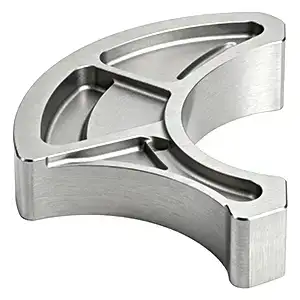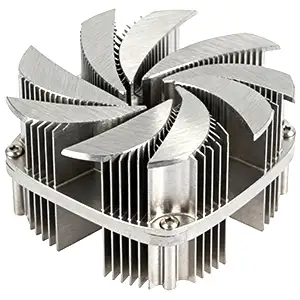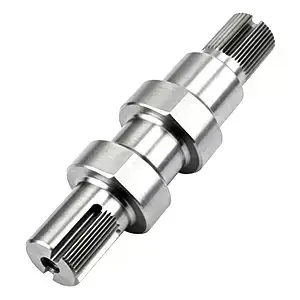
Titanium CNC Machining Services

3-, 4-, 5-axis milling & turning for Ti-6Al-4V and titanium alloys.
High-pressure coolant, adaptive toolpaths, tight tolerances, fast lead times.

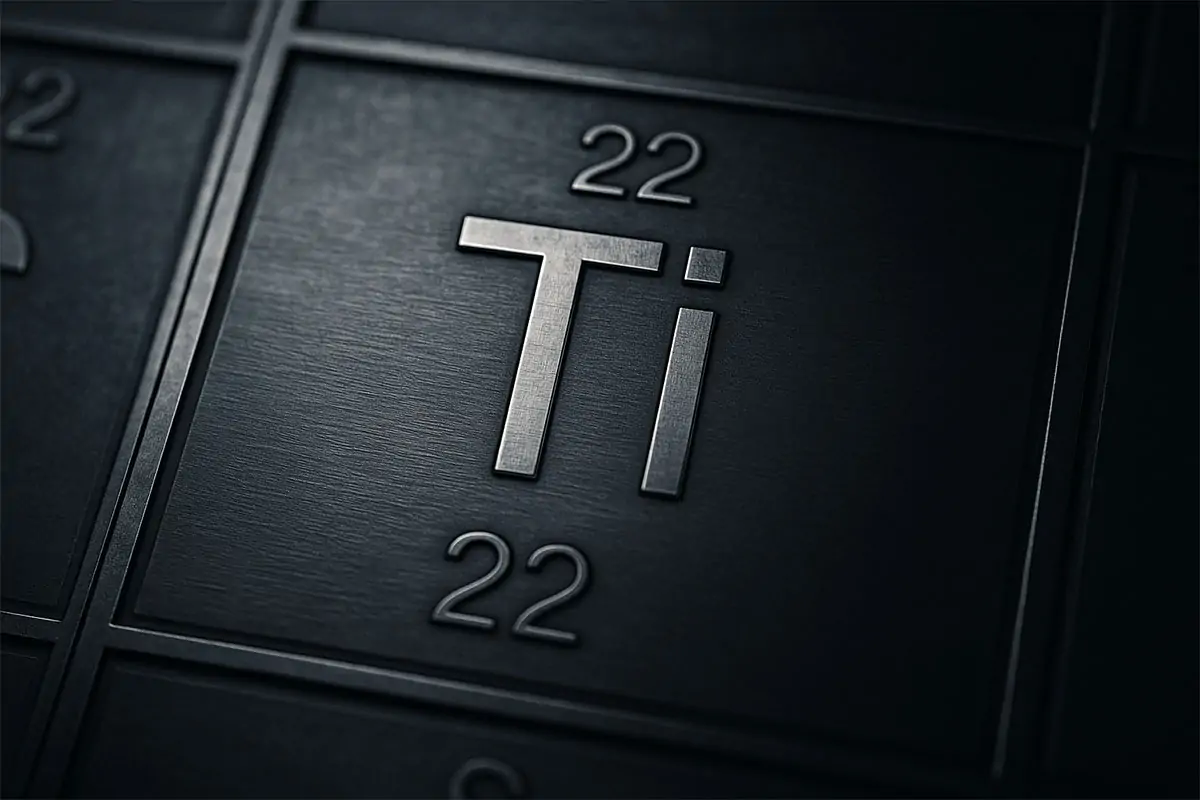
What is Titanium - Ti symbol close-up

What is Titanium?

Titanium is a strong, lightweight, corrosion-resistant metal prized for its durability and versatility. It is widely used across aerospace, medical, automotive and marine industries thanks to its exceptional strength-to-weight performance and biocompatibility.

  • High strength, low weight: Stronger than many steels at a fraction of the mass.
  • Outstanding corrosion resistance: Resists attack from air, water and many chemicals.
  • Biocompatible & non-toxic: Safe for medical implants and instruments.
  • Heat stability: Maintains strength at elevated temperatures.
Common grades & uses: CP Grade 2 for corrosion resistance; Ti-6Al-4V (Grade 5) for high strength. Typical applications include aerospace fasteners, implants, heat exchangers, marine hardware and performance automotive parts.
Can Titanium Be CNC Machined? — Titanium CNC Machining Guide

Yes. Titanium CNC Machining is routinely performed on rigid 3-, 4- and 5-axis mills and lathes. Because titanium has high strength, low thermal conductivity and a tendency to work-harden, success depends on the right tooling, conservative surface speeds, adequate feed per tooth, and reliable chip evacuation with high-pressure coolant.

  • Tooling & geometry: Tough micro-grain carbide with heat-resistant coatings (AlTiN/TiAlN), positive rake, short overhang.
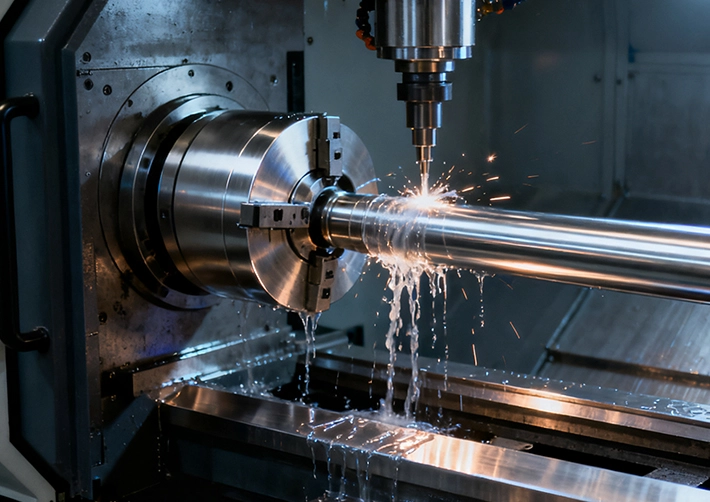
  • Coolant & heat control: Through-tool or high-pressure coolant to remove heat and chips; avoid rubbing to prevent work-hardening.
  • Strategies: Constant-engagement/adaptive toolpaths, climb milling, chip-thinning feeds, peck cycles for drilling.
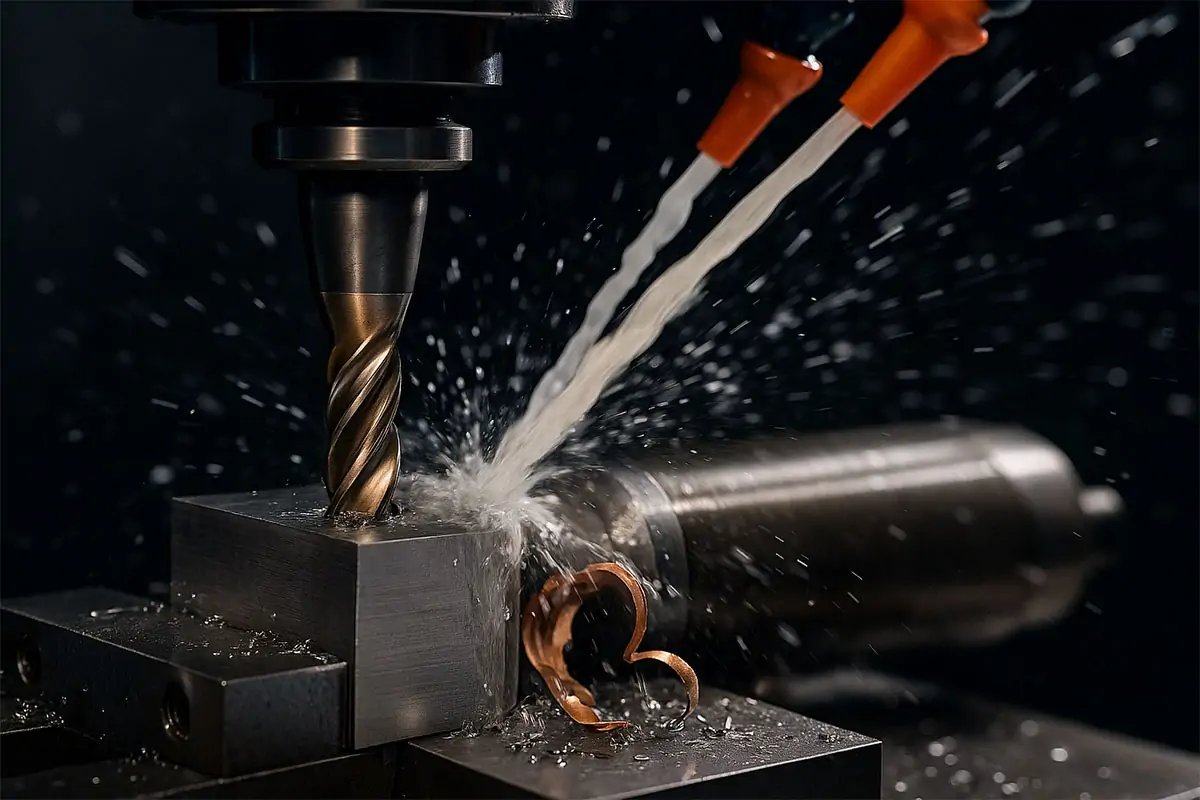
Titanium CNC milling with coolant
What is the hardest material to CNC machine — guide to difficult-to-machine metals and alloys

What is the hardest material to CNC?

  • Inconel (Ni-Cr superalloys): Extreme heat resistance and work-hardening; very low SFM, relentless tool wear.
  • Titanium alloys: Poor heat conduction and springback; requires rigid setups and aggressive chip control.
  • Hardened steels (HRC > 45): Demands coated carbide/CBN and stable machine dynamics.
  • Advanced ceramics: Too brittle for conventional cutting; typically ground, EDM’d, or laser-processed.
Tip: For extreme alloys or tight thermal budgets, consider hybrid routes—rough by waterjet/EDM, finish by Titanium CNC Machining with optimized toolpaths and high-pressure coolant.

Precision Titanium CNC Machining

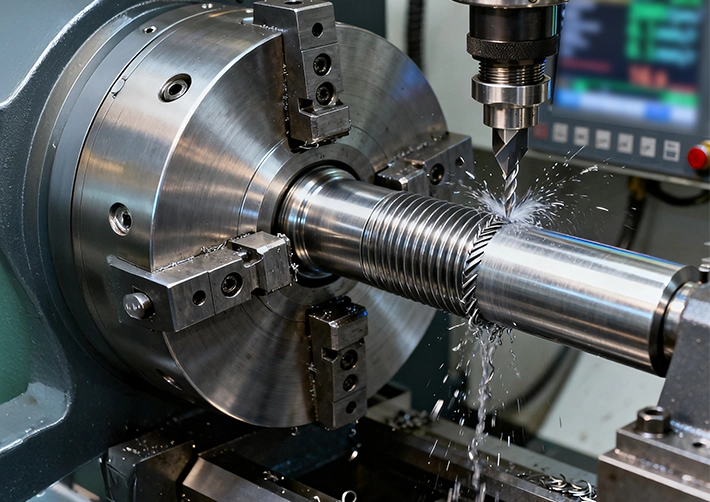
CNC Turning and Milling Combined Machining Process

CNC Turning & Mill-Turn

Rigid setups, balanced chip-load and through-tool coolant produce round bores and clean faces in Ti shafts, rings and multi-feature parts—consistent finish and runout across batches.

Titanium 3/4/5-axis milling with adaptive toolpaths

3, 4, 5-Axis CNC Milling

Adaptive toolpaths, constant-engagement strategies and heat-resistant tooling deliver tight tolerance Ti components with controlled burrs and excellent surface integrity.

Titanium CNC Machining Capabilities

FeatureDetail
Max Part Size (X/Y/Z)2300 × 1500 × 600 mm
Minimum Feature Size⌀1 mm
Wall Thickness0.25 mm
Tolerance±0.005 mm
Surface Finish (as milled)Ra 0.4–3.2 µm
Standard Lead Time3 working-days for rapid prototyping
Pricing LevelTo be confirmed after design review
Type of MachineGantry CNC / 3-4-5-Axis CNC / Mill-Turn Compound CNC / Swiss-Type CNC / Turning Machine...etc...
Titanium Grades Grade 2, Grade 5 (Ti-6Al-4V), Grade 9 (Ti-3Al-2.5V), Grade 23 (ELI)

Titanium Alloys for CNC Machining

We stock common titanium grades. Need certs or a specific spec? Contact us.

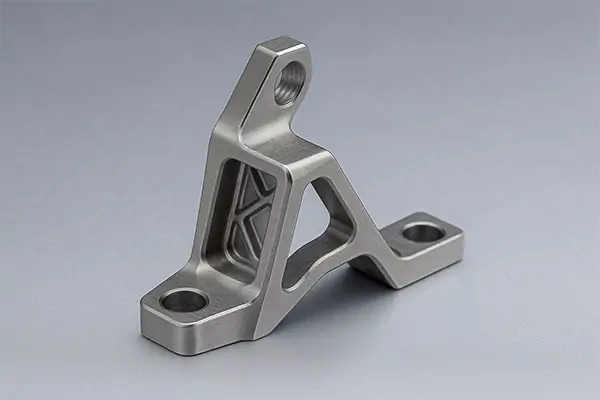
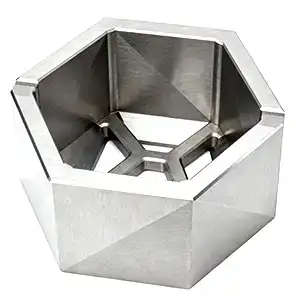
Titanium Grade 5 (Ti-6Al-4V) lightweight 5-axis CNC machined bracket for aerospace components

Titanium Grade 2

  • Commercially pure; best corrosion resistance
  • Lower strength; easy to weld
  • Chemical, marine, medical devices
  • Use sharp tools; avoid rubbing

Good formability and stability—great for fittings and corrosion-critical parts.

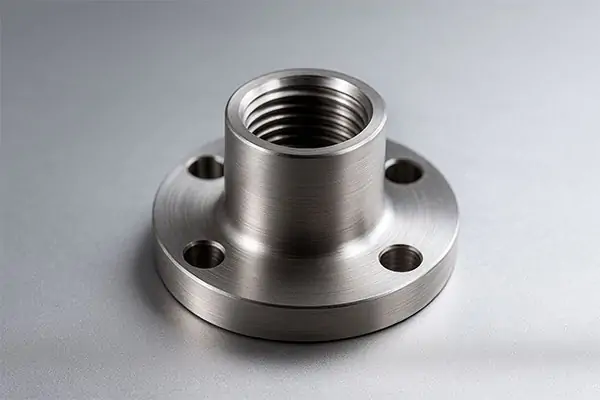
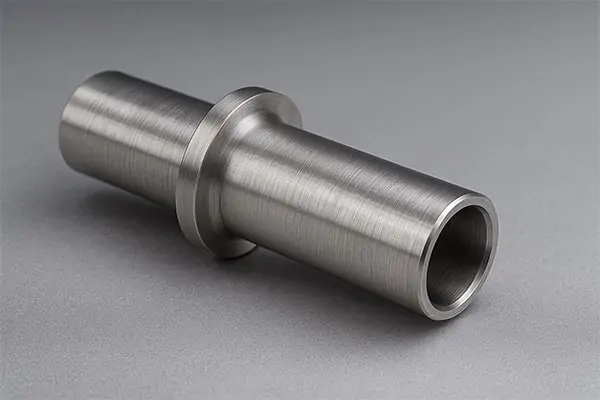
Titanium Grade 9 (Ti-3Al-2.5V) precision CNC machined tube connector with high formability

Titanium Grade 5 (Ti-6Al-4V)

  • High strength-to-weight
  • Good fatigue & creep
  • Aerospace fasteners, brackets
  • Needs HPC and rigid fixturing

Most popular Ti alloy for structural applications and high-performance hardware.

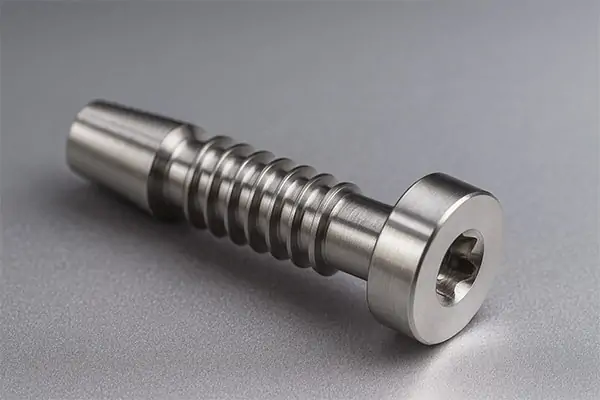
Titanium Grade 23 (ELI) CNC machined bone screw for medical and dental implants

Titanium Grade 9 (Ti-3Al-2.5V)

  • Medium strength; good formability
  • Tubing, bike frames, aerospace ducts
  • Better weldability than Gr5
  • Stable thin-wall machining

Great balance of strength and ductility—ideal for hollow sections.

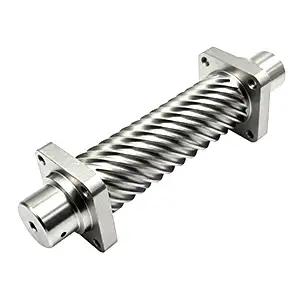
Collection of titanium alloy CNC machined parts showing various grades and finishes

Titanium Grade 23 (ELI)

  • Extra-low interstitials; high toughness
  • Implants & medical instruments
  • Excellent biocompatibility
  • Careful heat input control

Low oxygen content for improved fracture toughness—preferred for medical use.

Display of Our Titanium CNC Machining Parts

Material Machining Guide

Titanium CNC Machining: Selection, Process, and Quality Notes

Titanium is commonly considered for aerospace, medical, lightweight high-strength, and corrosion-resistant parts. It is selected because of high strength-to-weight ratio and excellent corrosion resistance. For CNC machining, the final result depends on material grade, toolpath strategy, tolerance allocation, surface finish, and inspection planning.

Good Fit

Use Titanium when the application benefits from high strength-to-weight ratio and excellent corrosion resistance and the design can be machined with stable workholding.

Watch Points

Confirm wall thickness, hole depth, thread callouts, burr control, cosmetic surfaces, and finish buildup before production.

Quality Planning

Define critical dimensions, inspection method, tolerance class, and documentation requirements before the first article.

TopicPractical Guidance for Titanium
Design reviewSend 3D CAD, 2D drawings, material grade, finish notes, quantity, and critical-to-function dimensions.
Machining processMTSPi can review whether milling, turning, drilling, tapping, boring, or a combined route is best for the geometry.
Surface finishPlan cosmetic and functional finishing early, especially where coating thickness, polishing, or deburring affects fit.
InspectionUse calipers, micrometers, gauges, CMM, or visual inspection based on tolerance risk and assembly function.

FAQ

Is Titanium suitable for CNC machining?

Yes, Titanium can be CNC machined when the grade, geometry, tooling, workholding, and tolerance requirements are planned correctly.

What should I send for a Titanium machining quote?

Send CAD files, 2D drawings, quantity, material grade, finish requirements, tolerance notes, and any inspection or packaging needs.

Can Titanium parts be finished after machining?

Often yes. The right finish depends on the material family and part function. Confirm finish thickness and cosmetic expectations before machining.

How do I reduce cost on Titanium CNC parts?

Use practical tolerances, avoid unnecessary deep pockets or tiny holes, simplify setups, and reserve tight control for functional features.

Request A Quote

We'll Send You Back with Price Immediately!

DEC 1-31

XMAS SPECEIL

Up to

40% off

Titanium CNC Machining

We'll Send You Back with Price Immediately!