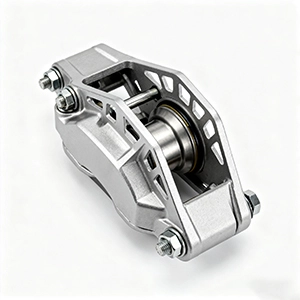
Aluminum CNC Machining Services

High-speed 3-, 4-, and 5-axis machining for lightweight, high-strength aluminum parts.
Tight tolerances, fast lead times, and production-ready surface finishes.

What’s the best tool for cutting aluminum?

For clean, accurate prep cuts in aluminum, circular saws and miter saws with non-ferrous carbide blades are dependable. For long, straight rips in sheet or plate, a table saw with a rigid fence/edge guide produces a consistent edge ready for downstream machining.

  • Blade: Non-ferrous carbide, neutral/negative rake, high tooth count.
  • Workholding: Clamp securely; use a backer to reduce burrs and chatter.
  • Lubrication & chips: Light wax/mist; steady feed; clear chips often.
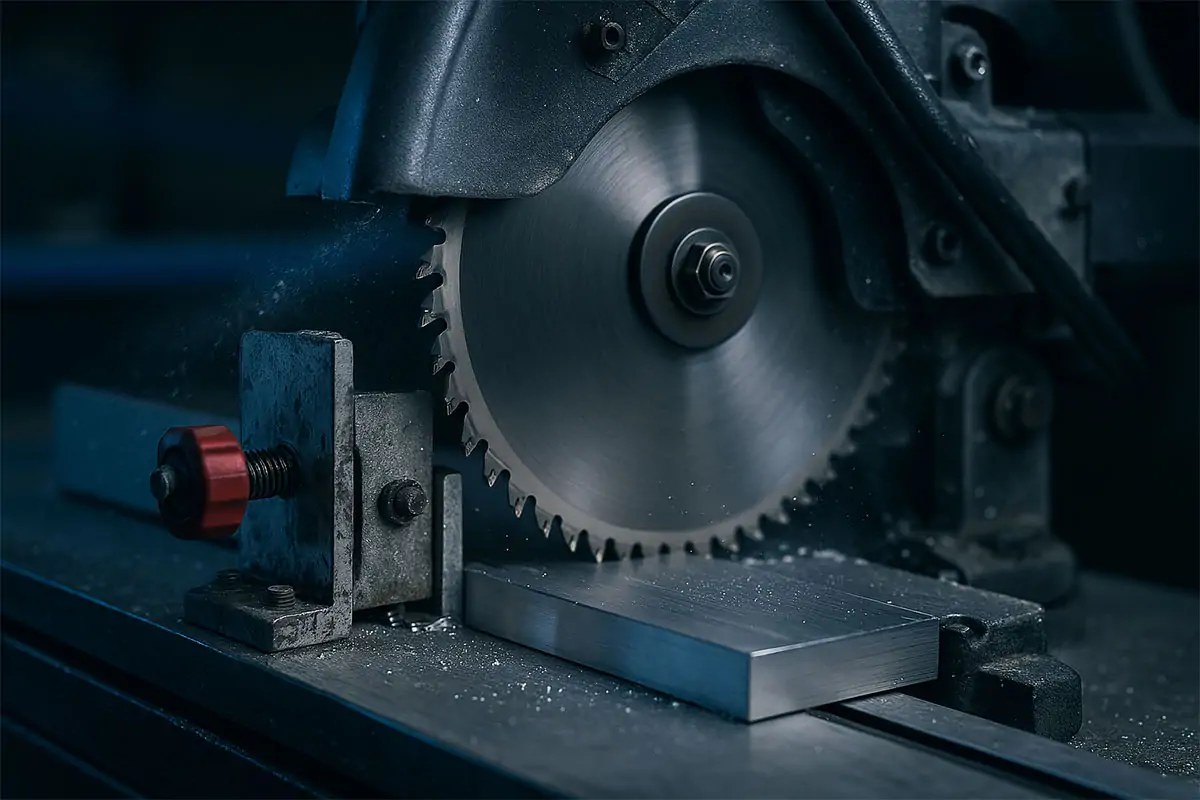
Cutting aluminum with a non-ferrous carbide circular saw blade, 3:2
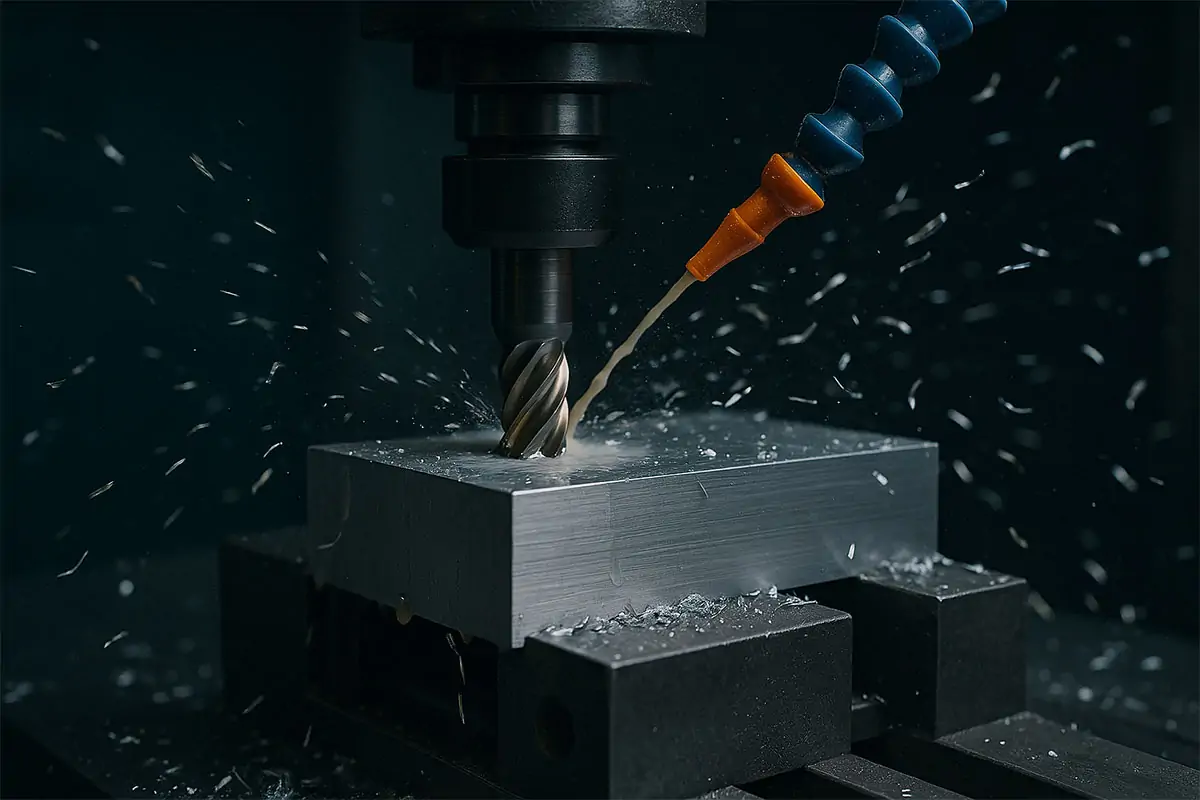
CNC milling aluminum with coolant and end mill, 3:2

What materials cannot be CNC machined?

  • Rubber & flexible polymers (silicone, soft PU, TPE/TPU): deform under the tool; poor tolerances.
  • Carbon-fiber laminates/composites: fraying/delamination without composite-specific tooling.
  • Ceramics & glass: too brittle for conventional milling/turning—typically ground or laser-processed.
  • Tempered or hardened glass: not machinable by standard CNC methods.
  • Super-soft or gummy metals (e.g., very pure Al, lead): smear on the tool; poor finish/control.
  • Foams & sponge-like materials: compress/tear rather than cut cleanly.
  • Unstable/inconsistent stock: porous or dimensionally unstable materials that can’t hold precision.
Tip: For challenging materials, consider waterjet, laser, EDM or grinding, or use application-specific tooling.

Precision Aluminum CNC Machining

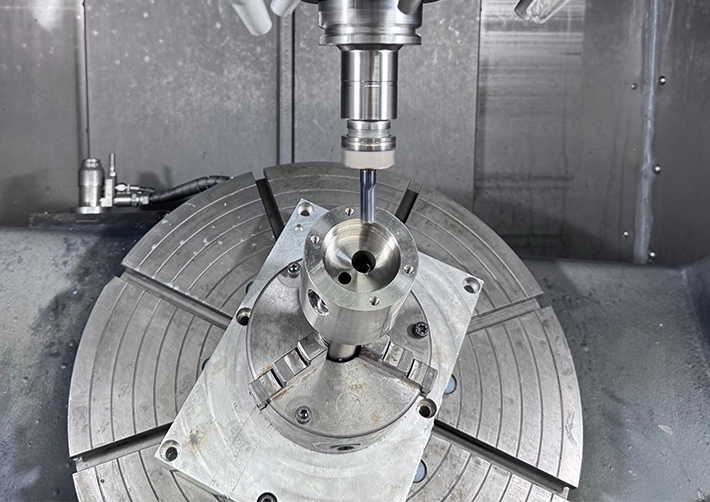
3/4/5-axis aluminum CNC milling with high-pressure coolant

3, 4, 5-Axis CNC Milling

High-speed machining with aluminum-optimized toolpaths and fixtures. We deliver complex geometries, thin walls, and aesthetic faces efficiently—with excellent flatness and surface finish.

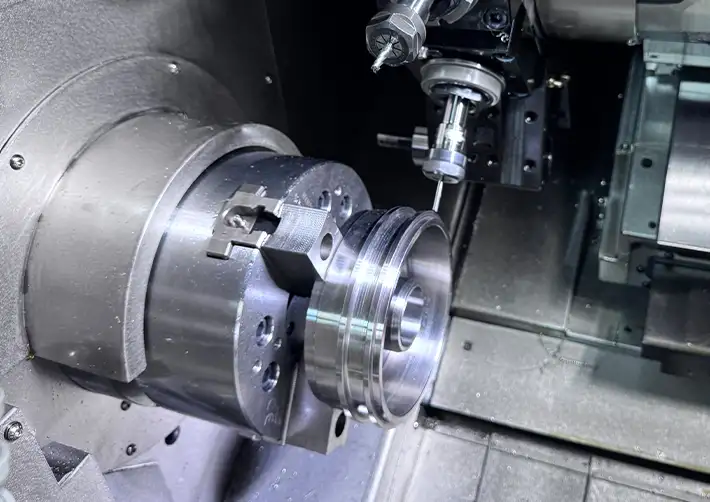
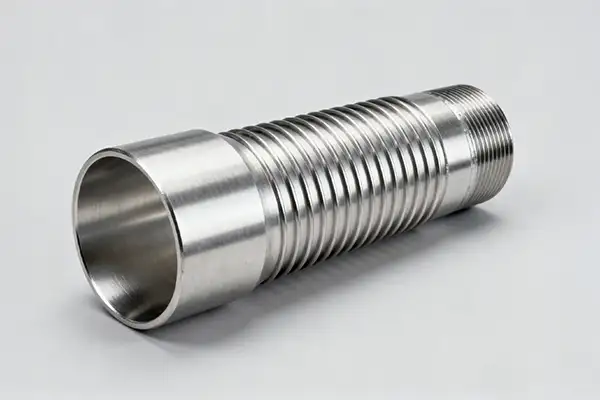
Aluminum CNC turning & mill-turn: precise bores, faces and milled features

CNC Turning & Mill-Turn

Accurate shafts, housings, manifolds and multi-feature parts in one setup. Stable clamping and sharp tools keep bores round and surfaces smooth—ideal for prototypes and production.

Aluminum CNC Machining Capabilities

StandardsDetail
Max Part Size (X/Y/Z) 2300 × 1500 × 600 mm
Minimum Feature Size ⌀1 mm
Wall Thickness 0.25 mm
Tolerance ±0.005 mm
Surface Finish (as milled) Ra 0.4–3.2 µm
Standard Lead Time 3 working-days for rapid prototyping
Pricing Level To be confirmed after design review
Type of Machine Gantry CNC / 3-4-5-Axis CNC / Mill-Turn Compound CNC / Swiss-Type CNC / Turning Machine...etc...
Common Grades 1060, 1100, 2017, 2024 – T3, 5052 – H32, 5083 – H111, 5086, 6061, 6061 – T6

Aluminum CNC Machining Materials

We offer a wide range of aluminum grades for your parts. Need a specific spec or cert? Contact us.

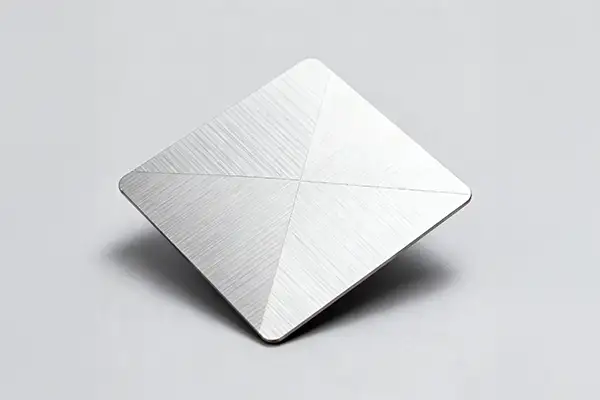
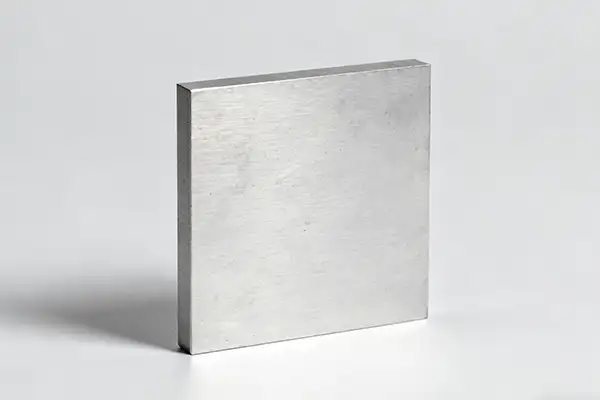
1060 aluminum machined plate (3:2)

1060

  • Commercially pure; excellent conductivity
  • Best for forming; low strength
  • Good corrosion resistance
  • Electrical, chemical equipment

Very soft—use razor-sharp tools and steady chip load to avoid built-up edge.

1100 aluminum machined cover (3:2)

1100

  • High ductility and conductivity
  • Low mechanical strength
  • Excellent corrosion resistance
  • Decorative/anodized parts

Use sharp tools and light step-downs for cosmetic faces before anodizing.

2017 aluminum machined bracket (3:2)

2017

  • Al-Cu; higher strength than 6061
  • Good machinability
  • Moderate corrosion resistance
  • Structural parts, fixtures

Prefer protective coating in corrosive environments; manages threads well.

2024-T3 aluminum aerospace clevis (3:2)

2024 - T3

  • High strength; fatigue resistant
  • Good machinability
  • Lower corrosion resistance
  • Aerospace, high-load parts

Coat/anodize where needed; control heat to avoid distortion on thin webs.

5052-H32 aluminum machined panel (3:2)

5052 - H32

  • Excellent corrosion resistance
  • Good weldability
  • Medium strength
  • Marine, enclosures

Stable for sheet/plate parts; bead-blast + anodize yields uniform matte finish.

5083-H111 aluminum marine bracket (3:2)

5083 - H111

  • Marine-grade corrosion resistance
  • Higher strength than 5052
  • Good weldability
  • Ships, tanks, frames

Great for salt environments; use sharp tools to maintain burr-free edges.

5086 aluminum structural part (3:2)

5086

  • High strength & seawater resistance
  • Good formability
  • Common in marine/transport
  • Weldable structures

Keeps strength after welding better than many series—popular for frames.

6061 aluminum machined fixture (3:2)

6061

  • Balanced strength, cost & availability
  • Excellent machinability
  • Good anodizing response
  • General purpose, jigs, frames

Our most common grade for prototypes and production—reliable, versatile.

6061-T6 aluminum precision housing (3:2)

6061 - T6

  • Heat-treated for higher strength
  • Very good machinability
  • Excellent for anodized cosmetics
  • Wide industrial usage

Stable and predictable—great for critical tolerances and visual surfaces.

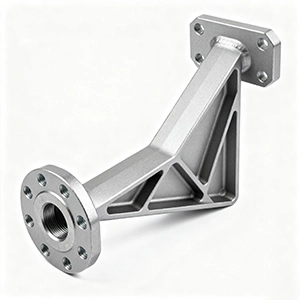
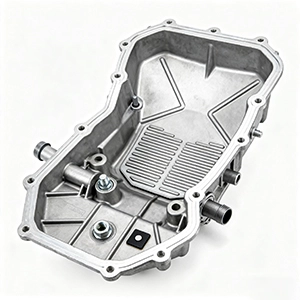
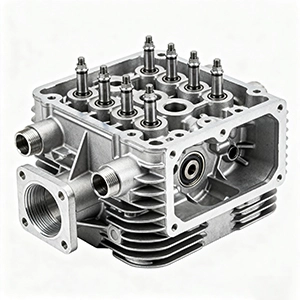
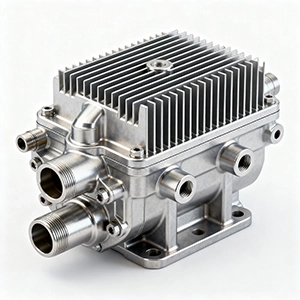
Display of Our CNC Machining Aluminum Parts

Material Machining Guide

Aluminum CNC Machining: Selection, Process, and Quality Notes

Aluminum is commonly considered for lightweight parts, housings, brackets, prototypes, and anodized components. It is selected because of excellent machinability, low weight, good corrosion resistance. For CNC machining, the final result depends on material grade, toolpath strategy, tolerance allocation, surface finish, and inspection planning.

Good Fit

Use Aluminum when the application benefits from excellent machinability, low weight, good corrosion resistance and the design can be machined with stable workholding.

Watch Points

Confirm wall thickness, hole depth, thread callouts, burr control, cosmetic surfaces, and finish buildup before production.

Quality Planning

Define critical dimensions, inspection method, tolerance class, and documentation requirements before the first article.

TopicPractical Guidance for Aluminum
Design reviewSend 3D CAD, 2D drawings, material grade, finish notes, quantity, and critical-to-function dimensions.
Machining processMTSPi can review whether milling, turning, drilling, tapping, boring, or a combined route is best for the geometry.
Surface finishPlan cosmetic and functional finishing early, especially where coating thickness, polishing, or deburring affects fit.
InspectionUse calipers, micrometers, gauges, CMM, or visual inspection based on tolerance risk and assembly function.

FAQ

Is Aluminum suitable for CNC machining?

Yes, Aluminum can be CNC machined when the grade, geometry, tooling, workholding, and tolerance requirements are planned correctly.

What should I send for a Aluminum machining quote?

Send CAD files, 2D drawings, quantity, material grade, finish requirements, tolerance notes, and any inspection or packaging needs.

Can Aluminum parts be finished after machining?

Often yes. The right finish depends on the material family and part function. Confirm finish thickness and cosmetic expectations before machining.

How do I reduce cost on Aluminum CNC parts?

Use practical tolerances, avoid unnecessary deep pockets or tiny holes, simplify setups, and reserve tight control for functional features.

Request A Quote

We'll Send You Back with Price Immediately!

DEC 1-31

XMAS SPECEIL

Up to

40% off

Aluminum CNC Machining

We'll Send You Back with Price Immediately!