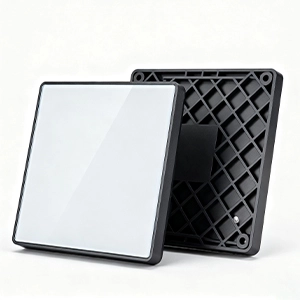
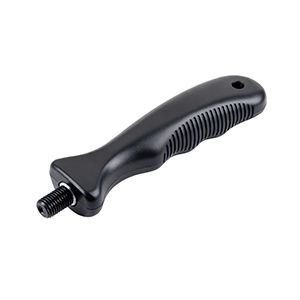
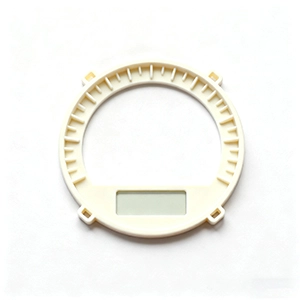
ABS CNC Machining Services

High-Precision Machining for Lightweight & Durable ABS Plastic Components
Custom Prototypes and Production with Advanced CNC Technology

What is ABS CNC Machining?

ABS (Acrylonitrile-Butadiene-Styrene) is a tough, impact-resistant thermoplastic used for enclosures, fixtures, brackets, and appearance models. It machines quickly, holds detail, and accepts paints and textures well.

  • Tooling: Razor-sharp O-flute/polished carbide or HSS; high rake to shear, not rub.
  • Heat control: Air blast/mist preferred; avoid heat-soak that causes melting or chip-weld.
  • Feeds/Speeds: Higher feed with shallow step-over; keep chips large and cool.
  • Workholding: Soft jaws/vacuum; spread clamping to protect cosmetic faces.
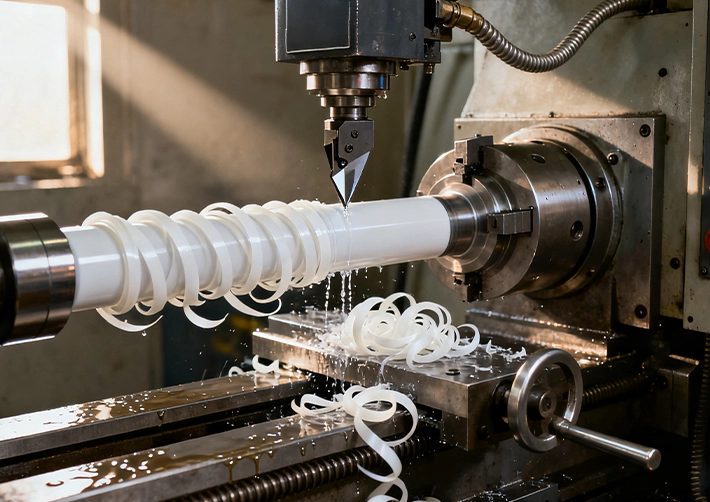
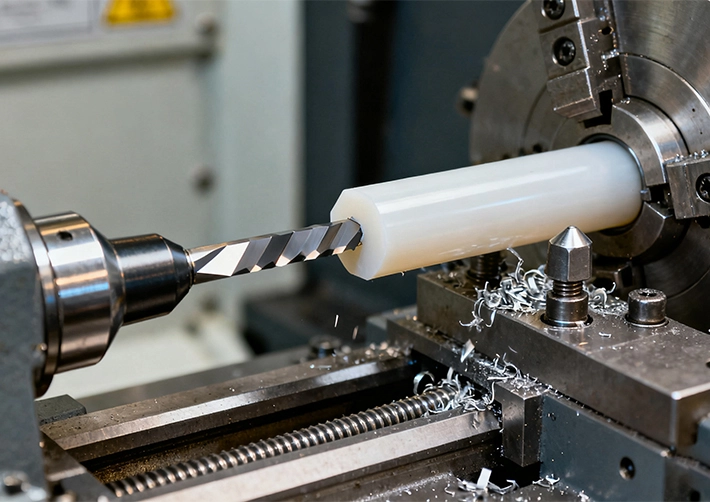
ABS CNC machining overview with O-flute end mill and air blast
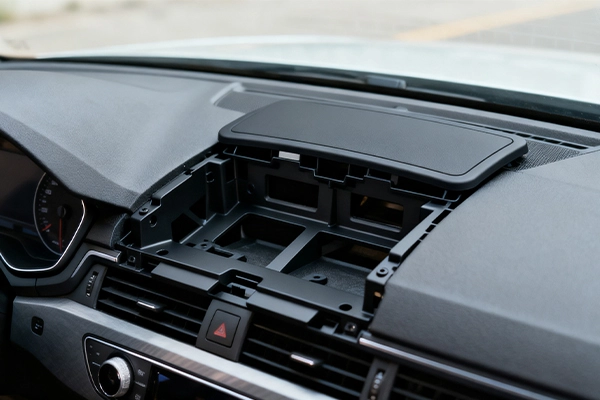
ABS machining: burr control, finish quality, and thermal management

Key Considerations

Use sharp tools and constant chip load to prevent fuzz/burrs. Prefer climb milling for cleaner edges. Deburr lightly (hand, media tumble) and plan a skim pass on show faces.

For thin walls: smaller axial DOC, generous step-downs, and support tabs. Avoid aggressive coolants—dry or mist is best.

Precision ABS CNC Machining

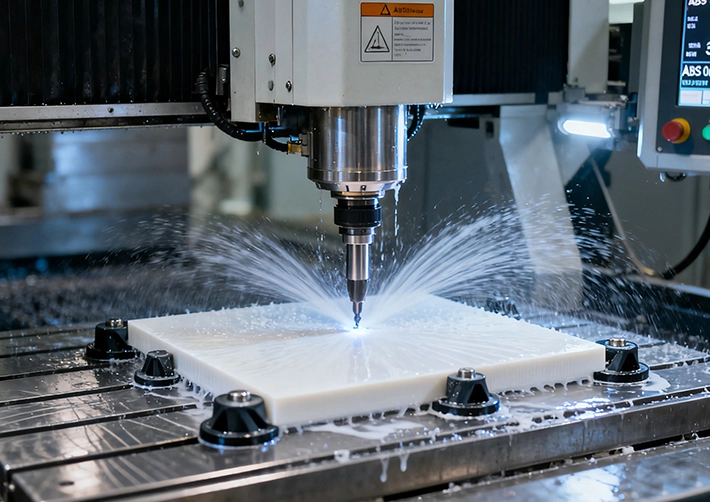
ABS 3/4/5-axis CNC milling with O-flute tools and vacuum fixturing

3, 4, 5-Axis CNC Milling

High-speed milling for enclosures, pockets, and thin-wall features. O-flute cutters, balanced holders, and air blast yield crisp edges and uniform textures ready for painting.

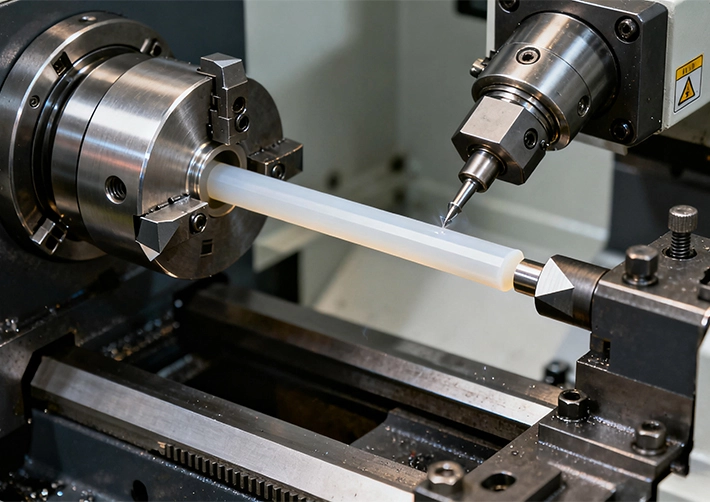
ABS CNC turning/mill-turn for bushings, caps, and fixtures

CNC Turning & Mill-Turn

Clean OD/ID finishes for caps, hubs, and fixturing. Sharp inserts, generous chip-breaker geometry, and steady feed reduce fuzz and keep diameters consistent.

ABS CNC Machining Capabilities

StandardsDetail
Max Part Size (X/Y/Z)2300 X 1500 X 600mm
Minimum Feature Size⊘1mm
Wall Thickness0.25mm
Tolerance+/-0.01
Surface Finish (as milled)Ra0.5-Ra3.2
Standard Lead Time3 working-days for rapid prototyping
Pricing LevelTo be confirmed after design review
Type of MachineGantry CNC / 3-4-5-Axis CNC / Mill-Turn Compound CNC / Swiss-Type CNC / Turning Machine...etc...
Common Grades ABS (General Purpose), PC-ABS (Blend), ABS-FR (UL 94 V-0), ABS ESD/Conductive

ABS Grades

General-purpose, PC-ABS blends, flame-retardant, and ESD/Conductive options for prototypes to production.

General-purpose ABS machined enclosure (3:2)

ABS (General Purpose)

  • Tough, easy to machine and paint
  • Great for covers, brackets, fixtures
  • Crisp edges with O-flute cutters
  • Good cost/performance balance

Run sharp tools, air blast, and a light finish pass for show faces.

PC-ABS machined bracket with reinforced boss (3:2)

PC-ABS (Blend)

  • Higher heat & impact vs ABS
  • Good for functional housings
  • Slightly more gummy—keep tools sharp
  • Paint/texture friendly

Moderate SFM, steady feed; support thin walls to avoid chatter.

ABS-FR UL94 V-0 rated machined panel (3:2)

ABS-FR (UL 94 V-0)

  • Flame-retardant for electronics
  • Machinability similar to ABS
  • Enclosures, trays, covers
  • Requires clean edges for assembly

Use sharp tools and light deburr; avoid melting with aggressive coolant.

ABS ESD/Conductive machined tray for electronics (3:2)

ABS ESD/Conductive

  • Static-safe for electronics handling
  • Fillers may change chip behavior
  • Trays, nests, tooling
  • Surface resistivity per spec

Confirm resistivity target; tune feeds for consistent edges and low fuzz.

Display of Our ABS CNC Machining Parts

Material Machining Guide

ABS CNC Machining: Selection, Process, and Quality Notes

ABS is commonly considered for prototypes, housings, fixtures, covers, and lightweight general-purpose plastic parts. It is selected because of low cost, impact resistance, and easy machining. For CNC machining, the final result depends on material grade, toolpath strategy, tolerance allocation, surface finish, and inspection planning.

Good Fit

Use ABS when the application benefits from low cost, impact resistance, and easy machining and the design can be machined with stable workholding.

Watch Points

Confirm wall thickness, hole depth, thread callouts, burr control, cosmetic surfaces, and finish buildup before production.

Quality Planning

Define critical dimensions, inspection method, tolerance class, and documentation requirements before the first article.

TopicPractical Guidance for ABS
Design reviewSend 3D CAD, 2D drawings, material grade, finish notes, quantity, and critical-to-function dimensions.
Machining processMTSPi can review whether milling, turning, drilling, tapping, boring, or a combined route is best for the geometry.
Surface finishPlan cosmetic and functional finishing early, especially where coating thickness, polishing, or deburring affects fit.
InspectionUse calipers, micrometers, gauges, CMM, or visual inspection based on tolerance risk and assembly function.

FAQ

Is ABS suitable for CNC machining?

Yes, ABS can be CNC machined when the grade, geometry, tooling, workholding, and tolerance requirements are planned correctly.

What should I send for a ABS machining quote?

Send CAD files, 2D drawings, quantity, material grade, finish requirements, tolerance notes, and any inspection or packaging needs.

Can ABS parts be finished after machining?

Often yes. The right finish depends on the material family and part function. Confirm finish thickness and cosmetic expectations before machining.

How do I reduce cost on ABS CNC parts?

Use practical tolerances, avoid unnecessary deep pockets or tiny holes, simplify setups, and reserve tight control for functional features.

Request A Quote

We'll Send You Back with Price Immediately!

DEC 1-31

XMAS SPECEIL

Up to

40% off

ABS CNC Machining

We'll Send You Back with Price Immediately!