Alloy Steel CNC Machining Service

High-Performance Machining for Strong & Wear-Resistant Alloy Steel Parts
From Prototypes to Production with Advanced Multi-Axis CNC Capabilities

What is Alloy Steel CNC Machining?

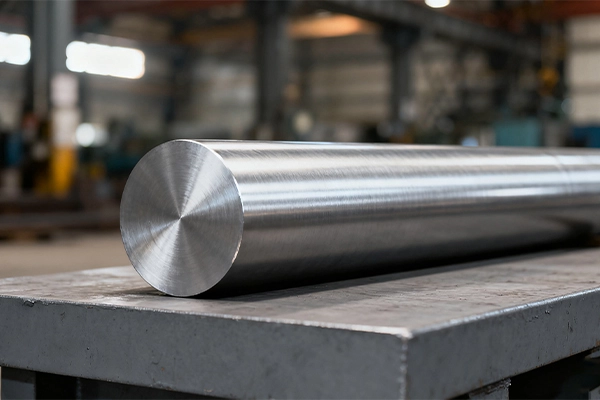
Alloy steel CNC machining covers grades like 4140/4140PH, 4130, 4340, and 8620. By adding Cr–Mo–Ni–V and other elements, these steels gain higher strength, toughness, and fatigue resistance for shafts, gears, tooling, and structural parts.

  • Tooling: Coated carbide (TiAlN/TiCN) or cermet for wear and heat control.
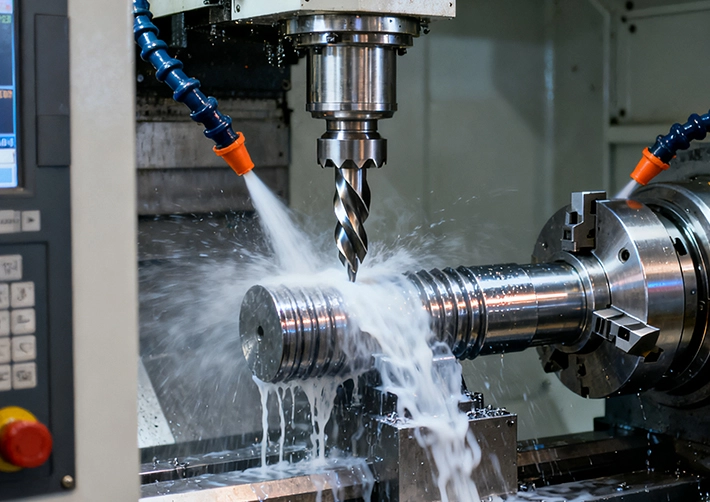
  • Coolant: Flood or high-pressure coolant keeps chips moving and temps low.
  • Feeds/Speeds: Maintain chip load—avoid rubbing; adjust per hardness/condition.
  • Rigidity: Short stick-out and solid fixturing for tight tolerances and finish.
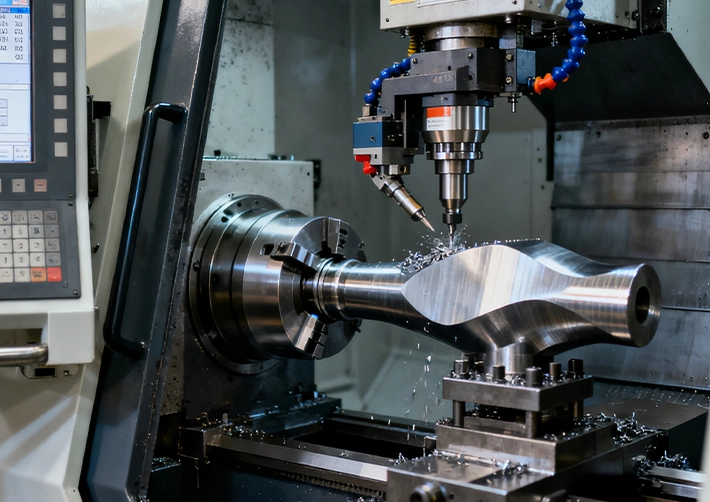
Alloy steel CNC machining overview with coated carbide and flood coolant
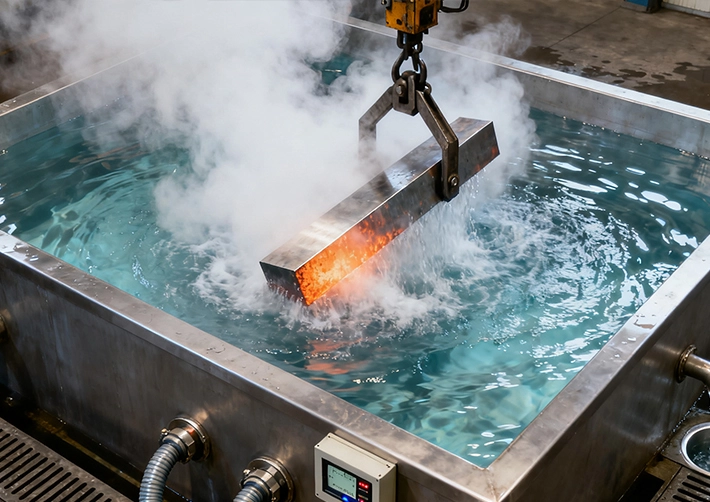
Alloy steel heat-treatment vs machinability illustration

Key Considerations

Machinability changes with heat treatment: annealed/pre-hard cuts faster; quenched/tempered improves service life but requires lower SFM and rigid setups.

For dimensional stability: rough → stress-relieve → heat-treat (as needed) → finish mill/turn/EDM → grind/polish for critical surfaces.

Precision Alloy Steel CNC Machining

Alloy steel 3/4/5-axis CNC milling with through-tool coolant

3, 4, 5-Axis CNC Milling

Tight-tolerance pockets, ribs, and contours in pre-hard and Q&T alloys. Balanced holders, coated carbide, and stable acceleration profiles deliver clean walls and consistent geometry.

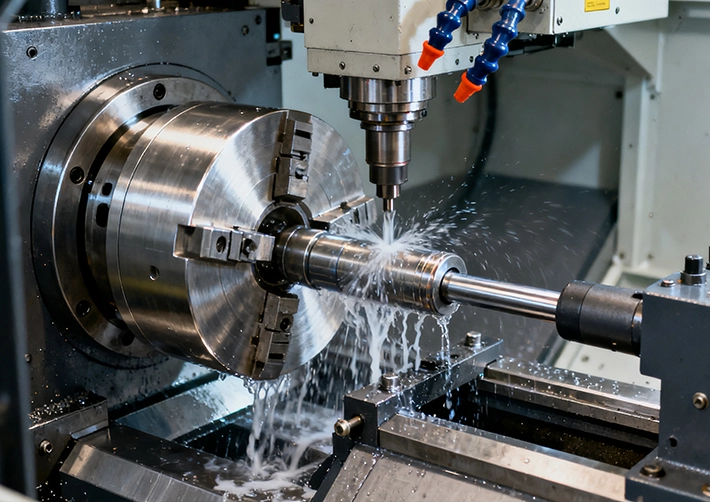
Alloy steel CNC turning and mill-turn for shafts and gears

CNC Turning & Mill-Turn

Shafts, hubs, and gear blanks with concentricity control. One-setup mill-turn reduces lead time and improves runout, surface finish, and feature alignment.

Alloy Steel CNC Machining Capabilities

FeatureDetail
Max Part Size (X/Y/Z)2300 × 1500 × 600 mm
Minimum Feature Size⌀1 mm
Wall Thickness0.25 mm
Tolerance±0.005 mm
Surface Finish (as milled)Ra 0.4–3.2 µm
Standard Lead Time3 working-days for rapid prototyping
Pricing LevelTo be confirmed after design review
Type of MachineGantry CNC / 3-4-5-Axis CNC / Mill-Turn Compound CNC / Swiss-Type CNC / Turning Machine...etc...
Alloy Steel Grades 4140 / 4140PH, 4340, 8620, 4130

Alloy Steel Grades

Popular grades for shafts, gears, fixtures and tooling. Need a specific spec? Contact us.

4140/4140PH turned shaft (3:2)

4140 / 4140PH

  • Cr–Mo steel; strong and tough
  • PH: pre-hardened (e.g., ~28–32 HRC) for faster delivery
  • Great for shafts, fixtures, tooling
  • Finish by grinding for precise fits

Run coated carbide, steady chip load; reduce SFM as hardness increases.

4340 quenched-and-tempered gear blank (3:2)

4340

  • Ni–Cr–Mo; very high strength/toughness
  • Often Q&T; lower SFM, rigid setup
  • Ideal for high-load shafts & gears
  • Post-process: grind, shot-peen (as spec)

Keep tools cool and sharp; use through-coolant for deep features.

8620 case-hardened component (3:2)

8620

  • Case-hardening grade; tough core
  • Good machinability in pre-HT state
  • Gears, cams, wear components
  • Carburize + grind for final finish

Machine in soft state → case-harden → grind critical diameters.

4130 machined/welded bracket (3:2)

4130

  • Chromoly; good strength-to-weight
  • Weldable; common in structures
  • Moderate machinability
  • Heat treat for higher strength

Use rigid fixturing and adequate coolant to control heat and burrs.

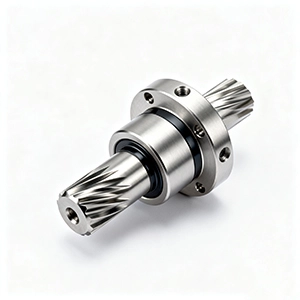
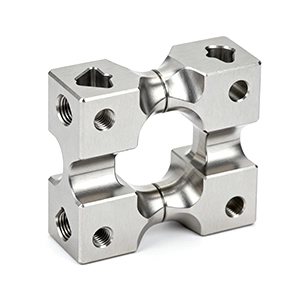
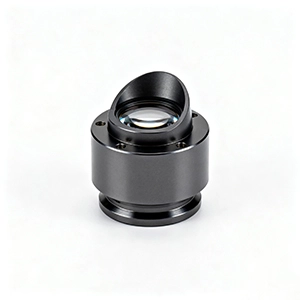
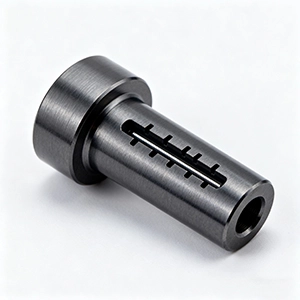
Display of Our CNC Machining Alloy Steel Parts

Material Machining Guide

Alloy Steel CNC Machining: Selection, Process, and Quality Notes

Alloy Steel is commonly considered for shafts, gears, mechanical parts, and load-bearing industrial components. It is selected because of strength, toughness, and heat-treatment response. For CNC machining, the final result depends on material grade, toolpath strategy, tolerance allocation, surface finish, and inspection planning.

Good Fit

Use Alloy Steel when the application benefits from strength, toughness, and heat-treatment response and the design can be machined with stable workholding.

Watch Points

Confirm wall thickness, hole depth, thread callouts, burr control, cosmetic surfaces, and finish buildup before production.

Quality Planning

Define critical dimensions, inspection method, tolerance class, and documentation requirements before the first article.

TopicPractical Guidance for Alloy Steel
Design reviewSend 3D CAD, 2D drawings, material grade, finish notes, quantity, and critical-to-function dimensions.
Machining processMTSPi can review whether milling, turning, drilling, tapping, boring, or a combined route is best for the geometry.
Surface finishPlan cosmetic and functional finishing early, especially where coating thickness, polishing, or deburring affects fit.
InspectionUse calipers, micrometers, gauges, CMM, or visual inspection based on tolerance risk and assembly function.

FAQ

Is Alloy Steel suitable for CNC machining?

Yes, Alloy Steel can be CNC machined when the grade, geometry, tooling, workholding, and tolerance requirements are planned correctly.

What should I send for a Alloy Steel machining quote?

Send CAD files, 2D drawings, quantity, material grade, finish requirements, tolerance notes, and any inspection or packaging needs.

Can Alloy Steel parts be finished after machining?

Often yes. The right finish depends on the material family and part function. Confirm finish thickness and cosmetic expectations before machining.

How do I reduce cost on Alloy Steel CNC parts?

Use practical tolerances, avoid unnecessary deep pockets or tiny holes, simplify setups, and reserve tight control for functional features.

Request A Quote

We'll Send You Back with Price Immediately!

DEC 1-31

XMAS SPECEIL

Up to

40% off

Alloy Steel CNC Machining

We'll Send You Back with Price Immediately!