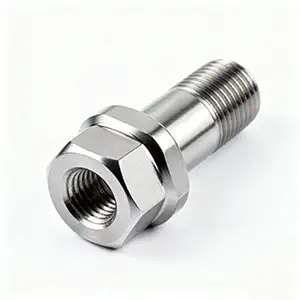
Remove sharp edges and machining burrs to improve safety, assembly fit, and finish readiness.
Our deburring services refine surfaces and edges so your CNC parts are ready for coating,
assembly, and end use.
CNC deburring services to remove burrs and sharp edges for smooth, safe, and precise components. Enhance assembly fit, improve finishing quality, and ensure reliable performance across automotive, aerospace, medical, and industrial applications.
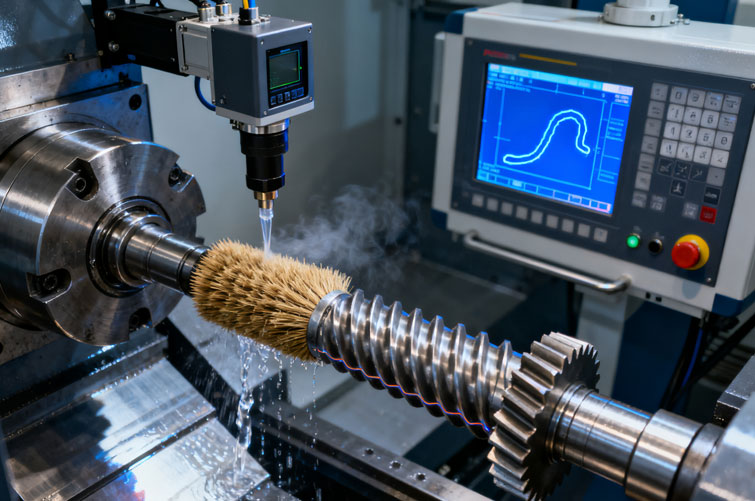
Deburring is the removal of sharp edges, raised material, and micro-burrs left after machining, cutting, or drilling. By refining edges and surface transitions, deburring enhances part safety, improves dimensional consistency, and prevents premature wear or coating defects. It is an essential post‑process step for high‑quality CNC components.
We support multiple methods—including vibratory/tumbling, brushing, manual detail work, thermal deburring (TEM), and electrochemical deburring (ECD)—to match different materials, geometries, and tolerance requirements.
Removes sharp edges to reduce injury risk during production and assembly.
Prevents burr‑related interference; improves insertion, sealing, and thread quality.
Eliminates burrs that cause paint pulls, anodizing defects, or coating pinholes.
| Feature | Info |
|---|---|
| Dimensional Control | Localized methods protect toleranced faces and bores; masking if required |
| Coating Prep | Edge rounding prevents thin‑film pullback in anodizing/painting |
| Documentation | Process plans, before/after photos, and inspection reports available |
| Lead Time | Typically 2–5 business days; expedited service available for small batches |
| Packaging | Part‑to‑part protection to maintain finished edges during transit |
Deburring Service for CNC Machined Parts helps CNC part buyers remove burrs and sharp edges while protecting dimensions, threads, holes, and cosmetic surfaces. MTSPi CNC reviews the machined geometry, material grade, tolerance-sensitive areas, cosmetic expectations, and inspection needs before recommending a finishing route.
This page is written for sourcing and engineering teams that need practical finishing decisions, not just a process name. Share drawings, material, quantity, finish standard, color or texture target, masking requirements, and critical dimensions with the RFQ.
| Buyer question | Why it matters | Practical action |
|---|---|---|
| Material compatibility | Confirm that the material and alloy can accept the finish reliably | Avoid adhesion, color, hardness, or corrosion problems |
| Dimensional impact | Review coating thickness, edge build-up, holes, threads, masking, and critical fits | Protect assembly dimensions after finishing |
| Appearance standard | Define visible faces, gloss, matte texture, color range, and acceptable marks | Keep cosmetic expectations realistic |
| Inspection needs | Select visual checks, thickness checks, hardness checks, adhesion tests, or sample approval as needed | Match evidence to part function and buyer risk |
Surface treatment should be planned before final machining whenever possible. Threads, bores, bearing fits, sealing faces, electrical contact areas, and cosmetic surfaces may need different handling. For repeat work, keep a finish sample, color reference, thickness target, and packaging instruction with the drawing revision.
What should I confirm before choosing this finish? Confirm material grade, part function, cosmetic standard, masking needs, tolerance-sensitive surfaces, expected environment, and inspection requirements.
Can MTSPi CNC machine and finish the same parts? Yes. MTSPi CNC can support machining, finishing coordination, inspection, and packaging so the finish plan matches the machined part requirements.
Will surface treatment affect dimensions? Some finishes add thickness, change edges, or affect holes and threads. Critical fits should be marked on the drawing and masking or post-finish checks should be discussed early.