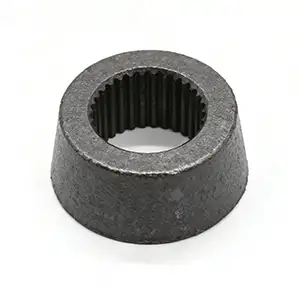
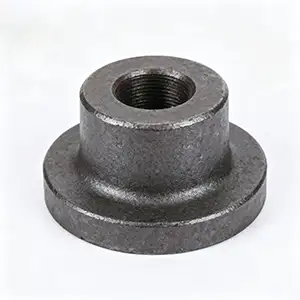
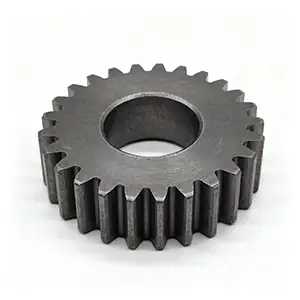
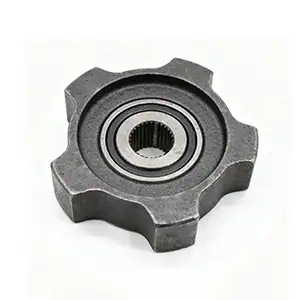
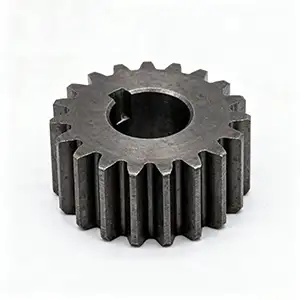
We optimize mechanical properties and stability of CNC parts through precise heat treatment.
From hardness and wear resistance to toughness and dimensional control,
our processes are tuned to your alloy and application.
CNC heat treatment services provide controlled heating and cooling processes to enhance hardness, strength, and stability of machined components. Ideal for automotive, aerospace, machinery, and tooling applications requiring durability and dimensional accuracy.
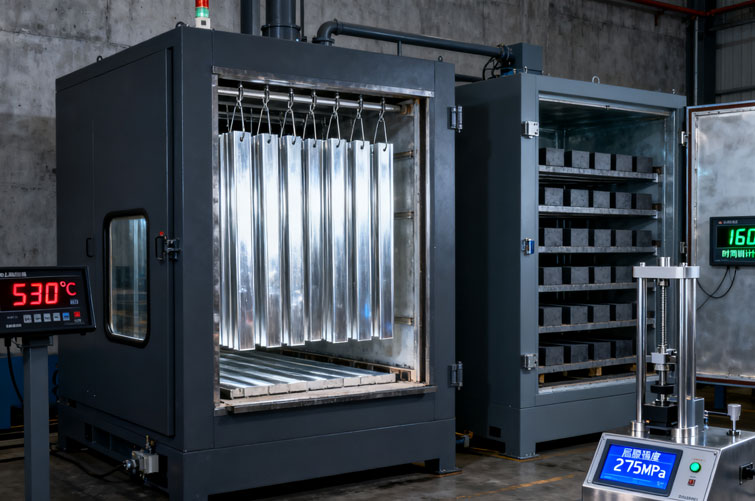
Heat treatment is a controlled heating and cooling process applied to metals to alter their microstructure and mechanical properties. By carefully managing temperature, soak time, and cooling rate, we can increase hardness and wear resistance, improve strength-to-weight ratio, relieve internal stresses, or restore ductility for subsequent machining.
Common industrial methods include annealing, normalizing, quenching and tempering, solution treatment and aging (T6/T651 for aluminum), and precipitation hardening for stainless steels and nickel alloys. Selecting the right route depends on the base alloy, geometry, tolerances, and end-use requirements.
Increase surface and core hardness to resist abrasion and extend component life.
Optimize yield/ultimate strength with controlled tempering or aging while maintaining toughness.
Reduce distortion and residual stress for better dimensional control and machining accuracy.
| Feature | Info |
|---|---|
| Alloy Coverage | Aluminum (2xxx/6xxx/7xxx), carbon & alloy steels, PH stainless, tool steels, nickel alloys. |
| Size & Fixturing | Small precision parts to mid-size housings; custom fixtures minimize distortion. |
| Dimensional Control | Process planning for growth/shrinkage; optional double-aging or cryo as required. |
| Certification | Process records and hardness reports available per drawing/PO requirements. |
| Lead Time | Typically 3–7 business days depending on alloy, section thickness, and lot size. |
Heat Treatment for CNC Machined Metal Parts helps CNC part buyers change hardness, strength, stress condition, and mechanical performance after or before machining. MTSPi CNC reviews the machined geometry, material grade, tolerance-sensitive areas, cosmetic expectations, and inspection needs before recommending a finishing route.
This page is written for sourcing and engineering teams that need practical finishing decisions, not just a process name. Share drawings, material, quantity, finish standard, color or texture target, masking requirements, and critical dimensions with the RFQ.
| Buyer question | Why it matters | Practical action |
|---|---|---|
| Material compatibility | Confirm that the material and alloy can accept the finish reliably | Avoid adhesion, color, hardness, or corrosion problems |
| Dimensional impact | Review coating thickness, edge build-up, holes, threads, masking, and critical fits | Protect assembly dimensions after finishing |
| Appearance standard | Define visible faces, gloss, matte texture, color range, and acceptable marks | Keep cosmetic expectations realistic |
| Inspection needs | Select visual checks, thickness checks, hardness checks, adhesion tests, or sample approval as needed | Match evidence to part function and buyer risk |
Surface treatment should be planned before final machining whenever possible. Threads, bores, bearing fits, sealing faces, electrical contact areas, and cosmetic surfaces may need different handling. For repeat work, keep a finish sample, color reference, thickness target, and packaging instruction with the drawing revision.
What should I confirm before choosing this finish? Confirm material grade, part function, cosmetic standard, masking needs, tolerance-sensitive surfaces, expected environment, and inspection requirements.
Can MTSPi CNC machine and finish the same parts? Yes. MTSPi CNC can support machining, finishing coordination, inspection, and packaging so the finish plan matches the machined part requirements.
Will surface treatment affect dimensions? Some finishes add thickness, change edges, or affect holes and threads. Critical fits should be marked on the drawing and masking or post-finish checks should be discussed early.