

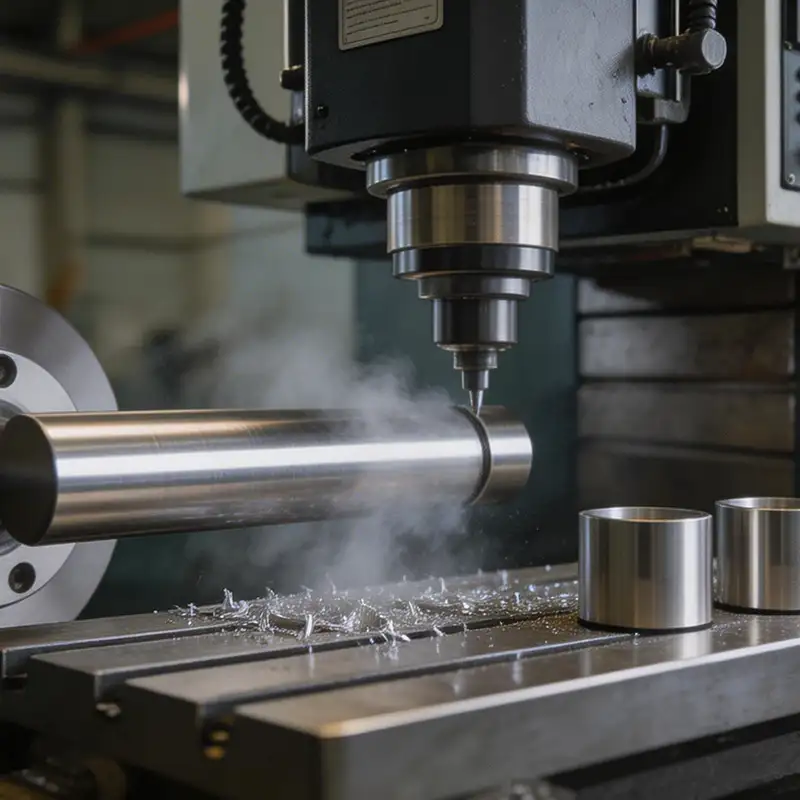
Small batch CNC machining is a manufacturing process that uses computer-controlled machines to produce a limited quantity of parts, typically ranging from 10 to 1000 units. It’s a perfect bridge between one-off prototyping and mass production, offering flexibility and cost-effectiveness for product development and market testing.
Understanding Small Batch CNC Machining
Let’s break it down. CNC stands for Computer Numerical Control. It’s a process where a computer file guides cutting tools to shape a block of material (like metal or plastic) into a precise part. Now, small batch manufacturing simply means we’re not making millions of these parts—we’re making a manageable, limited run. Think of it as the sweet spot between crafting a single prototype and committing to a massive, expensive production line. It’s ideal for when you need more than just a couple of samples but aren’t ready for full-scale production yet.
Why Choose Small Batch Production?
You might wonder, “Why not just go straight to mass production?” Great question! The benefits of low volume CNC machining are numerous, especially for startups, engineers, and inventors. It allows you to test your product in the real world without a huge upfront investment. Imagine you’ve designed a new drone component. With a short run production of 50 pieces, you can gather feedback, make improvements, and validate the market before ordering 10,000.
Cost-Effectiveness and Flexibility
One of the biggest perks is cost control. Tooling for injection molding can be prohibitively expensive for small quantities. With CNC, the “tooling” is primarily the digital program, which is much cheaper to create and modify. This makes limited quantity machining incredibly flexible. Need to change a dimension or add a hole in version 2? You can update the CAD file and machine the next batch with minimal hassle and cost compared to retooling a mold.
Speed and Iterative Development
Speed to market is crucial. On-demand manufacturing through small batch CNC services means you can go from a digital design to holding parts in your hand in a matter of days, not months. This enables rapid iteration. A client of mine, Sarah, used this for her custom bicycle accessory. She ordered 25 units, sold them at a local fair, got user comments, and then tweaked the design for a second, improved batch—all within a single season.
How the Small Batch Process Works
The workflow for precision small batch manufacturing is straightforward. It starts with you! You provide a 3D CAD model (like a .STEP or .SLDPRT file) to a machine shop. Their engineers then prepare the file for machining, a step called CAM programming, which creates the instructions for the CNC mill or lathe.
From Digital Design to Physical Part
The machine shop will select the right CNC equipment—often a 3-axis or 5-axis machining center—for your part’s complexity. A block of material is secured, and the automated cutting process begins. The machine follows the toolpaths with incredible accuracy, often within microns. This repeatable process is what makes CNC perfect for batch production machining; the 1st part and the 100th part are virtually identical.
Materials and Finishes
You have a vast material selection. Common choices include aluminum (great for strength and weight), stainless steel (for durability), brass, and various engineering plastics like Delrin or PEEK. After machining, parts often undergo secondary operations or post-processing. This could be bead blasting for a matte finish, anodizing for color and corrosion resistance (common for aluminum), or simply deburring to remove sharp edges. You can learn more about material properties from authoritative sources like ASM International.
Common Misconceptions Clarified
Let’s clear up a few things! A common myth is that small lot machining is only for simple parts. Not true! Modern multi-axis CNC machines can produce incredibly complex geometries. Another misconception is that it’s always more expensive per part than mass production. While the per-part cost is higher than injection molding at huge volumes, the total project cost is often lower due to zero tooling investment. It’s about the right tool for the job stage.
Getting Started with Your Project
Ready to explore custom small batch CNC for your idea? My friendly advice is to start with a clear CAD model. If you don’t have one, many shops offer design assistance. Then, reach out to a few reputable machine shops for quotes. Be prepared to discuss your quantity, material, and any critical tolerances. Don’t hesitate to ask questions—a good partner will guide you through low volume manufacturing. They can help you design for manufacturability (DFM) to optimize your part for machining, saving you time and money. For a deeper dive into manufacturing standards and processes, a great resource is NIST’s manufacturing resources.
In short, small batch CNC machining is a powerful, accessible gateway to bringing precise, functional parts into the physical world. It offers the agility to innovate, test, and grow your product with confidence.