

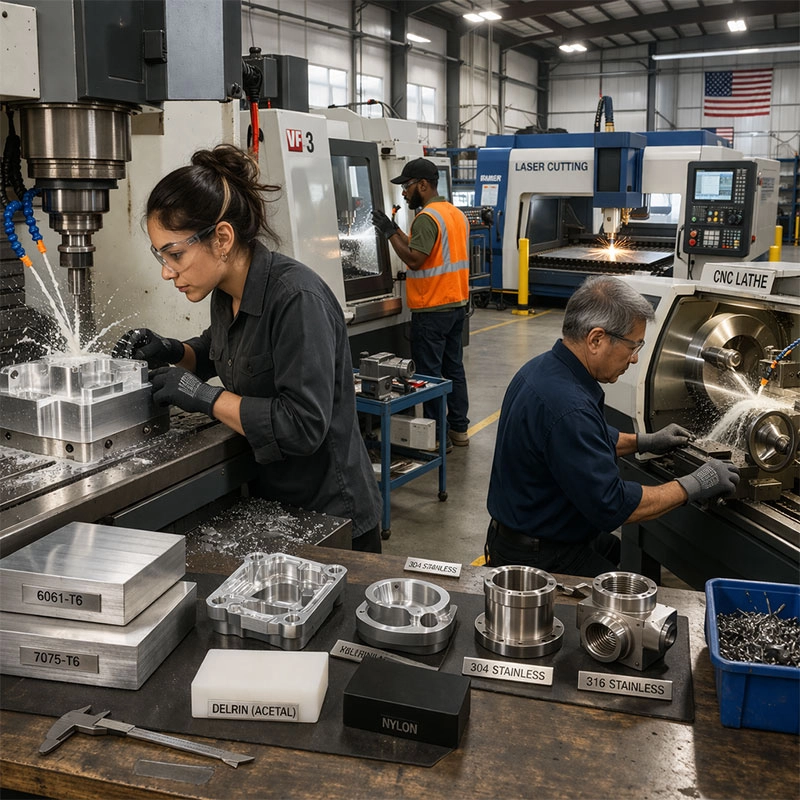
Choosing the right material is a crucial first step in any CNC project. This guide walks you through the most common and effective materials, from metals like aluminum and stainless steel to plastics and composites, helping you match their properties to your specific application needs for a successful outcome.
Why Your Material Choice Matters So Much
Hey there! If you’re diving into a new CNC project, you’ve probably realized there are tons of material options out there. It can feel a bit overwhelming, right? I’m here to tell you that picking the optimal CNC machining material isn’t just a technical step—it’s the foundation of your entire project. The right choice affects everything: how long it takes to machine, the final finish, the part’s strength, its cost, and even how it behaves in the real world. Think of it like choosing ingredients for a recipe; the best dish starts with the best, most suitable components. Whether you’re making a lightweight drone arm or a heavy-duty gear, understanding CNC material properties is your first step to success.
Top Metals for CNC Machining
Let’s talk about metals first. They’re the backbone of many CNC milling materials and CNC turning materials lists, and for good reason. They offer a fantastic balance of strength, durability, and machinability. Here’s a breakdown of the most popular ones you’ll encounter.
Aluminum Alloys: The Go-To Favorite
If I had to pick one material that’s the superstar of the CNC shop, it would be aluminum. Specifically, alloys like 6061 and 7075. Why? They’re incredibly easy to machine, which means faster production times and less tool wear. They’re also lightweight and have a great strength-to-weight ratio, making them perfect for aerospace parts, automotive components, and consumer electronics. 6061 is your all-around workhorse, while 7075 offers higher strength. For more detailed specs on aluminum grades, a great resource is the ASM Handbook series.
Stainless Steel: For Strength and Shine
When you need corrosion resistance and serious strength, stainless steel is the answer. Grades like 304 and 316 are common for food-grade or marine applications. For even higher strength and wear resistance, people often look at 17-4 PH or 416. The catch? Stainless is tougher on your tools than aluminum, so machining it requires more power and careful planning. But for parts that need to last under stress and resist rust, it’s a top-tier choice for precision machining materials.
Mild Steel and Other Common Metals
Don’t overlook good old mild steel (like A36) or alloy steels (like 4140). They’re cost-effective, very strong, and weldable, ideal for structural frames, brackets, and tooling. Brass and copper are also excellent CNC machining metals when you need electrical conductivity, corrosion resistance, or that distinctive aesthetic look for custom fittings and decorative pieces.
Top Plastics and Composites for CNC
Plastics and composites open up a whole new world of possibilities. They’re essential when you need electrical insulation, chemical resistance, or a lower-cost prototype. The key is knowing which plastic fits your CNC fabrication needs.
Delrin® (Acetal): The Precision Plastic
Ask any machinist about their favorite plastic to cut, and many will say Delrin (acetal homopolymer). It machines beautifully—leaving a smooth, low-friction finish—and is dimensionally stable. It’s the go-to for making gears, bushings, and insulators. If you’re looking for easy to machine materials for CNC in the plastic family, start here.
Nylon: Tough and Versatile
Nylon is another fantastic option, known for its toughness, wear resistance, and slight flexibility. It’s great for parts that need to endure impact or friction. You might find it in wear pads, fasteners, or functional prototypes. Just remember, it can absorb moisture, which might affect dimensions in very humid environments.
PTFE (Teflon®) and PEEK
For extreme applications, we move into high-performance polymers. PTFE (like Teflon) has incredible chemical resistance and the lowest coefficient of friction, perfect for seals and linings. PEEK is a superstar engineering plastic that retains its properties at high temperatures and is biocompatible, used in medical and aerospace. These are more challenging to machine but solve unique problems. The Boedeker Plastics resource center is a helpful place to learn more about these advanced materials.
How to Choose: Matching Material to Your Project
So, with all these options, how do you decide? I like to break it down by asking a few simple questions. First, what does the part *do*? Does it need to be strong, lightweight, conductive, or chemically inert? Second, what’s your budget? Material cost and machinability of metals directly impact the final price. Third, consider the environment. Will it be outdoors, in contact with chemicals, or inside the human body? Finally, think about appearance and finish. Answering these will quickly narrow down your list of suitable materials for CNC and point you toward the best fit.
Common Mistakes to Avoid
Let’s wrap up by looking at a few pitfalls I’ve seen folks run into. One big one is choosing a material based only on its raw cost, without factoring in machining difficulty. A cheaper, harder-to-machine metal might end up costing more in labor and tooling than a slightly pricier, easier one. Another is overlooking material grain direction or thermal properties, which can cause warping or poor finishes. And finally, not prototyping with a cheaper, easier material first! It’s often wise to test your design in a basic plastic or aluminum before committing to expensive stainless or titanium. Avoiding these missteps will make your journey to finding the best stock for CNC machining much smoother.