

Categories
Industries & Applications

CNC Machining for Automotive Parts: Prototypes, Fixtures and Production Components

CNC machining automotive parts is a key search topic for buyers who need reliable custom parts, accurate dimensions, practical material advice, and clear supplier communication. Before sending a drawing or placing an order, buyers should understand the process, cost drivers, tolerance requirements, material options, lead time, inspection needs, and the questions that separate a capable machine shop from a weak supplier.

Automotive Use Cases

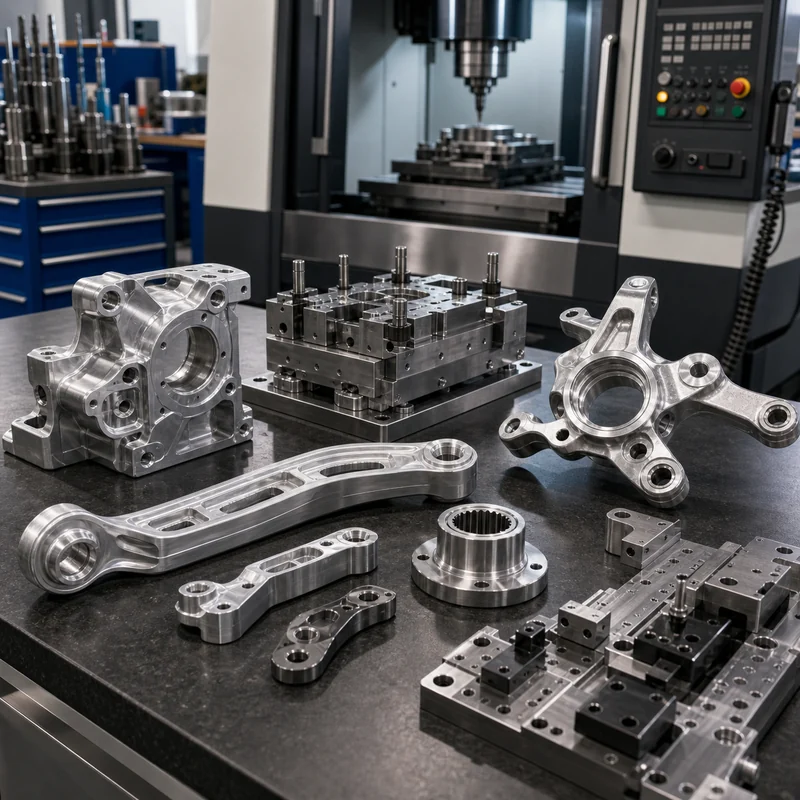
CNC machining is used for prototypes, test parts, brackets, adapters, housings, shafts, bushings, fixtures, and performance components.

Buyer Notes

For a smoother quote, prepare a 3D model, 2D drawing, target material, order quantity, surface finish, tolerance requirements, and any critical assembly information. Clear specifications reduce delays and help the supplier identify manufacturability risks early.

Materials

Aluminum, steel, stainless steel, brass, and engineering plastics are common depending on strength, weight, heat, and wear requirements.

Buyer Notes

For a smoother quote, prepare a 3D model, 2D drawing, target material, order quantity, surface finish, tolerance requirements, and any critical assembly information. Clear specifications reduce delays and help the supplier identify manufacturability risks early.

Prototype and Testing

CNC parts can be made from real material, which helps engineers test function before tooling or mass production.

Buyer Notes

For a smoother quote, prepare a 3D model, 2D drawing, target material, order quantity, surface finish, tolerance requirements, and any critical assembly information. Clear specifications reduce delays and help the supplier identify manufacturability risks early.

Buyer Tips

Confirm fit, tolerance, surface finish, heat treatment, thread requirements, and inspection method before ordering.

Buyer Notes

For a smoother quote, prepare a 3D model, 2D drawing, target material, order quantity, surface finish, tolerance requirements, and any critical assembly information. Clear specifications reduce delays and help the supplier identify manufacturability risks early.

FAQ

Is CNC machining used for automotive parts?

For CNC machining automotive parts, the right answer depends on part geometry, material, tolerance, surface finish, quantity, and end-use requirements. A complete RFQ helps the supplier give a useful recommendation.

What automotive parts can be CNC machined?

For CNC machining automotive parts, the right answer depends on part geometry, material, tolerance, surface finish, quantity, and end-use requirements. A complete RFQ helps the supplier give a useful recommendation.

Can CNC machining make custom car parts?

For CNC machining automotive parts, the right answer depends on part geometry, material, tolerance, surface finish, quantity, and end-use requirements. A complete RFQ helps the supplier give a useful recommendation.

Is CNC machining good for automotive prototypes?

For CNC machining automotive parts, the right answer depends on part geometry, material, tolerance, surface finish, quantity, and end-use requirements. A complete RFQ helps the supplier give a useful recommendation.

Practical Checklist Before Ordering

  • Confirm material grade, dimensions, tolerance, and surface finish.
  • Share both 3D files and 2D drawings when possible.
  • Identify critical features that affect fit, sealing, strength, or assembly.
  • Ask about sample lead time, MOQ, inspection reports, and packaging.
  • Compare quotes by specification, not only by unit price.

Conclusion

A good CNC machining decision balances design, material, tolerance, cost, lead time, and supplier capability. Buyers who prepare complete files and ask the right technical questions usually receive more accurate quotes, better parts, and fewer production surprises.
Categories
Industries & Applications

Unlock Precision: 5 CNC Machining Automotive Parts Secrets

Ever wondered how modern cars achieve such incredible performance and reliability? A lot of the credit goes to precision manufacturing. In this friendly guide, we’ll uncover five key secrets behind using CNC machining for automotive parts that can transform your understanding of vehicle quality and durability.

Optimizing Performance with CNC Machined Automotive Components

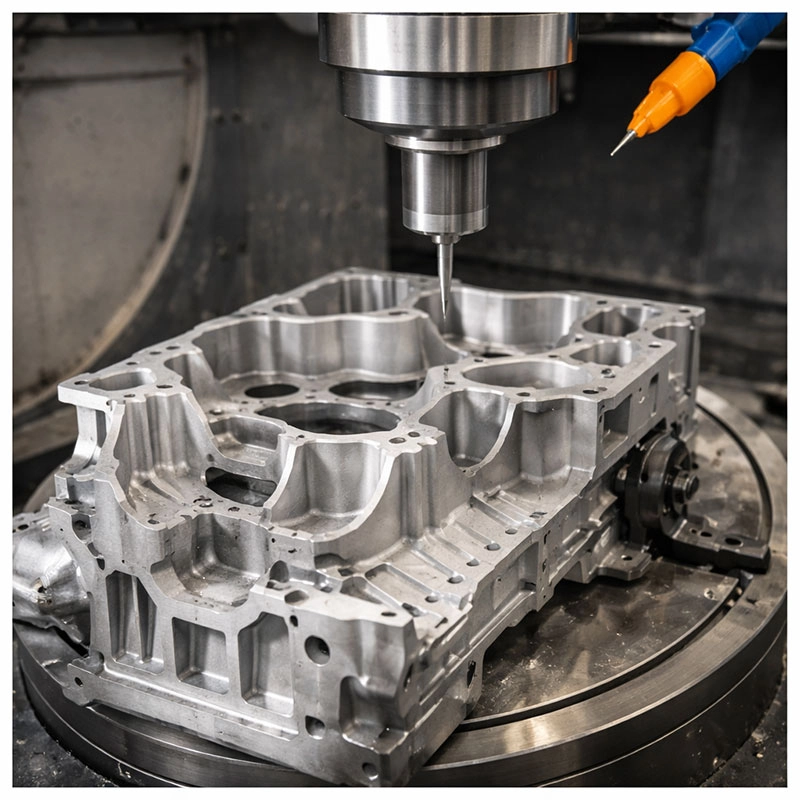
When we talk about high-performance vehicles, whether it’s a track-day special or a reliable daily driver, the quality of its components is non-negotiable. This is where CNC machining for car parts truly shines. Think of it as the difference between a hand-me-down tool and a custom-made, perfectly balanced one. By using computer-controlled precision, manufacturers can create engine blocks, transmission housings, and suspension components that fit together flawlessly. This level of accuracy in automotive component manufacturing directly translates to less vibration, reduced wear, and ultimately, a smoother, more powerful ride. It’s not just about making a part; it’s about crafting a piece of a perfectly synchronized machine.

The Secret is in the Material

Choosing the right material is the first and most crucial step. It’s like picking the right flour for a cake—the end result depends on it. While aluminum and steel are common, the secret lies in selecting the specific alloy for the job. For instance, a 6061-T6 aluminum might be perfect for a lightweight bracket, but a high-strength 7075 alloy is better for a critical suspension knuckle. For engine components facing extreme heat, materials like pre-hardened steel or specialized alloys are often the go-to choice in precision automotive machining. The right material ensures the part can handle stress, heat, and wear, which is fundamental for both safety and longevity.

Beyond Aluminum and Steel

Don’t limit your thinking! The world of CNC auto parts includes advanced materials like titanium for ultra-strong, lightweight connections, or engineering plastics like PEEK for specific insulators and bushings. Each material behaves differently during the machining process, requiring specific tooling and strategies. A good machinist doesn’t just cut metal; they understand how each material “feels” and reacts, ensuring a perfect result every time.

Why Tolerances Aren’t Just Numbers

You might hear machinists talk about tolerances like ±0.001 inches and wonder what the big deal is. Let me put it this way: imagine building a puzzle where every piece is just a hair too big. It would never fit smoothly. In an engine, such a tiny gap could mean lost compression, oil leaks, or premature failure. Tight tolerances in CNC machined automotive components ensure parts are interchangeable, assemblies are quiet, and systems are efficient. Achieving these microscopic levels of precision consistently is what separates hobbyist work from professional, reliable automotive parts production.

The Hidden Power of Surface Finish

A part might be dimensionally perfect, but if its surface is rough, it’s asking for trouble. Surface finish, measured in Ra (roughness average), is a silent hero. A smoother finish on a cylinder wall reduces friction, improving horsepower and fuel economy. On a sealing surface, it prevents leaks. When you’re looking for custom automotive machining services, asking about their capability for specific surface finishes is a smart move. It’s an often-overlooked detail that has a massive impact on performance and durability.

Designing for Manufacturability (DFM)

Here’s a secret straight from the shop floor: a part designed *with* the machining process in mind is always cheaper, faster, and better to produce. This is called Design for Manufacturability. For example, designing internal corners with a radius instead of a sharp 90-degree angle allows standard cutting tools to be used. Specifying realistic wall thicknesses prevents tool deflection and vibration. By collaborating with your CNC parts supplier early in the design phase, you can avoid headaches and extra cost. It turns a complex design for a performance car part into an efficient, reliable reality.

Simple DFM Tips for Better Parts

Keep these in mind: Use standard hole sizes when possible. Avoid excessively deep pockets that require special long-reach tools. Add slight drafts (tapers) to vertical walls to make parts easier to remove from fixtures. These small considerations make the machining of vehicle components smoother and more cost-effective for everyone involved. For more on industry-standard practices, you can review resources from authoritative bodies like the Society of Manufacturing Engineers.

The Final Touch: Post-Processing

The part coming off the CNC machine is rarely the final product. This is where post-processing—the fifth secret—adds the final layer of performance and protection. Processes like heat treatment (annealing, tempering) can dramatically increase a part’s strength. Anodizing or powder coating adds corrosion resistance and a great look. For moving parts, treatments like tumbling or vibratory finishing deburr and smooth edges, reducing stress points. Never underestimate this stage; it’s what turns a raw machined piece into a durable, finished automotive component ready for the road.

So, there you have it! The journey of creating top-tier CNC machined auto parts is a blend of science, art, and meticulous attention to detail—from material science and microscopic measurements to smart design and protective finishes. By understanding these five areas, you’re better equipped to appreciate the engineering in your vehicle or to communicate effectively on your next custom project. Here’s to building something amazing!

Request A Quote

We'll Send You Back with Price Immediately!

DEC 1-31

XMAS SPECEIL

Up to

40% off

Unlock Precision: 5 CNC Machining Automotive Parts Secrets

We'll Send You Back with Price Immediately!