

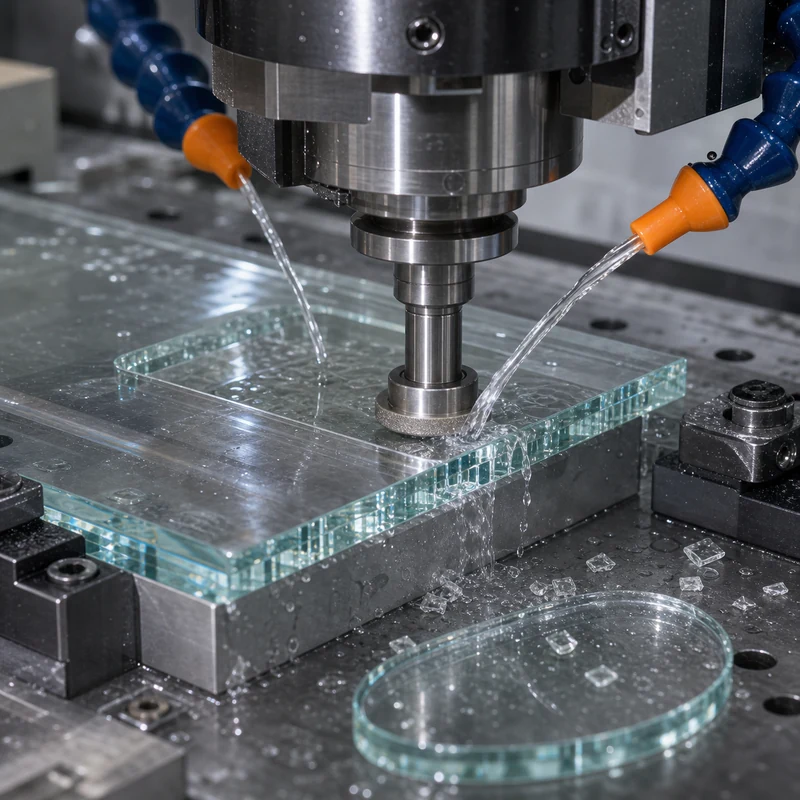
Glass CNC machining is the controlled cutting, drilling, grinding, or shaping of glass with computer-controlled equipment. Unlike aluminum or steel, glass is brittle and can crack if the tool, coolant, speed, fixture, or edge design is wrong. That makes process planning especially important.
Glass components appear in optics, displays, laboratory equipment, electronics, sensors, and decorative industrial products. When a project includes both glass and machined metal parts, MTSPi can help coordinate CNC machining services and assembly-oriented design feedback.
What Makes Glass Different From Metal
Metal usually deforms before it breaks; glass does not. Cutting forces can create microcracks that grow later during handling or assembly. Heat can also stress the material. For this reason, glass machining normally uses diamond tooling, controlled feeds, steady coolant, and careful support.
- Avoid sharp internal corners where cracks can start.
- Use generous edge radii or chamfers when possible.
- Keep thin walls and narrow slots realistic for the glass thickness.
- Specify edge finish requirements if the part will be visible or sealed.
Common Glass CNC Operations
| Operation | Purpose | Key Concern |
|---|---|---|
| Cutting and profiling | Create outside shapes or panels | Edge chipping and dimensional control |
| Drilling | Create mounting or fluid holes | Breakout on exit side |
| Grinding | Improve edge quality and size | Heat, feed rate, and wheel condition |
| Pocketing or recessing | Add shallow features | Crack prevention and support |
| Polishing | Improve optical or cosmetic finish | Time and cost increase |
Design Tips for Better Results
Designers should treat glass as a precision brittle material, not just a transparent sheet. Keep hole spacing away from edges, choose thickness that can survive handling, and avoid combining deep slots with sharp corners. If a part will be clamped, gasketed, or bonded, identify the contact zones on the drawing.
Material and Process Considerations
Different glass types behave differently. Soda-lime glass, borosilicate glass, quartz, and optical glass each require different tooling and parameters. When glass parts mate with metal housings, check tolerance stack-up carefully. Metal features may be produced by milling or turning, while glass may need looser allowances to prevent stress during assembly.
Inspection and Handling
Glass parts should be inspected for chips, cracks, edge quality, hole position, and thickness. Clean handling matters because small edge damage can turn into a later fracture. Packaging should prevent part-to-part contact, especially for polished or coated surfaces.
Related MTSPi Resources
FAQ
Can glass be CNC machined accurately?
Yes, but achievable tolerance depends on glass type, thickness, feature geometry, and edge finish requirements.
Why does glass chip during machining?
Chipping usually comes from brittle fracture, excessive force, poor support, or unsuitable tooling.
Can threaded holes be machined in glass?
It is generally risky. Inserts, bonded hardware, or through holes with fasteners are often safer design choices.