

Ever wondered what the different kinds of CNC machines are? You’re in the right place! This guide will walk you through the seven most common types of CNC equipment, explaining what each one does best and how they’re used in modern manufacturing. Think of it as your friendly introduction to the world of automated machining.
CNC Milling Machines
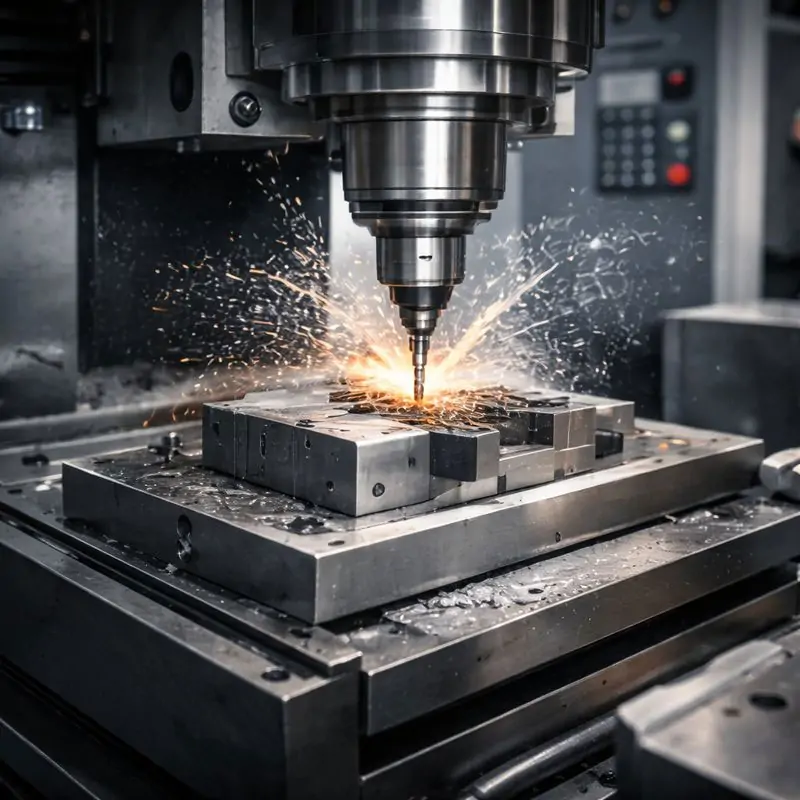
Let’s start with one of the most versatile players in the shop: the CNC mill. If you’re asking yourself, “what are the main categories of CNC equipment?”, this is a fantastic place to begin. Imagine a super-precise, computer-controlled drill that can move in multiple directions. That’s essentially a milling machine. It uses rotating cutting tools to remove material from a stationary workpiece, carving out complex shapes, slots, and holes. From creating engine blocks to intricate mold cavities, the CNC milling machine is a true workhorse. For a deeper dive into their history and mechanics, you can check out this resource from Modern Machine Shop.
Vertical Machining Centers (VMC)
A very popular subtype is the Vertical Machining Center, or VMC. Here, the spindle (the part that holds the cutting tool) is oriented vertically. It’s like the standard setup you might picture in a machine shop. VMCs are fantastic for detailed work on the top and sides of a part, making them a go-to choice for a huge range of CNC machining applications.
CNC Lathes
Now, let’s talk about the classic: the CNC lathe, often called a turning center. This machine flips the script. Here, the workpiece spins at high speed, and a stationary cutting tool is brought into contact with it to shave off material. This process, known as turning, is perfect for creating cylindrical or conical parts. Think shafts, bushings, and baseball bats. If you need something round and symmetrical, a lathe is your best friend. It answers the common query about different kinds of CNC lathes and their uses beautifully.
CNC Plasma Cutters
Need to slice through thick metal sheets like butter? Enter the CNC plasma cutter. This machine uses a superheated jet of ionized gas—plasma—to melt through conductive materials. It’s incredibly fast for cutting large shapes out of steel, aluminum, or stainless steel plates. While the edge might not be as smooth as a laser’s cut, it’s a cost-effective powerhouse for fabrication shops, sign making, and industrial construction. It’s a key answer when exploring types of CNC cutting machines.
CNC Laser Cutters
For precision and a clean, finished edge, the CNC laser cutter is a marvel. It focuses a high-powered laser beam to vaporize material, leaving an incredibly precise and smooth cut. They’re not just for metal; they can cut acrylic, wood, fabric, and more. The level of detail is astounding, making them ideal for intricate decorative pieces, precise mechanical parts, and prototyping. If you’re looking into CNC machine varieties for detailed work, the laser cutter is a top contender.
CNC Routers
You might have heard of these in a woodworking context, and that’s where they shine! A CNC router looks similar to a large milling machine but is typically designed for softer materials like wood, plastics, composites, and non-ferrous metals. They have a large working area (like a table) and are the stars behind custom furniture, ornate door carvings, sign-making, and even parts for musical instruments. They bring digital designs to life in the workshop, perfectly suited for list of CNC machines for woodworking and signage.
CNC Electrical Discharge Machines (EDM)
This one feels a bit like magic. Electrical Discharge Machining, or EDM, uses controlled electrical sparks to erode material. The workpiece and the electrode (tool) never actually touch! This allows it to cut incredibly hard metals and create complex shapes that would be impossible with a traditional cutting tool. There are two main EDM machine types: Wire EDM, which uses a thin wire to cut through like a cheese wire, and Sinker EDM, which uses a shaped electrode to create molds or cavities. It’s a specialist’s tool for ultra-precise, tough jobs.
CNC Grinders
Finally, for the finest finish and the tightest tolerances, we have CNC grinders. While milling and turning remove chunks of material, grinding uses an abrasive wheel to shave off tiny amounts. This achieves a super-smooth surface finish and dimensional accuracy measured in microns. They are essential for finishing precision components like bearing races, tooling, and parts that need to fit together with zero gap. When the question is about CNC equipment classifications for finishing, the grinder is the ultimate answer.
How to Choose the Right CNC Machine for Your Project
So, with all these options, how do you pick? Here’s a simple way to think about it. First, consider your material. Routing wood? Go for a CNC router. Slicing steel plate? Look at plasma or laser. Second, think about the shape. Round parts? A lathe. Complex 3D shapes? A milling machine. Finally, consider precision and finish. Need a mirror-like surface? You might start with a mill and finish with a grinder. My advice is to always start with the final part in mind and work backwards to find the machine that creates it most efficiently.
Clearing Up Common Misconceptions
I often hear a couple of myths that are worth addressing. One is that “CNC machines are only for giant factories.” Not true at all! With the rise of desktop CNC routers and small-format mills, hobbyists and small businesses are using this technology every day. Another is that “one CNC machine can do everything.” While a versatile 5-axis mill comes close, each type we discussed has its superpower. A lathe won’t efficiently cut a flat sheet, and a plasma cutter won’t turn a perfect sphere. Understanding their specializations is key to unlocking their potential.
And there you have it! We’ve explored the seven essential types of CNC machines, from the subtractive power of mills and lathes to the thermal precision of lasers and plasma. Each one is a specialized tool in the modern maker’s digital toolbox. Whether you’re a seasoned engineer or just curious about how things are made, I hope this friendly breakdown helps you see the amazing variety and capability behind computer-controlled manufacturing. Now you know not just what they are, but what each one is perfect for!