

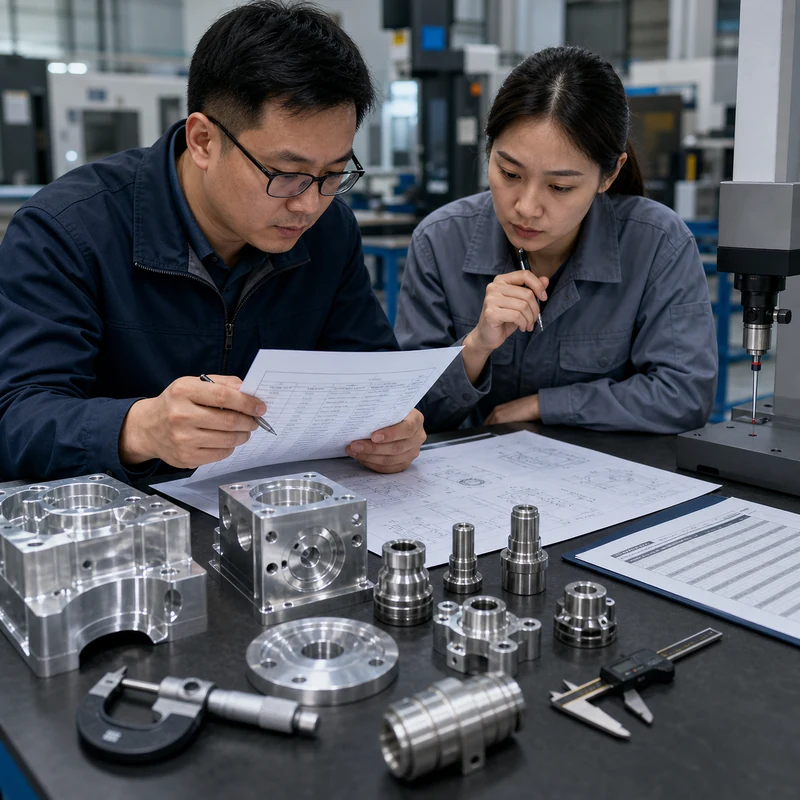
A CNC supplier audit is the practical bridge between a promising quotation and dependable production. Instead of judging a machine shop only by sample photos or unit price, engineers and sourcing teams should verify whether the supplier can repeatedly meet drawing requirements, manage material risk, document inspection results, and communicate clearly when something changes.
MTSPi supports prototype and production programs through CNC machining services, including milling, turning, 5-axis work, finishing coordination, and documented inspection. The checklist below is written as a reusable audit framework that buyers can apply when qualifying any machining partner for new work.
Supplier Audit Snapshot
Start with a short cross-functional review before going deep into drawings or pricing. A first-pass audit should tell you whether the supplier deserves a technical follow-up, an on-site visit, or a pilot order.
| Audit Area | What You Need to Confirm | Why It Matters |
|---|---|---|
| Process fit | The available machines and setups match your part geometry | Capability gaps create rework, outsourcing, and lead-time risk |
| Quality system | Incoming, in-process, and final inspection are defined | Repeatable quality needs more than a final measurement |
| Material control | Traceability, certificates, and storage practices are in place | Wrong or mixed material can invalidate the whole build |
| Engineering support | The supplier can review manufacturability and tolerance drivers | Early DFM feedback reduces avoidable cost and scrap |
| Production control | Capacity, scheduling, tooling, and revision control are visible | A good sample does not guarantee stable repeat production |
| Communication | Technical questions, updates, and escalation paths are clear | Most schedule slips start as communication failures |
1. Verify Process Capability Against the Actual Part
An audit should begin with the part family you want to buy, not with a generic machine list. A supplier may own advanced equipment but still be a weak fit for thin-wall enclosures, tight-runout shafts, or multi-face brackets that need accurate datum transfer.
| Part Type | Capability to Look For | Audit Question |
|---|---|---|
| Prismatic plates and housings | 3-axis or indexed 4-axis milling | How are flatness, hole position, and burr control checked? |
| Multi-side complex features | 4-axis or 5-axis machining | How is setup error reduced across multiple faces? |
| Rotational parts | CNC turning, mill-turn, or Swiss machining | How are concentricity, runout, and thread quality controlled? |
| Deep cavities or difficult access | Long-reach tooling strategy and simulation | What risks exist for chatter, deflection, or tool collision? |
| Larger structural parts | Large-travel machining and inspection access | How are clamping distortion and thermal movement handled? |
If the project may move between process types, a supplier that can combine CNC milling, CNC turning, and 5-axis CNC machining under one workflow usually reduces handoff risk.
2. Audit Inspection Planning, Not Just Inspection Tools
Buyers often ask whether a supplier has a CMM, but that question alone is too shallow. A strong audit checks how the inspection plan is built, where critical dimensions are verified, and how measurement data connects back to the drawing revision.
- Confirm incoming material inspection and lot identification.
- Ask which dimensions are checked in-process versus only at final inspection.
- Review whether first-article reports are available for new parts.
- Check how threads, cosmetic surfaces, and post-finish dimensions are verified.
- Ask how nonconforming parts are segregated and documented.
- Request a sample dimensional report for a part with similar complexity.
For high-precision work, inspection should align with the broader quality assurance workflow rather than functioning as a disconnected end-of-line step.
3. Confirm Material Traceability and Storage Discipline
Material mistakes are expensive because they often remain hidden until after machining, finishing, or assembly. The audit should therefore cover how raw stock is received, labeled, stored, and tied to the job traveler or inspection package.
| Material Group | What to Review | Common Failure Mode |
|---|---|---|
| Aluminum alloys | Grade callout, temper, and certificate retention | Incorrect alloy substituted for a cosmetic or structural part |
| Stainless steel | Heat traceability and separation from carbon steel | Contamination, wrong grade, or finishing mismatch |
| Titanium | Inventory segregation and machining history | Tool wear or heat issues not planned into the process |
| Engineering plastics | Moisture control, lot labeling, and storage method | Warping or dimensional drift after machining |
Material capability should also line up with the supplier’s practical experience. A broad CNC materials library is useful, but real project success depends on knowing how each grade behaves during machining, deburring, cleaning, and finishing.
4. Test Engineering Support With Real DFM Questions
A supplier audit becomes much more valuable when the reviewer probes the team’s engineering judgment. Good suppliers do not simply accept every note on the drawing without comment. They identify risk, explain tradeoffs clearly, and offer better routes when a requirement is expensive, unstable, or hard to inspect.
- Ask which tolerances are most likely to drive scrap or setup changes.
- Review sharp internal corners, thin walls, deep pockets, and long threads.
- Check whether finish requirements conflict with dimensional targets.
- Ask what design changes could reduce cost without weakening function.
- Confirm how revision changes are shared between engineering, quality, and production.
This matters most for prototypes and early production because design intent is still moving. A capable supplier helps the customer stabilize the part before avoidable cost gets locked into repeat orders.
5. Review Process Control for Repeat Production
A shop can sometimes make one acceptable sample through extra attention and manual adjustment. The harder question is whether the same result can be repeated on the next lot, the next operator, or the next machine. That is why process control belongs in every supplier audit.
| Control Area | What to Look For | Warning Sign |
|---|---|---|
| Programming | Revision-controlled CAM files and setup sheets | Program edits happen informally at the machine |
| Tool management | Defined tool life, offsets, and replacement practice | Critical tools are changed only after visible problems |
| Setup discipline | Repeatable fixturing and documented zeroing method | Knowledge depends on one operator only |
| Monitoring | Checks during production, not just after the lot finishes | No plan for drift, wear, or process instability |
| Packaging | Protection for edges, threads, cosmetic faces, and clean parts | Finished parts are packed like raw hardware |
6. Compare Capacity and Lead Time Realistically
Lead time should be broken into material purchasing, machining, outside finishing, inspection, and packing. Buyers should ask the supplier to explain where the schedule is flexible and where it is exposed to outside dependencies.
- Can prototype and repeat orders be scheduled differently?
- Which operations depend on outside finishing vendors?
- How are urgent jobs prioritized without disrupting committed orders?
- What happens when incoming material misses the requested date?
- How is capacity communicated if demand increases after approval?
A realistic answer is more useful than an aggressive promise. In supplier audits, vague optimism is usually a stronger risk signal than a slightly longer but clearly explained schedule.
7. Check Communication, Documentation, and Compliance
Communication quality during the audit often predicts communication quality during production. If technical answers are delayed, incomplete, or inconsistent before the order, the same pattern usually appears later when the project is under time pressure.
| Requirement | Why It May Matter | What to Request |
|---|---|---|
| ISO 9001 or similar quality system | Baseline quality management discipline | Current certificate and scope |
| Industry-specific controls | Aerospace, medical, or regulated sectors may require more | Relevant procedures or certifications |
| Material certificates | Confirms raw stock matches the drawing | Example cert package from a similar job |
| Inspection reports | Supports acceptance and downstream assembly | Sample FAIR or dimensional report |
| Revision tracking | Prevents outdated drawings from reaching production | How document changes are released internally |
Final Approval Checklist
| Decision Point | Approve When… | Hold When… |
|---|---|---|
| Capability fit | The process route matches the actual part family | The supplier is relying on unproven subcontracting |
| Quality evidence | Inspection planning and sample records are convincing | Only generic promises are provided |
| Material control | Traceability is documented and easy to follow | Material handling is informal or unclear |
| Engineering support | DFM feedback is specific and technically useful | Questions are answered only with sales language |
| Production readiness | Capacity, tooling, and scheduling are defined | The shop can make a sample but not explain repeat control |
| Commercial clarity | Quote assumptions, reports, and lead time are explicit | Key cost or schedule assumptions remain vague |
How MTSPi Supports Supplier Qualification
MTSPi works with buyers who need a machining partner that can discuss the technical details early, document the process clearly, and support prototype through repeat production. Projects may include complex milling, turned parts, 5-axis features, finishing coordination, and inspection reporting when required.
To review a new part, send the model, drawing, material, finish, quantity, and inspection scope through the MTSPi quote request.
Related MTSPi Resources
FAQ
What should a CNC supplier audit cover first?
Start with process fit, quality planning, material traceability, and engineering support. Those four areas reveal most early production risks.
Is a CMM enough to qualify a machining supplier?
No. The audit should also verify how measurements are planned, recorded, reviewed, and tied to the drawing revision and acceptance criteria.
Why is DFM feedback important during supplier qualification?
Because early feedback can reduce machining risk, remove unnecessary cost drivers, and prevent tolerance or finish requirements from conflicting during production.
When should a buyer reject a supplier after an audit?
Reject or pause approval when process capability is unclear, traceability is weak, technical answers are vague, or the supplier cannot explain how repeat production will stay in control.