

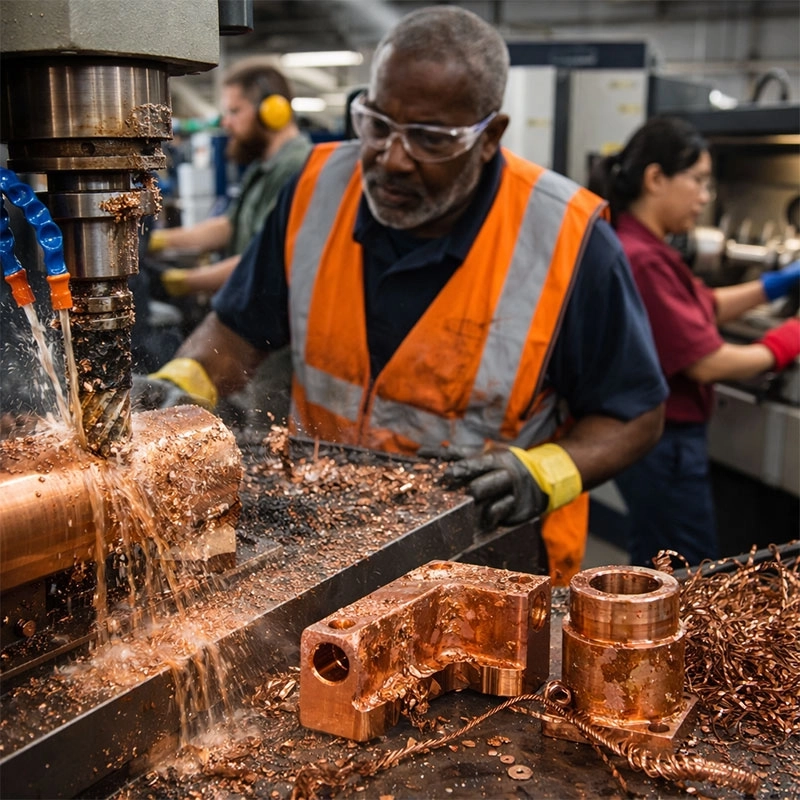
Machining hardened steel can be a real challenge, but with the right approach, it’s entirely manageable. This guide breaks down five expert strategies to help you achieve better surface finishes, extend tool life, and boost your productivity when working with this tough material.
Tip 1: Master Your Tool Selection
Think of your cutting tool as the star player on your team. When you’re machining hardened steel, you can’t just send anyone onto the field. The hardness of the workpiece, often above 45 HRC, demands a specialist. The most common question I get is, “Can I use carbide?” While premium micro-grain carbide can work for lighter cuts, for serious hard turning or hard milling operations, you need to look at the super-hard materials.
The Power of CBN and PCD
For steels hardened above about 50 HRC, Cubic Boron Nitride (CBN) inserts are often the go-to choice. They offer fantastic heat resistance and wear characteristics. For even higher hardness or when working with abrasive materials, Polycrystalline Diamond (PCD) tools might be the answer, though they are typically used for non-ferrous metals. The key is to choose a tool with a sharp, honed edge and a strong geometry to withstand the pressure. A blunt tool will just generate more heat and fail quickly. You can learn more about the properties of these advanced materials from authoritative sources like the ASM International website.
Tip 2: Dial in Your Speeds and Feeds
Getting your cutting parameters right is where the magic happens. A classic mistake is running the spindle too slow. It sounds counterintuitive, but with hardened materials, you often need a higher surface speed to create a shearing action rather than a rubbing one, which generates excessive heat. However, the feed rate needs to be conservative. We’re talking about light, consistent cuts here. A good starting point is to use a high speed with a low feed per tooth. This balance helps control cutting forces and directs heat into the chip, not your workpiece or tool. Remember, every machine and setup is different, so start with tool manufacturer recommendations and be prepared to tweak.
Tip 3: Prioritize Absolute Rigidity
This tip is non-negotiable. Machining high hardness steel amplifies any weakness in your setup. Any chatter or vibration will instantly destroy your tool’s edge and ruin the surface finish. So, how do we achieve this? First, minimize tool overhang as much as physically possible. Use the shortest, stoutest tool holder you can. Second, ensure your workpiece is clamped rock-solid. If you’re doing CNC machining of hardened components on a mill, consider using a vise with step jaws or custom fixtures. On a lathe, a collet chuck often provides better grip than a standard jaw chuck for small, hardened parts. A rigid setup is your best defense against unpredictable results.
Tip 4: Manage Heat with Coolant Strategy
Heat is the enemy when working with hardened steel. The wrong coolant approach can lead to thermal shock and micro-cracks. There are two main schools of thought, and both are valid. The first is a high-pressure, through-tool coolant system. This method effectively flushes chips away and cools the cut at the source. The second is dry machining or using an air blast. This avoids the rapid heating and cooling cycle that can damage the workpiece. If you use coolant, make sure it’s a high-quality synthetic or semi-synthetic type designed for heavy-duty operations. The goal is consistent temperature management, not wild fluctuations.
Tip 5: Optimize Your Tool Paths
Your CAM programming strategy makes a huge difference. Forget about old-school, full-depth radial cuts. For hard material machining, we want constant engagement and smooth tool movement. Techniques like trochoidal milling or peel milling are fantastic. They keep the tool moving in a circular, rolling path, which maintains a more consistent load and allows for better heat dissipation. When finishing, use a small stepover with a high speed to get that beautiful mirror-like surface. A well-planned tool path reduces stress on the tool, the machine, and the part, leading to longer tool life and superior accuracy. It’s worth spending extra time here to save headaches later.