

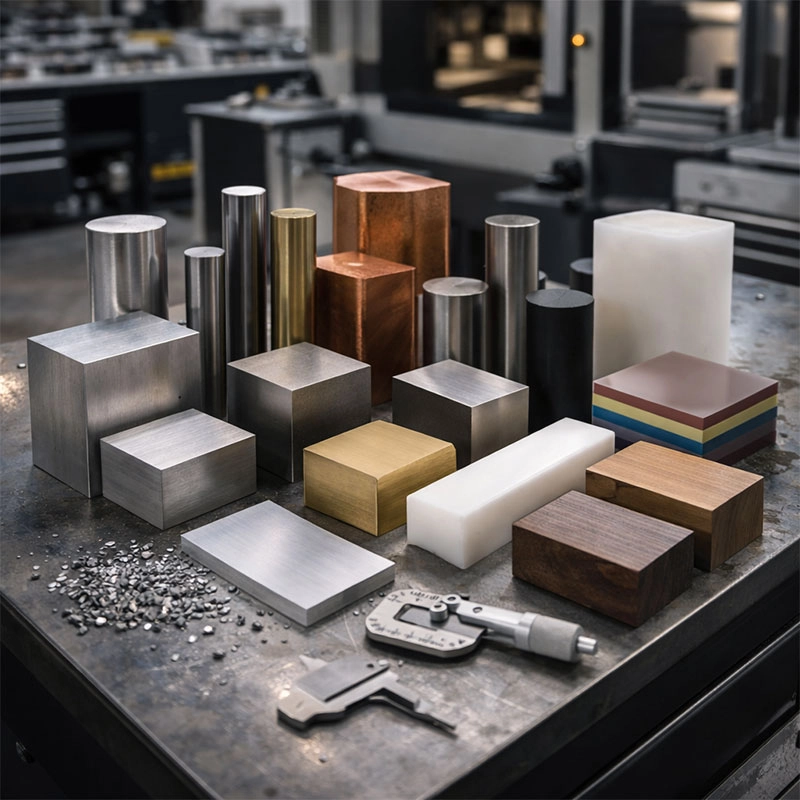
Choosing the right material is one of the most critical decisions in any CNC machining project. This guide will walk you through the essential materials list, from metals and plastics to more exotic options, explaining their properties, uses, and how to select the best one for your application. Think of it as your friendly workshop companion for material selection.
Why Your Material Choice is a Game-Changer
Hey there! Let’s talk about something fundamental. When you’re planning a project, whether it’s a custom bike part or a prototype for a new gadget, the CNC machining materials list you start with sets the stage for everything. It’s not just about what’s available; it’s about matching the material’s personality—its strength, weight, cost, and how it behaves under the tool—to your vision. Picking the wrong one can lead to parts that wear out too fast, cost too much, or simply don’t work. I like to think of it as choosing the right ingredient for a recipe. Get it right, and the final product is a masterpiece.
The Metal Machining Guide: From Common to Exotic
Metals are the backbone of many machined parts, prized for their strength and durability. Your CNC material selection guide isn’t complete without a deep dive into these workhorses. From the lightweight champion aluminum to the tough stalwart steel, each brings something unique to the table. Let’s break down the most common metals you’ll encounter and some you might consider for special jobs.
Aluminum Alloys: The Go-To Favorite
If you’re looking for a material that’s easy to machine, lightweight, and has good strength, aluminum alloys are often the first stop. Grades like 6061 and 7075 are superstars in the CNC metals list. 6061 is incredibly versatile and cost-effective, perfect for automotive parts, frames, and consumer goods. 7075, on the other hand, is much stronger (comparable to many steels) and is a top choice for aerospace components. You might find that for most general-purpose projects, starting with an aluminum alloy is a safe and smart bet.
Stainless Steel: For Strength & Shine
When you need corrosion resistance and serious strength, stainless steel enters the chat. It’s a key part of any comprehensive machining materials database. Grades like 304 (general purpose) and 316 (with even better corrosion resistance, great for marine environments) are widely used. Machining stainless can be tougher on tools than aluminum—it’s harder and generates more heat—but the result is a part that can withstand harsh conditions and look great doing it. Think medical instruments, food processing equipment, or architectural details.
Other Essential Metals
Your guide to CNC materials should also include these other key players. Mild Steel (like 1018) is inexpensive and easy to machine, ideal for non-critical structural parts. Titanium is the high-performance option: incredibly strong, lightweight, and biocompatible, but challenging and expensive to machine—common in medical implants and aerospace. Brass and Copper offer excellent electrical conductivity and machinability, making them perfect for electrical components and decorative fittings. Don’t forget Tool Steels (like D2 or A2), which are hardened for making, well, tools and dies themselves.
Plastics & Polymers: Lightweight & Versatile
Plastics aren’t just cheap substitutes; they’re engineering materials in their own right. A complete CNC machining materials list must cover plastics, which offer benefits metals can’t, like electrical insulation, transparency, and often lower cost. They’re generally easier on cutting tools, too. When you’re searching for the best plastics for CNC machining, you’ll typically split them into two camps: engineering-grade and commodity-grade.
Engineering Plastics
These are the high-performers. POM (Acetal/Delrin) is famously stiff, has low friction, and machines to a beautiful finish—great for gears and bearings. Nylon (PA) is tough, wear-resistant, and has good chemical resistance. Then there’s PEEK, a superstar polymer used in extreme environments (like inside an engine or the human body) due to its incredible thermal and chemical stability. While more expensive, these materials solve specific, demanding problems.
Common Plastics for Machining
For many projects, a standard plastic is all you need. ABS is that familiar, tough plastic used in LEGO bricks and car dashboards; it’s easy to machine and glue. Polycarbonate (PC) is virtually unbreakable and clear, perfect for protective shields or lenses. PVC is cheap and chemical-resistant, often used for pipes and fittings. And PMMA (Acrylic) gives you glass-like clarity and is wonderful for signs, displays, and light fixtures. When building your CNC stock materials list, these are reliable, readily available options.
How to Choose: Your Practical Selection Checklist
With so many options, how do you decide? Let’s make it practical. Instead of getting overwhelmed, run through this simple checklist. Ask yourself: What is the primary function of the part? Does it need to bear load (strength), move (wear resistance), or be exposed to weather (corrosion resistance)? Next, consider the operating environment—temperature, chemicals, moisture. Then, factor in budget and machinability; a cheaper material that’s hard to machine might end up costing more in labor. Finally, think about appearance and regulations (like FDA approval for food contact). I always recommend getting a small sample machined if you’re unsure—it’s the best way to test the real-world performance of your CNC raw material options.
Final Thoughts on Building Your Materials List
Creating your ultimate CNC machining materials list is less about memorizing every alloy and polymer and more about understanding the landscape. Start with the application, let that guide your property requirements, and then match it to the material family. Remember, fantastic resources exist to help. For deep technical data on metals, I often refer to the ASM International website. For plastics, the IDES Plastics Database is an incredible source for property sheets. Don’t be afraid to consult with your machine shop either—their experience is gold. With this guide in hand, you’re well-equipped to make informed choices and bring your best designs to life. Happy machining!