

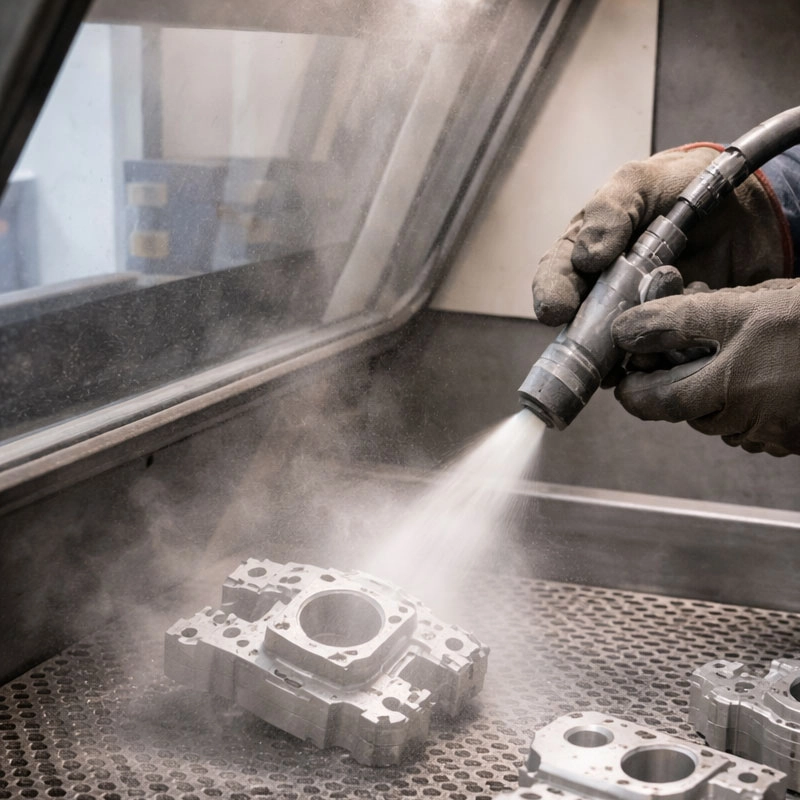
Achieving a flawless finish on your machined components often hinges on one crucial step: sandblasting. This guide explores how abrasive blasting transforms CNC parts, enhancing their appearance, durability, and performance. We’ll walk you through the process, benefits, and best practices to help you unlock superior results for your projects.
What Exactly is Sandblasting for CNC Parts?
Let’s start with the basics. When we talk about sandblasting CNC parts, we’re really describing a surface treatment process. Think of it as giving your precision-machined components a thorough, high-pressure shower—but instead of water, we use tiny abrasive particles. This technique, also known as abrasive blasting or media blasting, is a game-changer for finishing CNC machined components. It’s that essential final touch that takes a part from “functionally good” to “visually and technically excellent.
The Simple Science Behind the Blast
So, how does it work? Imagine you’re cleaning a dusty patio. A strong jet of air or water does a decent job. Now, imagine adding fine sand to that stream—it scrubs much more effectively. That’s the core idea! In a controlled cabinet or room, abrasive media is propelled at high velocity onto the surface of your CNC metal parts. This action meticulously cleans, textures, and prepares the metal. It’s perfect for tasks like deburring CNC parts or creating a uniform matte finish. The key is choosing the right media, from glass beads for a smooth, peened surface to aluminum oxide for aggressive cleaning.
Why You Should Consider Abrasive Blasting
You might wonder why this extra step is worth it. Well, the benefits go far beyond just looks. First, it’s the ultimate preparation. Any leftover oil, scale, or minor imperfection from the CNC milling or turning process is removed. This creates a perfectly clean, active surface that’s ready for the next stage, whether that’s painting, powder coating, or anodizing. Secondly, it can actually strengthen the part by inducing beneficial compressive stresses on the surface. Let’s break down two major advantages.
The Foundation for Perfect Coatings
If you’ve ever had paint chip or peel off a metal part, poor surface preparation was likely the culprit. Abrasive finishing for machined parts solves this by creating a microscopic “anchor profile” on the metal. This rough texture gives coatings something to grip onto mechanically, dramatically improving adhesion and longevity. It’s the unsung hero that ensures your beautiful powder coat doesn’t flake off after a year of use. For a deep dive on surface prep standards, the SSPC: The Society for Protective Coatings is an excellent resource.
More Than Just a Pretty Surface
While function is key, we can’t ignore form. Surface finishing for CNC components via blasting produces a consistent, attractive matte texture that hides minor tool marks and creates a professional, uniform appearance. It’s often the final touch for consumer products, architectural metalwork, or custom automotive parts. This process answers common search queries like how to finish CNC aluminum parts by providing a solution that is both practical and visually appealing.
Your Step-by-Step Guide to the Blasting Process
Ready to see how it’s done? The process for CNC part sandblasting services is quite logical. First, the parts are thoroughly cleaned to remove cutting fluids and grease—blasting over oil just spreads it around! Next, they are placed in a blast cabinet. The operator then selects the appropriate media and pressure. Using a nozzle, they direct the abrasive stream evenly across the part’s surface, often holding it at different angles to ensure complete coverage. After blasting, the parts are cleaned again to remove any residual media dust. Finally, they are often treated immediately with a rust inhibitor or sent directly for coating. The entire post processing CNC parts workflow is designed to protect that freshly prepared surface.
Pitfalls to Avoid for a Perfect Finish
Even with a great process, things can go sideways. A common mistake is using too high a pressure or the wrong abrasive type. For instance, using a coarse, angular media on soft aluminum can actually distort thin features or change critical dimensions—something you never want after precise CNC machining. Another pitfall is inconsistent movement, leading to an uneven, blotchy texture. And perhaps the biggest error is delaying the next step. A freshly blasted surface is highly reactive and can begin to oxidize (rust) quickly, especially with steel. The golden rule? Have your coating or protection process lined up right after blasting. For authoritative information on material compatibility and standards, check out ASTM International.
Bringing It All Together
So, what’s the secret to perfectly finished sandblasted machine parts? It’s understanding that this isn’t just a cosmetic add-on, but a critical engineering step that bridges manufacturing and final application. It combines careful preparation, the right choice of abrasive media, and a controlled, consistent technique. By integrating abrasive blasting of machined parts thoughtfully into your project workflow, you significantly boost the quality, durability, and appearance of your components. It’s the definitive answer for achieving a professional, durable finish that truly does justice to the precision of your CNC work.