

Categories
CNC Milling & Turning

What Is 4-Axis CNC Machining? A Beginner’s Friendly Guide

Welcome to the world of 4-axis CNC machining! If you’re curious about what sets it apart from the more common 3-axis machines, you’re in the right place. This guide will walk you through the basics, explain why it’s so useful, and show you how it opens up new possibilities for creating complex parts with incredible precision.

Understanding 4-Axis CNC Machining

Let’s start with the basics. You might already be familiar with 3-axis CNC milling, where the cutting tool moves along the X, Y, and Z axes. 4-axis CNC machining adds a whole new dimension to this—literally. It introduces a rotational movement, typically around the X-axis, which we call the A-axis. This means the workpiece can spin while the tool cuts, allowing access to multiple sides without manually repositioning it. Think of it like a potter’s wheel for metal and plastic; the part rotates, and the tool can work on its circumference with amazing accuracy.

The Fourth Axis Explained

This rotational capability is the game-changer. In technical terms, this is often referred to as indexing or continuous 4th axis machining. In indexing mode, the machine rotates the part to a fixed position, locks it, and then makes cuts—perfect for drilling holes on a cylinder. In continuous mode, the rotation and cutting happen simultaneously, which is essential for machining complex contours like camshafts or helical gears. It’s this flexibility that answers the common search query, how does 4 axis CNC work.

The Value of 4-Axis Machining

So, why would you choose a 4 axis mill over a standard 3-axis one? The benefits are pretty compelling. First, it dramatically improves accuracy for complex parts. Since the part is set up once, you eliminate the cumulative errors that can creep in from multiple manual re-fixturings. Second, it’s a huge time-saver. Machining multiple sides in one operation slashes production time. Imagine making a custom automotive manifold or a detailed aerospace bracket; what used to take several setups now happens in one smooth, automated process. This efficiency is a major reason shops invest in CNC milling with 4th axis capabilities.

Getting Started: Practical Advice

If you’re considering 4-axis CNC milling for a project, here’s some friendly advice. It’s not always the default choice, but for the right job, it’s unbeatable.

When to Use 4-Axis Machining

We suggest you look at 4-axis technology when your part has features on multiple sides or involves curved, cylindrical geometries. Common applications include machining cylindrical cams, engraving around a cylinder, or creating precision parts with angled features. If you find yourself constantly flipping a part in a 3-axis vise, it’s a strong signal that a 4 axis CNC machine could streamline your workflow. For a deeper dive into multi-axis strategies, the engineering.com resource library has some excellent, beginner-friendly articles.

Key Considerations for Beginners

The jump from 3-axis to 4-axis involves more than just hardware. Your CAM (Computer-Aided Manufacturing) software needs to support the extra axis for toolpath generation. Also, workholding becomes crucial—you need a reliable rotary table or indexer to secure the part while it spins. Don’t worry, though; many modern machines and software packages are designed with this integration in mind, making the learning curve much friendlier than you might think.

Clearing Up Common Misconceptions

Let’s tackle a few myths head-on. A big one is that 4-axis CNC machining is just for ultra-complex, expensive aerospace parts. Not true! Many small job shops use it for more accessible products like custom furniture details, musical instrument components, or specialized prototypes. Another misconception is that it completely replaces 3-axis machines. In reality, they often work together. A 3-axis machine might rough out a part, which then goes to the 4-axis for finishing intricate details. It’s about choosing the right tool for the job.

Wrapping Up: Is 4-Axis Right for You?

In summary, 4-axis CNC machining is a powerful step up that adds rotational movement to create more complex parts with greater efficiency and precision. It’s the ideal solution for parts requiring work on multiple faces or cylindrical contours. While it requires an understanding of new programming and setup techniques, the payoff in capability and time savings is immense. Whether you’re exploring what is multi axis machining or considering an upgrade, this technology opens a door to a wider range of creative and technical possibilities in modern manufacturing.
Categories
CNC Milling & Turning

What Is CNC Turning Service? Your Friendly Guide to Precision Machining

Ever wondered how those perfectly round, intricate metal parts in machines are made? That’s often the magic of CNC turning. This guide breaks down this essential precision machining service in a friendly, easy-to-understand way, explaining how it works, why it’s so valuable, and how you can use it for your projects.

Understanding CNC Turning: A Key Precision Machining Process

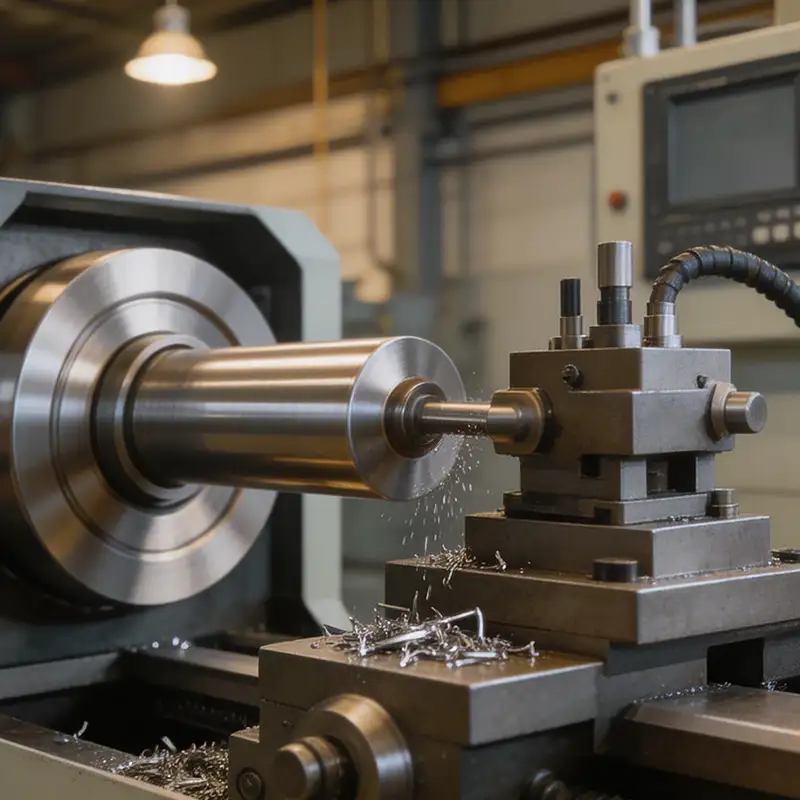
Let’s start with the basics. Imagine a piece of material, like a metal rod, spinning at high speed. Now, imagine a sharp, stationary cutting tool being carefully moved against it, shaving away layers to create a specific shape. That’s the heart of CNC turning in a nutshell! It’s a form of subtractive manufacturing where the workpiece rotates, and the tool does the cutting. The “CNC” part stands for Computer Numerical Control, which means a computer program guides every single movement of the machine with incredible accuracy. This process is also commonly referred to as lathe machining or simply turning. So, when you ask “what is a CNC turning service?”, you’re asking about a shop that uses these computer-controlled lathes to create cylindrical parts from your designs.

Why Use a CNC Turning Service? The Core Benefits

You might be thinking, “Couldn’t I just use a manual lathe?” Well, you could, but partnering with a professional CNC turning company unlocks a world of advantages that manual work simply can’t match consistently. It’s like having a master craftsman who never gets tired and makes zero calculation errors.

Unmatched Precision and Repeatability

This is the superstar benefit. Because a computer follows the digital instructions (called G-code), every cut is exact. Need 10, 100, or 10,000 identical parts? A CNC lathe service will produce part #10,000 that is virtually indistinguishable from part #1. This level of consistency is crucial for industries like aerospace, medical devices, and automotive, where a tiny variance can cause big problems. The precision achievable is often within thousandths of an inch (or hundredths of a millimeter).

Incredible Material Versatility

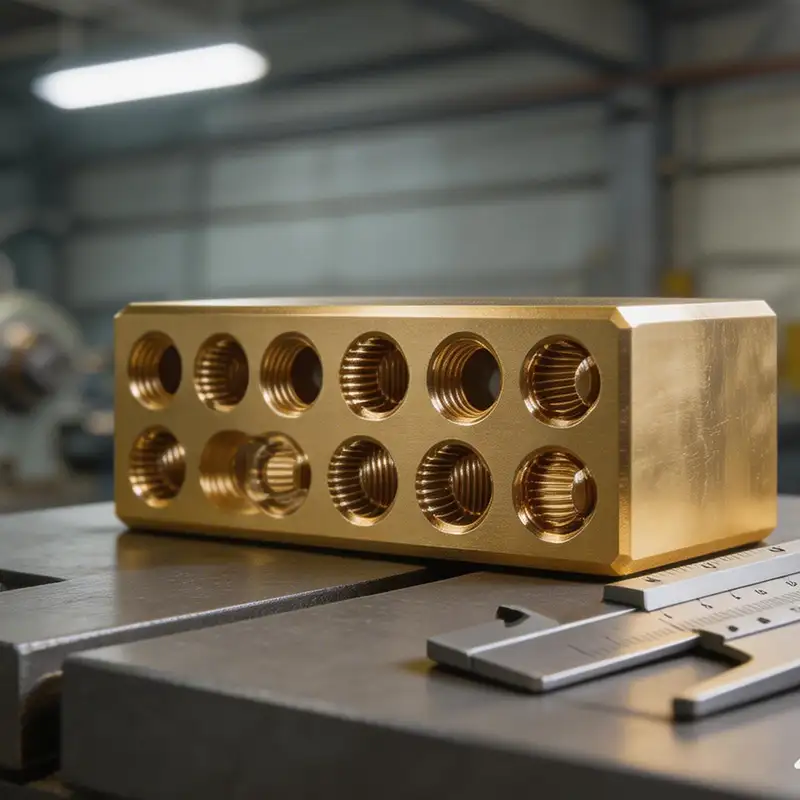
Whether you’re working with aluminum, stainless steel, brass, titanium, or even tough plastics like PEEK, a good precision turning service can handle it. Different materials require different cutting speeds, tools, and approaches, and professional machinists have the expertise to select the right parameters for each job. This versatility makes it a fantastic solution for prototyping and production across countless applications.

How to Get Started with a Lathe Machining Service

Ready to turn your idea into a tangible part? The process is more straightforward than you might think. Here’s a friendly, step-by-step approach to engaging with a CNC turning shop.

Step 1: Preparing Your Design

It all starts with a good design. You’ll need to create a 3D CAD (Computer-Aided Design) model and a 2D drawing with critical dimensions and tolerances. Don’t worry if you’re not a CAD expert—many shops offer design assistance. The key is to think about how to design for CNC turning: avoid overly complex internal features that are hard to reach with a tool, and consider the starting size of your raw material. Providing clear files is the best way to get an accurate quote and a perfect part.

Step 2: Choosing the Right Machining Partner

Not all shops are the same. Look for one with experience in your specific industry or part type. Check their capabilities—do they have multi-axis turning centers for complex parts? Can they provide secondary services like milling or finishing? Reading reviews and asking for examples of past work (like a CNC turned parts portfolio) can give you great insight. A good partner will communicate clearly, ask questions about your application, and guide you through material selection and design optimization. For authoritative information on machining standards, you can refer to resources like the American Society of Mechanical Engineers (ASME).

Clearing Up Common Misconceptions About Turning

Let’s tackle a few myths head-on! A common one is that CNC turning and milling are the same thing.” They’re actually complementary brothers in the machining world. Turning rotates the workpiece; milling typically moves a rotating tool around a stationary workpiece. They create different types of geometries. Another misconception is that it’s only for huge production runs. Not true! Many shops excel at low-volume and prototype CNC turning, making it accessible for inventors and small businesses. Finally, some think it’s prohibitively expensive. While there are costs for setup and programming, the efficiency and material savings often make it cost-effective, especially when you factor in the reduced scrap and labor compared to manual methods.

Wrapping Up: Is CNC Turning Right for You?

So, is a CNC turning service the solution for your project? If you need cylindrical, conical, or radially symmetric parts made from metal or plastic with high precision and consistency, the answer is very likely yes. From simple shafts and bushings to complex fittings and connectors, rotational machining is a foundational manufacturing process. My best advice? Start a conversation with a reputable shop. Share your goals and challenges—a good machinist will be your ally in figuring out the best path forward to bring your precise component to life.

Categories
CNC Milling & Turning

What Is CNC Milling Service? A Beginner’s Friendly Guide

Ever wondered how complex metal or plastic parts are made with such incredible precision? That’s often the magic of CNC milling. This guide breaks down what a CNC milling service is, how it works, and why it’s a cornerstone of modern manufacturing, all in simple, friendly terms.

Understanding CNC Milling Services

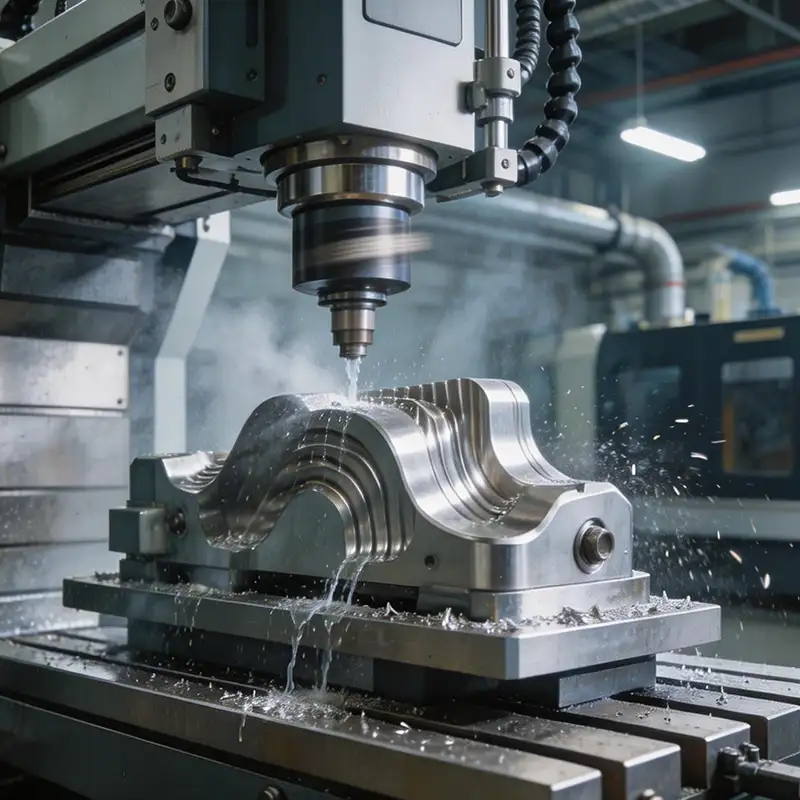
Let’s start with the basics. CNC stands for Computer Numerical Control. So, a CNC milling service is a manufacturing process where a computer directs a cutting tool to carve material away from a solid block. Think of it like a super-precise, automated sculptor that can follow digital instructions to the letter. This process is a core part of subtractive manufacturing, where you start with more material and remove what you don’t need. It’s different from 3D printing (additive manufacturing), which builds parts layer by layer.

How Does a CNC Milling Machine Work?

It all begins with a digital blueprint, usually a 3D CAD (Computer-Aided Design) file. This design is translated into a set of instructions called G-code, which tells the CNC mill exactly where to move, how fast to spin the cutter, and how deep to cut. The machine then uses rotating cutting tools to shave off material—be it aluminum, steel, plastic, or even wood—with incredible accuracy. The result? Highly repeatable, complex parts that would be very difficult or time-consuming to make by hand.

The Value of Using a CNC Milling Service

You might be asking, “Why should I consider precision machining for my project?” The benefits are pretty compelling. First and foremost is precision and consistency. Once the program is set, a CNC machining service can produce the first part and the thousandth part virtually identical. This is crucial for industries like aerospace or medical devices. It also allows for incredible complexity—think intricate geometries, internal channels, and fine details. While the initial setup has a cost, for medium to high production runs, it becomes very cost-effective and fast. Plus, it works with a huge range of materials, giving you tons of flexibility.

Getting Started with CNC Machining

Ready to turn your idea into a physical part? The process is more collaborative than you might think. A good milling service provider will guide you through it. Here’s a friendly overview of what to expect.

Preparing Your Design Files

This is your most important step. You’ll need to provide a 3D model. Common file formats include STEP and IGES, which are great for conveying the complete geometry. The service’s engineers will then use CAM (Computer-Aided Manufacturing) software to plan the toolpaths—essentially, creating the roadmap for the machine. A pro tip? Design with manufacturability in mind. Avoiding overly sharp internal corners and considering how the tool will access all surfaces can save time and cost. Resources like the ASME Digital Collection offer great insights into design for manufacturability principles.

Choosing the Right Material

The material you choose impacts strength, weight, appearance, and cost. For prototypes, machinable plastics like ABS or Delrin are popular and cost-friendly. For final metal parts, aluminum 6061 is a fantastic all-rounder—it’s strong, lightweight, and easy to machine. For higher strength needs, you might look at steel or titanium. Your machining partner can help you weigh the options based on your part’s function and budget.

Clearing Up Common Misconceptions

Let’s tackle a few myths head-on. A big one is that CNC milling is only for giant corporations. Not true! Many machine shops cater to startups, engineers, and even hobbyists needing one-off prototypes or small batches. Another is that it’s always prohibitively expensive. While not cheap for a single simple bracket, the value for complex, precise, or multiple parts is often unbeatable. Finally, it’s not a “set it and forget it” magic box. It requires skilled programmers and machinists to set up, monitor, and ensure quality—the computer controls the machine, but human expertise drives the process. You can learn more about the technical standards behind the process from organizations like ISO.

Wrapping Up: Is CNC Milling Right for You?

So, is a computer numerical control milling service the right choice for your project? If you need parts with high dimensional accuracy, complex features, or consistent quality across multiple units, then the answer is likely yes. It’s the workhorse behind everything from custom car components to specialized research equipment. My best advice is to start a conversation with a reputable machine shop. Share your design and goals; they can provide a feasibility check and a quote. Bringing an idea from a screen to your hand is an amazing process, and CNC machining is one of the most reliable ways to make it happen.

Request A Quote

We'll Send You Back with Price Immediately!

DEC 1-31

XMAS SPECEIL

Up to

40% off

What Is CNC Milling Service? A Beginner’s Friendly Guide

We'll Send You Back with Price Immediately!