

Categories
CNC Machining Basics

Demystifying the CNC Machining Process Explained Simply

Ever wondered how complex metal or plastic parts are made with such incredible precision? The answer lies in CNC machining. This guide breaks down the entire CNC manufacturing process into simple steps, from a digital design to a finished physical part. We’ll explore how it works, why it’s so valuable, and clear up some common misconceptions.

Understanding the Step-by-Step CNC Machining Workflow

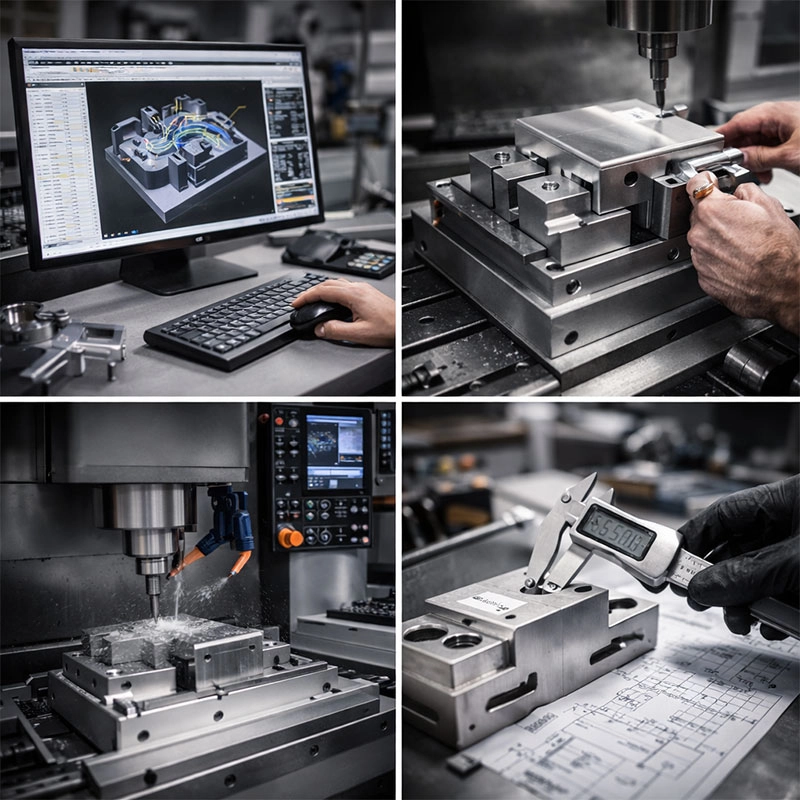
Let’s walk through the CNC machining process step by step. Think of it like a highly skilled chef following a perfect recipe. The recipe is the digital design, the chef is the machine, and the ingredients are your block of material. Every action is planned and executed with precision.

Step 1: The Digital Blueprint (CAD)

It all starts with an idea. Using Computer-Aided Design (CAD) software, an engineer or designer creates a detailed 3D model of the part. This is the master plan. It defines every dimension, curve, and hole. You might be asking, how does CNC machining work from a drawing?” Well, this 3D model is the essential first answer. It’s the source of truth for the entire CNC manufacturing process.

Step 2: Speaking the Machine’s Language (CAM)

The CAD model is beautiful, but the machine can’t understand it directly. This is where Computer-Aided Manufacturing (CAM) software comes in. The CAM programmer takes the 3D model and creates a set of instructions, called G-code. This code tells the machine exactly where to move, how fast to spin the cutting tool, and how deep to cut. It’s like translating the recipe into a language the chef understands perfectly.

Step 3: The Machine Setup

Now, we move to the shop floor. An operator secures the raw material (called the “workpiece”)—which could be aluminum, steel, plastic, or other materials—onto the machine bed. The correct cutting tools are loaded into the machine’s spindle. This setup is crucial for accuracy. A good setup ensures the CNC milling process or CNC turning operation starts from the right place every time.

Step 4: The Machining Operation

This is the main event! The machine operator starts the program. The spindle spins the cutting tool at high speeds, and it precisely removes material from the workpiece, following the paths defined by the G-code. You’ll see chips flying as the block of material is gradually shaped into the final part. Different operations like milling, drilling, and turning happen here, all part of the subtractive manufacturing family.

Step 5: Finishing Touches

Once the main cutting is done, the part often isn’t quite ready. It might have sharp edges or a rough surface. Secondary processes like deburring (removing sharp edges), sanding, polishing, or anodizing (for aluminum) are applied. This post-processing gives the part its final look, feel, and sometimes extra properties like corrosion resistance.

Why is the CNC Process So Valuable?

So, what makes this explanation of CNC machining so important for industries? The value is immense. First, it offers incredible precision and repeatability. You can make one part or a thousand, and they will all be virtually identical. This is a game-changer for everything from aerospace components to medical devices. Second, it can create incredibly complex geometries that would be impossible or prohibitively expensive to make by hand. Finally, while the initial setup and programming take time, it’s extremely efficient for production runs, saving both time and money in the long run. For a deeper dive into its applications, resources like the American Society of Mechanical Engineers (ASME) offer great insights.

How Can You Get Started with CNC Manufacturing?

If you’re curious about using CNC machining services for a project, here’s our friendly advice. Start with a clear and well-designed CAD file—this is the most important piece. Then, find a reputable machine shop. Don’t be afraid to ask questions! A good shop will guide you on material selection, design for manufacturability (making sure your design is easy to machine), and cost estimates. For beginners, starting with a simpler design in a common material like 6061 aluminum is a great way to learn the basics of CNC operation without breaking the bank.

Clearing Up Common CNC Machining Misconceptions

Let’s tackle a few myths. First, some think CNC is only for huge factories. Not true! Many small workshops and even hobbyists use desktop CNC machines. Second, it’s not always the fastest option for a single, simple part—3D printing might be quicker for a one-off prototype. Third, while highly automated, it still requires skilled humans for programming, setup, and quality control. The machine follows instructions; people provide the expertise. Understanding these nuances is key to a complete guide to computer numerical control.

In short, the CNC machining process is a powerful blend of digital design and physical precision. By understanding the workflow from CAD to finished part, you can appreciate its role in making the world around us, from your car’s engine to your smartphone’s casing. It’s a fascinating technology that turns digital dreams into tangible reality.
Categories
CNC Milling & Turning

What Is CNC Milling Service? A Beginner’s Friendly Guide

Ever wondered how complex metal or plastic parts are made with such incredible precision? That’s often the magic of CNC milling. This guide breaks down what a CNC milling service is, how it works, and why it’s a cornerstone of modern manufacturing, all in simple, friendly terms.

Understanding CNC Milling Services

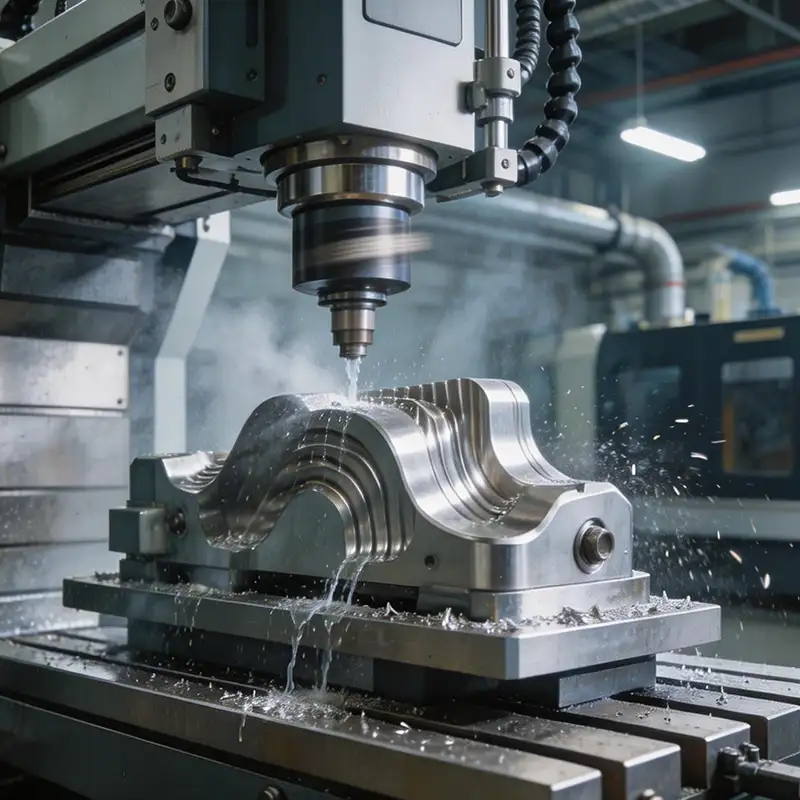
Let’s start with the basics. CNC stands for Computer Numerical Control. So, a CNC milling service is a manufacturing process where a computer directs a cutting tool to carve material away from a solid block. Think of it like a super-precise, automated sculptor that can follow digital instructions to the letter. This process is a core part of subtractive manufacturing, where you start with more material and remove what you don’t need. It’s different from 3D printing (additive manufacturing), which builds parts layer by layer.

How Does a CNC Milling Machine Work?

It all begins with a digital blueprint, usually a 3D CAD (Computer-Aided Design) file. This design is translated into a set of instructions called G-code, which tells the CNC mill exactly where to move, how fast to spin the cutter, and how deep to cut. The machine then uses rotating cutting tools to shave off material—be it aluminum, steel, plastic, or even wood—with incredible accuracy. The result? Highly repeatable, complex parts that would be very difficult or time-consuming to make by hand.

The Value of Using a CNC Milling Service

You might be asking, “Why should I consider precision machining for my project?” The benefits are pretty compelling. First and foremost is precision and consistency. Once the program is set, a CNC machining service can produce the first part and the thousandth part virtually identical. This is crucial for industries like aerospace or medical devices. It also allows for incredible complexity—think intricate geometries, internal channels, and fine details. While the initial setup has a cost, for medium to high production runs, it becomes very cost-effective and fast. Plus, it works with a huge range of materials, giving you tons of flexibility.

Getting Started with CNC Machining

Ready to turn your idea into a physical part? The process is more collaborative than you might think. A good milling service provider will guide you through it. Here’s a friendly overview of what to expect.

Preparing Your Design Files

This is your most important step. You’ll need to provide a 3D model. Common file formats include STEP and IGES, which are great for conveying the complete geometry. The service’s engineers will then use CAM (Computer-Aided Manufacturing) software to plan the toolpaths—essentially, creating the roadmap for the machine. A pro tip? Design with manufacturability in mind. Avoiding overly sharp internal corners and considering how the tool will access all surfaces can save time and cost. Resources like the ASME Digital Collection offer great insights into design for manufacturability principles.

Choosing the Right Material

The material you choose impacts strength, weight, appearance, and cost. For prototypes, machinable plastics like ABS or Delrin are popular and cost-friendly. For final metal parts, aluminum 6061 is a fantastic all-rounder—it’s strong, lightweight, and easy to machine. For higher strength needs, you might look at steel or titanium. Your machining partner can help you weigh the options based on your part’s function and budget.

Clearing Up Common Misconceptions

Let’s tackle a few myths head-on. A big one is that CNC milling is only for giant corporations. Not true! Many machine shops cater to startups, engineers, and even hobbyists needing one-off prototypes or small batches. Another is that it’s always prohibitively expensive. While not cheap for a single simple bracket, the value for complex, precise, or multiple parts is often unbeatable. Finally, it’s not a “set it and forget it” magic box. It requires skilled programmers and machinists to set up, monitor, and ensure quality—the computer controls the machine, but human expertise drives the process. You can learn more about the technical standards behind the process from organizations like ISO.

Wrapping Up: Is CNC Milling Right for You?

So, is a computer numerical control milling service the right choice for your project? If you need parts with high dimensional accuracy, complex features, or consistent quality across multiple units, then the answer is likely yes. It’s the workhorse behind everything from custom car components to specialized research equipment. My best advice is to start a conversation with a reputable machine shop. Share your design and goals; they can provide a feasibility check and a quote. Bringing an idea from a screen to your hand is an amazing process, and CNC machining is one of the most reliable ways to make it happen.

Request A Quote

We'll Send You Back with Price Immediately!

DEC 1-31

XMAS SPECEIL

Up to

40% off

What Is CNC Milling Service? A Beginner’s Friendly Guide

We'll Send You Back with Price Immediately!