Categories
Design, Cost & Sourcing

Master CNC Machining Quotes: A Step-by-Step Guide for Accuracy

Creating an accurate CNC machining quote is crucial for both shops and clients. It ensures fair pricing, avoids project delays, and builds trust. This guide walks you through the essential steps, from gathering part details to final pricing, helping you master the quoting process for precision machining jobs.

Essential Steps for Preparing a CNC Machining Quote

Hey there! If you’ve ever wondered how to quote a CNC machining project, you know it can feel a bit overwhelming. Whether you’re a new shop owner or a procurement specialist, getting a CNC machining quote right is the key to a smooth project. Think of it like baking a cake—you need the right ingredients (part details), the proper recipe (process plan), and an accurate timer (machine runtime) to avoid a kitchen disaster. Let’s break down this CNC quote process into simple, manageable steps.

Gather Complete Part Data

The first and most critical step is collecting all the necessary information. A vague request like “I need a metal bracket” leaves too much room for error and will likely result in an inaccurate machining cost estimate. What you need is a complete package. This always starts with a detailed 2D drawing or 3D CAD model (like a .STEP or .IGES file). The drawing should clearly specify all dimensions, tolerances (we’ll talk more about those later), and critical surface finishes.

Next, clarify the material. Is it 6061 aluminum, 304 stainless steel, or Delrin? The type and grade significantly impact the CNC milling quote or CNC turning quote. Don’t forget the quantity! Pricing one prototype is vastly different from pricing a production run of 10,000 pieces. Finally, understand the part’s application. Knowing if it’s for a medical device or an automotive component can influence the required quality controls and certifications. For a deep dive into technical drawing standards, the ASME website is an excellent resource.

Analyze Design for Manufacturability

This is where your expertise truly shines. You’re not just a quote machine; you’re a manufacturing partner. Look at the design and ask, “Can this be made efficiently?” This is called Design for Manufacturability (DFM). For instance, are the internal corner radii achievable with standard tooling? Are the specified tolerances of ±0.001″ absolutely necessary, or can they be relaxed to ±0.005″ for a major cost saving?

I remember a client who sent a design with incredibly deep, thin pockets. By suggesting a slight design tweak, we were able to reduce the machining time calculation by over 30% without affecting the part’s function. A friendly DFM review at the quoting stage builds tremendous trust and often leads to a more accurate and competitive precision machining quote.

Calculate Material and Machine Time

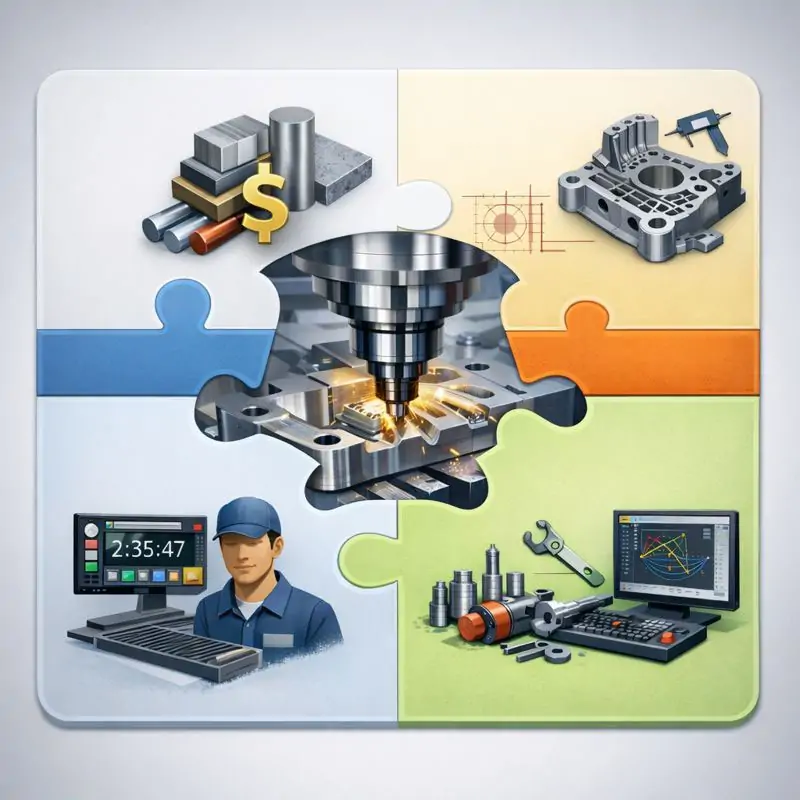
Now, let’s talk numbers. The total cost for a CNC machine shop quote typically breaks down into three main buckets. First, material costs: Calculate the raw stock size needed, add a margin for waste, and get a current price from your supplier.

Second, and often the largest, is machine time (or cycle time). This is the estimated time the part will spend on the CNC mill or lathe. Modern CAM software is fantastic for simulating this, but experienced machinists can often provide a good estimate based on similar past jobs. This time is then multiplied by your shop’s machine hourly rate.

Finally, don’t forget setup and secondary operations. This includes the time to program the job, set up fixtures and tools on the machine, and any post-processing like deburring, anodizing, or inspection. Bundling all these elements gives you your base cost, to which you add your desired profit margin to create the final price for your custom machining quote.

Common Mistakes and How to Avoid Them

Let’s be honest, we’ve all made quoting errors. The goal is to learn from them! One of the biggest pitfalls is underestimating setup time, especially for small-batch or prototype work. That first part might take hours to program and fixture, while parts two through ten are much faster. Always account for the full setup in your CNC service quotation.

Another common issue is overlooking material waste and availability. You might quote based on an online price for a 1-foot bar, only to find you must purchase a 12-foot length, significantly increasing your cost. Always check with your suppliers for stock sizes and lead times. Finally, unclear communication about revisions can sink a project. Make sure your quote clearly states what is included (e.g., “price includes one round of minor revisions based on provided drawing”) and what would constitute a new, chargeable quote.

How to Deliver a Winning Quote

You’ve crunched the numbers, but how you present the machining price quote matters just as much. A winning quote is clear, professional, and transparent. Instead of just a single number on a page, provide a brief, itemized breakdown. This doesn’t have to reveal all your internal costs, but categories like “Material,” “Machining & Setup,” and “Surface Treatment” help the client understand the value.

Always include the key assumptions your quote is based on: the revision of the drawing used, the material specification, the estimated lead time, and the terms of payment. This protects both you and the client. Most importantly, be available to discuss it! A quick call to walk through the quote and your DFM suggestions can make all the difference, turning a simple price into a valuable consultation and securing the job.

In the end, mastering the CNC machining quotation process is about combining technical knowledge with clear communication. By following these steps, you’ll provide accurate, competitive quotes that win business and build lasting partnerships. Now go ahead and quote with confidence!
Categories
Design, Cost & Sourcing

Your Guide to Choosing the Best CNC Machining Service

Choosing the right CNC machining service is a crucial decision for any project. This guide walks you through the key factors—from capabilities and materials to quality control and communication—to help you find a reliable partner that delivers precision parts on time and within budget.

Key Factors for Selecting a CNC Machining Partner

When you start looking for a CNC machining supplier, it can feel a bit overwhelming. There are so many options! But think of it like finding a good mechanic—you want someone skilled, trustworthy, and who uses the right tools for your specific car. Your journey to selecting a precision machining service begins with understanding their core capabilities and how they align with your project’s needs.

Technical Capabilities and Equipment

The first thing I always ask about is their machine shop’s equipment. Can they handle the complexity and tolerances your part requires? A shop with both 3-axis and multi-axis machines offers more flexibility. For instance, if you need complex contours or undercuts, a 5-axis CNC milling service is essential. Don’t hesitate to ask about their machine brands, age, and maintenance schedules—a well-maintained machine from a reputable manufacturer like Haas or DMG Mori often translates to more consistent results. It’s also wise to inquire about their experience with computer numerical control programming for materials similar to yours.

Material and Finishing Expertise

Not all shops work with all materials. You might have a great design for an aluminum bracket, but if the vendor primarily machines steel, there could be a learning curve. A reliable partner will have proven experience with your chosen material, whether it’s common alloys like 6061 aluminum or tougher stuff like titanium or PEEK. Furthermore, ask about their in-house post-processing and surface finishing options. Can they provide anodizing, powder coating, or bead blasting? Having these services under one roof, as outlined in resources like ASM International’s materials information, streamlines the process and ensures better accountability for the final look and feel of your part.

Evaluating Quality and Reliability

Once you’re confident a shop has the right tools, the next step is to assess their commitment to quality. This goes beyond just having a measuring tool. It’s about a systematic approach to ensuring every part that leaves their facility meets your specifications. A key part of how to find a good CNC machine shop is looking for evidence of this ingrained quality culture.

Quality Assurance Systems

Look for shops that are certified to standards like ISO 9001. This tells you they have documented processes for quality management. Ask about their inspection equipment—do they use advanced tools like Coordinate Measuring Machines (CMM) or optical comparators? A good practice is to request a sample inspection report. This gives you a clear picture of how they verify dimensions and tolerances. Remember, consistent quality is what separates a part that works from one that causes assembly headaches down the line.

Communication and Collaboration

This might be the most important factor. Is your point of contact responsive and proactive? Do they ask clarifying questions about your drawings? A great CNC manufacturing partner acts as an extension of your team. They should provide constructive feedback on your design for manufacturability (DFM), suggesting small tweaks that could save cost or improve strength without compromising function. Clear communication from the initial quote to final delivery prevents misunderstandings and builds a trusting, long-term relationship.

Making the Final Decision

You’ve shortlisted a few shops that seem capable. Now it’s time to drill down into the details and make your choice. This phase involves a practical test—the Request for Quote (RFQ)—and a clear-eyed view of value beyond just the lowest price. Your goal in this CNC vendor selection process is to find the best overall partner, not just the cheapest bidder.

Navigating the RFQ Process

To get comparable quotes, provide a clear, complete package: detailed drawings (with all tolerances called out), the 3D CAD model, material specs, quantity, and desired finish. Send this same package to your top candidates. When the quotes come back, compare them line by line. A surprisingly low quote can sometimes mean hidden costs or corners being cut. Pay attention to lead times and terms as well. A slightly higher price from a shop that guarantees a faster turnaround might be worth it for your project timeline.

Common Pitfalls to Avoid

Let me share a common scenario: a friend chose a shop based solely on price for a prototype run. The parts arrived late and had poor surface finishes, costing him more in rework and delayed testing. The lesson? Don’t let price be the only deciding factor. Also, be wary of shops that don’t ask questions—it might mean they aren’t critically reviewing your design for potential issues. Finally, check their references or online reviews. Hearing about other customers’ experiences, perhaps on professional engineering forums or platforms like Thomasnet for industrial sourcing, can provide invaluable real-world insight into their reliability and customer service.

Categories
Design, Cost & Sourcing

5 Smart Ways to Reduce CNC Machining Cost Effectively

Looking to lower your CNC machining costs without sacrificing quality? You’re in the right place. We’ll explore practical, actionable strategies that focus on smarter design, material choice, and process planning to help you save money on every project.

Strategies for Minimizing CNC Machining Expenses

If you’ve ever received a quote for a CNC machined part and thought, “That’s more than I expected,” you’re not alone. Managing CNC machining expenses is a common challenge, but the good news is there are several levers you can pull. It’s not just about finding the cheapest shop; it’s about making intelligent decisions from the design phase all the way through to production. Think of it like planning a road trip—choosing the right route, packing efficiently, and maintaining your vehicle can all save you time and fuel. Let’s dive into five smart ways to make your next project more cost-effective.

1. Optimize Your Design for Manufacturing (DFM)

The single most powerful way to cut CNC machining costs happens before a single tool touches metal. This is all about Design for Manufacturability, or DFM. A design that looks perfect in CAD software might be unnecessarily expensive or difficult to machine. By tweaking your design with the machining process in mind, you can dramatically reduce cycle time, tool wear, and material waste. It’s a conversation between your vision and the practical realities of the machine shop.

Simplify Complex Geometry

Deep pockets with sharp internal corners, extremely thin walls, or overly complex surfaces can drive up costs. They require specialized tools, slower machining speeds, and multiple setups. For instance, instead of machining a deep, square hole, could it be a through-hole or have a radius at the bottom? Using a standard end mill to create a radius is much faster than using a tiny tool to square off a corner. Simplifying these features is a key tactic for lowering CNC machining prices.

Standardize Features and Tolerances

Specifying unnecessarily tight tolerances across an entire part is a major cost driver. Every decimal place adds inspection time and may require slower machining passes. Ask yourself: “Does this surface really need to be ±0.025mm, or would ±0.1mm work perfectly?” Similarly, using standard drill sizes for holes instead of custom diameters avoids the need for non-standard tools. This approach to reducing CNC part cost is about applying precision only where it’s functionally critical.

2. Make Smarter Material Choices

Material cost and machinability are huge factors in your final bill. While you might need a specific alloy for strength or corrosion resistance, always explore alternatives. A common example is opting for 6061 aluminum over 7075 for non-critical structural parts—it’s cheaper and generally easier to machine. Also, consider the stock size. Designing a part that fits neatly into a standard bar or plate dimension minimizes waste. If you’re making multiple parts, see if they can be nested from a single sheet to optimize material yield, directly addressing how to decrease CNC operational costs.

3. Leverage Batch Production and Nesting

There’s a fixed cost in programming and setting up the CNC machine. Spreading that cost over multiple parts is one of the most effective CNC cost-saving techniques. Even a small batch order is often more cost-effective per part than a one-off. Furthermore, a skilled machinist or programmer can use CAM software to “nest” multiple parts onto a single piece of stock material, similar to a puzzle, drastically reducing waste. This strategy is central to minimizing expenses in computer numerical control processes.

4. Minimize Secondary and Finishing Operations

Every additional step after the main machining adds cost. Do all surfaces need a mirror polish, or would a standard machined finish suffice? Can you design the part to avoid manual deburring? For instance, specifying a small break edge on sharp corners in your design can allow the CNC tool to deburr it during the primary operation. Being strategic about surface finish requirements is a straightforward method for lowering the price of machined components.

5. Communicate Early with Your Machining Partner

This might be the most overlooked tip. Don’t just send a CAD file and ask for a quote. Start a conversation. A good machine shop wants to be a partner, not just an order-taker. Share your application, budget, and concerns. They can provide invaluable DFM feedback, suggest material alternatives, or recommend small design changes that yield big savings. They have the hands-on experience to identify potential hiccups you might not see. Building this relationship is crucial for long-term CNC manufacturing cost reduction. For authoritative information on materials and standards that can inform these discussions, you can refer to resources like the ASM International website.

In my experience, the most successful projects come from collaboration. I recall a client who designed a beautiful, complex bracket. After a quick chat about its use in a non-critical indoor application, we suggested a simpler geometry and a different aluminum grade. The part performed flawlessly for its purpose, and their machining expenditure dropped by nearly 30%. Remember, reducing cost isn’t about cutting corners—it’s about working smarter. By focusing on design efficiency, material savvy, batch planning, and clear communication, you can achieve high-quality results that keep your project on budget.

Categories
Design, Cost & Sourcing

When to Choose Precision CNC Machining: 5 Key Signs It’s Right for You

Deciding when to opt for precision CNC machining can be a pivotal choice for your project. This guide walks you through the key indicators that this advanced manufacturing method is the perfect fit, helping you make an informed and confident decision.

Identifying the Need for Precision CNC Machining

Hello there! If you’re reading this, you’re probably at a crossroads with a manufacturing project, wondering if precision CNC machining is the right path forward. It’s a fantastic technology, but it’s not always the answer for every single part. Think of it like choosing a tool from a workshop—you wouldn’t use a sledgehammer to drive in a tiny finishing nail, right? The same logic applies here. This article is your friendly guide to spotting the five key signs that point toward choosing computer numerical control machining. We’ll talk through real scenarios and clear indicators, so you can feel confident in your decision to use this high-accuracy manufacturing process.

Sign 1: Your Project Demands Extremely Tight Tolerances

This is often the biggest giveaway. When your part’s blueprint has dimensions measured in thousandths of an inch or microns, and those numbers absolutely cannot budge, you’ve entered the realm of precision machining. Imagine a component for a medical device or an aerospace fitting—a tiny deviation could mean the difference between perfect function and failure. If you find yourself saying, “This part *must* fit with another part with zero play,” or “The alignment has to be exact for the system to work,” then you’re looking at a prime candidate for high-precision CNC milling or turning.

What “Tight Tolerances” Really Mean for You

Let’s make it practical. Tolerances like ±0.001″ (0.0254 mm) or tighter aren’t just numbers on paper. They translate to parts that assemble silently, rotate smoothly, and perform reliably under stress. For instance, a client of ours needed a small housing for an optical sensor. The lens had to sit perfectly flush, with a gap variation of less than a human hair’s width. Standard machining couldn’t guarantee that consistency. By choosing a precision CNC service, we achieved that flawless fit every single time, which was critical for the sensor’s accuracy.

Sign 2: You’re Working with Complex or Intricate Geometries

Does your design have undercuts, deep cavities, fine threads, or complex 3D contours? If manual machining or even standard CNC makes you sweat, precision CNC fabrication is your ally. The advanced software and multi-axis machines (like 5-axis CNCs) can maneuver cutting tools in ways that are simply impossible manually. They can create those intricate features with a level of detail and consistency that protects the integrity of your most complex designs. It’s the ideal solution for prototypes and parts with sophisticated shapes that are becoming more common in industries like robotics and automotive.

Sign 3: Material Choice and Consistency Are Paramount

Perhaps you’re working with challenging materials like titanium, Inconel, hardened steels, or certain engineering plastics. These materials are often chosen for their strength or thermal properties but can be difficult to machine consistently. Precision CNC equipment is built to handle these tough jobs with stable, rigid frames and precise temperature control, minimizing stress on the material. This means you get a part that not only meets dimensional specs but also maintains the desired material properties without micro-cracks or warping. When material integrity is non-negotiable, the controlled environment of a precision shop is key.

Sign 4: You Need Medium to High Volume with Perfect Repeatability

You might need 500, 1,000, or 10,000 copies of a part, and every one must be identical to the first. This is where CNC precision manufacturing truly shines. Once the machine is programmed and set up, it will reproduce the part with astonishing consistency, hour after hour. This repeatability eliminates the variability you might see with less automated processes. It’s the bridge between a one-off prototype and full-scale production. If your project is moving beyond a handful of pieces and you need dependable, identical output, this is a major sign to choose a precision machining approach.

Sign 5: Seamless Integration and Superior Surface Finish are Required

Sometimes, a part isn’t just a standalone item; it’s a piece of a larger, high-performance puzzle. It needs to integrate seamlessly with other components, perhaps requiring a specific surface roughness for sealing or reduced friction. Precision machining centers can achieve remarkably fine surface finishes directly from the machine, often reducing or eliminating the need for secondary polishing. If your assembly calls for parts that fit together with a “snug” feel, have specific Ra (roughness average) values, or need to look as good as they function, this capability is a decisive factor. You can learn more about surface finish standards from resources like the American Society of Mechanical Engineers (ASME).

Making the Final Decision: Is Precision Machining Your Path?

So, how do you bring it all together? Listen to your project’s needs. If you nodded along to several of these signs—tight specs, complex shapes, tough materials, volume needs, and flawless finishes—then high-accuracy CNC machining is very likely the right choice for you. It’s an investment in quality, reliability, and performance. My advice? Have an open conversation with a reputable precision machine shop. Share your drawings and requirements. A good partner will help you determine if this is the best machining process selection for your goals and budget. Remember, choosing the right method from the start saves time, cost, and headaches down the road. Good luck with your project!

Categories
Design, Cost & Sourcing

What Is Small Batch CNC Machining? A Beginner’s Friendly Guide

Small batch CNC machining is a manufacturing process that uses computer-controlled machines to produce a limited quantity of parts, typically ranging from 10 to 1000 units. It’s a perfect bridge between one-off prototyping and mass production, offering flexibility and cost-effectiveness for product development and market testing.

Understanding Small Batch CNC Machining

Let’s break it down. CNC stands for Computer Numerical Control. It’s a process where a computer file guides cutting tools to shape a block of material (like metal or plastic) into a precise part. Now, small batch manufacturing simply means we’re not making millions of these parts—we’re making a manageable, limited run. Think of it as the sweet spot between crafting a single prototype and committing to a massive, expensive production line. It’s ideal for when you need more than just a couple of samples but aren’t ready for full-scale production yet.

Why Choose Small Batch Production?

You might wonder, “Why not just go straight to mass production?” Great question! The benefits of low volume CNC machining are numerous, especially for startups, engineers, and inventors. It allows you to test your product in the real world without a huge upfront investment. Imagine you’ve designed a new drone component. With a short run production of 50 pieces, you can gather feedback, make improvements, and validate the market before ordering 10,000.

Cost-Effectiveness and Flexibility

One of the biggest perks is cost control. Tooling for injection molding can be prohibitively expensive for small quantities. With CNC, the “tooling” is primarily the digital program, which is much cheaper to create and modify. This makes limited quantity machining incredibly flexible. Need to change a dimension or add a hole in version 2? You can update the CAD file and machine the next batch with minimal hassle and cost compared to retooling a mold.

Speed and Iterative Development

Speed to market is crucial. On-demand manufacturing through small batch CNC services means you can go from a digital design to holding parts in your hand in a matter of days, not months. This enables rapid iteration. A client of mine, Sarah, used this for her custom bicycle accessory. She ordered 25 units, sold them at a local fair, got user comments, and then tweaked the design for a second, improved batch—all within a single season.

How the Small Batch Process Works

The workflow for precision small batch manufacturing is straightforward. It starts with you! You provide a 3D CAD model (like a .STEP or .SLDPRT file) to a machine shop. Their engineers then prepare the file for machining, a step called CAM programming, which creates the instructions for the CNC mill or lathe.

From Digital Design to Physical Part

The machine shop will select the right CNC equipment—often a 3-axis or 5-axis machining center—for your part’s complexity. A block of material is secured, and the automated cutting process begins. The machine follows the toolpaths with incredible accuracy, often within microns. This repeatable process is what makes CNC perfect for batch production machining; the 1st part and the 100th part are virtually identical.

Materials and Finishes

You have a vast material selection. Common choices include aluminum (great for strength and weight), stainless steel (for durability), brass, and various engineering plastics like Delrin or PEEK. After machining, parts often undergo secondary operations or post-processing. This could be bead blasting for a matte finish, anodizing for color and corrosion resistance (common for aluminum), or simply deburring to remove sharp edges. You can learn more about material properties from authoritative sources like ASM International.

Common Misconceptions Clarified

Let’s clear up a few things! A common myth is that small lot machining is only for simple parts. Not true! Modern multi-axis CNC machines can produce incredibly complex geometries. Another misconception is that it’s always more expensive per part than mass production. While the per-part cost is higher than injection molding at huge volumes, the total project cost is often lower due to zero tooling investment. It’s about the right tool for the job stage.

Getting Started with Your Project

Ready to explore custom small batch CNC for your idea? My friendly advice is to start with a clear CAD model. If you don’t have one, many shops offer design assistance. Then, reach out to a few reputable machine shops for quotes. Be prepared to discuss your quantity, material, and any critical tolerances. Don’t hesitate to ask questions—a good partner will guide you through low volume manufacturing. They can help you design for manufacturability (DFM) to optimize your part for machining, saving you time and money. For a deeper dive into manufacturing standards and processes, a great resource is NIST’s manufacturing resources.

In short, small batch CNC machining is a powerful, accessible gateway to bringing precise, functional parts into the physical world. It offers the agility to innovate, test, and grow your product with confidence.

Categories
Design, Cost & Sourcing

What Is Low Volume CNC Production? Your 2024 Guide

Low volume CNC production is a manufacturing strategy that uses computer-controlled machines to create precise, high-quality parts in smaller batches, typically from 10 to 10,000 units. It’s the perfect bridge between one-off prototyping and mass production, offering flexibility and cost-effectiveness for product development, market testing, and specialized projects.

Understanding Low Volume CNC Manufacturing

Let’s break down what we mean by low volume CNC manufacturing. Imagine you have a brilliant idea for a new product—maybe a custom drone component or a specialized medical device part. You need more than just a single prototype to test, but you’re not ready to commit to ordering 50,000 pieces. That’s where small batch CNC machining shines. It’s all about producing limited production runs using the same precise, automated milling and turning processes used for huge orders, but tailored for quantities that make sense for startups, engineers, and innovators like you.

This approach, sometimes called short run production, sits comfortably between prototyping and full-scale mass production. It uses CNC (Computer Numerical Control) technology, where machines follow digital blueprints to cut, drill, and shape materials like aluminum, steel, or plastics with incredible accuracy. The key difference from high-volume work is the focus on agility and lower initial investment, making advanced manufacturing accessible.

Why Choose Low Volume CNC Machining?

You might be wondering why you’d choose this path over other methods. Well, the benefits of low volume CNC machining are pretty compelling, especially in today’s fast-paced market. It offers a unique blend of flexibility, quality, and efficiency that’s hard to beat for bringing a design to life in a tangible, testable way.

Cost-Effectiveness and Flexibility

The most significant advantage is cost. Traditional high-volume production requires expensive, custom tooling (like injection molds) that only pays off over thousands of units. With low volume CNC services, you avoid those hefty upfront costs. The machines use standard cutting tools, so you’re primarily paying for machine time and material. This makes it perfect for bridge production—creating a batch of parts to validate your design, gather user feedback, or even launch a limited edition product without a massive financial gamble.

Flexibility is another superstar feature. Need to tweak the design after the first 100 pieces? No problem! Updating a digital CAD file is far simpler and cheaper than modifying physical molds. This agility allows for continuous improvement and adaptation, which is crucial for custom CNC machining projects and iterative development.

Speed and Superior Quality

When it comes to rapid manufacturing, low volume CNC is a leader. Once the digital design is ready, production can start almost immediately, bypassing the weeks or months needed for tooling fabrication. You can go from a concept to holding a finished, professional-grade part in your hands remarkably quickly.

And let’s talk quality. CNC precision machining delivers exceptional consistency and tight tolerances across every unit in your batch. Whether you’re producing 50 or 500 parts, the tenth part will be virtually identical to the first. This repeatability and high surface finish quality are essential for functional parts in industries like aerospace, automotive, or consumer electronics. For a deeper dive into quality standards, you can review resources from the American Society of Mechanical Engineers (ASME).

How Low Volume CNC Production Works

The process for low volume part manufacturing is a streamlined, digital workflow. It’s less about massive factory lines and more about smart, efficient use of technology. Here’s a typical journey your part takes from screen to reality.

From Design to Finished Part

It all starts with your 3D CAD model. A skilled machinist or programmer then uses CAM (Computer-Aided Manufacturing) software to translate that model into a set of instructions, called G-code, which tells the CNC machine exactly how to move. They’ll plan the toolpaths, select the right cutting tools, and set up the machine—a step often referred to as CNC milling for small batches or CNC turning for low volumes, depending on the part’s geometry.

The machine setup is where the “low volume” efficiency comes in. Fixtures are designed to hold the material securely but are generally simpler than the permanent fixtures used for millions of parts. Once set up, the machine runs autonomously, producing each part with the same programmed precision. After machining, parts often undergo secondary operations like deburring, anodizing, or powder coating to meet the final specifications.

Material and Machine Considerations

One of the joys of on-demand CNC machining is the vast material selection. You aren’t limited by what works with injection molding. You can choose from metals like 6061 aluminum (a popular, machinable choice), stainless steels, brass, or plastics like ABS and PEEK. The best material depends on your part’s function, strength requirements, and budget.

The choice of machine matters too. For highly complex, intricate parts, a 5-axis CNC machine might be used to complete the job in a single setup, saving time and improving accuracy. For simpler geometries, a 3-axis mill or lathe might be perfectly sufficient and more cost-effective. A good manufacturing partner will help guide these decisions.

Common Misconceptions and Practical Solutions

I often hear a couple of myths about small quantity CNC production. Let’s clear those up with some friendly advice. First, some people think “low volume” means “low quality.” Nothing could be further from the truth! As we discussed, the precision is top-tier. The volume simply refers to the batch size, not the capability.

Another common question is about cost per part. Yes, the per-unit cost is higher than in mass production. But the total project cost and risk are much lower. You’re investing in validation and market testing, which can save you from a far more costly mistake down the line. Think of it as buying crucial insurance for your product’s success. My suggestion? Always request a detailed quote that breaks down unit price versus setup costs so you can make an informed decision.

Getting Started with Your Project

Ready to explore low volume manufacturing solutions for your idea? Great! Here’s my practical advice for a smooth start. First, invest time in creating a clean, well-designed 3D CAD file (like a .STEP or .IGES format). This is the blueprint for everything and reduces the chance of errors. Be clear about your critical dimensions and tolerances—know which features must be perfect and which have more flexibility.

Next, find a machine shop that specializes in or is experienced with prototype and low volume production. Look for clear communication, a willingness to consult on design for manufacturability (DFM), and examples of past work. Don’t hesitate to ask questions! A good partner will help you optimize your design for the CNC process, potentially saving you time and money. Start with a conservative batch size, get those parts in hand, test them thoroughly, and then you’ll have the confidence to scale up. Your journey from concept to limited run is closer than you think!

Categories
Design, Cost & Sourcing

Discover the Real Cost: How Much Does CNC Machining Cost?

Wondering about the price of CNC machining? You’re not alone. The cost isn’t a single number but a puzzle made from material choice, part complexity, machine time, and more. Let’s break down these factors in a friendly, straightforward way so you can understand what goes into that quote.

Factors Influencing CNC Machining Pricing

When you ask, “What’s the price for CNC machining?” it’s like asking, “How much does a car cost?” The answer depends on a lot! Let’s walk through the main things that shape the final price tag for your computer numerical control project. I find it helpful to think of it as a recipe—each ingredient adds to the total.

Material Costs

This is often the most straightforward part. The raw stock you choose—be it aluminum, stainless steel, titanium, or engineering plastics—has a base price per block or sheet. For instance, aerospace-grade aluminum will cost more than standard 6061. The cost of CNC machining starts right here. Don’t forget waste! The machining process removes material, so you’re paying for the entire block you order, not just the final part. You can check current material prices on sites like McMaster-Carr to get a ballpark figure.

Part Complexity and Design

Here’s where things get interesting. A simple bracket is a quick job. But a part with deep pockets, tight tolerances, thin walls, or complex 3D contours? That requires more time, specialized tools, and careful programming. This directly affects the CNC milling cost or CNC turning price. Every additional setup, tool change, and precision check adds up. A friend of mine once designed a part with an incredibly sharp internal corner—it required a custom, fragile tool that broke twice, significantly hiking the CNC service quote.

Machine Time and Labor

This is the “runtime” cost. Shops typically charge an hourly machine rate, which covers the CNC equipment depreciation, electricity, and the operator’s expertise. A 5-axis mill has a much higher rate than a basic 3-axis machine, but it might complete your complex job in one setup, saving you money overall. The labor for programming (creating the toolpaths) and setup is also factored in, usually as part of the initial quote. So, the total expense of precision machining blends machine hours with skilled human input.

Understanding CNC Machining Quotes

Getting a quote can feel confusing if you’re not sure what you’re looking at. Let’s decode a typical CNC machining estimate so you know exactly what you’re paying for. Think of it as an itemized receipt for a custom-made product.

Breakdown of a Typical Quote

A good quote should be transparent. You’ll likely see line items for: material cost, programming/setup (a one-time fee), machine runtime, and any secondary operations like anodizing or sandblasting. Some shops bundle programming into the hourly rate. The key is there are no hidden fees. If you’re comparing computer numerical control pricing from different vendors, make sure you’re comparing the same scope of work. A lower quote might exclude surface finishing or quality inspection.

Volume and Its Impact on Price

This is a huge lever for cost. For one prototype, you pay the full setup cost. But for 100 or 1000 parts, that setup cost is spread thin, dramatically reducing the price per part. This economy of scale is why the price per piece for machined parts drops with quantity. It’s always worth discussing your potential volume with the shop, even if you’re starting small—it helps them give you the best advice on processes.

Practical Tips for Managing Costs

You have more control over the CNC machining fees than you might think! A few smart decisions during the design and planning phase can lead to significant savings without compromising on quality. Let me share some insider tips.

Design for Manufacturability (DFM)

This is the golden rule. Designing a part that’s easier to make is cheaper to make. Use standard drill sizes, avoid extremely deep holes, add fillets to sharp internal corners, and keep tolerances as loose as your function allows. Many great shops offer a free DFM review. Upload your CAD file, and they’ll suggest tweaks to optimize the cost of manufacturing. Resources like the Hubs CNC Machining Guide are fantastic for learning these principles.

Choosing the Right Partner

Not all machine shops are the same. A job shop with 3-axis mills is perfect for simpler parts. A high-tech shop with multi-axis machines might be better for complex geometries. Get quotes from a few, but also gauge their communication. A shop that asks good questions about your design intent will likely give you a more accurate machining service cost and a better final product. It’s a partnership!

Common Misconceptions About CNC Pricing

Let’s clear the air on a few things I often hear. First, the cheapest quote isn’t always the best value—it might mean corner-cutting on quality or materials. Second, while CNC is fantastic for precision, it’s not always the cheapest option for very high volumes (like 50,000+ pieces); injection molding might be better. Finally, don’t assume all precision machining costs are astronomical. For small batches and prototypes, it’s incredibly cost-effective versus other methods.

Wrapping It Up: A Realistic View on Cost

So, how much does CNC machining cost? As we’ve seen, it’s a variable built from materials, design, time, and quantity. There’s no one-size-fits-all answer, but now you know the right questions to ask. The best approach is to have a clear design, communicate openly with your manufacturing partner, and view the quote as an investment in a precisely made part that meets your exact needs. Start by getting a few quotes for your project—you might be pleasantly surprised!

Categories
Design, Cost & Sourcing

Your Guide to Choosing the Perfect Precision CNC Machining Supplier

Choosing the right precision CNC machining supplier is a critical decision that impacts your project’s quality, timeline, and budget. This guide walks you through the key factors to consider, from technical capabilities and quality control to communication and value, helping you make an informed and confident choice for your manufacturing needs.

Key Factors for Selecting a Precision CNC Machining Partner

When you’re looking for a supplier for your CNC machining services, it’s like picking a teammate for a crucial project. You need someone reliable, skilled, and easy to work with. The goal isn’t just to find a vendor; it’s to find a true manufacturing partner who understands your vision. Let’s break down the most important things to look for.

Technical Capabilities and Equipment

First things first, can they actually make your part? This goes beyond just having CNC machines. You need to dig into their specific precision machining expertise. Ask about their machine shop’s equipment: Do they have multi-axis mills and lathes capable of the complex geometries you need? What materials are they experienced with—aluminum, stainless steel, titanium, or engineering plastics? For instance, a shop specializing in prototype work might be perfect for low-volume, complex parts, while another might excel at high-volume production. It’s always a good idea to request examples of past work similar to your project. You might find that a supplier’s experience with a specific industry, like aerospace or medical device manufacturing, gives them a huge edge in understanding your tolerances and regulatory needs.

Quality Assurance and Certifications

Precision is in the name for a reason. A tiny deviation can render a part useless. That’s why a robust quality management system is non-negotiable. Look for suppliers with recognized certifications like ISO 9001 or, even better, industry-specific ones like AS9100 for aerospace or ISO 13485 for medical devices. These aren’t just plaques on the wall; they represent a documented commitment to consistency. Ask them about their inspection process. Do they use advanced metrology equipment like CMMs (Coordinate Measuring Machines) or optical comparators? A reliable partner will be transparent about their quality control steps and should provide detailed inspection reports with your first article. This is a core part of any machining supplier selection process.

The Supplier Evaluation and Selection Process

Once you know what to look for, it’s time to start the actual hunt. This process is more of a conversation than a checklist. We recommend you approach it with clear communication and a focus on building a relationship, not just getting a quote.

The RFQ and Communication Stage

Your request for quote (RFQ) is your first impression. Make it clear and detailed with complete drawings, material specs, tolerances, and quantities. But here’s a pro tip: pay as much attention to their *response* as to the price. How quickly did they reply? Did they ask insightful questions to clarify your design for manufacturability (DFM)? A good partner will suggest potential optimizations that could save you time and money. Their communication style here is a strong indicator of what it will be like to work with them. Are they proactive and helpful, or just sending back a number? This early dialogue is crucial for finding a CNC machine shop that aligns with your workflow.

Making the Final Decision

You’ve got a few quotes and have had initial chats. Now, it’s decision time. Price is important, but it shouldn’t be the sole deciding factor. Consider the total value. A slightly higher quote from a shop with better equipment, stricter quality controls, and excellent communication might save you from costly delays or rework down the line. Think about logistics, too. Can they handle your required lead times? What is their policy on revisions or issues? Sometimes, visiting the facility or arranging a video tour can give you immense peace of mind. You’re not just choosing a service; you’re choosing a business relationship for your contract manufacturing needs.

Common Pitfalls and How to Avoid Them

Let’s talk about some common mistakes people make so you can steer clear of them. One big one is focusing only on the unit price. The cheapest option often cuts corners on quality, communication, or reliability, leading to higher total costs. Another pitfall is not checking references or past client testimonials. A reputable CNC machining vendor should be happy to connect you with a past client (with their permission, of course). Also, don’t assume all capabilities are equal—a shop great at aluminum might struggle with titanium. Always verify their specific experience. Finally, unclear communication of your expectations from the start is a recipe for frustration. Be as detailed as possible in your initial brief.

Conclusion: Building a Lasting Partnership

Choosing the perfect precision CNC machining supplier is a strategic investment. By thoroughly evaluating technical capabilities, quality systems, communication, and overall value, you’re setting your project up for success. Remember, the best outcome is a long-term partnership where your supplier becomes an extension of your own team, contributing expertise and reliability to bring your designs to life. Take your time, ask the right questions, and trust the process. Your perfect manufacturing partner is out there. For more on industry standards, you can review information from authoritative sources like the American Society of Mechanical Engineers (ASME).

Request A Quote

We'll Send You Back with Price Immediately!

DEC 1-31

XMAS SPECEIL

Up to

40% off

Your Guide to Choosing the Perfect Precision CNC Machining Supplier

We'll Send You Back with Price Immediately!