

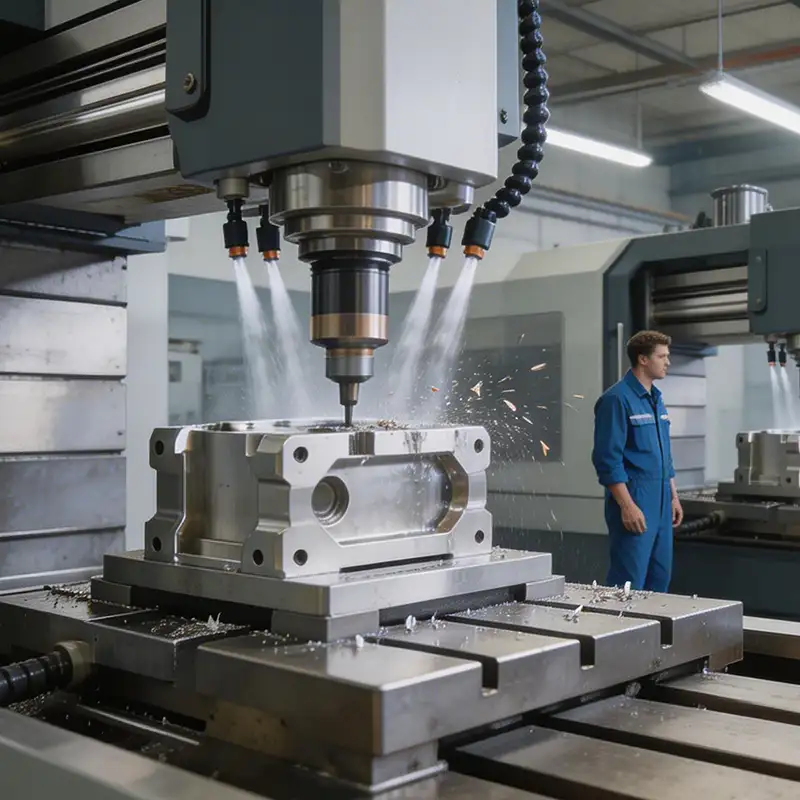
Absolutely, CNC machines can process titanium, but it’s a challenging material that demands respect and specific know-how. Success lies in understanding its unique properties and adapting your machining strategy accordingly. This guide will walk you through five essential expert tips to help you machine titanium parts effectively and efficiently.
Understanding Titanium’s Machining Nature
Before we dive into the tips, let’s get to know our material. Titanium isn’t your average metal. It’s incredibly strong yet lightweight, and it has excellent corrosion resistance—properties that make it a superstar in aerospace, medical implants, and high-performance automotive parts. However, these same benefits are what make titanium machining so tricky. People often ask, Is titanium hard to machine? and the short answer is yes, but it’s absolutely doable with the right approach. The key is to think of it not as a harder steel, but as a unique material with its own rules.
Key Challenges and Material Properties
The main hurdles in CNC milling titanium come from its material science. Titanium has a low thermal conductivity, meaning the heat generated during cutting doesn’t dissipate into the chip or the workpiece easily. Instead, it concentrates on the cutting tool edge, leading to rapid wear. It’s also prone to work hardening and can gall or weld to the tool if you’re not careful. Understanding these titanium alloy machining challenges is your first step toward conquering them. For a deep dive into titanium’s material properties, resources like the ASM International handbook are invaluable.
Tool Selection and Geometry Are Paramount
You wouldn’t use a butter knife to carve hardwood, right? The same logic applies here. For machining titanium on a CNC, your tool choice is critical. We strongly recommend using carbide end mills specifically designed for high-temperature alloys. Look for tools with a sharp, polished cutting edge and a geometry that promotes strong shearing action and efficient chip evacuation. Coatings like AlTiN (Aluminum Titanium Nitride) can provide an extra layer of thermal protection. Remember, a slightly more expensive tool that lasts longer and performs better will save you money and headaches in the long run compared to a standard tool that fails quickly.
Mastering Cutting Parameters and Techniques
This is where the art meets the science. The golden rule for how to CNC titanium is to maintain a consistent, controlled chip load. You want to avoid letting the tool rub or dwell in the cut, as this generates excessive heat. We suggest using lower cutting speeds (SFM) than you would for steel, but with a higher feed rate and a conservative depth of cut. This “high feed, light cut” strategy keeps the tool engaged in productive cutting, carries heat away in the chip, and minimizes the time the tool spends in contact with the workpiece. It’s a balancing act that prevents work hardening and extends tool life dramatically.
Workholding, Coolant, and Chip Control
A flimsy setup is your worst enemy when processing titanium with CNC. Titanium parts can vibrate or deflect under cutting forces, ruining surface finish and accuracy. Ensure your workpiece is clamped as rigidly as possible. Next, flood coolant is non-negotiable—and not just any coolant. Use a high-quality, high-pressure coolant aimed directly at the cutting zone to combat heat and flush chips away. Effective chip control is vital; long, stringy titanium chips can re-cut themselves and damage the part or tool. Proper parameters and toolpaths should produce small, broken chips, which are much safer and easier to manage.
Post-Machining: Handling and Inspection
Your job isn’t over when the spindle stops. Titanium parts, especially thin-walled features common in aerospace CNC machining, can retain residual stresses. Handle them carefully to avoid bending. A thorough inspection is crucial. Check for any signs of smearing, galling, or micro-cracks, particularly along edges. Deburring needs a gentle touch—aggressive methods can induce stress. Finally, consider post-processing like stress relieving or specific surface treatments if required by the application. Taking these final steps ensures the quality and integrity of your meticulously machined titanium component.