

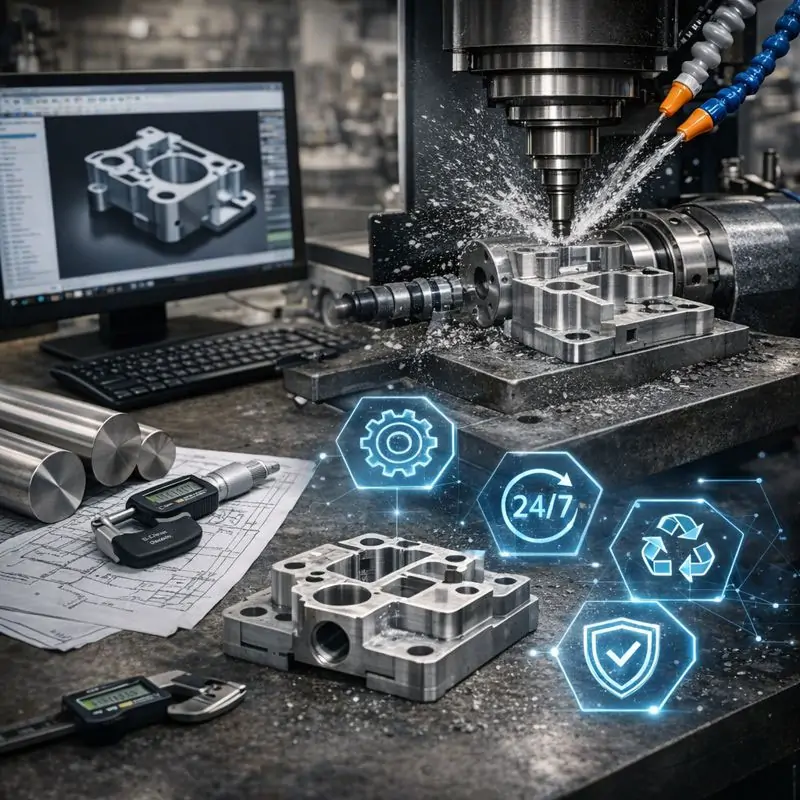
Ever wondered how modern factories achieve such incredible speed and precision? The secret often lies in CNC machining. This guide explores five key ways this technology transforms production, making it faster, more reliable, and incredibly efficient. Let’s dive into how it streamlines the entire manufacturing process.
Unmatched Precision and Repeatability
When we talk about boosting manufacturing efficiency, consistency is king. Imagine you need a thousand identical components. With manual methods, tiny variations are almost inevitable. But with Computer Numerical Control (CNC) machining, every single part comes out exactly the same. This is the core of how CNC machining improves manufacturing efficiency—by eliminating human error in the cutting process. The machine follows digital instructions to the letter, ensuring each cut, drill, and contour is perfect. This level of precision in CNC manufacturing means less time spent on inspection and rework, and more time shipping perfect products.
From Blueprint to Perfect Part
It all starts with a CAD (Computer-Aided Design) model. This digital blueprint is converted into code (G-code) that the CNC machine understands. Once set up, the machine can produce part after part with microscopic accuracy. This repeatability is a game-changer, especially for complex parts used in aerospace or medical devices. You can learn more about the standards for this precision from resources like the American Society of Mechanical Engineers (ASME). It’s like having a master craftsman who never gets tired and never makes a mistake.
Dramatically Faster Production Cycles
Speed is another massive advantage. Traditional machining requires constant operator intervention—changing tools, adjusting settings, measuring parts. CNC automation streamlines this entire workflow. Once the program is loaded, the machine handles complex operations in one setup. Tools change automatically, and cutting paths are optimized for speed. This drastically reduces cycle times, allowing you to produce more parts in less time. For businesses looking to scale up, this increase in production speed is a direct boost to the bottom line.
Lights-Out Manufacturing: Running 24/7
Here’s where it gets really exciting for operational efficiency. Many modern CNC workshops can run “lights-out” manufacturing. This means the machines can operate unattended for hours, even overnight. After the initial setup by a skilled technician, the system takes over, maximizing equipment uptime. This capability to run continuously is a powerful answer to the question of how to improve machining productivity. It turns capital equipment into a nearly constant source of output, dramatically improving overall equipment effectiveness (OEE).
Significant Reduction in Material Waste
Efficiency isn’t just about speed; it’s also about using resources wisely. CNC milling and turning are subtractive processes, meaning they cut away material from a solid block. While some waste is inherent, CNC technology minimizes it. The software can nest parts strategically on a raw material sheet to get the most out of it. Furthermore, the precision of CNC cutting means you often start with less excess material (“stock”) to begin with. Less waste translates directly to lower material costs and a more sustainable, cost-effective manufacturing process.
Enhanced Flexibility and Rapid Prototyping
Gone are the days of needing entirely new machines for new products. One of the greatest benefits of CNC technology is its flexibility. Switching from producing one part to another often just requires loading a new digital file and changing the raw material. This makes CNC machining ideal for both low-volume production and rapid prototyping. You can design a part, create the program, and have a physical prototype in your hands incredibly fast. This agility allows for quicker design iterations, faster time-to-market, and the ability to respond to customer needs without costly retooling delays.
Improved Safety and Consistent Quality
Finally, let’s not forget the human element. CNC machining enhances workplace safety. Operators manage the process from a computer console, away from the moving cutters, sharp chips, and coolants. This reduces the risk of accidents significantly. Simultaneously, this separation ensures that the quality of the output is not dependent on the operator’s skill or fatigue level on a given day. The machine delivers the same high standard every time. This combination of a safer workplace and guaranteed quality is a crucial, though sometimes overlooked, pillar of long-term manufacturing efficiency and business success.