

Achieving high precision in CNC machining is a common goal for every shop. This guide breaks down the process into five manageable steps, focusing on practical maintenance, smart tooling, and operator knowledge to help you consistently hit tighter tolerances and improve part quality.
Start with a Solid Foundation: Machine Health
Think of your CNC machine like a high-performance athlete. To perform at its peak, it needs to be in top condition. You can have the best tools and programs, but if the machine itself has issues, your quest for perfect CNC machining accuracy will be an uphill battle. The first step to improving CNC precision is ensuring your equipment is properly maintained and calibrated.
The Non-Negotiable: Regular Maintenance
This isn’t just about wiping down the machine. I’m talking about a scheduled regimen. Check and lubricate the ball screws and guideways according to the manufacturer’s manual. Worn-out bearings or a dry ball screw can introduce backlash—that tiny bit of slack in the system—which directly translates to positional error in your parts. A simple CNC machine calibration check, like a laser interferometer test, can reveal these issues. Resources from organizations like the National Institute of Standards and Technology (NIST) provide great frameworks for understanding measurement and calibration standards.
Don’t Forget the Room It’s In
Here’s something you might not think about daily: temperature. Metal expands and contracts with heat. If your shop has big temperature swings, your machine’s frame and the part you’re machining can change size slightly. For ultra-high machining precision, controlling the shop environment or letting the machine warm up to a stable operating temperature is a game-changer. It’s a key part of enhancing CNC part quality.
Choose and Manage Your Tools Wisely
Your cutting tools are the direct point of contact with your material. Using dull, unbalanced, or low-quality tools is like trying to paint a masterpiece with a frayed brush. To increase CNC tolerance accuracy, invest in high-quality tooling from reputable brands and implement a strict tool management system. This means tracking tool life, so you change inserts or end mills *before* they get too worn. A worn tool doesn’t just produce a bad finish; it deflects more, pushing away from the cut and creating dimensional inaccuracies. For specific materials, using the correct tool coating and geometry is crucial for optimizing CNC cutting parameters.
Master the Art of Workholding
If your part isn’t held rock-solid, nothing else matters. Vibration or movement during cutting is the enemy of precision. Ensure your vises, chucks, or custom fixtures are clean, in good condition, and applying adequate, even clamping force. For complex or thin-walled parts, consider strategic support to prevent deflection. A part that “sings” or vibrates is telling you the workholding isn’t right. Proper CNC workholding techniques are a fundamental, yet often overlooked, method for reducing machining errors.
Fine-Tune Your Programming and Processes
Great CNC operation precision starts at the computer. Your CAM software and the choices you make when creating the toolpath have a huge impact. This is where you can really dial things in for better CNC surface finish and accuracy.
Smart Tool Paths Matter
Avoid programming that forces the tool to take sharp, heavy cuts or sudden direction changes. Instead, use smoother, adaptive toolpaths that maintain a more consistent load on the tool. This reduces tool deflection, heat buildup, and vibration—all factors that hurt accuracy. Think of it as taking a smooth highway instead of a bumpy back road.
Dialing in Feeds and Speeds
Running a tool too fast or too slow can cause problems. Too slow, and you risk work hardening the material or poor chip evacuation. Too fast, and you generate excessive heat and tool wear. Using recommended feeds and speeds for precision machining for your specific tool and material is essential. Don’t just use the default settings; treat them as a starting point for optimization. Websites like CNC Cookbook offer fantastic, practical guides and calculators to help you find the sweet spot.
Trust, But Verify: The Power of Measurement
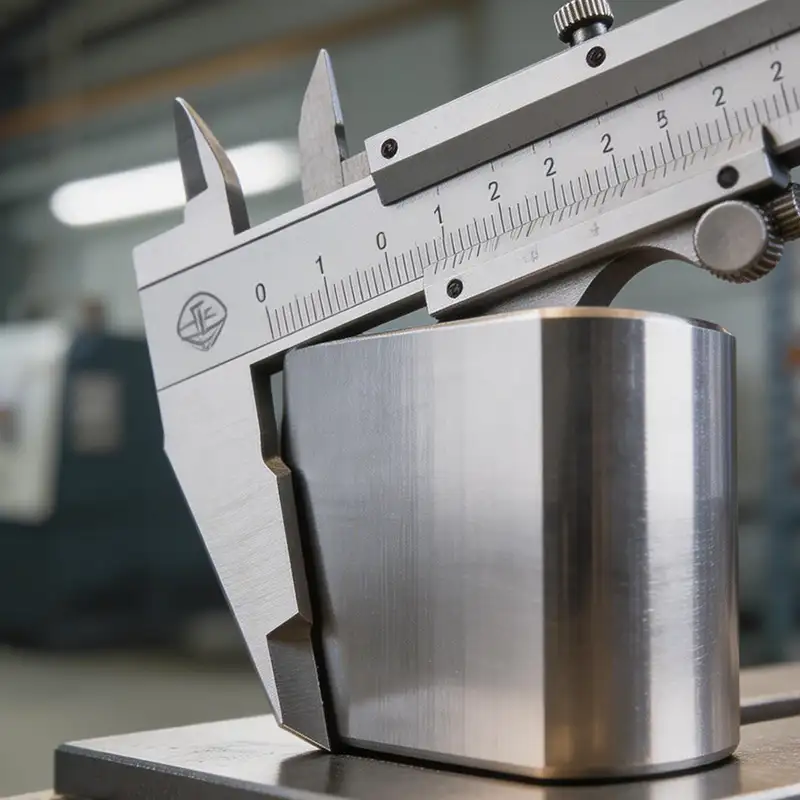
You can’t improve what you don’t measure. The final, critical step to improving dimensional accuracy in CNC is implementing a robust in-process and post-process inspection routine. Don’t wait until the entire batch is done to check the first part. Use precision instruments like micrometers, calipers, and, for complex geometries, a CMM (Coordinate Measuring Machine). This data is gold—it tells you if you’re on target and helps you make tiny offsets to your tool compensation to correct any drift. This cycle of machining, measuring, and adjusting is the ultimate secret to consistent, high CNC milling and turning accuracy.