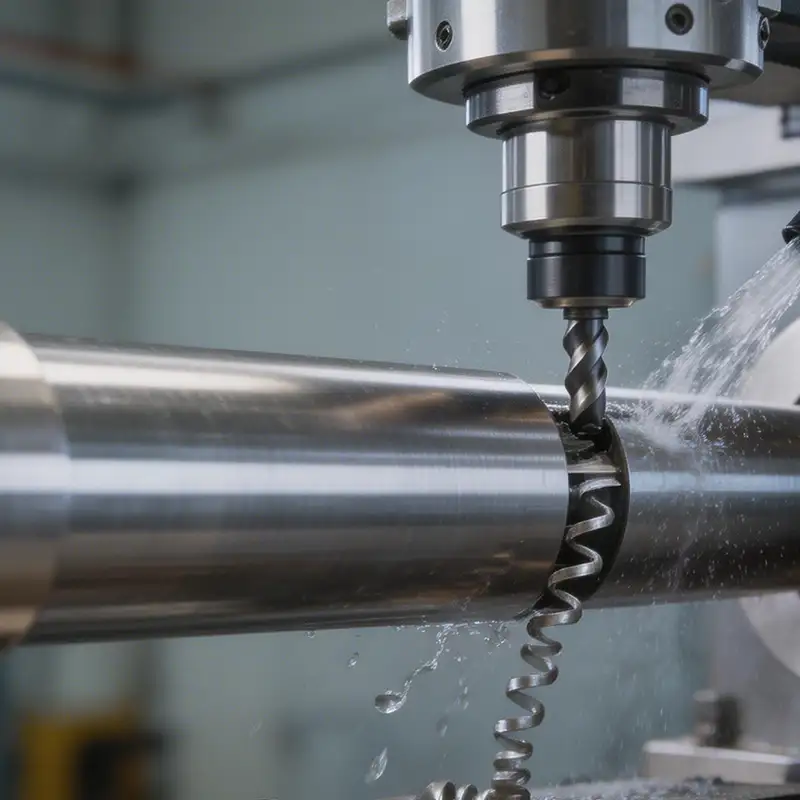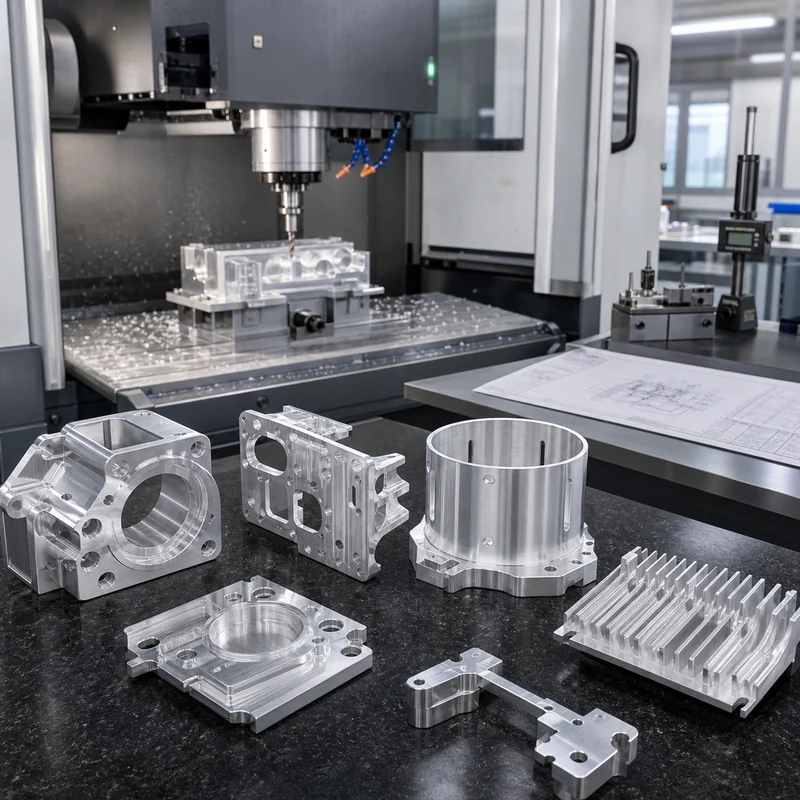
Aluminum cnc machining is often chosen because it balances machinability, weight, corrosion resistance, cost, and finishing flexibility. Buyers use aluminum for brackets, housings, covers, heat sinks, fixtures, robot parts, electronics enclosures, and prototype components that need real metal performance without the weight of steel. Good results depend on more than selecting aluminum as a material. The alloy, temper, wall thickness, pocket depth, tolerance, tool path, deburring method, and anodizing requirement all shape the final part.
Quick Answer
For most custom parts, aluminum CNC machining works best when the buyer chooses the alloy based on function. 6061 is a common all-purpose choice for brackets, housings, plates, and prototypes. 7075 offers higher strength but is more expensive and less forgiving for some finishing requirements. 5052 is often associated with sheet work rather than heavy machining, while 2024 has strength advantages but needs corrosion planning. If the project needs supplier confirmation, start with the site’s aluminum CNC machining material page and include exact alloy and temper in the RFQ.
Key Takeaways
- 6061 is usually the safest default for general machined aluminum parts unless strength or weight targets require another alloy.
- 7075 can improve strength but may raise material cost and finishing constraints.
- Thin walls, large pockets, and asymmetric material removal can cause distortion.
- Anodizing should be discussed before machining because coating thickness affects holes, threads, and cosmetic surfaces.
- Quote accuracy improves when the buyer sends drawings, 3D files, finish notes, quantity, and critical dimensions.
What Buyers Usually Need to Know
Aluminum machines quickly compared with many steels, but that does not make every aluminum part easy. Thin walls can vibrate, deep pockets can require long tools, and broad flat plates can move after material is removed. A part with many cosmetic faces may need careful fixturing to avoid marks.
Machining route depends on geometry. Plates, brackets, pockets, slots, and housings are commonly made through CNC milling service planning. Round bosses, threaded inserts, or cylindrical features may need turning or mill-turn work. When a design includes both milled and turned aluminum features, the supplier should review setups before quoting.
Buyers also need to decide whether the part is a prototype, a small batch, or a repeat production item. A one-off prototype may accept visible machining marks, while a production enclosure may need consistent bead blasting and anodizing color from batch to batch.
| Alloy | Best Use | Buyer Caution |
|---|---|---|
| 6061-T6 | General brackets, housings, plates, prototypes | Good default but still check wall thickness and finish |
| 7075-T6 | Higher strength lightweight parts | Higher cost and more finish planning |
| 2024 | Strength-focused components | Corrosion protection may be important |
| 6082 | Structural machined parts in some markets | Confirm availability with supplier |
Material and Process Considerations
6061-T6 is widely used because it is available, stable, reasonably strong, and friendly to machining and anodizing. It is a practical choice for many brackets, housings, plates, fixtures, and general components. 7075-T6 has much higher strength and is common for loaded parts, but it costs more and may be more sensitive to corrosion and finish decisions.
Aluminum can be paired with different finishes. Clear anodizing preserves a technical silver look. Color anodizing helps identification or appearance. Hard anodizing improves wear resistance but changes coating thickness and appearance. For finish-specific decisions, compare clear anodized aluminum options, color anodized finishes, and hard anodized requirements before production.
If the drawing does not define alloy and temper, the supplier may quote a common grade that is easy to buy locally. That can be acceptable for a noncritical prototype, but it is risky for loaded brackets, threaded components, and parts that must match previous batches. Always state the grade when performance matters.
Tolerance, Surface Finish, and Quality Checks
Aluminum often holds standard CNC tolerances well, but part geometry matters. A compact block with short tools may be easier than a thin housing with deep pockets. Tight tolerances on thin walls can be difficult because the part may relax after unclamping. For large flat faces, flatness should be specified realistically and measured after the part stabilizes.
Inspection should focus on functional features: mounting holes, bearing seats, mating faces, threaded holes, slots, and sealing surfaces. If anodizing follows machining, decide whether dimensions are inspected before or after finishing. The supplier’s quality assurance workflow should state how coating-sensitive features are checked.
Surface finish should be defined in both technical and visual terms when needed. Ra values help for mating surfaces, while cosmetic notes help for exposed faces. A bead-blasted anodized cover needs different handling than an internal fixture plate where tool marks are acceptable.
| Finish | What It Adds | Design Note |
|---|---|---|
| Clear anodizing | Corrosion resistance and clean appearance | Check coating allowance on fits |
| Color anodizing | Identification and cosmetic color | Accept reasonable color variation |
| Hard anodizing | Wear resistance and thicker coating | Mask threads or critical bores if needed |
| Bead blasting plus anodizing | Uniform matte surface | Define cosmetic faces before quoting |
Cost Factors and Quotation Details
Aluminum is often cost-effective because cycle times can be shorter and tool wear is lower than in stainless steel or titanium. Cost still rises with deep pockets, small internal radii, thin walls, cosmetic finishing, tight flatness, and high inspection requirements. Material size also matters; removing a large amount from thick billet can waste material and machine time.
Buyers can reduce cost by increasing internal radii, avoiding unnecessary deep pockets, using standard stock sizes, and separating functional tolerances from cosmetic preferences. If the design is still changing, rapid prototyping support or low-volume samples can validate fit before committing to larger production.
Anodizing and cosmetic finishing often add hidden cost. A simple machined part may be fast, but masking holes, blasting visible faces, matching color, and checking appearance can extend the timeline. Put these requirements in the RFQ instead of treating them as details to decide later.
Design Tips for Better Machining Results
Good aluminum design uses balanced wall thickness, accessible corners, practical tool radii, and clear datum surfaces. Very thin ribs may look efficient but can chatter during machining. Deep closed pockets may trap chips and require longer tools. Large cosmetic surfaces should be protected during clamping and finishing.
Threaded holes need enough engagement, but excessive depth adds cycle time and tool risk. For anodized parts, threads may need masking or post-finish tapping depending on fit requirements. If the part needs heat dissipation, design fins and pockets with tool access in mind, especially for electronics enclosures and heat sinks.
If weight reduction is the goal, remove material where it does not create thin unsupported walls. Large pockets with generous radii are usually easier than many narrow slots. Discuss stress-relief machining for plates and housings that need flatness after heavy material removal.
Common Buyer Mistakes to Avoid
A common mistake is selecting 7075 simply because it sounds stronger. If 6061 already meets the load and finish requirement, 7075 may add cost without improving the purchased part. Another mistake is specifying an anodized color without accepting normal color variation between alloy batches, surface textures, and suppliers.
Buyers also overlook distortion. Removing material from one side of a plate can release stress and change flatness. Thin-wall aluminum housings may measure differently while clamped than after release. Discuss roughing, stress relief, and finish passes when the part has large pockets or slender walls.
A third mistake is ignoring deburring. Aluminum burrs can be sharp, especially around slots, intersecting holes, and thin fins. If the part must be handled by users or assembled against seals, define edge break and burr limits clearly.
Supplier Selection Checklist
Ask the supplier to review the drawing and explain the manufacturing route in plain technical terms. The response should identify risky features, material assumptions, fixture needs, finishing steps, inspection methods, and lead time drivers. A strong supplier also tells the buyer what information is missing before taking the order, which is often more valuable than a fast but shallow quotation.
| Checklist Item | Good Response | Risky Response |
|---|---|---|
| Process route | The supplier names machines, setups, and secondary operations | Only says the part is easy |
| Material control | The supplier confirms grade, stock, and certificate needs | Offers vague equivalent material |
| Inspection | The supplier lists gauges, CMM, report, or sampling method | Mentions only visual checking |
| Communication | The supplier records revisions and open questions | Uses old files or informal changes |
Specification Sheet to Request
Before approval, request a short specification sheet covering drawing revision, 3D file name, material, quantity, finish, tolerance notes, critical dimensions, inspection report, packaging, and delivery terms. This sheet becomes the shared reference when purchasing, engineering, quality, and supplier teams discuss the order.
For repeat orders, the same sheet helps prevent silent changes. If the supplier changes stock size, finish partner, inspection method, or packaging, the buyer can catch the difference before parts ship. That control is more useful than relying on memory from an earlier batch or a message buried in an old email thread.
Aluminum CNC Machining Depth Notes for 6061, 7075 and Thin Walls
For aluminum cnc machining, anodizing must be treated as part of the engineering plan. Coating grows inward and outward, so tight bores, threaded holes, and sliding fits may need allowance or masking. Cosmetic surfaces may require consistent pre-finish texture such as bead blasting before anodizing.
Thin-wall machining is another key risk. The shop may rough both sides, leave temporary support, use soft jaws, or adjust tool paths to control vibration. If the buyer can increase wall thickness from 1.0 mm to 1.5 mm or allow a larger corner radius, cost and rejection risk may drop sharply.
Heat sinks and enclosures bring their own requirements. Fins should be thick enough for stable cutting, and pockets should allow chip evacuation. Cosmetic outside surfaces and functional internal surfaces may need different finish notes, so the drawing should not treat the entire part as one uniform surface.
Aluminum stock condition can influence the finished part. Plate, bar, and billet may have different internal stress patterns, and aggressive material removal can reveal those stresses. If a part has a large pocket on one side, the supplier may rough the part, flip it, leave material for a finish pass, or recommend stress-relieved stock. Buyers should be cautious when a drawing combines thin walls, broad flatness requirements, and a low-cost target, because those goals can conflict.
For 6061 parts, the biggest advantage is practical availability and predictable machining. It is usually easier to quote, easier to source, and easier to anodize consistently than many specialized alloys. That makes it suitable for fixtures, brackets, housings, and prototype parts. The buyer should still define temper and finish, because untreated soft aluminum or an unspecified equivalent may not match strength, surface hardness, or color expectations in a repeat order.
For 7075 parts, the buyer should be clear about why the alloy is needed. Higher strength may be important for loaded lightweight components, but 7075 can raise material cost and may require more careful corrosion planning. If the part is only a cover, spacer, or test fixture, 6061 may provide a better cost balance. If the part truly carries load, ask the supplier to confirm stock availability before promising lead time.
Thin-wall aluminum housings need realistic inspection planning. A wall can move slightly after unclamping or after anodizing. Measuring the part while it is still warm, clamped, or unsupported can produce misleading results. Ask the supplier how it will support the part during inspection and which dimensions are measured after finishing. For critical sealing or assembly faces, flatness and perpendicularity may need more attention than general size.
Anodizing color is not a precision dimension. Color can vary with alloy, surface preparation, coating thickness, bath condition, and batch size. Buyers who need a cosmetic match should request a control sample or acceptable range. For functional parts, coating thickness, masking, and corrosion behavior may matter more than color. Clear communication avoids rejecting usable parts because appearance expectations were never defined.
Aluminum burr control is especially important around drilled holes, milled slots, thin fins, and tapped features. Burrs can interfere with assembly, scratch mating surfaces, or break loose during product use. If the part has fluid paths, electronics contact areas, or user-handled edges, add a deburring note. A simple edge break callout can save time compared with arguing about whether a sharp edge is acceptable after delivery.
Heat sinks require a balance between thermal design and machinability. Very thin fins increase surface area, but they may chatter, bend, or trap chips during machining. Wider fin spacing may reduce theoretical thermal performance slightly while improving manufacturing consistency and cost. If a heat sink is still in development, prototype several fin geometries before choosing a production design.
For assemblies, aluminum parts often interact with steel screws, brass inserts, stainless pins, plastic covers, or electronic components. These interfaces should guide tolerances and finish choices. Threaded holes may need helicoils or inserts if repeated assembly is expected. Bearing seats may need a tighter tolerance than the surrounding pocket. Cosmetic covers may need protected faces, while internal brackets may only need functional deburring.
Buyers should also consider galvanic corrosion when aluminum contacts other metals in humid or outdoor environments. Anodizing, isolation washers, coatings, or material changes may be needed depending on the assembly. The machining supplier may not design the whole product, but it can flag obvious risks when the drawing and use condition are explained clearly.
For aluminum parts with many tapped holes, thread quality should be planned before finishing. Small tapped holes can load with chips, distort during deburring, or feel tight after anodizing. If screws are installed repeatedly, inserts may be better than direct aluminum threads. If the holes are only used once for assembly, direct tapping may be enough. The buyer should match the thread design to real service conditions.
Inspection reports for aluminum parts should not measure every easy dimension while ignoring the difficult ones. Hole position, flatness, perpendicularity, thread depth, and mating faces often matter more than outside block size. Ask the supplier to identify which features it considers critical and compare that list with the engineering intent before production starts.
For repeat aluminum orders, ask the supplier to keep finish samples, inspection points, and packaging method consistent. A dimensional drawing alone may not protect color, texture, edge feel, or cosmetic face handling. Record these details after the first accepted batch so the next order does not restart the same discussions.
Conclusion
Aluminum cnc machining decisions should be based on alloy, wall thickness, machining route, tolerance control, finishing risk, and inspection evidence. Buyers get better results when they send complete RFQ data, mark critical features clearly, and discuss anodizing or cosmetic expectations before production. A well-controlled aluminum order can be lightweight, accurate, attractive, and cost-effective when the design and supplier process fit each other.
FAQ
Is 6061 good for aluminum CNC machining?
Yes. 6061-T6 is a common default for machined aluminum brackets, housings, plates, and prototypes because it is available, stable, and finishes well.
When should I choose 7075 aluminum?
Use 7075 when higher strength-to-weight performance is needed and the added material cost and finishing considerations are justified.
Does anodizing change dimensions?
Yes. Anodizing adds coating thickness and can affect holes, threads, and sliding fits. Critical features may need masking or post-finish checks.