

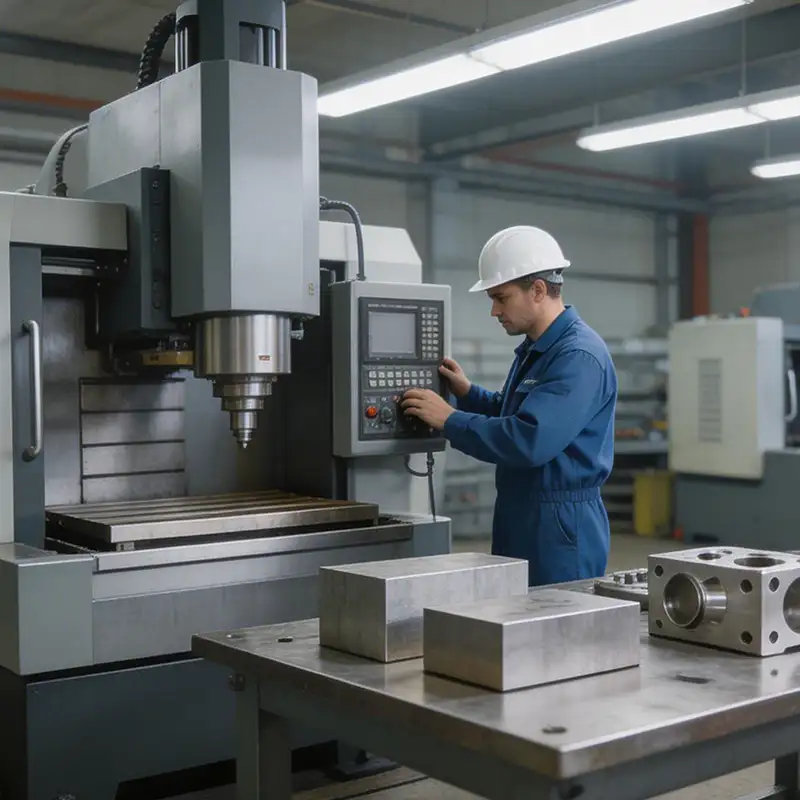
Categories
CNC Materials

Discover the Best Materials for CNC Machining Success

Choosing the right material is a foundational step for any CNC machining project. The best choice balances machinability, strength, cost, and final application, turning a good design into a great finished part. Let’s explore the top contenders to help you make an informed decision.

Top Metals for CNC Machining

When people ask about the best materials for CNC milling, metals often come to mind first. They offer incredible strength and durability, making them perfect for functional parts, aerospace components, and automotive applications. The key is finding a metal that machines well without excessive tool wear.

Aluminum Alloys: The Go-To Choice

If I had to pick one material that’s a superstar in the shop, it’s aluminum. Alloys like 6061 and 7075 are incredibly popular for good reason. They’re lightweight, have an excellent strength-to-weight ratio, and, most importantly, they’re highly machinable. You can achieve fast cutting speeds and beautiful surface finishes. It’s often the most cost-effective metal option, which is why it’s perfect for prototypes, enclosures, and brackets. For more on its properties, the ASM Handbook series is a fantastic technical resource.

Stainless Steel: For Strength & Corrosion Resistance

Need something tougher? That’s where stainless steel comes in. Grades like 304 and 316 are the answer for parts that face harsh environments, require food-grade certification, or need to withstand high stress. While it’s harder on tools than aluminum, modern CNC machines handle it with the right parameters. When you’re looking for durable CNC materials that won’t rust, stainless is a top-tier choice.

Excellent Plastics for CNC Projects

Don’t overlook plastics! They are fantastic CNC machining materials for applications where weight, electrical insulation, or chemical resistance are priorities. The range available means you can find a plastic with properties tailored to almost any need, from low-friction bearings to see-through prototypes.

Delrin (Acetal): The Precision Plastic

Delrin, or acetal homopolymer, is a machinist’s favorite plastic. It’s stiff, has low moisture absorption, and machines to a dimensionally stable, smooth finish that almost feels like metal. It’s ideal for gears, bushings, and insulators. If you’re wondering about what plastics are good for CNC for high-precision parts, Delrin should be at the top of your list.

Nylon (PA): Tough and Versatile

Nylon is the workhorse of engineering plastics. It’s tough, has good wear resistance, and can be quite flexible depending on the grade. This makes it excellent for functional parts like spacers, rollers, and custom fasteners. A friend of mine who makes custom bicycle components swears by CNC-machined nylon for its durability and shock absorption. For a deep dive into polymer science, check out the Polymer Science Learning Center.

How to Choose Your CNC Material

So, with all these options, how do you decide? I always suggest starting with the part’s job. Ask yourself: What forces will it handle? Will it be indoors or outdoors? What’s the budget? For instance, selecting materials for CNC for a one-off prototype might lead you to aluminum or ABS plastic for speed and cost. A final production part going into a machine might demand stainless steel or PEEK. Don’t hesitate to consult with your machine shop—they see what works and what doesn’t every day and can offer priceless advice to ensure your project’s success.
Categories
CNC Materials

Discover the Best Materials for Precision CNC Machining

Choosing the right material is a crucial first step in any precision machining project. The ideal material balances machinability, strength, and cost to bring your design to life. This guide explores the most common and effective materials used in CNC milling and turning, helping you make an informed decision for your next project.

Common Materials for Precision CNC Machining

When we talk about materials for CNC machining, we’re really looking at a fantastic toolbox. From robust metals to versatile plastics, each material family offers unique properties. Let’s break down the most popular options you’ll encounter in a machine shop.

Metals and Alloys

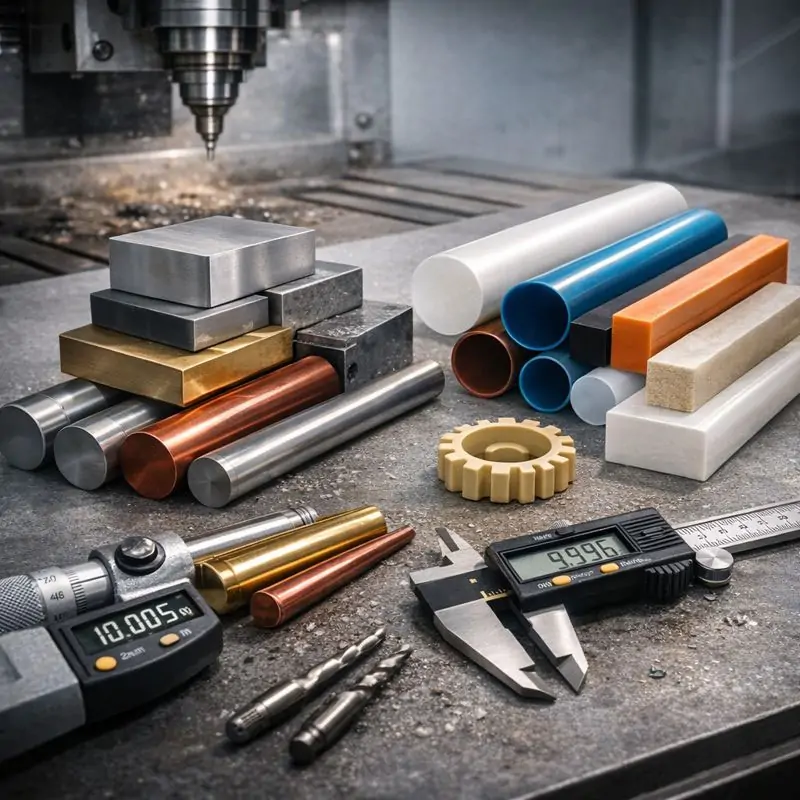
Metals are the workhorses of the industry. Aluminum, for instance, is a superstar because it’s lightweight, strong, and incredibly easy to machine, which often makes it a cost-effective choice. You’ll find alloys like 6061 and 7075 used everywhere from aerospace brackets to consumer electronics. Stainless steel is another go-to for parts that need to resist corrosion and handle high stress; grades like 304 and 316 are incredibly common. And let’s not forget brass and copper, which are excellent for electrical components and decorative pieces due to their conductivity and beautiful finish.

Engineering Plastics

Plastics aren’t just for prototypes! Modern engineering plastics offer incredible performance. Take Delrin (POM), for example—it’s stiff, has low friction, and machines to a beautifully smooth finish, making it perfect for gears and bearings. For parts needing clarity and impact resistance, acrylic (PMMA) is a fantastic option. And when you need something tough and chemical-resistant, like in automotive or medical applications, PEEK (Polyether Ether Ketone) is often the material of choice, despite being more challenging to work with.

Why Your Material Choice Matters

Picking the right stock material isn’t just a technicality; it directly impacts your project’s success. The right choice ensures your part can handle its intended load, environment, and lifespan. For instance, using a standard aluminum for a part that will face constant saltwater spray would be a mistake—a marine-grade aluminum or stainless steel would be necessary. The material also dictates the machining process itself; some cut like butter, allowing for faster production and lower costs, while others require special tools and slower speeds. Ultimately, matching the material to the application’s requirements is the key to a durable, functional, and cost-effective component.

How to Select the Right CNC Material

Feeling overwhelmed by the options? Don’t worry, we suggest you start by asking a few key questions. First, what is the primary function of the part? Does it need to be strong, lightweight, electrically insulating, or transparent? Second, consider the environment: will it face heat, chemicals, or outdoor exposure? Third, think about your budget and timeline. Easier-to-machine materials like aluminum 6061 or Delrin can significantly reduce machining time and cost. It’s always a good idea to consult with your machining partner early on. They can provide valuable insights, like recommending a slightly different alloy that machines more efficiently or a plastic that offers better performance for your specific use case.

Clearing Up Common Material Misconceptions

There are a few myths floating around that can lead to suboptimal choices. One common belief is that “stronger is always better.” While high-strength materials like titanium are amazing, they are often overkill for many applications and come with a much higher material and machining cost. Another misconception is that all plastics are weak. As we saw with PEEK and UHMW, some plastics are incredibly tough and suitable for demanding mechanical applications. Finally, some assume that the surface finish is purely a result of the machining process. While tooling and technique are critical, the material itself plays a huge role; for example, brass naturally achieves a smoother finish than some grades of steel.

Final Thoughts on Material Selection

Navigating the world of CNC machining materials is about finding the perfect partner for your design. Whether you’re creating a one-off prototype or components for high-volume production, the foundation is a well-chosen material. Remember to weigh the functional needs against practical factors like machinability and cost. By understanding the core families of metals and plastics and their best uses, you’re well-equipped to make a confident choice. For deeper technical data on material properties, reputable sources like the ASM International handbook are invaluable. Here’s to bringing your next precision part to life with the perfect material match!

Request A Quote

We'll Send You Back with Price Immediately!

DEC 1-31

XMAS SPECEIL

Up to

40% off

Discover the Best Materials for Precision CNC Machining

We'll Send You Back with Price Immediately!