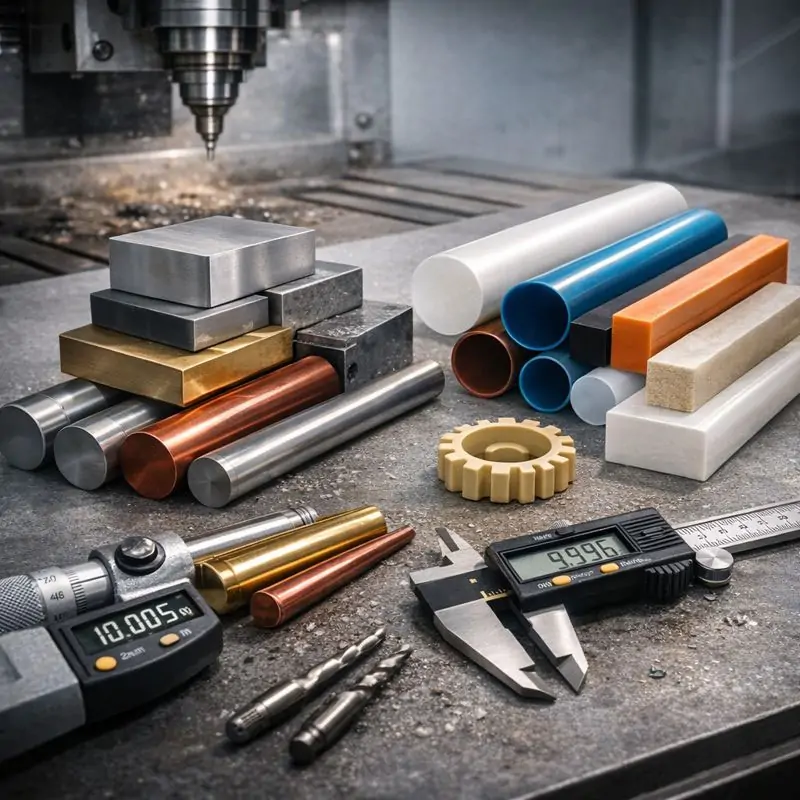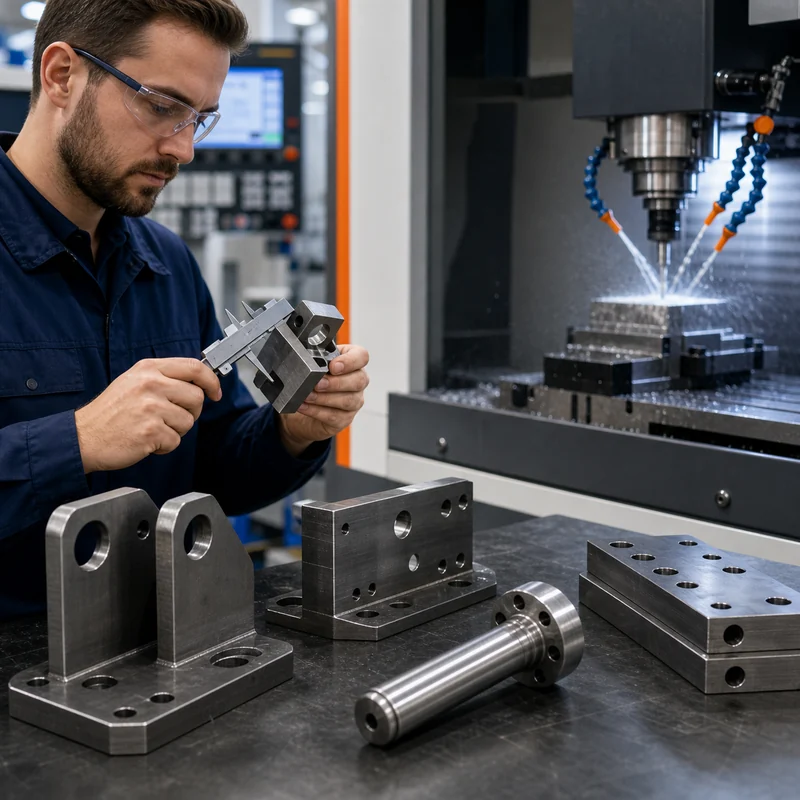
Categories
Blog CNC Materials Design, Cost & Sourcing

Properties of Mild Steel: CNC Machining Material Guide

Mild steel is one of the most widely used metals in manufacturing because it offers a practical balance of strength, cost, machinability, weldability, and availability. For CNC machined parts, it is often selected when the design needs a tough and economical steel component but does not require the corrosion resistance of stainless steel or the low weight of aluminum.

This guide explains the properties of mild steel from a custom-part perspective: what it is, how it behaves during CNC machining, when to choose it, when to avoid it, and which finishes can protect it. If you are comparing steel, aluminum, stainless steel, brass, copper, titanium, or engineering plastics, MTSPi’s CNC machining materials section can help you narrow the choice.

What Is Mild Steel?

Mild steel is a low-carbon steel. It normally contains a relatively small amount of carbon compared with medium-carbon or high-carbon steel, which makes it easier to form, weld, cut, drill, mill, turn, and fabricate. The low carbon level also makes mild steel less brittle and more forgiving in many general-purpose mechanical applications.

Because mild steel is economical and widely available in plate, bar, rod, tube, sheet, and structural forms, it is used across machinery, automation, tooling, automotive components, construction hardware, fixtures, frames, brackets, and equipment parts.

Key Properties of Mild Steel

Property Typical Behaviour Why It Matters for CNC Parts
Strength Moderate strength for general mechanical use Suitable for brackets, fixtures, plates, spacers, shafts, and frames
Ductility Can deform before fracture Useful when parts need toughness instead of brittle failure
Machinability Generally practical to mill, drill, tap, and turn Good for custom CNC parts when tools, feeds, and coolant are controlled
Weldability Usually easier to weld than higher-carbon steels Good for machined-and-welded assemblies
Formability Can be bent and formed in many sheet or plate applications Useful for combined machining and fabrication projects
Corrosion resistance Low compared with stainless steel Often needs coating, plating, oil, paint, or black oxide
Cost Usually lower than stainless steel, titanium, and many specialty alloys Good choice for cost-sensitive parts

Mild Steel vs Carbon Steel

Mild steel is part of the broader carbon steel family. Carbon steel includes low-carbon, medium-carbon, and high-carbon grades. Mild steel usually refers to the low-carbon end of that range. As carbon content increases, steel can become stronger and harder, but it may also become less ductile, less weldable, and more demanding to machine or heat treat.

For many CNC projects, the exact grade matters more than the general name. A drawing should specify the material grade, standard, heat treatment condition, and finish requirements when mechanical performance is important.

Mild Steel vs Stainless Steel

Comparison Point Mild Steel Stainless Steel
Corrosion resistance Rusts easily without protection Much better corrosion resistance depending on grade
Cost Usually more economical Typically higher material and machining cost
Machinability Often easier and faster to machine Can work harden and may require slower machining
Appearance Needs coating or finishing for long-term clean appearance Can remain bright or passivated in many environments
Best use General mechanical, structural, fixture, and cost-sensitive parts Corrosive, hygienic, marine, medical, or food-related environments

If corrosion resistance is a key requirement, stainless steel CNC machining may be a better fit. If the part will be painted, plated, powder coated, or used indoors, mild steel may offer better value.

Mild Steel vs Aluminum

Aluminum is lighter and naturally more corrosion resistant than mild steel, while mild steel is usually stronger, stiffer, and more economical for many load-bearing components. Aluminum often wins when weight, speed of machining, heat dissipation, or anodized appearance matter. Mild steel often wins when cost, stiffness, weldability, and general mechanical robustness matter. See aluminum CNC machining for comparison context.

Is Mild Steel Good for CNC Machining?

Yes. Mild steel is a common CNC machining material for both prototypes and production parts. It can be milled, turned, drilled, tapped, bored, reamed, and surface finished. It is especially useful for parts that need practical strength, threaded holes, flat plates, shafts, brackets, spacers, machine fixtures, and weldable assemblies.

  • CNC milling: suitable for plates, brackets, fixture blocks, mounting features, slots, and pockets.
  • CNC turning: suitable for shafts, pins, bushings, collars, threaded parts, and round spacers.
  • Drilling and tapping: practical for mounting holes and threaded interfaces.
  • Grinding or finishing: useful when better flatness, surface finish, or fit is required.

For part geometry that uses pockets, precision holes, or mating surfaces, CNC milling can provide accurate features. For round parts, pins, shafts, and threaded components, CNC turning may be more efficient.

Advantages of Mild Steel

  • Lower material cost compared with many stainless steels, titanium alloys, and specialty metals.
  • Good availability in many stock forms and thicknesses.
  • Useful strength and stiffness for general engineering parts.
  • Good weldability for fabricated assemblies.
  • Predictable machining behaviour for many common grades.
  • Compatible with many protective finishes.

Limitations of Mild Steel

  • Rusts quickly if exposed to moisture without protection.
  • Heavier than aluminum and many engineering plastics.
  • Not ideal for sanitary, marine, chemical, or outdoor environments unless coated properly.
  • Not as strong or wear-resistant as heat-treated alloy steels.
  • Can require deburring, edge protection, and post-processing to meet cosmetic expectations.

Common Grades and Similar Materials

Grade names vary by region and standard, so sourcing teams should confirm the exact specification on the drawing or purchase order. Common mild steel or low-carbon steel choices may include grades used for general fabrication, machining, plate work, or structural applications. Equivalent grades are not always identical across standards, so final selection should be verified against mechanical and chemical requirements.

Material Type Typical Use Selection Note
Low-carbon steel bar Turned shafts, pins, spacers, collars Good for economical machined round parts
Mild steel plate Brackets, fixture plates, mounting bases Check flatness, thickness tolerance, and surface condition
Cold rolled steel Parts needing better surface finish and tighter stock tolerance Often cleaner for precision plates and small components
Hot rolled steel Frames, large plates, structural parts Scale and surface condition may require machining or blasting
Free-machining steel High-volume turned parts Improves machinability but may affect weldability or compliance requirements

Surface Treatment for Mild Steel

Because mild steel rusts, finishing is often part of the design decision. A part used indoors may only need oil, black oxide, or paint. A visible product part may need powder coating or plating. A part exposed to moisture may need zinc plating, nickel plating, e-coating, or a more corrosion-resistant base material. MTSPi’s surface treatment section covers common finishing options for CNC parts.

Finish What It Does Typical Mild Steel Use
Black oxide Adds a dark appearance and light corrosion resistance with oil Tooling, fixtures, machine parts
Zinc plating Improves corrosion resistance at low cost Fasteners, brackets, hardware
Nickel plating Improves wear, appearance, and corrosion resistance Precision parts, shafts, decorative or functional surfaces
Powder coating Durable colored protective coating Frames, covers, brackets, equipment panels
Painting Economical corrosion and appearance protection Large fabricated or structural parts

Design Tips for CNC Machined Mild Steel Parts

  • Specify the exact grade and standard when strength or compliance matters.
  • Add realistic radii to internal corners to reduce stress concentration and machining cost.
  • Avoid unnecessary tight tolerances on non-critical faces.
  • Call out threaded holes, reamed holes, bearing fits, and datum surfaces clearly.
  • Plan coating thickness if the part has mating surfaces, sliding fits, or threads.
  • Use stainless steel or plating when corrosion is a serious risk.
  • Review welding sequence and post-weld machining needs for assemblies.

Typical Applications

Mild steel is often selected where the part needs strength, stiffness, weldability, and affordability more than light weight or corrosion resistance. It appears in machine bases, tooling plates, brackets, frames, fixture components, pins, collars, shafts, mounting hardware, guards, covers, and general industrial parts.

Industries such as automation, machinery, automotive equipment, robotics fixtures, and industrial hardware often use mild steel when a practical and economical metal is needed. For application-specific support, see MTSPi’s CNC machining applications.

When Should You Avoid Mild Steel?

Mild steel may not be the best option for parts that operate outdoors, in salt spray, in chemical exposure, in medical environments, in food-contact areas, or where low weight is essential. It may also be unsuitable when the part requires very high strength, high hardness, high fatigue resistance, or excellent corrosion resistance without coating.

In those cases, consider stainless steel, aluminum, alloy steel, titanium, brass, copper, or engineering plastics depending on the functional requirement.

How MTSPi Supports Mild Steel CNC Machining

MTSPi can machine mild steel parts from drawings and 3D models for prototypes, low-volume production, fixtures, brackets, shafts, plates, and mechanical components. We can review part geometry, tolerance, surface finish, coating needs, and inspection requirements before production.

To request a quote, send your CAD file, 2D drawing, quantity, steel grade preference, finish requirement, and application notes through the contact page. If you are unsure whether mild steel, stainless steel, or aluminum is better, include the operating environment and load requirements so the material choice can be reviewed.

FAQ

What is mild steel made of?

Mild steel is mainly iron with a low amount of carbon, plus small amounts of other elements depending on the grade and standard.

Does mild steel rust?

Yes. Mild steel can rust when exposed to moisture or corrosive environments, so protective finishing is often required.

Is mild steel easy to machine?

Many mild steel grades are practical to CNC machine. Tooling, coolant, feeds, speeds, chip control, and grade selection still matter for finish and dimensional stability.

Is mild steel stronger than aluminum?

Mild steel is usually stronger and stiffer than common aluminum alloys, but aluminum is much lighter and often easier to machine quickly.

Can mild steel be used for precision parts?

Yes, mild steel can be used for precision components when the grade, stock condition, machining process, tolerances, and finishing are specified correctly.

Can MTSPi machine mild steel prototypes and production parts?

Yes. MTSPi supports CNC machined mild steel prototypes, fixtures, brackets, shafts, plates, and low-volume production parts.
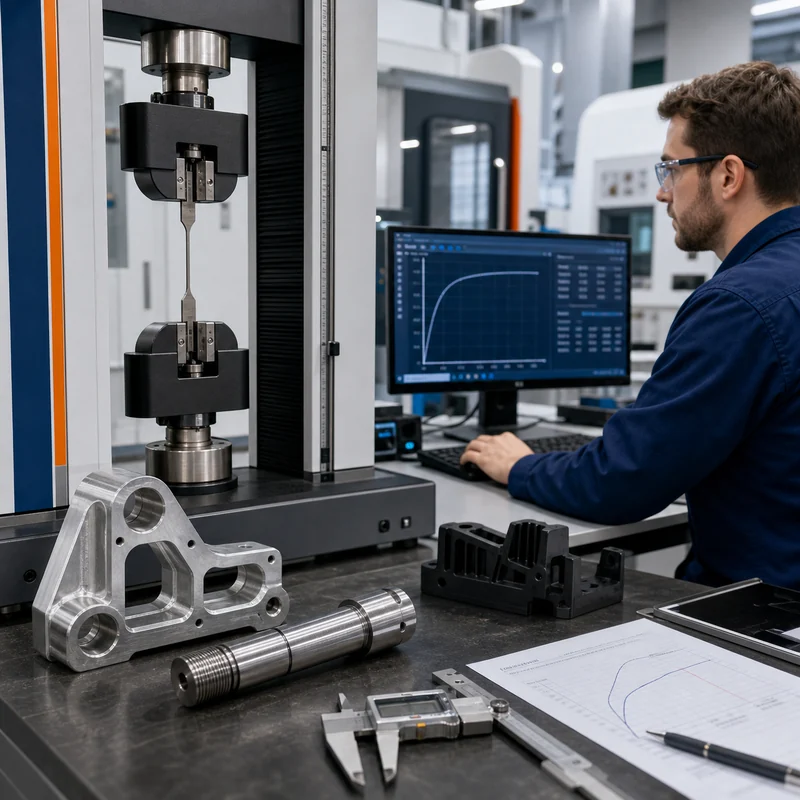
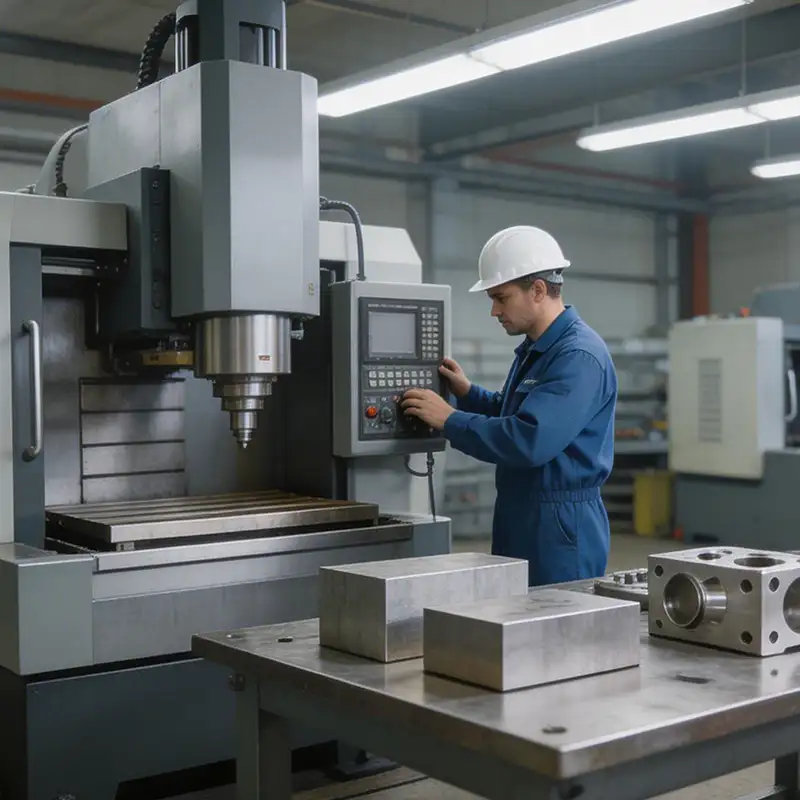
Categories
Blog CNC Materials Quality & Tolerances

Understanding Yield Strength: A Practical Guide for CNC Machined Parts

Yield strength is one of the most useful material properties for engineers who design custom CNC machined parts. It tells you how much stress a material can take before it stops behaving elastically and starts to deform permanently. In practical terms, it helps answer a direct question: will this bracket, shaft, housing, fixture, or plastic component keep its shape under real load?

This guide explains yield strength in plain engineering language, then connects it to CNC material selection, part geometry, safety factors, machining process choices, and inspection planning. If you are choosing between aluminum, stainless steel, brass, copper, titanium, Delrin, nylon, or PEEK, MTSPi’s CNC machining materials library and custom CNC machining services can help review the application before production.

What Is Yield Strength?

Yield strength is the stress at which a material begins to change shape permanently. Before this point, the material is in the elastic region: it can stretch, bend, or compress slightly and then return to its original shape when the load is removed. After the yield point, plastic deformation begins. The part may still be intact, but it no longer returns fully to its original dimensions.

For a CNC machined component, that distinction matters. A part does not need to break to fail. A bent mounting bracket, an ovalized bore, a stretched fastener area, or a shaft with permanent deflection can cause assembly problems even if the material has not fractured.

Yield Strength vs Tensile Strength

Property What It Means Why It Matters in CNC Part Design
Yield strength Stress where permanent deformation begins Used to prevent bending, stretching, or dimensional loss under working load
Ultimate tensile strength Maximum stress before fracture during tensile loading Useful for understanding final failure capacity
Elastic modulus Material stiffness in the elastic region Controls deflection before yield
Elongation How much the material can stretch before breaking Helps evaluate ductility and toughness
Hardness Resistance to indentation or surface wear Useful for wear surfaces, tooling contact, and finish expectations

A material can have high tensile strength but still yield earlier than expected under design loads. For many structural CNC parts, yield strength is often more important than ultimate strength because the part must maintain alignment, flatness, clearance, and function.

Stress, Strain, and the Yield Point

Stress is the force applied over an area. Strain is the amount of deformation that results from that stress. During a tensile test, a sample is pulled until it stretches and eventually breaks. The stress-strain curve shows how the material behaves from elastic deformation through yielding and final fracture.

Many metals have a visible transition from elastic to plastic behavior. Some materials do not show a sharp yield point, so engineers use an offset yield strength, commonly based on a defined amount of permanent strain. This creates a consistent way to compare materials even when the curve is gradual.

Why Yield Strength Matters for CNC Machined Parts

  • It helps prevent permanent bending in brackets, plates, arms, and frames.
  • It supports shaft, pin, and fastener-area sizing under mechanical load.
  • It helps engineers choose between aluminum, steel, stainless steel, titanium, and engineering plastics.
  • It affects whether a part can survive clamping, press fits, assembly forces, and service loads.
  • It informs safety factors when parts are used in machinery, automation, robotics, aerospace, or medical equipment.

For example, a lightweight aluminum prototype may be suitable for a visual housing, while a loaded fixture plate may need a stronger aluminum alloy, stainless steel, or a design with thicker ribs. A turned shaft may need both yield strength and surface hardness, which makes CNC turning, material grade, heat treatment, and finishing all part of the same decision.

How Yield Strength Is Tested

Yield strength is usually measured with a tensile test. A standardized specimen is clamped in a testing machine and pulled at a controlled rate. The machine records force and elongation, which are converted into stress and strain. The resulting curve shows elastic behavior, yield, strain hardening, and eventual fracture.

For sourced CNC parts, the machine shop normally does not test every machined part for yield strength. Instead, the value usually comes from material standards, mill certificates, supplier data sheets, or customer-specified requirements. Critical projects may require material certificates, hardness checks, dimensional inspection, or additional validation testing.

Typical Yield Strength Ranges for Common CNC Materials

The table below gives general comparison ranges only. Actual values depend on alloy, temper, heat treatment, manufacturing route, supplier, standard, and test condition. Always confirm the exact grade and certification requirements for critical applications.

Material Family Typical Yield Strength Direction Common CNC Applications
Aluminum alloys Medium; varies widely by grade and temper Housings, brackets, heat sinks, aerospace-style lightweight parts
Stainless steel Medium to high depending on grade and condition Corrosion-resistant shafts, fittings, medical and food-equipment components
Carbon and alloy steel Medium to very high depending on heat treatment Pins, shafts, tooling components, structural machine parts
Titanium alloys High strength-to-weight ratio Aerospace, medical, high-performance lightweight parts
Brass and copper alloys Lower to medium depending on alloy Connectors, fittings, electrical and thermal components
Engineering plastics Lower than metals; highly dependent on polymer and reinforcement Insulators, wear parts, lightweight fixtures, housings

Material Selection Examples

Aluminum CNC Machining

Aluminum is often selected for CNC prototypes and production parts because it machines quickly, has a useful strength-to-weight ratio, and accepts finishes such as anodizing. For loaded parts, yield strength depends heavily on alloy and temper. A cosmetic aluminum cover and a structural automation bracket may need different grades. See aluminum CNC machining for related material and process context.

Stainless Steel CNC Machining

Stainless steel combines corrosion resistance with good mechanical strength. It is used for shafts, fittings, valve parts, medical components, marine parts, and food-equipment hardware. Yield strength, machinability, corrosion resistance, and cost vary by grade, so material choice should match the working environment. See stainless steel CNC machining.

Titanium CNC Machining

Titanium alloys offer strong yield performance for their weight, plus excellent corrosion resistance. They are valuable for aerospace, medical, and high-performance applications, but they require careful machining strategy, tooling, heat control, and inspection planning. See titanium CNC machining.

Engineering Plastics

Plastics such as ABS, Delrin, nylon, and PEEK have much lower yield strength than metals, but they can be ideal when the design needs low weight, insulation, wear resistance, chemical resistance, or lower friction. For plastic parts, creep, temperature, moisture absorption, and wall thickness are often as important as short-term yield data. See CNC plastic machining.

Yield Strength and Part Geometry

A material property alone does not make a part strong. Geometry controls how stress moves through the component. Sharp inside corners, thin sections, small radii, undercut areas, and holes near loaded edges can concentrate stress and cause local yielding. A stronger material may still fail if the design creates a severe stress concentration.

  • Use fillets around internal corners and shoulder transitions.
  • Increase wall thickness or add ribs where deflection is a concern.
  • Avoid placing holes too close to highly loaded edges.
  • Match thread engagement length to the material and load.
  • Consider load direction when choosing grain direction, stock form, and machining setup.
  • Use finite element analysis or prototype testing for high-risk structural parts.

Yield Strength in Prototypes vs Production Parts

A prototype should use a material that answers the right engineering question. If the prototype is only for fit and appearance, a substitute material may be acceptable. If the prototype must carry load, validate threads, prove fatigue behavior, or represent final product performance, material grade and yield strength must be closer to the production condition. This is one reason CNC machining is valuable in rapid prototyping.

Production adds another layer: repeatability. The first prototype may pass because it was machined carefully from a known stock piece. Batch production needs consistent material supply, documented grade, controlled heat treatment, finish control, and inspection criteria.

How Manufacturing Processes Affect Yield Strength

Yield strength can change with alloy composition, heat treatment, cold working, casting condition, forging, additive manufacturing, and post-processing. CNC machining usually removes material and shapes the part; it does not automatically improve the base material strength. However, machining strategy can influence residual stress, surface condition, notch sensitivity, and dimensional stability.

Process or Condition Possible Effect Design Note
Heat treatment Can significantly raise or change yield strength Specify grade and condition clearly on drawings
Cold working May increase strength but reduce ductility Confirm supplier data and forming history
Casting Properties may vary with porosity and microstructure Critical surfaces may need machining and inspection
Additive manufacturing Properties can vary by orientation and post-processing Do not assume printed strength equals wrought material
CNC machining Usually preserves base material strength but changes geometry and surface condition Avoid stress risers and manage thin-wall distortion

Safety Factor and Real-World Loads

Engineers rarely design a part to operate exactly at yield strength. They use a safety factor to account for uncertainty in loads, material variation, surface condition, temperature, shock, vibration, fatigue, corrosion, and assembly effects. The required safety factor depends on the application and risk level.

For non-critical fixtures, a modest factor may be acceptable. For lifting equipment, aerospace components, medical devices, or safety-critical assemblies, the design standard, documentation, and testing requirements are much stricter. A CNC supplier can support manufacturability and inspection, but the final safety requirement should come from the product design team or applicable standard.

Common Mistakes When Using Yield Strength

  • Choosing material only by yield strength while ignoring stiffness, toughness, corrosion, wear, or machinability.
  • Using generic online values instead of the exact alloy, grade, temper, and standard.
  • Forgetting that heat treatment and supplier condition can change properties.
  • Assuming a prototype made from one material will perform like the production material.
  • Ignoring permanent deformation in holes, thin walls, press fits, and threaded features.
  • Treating plastics like metals without considering creep, temperature, and moisture.

How MTSPi Helps With Material and Strength Decisions

MTSPi supports CNC machining for metal and plastic parts where material choice, geometry, tolerance, and finishing must work together. We can review drawings for material feasibility, machining access, stress-sensitive features, wall thickness, thread design, surface finish, and inspection requirements before production.

For a strength-sensitive part, send the 3D model, 2D drawing, expected load direction, quantity, material preference, finish, and inspection requirements through our contact page. If the material is not fixed, we can help compare options across the CNC metal machining and plastic material families.

FAQ

What is yield strength in simple terms?

Yield strength is the point where a material begins to bend, stretch, or deform permanently instead of springing back to its original shape.

Is yield strength the same as tensile strength?

No. Yield strength marks the start of permanent deformation. Tensile strength is the maximum stress a material can withstand before breaking in a tensile test.

Why does yield strength matter for CNC machined parts?

It helps prevent brackets, shafts, housings, fixtures, and threaded areas from permanently deforming under load, clamping, assembly, or service conditions.

Which CNC metal has the highest yield strength?

High-strength alloy steels and some titanium alloys can have very high yield strength, but the best choice depends on weight, corrosion resistance, machinability, heat treatment, cost, and application requirements.

Do plastics have yield strength?

Yes, many plastics have yield data, but plastic behavior is also affected by creep, temperature, moisture, reinforcement, wall thickness, and long-term loading.

Can MTSPi help choose a material based on yield strength?

Yes. MTSPi can review the application, drawing, tolerance, and service conditions to help compare CNC material options before quoting or production.

Categories
CNC Materials

Discover the Best Materials for CNC Machining Success

Choosing the right material is a foundational step for any CNC machining project. The best choice balances machinability, strength, cost, and final application, turning a good design into a great finished part. Let’s explore the top contenders to help you make an informed decision.

Top Metals for CNC Machining

When people ask about the best materials for CNC milling, metals often come to mind first. They offer incredible strength and durability, making them perfect for functional parts, aerospace components, and automotive applications. The key is finding a metal that machines well without excessive tool wear.

Aluminum Alloys: The Go-To Choice

If I had to pick one material that’s a superstar in the shop, it’s aluminum. Alloys like 6061 and 7075 are incredibly popular for good reason. They’re lightweight, have an excellent strength-to-weight ratio, and, most importantly, they’re highly machinable. You can achieve fast cutting speeds and beautiful surface finishes. It’s often the most cost-effective metal option, which is why it’s perfect for prototypes, enclosures, and brackets. For more on its properties, the ASM Handbook series is a fantastic technical resource.

Stainless Steel: For Strength & Corrosion Resistance

Need something tougher? That’s where stainless steel comes in. Grades like 304 and 316 are the answer for parts that face harsh environments, require food-grade certification, or need to withstand high stress. While it’s harder on tools than aluminum, modern CNC machines handle it with the right parameters. When you’re looking for durable CNC materials that won’t rust, stainless is a top-tier choice.

Excellent Plastics for CNC Projects

Don’t overlook plastics! They are fantastic CNC machining materials for applications where weight, electrical insulation, or chemical resistance are priorities. The range available means you can find a plastic with properties tailored to almost any need, from low-friction bearings to see-through prototypes.

Delrin (Acetal): The Precision Plastic

Delrin, or acetal homopolymer, is a machinist’s favorite plastic. It’s stiff, has low moisture absorption, and machines to a dimensionally stable, smooth finish that almost feels like metal. It’s ideal for gears, bushings, and insulators. If you’re wondering about what plastics are good for CNC for high-precision parts, Delrin should be at the top of your list.

Nylon (PA): Tough and Versatile

Nylon is the workhorse of engineering plastics. It’s tough, has good wear resistance, and can be quite flexible depending on the grade. This makes it excellent for functional parts like spacers, rollers, and custom fasteners. A friend of mine who makes custom bicycle components swears by CNC-machined nylon for its durability and shock absorption. For a deep dive into polymer science, check out the Polymer Science Learning Center.

How to Choose Your CNC Material

So, with all these options, how do you decide? I always suggest starting with the part’s job. Ask yourself: What forces will it handle? Will it be indoors or outdoors? What’s the budget? For instance, selecting materials for CNC for a one-off prototype might lead you to aluminum or ABS plastic for speed and cost. A final production part going into a machine might demand stainless steel or PEEK. Don’t hesitate to consult with your machine shop—they see what works and what doesn’t every day and can offer priceless advice to ensure your project’s success.

Categories
CNC Materials

Discover the Best Materials for Precision CNC Machining

Choosing the right material is a crucial first step in any precision machining project. The ideal material balances machinability, strength, and cost to bring your design to life. This guide explores the most common and effective materials used in CNC milling and turning, helping you make an informed decision for your next project.

Common Materials for Precision CNC Machining

When we talk about materials for CNC machining, we’re really looking at a fantastic toolbox. From robust metals to versatile plastics, each material family offers unique properties. Let’s break down the most popular options you’ll encounter in a machine shop.

Metals and Alloys

Metals are the workhorses of the industry. Aluminum, for instance, is a superstar because it’s lightweight, strong, and incredibly easy to machine, which often makes it a cost-effective choice. You’ll find alloys like 6061 and 7075 used everywhere from aerospace brackets to consumer electronics. Stainless steel is another go-to for parts that need to resist corrosion and handle high stress; grades like 304 and 316 are incredibly common. And let’s not forget brass and copper, which are excellent for electrical components and decorative pieces due to their conductivity and beautiful finish.

Engineering Plastics

Plastics aren’t just for prototypes! Modern engineering plastics offer incredible performance. Take Delrin (POM), for example—it’s stiff, has low friction, and machines to a beautifully smooth finish, making it perfect for gears and bearings. For parts needing clarity and impact resistance, acrylic (PMMA) is a fantastic option. And when you need something tough and chemical-resistant, like in automotive or medical applications, PEEK (Polyether Ether Ketone) is often the material of choice, despite being more challenging to work with.

Why Your Material Choice Matters

Picking the right stock material isn’t just a technicality; it directly impacts your project’s success. The right choice ensures your part can handle its intended load, environment, and lifespan. For instance, using a standard aluminum for a part that will face constant saltwater spray would be a mistake—a marine-grade aluminum or stainless steel would be necessary. The material also dictates the machining process itself; some cut like butter, allowing for faster production and lower costs, while others require special tools and slower speeds. Ultimately, matching the material to the application’s requirements is the key to a durable, functional, and cost-effective component.

How to Select the Right CNC Material

Feeling overwhelmed by the options? Don’t worry, we suggest you start by asking a few key questions. First, what is the primary function of the part? Does it need to be strong, lightweight, electrically insulating, or transparent? Second, consider the environment: will it face heat, chemicals, or outdoor exposure? Third, think about your budget and timeline. Easier-to-machine materials like aluminum 6061 or Delrin can significantly reduce machining time and cost. It’s always a good idea to consult with your machining partner early on. They can provide valuable insights, like recommending a slightly different alloy that machines more efficiently or a plastic that offers better performance for your specific use case.

Clearing Up Common Material Misconceptions

There are a few myths floating around that can lead to suboptimal choices. One common belief is that “stronger is always better.” While high-strength materials like titanium are amazing, they are often overkill for many applications and come with a much higher material and machining cost. Another misconception is that all plastics are weak. As we saw with PEEK and UHMW, some plastics are incredibly tough and suitable for demanding mechanical applications. Finally, some assume that the surface finish is purely a result of the machining process. While tooling and technique are critical, the material itself plays a huge role; for example, brass naturally achieves a smoother finish than some grades of steel.

Final Thoughts on Material Selection

Navigating the world of CNC machining materials is about finding the perfect partner for your design. Whether you’re creating a one-off prototype or components for high-volume production, the foundation is a well-chosen material. Remember to weigh the functional needs against practical factors like machinability and cost. By understanding the core families of metals and plastics and their best uses, you’re well-equipped to make a confident choice. For deeper technical data on material properties, reputable sources like the ASM International handbook are invaluable. Here’s to bringing your next precision part to life with the perfect material match!

Request A Quote

We'll Send You Back with Price Immediately!

DEC 1-31

XMAS SPECEIL

Up to

40% off

Discover the Best Materials for Precision CNC Machining

We'll Send You Back with Price Immediately!