

Categories
CNC Materials

ABS vs Nylon Machining: Which Material Wins for Your CNC Project?

Choosing between ABS and Nylon for your CNC machining project can be tricky. Both are fantastic engineering plastics, but they shine in different areas. This friendly guide breaks down their properties, machining quirks, and ideal uses to help you pick the perfect material for your part.

Getting to Know ABS and Nylon

Hey there! So you’re planning a CNC project and the material choice has come down to ABS plastic versus Nylon. It’s a common crossroads. Think of it like choosing between a reliable sedan and a rugged off-road vehicle—both will get you there, but the best ride depends on the terrain. Let’s meet our contenders properly before we pit them against each other in a machinable plastics comparison.

What is ABS Plastic?

ABS, or Acrylonitrile Butadiene Styrene, is like the friendly, all-around workhorse of the plastic world. You’ve definitely held it—it’s the same stuff used in LEGO bricks, car dashboards, and protective cases. Its popularity in CNC machining plastics comes from its great balance. It’s tough, has good impact resistance, and is relatively inexpensive. It also machines beautifully, leaving a nice, smooth surface finish that’s easy to post-process. For more on its general properties, you can check out this resource from Ensinger Plastics.

What is Nylon (Polyamide)?

Nylon, known technically as Polyamide or PA, is the tough, resilient athlete. Originally famous for stockings, it’s now a superstar in engineering for its strength, wear resistance, and flexibility. In the world of CNC machining nylon, you’ll often hear about grades like Nylon 6 and Nylon 66. It’s the go-to for parts that need to endure friction, bear loads, or operate in tougher environments. However, it has a bit of a reputation for being “thirsty”—it absorbs moisture from the air, which can affect machining and final part dimensions.

Head-to-Head: Key Properties for Machining

Alright, let’s put them side-by-side. When you’re comparing ABS vs Nylon for CNC, you’re really looking at a trade-off between impact toughness and mechanical strength. Here’s a breakdown of the key factors that will influence your engineering plastic selection.

Strength & Toughness

This is where their personalities really differ. Nylon is the stronger of the two. It has a higher tensile strength and excellent fatigue resistance, meaning it can handle repeated stress and strain without failing. It’s fantastic for gears, bearings, and structural components. ABS, while strong, excels in toughness and impact resistance. It can take a sudden shock or drop better than Nylon. So, if your part might get bumped or knocked around, ABS could be your hero. For a deep dive into material data, MatWeb is an excellent database.

Heat & Moisture Resistance

Here’s a big one for functional parts. Nylon generally handles higher temperatures better than ABS. Its heat deflection temperature is higher, so it won’t soften or warp as easily in warm environments. But remember that “thirsty” nature? That absorbed moisture can actually make Nylon softer and less stiff during machining if it’s not pre-dried. ABS is more dimensionally stable in humid conditions but has a lower thermal limit. So, for a part under the hood of a car? Lean Nylon. For a housing in a climate-controlled room? ABS is fine.

Wear and Chemical Resistance

If your part involves sliding, rubbing, or any kind of friction, Nylon is the undisputed champion. Its natural lubricity and wear resistance are why it’s the classic choice for bushings, rollers, and wear pads. It also resists oils, fuels, and many solvents quite well. ABS has decent chemical resistance to some acids and alkalis but doesn’t like hydrocarbons (like gasoline) and can be scratched more easily. So, for a durable plastic part that needs to slide smoothly, Nylon wins every time.

The CNC Machining Process for Each

Now, how do they behave on the machine? Both are considered very machinable plastics, but they have their own quirks. A good machinist knows these tricks, which can affect the cost and quality of your final part.

Machining ABS: Tips and Tricks

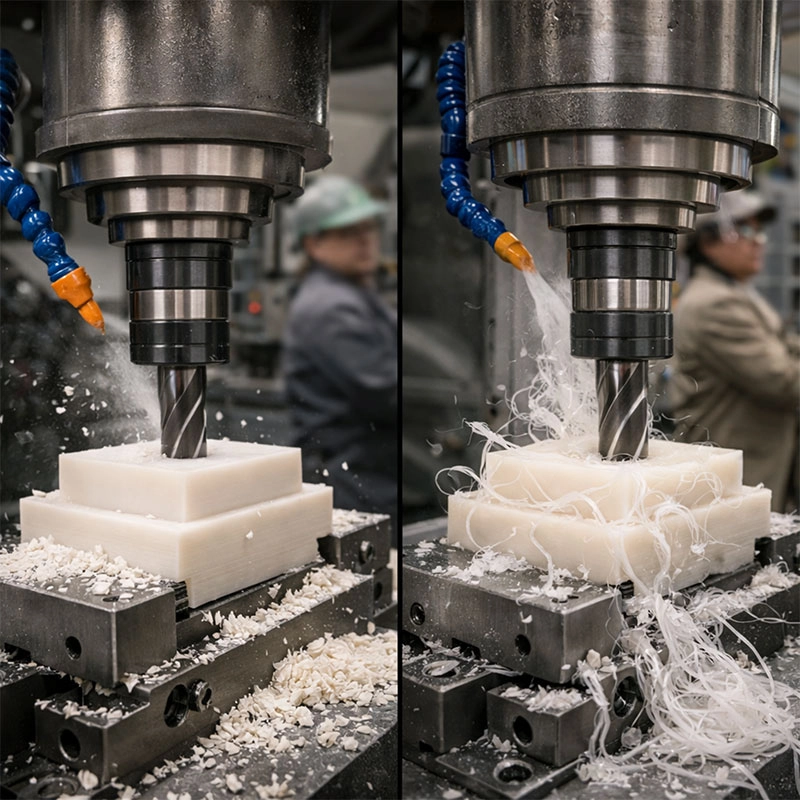
Machinists often describe ABS as “forgiving” and “easy to work with.” It cuts cleanly, produces manageable chips (not long, stringy ones), and allows for high feed rates. You get a great surface finish right off the tool, and it’s easy to sand, glue, or paint afterward. The main watch-out is heat. Too much localized heat from aggressive cutting can melt or gum up the plastic. Using sharp tools, proper coolant (often compressed air is enough), and the right speeds and feeds keeps everything smooth. It’s a top pick for prototype machining because of this ease.

Machining Nylon: Handling the Challenges

CNC machining Polyamide requires a bit more finesse. The two big challenges are moisture and flexibility. As we mentioned, nylon should be pre-dried before machining to ensure dimensional stability and prevent bubbling or a poor surface finish. Secondly, because it’s somewhat flexible, it can deflect or vibrate during cutting if not properly supported, leading to inaccuracies. Using very sharp tools with high rake angles and secure workholding is key. The payoff is worth it—you get a strong, durable part with excellent wear properties.

Choosing Your Winner: Application-Based Advice

So, who wins the ABS versus Nylon machining battle? The answer, as you’ve probably guessed, is: “It depends on your project!” Let’s make it simple with some real-world scenarios.

Choose ABS Plastic Machining when: Your priority is good impact resistance, a lower cost, and excellent machinability. It’s perfect for prototypes, enclosures, housings, consumer product parts, and models that need a nice painted finish. Think of a custom dashboard panel, a jig or fixture for assembly, or a protective cover.

Choose Nylon CNC Material when: You need high mechanical strength, wear resistance, and fatigue endurance. It’s the ideal candidate for functional, moving parts like gears, bearings, bushings, pulleys, and insulators. If your part will face friction, constant load, or a slightly tougher environment, Nylon is your material.

My final piece of friendly advice? Talk to your CNC machining partner early. Describe the function, environment, and stresses your part will face. A good shop can guide you through this plastic material comparison and help you select the right stock material to ensure your project is a total success. Happy making!
Categories
CNC Materials

Your Ultimate Guide to Plastic CNC Machining Success

Welcome to your go-to resource for plastic CNC machining! This guide breaks down everything from material selection to finishing techniques, helping you understand the process and achieve high-quality, precise plastic parts. Whether you’re new to CNC or looking to refine your skills, you’ll find practical advice here.

Why Choose CNC for Plastic Parts?

If you’re exploring plastic part fabrication or polymer machining, you might wonder why CNC is such a popular choice. Think of it like a highly skilled sculptor, but one that uses digital instructions to carve plastic with incredible accuracy. Unlike injection molding, which is great for huge volumes, CNC milling of plastics is perfect for prototypes, custom one-off pieces, or low to medium production runs. It gives you the freedom to make design changes quickly without expensive molds. The result? Parts with tight tolerances, excellent surface finishes, and complex geometries that are hard to achieve with other methods.

Picking the Right Plastic for Your Project

This is where your guide to machining plastics really starts. Not all plastics are created equal for machining! Picking the wrong one can lead to melted edges, poor finishes, or a part that just doesn’t hold up. Here’s a quick rundown of some common players:

ABS is a tough, all-rounder that machines nicely and is easy to glue and paint. Polycarbonate (PC) is incredibly strong and clear, but it can be a bit grabby on tools. Acrylic (PMMA) gives you that crystal-clear, glass-like finish but is brittle and can chip. For parts needing low friction and high wear resistance, Acetal (POM/Delrin) is a star performer. And for extreme chemical resistance or high temperatures, engineers often turn to PEEK or PTFE (Teflon). My advice? Always chat with your material supplier or machinist about your part’s function—they can point you to the perfect fit.

Key Considerations Before You Start Machining

Jumping straight into CNC plastic fabrication without a plan is like baking without a recipe. A few upfront thoughts make all the difference. First, consider your part’s design. Sharp internal corners? They might need a special tool. Very thin walls? They could vibrate or break during cutting. Sharing a detailed 3D model with your machinist helps them spot these issues early. Also, think about the final look and feel. Do you need a glossy finish, or will a matte texture work? Specifying this early guides the entire machining process for polymers.

Your Tooling and Cutting Strategy

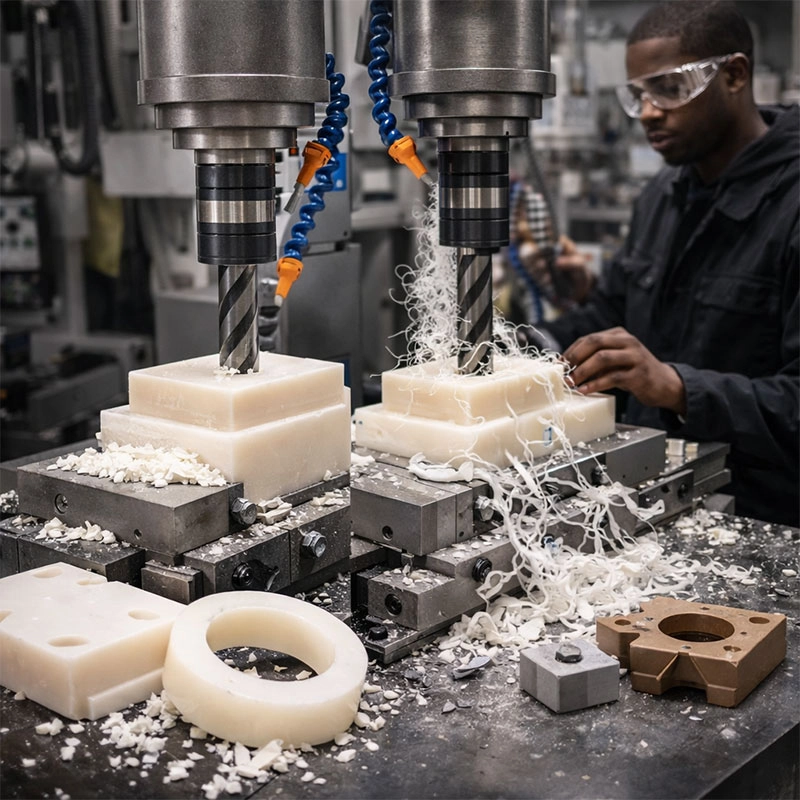
The tools and how we use them are crucial in precision plastic machining. We generally use sharp, polished tools designed for plastics. Why sharp? Dull tools generate more heat through friction, and heat is the enemy—it can soften the plastic and ruin your cut. High spindle speeds with slow feed rates often work well, as they produce smaller chips that carry heat away. Using compressed air or mist coolant (never a flood of liquid that could swell the material) is key for temperature control. It’s a delicate balance, but getting it right means clean cuts and happy parts.

Workholding and Temperature Control

How you hold the plastic block still is just as important as the cutting. Since plastics are softer and more flexible than metal, we need gentle but secure fixturing. Vacuum tables are fantastic because they distribute holding force evenly without distorting the material. Sometimes, custom soft jaws or adhesive methods are used. The goal is always to prevent vibration and movement without crushing the part. And remember that temperature control we mentioned? Keeping everything cool prevents the plastic from expanding, which ensures your final dimensions are spot-on. For more on material properties, resources like Boedeker Plastics offer great technical data sheets.

A Step-by-Step Look at the CNC Process for Plastics

Let’s walk through a typical CNC machining plastic guide process. It starts with your CAD model, which gets translated into machine instructions (G-code) by CAM software. The machinist then secures a block of your chosen plastic to the machine bed. The first cuts are usually roughing passes—these quickly remove large amounts of material, leaving a little extra. Then, finishing passes come in with finer tools and precise movements to hit the exact dimensions and surface quality. Finally, the part is carefully detached, deburred (removing any sharp edges), and often goes through a secondary finishing process like sanding or polishing. It’s a methodical dance between machine, material, and machinist.

Common Pitfalls and How to Avoid Them

Even with a great plastic machining tutorial, things can go sideways. A common issue is melting or gumming. This usually points to excessive heat from dull tools, too slow spindle speed, or inadequate cooling. The fix? Sharpen or change your tools and optimize your speeds and feeds. Another headache is chipping, especially on brittle plastics like acrylic. Using climb milling techniques and very sharp, single-flute cutters can make a world of difference. Finally, dimensional inaccuracy often stems from the plastic expanding due to heat or from improper fixturing. Allowing the material to cool between passes and using the right workholding solve most of this. The key is to start with conservative settings and adjust as you learn how the specific material behaves.

Wrapping Up Your Plastic Machining Journey

I hope this comprehensive guide to CNC machining plastics has been helpful! Mastering plastic CNC machining is about understanding the unique personality of plastics—how they react to heat, force, and cutting tools. It blends science with a bit of practical artistry. Start with a suitable material, design for manufacturability, use sharp tools with a smart cutting strategy, and control your environment. Don’t be afraid to ask for advice from experienced machinists; their hands-on knowledge is invaluable. With these tips, you’re well on your way to turning your plastic part ideas into successful, high-quality realities. Happy machining!

Categories
CNC Materials

Discover the Best Materials for Precision CNC Machining

Choosing the right material is a crucial first step in any precision machining project. The ideal material balances machinability, strength, and cost to bring your design to life. This guide explores the most common and effective materials used in CNC milling and turning, helping you make an informed decision for your next project.

Common Materials for Precision CNC Machining

When we talk about materials for CNC machining, we’re really looking at a fantastic toolbox. From robust metals to versatile plastics, each material family offers unique properties. Let’s break down the most popular options you’ll encounter in a machine shop.

Metals and Alloys

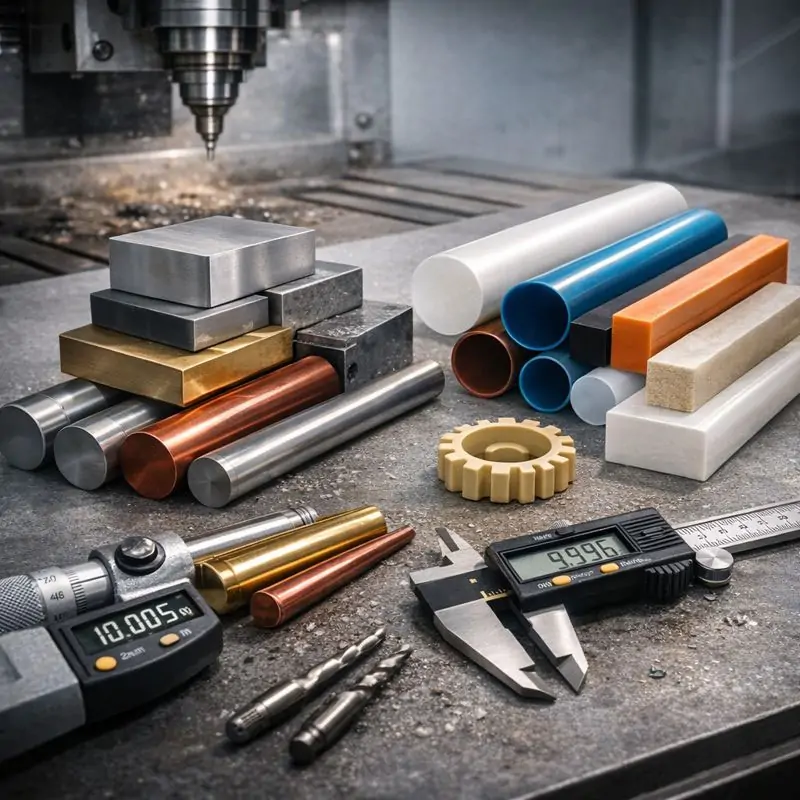
Metals are the workhorses of the industry. Aluminum, for instance, is a superstar because it’s lightweight, strong, and incredibly easy to machine, which often makes it a cost-effective choice. You’ll find alloys like 6061 and 7075 used everywhere from aerospace brackets to consumer electronics. Stainless steel is another go-to for parts that need to resist corrosion and handle high stress; grades like 304 and 316 are incredibly common. And let’s not forget brass and copper, which are excellent for electrical components and decorative pieces due to their conductivity and beautiful finish.

Engineering Plastics

Plastics aren’t just for prototypes! Modern engineering plastics offer incredible performance. Take Delrin (POM), for example—it’s stiff, has low friction, and machines to a beautifully smooth finish, making it perfect for gears and bearings. For parts needing clarity and impact resistance, acrylic (PMMA) is a fantastic option. And when you need something tough and chemical-resistant, like in automotive or medical applications, PEEK (Polyether Ether Ketone) is often the material of choice, despite being more challenging to work with.

Why Your Material Choice Matters

Picking the right stock material isn’t just a technicality; it directly impacts your project’s success. The right choice ensures your part can handle its intended load, environment, and lifespan. For instance, using a standard aluminum for a part that will face constant saltwater spray would be a mistake—a marine-grade aluminum or stainless steel would be necessary. The material also dictates the machining process itself; some cut like butter, allowing for faster production and lower costs, while others require special tools and slower speeds. Ultimately, matching the material to the application’s requirements is the key to a durable, functional, and cost-effective component.

How to Select the Right CNC Material

Feeling overwhelmed by the options? Don’t worry, we suggest you start by asking a few key questions. First, what is the primary function of the part? Does it need to be strong, lightweight, electrically insulating, or transparent? Second, consider the environment: will it face heat, chemicals, or outdoor exposure? Third, think about your budget and timeline. Easier-to-machine materials like aluminum 6061 or Delrin can significantly reduce machining time and cost. It’s always a good idea to consult with your machining partner early on. They can provide valuable insights, like recommending a slightly different alloy that machines more efficiently or a plastic that offers better performance for your specific use case.

Clearing Up Common Material Misconceptions

There are a few myths floating around that can lead to suboptimal choices. One common belief is that “stronger is always better.” While high-strength materials like titanium are amazing, they are often overkill for many applications and come with a much higher material and machining cost. Another misconception is that all plastics are weak. As we saw with PEEK and UHMW, some plastics are incredibly tough and suitable for demanding mechanical applications. Finally, some assume that the surface finish is purely a result of the machining process. While tooling and technique are critical, the material itself plays a huge role; for example, brass naturally achieves a smoother finish than some grades of steel.

Final Thoughts on Material Selection

Navigating the world of CNC machining materials is about finding the perfect partner for your design. Whether you’re creating a one-off prototype or components for high-volume production, the foundation is a well-chosen material. Remember to weigh the functional needs against practical factors like machinability and cost. By understanding the core families of metals and plastics and their best uses, you’re well-equipped to make a confident choice. For deeper technical data on material properties, reputable sources like the ASM International handbook are invaluable. Here’s to bringing your next precision part to life with the perfect material match!

Request A Quote

We'll Send You Back with Price Immediately!

DEC 1-31

XMAS SPECEIL

Up to

40% off

Discover the Best Materials for Precision CNC Machining

We'll Send You Back with Price Immediately!