Choosing between CNC machining and laser cutting can be tricky. This guide breaks down their core differences, strengths, and ideal applications in a friendly, easy-to-understand way, helping you pick the perfect process for your next project.
Understanding the Basics
Let’s start by getting to know our two contenders. Think of it like choosing between a master sculptor and a master calligrapher—both are incredibly skilled, but they create in fundamentally different ways. Understanding these subtractive manufacturing methods is the first step to making a great choice.
What is CNC Machining?
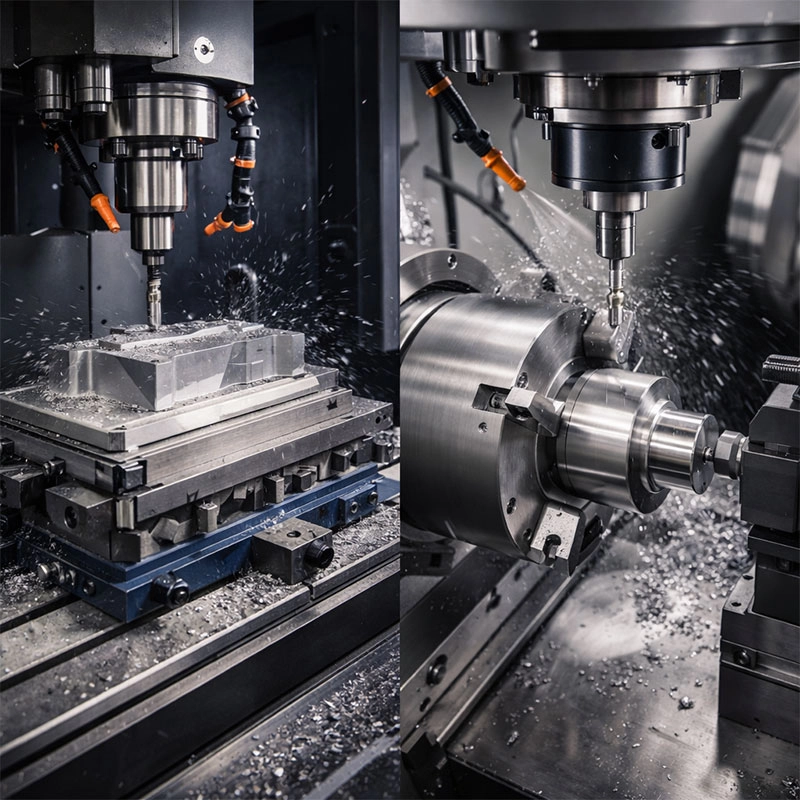
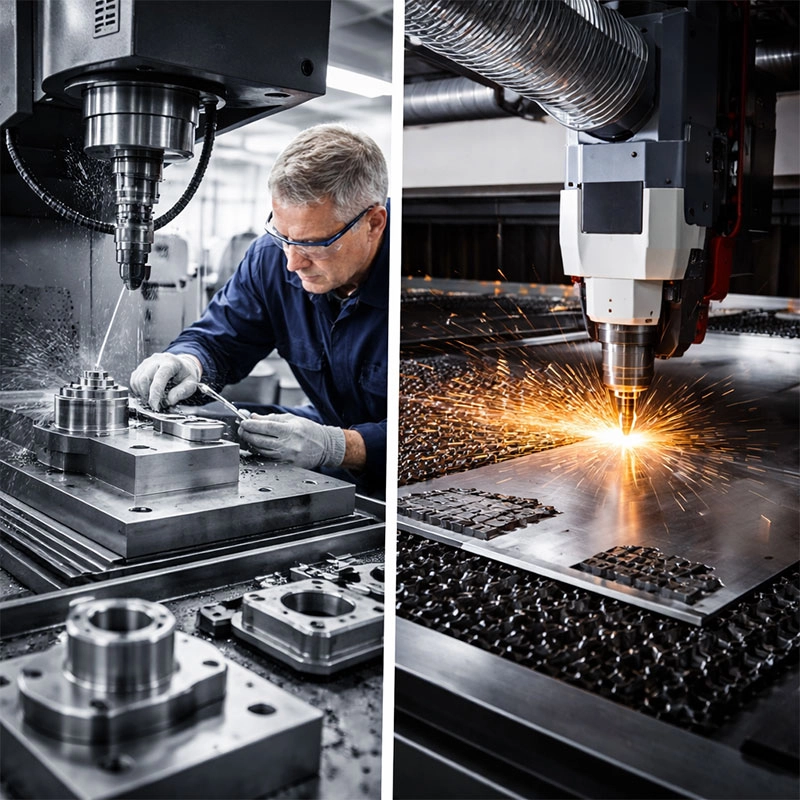
CNC machining, short for Computer Numerical Control machining, is like a super-precise, automated carving tool. A computer program guides cutting tools (like drills and end mills) to selectively remove material from a solid block, known as a workpiece or blank. This CNC milling and turning process is fantastic for creating complex 3D shapes, threads, and parts with tight tolerances. It’s the go-to method for functional prototypes, engine components, and intricate enclosures.
What is Laser Cutting?
Laser cutting, on the other hand, is a form of sheet metal fabrication that uses a highly focused beam of light to melt, burn, or vaporize material along a defined path. It’s exceptionally good at cutting flat, 2D shapes from sheet materials with incredible speed and a clean edge. When people search for laser cutting services near me, they’re often looking to create precise panels, brackets, decorative art, or architectural models from materials like steel, acrylic, or wood.
Key Differences Explained
Now that we know what they are, let’s dive into the nitty-gritty. The core differences between these precision manufacturing techniques come down to how they interact with material, what shapes they can make, and what they can cut. This is where your project’s needs really start to point you in one direction.
Material Removal vs. Material Separation
This is the most fundamental difference. CNC machining is a subtractive process; it carves away material to reveal the final part, which can mean more waste (chips and shavings). Laser cutting is a thermal separation process; it slices through material with a thin kerf (the width of the cut), generally creating less waste from the sheet itself. It’s the difference between sculpting a statue from marble versus using a cookie cutter on dough.
Dimensional Capabilities
Here’s a big one: dimensionality. CNC milling services excel at true 3D fabrication. They can create pockets, holes, curved surfaces, and complex geometries on multiple axes. Laser cutters primarily work in 2D, creating flat parts. While some systems can etch or mark on a surface, they don’t typically create significant 3D relief like a CNC machine can. For a great visual comparison of capabilities, you can check out this resource from Engineering.com.
Material Compatibility
Both processes handle a wide range, but with caveats. CNC machines are incredibly versatile, working with metals (aluminum, steel, brass), plastics, and wood. Laser cutters are champions with metals, wood, acrylic, and fabric, but struggle with materials that melt or release toxic fumes, like PVC. Also, reflective materials like bare copper or aluminum can sometimes be tricky for standard CO2 lasers. The American Welding Society provides detailed guidelines on material interactions with thermal processes here.
Choosing the Right Process for Your Project
So, how do you decide? It often boils down to your part’s geometry, material, and required precision. Let’s walk through some common scenarios. I always tell my clients to sketch their part and ask: “Is this mostly a flat shape, or does it have depth and complex contours?
When to Choose CNC Machining
Opt for computer numerical control machining when your project needs:
– Complex 3D Geometry: Parts with curves, slopes, pockets, or undercuts (think a custom gear or a sculpted handle).
– Exceptional Strength & Precision: Parts requiring very tight tolerances (±0.001″ or better) and excellent structural integrity from a solid block.
– Threads and Detailed Features: Creating internal or external threads, precise holes for bearings, or intricate engravings on a curved surface.
In short, if you’re asking how to make a prototype for a mechanical part that needs to bear load or fit with other components, CNC is usually your best bet.
When to Choose Laser Cutting
A laser cutting service is likely your winner for projects that involve:
– Flat or 2D Parts: Signage, machine panels, brackets, intricate stencils, or architectural models.
– Speed for Thin Materials: Cutting through sheet metal or acrylic under 1/2″ thick is often significantly faster with a laser.
– Intricate, Clean Edges: Projects requiring very fine details and a smooth, sealed cut edge with minimal post-processing.
For example, if you need fifty identical flat brackets with complex cutouts by next week, laser cutting will get you there efficiently.
Practical Considerations and Common Questions
Beyond the technical specs, there are everyday factors to weigh. Let’s talk about setup, cost, and finish. A friend recently asked me about making custom aluminum nameplates. For a simple, flat plate with etched text, laser was cheaper and faster. But for a plate with a raised border and recessed text, CNC was the only way to go.
Setup and Cost: For one-off parts, laser cutting often has a simpler setup, making it more cost-effective for small batches. CNC machining might have a higher initial setup cost (programming, fixturing) but can become more economical for complex parts in larger quantities because the per-part time decreases.
Edge and Surface Finish: A laser-cut edge can have a characteristic slight taper and, on metals, a hardened layer. A machined edge is typically square and can have a variety of finishes (milled, turned, polished) directly from the machine. Sometimes, the best solution is a combination of both processes!
In the end, the “best” choice isn’t about which technology is superior, but which is superior *for your specific project*. By understanding the core strengths of CNC vs laser cutting, you can confidently choose the path that will bring your design to life most effectively. When in doubt, don’t hesitate to consult with a reputable machine shop—they can offer invaluable guidance based on your drawings and goals.