

Categories
CNC Materials

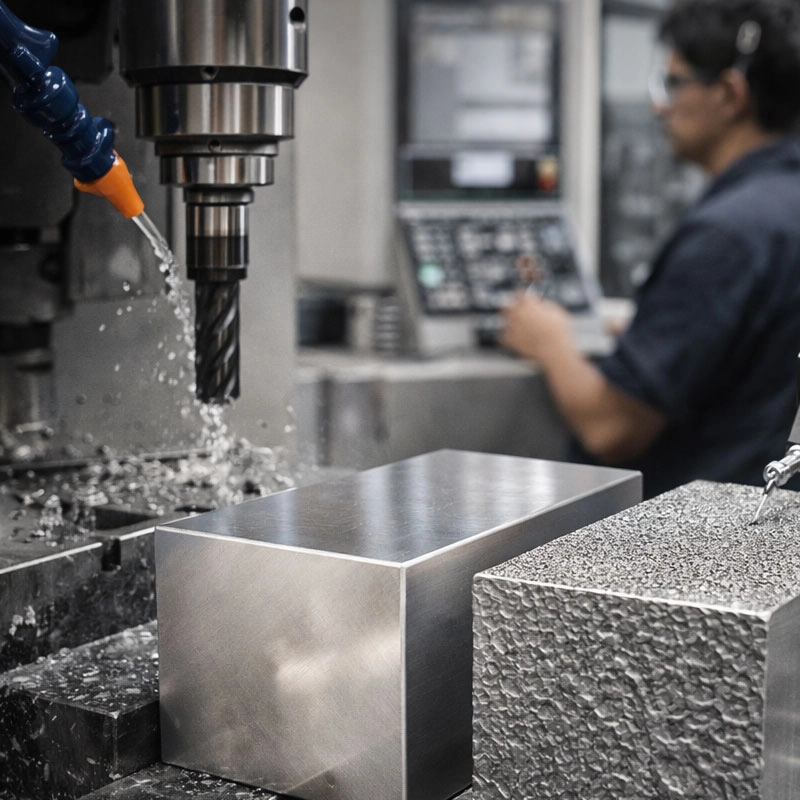
Titanium vs. Steel Machining: 5 Key Differences Explained

Choosing between titanium and steel for your CNC project? It’s more than just picking a strong metal. This guide breaks down the five key differences in machining these materials, from cutting speeds to tool wear, helping you make an informed decision for better results and fewer headaches in the shop.

Material Properties and Machinability

When you first compare titanium machining to steel CNC machining, the physical properties tell the whole story. Think of it like cooking: you wouldn’t use the same heat and technique for a delicate fish as you would for a tough steak. The same logic applies here. Titanium’s unique characteristics, like its low thermal conductivity and high chemical reactivity, make it behave very differently under the tool compared to most steels. Understanding this “machinability rating” is your first step to success.

Strength-to-Weight Ratio

This is where titanium truly shines and why it’s a favorite in aerospace and medical implants. Titanium offers a phenomenal strength-to-weight ratio; it’s as strong as many steels but about 45% lighter. However, this very strength is a double-edged sword in machining. That impressive tensile strength means cutting forces are high, demanding rigid machine setups and sharp tools. When you’re working on a part where every gram counts, this property makes the extra effort in machining titanium alloys worthwhile.

Thermal Conductivity

Here’s a critical difference that trips up many machinists. Steel is a pretty good conductor of heat. When you cut it, a significant amount of the heat generated travels up into the chip and away from the cutting edge. Titanium, on the other hand, is a poor thermal conductor. Almost all the heat from the cutting process stays right at the tool-workpiece interface. This creates a localized “hot spot” that can rapidly degrade your cutting tool. It’s one of the main reasons why machining Ti-6Al-4V requires such careful attention to speeds and cooling.

Cutting Tools and Parameters

You can’t use the same tooling strategy for both materials. For steel, you have a wide range of options, including high-speed steel (HSS) for some jobs. But for titanium, you’re almost always looking at premium, uncoated or specially coated carbide tools. The cutting speeds tell a clear story: you might run many steels at several hundred surface feet per minute (SFM), but for titanium, you often need to slow way down, sometimes below 100 SFM. It’s not about being fast; it’s about being smart and preserving your tool. Using the correct parameters is the key to CNC machining titanium efficiently.

Chip Formation and Evacuation

Watch the chips, and they’ll tell you how the cut is going. Steel typically produces a nice, curled chip that breaks easily. Titanium is notorious for producing long, stringy, continuous chips. These “birds’ nests” are not just a nuisance; they’re dangerous. They can wrap around the tool or workpiece, causing scratches, tool breakage, or even machine damage. Effective chip control through proper tool geometry (sharp cutting edges, positive rakes) and high-pressure coolant to break and flush chips is non-negotiable in titanium metal machining.

Coolant and Lubrication Strategy

Given the heat issue we talked about, coolant isn’t just helpful for titanium—it’s essential. But it’s not just any coolant. We recommend using a high-quality, heavy-duty synthetic or semi-synthetic fluid with excellent lubricity. More importantly, the delivery method is crucial. A flood coolant might work for steel, but for titanium, high-pressure through-tool coolant is a game-changer. It penetrates the cutting zone, reduces the heat, and helps with chip evacuation. For some operations, like tapping, using a dedicated tapping fluid can prevent galling, a common problem where titanium welds itself to the tool. You can find excellent guidelines on metalworking fluids from authoritative sources like Machinery Lubrication.

Cost and Application Considerations

Let’s talk about the bottom line. The raw material cost for titanium is significantly higher than for steel. Add to that the slower machining speeds, more expensive tooling, and need for possibly more powerful/rigid CNC machines, and the cost per part skyrockets. So, when do you choose it? When the application demands its unique benefits: unparalleled corrosion resistance, that fantastic strength-to-weight ratio, and biocompatibility. For high-stress, weight-sensitive, or corrosive environments, titanium is worth the investment. For most general-purpose, high-strength applications, machining stainless steel or alloy steel is the more economical and practical choice. It’s all about matching the material to the part’s real-world job.
Categories
CNC Materials

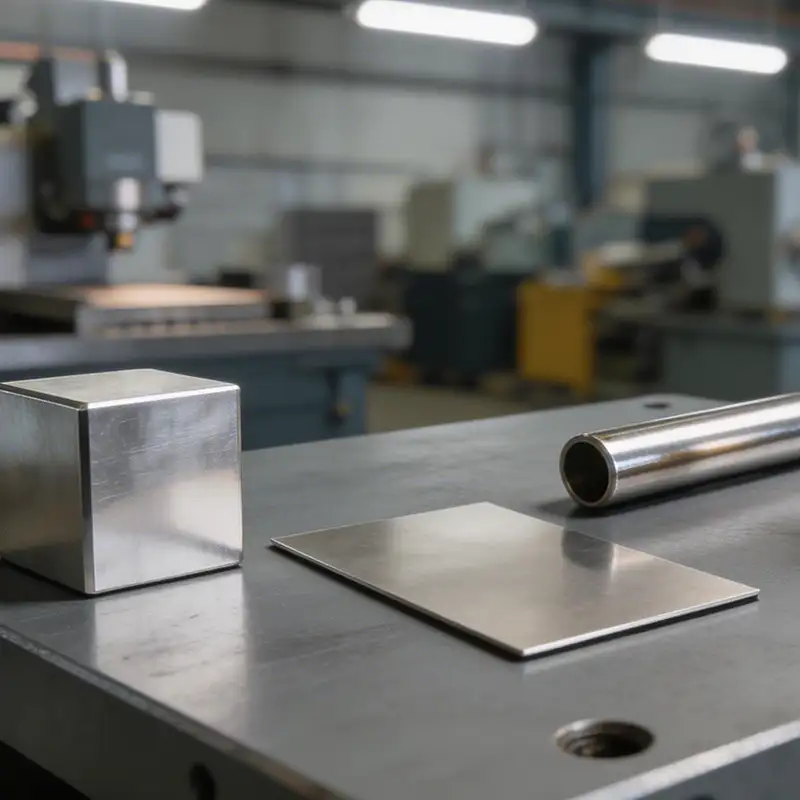
Can CNC Machine Stainless Steel? Your Top 5 Questions Answered

Absolutely! CNC machining is a fantastic way to work with stainless steel. This article dives into the key questions about the process, from tool selection to managing the material’s unique challenges, helping you achieve precise and high-quality results.

Machining Stainless Steel with CNC: Key Considerations

So, you’re wondering, can a CNC machine handle stainless steel? The short and sweet answer is a resounding yes! Computer Numerical Control (CNC) machining is one of the most reliable methods for fabricating parts from this durable alloy. Whether you’re prototyping a medical device or producing components for the aerospace sector, CNC milling stainless steel and CNC turning stainless steel are go-to processes. The real question isn’t *if* it can be done, but *how* to do it effectively. Think of stainless like a tough but talented athlete—it performs incredibly well under pressure, but it requires the right training and equipment. Its high strength and excellent corrosion resistance, which we all love, also mean it demands specific strategies during precision machining.

Popular Stainless Steel Grades for CNC

Not all stainless is created equal for machining. The grade you choose significantly impacts the process. Here’s a quick look at some common ones:

304 Stainless Steel: This is the most common “workhorse” grade. It’s great for general-purpose parts but can be gummy during cutting, requiring sharp tools.

316 Stainless Steel: Similar to 304 but with added molybdenum for even better corrosion resistance. It’s often used in marine and chemical applications and has similar machining characteristics.

303 Stainless Steel: This is the machinist’s friend! It’s specifically formulated with sulfur to improve machinability, making it perfect for high-volume production of screws, gears, and shafts.

17-4 PH Stainless Steel: A precipitation-hardening grade that can be heat treated to very high strengths. It machines well in the annealed condition and is ideal for high-stress applications.

Choosing the right grade is your first step toward a successful project. For more detailed properties, resources like the ASM International materials database can be incredibly helpful.

How Does the CNC Process Work with Stainless Steel?

The core process is similar to machining other metals, but with extra attention to detail. It starts with a digital 3D model, which is translated into instructions (G-code) for the CNC machine. The machine then uses rotating cutting tools to precisely remove material from a solid block of stainless. What makes stainless steel fabrication unique is the need to manage heat and pressure. Unlike aluminum, stainless doesn’t dissipate heat quickly. This means we use lower cutting speeds, higher feed rates, and a constant, ample flow of coolant to carry heat away in the chips. This prevents the tool from overheating and the material from work-hardening, which can make subsequent cuts even tougher. It’s a delicate dance of parameters to ensure a smooth, efficient cut.

What Are the Biggest Challenges in CNC Machining Stainless?

Let’s be honest, machining stainless isn’t always a walk in the park. Its very strengths pose the main hurdles. First, there’s work hardening. If the tool rubs instead of cuts, it can harden the surface, making the next pass nearly impossible and quickly dulling the tool. Then, there’s tool wear. Stainless is abrasive, so tools wear out faster than when cutting mild steel or aluminum. This is why using the correct, high-quality tooling is non-negotiable. Finally, managing those long, stringy chips can be a hassle. They don’t break easily and can wrap around the tool or workpiece, potentially causing damage. A good machinist uses techniques and tool geometries designed to create manageable chips.

Best Tools and Techniques for Success

Overcoming these challenges is all about smart preparation. Here are some friendly tips from the shop floor:

Use the Right Tools: Carbide tools are your best bet. They handle the heat and abrasion much better than high-speed steel. Look for tools with sharp, polished geometries and coatings like TiAlN (Titanium Aluminum Nitride) that reduce friction and heat.

Master Your Feeds and Speeds: This is the golden rule. Run the tool too slow, and it will rub and work-harden the material. Run it too fast, and you’ll overheat and destroy the tool. We generally use lower spindle speeds and higher feed rates to maintain a consistent chip load and carry heat away.

Flood that Coolant: Never try to dry machine stainless steel. A high-pressure flood of coolant is essential for lubrication, cooling, and flushing away chips. It’s the difference between a beautiful finish and a scrapped part.

Keep it Rigid: Any vibration or chatter will ruin your surface finish and tool life. Ensure the workpiece is clamped securely and that the machine and tool holder are in good condition. A rigid setup is a happy setup.

How to Choose the Right CNC Shop for Your Project

If you’re not running the machine yourself, finding a shop with proven stainless steel machining experience is crucial. Don’t be shy about asking questions! A great shop will be happy to discuss their process. Ask them about their experience with your specific stainless grade, what kind of tooling they use, and how they manage heat and chip control. Look at examples of their previous work—the surface finish on a stainless part tells you a lot about their skill level. A partner who understands the nuances of CNC metal fabrication with stainless will save you time, money, and headaches, delivering a part that meets both your dimensional and aesthetic expectations.

Categories
CNC Materials

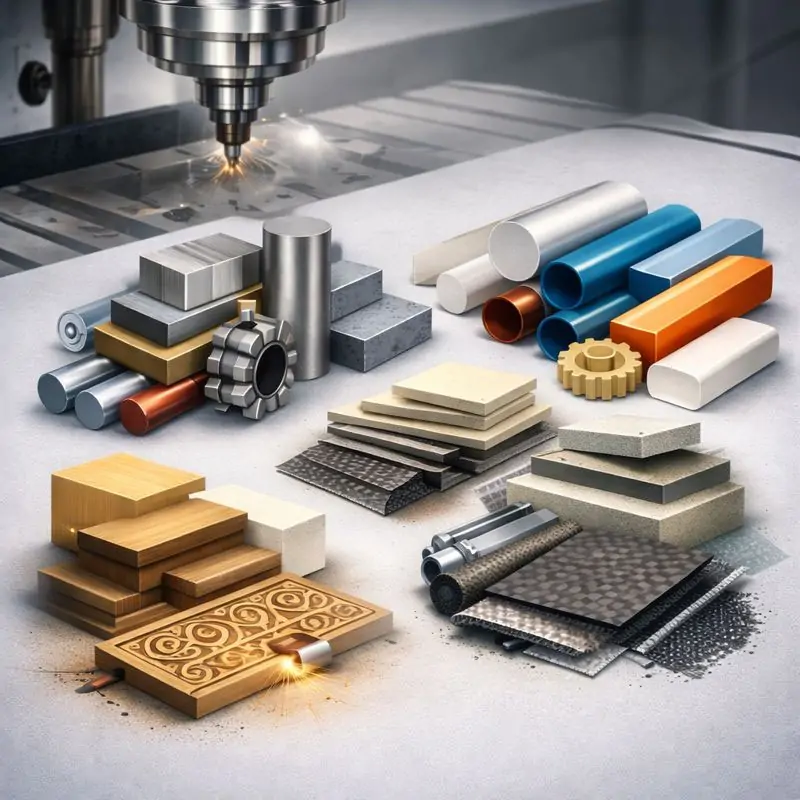
Discover What Materials Can Be Machined with CNC: A Complete Guide

Ever wondered what you can actually make with a CNC machine? The answer is, a lot! From the plastic parts in your phone to the metal components in a car engine, CNC machining works with a huge variety of materials. This guide will walk you through the most common and some surprising options, helping you pick the perfect material for your next project.

Common and Specialized Materials for CNC Machining

When people ask, “What can a CNC machine cut?”, they’re often amazed by the range. Whether you’re a hobbyist or a professional engineer, understanding your material options is the first step to a successful project. Let’s break down the main categories you’ll encounter.

Metals and Alloys: The Heavy Hitters

This is where CNC milling and turning really shine. Metals are prized for their strength, durability, and heat resistance. Here are some of the most popular ones:

Aluminum: This is arguably the superstar of CNC machining materials. It’s lightweight, strong, easy to machine, and has great corrosion resistance. You’ll find it everywhere from aerospace parts to consumer electronics. A common question like can you CNC aluminum?” has a resounding yes for an answer—it’s a machinist’s favorite.

Stainless Steel: Need something tough and rust-proof? Stainless steel is your go-to. It’s harder to machine than aluminum (requiring more robust tools), but the result is a part that can withstand harsh environments. It’s essential for medical devices, food processing equipment, and marine applications.

Brass and Copper: These materials offer excellent electrical conductivity and a beautiful finish. They are relatively soft and very easy to machine with CNC, making them perfect for electrical components, decorative hardware, and musical instruments.

Titanium: This high-performance material is incredibly strong yet lightweight, and it’s biocompatible. However, it’s challenging to work with, generating a lot of heat and requiring specialized tooling. It’s primarily used in aerospace and medical implants. For more detailed properties, resources like the ASM Handbook series are invaluable.

Plastics and Polymers: The Versatile Choice

Don’t underestimate plastics! They are incredibly versatile for CNC fabrication, offering benefits like electrical insulation, transparency, and low cost. The key is choosing the right type.

ABS: Think LEGO bricks. ABS is tough, impact-resistant, and can be easily finished (like sanding or painting). It’s a great all-rounder for prototypes and functional parts.

Polycarbonate (PC): This is your “bulletproof” plastic. It’s highly impact-resistant and transparent, used for things like safety glasses, machine guards, and light fixtures.

POM (Delrin/Acetal): Known for its low friction and high stiffness, POM is often called “the engineering plastic.” It machines to a very smooth finish and is perfect for gears, bearings, and precision insulators.

PEEK: This is a high-performance plastic that can withstand very high temperatures and aggressive chemicals. It’s often used as a metal replacement in demanding aerospace and automotive applications. When considering materials suitable for CNC in extreme conditions, PEEK is a top contender.

Other Materials: Wood, Foam, and Composites

CNC isn’t just for metal and plastic! The range of CNC compatible materials extends much further.

Wood: From intricate sign carving to custom furniture components, CNC routers excel with wood. Different woods, like maple, oak, or MDF, offer unique aesthetics and machining characteristics.

Machining Foams: Foams like polyurethane are fantastic for creating molds for composites or for lightweight packaging inserts. They machine quickly and cleanly.

Composites: Materials like carbon fiber reinforced polymer (CFRP) or fiberglass are layered and can be precisely trimmed and shaped with CNC. This is crucial in modern automotive and sporting goods manufacturing.

How to Choose the Right CNC Material

With so many options, picking a material can feel overwhelming. I like to think of it as matching the material’s personality to the job it needs to do. Let’s talk about how to make that choice easier.

Key Factors to Consider

Ask yourself these questions before you start:

What is the part’s function? Does it need to bear weight (strength)? Will it get hot (thermal resistance)? Does it need to conduct electricity or insulate? Your answers will immediately narrow the field. For instance, a simple bracket might use aluminum, while an electrical connector would need brass.

What environment will it live in? Will it be outdoors, in a chemical lab, or inside a consumer device? This determines needs for corrosion resistance or UV stability.

What’s your budget? Material costs vary wildly. Aluminum is cost-effective for many projects, while titanium or PEEK will significantly increase the price. We always recommend getting a few quotes for different workable materials on CNC to compare.

How will it be machined? Some materials, like certain stainless steels, are tough on tools, which can affect machining time and cost. Softer materials like plastics or aluminum are generally faster and cheaper to machine.

Practical Tips for Your Decision

Here’s some friendly advice from experience:

First, start with a prototype. If you’re unsure, machine a test part in a cheaper, easier material like ABS or aluminum. This lets you test the fit and function before committing to an expensive material.

Second, talk to your machinist. They have seen it all! A good machinist can look at your design and suggest the most suitable and cost-effective CNC machinable substances for your specific geometry and tolerances.

Finally, consider finishing. Do you need an anodized color? A polished shine? A textured grip? The material you choose must be compatible with your desired final look. The Machine Design materials section often has great articles on finishing techniques.

Myths and Facts About CNC Machinable Materials

There are a few common misconceptions floating around about what you can and can’t do with CNC. Let’s clear those up right now.

Myth: “CNC can only machine hard metals.” Fact: As we’ve seen, CNC handles an incredible range, from soft wax (for mold-making) to hard ceramics (with specialized equipment). The process is about controlled removal, not just brute force.

Myth: “Plastics are too weak for serious parts.” Fact: Engineering-grade plastics like PEEK or Ultem can outperform metals in specific scenarios, offering incredible strength-to-weight ratios, corrosion resistance, and electrical properties that metals can’t match.

Myth: “You can throw any material on a CNC and it will work.” Fact: Success depends heavily on using the correct cutting tools, speeds, and feeds for each specific material. Machining soft, gummy plastic requires a very different setup than machining brittle carbon fiber.

Getting Started with Your CNC Project

Feeling inspired? The world of CNC material options is vast and exciting. The best way to learn is by doing. Start with a clear idea of what you want your part to do, consider the factors we discussed, and don’t be afraid to consult with experts.

Remember, the perfect material is the one that balances performance, aesthetics, and cost for

Request A Quote

We'll Send You Back with Price Immediately!

DEC 1-31

XMAS SPECEIL

Up to

40% off

Discover What Materials Can Be Machined with CNC: A Complete Guide

We'll Send You Back with Price Immediately!