

Categories
Blog Industries & Applications Quality & Tolerances

Aerospace CNC Machining Supplier Evaluation Guide for 2026

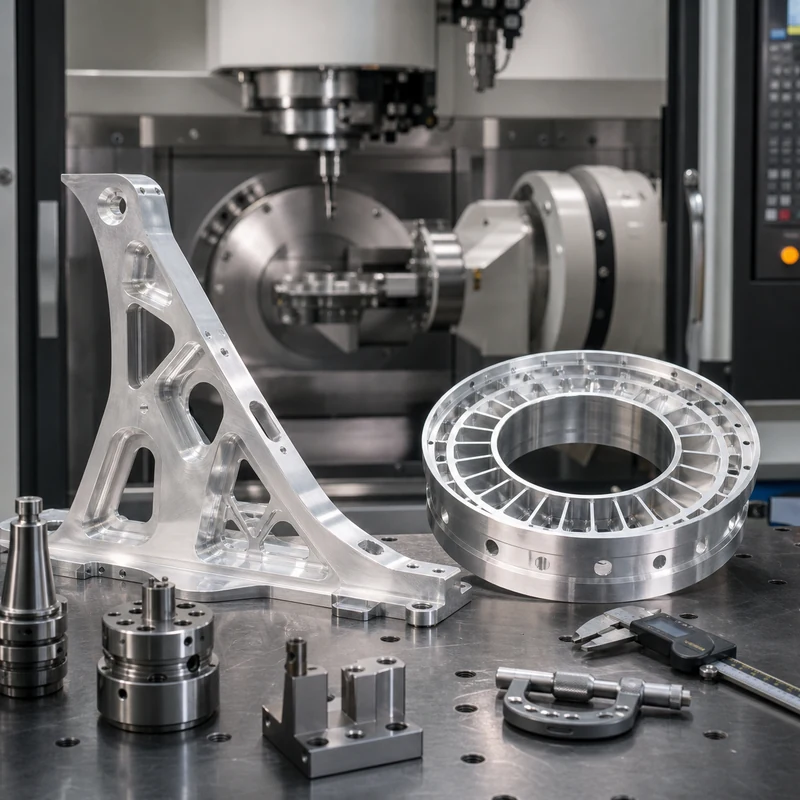
Aerospace CNC machining places heavy demands on geometry control, material knowledge, documentation, and consistency. A useful supplier evaluation should look beyond a list of machine names and focus on whether the shop can control risk across the full manufacturing route.

For MTSPi customers, the evaluation starts with part geometry, tolerance stack, material, finish, quantity, and required evidence. Those inputs help determine whether a job belongs on 5-axis machining, a turning center, a Swiss-type machine, or a simpler milling process.

What Aerospace Buyers Should Evaluate First

Evaluation point What good looks like Why it matters
Process capability The supplier can explain setup, access, fixturing, and datum strategy Complex parts fail when the route is vague.
Material experience Clear plan for aluminum, titanium, stainless, and nickel alloy behavior Aerospace materials can move, work harden, or wear tools quickly.
Inspection CMM or suitable measurement plan tied to drawing risk Tight tolerances need evidence, not assumptions.
Documentation Revision control, material records, and inspection reports Receiving teams need traceable proof.
Production fit Prototype, low-volume, or repeat-batch process is clear Capacity should match the program stage.

Machine Capability Is Only Part of the Answer

A 5-axis machine is valuable for angled features, compound surfaces, and reduced setups, but it does not automatically make a supplier qualified. Programming, toolpath verification, workholding, cutter selection, and inspection access decide whether the part can be produced reliably.

Simple aerospace brackets may still be best handled by CNC milling service. Shafts, pins, sleeves, and threaded features may need CNC turning service or Swiss-type machining. The practical route depends on the drawing, not on a marketing label.

Material and Finish Questions

Aluminum, titanium, stainless steel, and nickel alloys each need different cutting and finishing controls. If the part requires anodizing, passivation, polishing, bead blasting, or other surface treatment, the supplier should consider finish allowance before final machining.

Ask whether the shop has experience with the exact material grade, stock form, wall thickness, and inspection features on your drawing. A general claim of aerospace capability is not enough for a difficult component.

Inspection Planning for Aerospace Parts

Inspection should be planned before cutting starts. Critical datums, hole positions, profiles, thread depths, flatness, perpendicularity, and surface finish callouts may each require different tools. MTSPi aligns these requirements through CNC machining quality inspection so the final report supports real acceptance criteria.

Part feature Common concern Useful control
Thin wall pocket Distortion after roughing Balanced stock removal and interim checks
Datum hole pattern Position error across setups Stable fixture and CMM report
Titanium bracket Heat, tool wear, and burrs Controlled parameters and deburring plan
Precision shaft Runout and diameter repeatability Turning process with suitable gauge checks

Questions to Ask Before Sending an RFQ

  • Which features drive the machining route?
  • What tolerance or GD&T callouts add the most cost?
  • Can the supplier suggest design changes that reduce risk without changing function?
  • What inspection evidence will be supplied with the parts?
  • How will prototype feedback transfer into the next production batch?

Conclusion

Aerospace supplier selection is not about copying a ranking. It is about finding a machining partner that can explain the process, control the material, inspect the critical features, and provide documentation that matches the project risk. A clear evaluation checklist makes that decision more defensible.
Categories
Blog Industries & Applications Quality & Tolerances

How to Evaluate Medical CNC Machining Suppliers in 2026

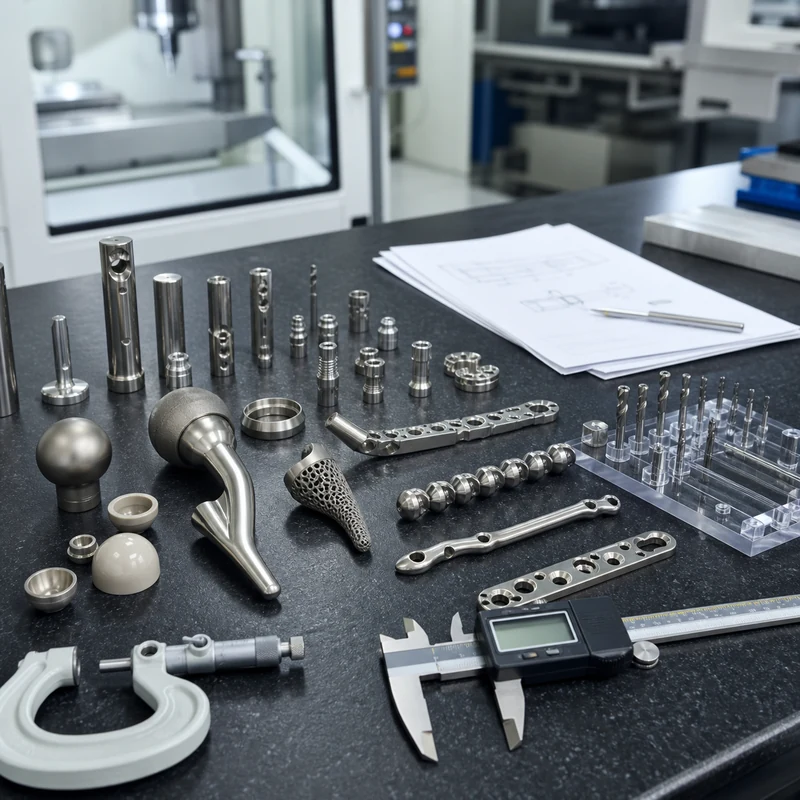
Medical CNC machining requires more than accurate cutting. Buyers need a supplier that can understand device function, material traceability, surface condition, inspection records, and repeatable production controls. A low quote is not helpful if the part cannot be validated later.

This guide reframes supplier selection into practical checks that engineering and purchasing teams can use before ordering prototypes or production parts from a custom CNC machining services provider.

Start With the Part Risk

Not every medical component carries the same level of risk. A fixture, diagnostic enclosure, surgical instrument component, and implant-related prototype have different documentation and process needs. Before comparing suppliers, define how the part is used, what surfaces are critical, and which dimensions affect function.

Review area What to confirm Why it matters
Material Exact grade, certificate need, and biocompatibility expectation Prevents substitutions that create validation issues.
Tolerance Critical dimensions, datum structure, and inspection method Keeps precision focused where the device needs it.
Finish Ra value, polishing, passivation, anodizing, or cleaning needs Controls contact surfaces, corrosion, and assembly behavior.
Documentation Inspection report, material certificate, and revision control Supports receiving inspection and engineering records.

Material Experience Matters

Common medical machining materials include stainless steel, titanium, aluminum, cobalt alloys, PEEK, and other engineering plastics. Each behaves differently during cutting and finishing. MTSPi can review options such as titanium CNC machining, stainless steel CNC machining, and PEEK CNC machining when buyers need a practical material route.

The supplier should be able to explain tool wear, burr risk, heat control, cleaning expectations, and whether the selected finish is compatible with the material. For small parts, the workholding plan can be just as important as the machine list.

Prototype and Production Are Different Tests

A supplier that can make one good prototype is useful, but medical programs often need stable repeatability. Ask how the shop controls setup changes, inspection frequency, lot traceability, and feedback from prototype runs into low-volume production.

For early development, speed and engineering feedback may matter most. For repeated orders, the focus shifts toward process stability, revision discipline, packing, and consistent inspection evidence.

Inspection Capabilities to Ask About

Feature type Typical inspection method Supplier question
Tight hole position CMM, optical measurement, or fixture check How is datum setup controlled?
Small turned features Micrometer, pin gauge, thread gauge, or CMM Can the process hold size across the lot?
Surface finish Visual standard and roughness measurement Which surfaces need controlled finish?
Threads Go/no-go gauge and drawing callout review Are thread class and depth unambiguous?

Inspection should match the failure mode. For practical planning, combine the drawing with quality assurance expectations before production begins.

Supplier Evaluation Checklist

  • Can the supplier explain the machining sequence and likely risk points?
  • Does the quote identify material grade, finish, tolerance, and inspection scope?
  • Can prototype feedback be carried into production without losing revision control?
  • Are burrs, cleaning, and packaging addressed for small or delicate parts?
  • Will the inspection report match the drawing features that matter most?

Conclusion

The right medical CNC machining supplier is the one that can connect material choice, machining strategy, inspection, and documentation into a controlled workflow. A strong evaluation process helps buyers avoid vague quotes and move from prototype to repeatable production with fewer surprises.

Request A Quote

We'll Send You Back with Price Immediately!

DEC 1-31

XMAS SPECEIL

Up to

40% off

How to Evaluate Medical CNC Machining Suppliers in 2026

We'll Send You Back with Price Immediately!