

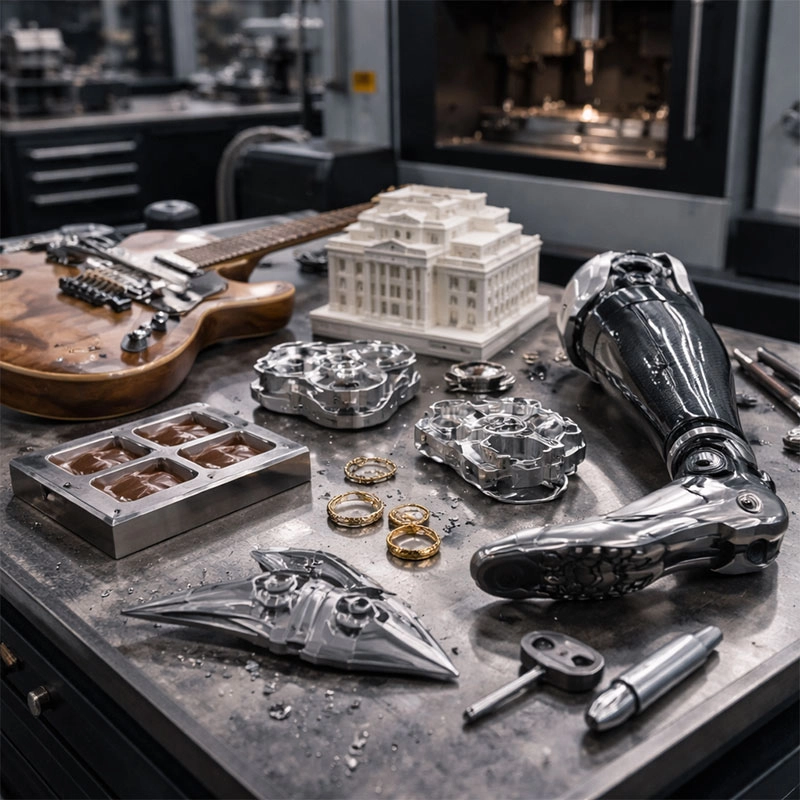
When you think of CNC machining, you might picture industrial parts or automotive components. But its reach is far wider! This guide explores ten unexpected and fascinating uses of CNC technology, showing how this precise manufacturing process touches everything from art to medicine.
The Unexpected Value of CNC Machining
Hi there! If you’re curious about what CNC machining can really do, you’re in the right place. We often box it into “heavy industry,” but its true value lies in its incredible versatility and precision. Whether you’re a designer, engineer, artist, or just a curious mind, understanding the diverse applications of CNC technology opens up a world of possibilities. It’s not just about making parts; it’s about turning complex ideas into tangible reality with accuracy that’s hard to match by hand.
10 Surprising CNC Machining Applications
Let’s dive into some of the most creative and unexpected places where CNC milling and CNC turning applications shine. You might be surprised where this technology pops up!
Custom Musical Instruments
Imagine a guitar with a body carved from a single, exotic piece of wood, featuring intricate soundhole patterns that would be impossible to cut by hand. That’s CNC at work! Luthiers use it to create precise necks, fretboards, and even entire brass or woodwind instrument bodies. This level of precision machining ensures perfect intonation and unique aesthetic designs, allowing musicians to have truly one-of-a-kind instruments. For more on advanced manufacturing techniques, you can check out resources from ASME.
Architectural Models & Art
Before a skyscraper rises, architects often present detailed scale models. CNC machines carve these models from foam, wood, or acrylic with stunning detail. Beyond models, artists are using CNC as a digital chisel to create large-scale sculptures, intricate wall panels, and textured installations. It’s a fantastic example of how computer numerical control bridges the gap between digital design and physical art.
Medical Prosthetics & Orthotics
This is where CNC machining makes a profound human impact. Using 3D scans of a patient, technicians can machine custom prosthetic limbs or orthotic braces that fit perfectly. The materials used, like medical-grade titanium or polymers, are easily worked by CNC to create lightweight, strong, and comfortable devices. This application highlights the critical role of CNC manufacturing in improving quality of life.
The Food Industry
Yes, you read that right! While not cutting food directly, CNC machines are vital in creating the molds and dies used for food production. Think of the complex shapes of chocolate bars, the detailed designs on cookies, or the molds for pasta. The machines that make those production tools are often CNC, ensuring consistency and intricate design in what we eat.
Custom Jewelry & Fashion
High-end and custom jewelry relies on the fine detail of CNC machining, especially for wax molds used in casting. Designers can create incredibly complex patterns and settings that would be too time-consuming or fragile to make manually. Furthermore, some designers are machining metal accessories, custom buttons, or even elements for haute couture directly, pushing the boundaries of machining uses in fashion.
Historical Restoration
Restoring a historic building or vehicle often requires replicating a broken or missing part that hasn’t been made for a century. Conservators can 3D scan the original or its counterpart, design a replacement digitally, and use CNC machining to create a perfect replica in the correct material, whether it’s vintage brass, wrought iron, or rare wood.
Scientific Instruments
Research labs depend on precision. Custom lens holders, sample chambers, components for spectrometers, and parts for particle accelerators often require the tolerances only CNC can provide. These uses of CNC machines enable scientific breakthroughs by creating the specialized tools researchers need.
Custom Furniture & Woodworking
Modern woodworkers use CNC routers to bring new designs to life. They can produce complex joinery like dovetails or mortise-and-tenon joints with perfect repeatability, carve elaborate decorative panels, or cut out unique furniture shapes. It allows for a blend of traditional craftsmanship with digital precision, expanding what’s possible in custom furniture design.
Aerospace Prototypes & Components
While aerospace is a known field for CNC, the surprising part is the prototyping of unconventional components. Before committing to expensive casting dies for a new engine bracket or satellite housing, engineers will often machine a functional prototype directly from metal or composite block using CNC. This allows for rapid testing and iteration. Standards for such high-stakes manufacturing are rigorous, and information can be found through organizations like SAE International.
Movie Props & Cosplay
Next time you see a hero’s detailed armor or a futuristic weapon in a film, there’s a good chance CNC helped make it. Prop shops machine parts from foam, urethane, or lightweight composites to create durable, detailed, and repeatable props. Similarly, dedicated cosplayers use desktop CNC routers to create incredibly accurate costumes and accessories, showcasing the creative applications of CNC milling in fandom.
How to Explore CNC for Your Project
Feeling inspired? If you have a project that could benefit from precision, here’s a friendly suggestion: start with a clear digital design. Software like CAD is your blueprint. Then, look for a local machine shop or a maker space with CNC capabilities. Don’t be afraid to discuss your idea with them—they can advise on the best materials (like aluminum, plastics, or woods) and machining processes for your needs. Many shops love working on unique, non-industrial projects!
Busting Common Myths About CNC Uses
Let’s clear up a couple of things! A common myth is that CNC is only for huge, expensive metal parts. As you’ve seen, it’s fantastic for prototyping, one-off custom items, and softer materials like wood and plastic. Another is that it removes all skill from creation. On the contrary, it requires skilled operators to program, set up, and manage the process—the skill shifts from manual dexterity to digital mastery and technical knowledge.
Final Thoughts
So, there you have it! From the concert hall to the operating room, and from the movie set to your dining room table, CNC machining applications are far more diverse than we often assume. It’s a tool of incredible precision that empowers creativity and innovation across countless fields. We hope this tour has given you a new appreciation for the surprising and wonderful world of CNC machine applications. Who knows what you’ll create with it next?