Categories
Industries & Applications

Discover 10 Surprising CNC Machining Applications Today

When you think of CNC machining, you might picture industrial parts or automotive components. But its reach is far wider! This guide explores ten unexpected and fascinating uses of CNC technology, showing how this precise manufacturing process touches everything from art to medicine.

The Unexpected Value of CNC Machining

Hi there! If you’re curious about what CNC machining can really do, you’re in the right place. We often box it into “heavy industry,” but its true value lies in its incredible versatility and precision. Whether you’re a designer, engineer, artist, or just a curious mind, understanding the diverse applications of CNC technology opens up a world of possibilities. It’s not just about making parts; it’s about turning complex ideas into tangible reality with accuracy that’s hard to match by hand.

10 Surprising CNC Machining Applications

Let’s dive into some of the most creative and unexpected places where CNC milling and CNC turning applications shine. You might be surprised where this technology pops up!

Custom Musical Instruments

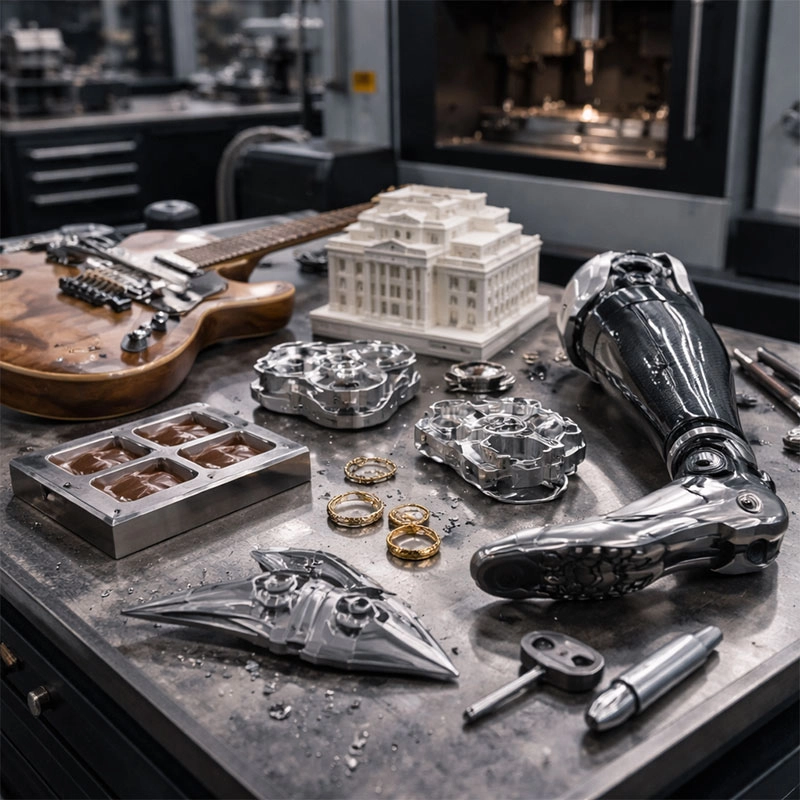
Imagine a guitar with a body carved from a single, exotic piece of wood, featuring intricate soundhole patterns that would be impossible to cut by hand. That’s CNC at work! Luthiers use it to create precise necks, fretboards, and even entire brass or woodwind instrument bodies. This level of precision machining ensures perfect intonation and unique aesthetic designs, allowing musicians to have truly one-of-a-kind instruments. For more on advanced manufacturing techniques, you can check out resources from ASME.

Architectural Models & Art

Before a skyscraper rises, architects often present detailed scale models. CNC machines carve these models from foam, wood, or acrylic with stunning detail. Beyond models, artists are using CNC as a digital chisel to create large-scale sculptures, intricate wall panels, and textured installations. It’s a fantastic example of how computer numerical control bridges the gap between digital design and physical art.

Medical Prosthetics & Orthotics

This is where CNC machining makes a profound human impact. Using 3D scans of a patient, technicians can machine custom prosthetic limbs or orthotic braces that fit perfectly. The materials used, like medical-grade titanium or polymers, are easily worked by CNC to create lightweight, strong, and comfortable devices. This application highlights the critical role of CNC manufacturing in improving quality of life.

The Food Industry

Yes, you read that right! While not cutting food directly, CNC machines are vital in creating the molds and dies used for food production. Think of the complex shapes of chocolate bars, the detailed designs on cookies, or the molds for pasta. The machines that make those production tools are often CNC, ensuring consistency and intricate design in what we eat.

Custom Jewelry & Fashion

High-end and custom jewelry relies on the fine detail of CNC machining, especially for wax molds used in casting. Designers can create incredibly complex patterns and settings that would be too time-consuming or fragile to make manually. Furthermore, some designers are machining metal accessories, custom buttons, or even elements for haute couture directly, pushing the boundaries of machining uses in fashion.

Historical Restoration

Restoring a historic building or vehicle often requires replicating a broken or missing part that hasn’t been made for a century. Conservators can 3D scan the original or its counterpart, design a replacement digitally, and use CNC machining to create a perfect replica in the correct material, whether it’s vintage brass, wrought iron, or rare wood.

Scientific Instruments

Research labs depend on precision. Custom lens holders, sample chambers, components for spectrometers, and parts for particle accelerators often require the tolerances only CNC can provide. These uses of CNC machines enable scientific breakthroughs by creating the specialized tools researchers need.

Custom Furniture & Woodworking

Modern woodworkers use CNC routers to bring new designs to life. They can produce complex joinery like dovetails or mortise-and-tenon joints with perfect repeatability, carve elaborate decorative panels, or cut out unique furniture shapes. It allows for a blend of traditional craftsmanship with digital precision, expanding what’s possible in custom furniture design.

Aerospace Prototypes & Components

While aerospace is a known field for CNC, the surprising part is the prototyping of unconventional components. Before committing to expensive casting dies for a new engine bracket or satellite housing, engineers will often machine a functional prototype directly from metal or composite block using CNC. This allows for rapid testing and iteration. Standards for such high-stakes manufacturing are rigorous, and information can be found through organizations like SAE International.

Movie Props & Cosplay

Next time you see a hero’s detailed armor or a futuristic weapon in a film, there’s a good chance CNC helped make it. Prop shops machine parts from foam, urethane, or lightweight composites to create durable, detailed, and repeatable props. Similarly, dedicated cosplayers use desktop CNC routers to create incredibly accurate costumes and accessories, showcasing the creative applications of CNC milling in fandom.

How to Explore CNC for Your Project

Feeling inspired? If you have a project that could benefit from precision, here’s a friendly suggestion: start with a clear digital design. Software like CAD is your blueprint. Then, look for a local machine shop or a maker space with CNC capabilities. Don’t be afraid to discuss your idea with them—they can advise on the best materials (like aluminum, plastics, or woods) and machining processes for your needs. Many shops love working on unique, non-industrial projects!

Busting Common Myths About CNC Uses

Let’s clear up a couple of things! A common myth is that CNC is only for huge, expensive metal parts. As you’ve seen, it’s fantastic for prototyping, one-off custom items, and softer materials like wood and plastic. Another is that it removes all skill from creation. On the contrary, it requires skilled operators to program, set up, and manage the process—the skill shifts from manual dexterity to digital mastery and technical knowledge.

Final Thoughts

So, there you have it! From the concert hall to the operating room, and from the movie set to your dining room table, CNC machining applications are far more diverse than we often assume. It’s a tool of incredible precision that empowers creativity and innovation across countless fields. We hope this tour has given you a new appreciation for the surprising and wonderful world of CNC machine applications. Who knows what you’ll create with it next?
Categories
CNC Machining Basics

What Is CNC Machining? A Beginner’s Friendly Guide to Modern Manufacturing

Ever wondered how complex metal or plastic parts are made with such incredible precision? The answer often lies in CNC machining. This guide will walk you through what CNC machining is, how it works, and why it’s a cornerstone of modern manufacturing, all in simple, friendly terms.

Understanding the Basics of CNC Machining

Let’s start at the very beginning. If you’ve ever seen a perfectly smooth engine block, a custom guitar bridge, or even parts of a smartphone, you’ve likely seen the work of CNC manufacturing. At its heart, computer numerical control machining is a way to make things by removing material from a solid block, guided entirely by a computer. Think of it like a super-precise, automated sculptor that can carve metal, plastic, or wood based on a digital blueprint.

What Does CNC Stand For?

CNC stands for Computer Numerical Control. It sounds technical, but it’s quite straightforward. The “computer” part is the brain—it reads a set of coded instructions (called G-code). The “numerical control” part refers to how those instructions tell the machine exactly where to move, how fast to spin the cutting tool, and how deep to cut. Before CNC, machinists had to manually operate machines like lathes and mills, which was slower and less consistent. So, when people ask what is CNC milling or what is CNC turning, they’re really asking about specific applications of this brilliant computer-controlled system.

How Does the CNC Machining Process Work?

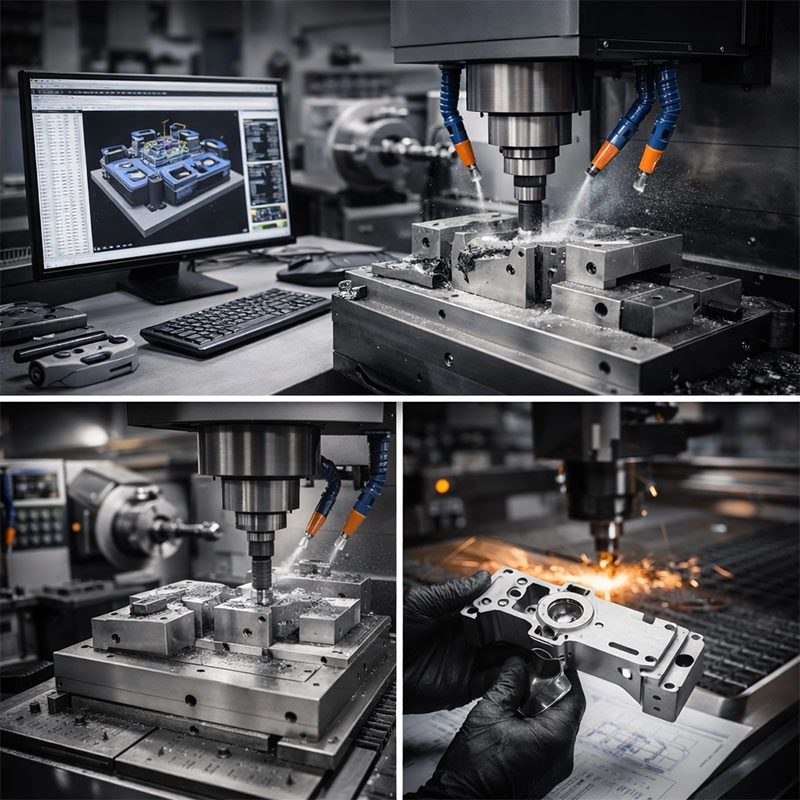
The journey from a raw block to a finished part is a fascinating dance between software and hardware. It usually starts with a 3D model designed in CAD (Computer-Aided Design) software. This model is then translated by CAM (Computer-Aided Manufacturing) software into the G-code the machine understands. Once the code is loaded, the operator secures the material (called the workpiece) onto the machine bed. Then, with the push of a button, the machine’s cutting tools follow the programmed path with incredible accuracy, shaving away material layer by layer until the part is complete. This process is the core of subtractive manufacturing, which is just a fancy term for carving out a shape.

CNC Milling vs. CNC Turning

You’ll often hear about two main types of CNC machine tools: mills and lathes. Here’s a simple way to tell them apart. A CNC milling service typically uses a rotating cutting tool that moves across a stationary workpiece to cut away material. It’s great for creating complex shapes, slots, and holes. On the other hand, CNC lathe work involves rotating the workpiece itself against a stationary cutting tool. This is ideal for making cylindrical or conical parts like shafts, knobs, and rings. Many modern workshops use multi-axis machining centers that can do both, offering incredible flexibility.

Why CNC Machining is a Game-Changer

So, why has precision CNC machining become so vital? First, it’s incredibly accurate and repeatable. You can produce ten parts or ten thousand, and each one will be virtually identical. This level of consistency is crucial for industries like aerospace and medical devices. Second, it can handle incredibly complex geometries that would be impossible or too expensive to make by hand. Third, while the initial setup and programming take time, it’s extremely efficient for production runs, saving time and money in the long run. It truly is a pillar of modern manufacturing techniques.

Getting Started with CNC: What You Should Know

If you’re curious about using CNC machining services, here’s some friendly advice. Start by having a clear, well-designed 3D model—this is your recipe. Next, think about your material choice; common options include aluminum, stainless steel, brass, and various plastics like ABS or nylon. Each has different properties and machining requirements. When you contact a machine shop, be ready to discuss your part’s function, required tolerances (how precise dimensions need to be), and surface finish. A good shop will guide you through the CNC fabrication process and help optimize your design for manufacturability. For a deeper dive into materials and standards, resources like ASM International can be very helpful.

Clearing Up Common CNC Misconceptions

Let’s tackle a few myths! One common belief is that CNC machines do everything by themselves without any human skill. In reality, a skilled machinist or programmer is essential for setting up the job, selecting the right tools, and ensuring everything runs smoothly. Another myth is that it’s only for giant factories. While it powers major industries, smaller CNC job shops and even hobbyists use desktop CNC machines for prototyping and custom projects. Finally, it’s not just for metal. CNC routing for wood and plastics is hugely popular in sign-making, furniture, and arts.

I hope this guide has helped demystify the world of CNC for you. From understanding what is computer numerical control to seeing its real-world impact, it’s a technology that shapes the physical world around us with precision and efficiency. Whether you’re an engineer, a maker, or just someone fascinated by how things are made, the principles of CNC machining are a wonderful glimpse into the innovation driving modern production.

Categories
CNC Machining Basics

What Is CNC Precision Machining? A Beginner’s Friendly Guide

Ever wondered how complex metal or plastic parts are made with incredible accuracy? That’s the world of CNC precision machining. This guide breaks down this advanced manufacturing service in simple terms, explaining how it works, why it’s so valuable, and what you should know before using it.

Understanding CNC Precision Machining Services

Let’s start with the basics. CNC precision machining is a manufacturing process where computer-controlled machines remove material from a solid block (called a workpiece) to create a custom part. Think of it like a super-skilled, ultra-precise robotic sculptor that can work with metals, plastics, and composites. The “CNC” stands for Computer Numerical Control, which is the brain behind the operation. This service is the go-to method for producing parts that need to be incredibly accurate, repeatable, and complex.

How Does It Work? From Design to Part

The journey of a part begins long before the machine starts. It all starts with a digital 3D model created in CAD (Computer-Aided Design) software. This model is then translated into instructions, called G-code, that the CNC machine can understand. The machine—whether it’s a mill, lathe, or router—follows these instructions to the letter, using cutting tools to carve away material with movements often measured in thousandths of an inch (or microns!). This level of precision manufacturing ensures every single part is virtually identical to the last.

The Real-World Value of Precision CNC Machining

So, why choose this method over others? The benefits are huge. First, the accuracy is unmatched, which is critical for parts in aerospace, medical devices, or automotive engines where a tiny error can cause big problems. Second, once the program is set, producing hundreds or thousands of identical parts is efficient and cost-effective. It also allows for incredible complexity—shapes that would be impossible to make by hand are routine with CNC milling services. For a deeper dive into the technical standards behind this precision, you can check out resources from the American Society of Mechanical Engineers (ASME).

Where Do You See It? Common Applications

You might be surprised how often you encounter products made by computer numerical control machining. That sleek aluminum body on your laptop? Likely CNC machined. The tiny, intricate components inside a surgical robot or a car’s fuel injection system? Absolutely. From prototyping a new product idea to full-scale production, this service is the backbone of modern manufacturing for industries demanding high quality and reliability.

Getting Started: Practical Advice for Your Project

If you’re considering a precision machining service for the first time, here’s some friendly advice. Start with a clear, well-designed 3D model—this is your blueprint. Be open to discussing design for manufacturability (DFM) with your machining partner; they can suggest small tweaks that make the part easier and cheaper to produce without changing its function. Also, understand the trade-offs between different materials and finishes. For example, a project requiring tight tolerance machining with aluminum will differ from one using stainless steel. Getting these details right upfront saves time and money.

Clearing Up Common Confusion

A lot of folks get a few things mixed up. One big one is thinking CNC machining is the same as 3D printing (or additive manufacturing). While both are computer-controlled, they are opposites in approach: machining cuts material away, while 3D printing adds material layer by layer. Machining is typically better for strength, precision, and a wider range of engineering materials. Another point of confusion is cost; for one-off prototypes, it might seem pricey, but for batch production, the unit cost becomes very competitive due to its speed and consistency.

Wrapping Up: Is It Right for You?

In short, CNC precision machining is a powerful, versatile manufacturing service that turns digital designs into high-accuracy physical parts. It’s ideal if your project demands reliability, complex geometries, or tight tolerances. Whether you’re an engineer, a product designer, or a hobbyist tackling an advanced project, understanding this process is a great first step. By knowing how it works and what it offers, you can make smarter decisions and bring your ideas to life with confidence. For further exploration of manufacturing processes, authoritative information can be found through institutions like the SME (formerly the Society of Manufacturing Engineers).

Categories
CNC Machining Basics

Unlock the Secrets: How Does Precision CNC Machining Work?

Ever wondered how incredibly complex and precise metal parts are made? The answer often lies in precision CNC machining. This guide will walk you through the fascinating step-by-step process, from a digital design to a finished, high-accuracy component, explaining the core principles that make it all possible.

The Step-by-Step Process of Precision CNC Machining

Let’s break down the journey of a part, which many refer to as the CNC machining process. Think of it like a highly skilled, super-fast sculptor that follows digital instructions to the letter.

From Idea to Digital Blueprint: CAD

It all starts on a computer. An engineer or designer uses Computer-Aided Design (CAD) software to create a perfect 3D model of the part. This is the digital master plan, defining every dimension, curve, and hole with extreme accuracy. It’s the most critical step for achieving true precision manufacturing.

Speaking the Machine’s Language: CAM & G-Code

Next, that 3D model needs to be translated into instructions the machine can understand. This is where Computer-Aided Manufacturing (CAM) software comes in. The CAM programmer decides on toolpaths, cutting speeds, and feed rates. The software then generates a special program called G-code, which is essentially a list of coordinates and commands that tell the machine exactly where to move and what to do. You might hear this whole phase called CNC programming.

The Physical Foundation: Machine Setup

Now we move to the shop floor. An operator secures the raw material (like a block of aluminum or steel) firmly onto the machine’s bed or into a vise. They then load the correct cutting tools (end mills, drills, etc.) into the machine’s spindle and carefully set the tool and workpiece origins. This setup is crucial—even a tiny misalignment here can affect the final part’s accuracy.

The Magic Happens: Automated Machining

With the click of a button, the automated cycle begins. The CNC machine (which could be a mill, lathe, or router) follows the G-code program precisely. The spindle spins the cutting tool at high speeds, while motors move the tool and/or workpiece along multiple axes (like X, Y, and Z) to gradually remove material. This subtractive manufacturing process continues until the part emerges from the raw block, matching the CAD model. The level of automation in modern computer numerical control systems is what allows for such incredible repeatability.

The Final Touch: Post-Processing

Once the main machining is done, the part often needs a little extra love. This can involve deburring (removing sharp edges), sanding, polishing, or applying surface treatments like anodizing or plating. For the highest levels of accuracy, the part might be measured on a Coordinate Measuring Machine (CMM) to verify every dimension is perfect. This final quality check is a hallmark of true high-precision machining.

Why Precision Matters: The Core Value of CNC

So, why go through all these steps? The real power of precision CNC machining lies in its outcomes. First, it delivers exceptional accuracy and consistency. You can produce ten, a hundred, or a thousand parts, and each one will be virtually identical—a game-changer for assembly and reliability. Second, it can handle incredibly complex geometries that would be impossible or prohibitively expensive to make by hand. Third, it works with a vast range of materials, from plastics and aluminum to tough alloys like titanium. This makes it indispensable for industries like aerospace, medical devices, and automotive, where there’s zero room for error. If you’re curious about the standards for these tolerances, organizations like ASME publish widely accepted guidelines.

Getting the Best Results: Helpful Tips for Your Project

If you’re considering using CNC services, here’s some friendly advice from the workshop. First, invest time in a clean, well-thought-out CAD design. Clearly defining your tolerances and critical features here saves headaches later. Second, choose the right material for your part’s function—don’t just default to the most common one. Third, communicate openly with your machining partner! Ask them for Design for Manufacturability (DFM) feedback; they can often suggest small tweaks that make the part easier and more cost-effective to produce without compromising your design intent.

Clearing the Air: Common Misconceptions About CNC

Let’s tackle a couple of myths I often hear. One is that “CNC is only for huge production runs.” Not true at all! While it’s great for volume, it’s also perfect for prototyping and low-volume custom parts because the setup is digital. Another misconception is that it’s a “set it and forget it” process. While highly automated, it still requires skilled programmers and operators to plan the process, select tools, and ensure everything runs smoothly. Think of it as a powerful tool guided by expert hands. Finally, some wonder, how does CNC milling work differently from turning? Simply put, milling uses a rotating tool on a stationary (or moving) workpiece, while turning (on a lathe) rotates the workpiece against a stationary tool. Both are essential branches of the machining family tree!

Categories
CNC Machining Basics

What Is High Precision CNC Machining? A Beginner’s Friendly Guide

High precision CNC machining is a specialized manufacturing process that uses computer-controlled machines to create parts with extremely tight tolerances and exceptional accuracy. It’s the go-to method when a project demands components that fit together perfectly or perform reliably under stress. Think of it as the difference between a hand-drawn sketch and a detailed architectural blueprint.

Understanding High Precision CNC Machining

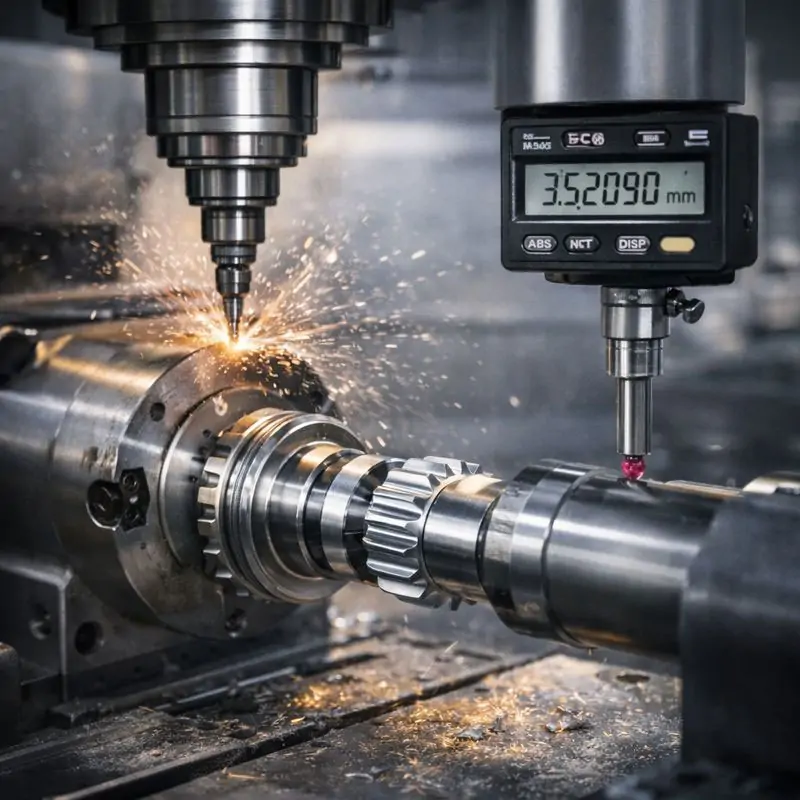
Let’s break it down. CNC stands for Computer Numerical Control. It means a machine—like a mill, lathe, or router—follows a set of digital instructions (called G-code) to cut and shape material. Now, add “high precision” to that. This refers to the incredible level of accuracy and repeatability the process can achieve. We’re talking about tolerances often measured in microns (thousandths of a millimeter). To give you a picture, a human hair is about 70 microns thick. High-precision CNC milling or CNC turning can work within a fraction of that.

The Real-World Value of Tight Tolerances

You might wonder, “Why does such tiny accuracy matter?” It’s all about performance and reliability. In many applications, parts aren’t just sitting on a shelf; they’re moving, spinning, bearing loads, or sealing fluids. Even a tiny deviation can lead to failure, noise, wear, or inefficiency. This level of precision machining ensures everything works together as designed, every single time.

Where You’ll Find High Precision Parts

This isn’t just for lab equipment. You interact with products made by high-accuracy CNC machining every day. The medical implants in a surgical kit, the fuel injectors in your car, the connectors in your smartphone, and the components inside a drone’s camera gimbal all rely on this technology. Industries like aerospace, medical device manufacturing, and optics simply couldn’t function without it. When someone searches for what is micro machining or tight tolerance machining services, they’re often looking for this specific capability.

The True Cost of Imprecision

Imagine ordering 10,000 parts for an assembly line. If each part is even slightly out of spec, you face a nightmare: assemblies that won’t fit, production delays, wasted materials, and costly rework. High precision CNC fabrication minimizes this risk. It’s an investment in predictability. By ensuring each part is virtually identical, you save massive headaches and money down the line. It turns manufacturing from a hopeful gamble into a reliable science.

How to Achieve High Precision Results

Getting those micron-level results doesn’t happen by accident. It’s a symphony of good decisions. From my experience talking with machinists, it starts long before the machine even powers on. It’s about planning for precision at every single step.

Starting with a Great Design

It all begins with your CAD (Computer-Aided Design) model. A design that’s difficult to machine will struggle to be precise. We recommend you work with your machinist early on. This practice, often called Design for Manufacturability (DFM), can identify potential issues like thin walls, hard-to-reach features, or unrealistic tolerances. A good resource to understand engineering fundamentals is the American Society of Mechanical Engineers (ASME) website. Clear communication at this stage sets the stage for success.

Choosing the Right Machine and Machinist

Not all CNC shops are equal. For high-precision work, you need a shop with modern, well-maintained equipment and, more importantly, highly skilled operators. The machinist’s expertise in selecting tools, setting up the machine, and compensating for variables like material stress or temperature is irreplaceable. They understand the nuances of advanced CNC manufacturing. When evaluating a shop, don’t just ask about their machine’s specs; ask about their quality control processes, like using coordinate measuring machines (CMMs) to verify every dimension.

Clearing Up Common Misconceptions

Let’s tackle a few myths head-on. First, “high precision” doesn’t automatically mean “slow and extremely expensive.” While it is more costly than standard machining, modern CNC technology has become remarkably efficient. For critical components, the value far outweighs the cost. Second, it’s not magic. There are physical limits based on the material, machine, and tooling. A good machinist will tell you what’s realistically achievable rather than promise the impossible. Finally, precision isn’t just about the machine; it’s a culture of meticulousness throughout the entire process.

Wrapping Up Your Beginner’s Journey

So, what is high precision CNC machining? It’s the art and science of making incredibly accurate, reliable parts through computer-controlled cutting. It’s essential for technology that pushes boundaries and improves lives. If your project demands flawless fit, function, or performance, this is the process you’re looking for. My friendly advice? Partner with a skilled machinist, design with manufacturing in mind, and understand that this precision is what turns a good idea into a great, working product. Welcome to the precise world of modern manufacturing!

Request A Quote

We'll Send You Back with Price Immediately!

DEC 1-31

XMAS SPECEIL

Up to

40% off

What Is High Precision CNC Machining? A Beginner’s Friendly Guide

We'll Send You Back with Price Immediately!