

Categories
Quality & Tolerances

Master CNC Machining Tolerance Standards: A Beginner’s Guide

Welcome! If you’re new to CNC machining, the world of tolerances and precision standards might seem a bit overwhelming. Think of it like following a recipe: the tolerances are the specific measurements that ensure your final part turns out just right. This guide will walk you through the basics of CNC machining tolerance standards in a friendly, easy-to-understand way.

Understanding CNC Machining Tolerances and Specifications

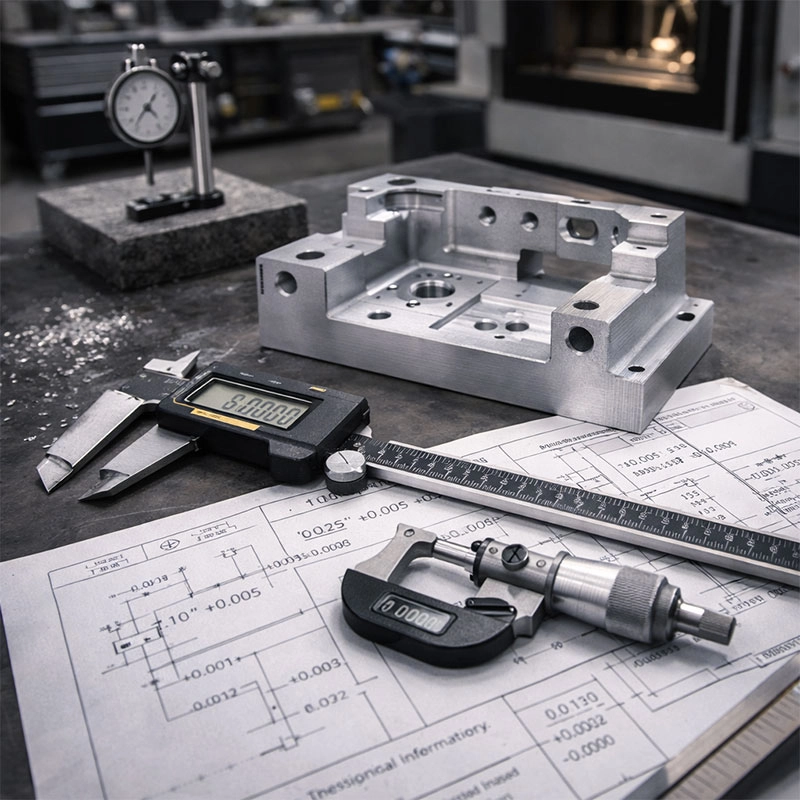
Let’s start at the very beginning. In the world of CNC precision machining, a “tolerance” isn’t about patience—it’s about permission. It’s the allowable amount of variation in a physical dimension. If a drawing calls for a 10 mm hole with a ±0.1 mm tolerance, it means the machined hole can be anywhere from 9.9 mm to 10.1 mm and still be considered perfect. These dimensional tolerances in machining are the rules of the game, ensuring every part fits and functions as intended.

What Exactly is a Machining Tolerance?

You might wonder, “Why not just make everything perfectly to the number on the drawing?” In an ideal world, that would be great! But in reality, tiny variations are inevitable due to tool wear, material properties, and machine capabilities. Tolerance standards for CNC give us a practical, agreed-upon range for these variations. They answer the question: “How close is close enough?” For a deeper dive into the fundamental concepts, the American Society of Mechanical Engineers (ASME) provides the foundational guidelines, like ASME Y14.5, that define how we communicate these tolerances on engineering drawings.

Why Getting Tolerances Right is So Important

Specifying the correct CNC machining accuracy standards is like choosing the right tool for a job. Too loose, and parts might not assemble or function correctly—imagine a wobbly gear or a leaky seal. Too tight, and you’re asking for unnecessary expense and potential production delays. Getting it just right ensures reliability, safety, and cost-effectiveness. It’s the secret sauce that allows parts from different batches, or even different manufacturers, to work together seamlessly. This interoperability is a key benefit of adhering to recognized geometric dimensioning and tolerancing (GD&T) principles.

Your Practical Guide to Specifying Tolerances

So, how do you, as a beginner, approach this? First, don’t just guess. Collaborate with your machinist or engineer early on. Ask yourself: What is this part’s job? Does it need to spin freely, press-fit snugly, or just cover a hole? The answer will guide your machining precision requirements.

Common Tolerance Standards and Grades

Many shops use standard tolerance grades, like ISO 2768-mK for general metal parts. It’s a fantastic starting point that covers most features without cluttering your drawing. For example, under this standard, a dimension like 25 mm might have a default tolerance of ±0.2 mm. For critical features, you then call out tighter part tolerance guidelines specifically. Remember, every decimal place you add (e.g., ±0.1 mm vs. ±0.01 mm) increases the challenge and cost. The International Organization for Standardization (ISO) website is a great resource to explore these international benchmarks.

Balancing Cost, Time, and Complexity

Here’s a friendly tip from experience: apply tight tolerances only where they are functionally critical. I once saw a designer specify extremely tight tolerances on every single dimension of a non-critical bracket. This turned a simple, affordable part into a costly and time-consuming project. By relaxing the tolerances on non-mating surfaces, we cut the cost in half with zero impact on performance. Always consider the manufacturing tolerances for CNC parts in the context of the whole assembly.

Clearing Up Common Misconceptions About Tolerances

Let’s bust a couple of myths! First, “tighter is always better.” Not true. Unnecessarily tight machining limits and fits waste money and can even make a part more prone to failure if it requires an overly delicate manufacturing process. Second, “the CNC machine will automatically hit any tolerance I write down.” While modern machines are incredibly accurate, they have limits. A tolerance of ±0.001 mm is a different league than ±0.1 mm and requires specific tools, processes, and environmental controls. Understanding these CNC part dimensional accuracy realities helps set realistic expectations.

Wrapping Up: Your Path to Confident Tolerancing

Mastering CNC machining tolerance standards is a journey, not a destination. Start by understanding the basic “why” behind tolerances, use standard grades as your baseline, and specify tighter controls only for critical features. Always talk to your manufacturing partner—their expertise is invaluable. By taking this balanced approach, you’ll design parts that are not only functional and reliable but also manufacturable and cost-effective. Happy machining!
Categories
Quality & Tolerances

Discover What Tolerance CNC Can Achieve: A Practical Guide

When you’re designing a part, knowing the achievable CNC machining tolerances is crucial for fit, function, and cost. This guide breaks down the standard and high-precision capabilities of CNC, explains the factors that influence precision, and offers practical tips to specify tolerances effectively for your project.

Understanding CNC Machining Tolerances and Capabilities

If you’ve ever wondered, “How precise can a CNC machine be?” you’re asking the right question. The level of precision, or CNC tolerance, is what separates a good part from a great one. It directly impacts how parts fit together, how they perform, and even your project budget. In simple terms, tolerance is the permissible limit of variation in a physical dimension. Think of it as the “wiggle room” you allow for a measurement. Getting this right means your components will assemble smoothly and function reliably, which is the ultimate goal of any machining project.

What Exactly is a Machining Tolerance?

Let’s make it relatable. Imagine you’re ordering a custom dowel pin that must fit into a hole. If you specify a pin diameter of 10.00 mm with a tolerance of ±0.05 mm, you’re telling the machinist, “Any pin between 9.95 mm and 10.05 mm is perfectly acceptable to me.” This range is the dimensional accuracy target. Common questions like What are standard machining tolerances? or CNC precision limits are all getting at this core concept. It’s not about achieving a single, perfect number every time (which is nearly impossible), but about consistently hitting a defined range. For a deeper dive into geometric dimensioning and tolerancing (GD&T) principles, the ASME Y14.5 standard is the authoritative guide.

Standard vs. High-Precision CNC Tolerances

So, what numbers are we talking about? Most general machine shops work with standard machining tolerances around ±0.005 inches (±0.127 mm). This is often perfectly suitable for many brackets, enclosures, and non-critical components. However, when you need tighter fits—like for aerospace components, medical devices, or injection molds—that’s where high precision CNC machining comes in. Here, capabilities can reach incredible levels, such as ±0.0005 inches (±0.0127 mm) or even tighter for micromachining. It’s like comparing the precision of a standard ruler to a high-end caliper. The key takeaway? Always match the CNC accuracy level to your part’s actual needs. Requesting ultra-tight tolerances everywhere will skyrocket costs without adding value.

Key Factors Influencing CNC Accuracy

The tolerance capability of CNC milling isn’t just a number on a spec sheet. It’s the result of a whole system working in harmony. I like to think of it as a team sport where every player matters. If one part of the process is off, the final precision suffers. Let’s look at the main team members that determine how fine a tolerance you can hold.

The Machine Tool Itself

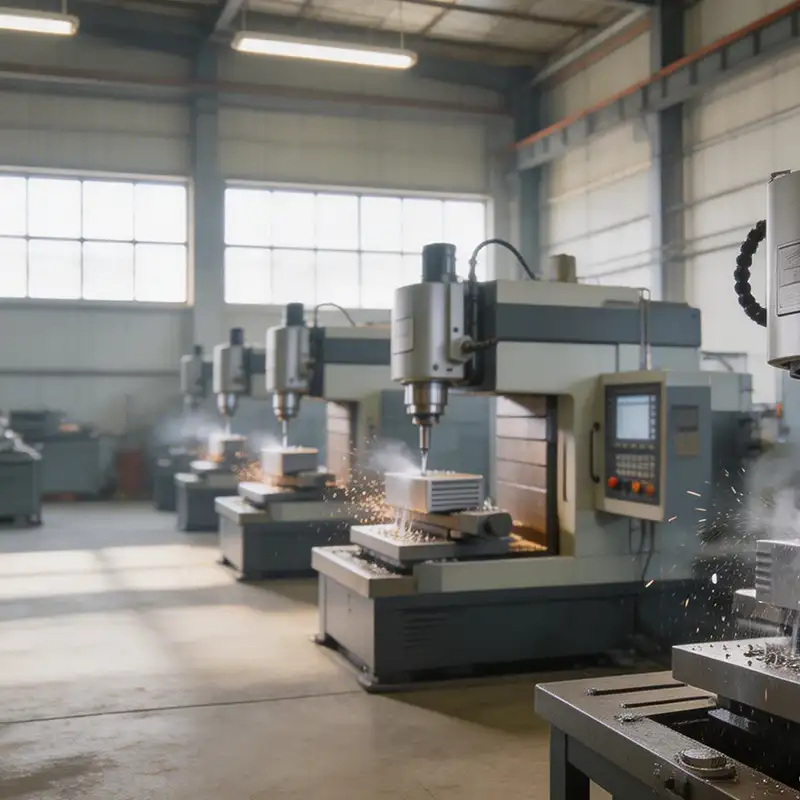
The foundation is the CNC machine. Its rigidity, the quality of its ball screws and guideways, and its thermal stability are paramount. A newer, well-maintained machining center will naturally hold tighter tolerances than a worn-out one. This is a big part of the answer to How fine a tolerance can CNC hold?.

Tooling and Workholding

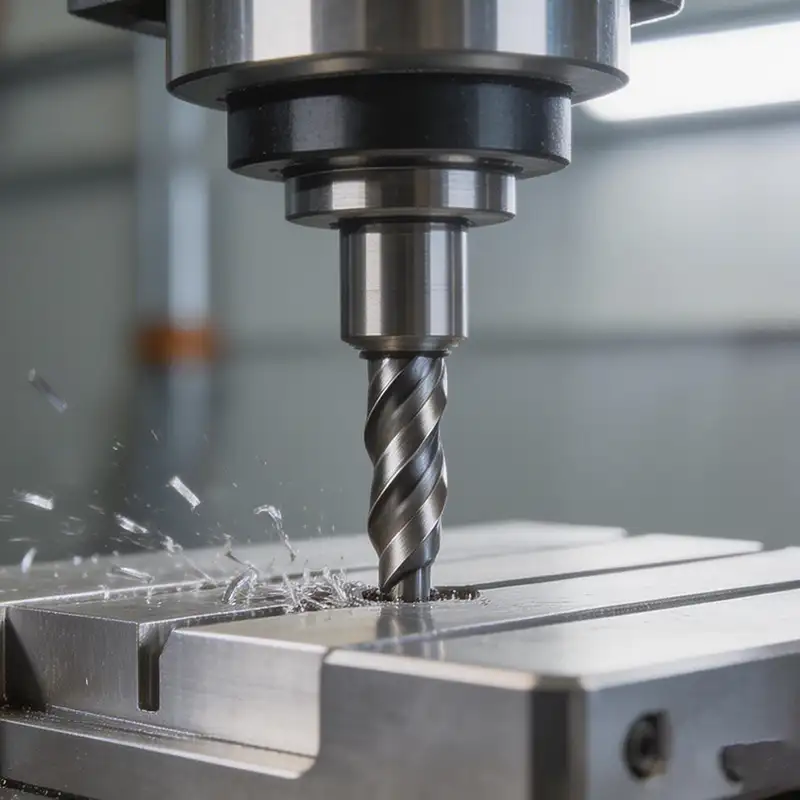
A fantastic machine can’t compensate for a dull tool or a part that vibrates in the vise. Using sharp, high-quality end mills and secure, rigid workholding (like precision vises or custom fixtures) is non-negotiable for achieving good machining part accuracy. It’s the difference between a clean cut and a chattered, inaccurate one.

Material and Operator Skill

Some materials, like certain stainless steels or high-temperature alloys, are trickier to machine precisely than, say, aluminum. They may warp with heat or work-harden. Furthermore, a skilled machinist or programmer knows how to choose the right speeds, feeds, and toolpaths to minimize stress and maximize CNC milling precision. Their expertise in setting up the job is invaluable.

A Practical Guide to Specifying Tolerances

Now for the actionable advice. When you’re preparing your design drawings, be a tolerance hero, not a tolerance micromanager. First, apply tight tolerances only to critical features and dimensions—like a bore for a bearing or a mating surface. Leave non-critical dimensions with a looser, standard tolerance. This is the single best way to control costs. Second, communicate clearly with your machine shop. Ask them about their typical CNC tolerance standards for different operations. A good partner will help you design for manufacturability. Finally, remember that factors like part size and geometry matter; holding ±0.001″ on a 1-inch feature is different than on a 20-inch feature. By understanding the capabilities of CNC technology and applying tolerances thoughtfully, you ensure a successful, cost-effective project where every part fits and functions just as you envisioned.

Categories
Quality & Tolerances

What Is Tight Tolerance Machining? A Beginner’s Friendly Guide

Tight tolerance machining is a specialized form of manufacturing where parts are made to exceptionally precise dimensions. Think of it as the difference between a good fit and a perfect, seamless fit. This guide will explain what it is, why it’s crucial in industries like aerospace and medical devices, and how it’s achieved.

Understanding the Fundamentals of Tight Tolerance Machining

Let’s start with the basics. When we talk about precision machining or high-precision machining, we’re often referring to the practice of creating parts with very small allowable deviations from the design specifications. This core concept is what close tolerance machining is all about. It’s the art and science of making things fit together perfectly, every single time.

What Does “Tolerance” Really Mean?

Imagine you’re ordering a custom wooden dowel to fit into a hole. If the shop says they can make it 10mm in diameter, plus or minus 1mm, that’s a relatively loose tolerance. Your dowel could be 9mm or 11mm and still be “correct.” Now, what if your application requires a perfect, frictionless fit? You might specify a diameter of 10mm, with a tolerance of ±0.025mm (or ±0.001 inches). This tiny allowable error is a tight machining tolerance. In essence, tolerance defines the permissible limit of variation in a physical dimension, and tight tolerance means that limit is exceptionally small.

The Value and Common Applications

You might wonder, “Why go through all that extra effort?” Well, in many modern products, there’s simply no room for error. Precision CNC machining with tight tolerances is non-negotiable in fields where failure isn’t an option. For example, in an aircraft engine, components must align perfectly to handle immense stress and heat. A tiny gap or misalignment could lead to catastrophic wear or failure. Similarly, in the medical field, surgical instruments and implants must meet exacting standards to ensure patient safety and device functionality. This is why searching for information on tight tolerance machining applications often leads you to these high-stakes industries.

How to Achieve Tight Tolerances: A Practical Look

So, how do machinists pull this off? It’s not magic—it’s a combination of advanced technology, meticulous processes, and deep expertise. Achieving micron-level machining involves controlling every variable in the production process.

Using the Right Tools and Machines

Not every machine shop can deliver true tight tolerances. It requires high-end CNC milling and CNC turning centers that are incredibly rigid and accurate. The machines themselves must be regularly calibrated and maintained. Furthermore, the choice of cutting tools, tool holders, and even the programming software (like advanced CAM systems) plays a huge role. Using worn tools or incorrect speeds/feeds is a surefire way to miss your tolerance goals.

Controlling the Environment

Here’s something you might not think about: temperature. Metal expands and contracts with heat. A shop that isn’t temperature-controlled can see parts change size slightly throughout the day, ruining precision work. Many top-tier shops for precision part manufacturing maintain a consistent climate. Additionally, skilled machinists use sophisticated measurement tools like coordinate measuring machines (CMMs) and laser scanners to verify dimensions, not just simple calipers. You can learn more about measurement best practices from authoritative sources like the National Institute of Standards and Technology (NIST).

Clearing Up Common Misconceptions

A common misunderstanding is that “tighter is always better.” While high tolerance machining is amazing, it also costs more and takes longer. Not every part of your assembly needs to be held to a ±0.001″ standard. A good design, often called GD&T (Geometric Dimensioning and Tolerancing), applies tight tolerances only where they are functionally critical. This balances performance with cost-effectiveness. Another myth is that it’s only for metal; tight tolerance processes are also vital for machining advanced plastics and composites used in various industries.

Getting Started with Your Project

If you’re considering a project that might need this level of precision, my best advice is to communicate early and often with your machining partner. Be clear about the part’s function. Ask them about their capabilities—what tolerances they can reliably hold, and what their inspection process looks like. Providing a clear drawing with well-defined tolerances, rather than just a 3D model, is a great first step. Remember, partnering with a shop experienced in ultra-precision machining can save you from headaches down the line and ensure your product works exactly as intended.

Request A Quote

We'll Send You Back with Price Immediately!

DEC 1-31

XMAS SPECEIL

Up to

40% off

What Is Tight Tolerance Machining? A Beginner’s Friendly Guide

We'll Send You Back with Price Immediately!