

Categories
Surface Finishing

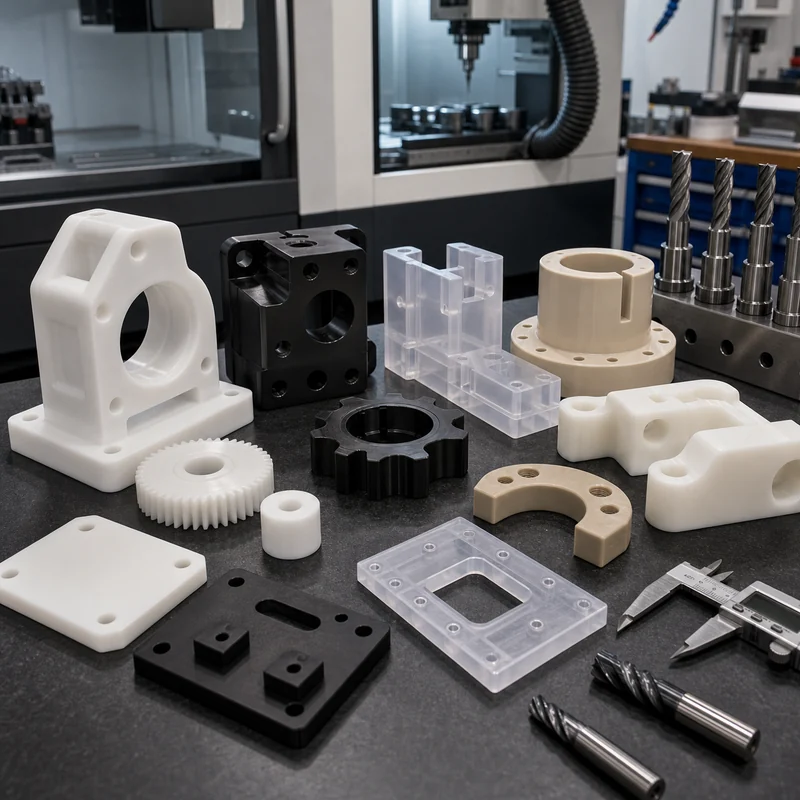
Plastic CNC Machining Guide: ABS, POM, Nylon, PEEK, Acrylic, and PC

Quick answer: Plastic CNC machining removes material from plastic sheet, rod, or block stock to create prototypes and functional parts. Common materials include ABS, POM/Delrin, nylon, acrylic, polycarbonate, PEEK, PTFE, and ULTEM.

Plastic CNC Machining Guide

Plastic machining is useful when molded tooling is too expensive, quantity is low, or the part must be made from real engineering material quickly. Each plastic behaves differently under cutting heat, clamping force, moisture, and load.

Key Points for Buyers and Engineers

Topic What to know Practical impact
ABS Affordable and tough Housings, prototypes, covers.
POM / Delrin Low friction and stable Gears, bushings, guides, rollers.
Nylon Tough and wear-resistant Mechanical wear parts, spacers.
PEEK High-performance plastic Heat, chemical, and precision applications.
Acrylic / PC Clear or impact-resistant options Windows, covers, optical or display parts.

How This Affects CNC Machined Parts

Plastic parts can use CNC milling, turning, drilling, tapping, and polishing. Material selection should consider heat, strength, moisture, transparency, wear, and cosmetic finish.

Design and Purchasing Checklist

  • Avoid excessive clamping pressure.
  • Use sharp tools to reduce melting and burrs.
  • Set realistic tolerances for plastic movement.
  • Consider moisture absorption for nylon.
  • Confirm cosmetic surfaces and edge quality.

Related MTSPi Resources

FAQ

Can plastics be CNC machined?

Yes. Many engineering plastics can be milled, turned, drilled, and tapped.

Which plastic is best for CNC machining?

It depends on function. ABS is good for prototypes, POM for low friction, nylon for wear, PC for impact, and PEEK for high performance.

Are plastic CNC parts accurate?

Yes, but tolerances should account for material movement, heat, moisture, and part geometry.

Need help with plastic CNC machining?

Send drawings, material, quantity, finish, tolerance notes, and application requirements. MTSPi can review manufacturability before quoting.

Contact MTSPi for engineering and quote support

Practical Buyer Notes

Plastic CNC machining pages should not treat all plastics the same. ABS, POM, nylon, acrylic, PC, PEEK, PTFE, and ULTEM each machine differently and serve different functions.

The page should help buyers avoid the biggest plastic machining problems: heat buildup, clamping deformation, burrs, stress cracking, moisture movement, unrealistic tolerances, and wrong material choice.

How to Evaluate This Topic on a Real Drawing

Decision point Recommended approach Why it matters
Low-cost prototype ABS or acrylic may work Good for appearance and early validation
Wear or sliding POM or nylon may be better Improves friction and durability
Clear part Acrylic or PC Transparency and impact needs decide
High performance PEEK or ULTEM Used when heat, chemical, and strength requirements justify cost

Common Mistakes to Avoid

  • Applying metal tolerances to every plastic part.
  • Ignoring heat and melting during machining.
  • Choosing clear acrylic when impact resistance needs PC.
  • Using nylon without considering moisture absorption.

Recommended MTSPi Review Workflow

MTSPi should match plastic material to function before quoting. Machining strategy, fixture pressure, tool sharpness, and inspection method should follow the material behavior.

  1. Confirm the part function, operating environment, and assembly risk.
  2. Review material, process, tolerance, surface finish, and inspection requirements together.
  3. Separate critical features from general dimensions so cost is not wasted on non-functional details.
  4. Use related resources such as CNC materials, surface treatment, and quality assurance to complete the specification.
  5. Send the final drawing package to MTSPi for quote review before production.

What to Send for a Faster Quote

Send material preference, application environment, color, finish, quantity, tolerance notes, and whether the part must be transparent, wear-resistant, heat-resistant, or cosmetic.

  • 3D CAD file and 2D drawing with revision number.
  • Material grade or acceptable alternatives.
  • Quantity, delivery target, and whether samples are required first.
  • Critical dimensions, thread callouts, finish notes, and inspection requirements.
  • Application notes when the part is used in heat, moisture, wear, vibration, or visible assemblies.

Deeper Engineering Notes

For plastic CNC machining, the strongest page is not just a definition. It should help a buyer decide what information belongs on the drawing, what questions to ask a supplier, and which details affect cost, quality, and delivery. In real RFQ work, the important details are usually heat control, clamping force, material movement, edge quality, transparency, wear, and chemical exposure. These details decide whether the supplier can quote confidently or has to return with repeated questions.

The common risk is choosing plastic only by price instead of matching performance to the application. That risk can make the content look complete on the surface but weak in a real manufacturing situation. A stronger specification connects the topic to material behavior, machine access, tolerance control, finishing, and inspection before the order is released.

Example Specification Review

Review area Question to answer Good specification practice
Function What does this feature or part need to do? Describe the load, fit, motion, appearance, sealing, or assembly requirement.
Material Is the selected material suitable for the environment? Confirm strength, heat, corrosion, wear, chemical exposure, and cosmetic needs.
Geometry Can the feature be reached by standard tools? Review depth, corner radius, wall thickness, tool clearance, and setup direction.
Tolerance Which dimensions are truly critical? Use tight tolerances only where function requires them and keep general dimensions practical.
Verification How will acceptance be checked? Define gauges, CMM checks, roughness measurement, thread inspection, or visual standards when needed.

How This Page Should Support Ranking

This topic can attract both beginner searches and buyer searches. The beginner wants a clear answer; the buyer wants enough detail to make a manufacturing decision. A page has a better chance to rank when it answers the simple question first, then adds examples, process limits, design notes, comparison tables, and practical next steps.

That is also why internal links should be helpful rather than forced. A reader should naturally move from this page to a process page, material page, surface finish page, inspection page, or quote page only when that next step solves a real question.

Conclusion

Plastic CNC machining is valuable for prototypes and functional parts when material choice, tolerances, wall thickness, and heat control are handled correctly.
Categories
CNC Materials

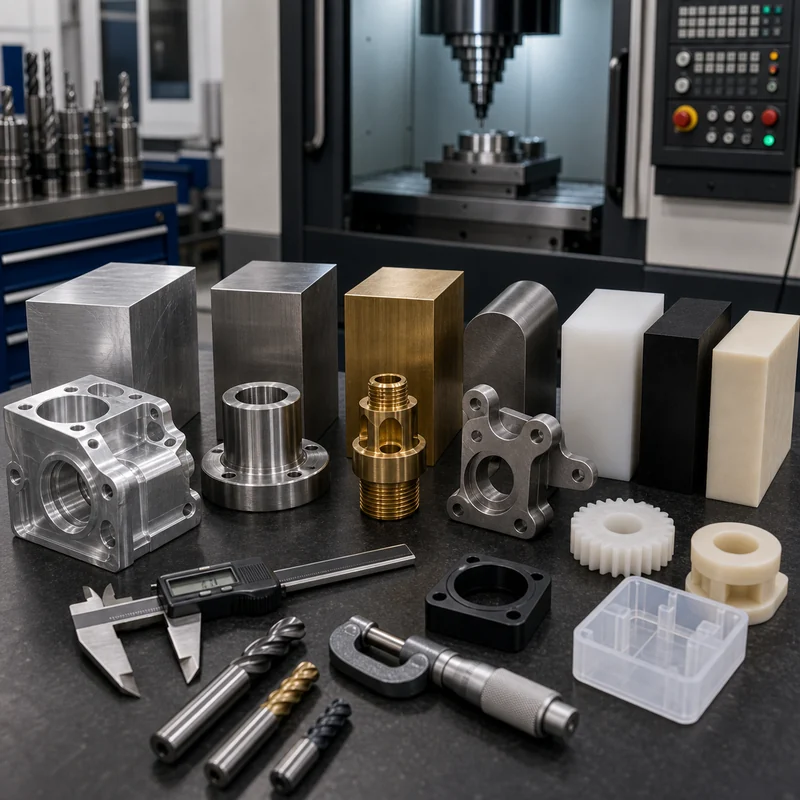
Best Materials for CNC Machining: Aluminum, Steel, Brass, Titanium and Plastics

CNC machining materials is a key search topic for buyers who need reliable custom parts, accurate dimensions, practical material advice, and clear supplier communication. Before sending a drawing or placing an order, buyers should understand the process, cost drivers, tolerance requirements, material options, lead time, inspection needs, and the questions that separate a capable machine shop from a weak supplier.

Aluminum

Aluminum is popular because it machines quickly, has good strength-to-weight ratio, and works well for prototypes, housings, brackets, and aerospace-style components.

Buyer Notes

For a smoother quote, prepare a 3D model, 2D drawing, target material, order quantity, surface finish, tolerance requirements, and any critical assembly information. Clear specifications reduce delays and help the supplier identify manufacturability risks early.

Steel and Stainless Steel

Steel offers strength and durability. Stainless steel adds corrosion resistance but usually costs more to machine than aluminum.

Buyer Notes

For a smoother quote, prepare a 3D model, 2D drawing, target material, order quantity, surface finish, tolerance requirements, and any critical assembly information. Clear specifications reduce delays and help the supplier identify manufacturability risks early.

Brass, Copper, and Titanium

Brass machines well and suits fittings. Copper conducts heat and electricity. Titanium is strong and light but more difficult to machine.

Buyer Notes

For a smoother quote, prepare a 3D model, 2D drawing, target material, order quantity, surface finish, tolerance requirements, and any critical assembly information. Clear specifications reduce delays and help the supplier identify manufacturability risks early.

Engineering Plastics

POM, nylon, ABS, PC, PTFE, and PEEK can be CNC machined for prototypes, fixtures, insulation parts, and functional components.

Buyer Notes

For a smoother quote, prepare a 3D model, 2D drawing, target material, order quantity, surface finish, tolerance requirements, and any critical assembly information. Clear specifications reduce delays and help the supplier identify manufacturability risks early.

FAQ

What materials can be CNC machined?

Choose material by strength, weight, corrosion resistance, heat resistance, machinability, appearance, and cost. If unsure, ask the supplier to recommend options based on the part function.

What is the best material for CNC machining?

Choose material by strength, weight, corrosion resistance, heat resistance, machinability, appearance, and cost. If unsure, ask the supplier to recommend options based on the part function.

Can CNC machining make plastic parts?

Choose material by strength, weight, corrosion resistance, heat resistance, machinability, appearance, and cost. If unsure, ask the supplier to recommend options based on the part function.

How do I choose material for CNC parts?

Choose material by strength, weight, corrosion resistance, heat resistance, machinability, appearance, and cost. If unsure, ask the supplier to recommend options based on the part function.

Practical Checklist Before Ordering

  • Confirm material grade, dimensions, tolerance, and surface finish.
  • Share both 3D files and 2D drawings when possible.
  • Identify critical features that affect fit, sealing, strength, or assembly.
  • Ask about sample lead time, MOQ, inspection reports, and packaging.
  • Compare quotes by specification, not only by unit price.

Conclusion

A good CNC machining decision balances design, material, tolerance, cost, lead time, and supplier capability. Buyers who prepare complete files and ask the right technical questions usually receive more accurate quotes, better parts, and fewer production surprises.

Categories
CNC Materials

Your Ultimate Guide to Plastic CNC Machining Success

Welcome to your go-to resource for plastic CNC machining! This guide breaks down everything from material selection to finishing techniques, helping you understand the process and achieve high-quality, precise plastic parts. Whether you’re new to CNC or looking to refine your skills, you’ll find practical advice here.

Why Choose CNC for Plastic Parts?

If you’re exploring plastic part fabrication or polymer machining, you might wonder why CNC is such a popular choice. Think of it like a highly skilled sculptor, but one that uses digital instructions to carve plastic with incredible accuracy. Unlike injection molding, which is great for huge volumes, CNC milling of plastics is perfect for prototypes, custom one-off pieces, or low to medium production runs. It gives you the freedom to make design changes quickly without expensive molds. The result? Parts with tight tolerances, excellent surface finishes, and complex geometries that are hard to achieve with other methods.

Picking the Right Plastic for Your Project

This is where your guide to machining plastics really starts. Not all plastics are created equal for machining! Picking the wrong one can lead to melted edges, poor finishes, or a part that just doesn’t hold up. Here’s a quick rundown of some common players:

ABS is a tough, all-rounder that machines nicely and is easy to glue and paint. Polycarbonate (PC) is incredibly strong and clear, but it can be a bit grabby on tools. Acrylic (PMMA) gives you that crystal-clear, glass-like finish but is brittle and can chip. For parts needing low friction and high wear resistance, Acetal (POM/Delrin) is a star performer. And for extreme chemical resistance or high temperatures, engineers often turn to PEEK or PTFE (Teflon). My advice? Always chat with your material supplier or machinist about your part’s function—they can point you to the perfect fit.

Key Considerations Before You Start Machining

Jumping straight into CNC plastic fabrication without a plan is like baking without a recipe. A few upfront thoughts make all the difference. First, consider your part’s design. Sharp internal corners? They might need a special tool. Very thin walls? They could vibrate or break during cutting. Sharing a detailed 3D model with your machinist helps them spot these issues early. Also, think about the final look and feel. Do you need a glossy finish, or will a matte texture work? Specifying this early guides the entire machining process for polymers.

Your Tooling and Cutting Strategy

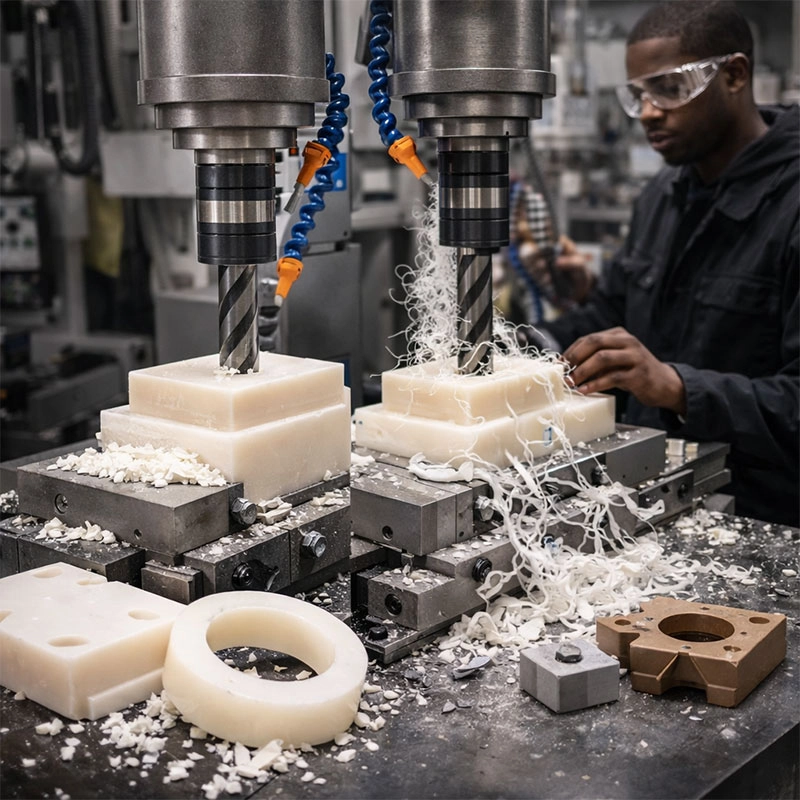
The tools and how we use them are crucial in precision plastic machining. We generally use sharp, polished tools designed for plastics. Why sharp? Dull tools generate more heat through friction, and heat is the enemy—it can soften the plastic and ruin your cut. High spindle speeds with slow feed rates often work well, as they produce smaller chips that carry heat away. Using compressed air or mist coolant (never a flood of liquid that could swell the material) is key for temperature control. It’s a delicate balance, but getting it right means clean cuts and happy parts.

Workholding and Temperature Control

How you hold the plastic block still is just as important as the cutting. Since plastics are softer and more flexible than metal, we need gentle but secure fixturing. Vacuum tables are fantastic because they distribute holding force evenly without distorting the material. Sometimes, custom soft jaws or adhesive methods are used. The goal is always to prevent vibration and movement without crushing the part. And remember that temperature control we mentioned? Keeping everything cool prevents the plastic from expanding, which ensures your final dimensions are spot-on. For more on material properties, resources like Boedeker Plastics offer great technical data sheets.

A Step-by-Step Look at the CNC Process for Plastics

Let’s walk through a typical CNC machining plastic guide process. It starts with your CAD model, which gets translated into machine instructions (G-code) by CAM software. The machinist then secures a block of your chosen plastic to the machine bed. The first cuts are usually roughing passes—these quickly remove large amounts of material, leaving a little extra. Then, finishing passes come in with finer tools and precise movements to hit the exact dimensions and surface quality. Finally, the part is carefully detached, deburred (removing any sharp edges), and often goes through a secondary finishing process like sanding or polishing. It’s a methodical dance between machine, material, and machinist.

Common Pitfalls and How to Avoid Them

Even with a great plastic machining tutorial, things can go sideways. A common issue is melting or gumming. This usually points to excessive heat from dull tools, too slow spindle speed, or inadequate cooling. The fix? Sharpen or change your tools and optimize your speeds and feeds. Another headache is chipping, especially on brittle plastics like acrylic. Using climb milling techniques and very sharp, single-flute cutters can make a world of difference. Finally, dimensional inaccuracy often stems from the plastic expanding due to heat or from improper fixturing. Allowing the material to cool between passes and using the right workholding solve most of this. The key is to start with conservative settings and adjust as you learn how the specific material behaves.

Wrapping Up Your Plastic Machining Journey

I hope this comprehensive guide to CNC machining plastics has been helpful! Mastering plastic CNC machining is about understanding the unique personality of plastics—how they react to heat, force, and cutting tools. It blends science with a bit of practical artistry. Start with a suitable material, design for manufacturability, use sharp tools with a smart cutting strategy, and control your environment. Don’t be afraid to ask for advice from experienced machinists; their hands-on knowledge is invaluable. With these tips, you’re well on your way to turning your plastic part ideas into successful, high-quality realities. Happy machining!

Request A Quote

We'll Send You Back with Price Immediately!

DEC 1-31

XMAS SPECEIL

Up to

40% off

Your Ultimate Guide to Plastic CNC Machining Success

We'll Send You Back with Price Immediately!