Quick answer: Brass does not rust like steel because rust is iron oxide and brass is mainly copper and zinc. However, brass can tarnish, darken, form a green patina, corrode, or suffer dezincification in harsh environments. For CNC machined brass parts, alloy choice, surface finish, storage, cleaning, and operating conditions decide how the part ages.
Does Brass Rust?
Strictly speaking, brass does not rust. Rust is the red or orange iron oxide corrosion product that forms on iron and steel. Standard brass is a copper-zinc alloy, so it does not produce the same flaky red rust seen on carbon steel. This is one reason brass is widely used for fittings, electrical contacts, decorative hardware, bushings, valve parts, and turned components.
That does not mean brass is immune to surface change. Brass can tarnish in air, discolor from handling, develop patina outdoors, and corrode in aggressive water, salt, ammonia, acidic environments, or certain industrial chemicals. So the better question is not only “does brass rust?” but also “what type of corrosion or appearance change can happen to brass?”
Brass Rust vs Tarnish vs Corrosion vs Dezincification
| Surface condition | Typical appearance | Cause | Risk level |
|---|---|---|---|
| Rust | Red or orange flaky oxide | Iron oxidation | Not typical for normal brass unless iron contamination is present |
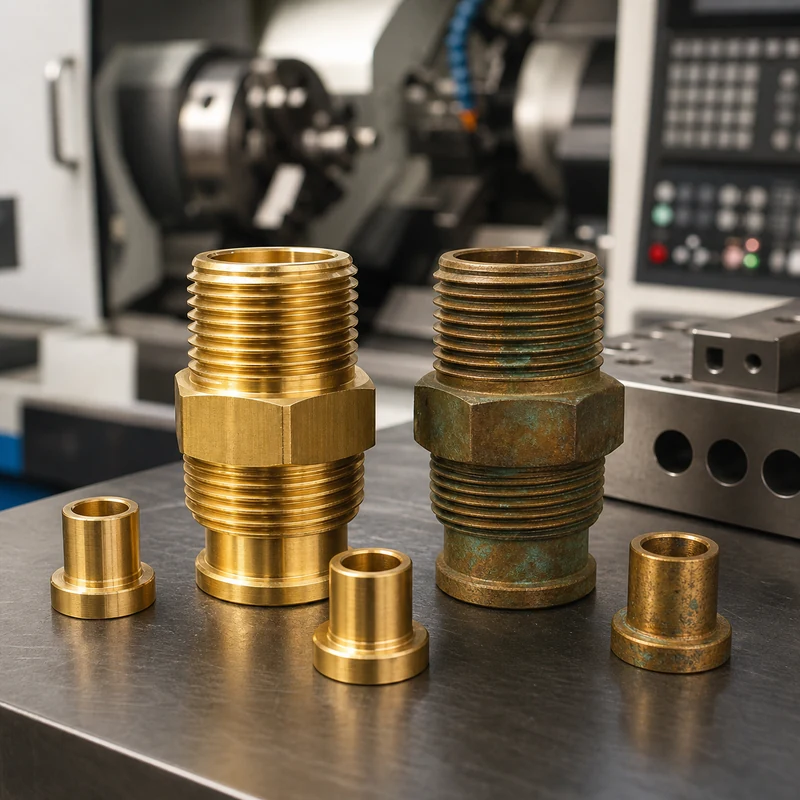
| Tarnish | Dull brown, yellow-brown, or darker surface | Reaction with oxygen, sulfur compounds, oils, or handling | Usually cosmetic |
| Patina | Green or blue-green film | Long-term copper reaction with moisture, salts, pollutants, or carbonates | Often surface-level but may be undesirable |
| General corrosion | Dull, stained, etched, or roughened surface | Chemicals, water quality, salt, acids, or pollutants | Can become functional if severe |
| Dezincification | Pink or copper-rich surface, weakened structure | Zinc is selectively removed from brass | Potentially serious for pressure, water, and load-bearing parts |
Why Brass Tarnishes
Brass tarnish is usually an oxidation or surface reaction. Air, moisture, skin oils, sulfur compounds, fingerprints, cleaners, and packaging materials can change the surface color. For decorative parts, tarnish may be unacceptable even if the part still works. For hidden mechanical parts, light tarnish is often harmless.
Freshly machined brass may look bright because the cutting tool exposes clean metal. Over time, that surface reacts with the environment. Polishing can restore brightness, but polished brass will still change again unless it is protected by clear coating, plating, controlled packaging, or regular maintenance.
What Is Dezincification?
Dezincification is a form of brass corrosion where zinc is removed from the alloy and a copper-rich structure remains. The surface may look pinkish or reddish. Mild cases can appear cosmetic, but severe dezincification can weaken the part and create leakage or failure in fluid-handling components.
This matters for valves, fittings, threaded brass parts, plumbing-related components, marine hardware, and parts exposed to aggressive water chemistry. If the application involves water, pressure, salt, heat, or chemicals, buyers should confirm the brass grade instead of simply requesting “brass.”
Where Brass Performs Well
- Electrical contacts and conductive components
- Precision turned fittings and threaded inserts
- Bushings, sleeves, spacers, and small mechanical hardware
- Decorative machined parts and visible metal trim
- Valve components and fluid fittings when the correct grade is selected
- Low-friction or wear-related applications with moderate loads
Brass Grades and CNC Machining Considerations
Brass is generally one of the easiest metals to machine. It cuts cleanly, forms chips well, and can achieve good surface finish. Free-cutting brass is especially efficient for high-volume turned parts, but some applications require lead-free or dezincification-resistant brass. A purchasing specification should identify the exact alloy when compliance, water exposure, or mechanical properties matter.
For machined brass parts, MTSPi can support CNC turning, milling, drilling, tapping, and finishing. Brass parts often include threads, bores, flats, grooves, knurls, slots, and sealing surfaces. Each feature should be reviewed for tool access and inspection method.
How to Protect CNC Machined Brass Parts
| Protection method | Best use | Important note |
|---|---|---|
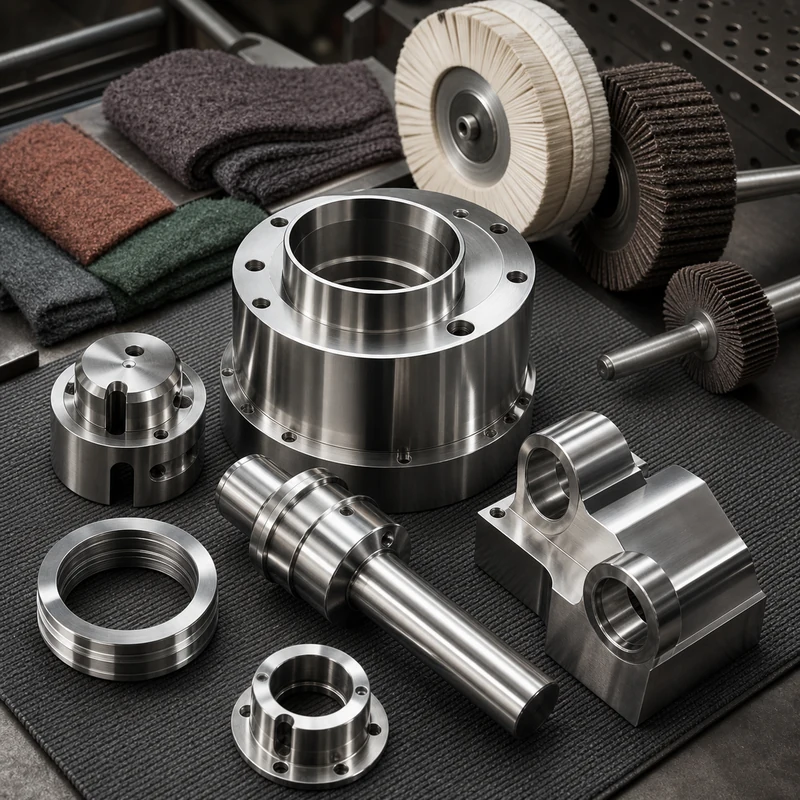
| Polishing | Bright cosmetic appearance | May need maintenance or additional coating |
| Clear coating | Decorative brass surfaces | Can reduce tarnish from handling and air exposure |
| Nickel plating | Appearance, wear, and corrosion resistance | Thread fit and thickness should be considered |
| Chrome plating | Harder decorative surface | Usually more process planning and cost |
| Controlled packaging | Shipping and storage protection | Useful for polished or cosmetic parts |
Cleaning Brass: What to Avoid
Avoid aggressive ammonia-based cleaners on stressed brass parts because ammonia exposure can contribute to cracking risk in some brass conditions. Acidic cleaners can brighten brass but may also attack the surface if used incorrectly. For precision machined parts, cleaning should preserve dimensions, threads, sealing faces, and cosmetic requirements.
FAQ
Does brass rust in water?
No, brass does not form red iron rust in water. But water chemistry can cause tarnish, general corrosion, or dezincification depending on the alloy and exposure.
Why does brass turn green?
Green patina forms when copper in brass reacts with moisture, salts, carbon dioxide, or pollutants. It is common on copper-rich alloys exposed outdoors.
Is tarnished brass ruined?
Usually no. Light tarnish is often cosmetic and can be cleaned or polished. Severe dezincification or deep corrosion is more serious.
Is brass better than stainless steel?
It depends on the application. Brass machines easily and conducts electricity well. Stainless steel usually performs better in many corrosion and strength-critical environments.
Can brass CNC parts be plated?
Yes. Brass can be polished, nickel plated, chrome plated, brushed, or coated. Finishing should be planned before machining if dimensions or appearance are critical.
Need brass CNC machined parts?
Send your drawing, alloy requirement, quantity, finish, and working environment. MTSPi can review the right brass grade and surface treatment.
Conclusion
Brass does not rust like steel, but it can tarnish, patinate, corrode, or dezincify. For CNC machined brass parts, the safest approach is to match alloy, machining method, finish, and packaging to the actual working environment.