

Categories
Blog Design, Cost & Sourcing Manufacturing Process Comparisons

What Is Welding? Process Basics, Joint Types, and Machined-Part Design Notes

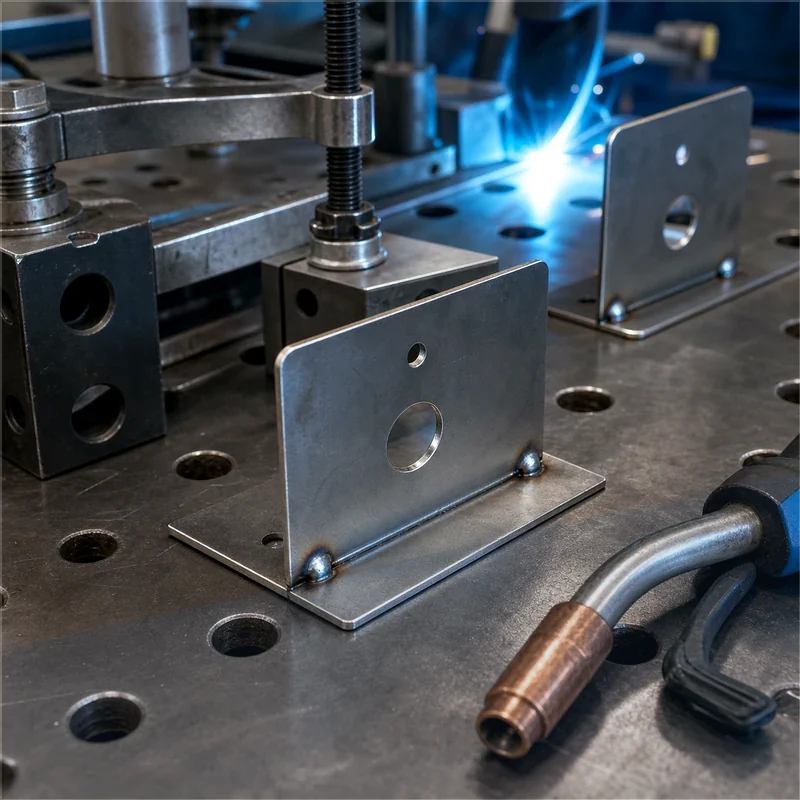
What Is Welding? Process Basics, Joint Types, and Machined-Part Design Notes is a practical manufacturing question because the answer affects cost, lead time, material behavior, inspection, and the path from prototype to production. For MTSPi CNC customers, the key is not simply naming a process, but understanding how the process connects with machined parts, fixtures, tolerances, surface requirements, and final assembly.

This guide explains what is welding from an engineering and purchasing point of view. It is written for product developers, mechanical engineers, sourcing teams, and buyers who need clear decisions rather than generic process descriptions.

Quick Answer

Welding is best for joining fabricated structures and metal assemblies. If a surface must remain flat, round, sealed, or tightly located, plan post-weld CNC machining or use a design that protects precision features from heat distortion.

Key Differences at a Glance

Point Option A Option B
MIG welding General fabrication and production assemblies Spatter, heat input, distortion
TIG welding Precise welds and thin materials Slower speed, operator skill
Spot welding Sheet metal overlap joints Access to both sides
Laser welding Small, precise, lower heat input joints Joint fit-up and equipment cost
Resistance welding High-volume sheet assemblies Material and thickness limits

How the Process Choice Affects Real Parts

A manufacturing method should be selected around the feature that actually controls function. Cosmetic surfaces, hidden support features, threads, bores, sealing faces, heat-transfer areas, and assembly datums do not carry the same risk. When those requirements are mixed together without priority, quotes become inconsistent and production becomes harder to control.

The safest workflow is to define the part requirement first, then match the process. A printed prototype may answer shape questions, a molded sample may answer appearance questions, and a CNC machined sample may answer tolerance, material, and functional questions. Many successful projects use more than one method before the final design is locked.

Design and Manufacturing Considerations

  • Place precision datums away from weld beads when possible.
  • Use tabs, slots, fixtures, or pilot features to control assembly location.
  • Allow access for the torch, electrode, or laser path.
  • Specify weld size and location clearly instead of using vague notes.
  • Plan post-weld machining for sealing faces, bearing seats, and critical holes.

Cost, Lead Time, and Risk Factors

Cost is driven by setup, tooling, material, machine time, inspection, finishing, and revision risk. A low unit price is not always the lowest project cost if it creates rework later. For prototypes and low-volume orders, flexibility can be more valuable than a process with a lower theoretical unit cost.

  • Use standard materials and standard feature sizes when they do not weaken the design.
  • Separate critical tolerances from general dimensions so the supplier knows where to focus.
  • Confirm surface finish and cosmetic requirements before production begins.
  • Avoid late changes to mounting holes, connector openings, datum faces, and threaded features.
  • Send CAD files and 2D drawings together when tolerances, threads, or finishes matter.

Quality Checks Before Production

A good quality plan checks the features that influence assembly and performance. Depending on the part, this may include dimensional inspection, thread gauges, surface roughness, flatness, perpendicularity, burr control, coating thickness, visual appearance, and fit with mating parts.

When This Topic Matters for CNC Buyers

what is welding matters when a team is comparing prototype routes, validating a design, replacing a weak supplier, or trying to reduce manufacturing cost without damaging function. The best choice is usually the process that answers the current engineering question with the least unnecessary risk.

MTSPi CNC Engineering Notes

MTSPi CNC supports precision CNC milling, turning, rapid prototyping, low-volume production, finishing, and inspection for custom parts. If your project uses molding, casting, welding, PCB assemblies, or 3D printing, CNC machining can still be important for datums, holes, threads, sealing faces, fixtures, and production-ready prototypes.

Frequently Asked Questions

Can this process replace CNC machining?

Sometimes it can replace CNC for non-critical geometry, but CNC is often still needed when tight tolerances, real engineering material, threads, flat sealing faces, or precise mating features are required.

What files help MTSPi CNC review a project?

STEP or STP files are useful for geometry. A 2D drawing is important for tolerances, materials, threads, surface finish, inspection requirements, and notes that are not obvious from the CAD model.

How do I reduce manufacturing risk?

Define critical features, avoid unnecessary tight tolerances, confirm material and finish requirements, and use prototypes to validate assembly before committing to higher-volume tooling or production.
Related MTSPi Resources

Categories
Blog CNC Materials Design, Cost & Sourcing

How to Polish Stainless Steel CNC Parts: Finishing Methods and Design Notes

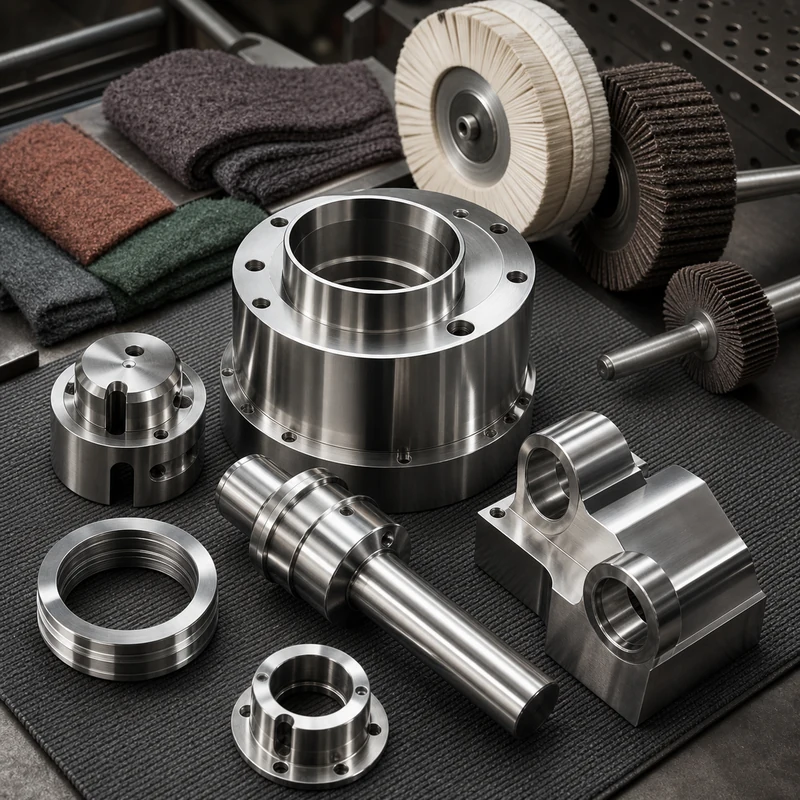
Stainless steel CNC parts are polished to remove tool marks, improve appearance, reduce roughness, prepare for cleaning, or support corrosion-resistant service. The best method depends on the stainless grade, starting surface, part geometry, cosmetic expectations, and whether the finish is decorative, functional, or both.

Polishing should be planned before production rather than treated as a last-minute cosmetic step. MTSPi can combine stainless steel CNC machining, surface finish planning, and quality checks so machined features and finished surfaces match the drawing intent.

Why Polish Stainless Steel Parts?

  • Remove visible cutter marks, burr traces, scratches, or handling marks.
  • Create a brushed, satin, bright, or mirror-like appearance.
  • Reduce surface roughness where cleaning, sealing, or flow behavior matters.
  • Improve corrosion performance when polishing is paired with proper cleaning or passivation.
  • Prepare selected surfaces for assembly, inspection, or customer-facing use.

Common Polishing Methods

Method Typical Result Best Use
Deburring and edge blending Safer edges and cleaner transitions General machined parts before cosmetic finishing
Abrasive grinding Removes deeper tool marks and uneven areas Pre-polish correction or weld/stock cleanup
Brushing Uniform directional satin texture Panels, covers, brackets, visible housings
Buffing Bright reflective surface Decorative components and customer-facing hardware
Mirror polishing Very high reflectivity after staged abrasives Optical, medical, food, and premium cosmetic surfaces
Electropolishing Electrochemical smoothing and cleaning Complex stainless parts, hygienic surfaces, and corrosion-sensitive applications

A Practical Stainless Steel Polishing Workflow

1. Define the target finish

The finish should be described with a surface roughness value, visual standard, grain direction, sample photo, or approved reference part. Terms like “nice polish” or “shiny” are too vague for repeat production.

2. Machine with finishing allowance in mind

Polishing removes material. If a critical diameter, sealing surface, or flatness callout will be polished, the machining plan may need allowance and inspection after finishing. Tight features should not be polished aggressively unless the drawing accounts for it.

3. Remove defects gradually

Deep scratches, heavy cutter marks, and sharp edges should be reduced with controlled abrasives before fine polishing. Jumping directly to a fine compound can leave hidden waves, dull patches, or inconsistent reflections.

4. Clean and protect the part

After polishing, stainless steel parts should be cleaned to remove abrasive residue, compounds, oils, and loose particles. Depending on the application, passivation or electropolishing may be specified to improve surface cleanliness and corrosion behavior.

Stainless Steel Grades and Finish Behavior

Grade Family Polishing Notes Typical CNC Use
304 stainless steel Polishes well and is widely used for general corrosion resistance Housings, brackets, food equipment, covers
316 stainless steel Good corrosion resistance and common in harsher environments Medical, marine, chemical, and hygienic components
17-4 PH stainless steel Can be heat treated; finish planning should account for hardness condition High-strength shafts, fixtures, aerospace and industrial parts
303 stainless steel Machines well, but corrosion and finishing expectations should be checked Turned parts, fittings, fasteners, bushings

Design Notes Before Specifying a Polish

  • Avoid deep narrow pockets if the inside surfaces must be cosmetically polished.
  • Mark which faces are cosmetic and which are non-visible functional surfaces.
  • Specify grain direction for brushed finishes on panels or covers.
  • Confirm whether threaded holes, sharp edges, datums, and bores must be protected during finishing.
  • Define inspection after finishing when surface removal could affect tolerances.

Polishing vs Passivation vs Electropolishing

Mechanical polishing changes texture and appearance by physically smoothing the surface. Passivation chemically removes free iron and supports corrosion resistance. Electropolishing removes a thin surface layer electrochemically, which can smooth micro-peaks and improve cleanliness on suitable stainless parts. These processes can be combined, but they are not interchangeable.

Process Main Purpose Changes Dimensions?
Mechanical polishing Appearance and roughness control Yes, depending on abrasive stage and pressure
Passivation Surface chemistry and corrosion support Minimal dimensional change
Electropolishing Micro-smoothing, cleaning, and corrosion support Small controlled material removal

How MTSPi Supports Stainless Finishing

For stainless components, MTSPi reviews machining, polishing access, tolerance risk, edge requirements, cleaning, and inspection before production. Send your 3D model, drawing, stainless grade, target finish, cosmetic faces, and quantity through our RFQ channel.

Related MTSPi Resources

FAQ

Can all stainless steel CNC parts be mirror polished?

Not always. Mirror polishing depends on grade, geometry, access, starting surface, tolerance limits, and cost. Some internal features are impractical to polish uniformly.

Does polishing improve corrosion resistance?

A smoother and cleaner surface can help, but corrosion performance also depends on stainless grade, contamination control, passivation, environment, and maintenance.

Categories
Blog CNC Machining Basics Industries & Applications

What Can You Make With a CNC Machine? Parts, Products, and Applications

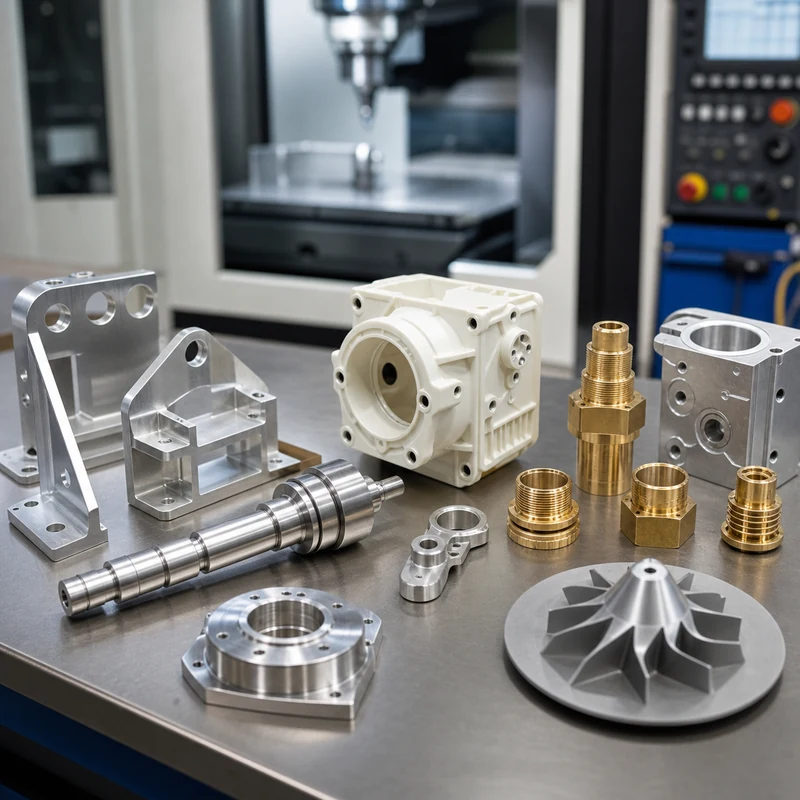
CNC machines can make a wide range of products, from simple plates and brackets to precision housings, shafts, heat sinks, fixtures, molds, connectors, robotic parts, and medical or aerospace components. The same core idea applies across all of them: a digital toolpath controls a cutting process so the finished part matches the model and drawing.

The best CNC product is not defined only by shape. It also depends on material, tolerance, surface finish, quantity, inspection level, and how the part will be assembled. MTSPi supports custom machined parts through CNC machined products, material planning, and production-oriented quality control.

Examples of CNC-Made Products

Product Type Examples Common Process
Structural parts Brackets, plates, frames, mounting blocks, machine bases 3-axis milling, 4-axis milling, 5-axis machining
Rotational parts Shafts, bushings, spacers, collars, rollers, pins CNC turning, Swiss-type machining, mill-turn
Enclosures and housings Sensor housings, electronics cases, motor covers, valve bodies Milling, drilling, tapping, boring
Thermal parts Heat sinks, cold plates, cooling blocks, finned components Milling, drilling, surface finishing
Tooling and fixtures Inspection fixtures, assembly jigs, soft jaws, nests, gauges Milling, turning, grinding-ready machining
Molds and dies Mold inserts, cavities, cores, die details 3-axis and 5-axis milling
Decorative or functional panels Nameplates, engraved plates, dashboard panels, prototypes Milling, engraving, finishing

Parts by Industry

Aerospace and drones

CNC machining can produce lightweight brackets, sensor mounts, landing gear parts, housings, antenna components, and structural frames. Aluminum and titanium are common because weight and strength matter.

Medical and life science

Medical projects often use stainless steel, titanium, aluminum, and engineering plastics for instrument components, housings, fixtures, and test hardware. Inspection, material control, and finish quality are especially important.

Robotics and automation

Robots need accurate joints, grippers, end-effectors, actuator housings, bearing blocks, shafts, sensor mounts, and lightweight plates. CNC machining is useful because fit and repeatability affect motion performance.

Electronics and semiconductor equipment

CNC machines can make enclosures, heat sinks, vacuum-compatible components, connector blocks, precision plates, and fixture hardware for electronics and semiconductor workflows.

Materials Used for CNC Products

  • Aluminum for lightweight prototypes, housings, brackets, and heat sinks.
  • Stainless steel for corrosion-resistant and durable components.
  • Brass and copper for fittings, contacts, thermal parts, and electrical components.
  • PEEK, POM, nylon, ABS, PC, and acrylic for insulated, lightweight, or low-friction parts.

What Cannot Be Made Efficiently With CNC?

CNC machining is not always the best answer. Thin sheet-metal parts may be better suited to laser cutting and bending. Very high-volume plastic parts may justify injection molding. Extremely large cast shapes may need casting first, followed by CNC finishing. The right process depends on geometry, volume, material, and cost target.

Design Tips for CNC-Made Products

  • Use realistic internal radii instead of sharp inside corners.
  • Avoid very deep narrow pockets unless they are functionally necessary.
  • Specify only the tolerances that affect fit, motion, sealing, or inspection.
  • Choose finishes early because anodizing, plating, polishing, and coating change dimensions and appearance.
  • Include drawings for threads, critical dimensions, flatness, surface roughness, and inspection notes.

From Idea to Finished Part

A typical project starts with CAD files and a drawing, then moves through manufacturability review, material selection, machining strategy, finishing, inspection, and shipment. For early-stage designs, rapid prototyping helps test fit and function before committing to a larger production run.

Related MTSPi Resources

FAQ

Can a CNC machine make finished products?

Yes. CNC machines can make finished components and, in some cases, complete products. Many projects still require secondary operations such as finishing, assembly, marking, or inspection.

Is CNC better for metal or plastic parts?

CNC works well for both. The best material depends on strength, weight, temperature, friction, chemical exposure, appearance, and cost.

Request A Quote

We'll Send You Back with Price Immediately!

DEC 1-31

XMAS SPECEIL

Up to

40% off

What Can You Make With a CNC Machine? Parts, Products, and Applications

We'll Send You Back with Price Immediately!