Categories
Surface Finishing

CNC Machining vs 3D Printing: Manufacturing Guide

Cnc machining vs 3d printing decisions should start with function, not with a generic machining label. Buyers get better results when they define how the part will be used, which dimensions control assembly, what material behavior matters, and how the supplier will inspect the finished work. For this topic, the important issues are material strength, accuracy, surface quality, cost by quantity, lead time, and prototype use cases. A capable supplier should be able to explain the process route, likely risk points, quotation assumptions, and inspection evidence before production begins.

Quick Answer

The practical answer is to match the drawing to a manufacturing route, then confirm material, tolerance, finish, quantity, and inspection before approving the order. If the part has mostly milled faces, pockets, slots, and holes, review CNC milling service capability. If it includes round features, shafts, bushings, or threads, include CNC turning service capability in the discussion. For buyer-side risk control, ask how the shop will hold the part, which features are critical, and whether any finish or secondary process changes final dimensions.

Key Takeaways

  • Define the functional dimensions before asking suppliers to quote every feature as critical.
  • Send a 2D drawing with tolerance notes and a 3D model for programming reference.
  • Confirm material grade, heat condition, surface finish, and inspection report requirements early.
  • Ask the supplier to identify difficult features, tool access issues, and possible design changes.
  • Use sample approval or first article checks when the part is new, tight, cosmetic, or assembly-critical.

What Buyers Usually Need to Know

Most problems in custom machining come from unclear assumptions. A supplier may quote one setup while the buyer expects multiple controlled operations. A buyer may request a tight tolerance on the full drawing while only one bore or mounting face actually affects the assembly. For cnc machining vs 3d printing, the conversation should make those assumptions visible before the purchase order is issued.

The RFQ should include units, drawing revision, STEP file, material grade, quantity, surface finish, critical dimensions, and target delivery. When these details are missing, suppliers either pause the quote or make assumptions. A fast answer based on assumptions can look attractive, but it often creates rework later. A better supplier asks clear questions and records the answers.

Capability should be checked against the part shape. A shop with CNC metal machining capability may handle many related jobs, but the buyer still needs to know whether the part will be milled, turned, ground, cut by EDM, drilled, or finished by a partner. Process route clarity is the first sign that the quotation is built on real manufacturing thinking.

Buyer Question Why It Matters Useful Evidence
Which process will make the main features? Process choice affects setup count, accuracy, cost, and lead time Supplier explains milling, turning, EDM, grinding, drilling, or finishing route
Which dimensions are functional? Critical dimensions need better control than clearance or cosmetic areas Marked drawing, datum notes, inspection plan
Which material condition is required? Grade, temper, hardness, and stress condition change machining behavior Material certificate or written grade confirmation
What happens after machining? Deburring, anodizing, plating, polishing, or heat treatment can change size and appearance Finish specification and post-finish inspection method

Material and Process Considerations

Material changes cutting speed, tool wear, clamping force, burr behavior, and finishing results. Aluminum is usually easier to machine and finish, stainless steel needs more attention to heat and work hardening, brass and copper require careful burr and dent control, and engineering plastics can move under heat or clamping pressure. For cnc machining vs 3d printing, material selection should support the part’s function rather than only the lowest raw material price.

The process route should match both material and geometry. Deep pockets, small internal radii, long shafts, thin walls, fine threads, and cosmetic faces each require different planning. Buyers should ask whether the supplier sees any design feature that raises risk. If the supplier recommends a larger radius, a different stock size, or a changed tolerance, ask for the reason and the expected effect on cost and quality.

When finishing is required, discuss it before machining starts. Anodizing, plating, passivation, polishing, blasting, coating, and heat treatment may change dimensions, surface appearance, or edge condition. A controlled supplier will connect machining allowance, masking, inspection, and packaging rather than treating finishing as an afterthought. Relevant finishing choices can be checked through quality assurance process.

Tolerance, Surface Finish, and Quality Checks

Tolerance should be tied to function. A general tolerance may be enough for clearance edges, while a bearing diameter, threaded hole, sealing face, or locating surface may require a tighter limit and a clear datum. Buyers should avoid applying strict tolerance across the whole drawing unless the part truly requires it, because unnecessary precision raises cost and may increase rejection risk without improving performance.

Inspection should be planned before production. Calipers may be enough for noncritical outside dimensions, but bores, threads, flatness, profile, runout, and surface roughness often need gauges, micrometers, CMM checks, height gauges, pin gauges, or functional fit tests. For cnc machining vs 3d printing, ask which tool will verify each critical feature and whether the report covers first article, sampling, or full inspection.

Surface finish needs clear language. Words like smooth, clean, or nice are not enough when mating, sealing, sliding, corrosion, or appearance matters. Use Ra values where function requires them and visual notes where cosmetic faces matter. If finish follows machining, confirm whether dimensions are checked before or after finishing through surface treatment options.

Factor Typical Risk Practical Control
Tight tolerance Higher cost, slower machining, more inspection Apply tight limits only to functional features
Thin walls or deep pockets Vibration, distortion, tool reach limits Use larger radii, balanced walls, and realistic flatness notes
Cosmetic finish Color variation, handling marks, unclear acceptance Define visible faces and approve samples when needed
Repeat order Different lot, tool wear, undocumented changes Keep revision, process, and inspection records

Cost Factors and Quotation Details

Cost depends on more than part size. Setup time, programming, material stock, tooling, machine time, number of operations, inspection, finishing, packaging, and batch size all affect the final quote. A small part with deep features and tight tolerances can cost more than a larger simple plate. A large batch may justify fixture work that would not make sense for a one-off sample.

Buyers can improve quote accuracy by separating must-have requirements from preferences. State which features control assembly, which surfaces are cosmetic, which dimensions may follow general tolerance, and what report is required. If the supplier has to guess, the quote may change after technical review. Cost-focused topics can also be compared against CNC machine shop capability when drawing changes are possible.

Lead time should be broken down into material purchase, programming, setup, machining, finishing, inspection, packing, and shipment. Finishing and inspection often create delays that buyers do not see in a simple machine-time estimate. Ask for a realistic timeline and identify which step has the highest risk of delay.

Design Tips for Better Machining Results

Good design makes machining predictable. Use accessible features, practical internal radii, balanced wall thickness, clear datums, standard threads, and realistic hole depths. Avoid deep narrow pockets, very thin unsupported walls, tiny corner radii, and tight tolerances on nonfunctional features. These changes often lower cost while improving consistency.

For cnc machining vs 3d printing, design review should focus on material strength, accuracy, surface quality, cost by quantity, lead time, and prototype use cases. If a feature is difficult but not functional, simplify it. If a feature is critical, mark it clearly and allow the supplier to plan the correct process. Tool access, clamping surface, burr direction, and finishing allowance should be considered before the drawing is released.

When the part is still being developed, use prototype or low-volume stages to learn from the design. A sample can reveal fit issues, burr problems, coating changes, or tolerance conflicts. It is cheaper to update the drawing after a controlled sample than to repair a full batch after shipment.

Common Buyer Mistakes to Avoid

One common mistake is comparing prices without comparing assumptions. If one supplier includes material certification, surface treatment, inspection report, and protective packaging while another quotes machining only, the prices are not equivalent. Ask each supplier to state what is included and what is excluded.

Another mistake is sending only a 3D model. The model helps programming, but the drawing carries tolerances, threads, material notes, finish requirements, datum references, and revision control. For cnc machining vs 3d printing, a missing drawing often leads to arguments about what should have been inspected or finished.

Buyers also overlook packaging. Sharp edges, polished faces, threads, thin walls, and precision bores can be damaged after inspection if parts are packed loosely. Packaging method should match the part’s risk and should be confirmed before shipment, especially for export orders.

Supplier Selection Checklist

A useful supplier review is technical and specific. Ask for the process route, material confirmation, fixture concept, inspection method, finishing plan, and lead time breakdown. The supplier does not need to expose every internal detail, but it should be able to explain how risk will be controlled.

Checklist Item Good Response Warning Sign
Drawing review Supplier identifies critical dimensions and unclear notes Supplier quotes with no technical questions
Process fit Supplier explains setups and secondary operations Supplier only lists machines generally
Inspection plan Supplier names tools and report format Supplier says quality is checked without details
Revision control Supplier confirms file version and change process Supplier relies on informal messages

Specification Sheet to Request

Before production, request a simple specification sheet covering drawing revision, 3D file name, material grade, quantity, finish, tolerance notes, critical dimensions, inspection report, packaging, and delivery terms. This sheet keeps engineering, purchasing, quality, and supplier teams aligned.

For repeat orders, the same sheet prevents silent changes. If material stock, finish partner, inspection method, or packaging changes, the buyer can review the difference before shipment. This is especially important when cnc machining vs 3d printing parts are used in assemblies or ordered across several batches.

CNC Machining vs 3D Printing: Manufacturing Deep-Dive Notes

The most important judgment for cnc machining vs 3d printing is knowing which requirement truly drives performance. If the part is a prototype, fast learning may matter more than cosmetic perfection. If it is a repeat production component, stable process control and inspection records may matter more than the fastest quote. If the part is visible to customers, handling and finishing should be planned with the same care as dimensions.

Suppliers should be encouraged to flag manufacturability issues. A larger internal radius, modified thread depth, adjusted wall thickness, or changed finish sequence can reduce cost and risk. The buyer should evaluate each suggestion based on function, assembly, cost, and schedule rather than accepting or rejecting changes automatically.

For higher-risk parts, use a first article approval step. Measure critical dimensions, test fit with mating parts, review burrs, check finish, and document any accepted deviations. Once the sample is approved, update the drawing or specification so production follows the approved standard. That discipline is what turns a one-time sample into a repeatable purchasing process.

Quotation review for cnc machining vs 3d printing should include a short risk discussion, not only a unit price. Ask the supplier which feature is most likely to drive cycle time, which tolerance is most difficult, whether the material is standard stock, and whether finishing or inspection creates a separate lead time. These answers help the buyer understand why two quotations may differ even when the drawing is the same.

Inspection planning should also separate first-piece approval from batch control. The first piece confirms that the program, fixture, material, and drawing interpretation are correct. Batch inspection confirms that the process stays stable as tools wear, operators change shifts, or material lots vary. For cnc machining vs 3d printing, both checks can matter when parts must fit an assembly or repeat across several orders.

Communication should be documented in a way that survives staff changes. If the buyer approves a larger corner radius, accepts a minor tool mark, changes a finish, or allows a substitute material, that decision should be written into the drawing, purchase specification, or deviation record. A message buried in a chat thread is easy to miss when the next batch is ordered.

Packaging and handling deserve a line in the purchase requirements. Precision parts can pass inspection and still arrive unusable if threads rub together, cosmetic faces are scratched, thin walls are bent, or moisture reaches bare steel. Ask for trays, separators, oil paper, caps, bags, or carton reinforcement where the part geometry justifies it. The right packaging method is part of the delivered quality, not an optional extra.

If the design is still changing, buyers should avoid locking a large batch too early. A small sample or pilot run can expose burrs, assembly interference, coating thickness issues, tolerance conflicts, or unexpected cost drivers. Once those details are corrected, the production batch becomes less risky. This staged approach is especially useful when cnc machining vs 3d printing parts combine tight dimensions with visible surfaces or secondary finishing.

Supplier capability should be judged by the questions the supplier asks. A useful supplier will ask about datums, mating parts, finish class, inspection reports, material grade, and delivery constraints. A weak supplier may simply agree to every requirement without explaining how it will be controlled. Buyers should prefer the partner who makes hidden risk visible before production starts.

Finally, keep a record of what worked. After an accepted order, save the final drawing, approved sample notes, inspection report, finish reference, packing photos, and supplier comments. The next order can then start from a known standard instead of repeating the same technical discussion. This habit improves repeatability and makes cnc machining vs 3d printing purchasing easier over time.

For acceptance, define what happens if only a noncritical feature is outside the drawing while the functional areas pass. Some buyers allow a documented deviation for prototypes or internal fixtures, while production parts may require rework or remake. Agreeing on this decision path before shipment makes cnc machining vs 3d printing projects easier to manage when small issues appear.

For scheduling, ask the supplier to identify the latest date for drawing freeze, material purchase, machining start, finishing release, inspection, and packing. A clear timeline helps the buyer understand which change requests are still practical and which ones will reset delivery. That clarity is often the difference between a controlled order and a rushed recovery.

Conclusion

Cnc machining vs 3d printing sourcing works best when buyers define function, material, tolerance, finish, inspection, and delivery expectations before production. The strongest supplier is not simply the one with the fastest quote; it is the one that can explain the manufacturing route, identify risks, and provide evidence that the finished parts match the drawing. Clear RFQ data and practical design decisions reduce cost, delays, and rework.

FAQ

What information should I send for cnc machining vs 3d printing?

Send a 2D drawing, STEP file, material grade, quantity, finish requirement, tolerance notes, critical dimensions, inspection report needs, and target delivery date.

How can I reduce cost without weakening the part?

Use practical tolerances, larger internal radii, accessible features, standard materials, and clear finish notes. Ask the supplier which design details add the most machine time.

When should I request a first article report?

Request it when the part is new, tight tolerance, cosmetic, assembly-critical, or used for repeat production. The report should focus on the dimensions and features that affect function.
Categories
Manufacturing Process Comparisons

CNC Machining vs. Extrusion: Which Process Is Right for Your Project?

Choosing between CNC machining and extrusion can be tricky. Both are fantastic for creating metal and plastic parts, but they work in very different ways. This guide will walk you through the basics of each process, their strengths, and typical uses to help you decide which one fits your project best.

Comparing Manufacturing Methods: CNC Machining and Aluminum Extrusion

When you’re looking into CNC machining vs extrusion, it’s like comparing a sculptor to a pastry chef. One carves away from a solid block, while the other pushes material through a shaped die. Both methods, including subtractive manufacturing (CNC) and profile extrusion, are pillars of modern fabrication. Let’s break down how each one operates.

What is CNC Machining?

CNC machining is a subtractive manufacturing process. Imagine you have a solid block of metal or plastic (we call this a “blank” or “workpiece”). A computer-controlled machine uses cutting tools to precisely remove material, layer by layer, until the final part is revealed. It’s incredibly versatile, allowing for complex 3D shapes, tight tolerances, and excellent surface finishes. Common searches like how does CNC milling work or precision machining services often lead people to discover this method’s capabilities for prototypes and end-use parts.

What is Extrusion?

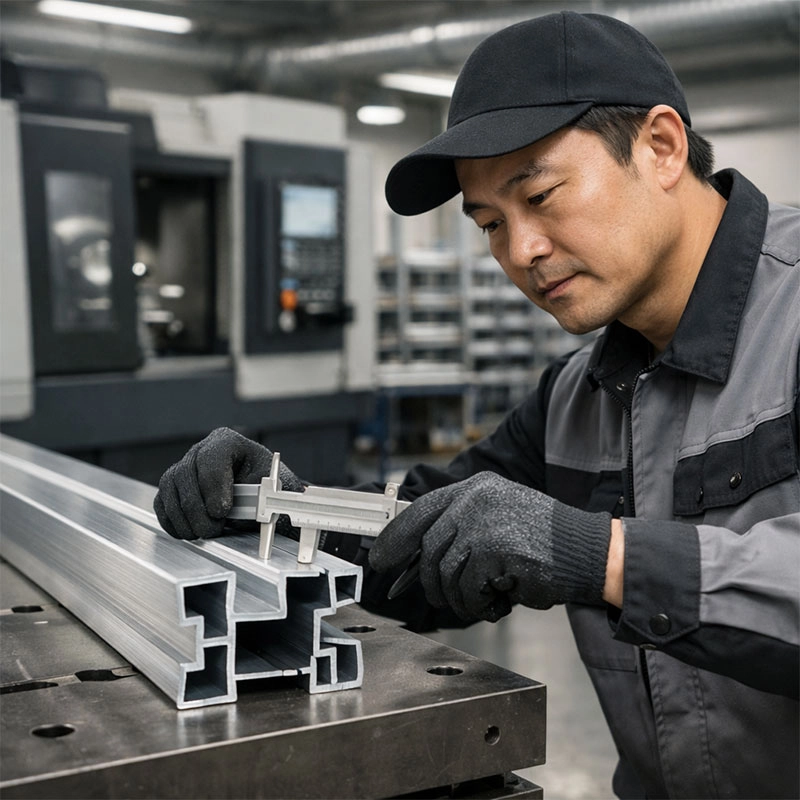
Extrusion, particularly aluminum extrusion, is a forming process. Here, a material (usually aluminum) is heated and forced through a shaped opening called a die. Think of it like squeezing playdough through a mold—the material takes on the continuous cross-sectional profile of that die. This process is fantastic for creating long, consistent shapes like rails, frames, and tracks. If you’ve ever wondered what is aluminum extrusion used for, look at window frames or structural components—they’re classic examples.

Key Differences Compared

Now that we know how they work, let’s put them side-by-side. The choice often boils down to your project’s specific needs in terms of material, design, and budget.

Material and Starting Form

CNC machining typically starts with a solid block, billet, or bar stock. You can machine a wide range of materials, from metals like aluminum and steel to various plastics. Extrusion, on the other hand, primarily works with materials that can be pushed through a die when heated—aluminum is the superstar here, but plastics like PVC are also common. The starting point for extrusion is usually cylindrical billets of these softer, more malleable materials.

Design Complexity and Geometry

This is a major differentiator. CNC is your go-to for complex, intricate, and fully three-dimensional parts. Need internal channels, undercuts, or highly detailed features? CNC milling and turning can handle it. Extrusion is ideal for parts with a constant 2D cross-section that runs along a length. It’s perfect for linear shapes. While you can do some secondary CNC machining on extruded profiles to add holes or features, the core geometry comes from that die.

Cost and Lead Time Considerations

For low to medium volumes of complex parts, CNC can be cost-effective because there’s no expensive tooling—just digital instructions. However, material waste (chips from cutting) can add cost. Extrusion requires a custom die, which is an upfront investment. But once that’s made, producing long runs of the profile becomes very economical per part. So, for a one-off prototype, CNC often wins on speed and cost. For a long production run of a simple shape, extrusion is usually the better cost-effective manufacturing choice.

Which Process is Right for Your Project?

So, how do you choose? Let’s make it practical. I often advise clients to start by sketching their part and asking a few key questions about its use and volume.

When to Choose CNC Machining

Opt for computer numerical control machining when your part has complex geometries, requires very tight tolerances (±0.001 inches or better), or needs to be made from a specific, hard-to-extrude material. It’s perfect for prototypes, custom fixtures, low-volume production, and parts that are fully 3D. If you’re searching for rapid prototyping services, you’ll likely be looking at CNC or 3D printing. For instance, a client of mine needed a custom sensor housing with intricate internal mounts—CNC was the only way to go.

When to Choose Extrusion

Choose metal extrusion or plastic extrusion when you need a long, linear part with a uniform cross-section. It’s ideal for structural components, frames, enclosures, and heat sinks. If you plan to produce thousands of feet of the same profile, the low per-part cost after the initial die is made is unbeatable. A great resource to understand standardized profiles is the Aluminum Association’s design standards. For example, if you’re building a modular frame system, extrusion allows for easy integration and consistent parts.

Clearing Up Common Misconceptions

Let’s tackle a couple of myths I hear often. First, some think extrusion is only for simple shapes and can’t be precise. While the initial profile is limited, you can achieve high precision through careful die design and secondary machining. Second, people sometimes believe CNC is always more expensive. For one-off parts, it’s often cheaper! The real cost in extrusion is the die. Finally, these processes aren’t always rivals. Many successful projects use both: an extruded aluminum profile for the main structure, with precision CNC machined brackets and connectors attached. The best choice depends on your specific design, material, and production goals.

Categories
Manufacturing Process Comparisons

CNC Machining vs Die Casting: Which is Best for Your Project?

Choosing between CNC machining and die casting can be a pivotal decision for your manufacturing project. This guide breaks down the key differences in process, materials, cost, and applications to help you select the best method for your specific needs, whether you need a few precise prototypes or thousands of identical parts.

Understanding the Core Processes

Let’s start by getting a clear picture of what each manufacturing technique actually involves. Think of it like choosing between carving a sculpture from a block of wood versus pouring molten metal into a mold. They achieve similar ends but through completely different means.

What is CNC Machining?

CNC machining, or Computer Numerical Control machining, is a subtractive manufacturing process. It starts with a solid block of material—like aluminum, steel, or plastic—and uses cutting tools to remove material, carving out the final part. It’s incredibly precise, controlled by computer programs (G-code), which is why it’s also referred to as CNC milling or precision machining. I often tell people it’s like a highly skilled, robotic sculptor that can create incredibly complex geometries with tight tolerances directly from a digital file.

What is Die Casting?

Die casting, on the other hand, is a formative process. It involves forcing molten metal—typically zinc, magnesium, or aluminum alloys—under high pressure into a reusable steel mold called a die. Once the metal cools and solidifies, the die opens to eject the part. This method is fantastic for producing high volumes of parts with excellent surface finish and consistent detail. You might also hear it called pressure die casting or metal injection molding when discussing similar high-pressure molding techniques for metals.

Key Differences: A Side-by-Side Look

Now that we know how they work, let’s compare them directly across some of the most important factors you’ll consider for your project. This comparison between subtractive and additive manufacturing (though die casting isn’t additive in the 3D printing sense) really highlights their unique strengths.

Materials and Tolerances

This is a major differentiator. CNC machining services offer incredible material flexibility. You can work with virtually any machinable metal, plastic, and even some composites. This makes it perfect for functional prototypes that need to match the final material’s properties. More importantly, CNC is the king of precision. It can hold tolerances within ±0.001 inches or even tighter, which is crucial for aerospace or medical components.

Die casting is primarily for non-ferrous metals. While it can produce parts with good dimensional accuracy, it generally can’t match the ultra-tight tolerances of CNC due to factors like metal shrinkage during cooling. Its strength lies in replicating complex shapes and fine surface details consistently across thousands of parts.

Cost and Production Volume

Here’s where the choice often becomes clear. The cost structure is opposite. CNC machining has low upfront costs—you just need the material and machine time. However, the cost per part remains relatively high and constant. It’s ideal for low-volume production and prototypes.

Die casting has very high initial costs because designing and manufacturing the hardened steel dies is complex and expensive. But once that die is made, the cost per part plummets. This makes it exceptionally economical for high-volume manufacturing. So, if you’re asking “should I use machining or casting for mass production?”, die casting usually wins on cost after a certain quantity threshold.

Lead Time and Design Flexibility

Need a part next week? CNC is your friend. Since there’s no tooling to make, lead times are short, often just a few days. It also offers maximum design flexibility; you can change the CAD file and machine a new version almost immediately.

Die casting requires several weeks to months for die design, fabrication, and testing. Making changes to the part design later usually means modifying or replacing the expensive die, which is a big deal. A common question is about die casting vs machining for complex parts. While dies can create complex shapes, undercuts and internal features are more challenging and costly than with CNC.

Choosing the Right Method for Your Project

So, how do you decide? It boils down to your project’s specific needs. Let’s walk through some typical scenarios to point you in the right direction.

When to Choose CNC Machining

Choose CNC machining if:

  • You need prototypes or a small batch of parts (1 to 100s of units).
  • Your design is still evolving, or you need the flexibility for custom one-offs.
  • You require extremely tight tolerances and superior surface finishes from the get-go.
  • Your part is made from an engineering plastic or a metal not suitable for casting.
  • Lead time is critical, and you need parts fast for testing or a pilot run.

In short, for rapid prototyping and low to medium volume needs, CNC is often the most practical and cost-effective route.

When to Choose Die Casting

Choose die casting if:

  • Your production volume is high (1,000s to millions of units).
  • The part design is finalized and unlikely to change.
  • You need thin walls, complex shapes with good detail, and a smooth surface finish “as-cast.
  • The part is suitable for metals like aluminum, zinc, or magnesium.
  • Reducing secondary operations (like extensive machining) is a priority for the final unit cost.

It’s the go-to for mass production of metal components like automotive housings, gearbox cases, or consumer electronics frames.

Clearing Up Common Misconceptions

I’ve seen a few myths pop up over the years. One big one is that die casting is always cheaper. It’s only cheaper *per part* at high volumes; for a few pieces, the die cost makes it prohibitively expensive. Another is that CNC parts are weaker. Not true! A machined part from a solid billet often has superior mechanical properties compared to a cast part, which can have internal porosity. Finally, some think you must choose one or the other. In reality, many projects use both! A part might be die cast to get the basic shape efficiently and then have critical features finished with CNC milling to achieve the required precision—a perfect hybrid approach.

Final Thoughts and Next Steps

There’s no single “best” process, only the best one for your specific project. Ask yourself about volume, budget, timeline, material, and required precision. For prototypes and complex, low-volume parts, CNC machining offers unbeatable flexibility and speed. For high-volume runs of metal parts, die casting provides unbeatable economy and consistency.

My advice? If you’re working on a prototype or small batch, start with a CNC machining service to validate your design. If mass production is the goal, use CNC for your prototypes and pre-production runs, then invest in die casting tooling for the full-scale manufacturing. For deeper technical details on materials and processes, reputable sources like the ASM International handbook or the Engineer’s Edge manufacturing guides are fantastic resources. Good luck with your project

Categories
Manufacturing Process Comparisons

CNC Machining vs Forging: Which Process Wins for Your Project?

Choosing between CNC machining and forging can be a head-scratcher. Both are fantastic ways to make metal parts, but they work in completely different ways. This guide will walk you through the key differences, strengths, and ideal uses for each process, helping you decide which one is the winner for your specific project needs.

How They Work: A Tale of Two Methods

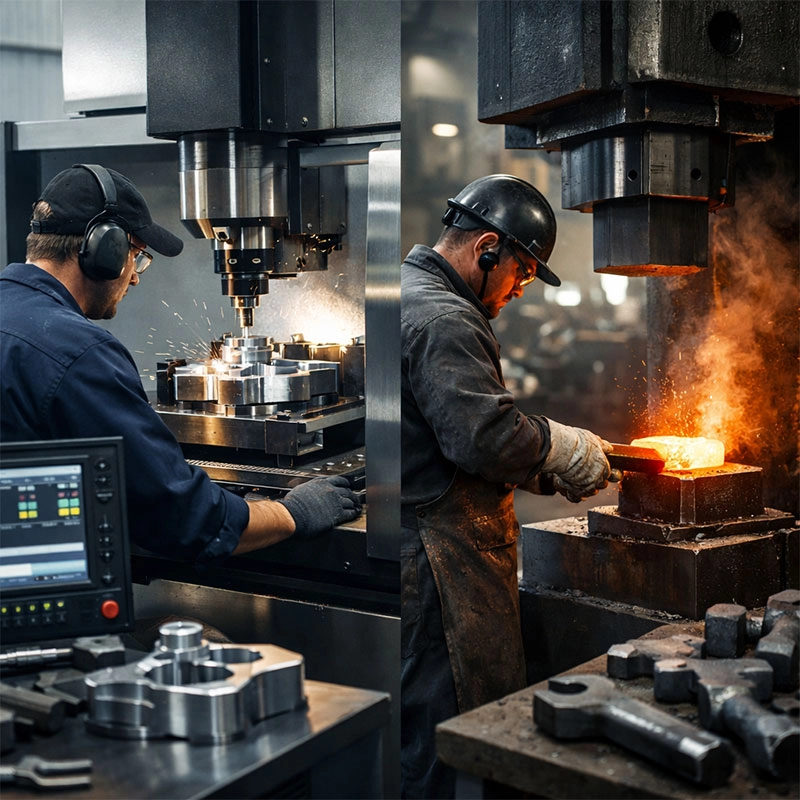
Let’s start with the basics. Imagine you’re a sculptor. CNC machining is like starting with a solid block of marble and carefully chiseling away everything that isn’t your statue. Forging, on the other hand, is like taking a lump of clay and using pressure to mold and shape it into the desired form. That fundamental difference—subtractive versus formative—shapes everything about these manufacturing processes.

The Subtractive Art of CNC Machining

CNC (Computer Numerical Control) machining is a form of precision machining. It uses computer-guided tools like mills, lathes, and routers to cut away material from a solid block (called a blank or billet). Think of it as a super-precise, automated carving process. You might also hear it called CNC milling or CNC turning, depending on the specific technique. The beauty of this method is its incredible flexibility and accuracy. Need a complex prototype with tight tolerances? CNC is often your go-to. For a deeper dive into the mechanics, resources like the American Society of Mechanical Engineers (ASME) offer great technical insights.

The Formative Power of Forging

Forging is one of the oldest metal forming techniques. It involves heating a metal workpiece and then applying compressive force—using a hammer or press—to deform it into a specific shape. This process aligns the metal’s grain structure, making it incredibly strong and durable. Common types include drop forging and press forging. It’s the preferred method for parts that must withstand immense stress, like forged crankshafts or forged connecting rods in engines. The Forging Industry Association provides excellent information on the benefits of this age-old craft.

Key Differences: Material, Strength, and More

Now that we know *how* they work, let’s look at *what* they deliver. The choice between cnc vs forging often boils down to a trade-off between three key factors: material integrity, design freedom, and cost-effectiveness for your production run.

Material Properties and Strength

This is where forging truly shines. The forging process compresses and refines the metal’s internal grain flow, following the contour of the part. This creates a continuous grain structure, dramatically increasing toughness and fatigue resistance. A forged component is typically stronger than a CNC machined part of the same material and size. Machining, however, can cut across the natural grain, which might create potential weak points in high-stress applications. So, if your main question is about forged vs machined strength, forging usually wins for dynamic, high-load parts.

Design Complexity and Precision

Here, CNC machining takes the lead. Because it’s controlled by a computer program, it can produce parts with extremely complex geometries, intricate details, and very tight tolerances that would be impossible with forging. Need internal channels, sharp corners, or a highly polished surface finish right off the machine? CNC is your friend. Forging is better suited for simpler, more solid shapes. While precision forging has advanced, it still can’t match the detail level of a 5-axis CNC machine.

Cost and Production Volume

This is a classic batch size consideration. CNC machining services have low upfront costs for tooling (often just the digital program), making them perfect for low volume production, one-off prototypes, and custom parts. However, the cost per part remains relatively steady. Forging requires expensive, custom-made dies. This makes the initial setup cost very high, but once the dies are made, the cost per part drops significantly for high-volume runs. So, for making 10 parts, CNC is cheaper. For making 10,000, forging becomes far more economical.

Choosing the Right Process for Your Project

So, how do you pick? Don’t worry, it’s not as hard as it seems once you break down your project’s requirements. Let’s match the process to the need.

When to Choose CNC Machining

You should lean towards CNC manufacturing when:
– You need prototype machining or a small batch of parts.
– Your design has complex features, tight tolerances, or excellent surface finish requirements.
– You are working with materials that are difficult to forge, like certain plastics or already-hardened metals.
– You need fast turnaround and design flexibility (making changes to a CAD file is easier than making a new forging die).
Essentially, if your priority is precision and complexity over ultimate tensile strength, CNC is the way to go.

When to Choose Forging

You should strongly consider metal forging when:
– The part will face high stress, impact, or fatigue (think automotive, aerospace, or tooling applications).
– You need superior structural integrity and reliability.
– Your production volume is high enough to justify the initial die cost.
– The part shape is relatively simple and solid.
In short, if you’re asking “is forged stronger than machined?” for a critical component, the answer is usually yes, and that’s your signal.

Clearing Up Common Misconceptions

I often hear a couple of myths that need busting. First, some folks think forging is a “low-tech” or imprecise process. Modern closed die forging is highly controlled and can produce near-net-shape parts with remarkable consistency. Second, there’s a belief that you can’t machine a forged part. Actually, it’s very common! Many forged parts undergo secondary machining (or “machining after forging”) to achieve final dimensions, drill holes, or create precision features. The processes are often partners, not just rivals.

Final Thoughts: Making Your Decision

So, which process wins? As you can see, there’s no single champion—it all depends on the goal of your project. Think of it this way: Forging is about creating supreme strength and durability from the inside out, ideal for high-volume, high-stress components. CNC machining is about achieving unparalleled precision and complexity from the outside in, perfect for prototypes, custom work, and intricate designs. My best advice? Clearly define your priorities for strength, complexity, quantity, and budget. Often, talking through these requirements with a knowledgeable CNC shop or forging supplier will quickly point you in the right direction. Good luck with your project!

Categories
CNC Machining Basics

What Is CNC Machining Used For? 5 Surprising Real-World Examples

Ever wondered how complex metal and plastic parts are made with such incredible precision? The answer often lies in CNC machining. This guide will explore the diverse applications of CNC technology, moving beyond the factory floor to show you five surprising places where it shapes our everyday world.

Common Applications of CNC Machining Technology

When we talk about the uses of CNC machining, it’s easy to picture big industrial factories. And you’re right—it’s a cornerstone of mass production. But the real magic of computer numerical control is its incredible versatility. It’s a subtractive manufacturing process where a computer directs cutting tools to carve a solid block of material into a finished part. This method is fantastic for creating everything from simple brackets to geometries that would be impossible to make by hand. Whether you’re looking at CNC milling for complex 3D shapes or CNC turning for symmetrical parts, the technology’s core value is repeatable, high-precision fabrication.

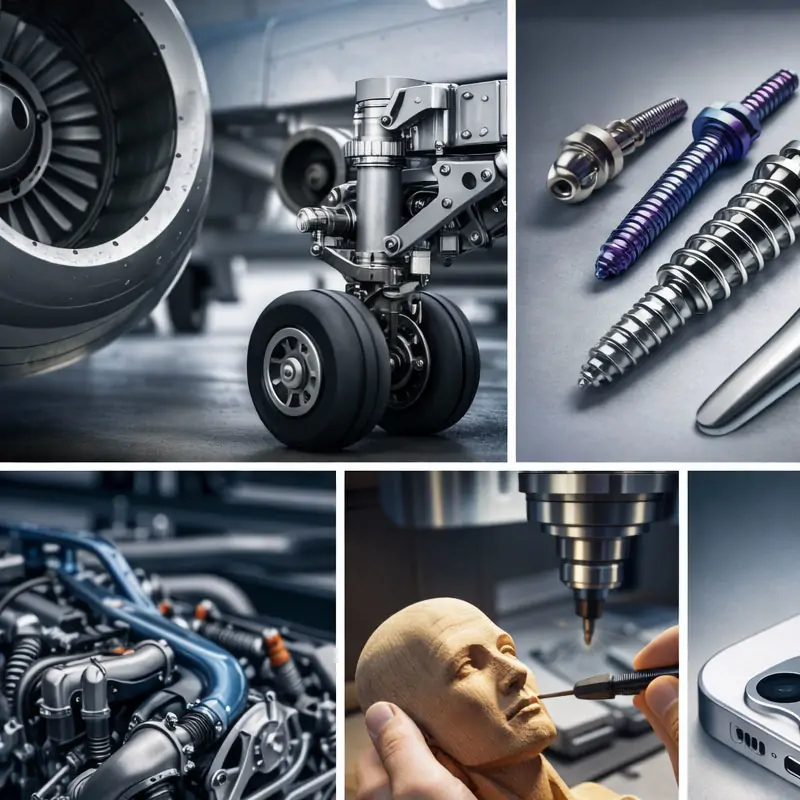
1. Aerospace: Crafting the Sky’s Backbone

Let’s start high up—literally. The aerospace industry relies on CNC machining for some of its most critical components. Think about the landing gear, turbine blades, and structural brackets inside an aircraft. These parts face extreme stress, temperature changes, and must be incredibly lightweight. That’s where CNC manufacturing shines. It can work with tough materials like titanium and high-grade aluminum alloys, machining them into strong, complex, and lightweight forms that are essential for flight safety and fuel efficiency.

Why CNC is Non-Negotiable Here

The margin for error in aerospace is virtually zero. Every component must meet exacting specifications, and that’s a perfect job for a CNC machine shop. The process ensures that the tenth part produced is identical to the thousandth, which is crucial for maintenance and safety. For a deeper dive into the standards these parts must meet, you can read about aerospace manufacturing practices on NASA’s official website.

2. Medical: Precision for Life-Saving Devices

This is one of the most impactful applications of CNC technology. If you or a loved one has ever needed a knee replacement, a spinal implant, or even a intricate surgical tool, chances are it was made with CNC. These devices are not one-size-fits-all; they often need to be customized to fit a patient’s unique anatomy. CNC machining allows for this custom, patient-specific production from biocompatible materials like surgical-grade stainless steel or cobalt-chrome, all while maintaining a sterile, contaminant-free process.

Meeting the Highest Standards

The medical field demands the ultimate in precision and cleanliness, known as CNC precision machining. A hip implant, for example, must have a perfectly smooth surface to integrate with bone and a specific geometry to allow for natural movement. The controlled environment of a CNC machine, guided by detailed digital models from MRI or CT scans, makes this level of customization and quality not just possible, but routine.

3. Automotive: From Prototypes to High-Performance Parts

From the family sedan to a Formula 1 race car, CNC plays a huge role. In the development phase, engineers use CNC prototyping to create functional models of engine blocks, cylinder heads, and custom intake manifolds to test their designs. In aftermarket and racing, enthusiasts rely on CNC to produce high-strength, lightweight parts that can withstand incredible forces. So, when you’re searching for what can you make with a CNC machine in the auto world, the list is nearly endless.

The Role of CNC in Rapid Prototyping

Before a new car model hits the road, its parts are tested extensively. CNC machining allows teams to quickly turn a digital design into a physical part they can hold, test, and refine. This rapid prototyping speeds up innovation dramatically. It’s much faster than traditional tooling methods, letting engineers iterate designs until they get everything just right.

4. Art and Sculpture: Where Engineering Meets Creativity

Here’s a surprising one that answers the question what is the purpose of CNC milling beyond industry. Artists and sculptors are increasingly using CNC routers to create large-scale works, intricate furniture, and stunning architectural details. They can take a 3D model of a complex, organic shape and machine it from wood, foam, or soft metals. This doesn’t replace the artist’s vision; it gives them a powerful new tool to execute it with a level of detail and scale that would be incredibly time-consuming or impossible by hand.

The CNC Machine as an Artist’s Tool

Imagine a sculptor wanting to create a large, twisting metal sculpture. Instead of weeks of welding and shaping, they can design it on a computer and use a CNC machine to cut the pieces with perfect precision. They then assemble and finish the work. It’s a beautiful fusion of digital design and physical craftsmanship. You can see examples of how technology influences modern art at institutions like the Museum of Modern Art.

5. Consumer Electronics: The Tech in Your Pocket

Look at your smartphone, laptop, or smartwatch. The sleek metal casing, the precisely placed ports, the tiny internal brackets—many of these are made using CNC machining processes. For prototypes and low-to-medium volume production, CNC is ideal for creating the perfect unibody aluminum chassis that feels premium and durable. It allows for tight tolerances that ensure all the buttons, cameras, and screens fit together seamlessly.

Machining the Unseeably Small

The components inside our gadgets are getting tinier and more complex. Precision CNC machining can produce the small, heat-resistant fixtures that hold circuit boards or the precise molds used to make plastic components. This application shows how CNC isn’t just for big, heavy metal parts; it’s equally adept at creating the miniature, high-tolerance parts that make our modern digital life possible.

Concluding Thoughts on CNC Uses

So, what is CNC machining used for? As we’ve seen, it’s far more than just an industrial workhorse. It’s a fundamental technology that builds the planes we fly in, the medical devices that heal us, the cars we drive, the art that inspires us, and the electronics we depend on every day. Its power lies in transforming digital dreams into precise, reliable, and tangible reality. Whether you’re an engineer, a designer, or just someone curious about how things are made, the world of CNC machining is full of fascinating and surprising examples.

Request A Quote

We'll Send You Back with Price Immediately!

DEC 1-31

XMAS SPECEIL

Up to

40% off

What Is CNC Machining Used For? 5 Surprising Real-World Examples

We'll Send You Back with Price Immediately!