

Categories
Blog Manufacturing Process Comparisons Quality & Tolerances

Precision Metal Stamping: What Determines Part Accuracy and When CNC Is Better

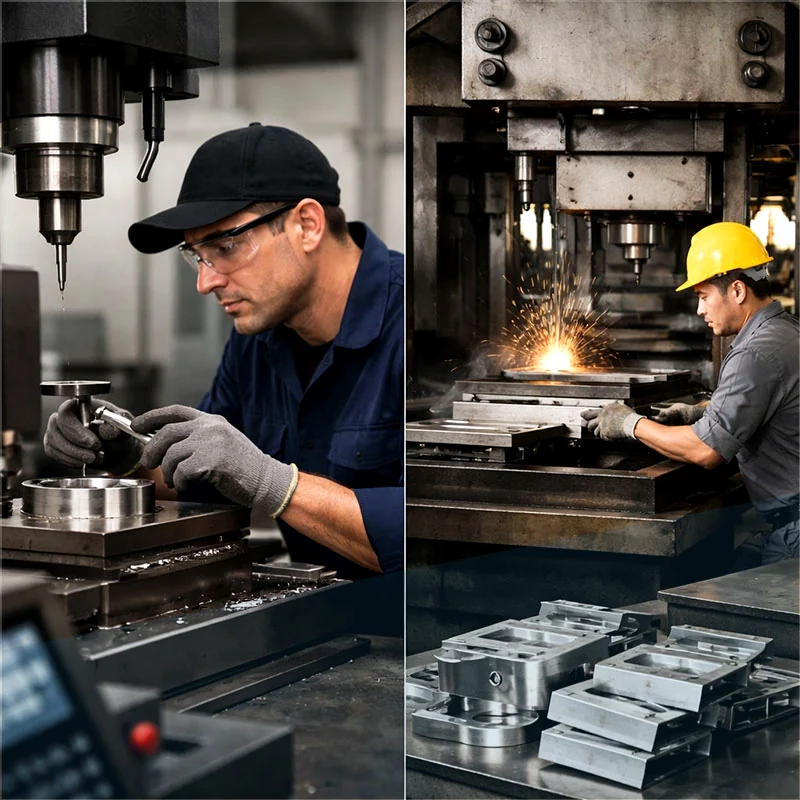
Precision Metal Stamping: What Determines Part Accuracy and When CNC Is Better is a practical manufacturing question because the answer affects cost, lead time, material behavior, inspection, and the path from prototype to production. For MTSPi CNC customers, the key is not simply naming a process, but understanding how the process connects with machined parts, fixtures, tolerances, surface requirements, and final assembly.

This guide explains precision metal stamping from an engineering and purchasing point of view. It is written for product developers, mechanical engineers, sourcing teams, and buyers who need clear decisions rather than generic process descriptions.

Quick Answer

Stamping is ideal for high-volume sheet metal parts with repeatable 2D or formed features. CNC machining is better when quantities are low, geometry is thicker or more complex, tolerances are very tight, or the design is still changing.

Key Differences at a Glance

Point Option A Option B
Best volume Medium to high volume Prototype to low-volume precision batches
Tooling Dedicated die required Soft tooling and fixtures
Geometry Sheet metal cuts and forms 3D shapes, pockets, bores, threads
Design changes Can be expensive after hard tooling Easier to revise
Accuracy drivers Die wear, springback, material thickness Machine rigidity, toolpath, setup, inspection

How the Process Choice Affects Real Parts

A manufacturing method should be selected around the feature that actually controls function. Cosmetic surfaces, hidden support features, threads, bores, sealing faces, heat-transfer areas, and assembly datums do not carry the same risk. When those requirements are mixed together without priority, quotes become inconsistent and production becomes harder to control.

The safest workflow is to define the part requirement first, then match the process. A printed prototype may answer shape questions, a molded sample may answer appearance questions, and a CNC machined sample may answer tolerance, material, and functional questions. Many successful projects use more than one method before the final design is locked.

Design and Manufacturing Considerations

  • Use generous bend radii where possible to reduce cracking and springback variation.
  • Keep holes away from bends unless the tooling plan supports them.
  • Define burr direction when assembly or safety is affected.
  • Prototype critical interfaces with CNC or soft tooling before hard dies.
  • Do not choose stamping only because the final volume is uncertain.

Cost, Lead Time, and Risk Factors

Cost is driven by setup, tooling, material, machine time, inspection, finishing, and revision risk. A low unit price is not always the lowest project cost if it creates rework later. For prototypes and low-volume orders, flexibility can be more valuable than a process with a lower theoretical unit cost.

  • Use standard materials and standard feature sizes when they do not weaken the design.
  • Separate critical tolerances from general dimensions so the supplier knows where to focus.
  • Confirm surface finish and cosmetic requirements before production begins.
  • Avoid late changes to mounting holes, connector openings, datum faces, and threaded features.
  • Send CAD files and 2D drawings together when tolerances, threads, or finishes matter.

Quality Checks Before Production

A good quality plan checks the features that influence assembly and performance. Depending on the part, this may include dimensional inspection, thread gauges, surface roughness, flatness, perpendicularity, burr control, coating thickness, visual appearance, and fit with mating parts.

When This Topic Matters for CNC Buyers

precision metal stamping matters when a team is comparing prototype routes, validating a design, replacing a weak supplier, or trying to reduce manufacturing cost without damaging function. The best choice is usually the process that answers the current engineering question with the least unnecessary risk.

MTSPi CNC Engineering Notes

MTSPi CNC supports precision CNC milling, turning, rapid prototyping, low-volume production, finishing, and inspection for custom parts. If your project uses molding, casting, welding, PCB assemblies, or 3D printing, CNC machining can still be important for datums, holes, threads, sealing faces, fixtures, and production-ready prototypes.

Frequently Asked Questions

Can this process replace CNC machining?

Sometimes it can replace CNC for non-critical geometry, but CNC is often still needed when tight tolerances, real engineering material, threads, flat sealing faces, or precise mating features are required.

What files help MTSPi CNC review a project?

STEP or STP files are useful for geometry. A 2D drawing is important for tolerances, materials, threads, surface finish, inspection requirements, and notes that are not obvious from the CAD model.

How do I reduce manufacturing risk?

Define critical features, avoid unnecessary tight tolerances, confirm material and finish requirements, and use prototypes to validate assembly before committing to higher-volume tooling or production.
Related MTSPi Resources

Categories
Blog CNC Materials Guides Quality & Tolerances

14 Gauge Steel Thickness: Inch, mm, Weight, Uses, and Fabrication Notes

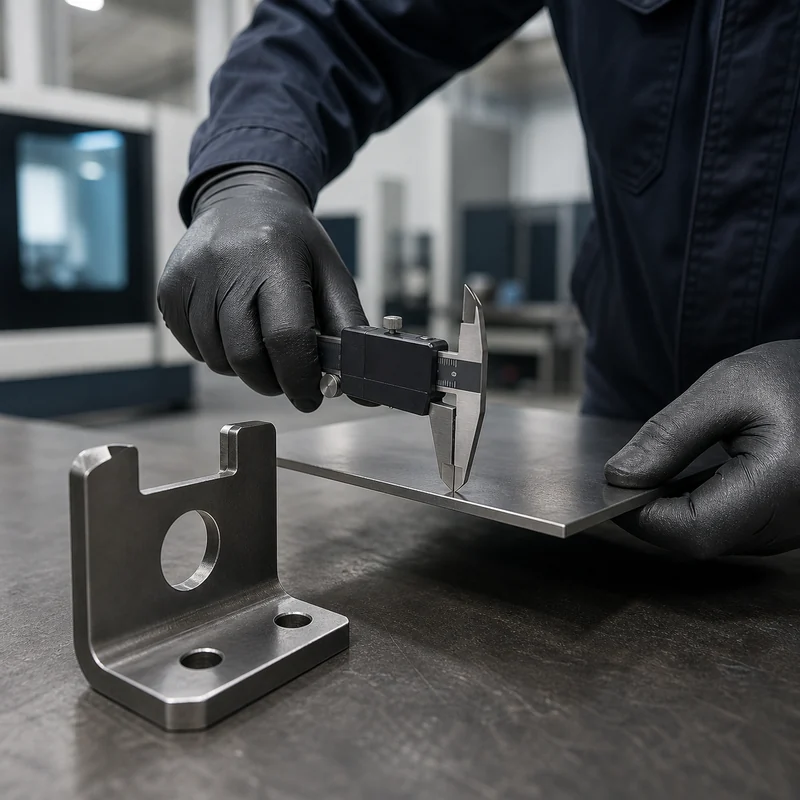
Quick answer: 14 gauge steel is commonly about 0.0747 in, or about 1.90 mm, for standard sheet steel. Exact thickness can vary by material type and gauge standard, so buyers should confirm the specification instead of relying only on the gauge number.

14 Gauge Steel Thickness Chart

Material / gauge reference Approx. thickness Notes
Standard steel, 14 gauge 0.0747 in / 1.90 mm Common reference for sheet steel
Galvanized steel, 14 gauge May differ slightly by standard Confirm coating and base metal requirements
Stainless steel, 14 gauge Often close but not always identical Check supplier chart and tolerance
Aluminum gauge Different from steel gauge Do not substitute steel gauge values for aluminum

Why Gauge Numbers Can Be Confusing

Gauge is a traditional sheet thickness system, and the same gauge number can mean different thicknesses for steel, stainless steel, aluminum, and nonferrous metals. A drawing should ideally show the actual thickness in inches or millimeters, especially when fit, weight, stiffness, or forming matters.

Common Uses for 14 Gauge Steel

  • Brackets, panels, guards, covers, and machine frames
  • Enclosures and equipment housings
  • Welded fabrication parts
  • Automotive and industrial sheet metal components
  • Fixtures, mounting plates, and support parts

Fabrication and CNC Machining Notes

14 gauge steel is thick enough for many structural sheet applications while still being practical for cutting, bending, welding, and finishing. For machined features, hole size, edge distance, bend radius, flatness, and finish requirements should be reviewed before production.

Design Checklist for 14 Gauge Parts

Design item Recommendation Reason
Hole edge distance Avoid holes too close to bends or edges Reduces tearing and distortion
Bend radius Match tooling and material condition Improves forming consistency
Tapped holes Use inserts or weld nuts when thread strength is limited Thin sheet does not provide much thread engagement
Surface finish Plan powder coating, plating, or brushing early Finishing affects appearance and protection

When to Use CNC Machined Parts Instead

If the part needs thick bosses, precise pockets, tight positional tolerances, machined sealing surfaces, or complex 3D geometry, a machined plate or billet part may be better than sheet metal. Compare options with CNC milling services and the metal material guide.

FAQ

How thick is 14 gauge steel in mm?

A common value is about 1.90 mm for standard sheet steel, but always confirm the exact standard and material.

Is 14 gauge steel strong?

It is stronger and stiffer than thinner sheet gauges, but strength depends on material grade, part shape, bends, supports, and load direction.

Can 14 gauge steel be bent?

Yes, but bend radius, tooling, grain direction, and material grade should be considered.

Is 14 gauge stainless the same thickness as 14 gauge steel?

Not always. Gauge charts can vary by material, so specify actual thickness when accuracy matters.

Need help choosing a machining route?

Send MTSPi your drawing, material, quantity, finish, and inspection requirements. We will review the part for manufacturability before quoting.

Contact MTSPi for a CNC machining quote

Practical Buyer Notes

Gauge pages can attract traffic because users often need a quick thickness answer, but they rank better when they go beyond a number. The page should explain why gauge varies by material, how thickness affects fabrication, and when CNC machining is a better option.

14 gauge steel is often used in panels, brackets, guards, housings, and fabricated assemblies. Buyers should confirm actual thickness in inches or millimeters because gauge standards are not universal across steel, stainless steel, galvanized steel, and aluminum.

How to Evaluate This Topic on a Real Drawing

Decision point Recommended approach Why it matters
Thickness callout Use exact inch or mm thickness on drawings Avoids confusion from gauge charts
Fabrication route Use sheet metal cutting and bending for thin formed parts Often cheaper than machining from billet
Machined features Use CNC when precise pockets, bores, or thick bosses are needed Sheet metal alone may not create complex 3D features
Finish Plan powder coating, plating, or brushing before quoting Finish affects edge quality and corrosion protection

Common Mistakes to Avoid

  • Assuming 14 gauge means the same thickness for every material.
  • Trying to tap strong threads directly into thin sheet without inserts or hardware.
  • Ignoring bend radius, hole-to-edge distance, and coating thickness.
  • Using gauge values instead of actual thickness on production drawings.

Recommended MTSPi Review Workflow

For gauge-related pages, MTSPi should answer the thickness first, then explain fabrication decisions, design constraints, material options, and whether CNC machining or sheet metal production fits better.

  1. Confirm the part function, operating environment, and assembly risk.
  2. Review material, process, tolerance, surface finish, and inspection requirements together.
  3. Separate critical features from general dimensions so cost is not wasted on non-functional details.
  4. Use related resources such as CNC materials, surface treatment, and quality assurance to complete the specification.
  5. Send the final drawing package to MTSPi for quote review before production.

What to Send for a Faster Quote

Send actual thickness, material grade, flat pattern or 3D model, bend notes, finish requirements, and any hardware or threaded feature expectations.

  • 3D CAD file and 2D drawing with revision number.
  • Material grade or acceptable alternatives.
  • Quantity, delivery target, and whether samples are required first.
  • Critical dimensions, thread callouts, finish notes, and inspection requirements.
  • Application notes when the part is used in heat, moisture, wear, vibration, or visible assemblies.

Conclusion

14 gauge steel is a useful thickness for durable sheet metal parts, but gauge alone is not enough for a precise manufacturing requirement. Use actual inch or millimeter thickness, define material grade, and review forming, finishing, and inspection needs before production.

Request A Quote

We'll Send You Back with Price Immediately!

DEC 1-31

XMAS SPECEIL

Up to

40% off

14 Gauge Steel Thickness: Inch, mm, Weight, Uses, and Fabrication Notes

We'll Send You Back with Price Immediately!