Categories
Blog Design, Cost & Sourcing

Medical Injection Molding Suppliers: An Evidence-Based Selection Guide

Choosing a medical injection molding supplier is an evidence exercise. A polished factory presentation does not establish that a particular production site can control your resin, tool, dimensions, contamination risks, and change history. The useful comparison is between the records each candidate can provide for the work you actually need.

Quick answer: Define the component’s function and acceptance criteria first. Screen suppliers for relevant quality-system scope, material traceability, tooling expertise, validation planning, and environmental controls. Then compare samples and documentation using the same drawing and test plan. Treat commercial price as one part of the decision.

Write a Project Brief Before Comparing Suppliers

A non-contact equipment cover, a fluid-path component, and an implantable component do not share the same requirements. Describe intended use, contact conditions where relevant, cleaning or sterilization exposure, assembly interfaces, quantities, and product life. Have the responsible quality and regulatory team define applicable obligations.

Include the exact resin grade or a controlled material-selection process. Define critical dimensions, appearance zones, packaging, and inspection methods. Suppliers cannot provide comparable proposals when each is making different assumptions about the scope.

An Evidence Matrix for Supplier Interviews

Area Evidence to request Follow-up question
Quality system Current certificate, site address, and scope where required Does the covered location perform this manufacturing step?
Material control Lot records, approved grades, storage and drying controls How is an unauthorized substitution prevented?
Tool and process DFM review, maintenance plan, sample process records How will cavity-to-cavity variation be evaluated?
Environment Defined controls and monitoring relevant to the component Where do parts travel after leaving the machine?
Measurement Inspection plan and suitable measurement methods Can the method reliably detect an out-of-limit part?
Changes Notification and approval procedure Which changes require customer approval before shipment?

Check Certification Scope Without Confusing It With Product Approval

A quality-system certificate can support supplier screening, but check its validity, scope, and manufacturing location. It does not establish approval of your device or prove that every process is suitable. Ask how the proposed work falls within the supplier’s controlled system and what records you will receive.

For U.S. finished-device manufacturers, FDA’s Quality Management System Regulation took effect on February 2, 2026 and incorporates ISO 13485:2016 by reference. Applicability depends on the organization’s role and product; a component supplier should not automatically be described as FDA approved. Confirm responsibilities for the actual supply arrangement.

Evaluate the Whole Handling Route

If controlled-environment molding is needed, map material entry, molding, trimming, inspection, assembly, and packaging. A clean machine area does not answer what happens during secondary handling. Define the contamination characteristics that matter and ask for the corresponding controls.

Keep environmental classification, product cleanliness, and sterility distinct. Establish the acceptance and verification approach with the responsible specialists. The cleanroom and standard molding comparison provides context for planning the production environment.

Make Validation Deliverables Part of the Quote

Discuss qualification and validation before issuing the tooling order. Agree on protocols, acceptance criteria, sample quantities, review responsibilities, and the records to be delivered. Installation, operational, and performance qualification may form part of the plan, depending on the process and applicable requirements.

Ask how the supplier will evaluate different cavities, material lots, and relevant process variation. A single attractive sample does not demonstrate sustained control. Where capability statistics are proposed, confirm that the measurement method and data set support the conclusion; do not accept a number detached from its method.

Review the Tooling and Drawing Together

Tool design affects gate vestiges, weld lines, ejector marks, parting lines, shrinkage, and assembly fit. Mark restricted areas on the drawing. Request an explanation of how critical features will be produced and measured, including the plan for correcting the tool after first samples.

For assemblies combining molded components with metal inserts or housings, define who owns the interface tolerances. Review the evaluation of precision component suppliers when the program also includes machined parts. Prototype fit checks can expose interface mistakes, but cannot establish production molding performance.

Set Traceability and Change Rules in Writing

Decide which records must connect the finished lot to the resin, colorant, tool, cavity, machine, inspection, and packaging batch. Define record retention and access. Use a sample record review during supplier assessment to check whether the trace can actually be followed.

  • Specify the policy for regrind and material substitutions.
  • Define approval of tool repairs that affect the component.
  • Include changes to subcontractors and production locations.
  • Agree how nonconforming lots will be segregated and reported.
  • Document the response and containment process for customer complaints.

Compare Commercial Terms After Technical Screening

Request separate prices for tooling, engineering work, qualification, routine production, inspection, and packaging. Clarify mold ownership, storage, maintenance, transfer documentation, and replacement inserts. Compare delivery commitments against realistic demand scenarios rather than only the smallest quoted unit price.

A practical selection method uses mandatory requirements first, then a documented scorecard. Do not average away a failed essential requirement with a low price. For two technically acceptable suppliers, compare the evidence quality, communication, capacity, and cost of sustaining the program.

Frequently Asked Questions

Does every medical component require a cleanroom?

Requirements depend on the component, intended use, subsequent processing, and acceptance criteria. Establish those requirements before specifying an environment.

Can a supplier certificate replace a product validation plan?

No. The certificate and the evidence for a particular product and process serve different purposes. Define the project-specific work and approval responsibilities.

What is the most useful first supplier meeting?

A review of one controlled drawing, its critical features, and the proposed evidence package. Concrete questions reveal more than a broad discussion of machine count.

This guide is a supplier-selection framework, not a statement that MTSPi holds a particular medical certification or operates a validated medical molding line.
Categories
Blog Industries & Applications Quality & Tolerances

How to Evaluate Swiss CNC Machining Manufacturers in China

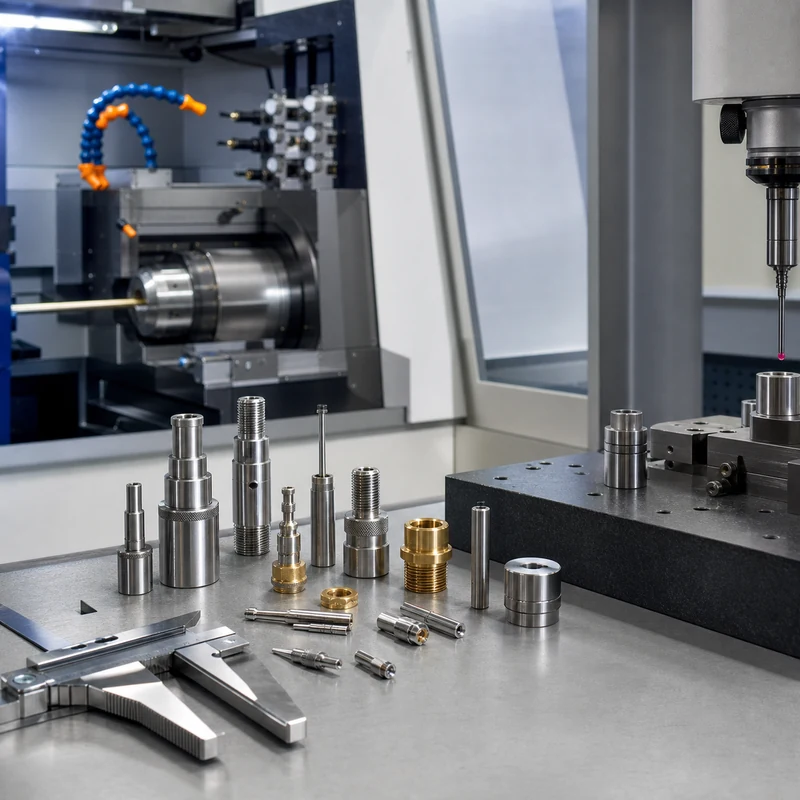
Swiss-type CNC machining is one of the most useful processes for small turned parts that need length, fine details, tight runout control, and repeatable production. China remains an important sourcing region for this work, but a buyer should not choose a supplier from a ranked name list alone. The real question is whether the shop can control bar-fed machining, guide-bushing support, live tooling, inspection, materials, finishing, and communication for your specific component. MTSPi supports Swiss-type machining and broader CNC turning service for precision shafts, pins, connectors, bushings, fasteners, and miniature mechanical parts.

What Makes Swiss-Type Machining Different

A Swiss-type lathe supports the bar close to the cutting tool, so the unsupported cutting length is very short. That setup is especially valuable for slender parts that would deflect on a conventional turning center. Many Swiss machines also combine turning, drilling, milling, slotting, thread cutting, and back-working in one cycle, which can reduce secondary operations when the part is designed well.

Capability Why It Matters Parts That Benefit
Guide-bushing support Reduces deflection on long and small-diameter workpieces Pins, shafts, needles, sleeves, miniature spacers
Live tooling Adds cross holes, flats, slots, and milled features in the same setup Connectors, medical-style components, sensor hardware
Bar-fed production Improves repeatability and cycle efficiency for small parts Fasteners, bushings, fittings, electrical contacts
Back-working Completes rear-side features after part-off Threaded ends, counterbores, chamfers, face details

How to Evaluate Swiss CNC Machining Manufacturers in China

The best supplier for a Swiss-machined part is not always the shop with the largest equipment list. Start with the drawing, the material, the annual volume, and the inspection requirement. Then compare suppliers by how clearly they explain the process plan and the risks.

Evaluation Area What to Confirm Buyer Risk if Ignored
Machine fit Bar diameter range, guide-bushing setup, live-tool axes, sub-spindle capability, and part-off strategy The part may require extra setups, higher cost, or unstable tolerance control
Tolerance control Expected process capability for diameter, length, runout, concentricity, threads, and small milled features A nominally precise shop may still miss the features that matter most
Material experience Stainless steel, titanium, aluminum, brass, copper alloys, engineering plastics, and difficult-to-machine grades Tool wear, burrs, heat, and surface finish can change the real lead time
Inspection method Micrometers, pin gauges, optical measurement, CMM, surface roughness checks, and documented first-article reports Quality evidence may not match the drawing requirement
Production control Tool-life rules, lot traceability, revision control, deburring standard, cleaning, and packaging Prototype success may not repeat across production batches
Engineering communication DFM questions, drawing markups, tolerance alternatives, finish notes, and change tracking Ambiguous requirements can turn into late rework

When Swiss-Type Machining Is the Right Process

Swiss machining is strongest when the part is small, slender, highly detailed, and expected to repeat. It is not automatically the best answer for every turned component. A short, simple bushing may be cheaper on a standard turning center. A large shaft may exceed the bar capacity. A prismatic part may belong on a milling platform or a mill-turn machine.

Part Condition Swiss-Type Fit Reason
Long diameter-to-length ratio Strong fit Guide-bushing support helps control bending and vibration
Tiny cross holes or milled flats Strong fit Live tooling can finish multiple features before part-off
Very short simple spacer Possible but not always economical Conventional turning may be faster and simpler
Large diameter component Usually poor fit Swiss machines are optimized around small bar stock
High-volume miniature part Strong fit Bar feeding and cycle consolidation can improve consistency

Materials Commonly Used for Swiss-Machined Parts

Material choice affects cutting stability, burr formation, tool wear, finish, and inspection. For material comparisons, review MTSPi’s CNC machining materials library before locking the drawing note. Swiss-type machining can handle many metals and plastics, but each grade needs a realistic plan.

Material Typical Use Manufacturing Note
Stainless steel Medical-style hardware, shafts, pins, fasteners, corrosion-resistant components Can work harden; tool condition and burr control matter
Titanium Lightweight high-strength components and demanding assemblies Heat control and sharp tooling are critical
Aluminum Light precision parts, housings, sleeves, electronics hardware Machines efficiently but needs clear cosmetic and anodizing notes
Brass Fittings, contacts, bushings, inserts, connectors Excellent machinability, with cleaning and tarnish expectations defined
Engineering plastics Insulators, low-friction spacers, lightweight precision parts Thermal movement and clamping distortion need attention

Inspection Questions Buyers Should Ask

  • Which dimensions will be checked in-process, and which will be checked after part-off?
  • How will runout, concentricity, thread fit, and small cross features be measured?
  • Does inspection happen before or after passivation, anodizing, plating, or cleaning?
  • Can the supplier provide a first-article report with actual measured values?
  • How are tool wear, burr growth, and dimensional drift controlled during repeat production?
  • What packaging prevents tiny parts from mixing, scratching, or damaging thread starts?

Design Details That Improve Swiss Machining Results

Swiss machining is precise, but it still benefits from practical DFM. Overly sharp internal corners, unrealistic surface finish notes, deep miniature holes, thin unsupported features, and excessive tolerance stacking can increase cost or reduce repeatability. If a feature is functional, mark it clearly. If a tight tolerance is only inherited from a template, loosen it before quoting.

Design Area Better Practice Why It Helps
Diameters Identify critical fits separately from noncritical stock-removal surfaces Keeps inspection effort focused on function
Threads Define thread standard, class, gauge requirement, and lead-in chamfer Prevents assembly issues in miniature components
Cross holes Confirm position tolerance and burr expectations Small intersecting holes often need special deburring control
Surface finish Apply roughness requirements only where they matter Avoids unnecessary cycle time and polishing risk
Part length Discuss cutoff burr, back-face finish, and sub-spindle support Controls the final end condition

RFQ Package for Comparing Suppliers

A complete RFQ makes supplier comparison much easier. Send the same information to each shop so price, lead time, inspection, and risk can be compared on equal assumptions.

RFQ Item Recommended Detail
3D model STEP file with the latest revision
2D drawing Datums, tolerances, threads, surface finish, notes, and critical dimensions
Material Grade, standard, temper or condition, and certificate requirement
Quantity Prototype order, batch size, annual volume, and release schedule
Finish Passivation, anodizing, plating, polishing, cleaning, color, and masking notes
Inspection First-article report, CMM or optical report, gauge checks, sampling level, and measurement format
Packaging Bagging, tray packing, anti-scratch protection, label format, and lot separation

When MTSPi Can Be a Practical Supplier Option

MTSPi can review Swiss-type turned parts, standard turned parts, milled features, and finishing requirements as one manufacturing package. For projects that involve small precision components, related capabilities may include Swiss-type machining, CNC turning, CNC milling, surface treatment, and quality assurance. Send the CAD model, drawing, material, quantity, tolerance notes, and inspection expectations so the manufacturing route can be reviewed before quoting.

Related MTSPi Resources

FAQ

What is Swiss CNC machining best for?

It is best for small, slender, complex turned parts such as pins, shafts, connectors, screws, sleeves, bushings, terminals, and miniature precision components.

Is Swiss-type machining always more accurate than standard turning?

Not always. It can be more stable for long and small-diameter parts, but accuracy still depends on machine setup, tooling, material, inspection, and process control.

What tolerances can Swiss machining hold?

The practical tolerance depends on the feature, material, part length, machine condition, tooling, and inspection method. Buyers should ask for realistic capability on the actual critical dimensions rather than a generic tolerance claim.

How do I compare Swiss CNC machining manufacturers in China?

Compare machine fit, bar capacity, live tooling, material experience, first-article reporting, tolerance control, deburring, finishing coordination, packaging, communication, and repeat-production control.

Categories
Blog Design, Cost & Sourcing Quality & Tolerances

How to Choose a CNC Machining Supplier: Practical Buyer Checklist

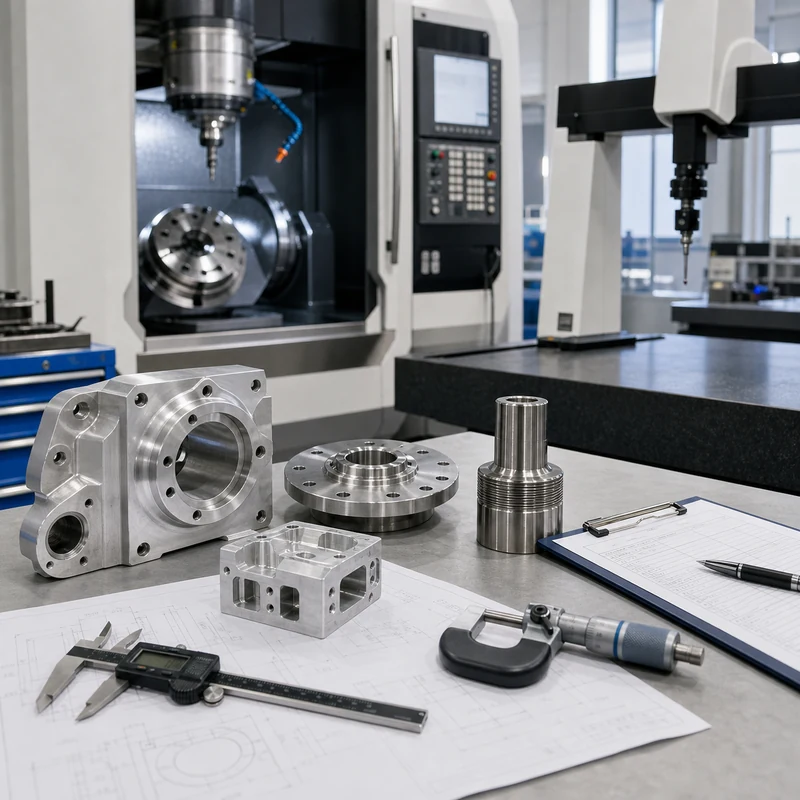
Choosing a CNC machining supplier is not a price-only decision. A dependable partner needs the right machining process, stable quality controls, material knowledge, engineering communication, and enough capacity to support the project after the first sample is approved. This guide gives engineers and purchasing teams a practical way to compare suppliers before sending an order.

MTSPi supports custom prototype and production machining through CNC machining services, including milling, turning, 5-axis work, finishing coordination, and inspection documentation. The same criteria below can help you evaluate MTSPi or any other supplier on a project-by-project basis.

Start With a Complete RFQ Package

A supplier can only quote accurately when the manufacturing requirement is clear. Before asking for price and lead time, prepare the files and assumptions that define the part, inspection level, and delivery expectation.

RFQ Item What to Include Why It Affects the Quote
3D model STEP, Parasolid, or another neutral CAD file Defines geometry, setups, tool access, and programming work
2D drawing Tolerances, datums, threads, GD&T, surface roughness, and notes Shows which dimensions are function-critical
Material Grade, temper, standard, and certificate requirement Controls machinability, raw stock cost, and documentation
Finish Anodizing, passivation, plating, polishing, bead blasting, or masking notes Post-processing can change appearance, dimensions, and schedule
Quantity Prototype lot, release quantity, and expected repeat demand Fixture strategy and unit price depend on volume
Inspection Critical dimensions, report format, sampling plan, and CMM needs Quality work must be planned into cost and lead time

For early-stage designs, it is worth asking for manufacturability feedback before locking the drawing. Small changes to inside corner radius values, wall thickness, thread depth, datum structure, or finish callouts can improve cost and reliability without weakening function.

Match Machine Capability to the Part

A strong supplier for simple plates may not be the right fit for a thin-wall housing, a tight-concentricity shaft, or a multi-face aerospace-style bracket. Compare the supplier against the geometry and tolerance stack of the actual part.

Part Requirement Capability to Look For Typical Risk to Check
Flat plates, brackets, simple housings 3-axis milling or indexed 4-axis machining Hole position, flatness, edge burrs, and finish consistency
Multi-side parts with tight datum relationships 4-axis or 5-axis machining with reliable fixture planning Setup error, profile tolerance, and datum transfer
Curved surfaces or difficult tool access Simultaneous or positional 5-axis CNC machining Tool reach, surface blending, and collision planning
Shafts, sleeves, spacers, and bushings CNC turning, mill-turn, or Swiss-type machining Runout, concentricity, thread quality, and diameter control
Large frames or plates Large-travel milling or gantry machining Workholding, thermal movement, and inspection access

When the project requires multiple process types, a supplier with coordinated CNC milling, CNC turning, and 5-axis machining can reduce handoffs and communication risk.

Review Quality Control Before Production

Inspection capability should be discussed before a purchase order is placed, not after parts arrive. A capable supplier should understand which dimensions require in-process checks, which can be verified at final inspection, and which need documented reports.

  • Ask how incoming material is checked and stored.
  • Confirm whether first-article inspection is available for new parts.
  • Review whether CMM, micrometers, height gauges, pin gauges, thread gauges, and surface roughness testing fit the drawing.
  • Define which dimensions need a measurement report and which can follow normal sampling.
  • Clarify whether inspection happens before or after finishing when coating thickness matters.
  • Ask how nonconforming parts, drawing revisions, and corrective actions are handled.

For precision assemblies, the supplier should connect machining, deburring, cleaning, packaging, and quality assurance into one controlled workflow. This is especially important when small dimensional changes can cause fit problems downstream.

Check Material and Finishing Experience

Material experience matters because each alloy or plastic behaves differently under cutting forces, heat, tool wear, and finishing. A supplier should be able to explain machining concerns for the selected material instead of treating every drawing the same way.

Material Group Common CNC Part Types Supplier Questions
Aluminum alloys Housings, brackets, heat sinks, prototypes, optical frames How will cosmetic surfaces, anodizing allowance, and thin walls be controlled?
Stainless steel Medical components, shafts, fixtures, food equipment, corrosion-resistant parts How will work hardening, burrs, passivation, and surface finish be managed?
Titanium Aerospace, medical, and high-strength lightweight components What toolpath, coolant, and inspection approach is used for heat-sensitive cutting?
Copper and brass Electrical parts, fittings, contacts, and precision inserts How will burr control, thread quality, and surface marks be prevented?
Engineering plastics Insulators, medical parts, wear pads, low-friction components How will clamping, moisture, thermal expansion, and deformation be handled?

A broad CNC materials library is useful, but supplier experience should still be verified against the specific grade, tolerance, finish, and application. For visible components, also review the available surface finishing options before finalizing the design.

Look for Engineering Support

Good suppliers do more than run machine tools. They review the drawing, flag manufacturing risks, ask clear questions, and suggest practical changes when a requirement is expensive or difficult to verify.

  • Features that require long, unstable tools.
  • Sharp internal corners that need an EDM operation or a design change.
  • Thin walls that may move during machining or finishing.
  • Tolerances that are tighter than the part function requires.
  • Thread, pocket, or hole depths that create unnecessary cost.
  • Finish requirements that conflict with dimensional tolerance or masking limits.

This support is valuable for prototypes, low-volume production, and parts moving from development into repeat manufacturing. The best result is usually a supplier that can protect the design intent while making the part easier to manufacture and inspect.

Evaluate Capacity, Lead Time, and Communication

A supplier may be able to make one sample but still struggle with repeat production. Ask how capacity is scheduled, how repeat jobs are controlled, and how the supplier communicates when material, finishing, or inspection affects the timeline.

Evaluation Area What to Confirm Warning Sign
Capacity Available machines, shift coverage, and fixture strategy No clear plan for repeat orders or urgent changes
Lead time Separate timing for machining, finishing, inspection, and shipping A promise that ignores outside processing or inspection time
Communication Named contact, drawing question process, and change tracking Slow replies or unclear technical answers before the order
Documentation Material certificates, inspection reports, packing records, and revision control Reports are promised but not defined
Packaging Protection for cosmetic surfaces, threads, precision edges, and clean parts Finished parts are packed like rough hardware

Compare Quotes Beyond Unit Price

The lowest unit price can be misleading if the quote excludes inspection, finishing, packaging, material documentation, tooling assumptions, or realistic tolerance control. Compare suppliers using the same inputs and ask each one to identify assumptions that affect cost.

  • Does the quote include the specified material grade and certificates?
  • Are tight tolerances quoted as drawn, or are they treated as general tolerances?
  • Is finishing included, and who controls masking, color, thickness, and cosmetic acceptance?
  • Is inspection reporting included or billed separately?
  • Does the lead time include purchasing material, machining, finishing, inspection, and packing?
  • Are engineering questions documented before production begins?

A higher quote can be the better value when it reduces rework, prevents assembly problems, and gives the buyer clear evidence that the part meets the drawing.

Common Selection Mistakes

  • Choosing only by the lowest price without checking process fit.
  • Assuming a prototype supplier can support repeat production without a capacity plan.
  • Ignoring inspection methods until after parts are delivered.
  • Sending incomplete files and expecting an accurate quote.
  • Treating surface treatment as cosmetic only when it can affect dimensions.
  • Overlooking communication quality during the RFQ stage.

Why MTSPi Can Be a Practical CNC Machining Partner

MTSPi provides custom CNC machining support for precision prototypes, small batches, and repeat production parts. Projects can include CNC milling, CNC turning, 5-axis machining, material selection, surface treatment coordination, and dimensional inspection. The goal is to review the part requirement early, quote with clear assumptions, and deliver components that match the drawing and application.

To compare options or discuss a new part, send the model, drawing, material, finish, quantity, and inspection requirement through the MTSPi quote request.

Related MTSPi Resources

FAQ

What should I look for in a CNC machining supplier?

Look for process capability, material experience, inspection equipment, clear communication, engineering support, realistic scheduling, and evidence that similar parts have been produced successfully.

How can I verify supplier quality before ordering?

Ask for the inspection plan, available measurement equipment, sample report format, material control process, and how the supplier handles critical dimensions, drawing revisions, and nonconforming parts.

Is the cheapest CNC machining quote the best option?

Not automatically. A low quote may exclude inspection, finishing, documentation, or realistic tolerance assumptions. Compare total project risk, not only unit price.

Can a CNC machining supplier help improve my design?

Yes. Experienced suppliers can provide DFM feedback on tolerances, corner geometry, wall thickness, tool access, material choice, finish planning, and cost drivers before production begins.

Categories
Blog Industries & Applications Quality & Tolerances

How to Evaluate CNC Machining Companies in Mexico in 2026

Mexico is an important manufacturing market for buyers who need CNC machined parts, precision assemblies, prototypes, and repeat production support. The right supplier can shorten development cycles and reduce sourcing risk, but a country-level search is only a starting point. Engineering teams still need to verify process capability, material control, inspection discipline, communication quality, and delivery reliability.

This MTSPi guide explains how to evaluate CNC machining companies in Mexico without relying on a simple brand list. It focuses on practical buying criteria for custom components in aerospace, automotive, medical, robotics, electronics, and industrial equipment. MTSPi can also review drawings through its CNC machining services workflow when a project needs an alternate sourcing path.

Why Buyers Look at Mexico for CNC Machining

Mexico has become a major nearshore manufacturing option for North American supply chains. Buyers often consider Mexican CNC machining suppliers for automotive, aerospace, medical device, electronics, and industrial equipment programs where geography, communication time zone, and logistics can reduce friction.

The market can be attractive for prototype support, production machining, and regional supply-chain resilience. As with any sourcing region, the buyer still needs to verify machine capability, inspection systems, material control, export experience, and the supplier’s ability to handle drawings and revision changes correctly.

Supplier Evaluation Checklist

Evaluation Area What to Confirm Why It Matters
Process fit 3-axis milling, 4-axis indexing, 5-axis machining, CNC turning, mill-turn, EDM, grinding, or Swiss-type capability The equipment and setup strategy must match the actual geometry
Material experience Aluminum, stainless steel, tool steel, titanium, brass, copper, and engineering plastics Material behavior affects tolerance, burrs, tool wear, finish, and lead time
Quality planning CMM inspection, calibrated gauges, first-article reports, in-process checks, and revision control Precision parts need measurable evidence, not only visual approval
Production range Prototype, low-volume, bridge production, and repeat-batch support A strong sample must translate into stable repeat orders
Finishing control Anodizing, passivation, plating, bead blasting, polishing, heat treatment, and packaging Post-processing can change dimensions, appearance, and delivery risk
Communication DFM feedback, drawing questions, response time, English documentation, and change tracking Clear technical communication prevents rework

Match the Supplier to the Part Type

A supplier that is excellent for simple brackets may not be the best choice for a thin-wall housing, a tight-concentricity shaft, a cosmetic aluminum enclosure, or a 5-axis aerospace-style component. Build the shortlist around the part, not around the marketing category.

Part Requirement Supplier Capability to Look For Inspection Focus
Complex multi-face geometry 5-axis machining or reliable multi-setup fixture planning Datum relationships, profile tolerance, and repeat setup error
Turned shafts and sleeves CNC turning, mill-turn, or Swiss-type machining Diameter, runout, concentricity, thread quality, and surface finish
Cosmetic enclosures Stable aluminum milling plus finishing coordination Visible surfaces, edge breaks, anodizing allowance, and packaging
Medical or aerospace-style parts Controlled processes, material records, and documented inspection Critical dimensions, traceability, CMM data, and nonconformance handling
Production batches Fixture control, tool-life rules, and repeatable process documentation Lot-to-lot consistency and sampling plan

Quality Questions to Ask Before Placing an Order

  • Which dimensions are highest risk, and how will they be measured?
  • How many setups are planned, and how will datum transfer be controlled?
  • Will inspection be performed before or after surface treatment?
  • Can the supplier provide a sample inspection report for similar tolerances?
  • How are material certificates, drawing revisions, and process changes controlled?
  • What packaging method protects cosmetic surfaces and precision edges during shipment?

Cost, Lead Time, and Hidden Risk

Unit price is only one part of sourcing cost. Buyers should also account for material availability, fixture cost, programming effort, inspection time, finishing lead time, export paperwork, logistics, and the cost of rework if requirements are misunderstood. A quote that ignores tolerance, finish, inspection, or packaging assumptions is not complete.

Nearshore sourcing can reduce transit time and simplify communication for North American teams, but it does not remove technical risk. Compare total landed cost, quality evidence, finishing lead time, packaging, customs process, and the supplier’s ability to maintain repeat-batch consistency.

When MTSPi Can Be a Practical Alternative

MTSPi supports custom CNC machining projects that need engineering review, competitive production cost, broad material options, finishing coordination, and inspection documentation. Services include CNC milling, CNC turning, 5-axis CNC machining, prototype machining, and low-volume production. For material selection, review the CNC materials library.

RFQ Package for Accurate Supplier Comparison

RFQ Item Recommended Detail
3D CAD model STEP or equivalent neutral file
2D drawing Tolerances, GD&T, threads, surface finish, datums, and critical notes
Material Grade, temper, standard, and certificate requirement
Finish Process, color, thickness, cosmetic surfaces, and masking notes
Quantity Prototype quantity, annual volume, release schedule, and repeat order expectations
Inspection Critical dimensions, report format, sampling level, and CMM needs

Related MTSPi Resources

FAQ

How should I compare CNC machining companies in Mexico?

Compare suppliers by part fit, machine capability, material experience, tolerance control, inspection method, communication, finishing support, and repeat-production reliability.

Should I choose the lowest CNC machining quote?

Not automatically. A low quote can be useful, but it should include the same material, tolerance, finish, inspection, lead-time, and packaging assumptions as the competing quotes.

What files should I send for a CNC machining quote?

Send a 3D CAD file, a 2D drawing, material grade, finish requirements, quantity, target lead time, inspection requirements, and notes on the features that matter most to function.

Categories
Blog Industries & Applications Quality & Tolerances

How to Evaluate Precision CNC Machining Companies in Japan

Japan is an important manufacturing market for buyers who need CNC machined parts, precision assemblies, prototypes, and repeat production support. The right supplier can shorten development cycles and reduce sourcing risk, but a country-level search is only a starting point. Engineering teams still need to verify process capability, material control, inspection discipline, communication quality, and delivery reliability.

This MTSPi guide explains how to evaluate CNC machining companies in Japan without relying on a simple brand list. It focuses on practical buying criteria for custom components in aerospace, automotive, medical, robotics, electronics, and industrial equipment. MTSPi can also review drawings through its CNC machining services workflow when a project needs an alternate sourcing path.

Why Buyers Look at Japan for CNC Machining

Japan is known for high-precision manufacturing, disciplined production systems, advanced machine tools, and strong experience in automotive, robotics, electronics, medical equipment, industrial automation, and aerospace-related components. Buyers often look there when accuracy, process stability, and long-term consistency are especially important.

The strongest suppliers tend to combine careful process planning with controlled inspection routines, stable tooling practices, and attention to detail. However, international buyers should still verify capacity, export communication, documentation format, and whether the supplier is comfortable with the required order size.

Supplier Evaluation Checklist

Evaluation Area What to Confirm Why It Matters
Process fit 3-axis milling, 4-axis indexing, 5-axis machining, CNC turning, mill-turn, EDM, grinding, or Swiss-type capability The equipment and setup strategy must match the actual geometry
Material experience Aluminum, stainless steel, tool steel, titanium, brass, copper, and engineering plastics Material behavior affects tolerance, burrs, tool wear, finish, and lead time
Quality planning CMM inspection, calibrated gauges, first-article reports, in-process checks, and revision control Precision parts need measurable evidence, not only visual approval
Production range Prototype, low-volume, bridge production, and repeat-batch support A strong sample must translate into stable repeat orders
Finishing control Anodizing, passivation, plating, bead blasting, polishing, heat treatment, and packaging Post-processing can change dimensions, appearance, and delivery risk
Communication DFM feedback, drawing questions, response time, English documentation, and change tracking Clear technical communication prevents rework

Match the Supplier to the Part Type

A supplier that is excellent for simple brackets may not be the best choice for a thin-wall housing, a tight-concentricity shaft, a cosmetic aluminum enclosure, or a 5-axis aerospace-style component. Build the shortlist around the part, not around the marketing category.

Part Requirement Supplier Capability to Look For Inspection Focus
Complex multi-face geometry 5-axis machining or reliable multi-setup fixture planning Datum relationships, profile tolerance, and repeat setup error
Turned shafts and sleeves CNC turning, mill-turn, or Swiss-type machining Diameter, runout, concentricity, thread quality, and surface finish
Cosmetic enclosures Stable aluminum milling plus finishing coordination Visible surfaces, edge breaks, anodizing allowance, and packaging
Medical or aerospace-style parts Controlled processes, material records, and documented inspection Critical dimensions, traceability, CMM data, and nonconformance handling
Production batches Fixture control, tool-life rules, and repeatable process documentation Lot-to-lot consistency and sampling plan

Quality Questions to Ask Before Placing an Order

  • Which dimensions are highest risk, and how will they be measured?
  • How many setups are planned, and how will datum transfer be controlled?
  • Will inspection be performed before or after surface treatment?
  • Can the supplier provide a sample inspection report for similar tolerances?
  • How are material certificates, drawing revisions, and process changes controlled?
  • What packaging method protects cosmetic surfaces and precision edges during shipment?

Cost, Lead Time, and Hidden Risk

Unit price is only one part of sourcing cost. Buyers should also account for material availability, fixture cost, programming effort, inspection time, finishing lead time, export paperwork, logistics, and the cost of rework if requirements are misunderstood. A quote that ignores tolerance, finish, inspection, or packaging assumptions is not complete.

Japanese sourcing may make sense for very demanding parts, long-term technical programs, or projects where process discipline is more important than the lowest initial cost. For cost-sensitive prototypes or bridge production, buyers may also compare qualified suppliers in other manufacturing regions.

When MTSPi Can Be a Practical Alternative

MTSPi supports custom CNC machining projects that need engineering review, competitive production cost, broad material options, finishing coordination, and inspection documentation. Services include CNC milling, CNC turning, 5-axis CNC machining, prototype machining, and low-volume production. For material selection, review the CNC materials library.

RFQ Package for Accurate Supplier Comparison

RFQ Item Recommended Detail
3D CAD model STEP or equivalent neutral file
2D drawing Tolerances, GD&T, threads, surface finish, datums, and critical notes
Material Grade, temper, standard, and certificate requirement
Finish Process, color, thickness, cosmetic surfaces, and masking notes
Quantity Prototype quantity, annual volume, release schedule, and repeat order expectations
Inspection Critical dimensions, report format, sampling level, and CMM needs

Related MTSPi Resources

FAQ

How should I compare CNC machining companies in Japan?

Compare suppliers by part fit, machine capability, material experience, tolerance control, inspection method, communication, finishing support, and repeat-production reliability.

Should I choose the lowest CNC machining quote?

Not automatically. A low quote can be useful, but it should include the same material, tolerance, finish, inspection, lead-time, and packaging assumptions as the competing quotes.

What files should I send for a CNC machining quote?

Send a 3D CAD file, a 2D drawing, material grade, finish requirements, quantity, target lead time, inspection requirements, and notes on the features that matter most to function.

Categories
Blog Industries & Applications Quality & Tolerances

How to Evaluate CNC Machining Companies in India in 2026

India is an important manufacturing market for buyers who need CNC machined parts, precision assemblies, prototypes, and repeat production support. The right supplier can shorten development cycles and reduce sourcing risk, but a country-level search is only a starting point. Engineering teams still need to verify process capability, material control, inspection discipline, communication quality, and delivery reliability.

This MTSPi guide explains how to evaluate CNC machining companies in India without relying on a simple brand list. It focuses on practical buying criteria for custom components in aerospace, automotive, medical, robotics, electronics, and industrial equipment. MTSPi can also review drawings through its CNC machining services workflow when a project needs an alternate sourcing path.

Why Buyers Look at India for CNC Machining

India has a large manufacturing base with strengths in automotive components, industrial equipment, aerospace supply chains, defense-related manufacturing, electronics, and engineering services. Several regional hubs have developed strong machining ecosystems with access to skilled labor, tooling suppliers, and export-oriented production experience.

For buyers, the appeal is a combination of engineering talent, competitive manufacturing cost, and growing experience with global quality expectations. The practical challenge is variation between suppliers: machine capability, inspection culture, finishing partners, and communication habits can differ significantly.

Supplier Evaluation Checklist

Evaluation Area What to Confirm Why It Matters
Process fit 3-axis milling, 4-axis indexing, 5-axis machining, CNC turning, mill-turn, EDM, grinding, or Swiss-type capability The equipment and setup strategy must match the actual geometry
Material experience Aluminum, stainless steel, tool steel, titanium, brass, copper, and engineering plastics Material behavior affects tolerance, burrs, tool wear, finish, and lead time
Quality planning CMM inspection, calibrated gauges, first-article reports, in-process checks, and revision control Precision parts need measurable evidence, not only visual approval
Production range Prototype, low-volume, bridge production, and repeat-batch support A strong sample must translate into stable repeat orders
Finishing control Anodizing, passivation, plating, bead blasting, polishing, heat treatment, and packaging Post-processing can change dimensions, appearance, and delivery risk
Communication DFM feedback, drawing questions, response time, English documentation, and change tracking Clear technical communication prevents rework

Match the Supplier to the Part Type

A supplier that is excellent for simple brackets may not be the best choice for a thin-wall housing, a tight-concentricity shaft, a cosmetic aluminum enclosure, or a 5-axis aerospace-style component. Build the shortlist around the part, not around the marketing category.

Part Requirement Supplier Capability to Look For Inspection Focus
Complex multi-face geometry 5-axis machining or reliable multi-setup fixture planning Datum relationships, profile tolerance, and repeat setup error
Turned shafts and sleeves CNC turning, mill-turn, or Swiss-type machining Diameter, runout, concentricity, thread quality, and surface finish
Cosmetic enclosures Stable aluminum milling plus finishing coordination Visible surfaces, edge breaks, anodizing allowance, and packaging
Medical or aerospace-style parts Controlled processes, material records, and documented inspection Critical dimensions, traceability, CMM data, and nonconformance handling
Production batches Fixture control, tool-life rules, and repeatable process documentation Lot-to-lot consistency and sampling plan

Quality Questions to Ask Before Placing an Order

  • Which dimensions are highest risk, and how will they be measured?
  • How many setups are planned, and how will datum transfer be controlled?
  • Will inspection be performed before or after surface treatment?
  • Can the supplier provide a sample inspection report for similar tolerances?
  • How are material certificates, drawing revisions, and process changes controlled?
  • What packaging method protects cosmetic surfaces and precision edges during shipment?

Cost, Lead Time, and Hidden Risk

Unit price is only one part of sourcing cost. Buyers should also account for material availability, fixture cost, programming effort, inspection time, finishing lead time, export paperwork, logistics, and the cost of rework if requirements are misunderstood. A quote that ignores tolerance, finish, inspection, or packaging assumptions is not complete.

For Asia-based sourcing, compare landed cost and project control rather than machine-hour pricing alone. Customs timing, finishing coordination, drawing clarification, and inspection documentation can matter as much as the quoted unit price.

When MTSPi Can Be a Practical Alternative

MTSPi supports custom CNC machining projects that need engineering review, competitive production cost, broad material options, finishing coordination, and inspection documentation. Services include CNC milling, CNC turning, 5-axis CNC machining, prototype machining, and low-volume production. For material selection, review the CNC materials library.

RFQ Package for Accurate Supplier Comparison

RFQ Item Recommended Detail
3D CAD model STEP or equivalent neutral file
2D drawing Tolerances, GD&T, threads, surface finish, datums, and critical notes
Material Grade, temper, standard, and certificate requirement
Finish Process, color, thickness, cosmetic surfaces, and masking notes
Quantity Prototype quantity, annual volume, release schedule, and repeat order expectations
Inspection Critical dimensions, report format, sampling level, and CMM needs

Related MTSPi Resources

FAQ

How should I compare CNC machining companies in India?

Compare suppliers by part fit, machine capability, material experience, tolerance control, inspection method, communication, finishing support, and repeat-production reliability.

Should I choose the lowest CNC machining quote?

Not automatically. A low quote can be useful, but it should include the same material, tolerance, finish, inspection, lead-time, and packaging assumptions as the competing quotes.

What files should I send for a CNC machining quote?

Send a 3D CAD file, a 2D drawing, material grade, finish requirements, quantity, target lead time, inspection requirements, and notes on the features that matter most to function.

Categories
Blog Industries & Applications Quality & Tolerances

How to Evaluate CNC Machining Companies in the UK in 2026

The UK has a deep precision engineering base, and buyers can find strong CNC machining suppliers for aerospace, medical, automotive, energy, electronics, defense, and industrial equipment. The challenge is not finding a machine shop; it is choosing one that fits the part, documentation level, quality risk, and production volume.

This guide gives procurement and engineering teams a practical way to evaluate CNC machining companies in the UK in 2026. It avoids a brand-by-brand ranking and focuses on the selection criteria that actually affect custom machined parts: process capability, inspection discipline, material experience, communication, and delivery control. If you are comparing local sourcing with overseas production, MTSPi can also review drawings through its CNC machining services workflow.

Quick Evaluation Checklist

Evaluation Area What to Check Why It Matters
Part fit Examples of similar components, sizes, tolerances, finishes, and batch quantities Relevant experience reduces setup risk
Machine capability 3-axis milling, 4-axis indexing, 5-axis machining, CNC turning, mill-turn, Swiss-type machining, EDM The process must match the geometry, not just the RFQ keyword
Material experience Aluminum, stainless steel, tool steel, titanium, brass, copper, engineering plastics Material behavior affects accuracy, burrs, cycle time, and finish
Quality system CMM inspection, calibrated gauges, first-article reports, ISO or sector-specific controls Critical parts need measurable evidence
Communication DFM feedback, revision tracking, drawing questions, clear lead-time assumptions Good communication prevents expensive rework
Scalability Prototype support, low-volume production, repeat-batch control, packaging, supplier coordination A good sample must translate into reliable production

Start With Your Part Requirements

A good supplier shortlist starts with the drawing, CAD model, material, quantity, target lead time, finish, tolerance class, and inspection expectations. A simple aluminum plate, a stainless shaft, a medical housing, and a 5-axis aerospace bracket require different equipment, setups, inspection tools, and supplier habits.

  • For tight datum relationships, ask how many setups are planned and how the datums will be protected.
  • For cosmetic parts, define finish direction, visible surfaces, edge breaks, and packaging requirements.
  • For prototype parts, check whether the supplier can provide DFM feedback before cutting metal.
  • For repeat production, ask about fixture control, tool-life rules, and lot-to-lot inspection records.

Machining Processes to Compare

Process Best Fit Questions to Ask
3-axis CNC milling Plates, brackets, pockets, covers, prismatic components Can critical sides be held in one setup or will datum transfer be needed?
4-axis machining Multi-side features, radial holes, indexed operations Is the rotary setup stable enough for the tolerance stack?
5-axis machining Complex housings, angled features, undercuts, high-value parts Will it reduce setups or only add cost?
CNC turning Shafts, bushings, spacers, threaded parts, round components How are concentricity, bore size, and face runout checked?
Mill-turn machining Turned parts with milled flats, holes, slots, or cross features Can one handling reduce alignment error?
EDM Sharp internal corners, hard materials, fine slots, tooling features Is EDM needed for function or only for convenience?

Quality and Certification Checks

Certifications can be useful, but they are not a substitute for part-specific quality planning. Ask how the supplier will inspect your actual drawing. For many projects, a practical plan includes in-process checks, final inspection, CMM data for complex geometry, gauge records for threads and bores, and a clear nonconformance process. MTSPi provides similar planning through quality assurance support for custom parts.

  • Request a sample inspection report before approving a critical production order.
  • Confirm whether dimensions apply before or after anodizing, plating, passivation, or polishing.
  • Ask how measurement uncertainty is managed for very tight tolerances.
  • Check whether drawing revisions are controlled across quotation, programming, inspection, and shipment.

Materials and Finishes

UK suppliers often support common production materials, but availability, cost, and lead time vary. For international projects, compare material procurement, certificates, finishing partners, and dimensional allowance after finishing. MTSPi maintains a practical CNC materials library for reviewing material choices before quotation.

Requirement Useful Buyer Question Risk If Ignored
Aluminum parts Which alloy and temper are required? Unexpected movement, finish mismatch, or strength concerns
Stainless parts How will burrs, work hardening, and surface finish be controlled? Tool wear, poor finish, or edge damage
Titanium parts Does the supplier have stable tooling and heat-control experience? High cost, distortion, or poor repeatability
Plastic parts How will clamping marks, stress, and thermal movement be managed? Warping or out-of-tolerance features
Surface treatment Which dimensions are critical after finish? Assembly problems or cosmetic rejection

When a UK Supplier Makes Sense

A UK CNC machining company may be the best fit when engineering communication, fast design iteration, regulated documentation, local logistics, or close project coordination matter more than unit price alone. For urgent prototypes or sensitive programs, proximity can reduce communication delay and simplify supplier visits.

When to Consider MTSPi as an Alternative

For buyers who need custom machined parts with competitive production cost, engineering review, broad material support, and documented inspection, MTSPi can provide another sourcing option. We support CNC milling, CNC turning, multi-axis machining, prototype machining, low-volume production, finishing, and inspection reporting.

Red Flags During Supplier Selection

  • The quote does not mention tolerance, finish, inspection, or material assumptions.
  • The supplier accepts every requirement without asking technical questions.
  • Lead time excludes finishing, inspection, or material procurement.
  • The supplier cannot explain fixturing or datum control for critical features.
  • Communication is slow before the order; it rarely improves after the order is placed.

Related MTSPi Resources

FAQ

How should I compare CNC machining companies in the UK?

Compare suppliers by part similarity, machine capability, material experience, inspection method, documentation quality, communication, lead-time realism, and repeat-production control.

Is the closest CNC machine shop always the best choice?

No. Location helps communication and logistics, but the best supplier is the one whose equipment, process planning, and quality system fit the specific part requirements.

What files should I send for an accurate CNC machining quote?

Send 3D CAD, a 2D drawing with tolerances and GD&T, material grade, finish, quantity, inspection requirements, and any functional notes that affect critical features.

Categories
Blog Industries & Applications Quality & Tolerances

How to Evaluate Aerospace CNC Machining Manufacturers in China

China has a large CNC machining supply base, but aerospace-style parts require a more disciplined selection process than ordinary price comparison. The right partner must be able to control material behavior, multi-axis access, tight tolerances, burrs, finishing, inspection records, and repeat orders under a documented process.

This guide focuses on how to evaluate aerospace CNC machining manufacturers without relying on a generic company list. Use it as a sourcing checklist when your parts include lightweight structures, datum-critical features, difficult materials, or inspection requirements tied to engineering drawings.

Quick Evaluation Checklist

Evaluation Area What to Check Why It Matters
Part similarity Examples of comparable brackets, housings, fittings, shafts, or precision hardware Relevant experience reduces process-learning risk
Machine capability 3-axis, 4-axis, 5-axis, turning, mill-turn, Swiss-type, fixture capacity The process must fit the part geometry, not just the RFQ keyword
Tolerance control Datum strategy, roughing and finishing sequence, thermal control, inspection plan Tight tolerances depend on process stability
Material experience Aluminum, titanium, stainless steel, alloy steel, nickel alloys, and engineering plastics Each material cuts, moves, and finishes differently
Quality system CMM inspection, calibrated gauges, first-article checks, report format, revision control Aerospace-style sourcing needs measurable evidence
Communication DFM feedback, drawing review, risk notes, English response quality, change tracking Good communication catches expensive mistakes early
Production control Tool-life rules, lot separation, packaging, repeat-order records, lead-time planning One good sample does not prove batch reliability

Start With the Part, Not the Factory Profile

A supplier with many machines may still be a poor fit for a specific part. Begin with the drawing, CAD model, material, quantity, finish, tolerance callouts, and required inspection documents. Ask the manufacturer to explain the proposed setup plan, tool access, datum control, and which features carry the highest risk.

  • Thin-wall aluminum structures may need stress-control planning and careful finishing passes.
  • Titanium components need heat management, sharp tooling, and conservative cutting strategies.
  • Small turned aerospace hardware may be better suited to Swiss-type or mill-turn machining.
  • Multi-face housings often benefit from 5-axis machining to reduce datum transfer error.

Machine Capability to Verify

For aerospace CNC machining, machine names alone are not enough. Buyers should confirm travel, spindle performance, axis configuration, fixture options, probing, tool reach, coolant strategy, and whether secondary operations are handled in-house or by a controlled partner.

Part Type Likely Process Selection Note
Lightweight brackets 3-axis or 5-axis milling Pocket depth, wall thickness, and datum access drive the route
Complex housings 5-axis milling Reduced setups can improve profile and true-position control
Bushings and spacers CNC turning Concentricity, bore finish, and face squareness matter
Small shafts and pins Swiss-type machining Good for long small-diameter parts and repeat batches
Turned parts with cross features Mill-turn machining Combines turning, drilling, milling, and tapping in one handling plan

How to Judge Tight-Tolerance Readiness

A manufacturer should be able to describe how tight dimensions will be made and measured. Listen for practical details: separate roughing and finishing, stable clamping, tool wear offsets, in-process checks, temperature awareness, and inspection methods that match the drawing. Vague claims about high precision are not enough.

  • Ask which datums will be machined first and how they will be protected.
  • Confirm whether critical dimensions apply before or after anodizing, passivation, plating, or polishing.
  • Review inspection tools for each feature: CMM, micrometer, bore gauge, pin gauge, thread gauge, or profilometer.
  • Request a sample inspection report format before placing a critical order.

Material and Finish Questions

Aerospace parts commonly use 7075 aluminum, 6061 aluminum, titanium alloys, stainless steels, and high-temperature alloys. Material choice affects cycle time, tool wear, stability, achievable finish, and inspection strategy. Finishes such as anodizing, passivation, bead blasting, polishing, or conversion coating should be planned with dimensional allowance in mind.

Requirement Question to Ask Risk If Missed
Material certificate Can the material lot be tied to the order? Traceability gaps
Heat treatment Is the required condition defined before machining? Unexpected hardness or movement
Surface finish Which faces are cosmetic, functional, or masked? Rework, dimension shift, or inconsistent appearance
Burr control Which edges must remain sharp and which must be broken? Assembly problems or part damage

Documentation and Quality Assurance

Quality assurance should be scaled to part risk. A prototype bracket may need dimensional checks and material confirmation. A production component with GD&T may need a first-article report, CMM data, gauge records, material certification, finish certification, and controlled packaging. MTSPi supports these discussions through quality assurance planning before production.

Sourcing Red Flags

  • The quote does not mention the drawing tolerances or inspection method.
  • The supplier cannot explain how the part will be fixtured.
  • The quoted lead time ignores finishing, inspection, or material procurement.
  • The response focuses only on low price instead of manufacturability and risk.
  • The supplier promises every tight tolerance without asking about feature function or measurement method.

How MTSPi Can Help

MTSPi provides custom CNC machining support for engineering teams that need precision milling, turning, 5-axis machining, material review, finishing, and inspection planning. Send your 3D model, 2D drawing, material grade, finish, quantity, and reporting needs through the RFQ page.

Related MTSPi Resources

FAQ

How should I compare aerospace CNC machining manufacturers in China?

Compare them by relevant part experience, process planning, material knowledge, inspection capability, documentation control, communication quality, and repeat-production discipline.

Does every aerospace part need 5-axis machining?

No. Some parts are better suited to 3-axis milling, turning, Swiss-type machining, or mill-turn machining. The best process depends on geometry and tolerance relationships.

What files should I send for an accurate aerospace machining quote?

Send 3D CAD, a 2D drawing with critical tolerances and GD&T, material grade, finish requirements, quantity, inspection needs, and any assembly context.

Request A Quote

We'll Send You Back with Price Immediately!

DEC 1-31

XMAS SPECEIL

Up to

40% off

How to Evaluate Aerospace CNC Machining Manufacturers in China

We'll Send You Back with Price Immediately!