Categories
Industries & Applications

CNC Machining for Automotive Parts: Prototypes, Fixtures and Production Components

CNC machining automotive parts is a key search topic for buyers who need reliable custom parts, accurate dimensions, practical material advice, and clear supplier communication. Before sending a drawing or placing an order, buyers should understand the process, cost drivers, tolerance requirements, material options, lead time, inspection needs, and the questions that separate a capable machine shop from a weak supplier.

Automotive Use Cases

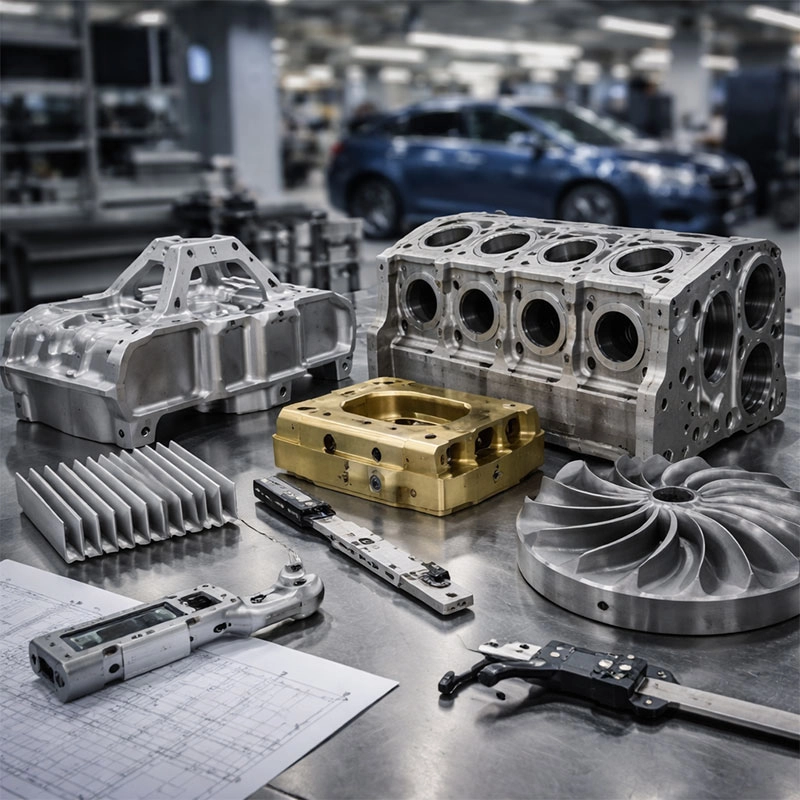
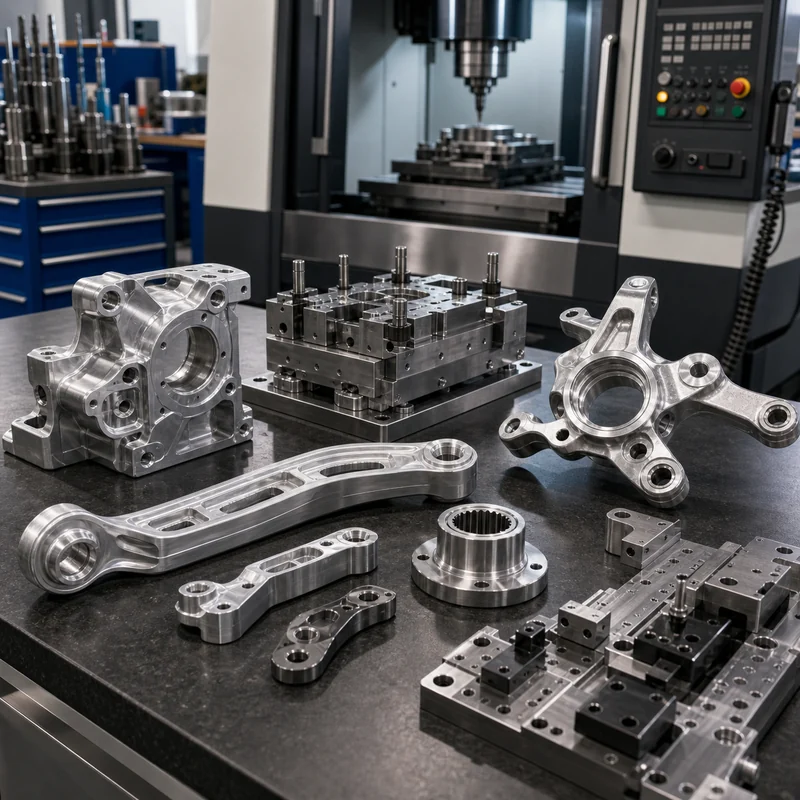
CNC machining is used for prototypes, test parts, brackets, adapters, housings, shafts, bushings, fixtures, and performance components.

Buyer Notes

For a smoother quote, prepare a 3D model, 2D drawing, target material, order quantity, surface finish, tolerance requirements, and any critical assembly information. Clear specifications reduce delays and help the supplier identify manufacturability risks early.

Materials

Aluminum, steel, stainless steel, brass, and engineering plastics are common depending on strength, weight, heat, and wear requirements.

Buyer Notes

For a smoother quote, prepare a 3D model, 2D drawing, target material, order quantity, surface finish, tolerance requirements, and any critical assembly information. Clear specifications reduce delays and help the supplier identify manufacturability risks early.

Prototype and Testing

CNC parts can be made from real material, which helps engineers test function before tooling or mass production.

Buyer Notes

For a smoother quote, prepare a 3D model, 2D drawing, target material, order quantity, surface finish, tolerance requirements, and any critical assembly information. Clear specifications reduce delays and help the supplier identify manufacturability risks early.

Buyer Tips

Confirm fit, tolerance, surface finish, heat treatment, thread requirements, and inspection method before ordering.

Buyer Notes

For a smoother quote, prepare a 3D model, 2D drawing, target material, order quantity, surface finish, tolerance requirements, and any critical assembly information. Clear specifications reduce delays and help the supplier identify manufacturability risks early.

FAQ

Is CNC machining used for automotive parts?

For CNC machining automotive parts, the right answer depends on part geometry, material, tolerance, surface finish, quantity, and end-use requirements. A complete RFQ helps the supplier give a useful recommendation.

What automotive parts can be CNC machined?

For CNC machining automotive parts, the right answer depends on part geometry, material, tolerance, surface finish, quantity, and end-use requirements. A complete RFQ helps the supplier give a useful recommendation.

Can CNC machining make custom car parts?

For CNC machining automotive parts, the right answer depends on part geometry, material, tolerance, surface finish, quantity, and end-use requirements. A complete RFQ helps the supplier give a useful recommendation.

Is CNC machining good for automotive prototypes?

For CNC machining automotive parts, the right answer depends on part geometry, material, tolerance, surface finish, quantity, and end-use requirements. A complete RFQ helps the supplier give a useful recommendation.

Practical Checklist Before Ordering

  • Confirm material grade, dimensions, tolerance, and surface finish.
  • Share both 3D files and 2D drawings when possible.
  • Identify critical features that affect fit, sealing, strength, or assembly.
  • Ask about sample lead time, MOQ, inspection reports, and packaging.
  • Compare quotes by specification, not only by unit price.

Conclusion

A good CNC machining decision balances design, material, tolerance, cost, lead time, and supplier capability. Buyers who prepare complete files and ask the right technical questions usually receive more accurate quotes, better parts, and fewer production surprises.
Categories
Industries & Applications

5 Essential Surface Treatments for Aerospace CNC Parts

Choosing the right surface finishing for aerospace parts is crucial. It’s not just about looks; these processes protect components from extreme environments, reduce wear, and ensure long-term reliability. Let’s explore five key treatments that make a world of difference.

Anodizing: The All-Round Protector

When we talk about aerospace part coating, anodizing is often the first process that comes to mind, and for good reason. Think of it like giving aluminum parts a super-tough, integrated suit of armor. The process uses an electrochemical reaction to thicken the part’s natural oxide layer, creating a surface that’s incredibly hard, corrosion-resistant, and provides excellent adhesion for paints and primers. It’s a cornerstone of aerospace surface engineering.

Type II vs. Type III: What’s the Difference?

You might hear about Type II (chromic acid) and Type III (hard coat) anodizing. Type II is great for general corrosion protection and paint adhesion. But for the really tough jobs—like components facing high wear or needing maximum protection—Type III hard coat is the go-to. It creates a much thicker, denser layer. It’s perfect for things like actuator housings or parts in landing gear systems where durability is non-negotiable.

Passivation: The Invisible Shield for Stainless

If your CNC parts are made from stainless steel, you can’t skip passivation. It’s a bit like giving the metal a refreshing bath in a citric or nitric acid solution. This removes free iron particles from the surface that can rust, allowing the chromium in the stainless steel to form a uniform, passive oxide layer. This layer is what gives stainless steel its famous “stainless” quality. It’s a critical step for ensuring the longevity of fasteners, fittings, and surgical tools used in aerospace applications. For more on the science, the ASTM A967 standard details the process.

Electroless Nickel Plating: Uniform & Wear-Resistant

Peen Forming & Surface Enhancement

This one is fascinating because it does two jobs at once. Shot peening involves bombarding the part’s surface with small media (like steel or ceramic beads). This induces compressive stresses into the surface layer, which dramatically improves fatigue life—think of it as making the metal more resistant to cracking under repeated stress. But it’s also used for “peen forming,” a precise method to form large, complex aircraft wing skins by strategically peening specific areas. It’s a brilliant example of a surface finishing for aerospace parts that enhances both mechanical properties and form.

Advanced Coating Solutions for Aerospace Components

For the most extreme conditions, standard treatments might not be enough. Enter the world of advanced coating solutions. These are specialized, high-performance coatings designed to handle blistering heat, abrasive wear, or chemical attack that would degrade a base metal. They are essential for components in engines, exhaust systems, and leading edges.

Thermal Spray Coatings: The Heavy-Duty Option

Imagine spraying molten or semi-molten materials onto a part to build up a coating. That’s thermal spray. Processes like High-Velocity Oxygen Fuel (HVOF) can apply incredibly dense, hard coatings of materials like tungsten carbide or chromium carbide. These coatings provide exceptional resistance to wear, heat, and oxidation. For instance, they’re often used on turbine blades and bearing surfaces. The ASM International handbook is a great resource for diving deeper into these technologies.

Making the Right Choice for Your Project

So, how do you pick? It all comes down to your part’s mission. Ask yourself: What material is it? (Aluminum, titanium, stainless steel?). What is it exposed to? (Salt spray, high heat, constant friction?). What properties are most critical? (Wear resistance, corrosion protection, dimensional stability?). My advice is to have an early conversation with your CNC machining partner and their recommended finishing house. They can guide you to the most cost-effective and performance-driven surface treatment for flight hardware. Getting this step right is what transforms a precision-machined part into a reliable, long-lasting aerospace component.

Categories
Industries & Applications

Unlock Precision: 5 CNC Machining Automotive Parts Secrets

Ever wondered how modern cars achieve such incredible performance and reliability? A lot of the credit goes to precision manufacturing. In this friendly guide, we’ll uncover five key secrets behind using CNC machining for automotive parts that can transform your understanding of vehicle quality and durability.

Optimizing Performance with CNC Machined Automotive Components

When we talk about high-performance vehicles, whether it’s a track-day special or a reliable daily driver, the quality of its components is non-negotiable. This is where CNC machining for car parts truly shines. Think of it as the difference between a hand-me-down tool and a custom-made, perfectly balanced one. By using computer-controlled precision, manufacturers can create engine blocks, transmission housings, and suspension components that fit together flawlessly. This level of accuracy in automotive component manufacturing directly translates to less vibration, reduced wear, and ultimately, a smoother, more powerful ride. It’s not just about making a part; it’s about crafting a piece of a perfectly synchronized machine.

The Secret is in the Material

Choosing the right material is the first and most crucial step. It’s like picking the right flour for a cake—the end result depends on it. While aluminum and steel are common, the secret lies in selecting the specific alloy for the job. For instance, a 6061-T6 aluminum might be perfect for a lightweight bracket, but a high-strength 7075 alloy is better for a critical suspension knuckle. For engine components facing extreme heat, materials like pre-hardened steel or specialized alloys are often the go-to choice in precision automotive machining. The right material ensures the part can handle stress, heat, and wear, which is fundamental for both safety and longevity.

Beyond Aluminum and Steel

Don’t limit your thinking! The world of CNC auto parts includes advanced materials like titanium for ultra-strong, lightweight connections, or engineering plastics like PEEK for specific insulators and bushings. Each material behaves differently during the machining process, requiring specific tooling and strategies. A good machinist doesn’t just cut metal; they understand how each material “feels” and reacts, ensuring a perfect result every time.

Why Tolerances Aren’t Just Numbers

You might hear machinists talk about tolerances like ±0.001 inches and wonder what the big deal is. Let me put it this way: imagine building a puzzle where every piece is just a hair too big. It would never fit smoothly. In an engine, such a tiny gap could mean lost compression, oil leaks, or premature failure. Tight tolerances in CNC machined automotive components ensure parts are interchangeable, assemblies are quiet, and systems are efficient. Achieving these microscopic levels of precision consistently is what separates hobbyist work from professional, reliable automotive parts production.

The Hidden Power of Surface Finish

A part might be dimensionally perfect, but if its surface is rough, it’s asking for trouble. Surface finish, measured in Ra (roughness average), is a silent hero. A smoother finish on a cylinder wall reduces friction, improving horsepower and fuel economy. On a sealing surface, it prevents leaks. When you’re looking for custom automotive machining services, asking about their capability for specific surface finishes is a smart move. It’s an often-overlooked detail that has a massive impact on performance and durability.

Designing for Manufacturability (DFM)

Here’s a secret straight from the shop floor: a part designed *with* the machining process in mind is always cheaper, faster, and better to produce. This is called Design for Manufacturability. For example, designing internal corners with a radius instead of a sharp 90-degree angle allows standard cutting tools to be used. Specifying realistic wall thicknesses prevents tool deflection and vibration. By collaborating with your CNC parts supplier early in the design phase, you can avoid headaches and extra cost. It turns a complex design for a performance car part into an efficient, reliable reality.

Simple DFM Tips for Better Parts

Keep these in mind: Use standard hole sizes when possible. Avoid excessively deep pockets that require special long-reach tools. Add slight drafts (tapers) to vertical walls to make parts easier to remove from fixtures. These small considerations make the machining of vehicle components smoother and more cost-effective for everyone involved. For more on industry-standard practices, you can review resources from authoritative bodies like the Society of Manufacturing Engineers.

The Final Touch: Post-Processing

The part coming off the CNC machine is rarely the final product. This is where post-processing—the fifth secret—adds the final layer of performance and protection. Processes like heat treatment (annealing, tempering) can dramatically increase a part’s strength. Anodizing or powder coating adds corrosion resistance and a great look. For moving parts, treatments like tumbling or vibratory finishing deburr and smooth edges, reducing stress points. Never underestimate this stage; it’s what turns a raw machined piece into a durable, finished automotive component ready for the road.

So, there you have it! The journey of creating top-tier CNC machined auto parts is a blend of science, art, and meticulous attention to detail—from material science and microscopic measurements to smart design and protective finishes. By understanding these five areas, you’re better equipped to appreciate the engineering in your vehicle or to communicate effectively on your next custom project. Here’s to building something amazing!

Categories
Industries & Applications

Discover Which Industries Rely on CNC Machining

CNC machining is a cornerstone of modern manufacturing, quietly shaping the parts and products that power our world. From the car you drive to the phone in your pocket, this technology is behind the scenes. Let’s explore the diverse sectors that depend on its precision and versatility.

Key Sectors Utilizing CNC Machining Technology

When people ask, “what industries use CNC machining?” or search for “CNC machining applications by industry,” they’re often surprised by the breadth of the answer. It’s not just one field; it’s a foundational process that supports innovation across the board. Think of it like a master key that opens doors to creating incredibly precise and reliable components for almost any sector you can imagine.

Aerospace and Defense

This is where the demands are arguably the highest. The need for CNC milling and turning to create parts that are both incredibly strong and exceptionally light is non-negotiable. We’re talking about turbine blades, landing gear components, and structural airframe parts. Every gram saved and every micron of precision achieved directly impacts fuel efficiency and safety. The industry relies on computer numerical control to meet the strict certifications and tolerances required for flight. You can learn more about the rigorous standards in aerospace manufacturing from resources like SAE International.

Automotive and Transportation

From prototyping a new engine block to mass-producing complex transmission parts, CNC manufacturing is the driving force. It’s used for everything from one-off custom racing components to the durable parts in your family sedan. The shift toward electric vehicles has also opened new doors, requiring precise machining for battery housings, motor components, and intricate thermal management systems. If you’re curious about “industries that use CNC lathes,” automotive is a prime example for creating symmetrical, round parts like axles and cylinders.

Medical and Dental Devices

Precision here is literally a matter of life and limb. The medical field uses precision machining to create implants (like knees and hips), surgical instruments, and diagnostic equipment. These parts must be biocompatible, sterile, and machined to flawless tolerances to ensure patient safety and successful outcomes. Similarly, dental labs use CNC technology to mill crowns, bridges, and dentures from ceramic or composite blocks, leading to faster and more accurate fittings for patients.

Electronics and Consumer Goods

Look at the device you’re using right now. Its sleek case, internal heat sinks, and connector ports were likely made with CNC processes. The industry needs to machine small, complex, and often delicate parts from metals and plastics. Questions like “which sectors need CNC prototyping?” often lead here, as electronics companies constantly iterate new designs. CNC machining services are perfect for creating the molds for plastic injection molding as well, which then produce millions of consumer product housings.

Energy and Industrial Machinery

Whether it’s traditional oil and gas or renewable solar and wind power, robust components are essential. CNC machine shops produce valves, pistons, turbine parts, and custom fittings that must withstand extreme pressures and corrosive environments. In general industrial machinery, CNC is used to make the very machines that make other things—gears, rollers, frames, and tooling that keep factories running smoothly.

The Value and Benefits for These Industries

So, why is CNC the go-to for so many different fields? The benefits are clear and compelling. First, the consistency is unmatched. Once a program is perfected, the CNC mill or lathe can produce the same part a thousand times with near-identical accuracy. This reduces waste and ensures quality control. Second, it handles complex geometries that would be impossible or prohibitively expensive with manual machining. Third, it’s remarkably versatile in materials, working with metals, plastics, woods, and composites. Finally, while the initial setup has costs, it becomes incredibly efficient for both short-run production and large-scale manufacturing, offering great value across the board.

How to Get Started with CNC for Your Project

If you’re thinking, “This sounds great for my industry,” you might wonder how to begin. We suggest you start by clearly defining your part’s function, material needs, and required tolerances. Reach out to a reputable CNC machining company for a consultation—they can be a fantastic resource. Many offer contract machining services, meaning you don’t need to buy the expensive equipment yourself. Be prepared to share detailed CAD drawings. A good partner will guide you on design for manufacturability (DFM), helping tweak your design to be more efficient and cost-effective to produce. It’s a collaborative process!

Clearing Up Common Misconceptions

Let’s tackle a few myths I often hear. One big one is that CNC is only for giant corporations. Not true! Many job shops specialize in small-batch or prototype work, making the technology accessible to startups and individual inventors. Another is that it’s always the most expensive option. While not cheap, its speed, precision, and material efficiency often make it the most *cost-effective* choice for complex parts, saving money compared to alternative methods or manual labor in the long run. Finally, it’s not a “set it and forget it” magic box. It requires skilled programmers and operators to create efficient toolpaths and ensure everything runs smoothly. The machine is a powerful tool wielded by human expertise.

Categories
Industries & Applications

Discover 10 Surprising CNC Machining Applications Today

When you think of CNC machining, you might picture industrial parts or automotive components. But its reach is far wider! This guide explores ten unexpected and fascinating uses of CNC technology, showing how this precise manufacturing process touches everything from art to medicine.

The Unexpected Value of CNC Machining

Hi there! If you’re curious about what CNC machining can really do, you’re in the right place. We often box it into “heavy industry,” but its true value lies in its incredible versatility and precision. Whether you’re a designer, engineer, artist, or just a curious mind, understanding the diverse applications of CNC technology opens up a world of possibilities. It’s not just about making parts; it’s about turning complex ideas into tangible reality with accuracy that’s hard to match by hand.

10 Surprising CNC Machining Applications

Let’s dive into some of the most creative and unexpected places where CNC milling and CNC turning applications shine. You might be surprised where this technology pops up!

Custom Musical Instruments

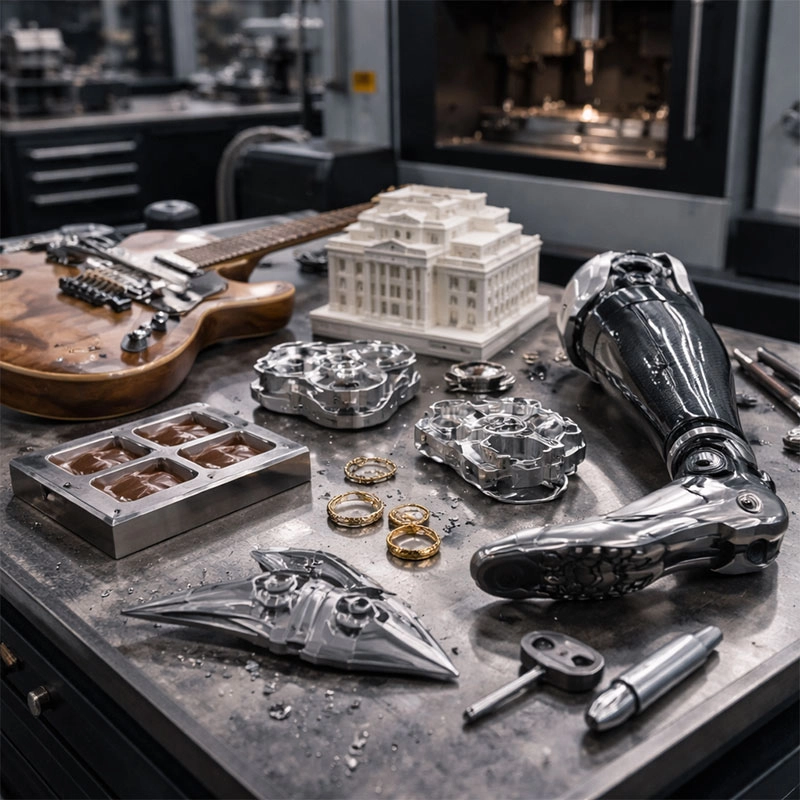
Imagine a guitar with a body carved from a single, exotic piece of wood, featuring intricate soundhole patterns that would be impossible to cut by hand. That’s CNC at work! Luthiers use it to create precise necks, fretboards, and even entire brass or woodwind instrument bodies. This level of precision machining ensures perfect intonation and unique aesthetic designs, allowing musicians to have truly one-of-a-kind instruments. For more on advanced manufacturing techniques, you can check out resources from ASME.

Architectural Models & Art

Before a skyscraper rises, architects often present detailed scale models. CNC machines carve these models from foam, wood, or acrylic with stunning detail. Beyond models, artists are using CNC as a digital chisel to create large-scale sculptures, intricate wall panels, and textured installations. It’s a fantastic example of how computer numerical control bridges the gap between digital design and physical art.

Medical Prosthetics & Orthotics

This is where CNC machining makes a profound human impact. Using 3D scans of a patient, technicians can machine custom prosthetic limbs or orthotic braces that fit perfectly. The materials used, like medical-grade titanium or polymers, are easily worked by CNC to create lightweight, strong, and comfortable devices. This application highlights the critical role of CNC manufacturing in improving quality of life.

The Food Industry

Yes, you read that right! While not cutting food directly, CNC machines are vital in creating the molds and dies used for food production. Think of the complex shapes of chocolate bars, the detailed designs on cookies, or the molds for pasta. The machines that make those production tools are often CNC, ensuring consistency and intricate design in what we eat.

Custom Jewelry & Fashion

High-end and custom jewelry relies on the fine detail of CNC machining, especially for wax molds used in casting. Designers can create incredibly complex patterns and settings that would be too time-consuming or fragile to make manually. Furthermore, some designers are machining metal accessories, custom buttons, or even elements for haute couture directly, pushing the boundaries of machining uses in fashion.

Historical Restoration

Restoring a historic building or vehicle often requires replicating a broken or missing part that hasn’t been made for a century. Conservators can 3D scan the original or its counterpart, design a replacement digitally, and use CNC machining to create a perfect replica in the correct material, whether it’s vintage brass, wrought iron, or rare wood.

Scientific Instruments

Research labs depend on precision. Custom lens holders, sample chambers, components for spectrometers, and parts for particle accelerators often require the tolerances only CNC can provide. These uses of CNC machines enable scientific breakthroughs by creating the specialized tools researchers need.

Custom Furniture & Woodworking

Modern woodworkers use CNC routers to bring new designs to life. They can produce complex joinery like dovetails or mortise-and-tenon joints with perfect repeatability, carve elaborate decorative panels, or cut out unique furniture shapes. It allows for a blend of traditional craftsmanship with digital precision, expanding what’s possible in custom furniture design.

Aerospace Prototypes & Components

While aerospace is a known field for CNC, the surprising part is the prototyping of unconventional components. Before committing to expensive casting dies for a new engine bracket or satellite housing, engineers will often machine a functional prototype directly from metal or composite block using CNC. This allows for rapid testing and iteration. Standards for such high-stakes manufacturing are rigorous, and information can be found through organizations like SAE International.

Movie Props & Cosplay

Next time you see a hero’s detailed armor or a futuristic weapon in a film, there’s a good chance CNC helped make it. Prop shops machine parts from foam, urethane, or lightweight composites to create durable, detailed, and repeatable props. Similarly, dedicated cosplayers use desktop CNC routers to create incredibly accurate costumes and accessories, showcasing the creative applications of CNC milling in fandom.

How to Explore CNC for Your Project

Feeling inspired? If you have a project that could benefit from precision, here’s a friendly suggestion: start with a clear digital design. Software like CAD is your blueprint. Then, look for a local machine shop or a maker space with CNC capabilities. Don’t be afraid to discuss your idea with them—they can advise on the best materials (like aluminum, plastics, or woods) and machining processes for your needs. Many shops love working on unique, non-industrial projects!

Busting Common Myths About CNC Uses

Let’s clear up a couple of things! A common myth is that CNC is only for huge, expensive metal parts. As you’ve seen, it’s fantastic for prototyping, one-off custom items, and softer materials like wood and plastic. Another is that it removes all skill from creation. On the contrary, it requires skilled operators to program, set up, and manage the process—the skill shifts from manual dexterity to digital mastery and technical knowledge.

Final Thoughts

So, there you have it! From the concert hall to the operating room, and from the movie set to your dining room table, CNC machining applications are far more diverse than we often assume. It’s a tool of incredible precision that empowers creativity and innovation across countless fields. We hope this tour has given you a new appreciation for the surprising and wonderful world of CNC machine applications. Who knows what you’ll create with it next?

Categories
Industries & Applications

Discover What Industries Use CNC Machining: 10 Key Sectors

Ever wondered where those incredibly precise metal and plastic parts come from? From the car you drive to the phone in your pocket, CNC machining plays a silent but crucial role. Let’s explore the diverse sectors that rely on this versatile manufacturing process to bring ideas to life.

Aerospace Industry

When we think about industries that utilize CNC machining, aerospace is often the first that comes to mind. It’s a perfect match. The need for ultra-lightweight, incredibly strong, and flawlessly precise components is non-negotiable here. Think about the engine turbine blades, landing gear parts, and complex airframe brackets—each one must perform perfectly under extreme stress and temperature. That’s where CNC milling and turning shine, transforming blocks of titanium or high-grade aluminum into mission-critical parts.

Why CNC is Critical Here

The margin for error is virtually zero. A tiny flaw can have major consequences. CNC technology allows for the creation of complex geometries that are often impossible with manual machining, all while maintaining the tightest tolerances. It’s not just about making a part; it’s about making a part that can reliably fly. For more on the standards these parts must meet, you can check resources from SAE International.

Automotive Sector

From high-performance race cars to the family sedan, the automotive industry uses CNC extensively. It’s used for both prototyping and full-scale production. You’ll find CNC-machined parts in engines (like cylinder heads and pistons), transmission systems, suspension components, and even in custom interior details. The shift towards electric vehicles has also opened new doors, requiring precise battery enclosures and motor housings. Whether it’s a one-off custom piece or a high-volume run using automated CNC systems, this process is a backbone of modern auto manufacturing.

Medical Device Manufacturing

This is a sector where precision is literally a matter of life and death. The application of CNC in medical fields is vast. It creates surgical instruments, orthopedic implants (like knees and hips), dental components, and enclosures for diagnostic equipment. These parts often require biocompatible materials like surgical-grade stainless steel or titanium, and surfaces that are exceptionally smooth to prevent bacterial growth. The ability of CNC to work with these tough materials and produce sterile, repeatable parts makes it indispensable.

Electronics & Consumer Goods

Look at your smartphone, laptop, or smartwatch. The sleek metal casing, the tiny internal connectors, the heat sinks—many are likely products of precision CNC machining. This sector demands the ability to machine small, intricate features with a fantastic surface finish. Aluminum and brass are common here. The process is perfect for creating the molds used in plastic injection molding for consumer products, too. So, even if the final product is plastic, a CNC-machined mold was probably involved.

Energy (Oil & Gas)

The energy sector, particularly oil and gas, relies on heavy-duty, reliable components that can withstand corrosive environments and immense pressure. Valves, pistons, drill bits, and turbine components for power generation are all prime examples of CNC machine applications in this field. These parts are typically large, made from tough alloys, and require machining that ensures perfect seals and longevity in harsh conditions. It’s all about durability and safety.

Defense & Military

Similar to aerospace, the defense industry requires components that are robust, reliable, and made to exact specifications. This includes everything from firearm components and optics mounts to communication equipment housings and parts for vehicles and aircraft. The use of CNC manufacturing ensures interchangeability of parts (a concept crucial for maintenance) and the ability to work with specialized, often classified, materials that offer high strength and other specific properties.

Industrial Machinery

This is the industry that often builds the machines for other industries! CNC machining services are used to produce the gears, shafts, housings, and frames that make up factory equipment, packaging machines, and agricultural machinery. These parts need to be incredibly wear-resistant and precise to ensure the larger machine operates smoothly for years. It’s a great example of how CNC supports the very foundation of manufacturing itself.

Prototyping & Product Development

Before any product goes into mass production, it needs a prototype. CNC prototyping is a favorite method for engineers and designers because it allows them to create a functional, high-fidelity model directly from a digital design (CAD file). They can test the fit, form, and function using the actual intended material. This rapid turnaround from concept to tangible part accelerates innovation and helps catch design flaws early, saving significant time and cost.

Marine Industry

The marine environment is brutal—constant exposure to saltwater demands exceptional corrosion resistance. CNC machining is used to create propellers, engine components, fittings, and custom parts for both commercial vessels and luxury yachts. Materials like marine-grade aluminum, bronze, and specific stainless steels are commonly machined to withstand this challenge. The precision also ensures optimal hydrodynamic performance for parts like propellers.

Job Shops & Contract Manufacturing

This isn’t a single “industry” per se, but it’s a critical piece of the puzzle. Many companies don’t have in-house machining capabilities. That’s where contract machine shops come in. These versatile businesses use CNC to serve *all* the sectors we’ve talked about. A single job shop might work on a medical device prototype one week and a batch of aerospace brackets the next. They are the flexible, on-demand backbone of modern manufacturing, answering the broad question of which industries use CNC machines with a simple “practically all of them.

As you can see, the reach of CNC machining is astonishingly wide. It’s the quiet force behind innovation and reliability in so many aspects of our modern world. If you’re working on a project that demands precision, strength, or complex geometry, there’s a good chance that partnering with a skilled CNC shop is your best path forward.

Categories
Industries & Applications

Discover the Top Industries Using CNC Precision Machining Today

CNC precision machining is a cornerstone of modern manufacturing, enabling the creation of complex, high-tolerance parts. This article explores the key sectors that rely on this technology, from aerospace to medical devices, and explains why it’s so vital to their success and innovation.

Key Sectors Leveraging CNC Precision Machining

When we talk about the top industries using CNC precision machining, we’re really looking at fields where there’s no room for error. Think of it like a master watchmaker crafting tiny gears—every cut must be perfect. This technology, also known as CNC milling or turning, is the backbone for creating the reliable, complex parts that power our modern world. From the plane you fly in to the device monitoring your health, computer numerical control machining makes it all possible with stunning accuracy.

Aerospace and Defense: Where Microns Matter

If you’ve ever wondered how aircraft stay safe and efficient, a huge part of the answer lies in precision CNC machining. This sector is arguably the most demanding user of high-precision manufacturing. Every component, from turbine blades and landing gear parts to intricate brackets within the fuselage, must withstand extreme forces and temperatures while being as light as possible. The search for industries that utilize CNC machining often starts right here, at 30,000 feet.

Advanced Materials and Incredible Tolerances

What’s fascinating is the materials involved. Aerospace engineers often work with tough alloys like titanium and Inconel, which are notoriously difficult to machine. A CNC machine, guided by perfect digital blueprints, handles these materials with ease, achieving tolerances that are thinner than a human hair. This level of precision manufacturing is non-negotiable for flight safety and performance. Regulatory bodies like the Federal Aviation Administration (FAA) set incredibly strict standards, and CNC processes are key to meeting them consistently.

Medical and Dental: Engineering for Life

Next on our list is an industry that touches all of our lives: medical device manufacturing. The need for CNC precision parts here is driven by one thing: patient outcomes. Whether it’s a titanium knee implant, a complex surgical tool, or the housing for a sensitive MRI machine, these components must be flawless. They need to be sterile, reliable, and often customized to a patient’s unique anatomy. This is where precision engineering truly becomes a life-saving discipline.

The Critical Role of Biocompatible Materials

Similar to aerospace, the medical field uses specialized materials. However, here the focus is on biocompatibility—materials that can safely exist inside the human body, like surgical-grade stainless steel, cobalt-chrome, and certain plastics. CNC machining is ideal for these materials because it produces smooth, non-porous surfaces that resist bacterial growth and are easy to sterilize. For anyone researching top applications of CNC technology, the innovation in custom orthopedic implants and minimally invasive surgical devices is a perfect example of its impact.

Automotive and Transportation: Driving Innovation

From high-performance race cars to the electric vehicle (EV) being charged next door, the automotive sector is a massive consumer of machined components. While many high-volume parts use casting or stamping, CNC machining services are essential for prototyping, custom aftermarket parts, and creating complex components for engines, transmissions, and braking systems. As the industry shifts toward EVs, the demand for precise battery housings, heat sinks, and power electronics components is soaring.

Electronics and Optics: The Details in the Data

This one might surprise you, but look at your smartphone or laptop. The tiny, complex heat sinks that keep your processor cool, the connectors, and even some casings are often produced with CNC precision. In optics, the lenses for cameras, microscopes, and laser equipment require surfaces polished to nanometer-level perfection. The quest for smaller, faster, and more powerful devices directly drives the need for advanced machining in manufacturing processes that can work on a miniature scale with impeccable accuracy.

Energy and Industrial Machinery: Powering the World

Whether it’s traditional oil and gas, renewable wind and solar, or the massive turbines in hydroelectric dams, the energy sector depends on durable, precision-made parts. Valves, pistons, turbine components, and fittings for pipelines all require the strength and exact specifications that CNC provides. In heavy industry, the machines that build other machines rely on robust, custom-machined parts to maintain productivity and safety. This answers the search for major industries using CNC in the foundational sectors that keep our lights on and factories running.

Making the Right Choice for Your Project

So, how do you know if CNC precision machining is right for your needs? I always suggest starting with three questions: What level of accuracy does my part require? What material is best for its function? And what is the expected volume? For prototypes, complex geometries, or low-to-medium volume runs of high-tolerance parts, CNC is often the most efficient and reliable choice. It gives you the flexibility to iterate designs quickly and the confidence that every piece will match the last. For more on material standards, you can check resources from ASTM International.

In the end, exploring the leading sectors for precision machining shows us that this isn’t just about cutting metal—it’s about enabling progress across the board. It’s the trusted process behind the technologies that make our lives safer, healthier, and more connected.

Request A Quote

We'll Send You Back with Price Immediately!

DEC 1-31

XMAS SPECEIL

Up to

40% off

Discover the Top Industries Using CNC Precision Machining Today

We'll Send You Back with Price Immediately!