Categories
Blog CNC Materials Industries & Applications Quality & Tolerances

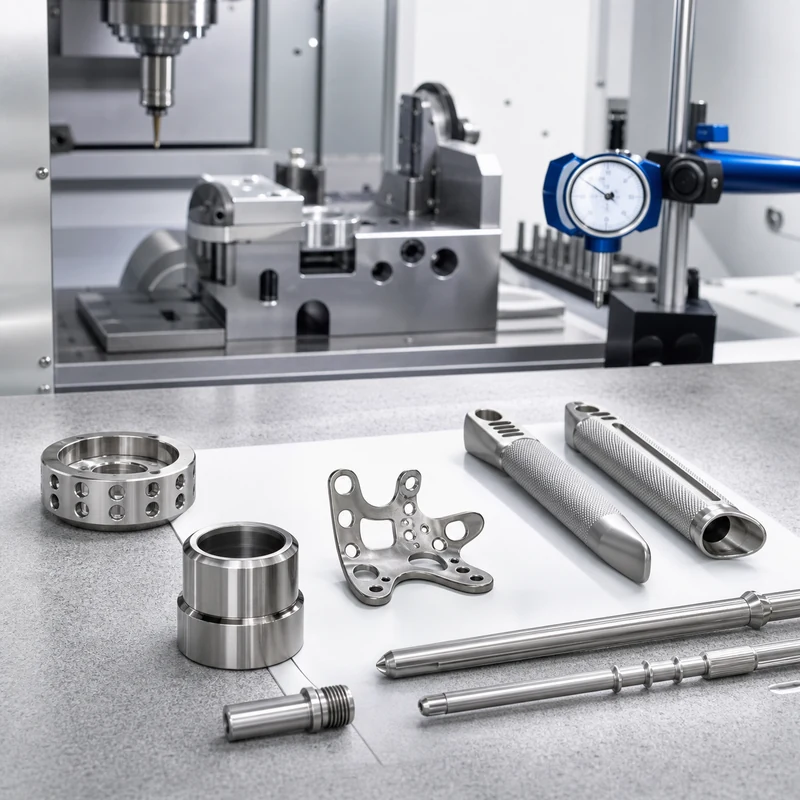
CNC Machining for Medical Devices: Materials, Applications, and Quality Checks

Quick answer: CNC machining is used for medical device prototypes, surgical tools, instrument parts, housings, fixtures, test components, and precision hardware. Medical parts often require careful material selection, clean machining, dimensional inspection, traceability, and clear documentation.

CNC Machining for Medical Devices

Medical machining is not only about tight tolerances. Buyers must consider biocompatible or application-appropriate materials, clean edges, surface finish, inspection records, and consistent communication about critical features.

Key Points for Buyers and Engineers

Topic What to know Practical impact
Materials Stainless steel, titanium, aluminum, PEEK, PC, PPSU Material must match use and regulatory expectations.
Features Small holes, slots, threads, mating surfaces Tool access and burr control are important.
Inspection CMM, gauges, visual checks, reports Confirms critical dimensions and drawing requirements.
Finish Polishing, passivation-like cleaning, anodizing, marking Affects appearance, corrosion behavior, and cleanliness.

How This Affects CNC Machined Parts

Medical prototypes may use both milling and turning. The process should be selected by geometry, material, tolerance, surface finish, and inspection requirements rather than by price alone.

Design and Purchasing Checklist

  • Mark critical dimensions and datums clearly.
  • Confirm material grade and certificate needs.
  • Define burr, edge break, and cleanliness expectations.
  • Request inspection reports when fit is critical.
  • Review finish compatibility before production.

Related MTSPi Resources

FAQ

What medical parts can be CNC machined?

Instrument components, housings, fixtures, prototype parts, surgical tool components, and precision hardware can be machined.

Is titanium used for medical CNC parts?

Yes, titanium is used in certain medical applications because of strength, corrosion resistance, and biocompatibility considerations.

Do medical CNC parts need CMM inspection?

Many precision medical parts benefit from CMM inspection, especially when GD&T or assembly-critical features are present.

Need help with medical CNC machining?

Send drawings, material, quantity, finish, tolerance notes, and application requirements. MTSPi can review manufacturability before quoting.

Contact MTSPi for engineering and quote support

Practical Buyer Notes

Medical machining pages need depth because the topic involves more than precision. Cleanliness, burr control, traceability, material documentation, surface finish, and inspection expectations can all be important.

The page should avoid making regulatory claims that are too broad. Instead, it should explain practical manufacturing controls for prototypes, test fixtures, instruments, housings, and precision medical hardware.

How to Evaluate This Topic on a Real Drawing

Decision point Recommended approach Why it matters
Material Confirm stainless steel, titanium, PEEK, PC, or other grade Material must match function and documentation needs
Burr control Define edge breaks and clean transitions Sharp edges can create safety and assembly issues
Inspection Use CMM, gauges, and reports for critical features Supports part verification
Cleanliness Plan cleaning and packaging expectations Protects parts during handling and shipment

Common Mistakes to Avoid

  • Using vague material names instead of exact grades.
  • Ignoring burrs on small holes, slots, and edges.
  • Treating surface finish as cosmetic only.
  • Failing to define inspection records before production.

Recommended MTSPi Review Workflow

MTSPi should review medical-related CNC parts with extra attention to material, edge condition, finish, and critical dimensions. The page should explain this clearly without overstating certification scope.

  1. Confirm the part function, operating environment, and assembly risk.
  2. Review material, process, tolerance, surface finish, and inspection requirements together.
  3. Separate critical features from general dimensions so cost is not wasted on non-functional details.
  4. Use related resources such as CNC materials, surface treatment, and quality assurance to complete the specification.
  5. Send the final drawing package to MTSPi for quote review before production.

What to Send for a Faster Quote

Send CAD, drawing, material grade, finish, required reports, cleaning expectations, critical dimensions, and whether the part is for prototype, fixture, or production use.

  • 3D CAD file and 2D drawing with revision number.
  • Material grade or acceptable alternatives.
  • Quantity, delivery target, and whether samples are required first.
  • Critical dimensions, thread callouts, finish notes, and inspection requirements.
  • Application notes when the part is used in heat, moisture, wear, vibration, or visible assemblies.

Deeper Engineering Notes

For medical CNC machining, the strongest page is not just a definition. It should help a buyer decide what information belongs on the drawing, what questions to ask a supplier, and which details affect cost, quality, and delivery. In real RFQ work, the important details are usually material traceability, burr control, clean handling, inspection reports, and revision discipline. These details decide whether the supplier can quote confidently or has to return with repeated questions.

The common risk is making broad claims without defining the exact medical application and documentation needs. That risk can make the content look complete on the surface but weak in a real manufacturing situation. A stronger specification connects the topic to material behavior, machine access, tolerance control, finishing, and inspection before the order is released.

Example Specification Review

Review area Question to answer Good specification practice
Function What does this feature or part need to do? Describe the load, fit, motion, appearance, sealing, or assembly requirement.
Material Is the selected material suitable for the environment? Confirm strength, heat, corrosion, wear, chemical exposure, and cosmetic needs.
Geometry Can the feature be reached by standard tools? Review depth, corner radius, wall thickness, tool clearance, and setup direction.
Tolerance Which dimensions are truly critical? Use tight tolerances only where function requires them and keep general dimensions practical.
Verification How will acceptance be checked? Define gauges, CMM checks, roughness measurement, thread inspection, or visual standards when needed.

How This Page Should Support Ranking

This topic can attract both beginner searches and buyer searches. The beginner wants a clear answer; the buyer wants enough detail to make a manufacturing decision. A page has a better chance to rank when it answers the simple question first, then adds examples, process limits, design notes, comparison tables, and practical next steps.

That is also why internal links should be helpful rather than forced. A reader should naturally move from this page to a process page, material page, surface finish page, inspection page, or quote page only when that next step solves a real question.

Conclusion

CNC machining can support medical device development when material, cleanliness, tolerance, finish, and inspection expectations are defined clearly from the start.
Categories
Blog Industries & Applications Quality & Tolerances

How to Evaluate Aerospace CNC Machining Manufacturers in China

China has a large CNC machining supply base, but aerospace-style parts require a more disciplined selection process than ordinary price comparison. The right partner must be able to control material behavior, multi-axis access, tight tolerances, burrs, finishing, inspection records, and repeat orders under a documented process.

This guide focuses on how to evaluate aerospace CNC machining manufacturers without relying on a generic company list. Use it as a sourcing checklist when your parts include lightweight structures, datum-critical features, difficult materials, or inspection requirements tied to engineering drawings.

Quick Evaluation Checklist

Evaluation Area What to Check Why It Matters
Part similarity Examples of comparable brackets, housings, fittings, shafts, or precision hardware Relevant experience reduces process-learning risk
Machine capability 3-axis, 4-axis, 5-axis, turning, mill-turn, Swiss-type, fixture capacity The process must fit the part geometry, not just the RFQ keyword
Tolerance control Datum strategy, roughing and finishing sequence, thermal control, inspection plan Tight tolerances depend on process stability
Material experience Aluminum, titanium, stainless steel, alloy steel, nickel alloys, and engineering plastics Each material cuts, moves, and finishes differently
Quality system CMM inspection, calibrated gauges, first-article checks, report format, revision control Aerospace-style sourcing needs measurable evidence
Communication DFM feedback, drawing review, risk notes, English response quality, change tracking Good communication catches expensive mistakes early
Production control Tool-life rules, lot separation, packaging, repeat-order records, lead-time planning One good sample does not prove batch reliability

Start With the Part, Not the Factory Profile

A supplier with many machines may still be a poor fit for a specific part. Begin with the drawing, CAD model, material, quantity, finish, tolerance callouts, and required inspection documents. Ask the manufacturer to explain the proposed setup plan, tool access, datum control, and which features carry the highest risk.

  • Thin-wall aluminum structures may need stress-control planning and careful finishing passes.
  • Titanium components need heat management, sharp tooling, and conservative cutting strategies.
  • Small turned aerospace hardware may be better suited to Swiss-type or mill-turn machining.
  • Multi-face housings often benefit from 5-axis machining to reduce datum transfer error.

Machine Capability to Verify

For aerospace CNC machining, machine names alone are not enough. Buyers should confirm travel, spindle performance, axis configuration, fixture options, probing, tool reach, coolant strategy, and whether secondary operations are handled in-house or by a controlled partner.

Part Type Likely Process Selection Note
Lightweight brackets 3-axis or 5-axis milling Pocket depth, wall thickness, and datum access drive the route
Complex housings 5-axis milling Reduced setups can improve profile and true-position control
Bushings and spacers CNC turning Concentricity, bore finish, and face squareness matter
Small shafts and pins Swiss-type machining Good for long small-diameter parts and repeat batches
Turned parts with cross features Mill-turn machining Combines turning, drilling, milling, and tapping in one handling plan

How to Judge Tight-Tolerance Readiness

A manufacturer should be able to describe how tight dimensions will be made and measured. Listen for practical details: separate roughing and finishing, stable clamping, tool wear offsets, in-process checks, temperature awareness, and inspection methods that match the drawing. Vague claims about high precision are not enough.

  • Ask which datums will be machined first and how they will be protected.
  • Confirm whether critical dimensions apply before or after anodizing, passivation, plating, or polishing.
  • Review inspection tools for each feature: CMM, micrometer, bore gauge, pin gauge, thread gauge, or profilometer.
  • Request a sample inspection report format before placing a critical order.

Material and Finish Questions

Aerospace parts commonly use 7075 aluminum, 6061 aluminum, titanium alloys, stainless steels, and high-temperature alloys. Material choice affects cycle time, tool wear, stability, achievable finish, and inspection strategy. Finishes such as anodizing, passivation, bead blasting, polishing, or conversion coating should be planned with dimensional allowance in mind.

Requirement Question to Ask Risk If Missed
Material certificate Can the material lot be tied to the order? Traceability gaps
Heat treatment Is the required condition defined before machining? Unexpected hardness or movement
Surface finish Which faces are cosmetic, functional, or masked? Rework, dimension shift, or inconsistent appearance
Burr control Which edges must remain sharp and which must be broken? Assembly problems or part damage

Documentation and Quality Assurance

Quality assurance should be scaled to part risk. A prototype bracket may need dimensional checks and material confirmation. A production component with GD&T may need a first-article report, CMM data, gauge records, material certification, finish certification, and controlled packaging. MTSPi supports these discussions through quality assurance planning before production.

Sourcing Red Flags

  • The quote does not mention the drawing tolerances or inspection method.
  • The supplier cannot explain how the part will be fixtured.
  • The quoted lead time ignores finishing, inspection, or material procurement.
  • The response focuses only on low price instead of manufacturability and risk.
  • The supplier promises every tight tolerance without asking about feature function or measurement method.

How MTSPi Can Help

MTSPi provides custom CNC machining support for engineering teams that need precision milling, turning, 5-axis machining, material review, finishing, and inspection planning. Send your 3D model, 2D drawing, material grade, finish, quantity, and reporting needs through the RFQ page.

Related MTSPi Resources

FAQ

How should I compare aerospace CNC machining manufacturers in China?

Compare them by relevant part experience, process planning, material knowledge, inspection capability, documentation control, communication quality, and repeat-production discipline.

Does every aerospace part need 5-axis machining?

No. Some parts are better suited to 3-axis milling, turning, Swiss-type machining, or mill-turn machining. The best process depends on geometry and tolerance relationships.

What files should I send for an accurate aerospace machining quote?

Send 3D CAD, a 2D drawing with critical tolerances and GD&T, material grade, finish requirements, quantity, inspection needs, and any assembly context.

Categories
Blog Industries & Applications Quality & Tolerances

How to Choose a Supplier for Tight-Tolerance Aerospace Machined Parts

Tight-tolerance aerospace machined parts demand more than accurate equipment. A capable supplier must control process planning, material behavior, fixturing, cutting strategy, inspection, documentation, and repeat production. The best evaluation focuses on how the supplier will manufacture your actual part, not on a generic machine list.

Aerospace components often combine thin walls, pockets, curved surfaces, deep features, critical datums, lightweighting geometry, and demanding materials. MTSPi supports custom CNC machining services with process review, precision machining, and quality assurance for engineering teams that need reliable parts for prototypes and production.

Supplier Evaluation Checklist

Area What to Verify Why It Matters
Relevant experience Similar materials, geometry, tolerances, and documentation needs Aerospace work punishes weak process planning
Machine capability 5-axis milling, turning, mill-turn, stable fixtures, tool reach The machine path must match part complexity
Tolerance control Repeatability, datum strategy, thermal control, in-process checks One good prototype is not enough for production
Material knowledge Aluminum, titanium, stainless steel, nickel alloys, engineering plastics Each material moves, cuts, and finishes differently
Inspection system CMM, gauges, surface checks, reporting, calibration discipline Critical features must be measurable and traceable
DFM support Early review of walls, radii, setup access, and tolerance stack-up Small design changes can reduce risk and cost
Production readiness Stable work instructions, tool-life control, lot tracking, packaging Repeat orders need the same result every time

1. Confirm Real Aerospace Machining Experience

Ask for examples that resemble your part family: brackets, housings, frames, sensor mounts, manifolds, shafts, spacers, or small precision hardware. A strong supplier should explain how they approach thin walls, datum transfer, residual stress, tool access, burr control, and inspection planning. Vague claims about precision are less useful than a clear manufacturing route.

2. Match Machine Capability to Part Geometry

Complex aerospace parts often benefit from 5-axis machining because multiple faces can be reached with fewer setups. Fewer setups can reduce repositioning error and help preserve true position, profile, and datum relationships. Turning, Swiss-type machining, and mill-turn machining may be better for cylindrical aerospace hardware or small long components.

Part Type Likely Process Reason
Lightweight brackets 3-axis or 5-axis milling Pocketing, profiling, and datum control
Complex housings 5-axis milling Multi-face access and reduced setup error
Bushings and spacers CNC turning Efficient control of concentric diameters and faces
Small pins and sleeves Swiss-type machining Stability for long, small-diameter features
Parts with turned and milled features Mill-turn machining Lower handling and better feature alignment

3. Evaluate Tight-Tolerance Process Control

Tight tolerances are held through a controlled chain of decisions. Programming, tool selection, fixture design, roughing and finishing sequence, stress relief, coolant strategy, tool wear monitoring, and final inspection all influence the result. For critical features, ask how the supplier separates roughing from finishing and how they confirm repeatability after the first article.

  • Ask which dimensions will be checked in process and which will be checked after finishing.
  • Confirm whether datums are machined in the same setup as critical features.
  • Review whether thin sections may move after material removal.
  • Discuss tool reach, cutter deflection, corner radii, burr risk, and surface roughness.
  • Clarify the inspection method for true position, flatness, parallelism, profile, threads, and bores.

4. Check Material Experience

Aerospace parts commonly use high-strength aluminum, titanium alloys, stainless steels, and nickel alloys. Aluminum is efficient to machine but can distort in thin-wall structures. Titanium offers excellent strength-to-weight performance but concentrates heat near the cutting zone. Stainless steels can work harden. Nickel alloys need rigid setups and conservative cutting conditions.

Material Common Aerospace Use Supplier Risk to Discuss
7075 aluminum Lightweight structural brackets and plates Stress movement, thin walls, anodizing allowance
Titanium alloys High-strength brackets and mission hardware Heat control, tool wear, surface integrity
Stainless steel Corrosion-resistant fittings and hardware Work hardening, burrs, passivation needs
Nickel alloys High-temperature components Tool life, rigidity, cycle time, inspection planning

5. Review Quality Assurance and Documentation

Inspection capability should be tied to the drawing. CMM inspection may be needed for GD&T and multi-feature relationships. Micrometers, bore gauges, thread gauges, pin gauges, and height gauges may be more efficient for simpler features. For aerospace-style work, ask about inspection reports, material certificates, revision control, calibration, nonconforming-part handling, and packaging protection.

6. Use DFM Before Releasing the Order

DFM review is especially valuable when tolerances, material removal, and geometry interact. A supplier may suggest larger internal radii, clearer datum callouts, revised wall thickness, changed thread depth, selective tight tolerances, or finish allowances. These changes can improve manufacturability without changing the part function.

Questions to Ask Before Selecting a Supplier

  • Which machine and setup strategy would you use for this part?
  • Which tolerances or GD&T callouts create the highest manufacturing risk?
  • How will the part be fixtured without distorting thin walls or datums?
  • What inspection equipment will verify the critical features?
  • Can you support prototypes and repeat production with the same process plan?
  • How are material certificates, inspection reports, and revisions controlled?

How MTSPi Supports Aerospace-Style CNC Projects

MTSPi reviews CAD models and drawings for material, geometry, tolerance, finishing, and inspection risk before production. Our team can support precision milling, turning, 5-axis machining, and documented inspection for demanding machined parts. Share your model, drawing, material requirement, target quantity, and reporting needs through the RFQ page.

Related MTSPi Resources

FAQ

What makes aerospace machined parts difficult?

They often combine tight tolerances, lightweight geometry, thin walls, hard materials, strict datum relationships, and documentation requirements.

Does every aerospace-style part need 5-axis machining?

No. Some parts are better suited to 3-axis milling, turning, Swiss machining, or mill-turn machining. The process should match the part geometry and tolerance plan.

Categories
Blog CNC Machining Basics Industries & Applications

What Can You Make With a CNC Machine? Parts, Products, and Applications

CNC machines can make a wide range of products, from simple plates and brackets to precision housings, shafts, heat sinks, fixtures, molds, connectors, robotic parts, and medical or aerospace components. The same core idea applies across all of them: a digital toolpath controls a cutting process so the finished part matches the model and drawing.

The best CNC product is not defined only by shape. It also depends on material, tolerance, surface finish, quantity, inspection level, and how the part will be assembled. MTSPi supports custom machined parts through CNC machined products, material planning, and production-oriented quality control.

Examples of CNC-Made Products

Product Type Examples Common Process
Structural parts Brackets, plates, frames, mounting blocks, machine bases 3-axis milling, 4-axis milling, 5-axis machining
Rotational parts Shafts, bushings, spacers, collars, rollers, pins CNC turning, Swiss-type machining, mill-turn
Enclosures and housings Sensor housings, electronics cases, motor covers, valve bodies Milling, drilling, tapping, boring
Thermal parts Heat sinks, cold plates, cooling blocks, finned components Milling, drilling, surface finishing
Tooling and fixtures Inspection fixtures, assembly jigs, soft jaws, nests, gauges Milling, turning, grinding-ready machining
Molds and dies Mold inserts, cavities, cores, die details 3-axis and 5-axis milling
Decorative or functional panels Nameplates, engraved plates, dashboard panels, prototypes Milling, engraving, finishing

Parts by Industry

Aerospace and drones

CNC machining can produce lightweight brackets, sensor mounts, landing gear parts, housings, antenna components, and structural frames. Aluminum and titanium are common because weight and strength matter.

Medical and life science

Medical projects often use stainless steel, titanium, aluminum, and engineering plastics for instrument components, housings, fixtures, and test hardware. Inspection, material control, and finish quality are especially important.

Robotics and automation

Robots need accurate joints, grippers, end-effectors, actuator housings, bearing blocks, shafts, sensor mounts, and lightweight plates. CNC machining is useful because fit and repeatability affect motion performance.

Electronics and semiconductor equipment

CNC machines can make enclosures, heat sinks, vacuum-compatible components, connector blocks, precision plates, and fixture hardware for electronics and semiconductor workflows.

Materials Used for CNC Products

  • Aluminum for lightweight prototypes, housings, brackets, and heat sinks.
  • Stainless steel for corrosion-resistant and durable components.
  • Brass and copper for fittings, contacts, thermal parts, and electrical components.
  • PEEK, POM, nylon, ABS, PC, and acrylic for insulated, lightweight, or low-friction parts.

What Cannot Be Made Efficiently With CNC?

CNC machining is not always the best answer. Thin sheet-metal parts may be better suited to laser cutting and bending. Very high-volume plastic parts may justify injection molding. Extremely large cast shapes may need casting first, followed by CNC finishing. The right process depends on geometry, volume, material, and cost target.

Design Tips for CNC-Made Products

  • Use realistic internal radii instead of sharp inside corners.
  • Avoid very deep narrow pockets unless they are functionally necessary.
  • Specify only the tolerances that affect fit, motion, sealing, or inspection.
  • Choose finishes early because anodizing, plating, polishing, and coating change dimensions and appearance.
  • Include drawings for threads, critical dimensions, flatness, surface roughness, and inspection notes.

From Idea to Finished Part

A typical project starts with CAD files and a drawing, then moves through manufacturability review, material selection, machining strategy, finishing, inspection, and shipment. For early-stage designs, rapid prototyping helps test fit and function before committing to a larger production run.

Related MTSPi Resources

FAQ

Can a CNC machine make finished products?

Yes. CNC machines can make finished components and, in some cases, complete products. Many projects still require secondary operations such as finishing, assembly, marking, or inspection.

Is CNC better for metal or plastic parts?

CNC works well for both. The best material depends on strength, weight, temperature, friction, chemical exposure, appearance, and cost.

Categories
Blog CNC Machining Basics Industries & Applications

What Is a CNC Machine Used For? Applications, Parts, and Manufacturing Examples

Quick answer: A CNC machine is used to cut, drill, turn, mill, engrave, tap, and shape metal or plastic parts with computer-controlled motion. It is commonly used for prototypes, production parts, fixtures, housings, shafts, brackets, molds, tooling, and precision components.

Common Uses of CNC Machines

CNC machines are used anywhere a part needs repeatable dimensions, controlled surfaces, accurate holes, or consistent production quality. The same basic technology can make a single prototype, a replacement component, or a batch of production parts.

Use Typical parts Best machine route
Prototypes Test housings, brackets, plates, adapters, fixtures CNC milling or turning
Machinery components Shafts, bushings, mounts, plates, tooling blocks Milling, turning, drilling
Aerospace and robotics Lightweight brackets, structural parts, precision interfaces Milling and multi-axis machining
Medical and electronics Small housings, connectors, fixtures, instrument components Precision milling and inspection
Maintenance parts Custom spacers, repair parts, replacement pins, covers Turning, milling, fast turnaround machining

Why Manufacturers Use CNC Instead of Manual Machining

Manual machining depends heavily on operator control. CNC machining uses programmed motion, making it better for repeatability, complex geometry, documented setups, and consistent batches. Manual work still has value for simple repairs, but CNC is stronger when repeatable production or tight drawing control is needed.

What Materials Can CNC Machines Cut?

CNC machines can cut many machining materials, including aluminum, stainless steel, carbon steel, brass, copper, titanium, ABS, POM, nylon, acrylic, PC, and PEEK. Aluminum is common for prototypes and lightweight parts, while stainless steel is selected for strength and corrosion resistance.

Which CNC Process Fits Which Part?

Flat, block-like, pocketed, or bracket-style parts usually fit CNC milling. Round parts such as shafts, pins, spacers, threaded sleeves, and bushings usually fit CNC turning. Parts with both round and milled features may require combined operations.

Industries That Use CNC Machines

  • Automation equipment and robotics
  • Automotive and electric vehicle hardware
  • Aerospace prototypes and lightweight structural parts
  • Medical devices, test fixtures, and instrument components
  • Electronics enclosures, heat sinks, and connectors
  • Industrial machinery, packaging equipment, and tooling

How to Decide If CNC Is Right for Your Part

CNC is a strong choice when you need real material properties, accurate dimensions, functional testing, low-volume production, or a part that cannot be easily molded without tooling. If the design needs very organic geometry or internal channels, 3D printing may be worth comparing.

FAQ

Can a CNC machine make one part?

Yes. CNC machining is often used for one-off prototypes, custom replacement parts, and short-run production.

Can CNC machines make plastic parts?

Yes. CNC machining is common for ABS, POM, nylon, acrylic, PC, PEEK, and other engineering plastics.

What is the difference between CNC milling and CNC turning?

Milling uses rotating cutting tools against a fixed workpiece, while turning rotates the workpiece against cutting tools.

Are CNC machines used for mass production?

Yes, but the economics depend on part geometry, cycle time, fixture design, material, and quantity.

Need help choosing a machining route?

Send MTSPi your drawing, material, quantity, finish, and inspection requirements. We will review the part for manufacturability before quoting.

Contact MTSPi for a CNC machining quote

Practical Buyer Notes

When buyers ask what a CNC machine is used for, the real question is usually whether CNC is the right manufacturing route for a specific part. CNC is strongest when the part needs real engineering material, controlled dimensions, repeatable features, and faster development than mold tooling.

For sourcing decisions, separate prototype use from production use. A prototype may focus on fit and function, while a production order must also consider cycle time, fixture repeatability, inspection method, packaging, and long-term cost stability.

How to Evaluate This Topic on a Real Drawing

Decision point Recommended approach Why it matters
Prototype or production Use CNC for real-material prototypes and low-volume production Avoids tooling cost while keeping functional material properties
Part geometry Match flat parts to milling and round parts to turning The right route lowers setup time and improves accuracy
Assembly risk Mark mating faces, holes, threads, and datums These features usually decide whether the part works
Finish requirement Define cosmetic and protective finishes early Finishing can change appearance, lead time, and dimensions

Common Mistakes to Avoid

  • Treating CNC as one single process instead of choosing milling, turning, drilling, or multi-axis machining.
  • Asking for tight tolerances on every dimension instead of only functional features.
  • Choosing a material by name without checking strength, heat, corrosion, and finish needs.
  • Forgetting to define threads, inserts, cosmetic faces, and burr requirements.

Recommended MTSPi Review Workflow

For application-driven pages, MTSPi reviews the part by use case first, then chooses the machining route. This keeps the page useful for information searches and also helps real buyers understand the quoting path.

  1. Confirm the part function, operating environment, and assembly risk.
  2. Review material, process, tolerance, surface finish, and inspection requirements together.
  3. Separate critical features from general dimensions so cost is not wasted on non-functional details.
  4. Use related resources such as CNC materials, surface treatment, and quality assurance to complete the specification.
  5. Send the final drawing package to MTSPi for quote review before production.

What to Send for a Faster Quote

A faster quote needs more than a screenshot or rough size. The best input package explains what the part does, how it assembles, which features are critical, and what finish or inspection level is required.

  • 3D CAD file and 2D drawing with revision number.
  • Material grade or acceptable alternatives.
  • Quantity, delivery target, and whether samples are required first.
  • Critical dimensions, thread callouts, finish notes, and inspection requirements.
  • Application notes when the part is used in heat, moisture, wear, vibration, or visible assemblies.

Conclusion

A CNC machine is used to turn digital designs into accurate physical parts. The best results come from matching the part shape to the right machining route, choosing a suitable material, and defining the important tolerances clearly before production.

Categories
Blog Industries & Applications

Car Chassis Guide: Types, Functions, Components, and Manufacturing Notes

A car chassis is the structural foundation that supports the body, drivetrain, suspension, steering, and safety systems. It must manage load, vibration, impact, and alignment across the entire vehicle.

Chassis-related parts require strong materials, accurate mounting points, consistent welding or fastening, and reliable corrosion protection.

Quick Guide to Car Chassis

Item Purpose Manufacturing Note
Ladder frame Trucks and heavy-duty platforms Strong and simple, but heavier
Monocoque Modern passenger vehicles Efficient packaging and lower weight
Space frame Performance and specialty vehicles High stiffness with engineered tubes or castings
Subframe Supports suspension or drivetrain modules Mounting hole accuracy is essential

Automotive Manufacturing Notes

Automotive components must balance load, vibration, material strength, corrosion resistance, assembly fit, and production repeatability. CNC machining is often used for brackets, housings, shafts, spacers, connectors, prototypes, and low-volume performance components.

  • Match the process to the material and geometry.
  • Confirm critical dimensions before quoting.
  • Plan finishing and inspection before production.
  • Use prototypes to validate fit when the assembly risk is high.

Common Applications

Car Chassis is relevant for prototypes, custom components, fixtures, low-volume manufacturing, maintenance parts, and engineering projects where function, cost, and lead time must be balanced.

Cost Factors

Cost usually depends on setup time, material price, number of operations, tool access, tolerance requirements, surface finish, inspection depth, and batch quantity.

Design and Sourcing Notes

The safest design approach is to define the part’s function first, then assign tolerances only where they affect assembly, movement, sealing, safety, or long-term performance.

  • Avoid unnecessary tight tolerances on non-critical surfaces.
  • Keep internal corners, hole depths, wall thickness, and tool access realistic.
  • Call out cosmetic surfaces separately from functional surfaces.
  • Include material, finish, quantity, and inspection notes in the RFQ package.

Quality Checks That Matter

Quality control may include visual inspection, dimensional measurement, thread checks, gauge checks, flatness checks, runout checks, surface finish checks, or CMM inspection depending on the part’s risk and function.

Related MTSPi Resources

FAQ

What is the main consideration for car chassis?

The main consideration is whether the design, material, and process can meet the functional requirements without adding unnecessary cost or risk.

Can MTSPi help with custom parts for this topic?

Yes. MTSPi can review drawings, material requirements, tolerances, finishing, and inspection needs for custom CNC machined or related manufacturing parts.

What should I send for a quote?

Send 3D CAD, 2D drawings, material grade, quantity, surface finish requirements, tolerance notes, and any critical assembly information.

Categories
Blog Industries & Applications

Car Wheel Parts Explained: Components, Materials, and CNC Manufacturing Notes

Quick answer: Car wheel systems include the rim, hub, spokes, center bore, lug holes, valve stem, wheel fasteners, hub-centric features, and related brake or suspension interfaces. Many wheel-related components require accurate machining for fit, balance, strength, and safety.

Car Wheel Parts and Manufacturing Notes

Wheel parts are often discussed as simple automotive components, but their interfaces are precision-sensitive. Center bores, bolt patterns, mounting faces, and hub surfaces must be controlled so the assembly fits correctly and runs smoothly.

Key Points for Buyers and Engineers

Topic What to know Practical impact
Center bore Locates the wheel on the hub Affects fit and vibration.
Bolt pattern Defines lug hole location and count Controls assembly compatibility.
Mounting face Contacts the hub or spacer Flatness and cleanliness matter.
Spacers and adapters Modify offset or fitment Need accurate turning and milling.

How This Affects CNC Machined Parts

CNC machining is often used for prototypes, adapters, spacers, test fixtures, and related automotive components. For round wheel-related parts, review CNC turning; for brackets and adapters, review CNC milling.

Design and Purchasing Checklist

  • Confirm bolt circle, center bore, thickness, and material.
  • Define flatness for mounting faces.
  • Avoid sharp corners where stress matters.
  • Specify finish and corrosion protection.
  • Inspect critical dimensions before assembly testing.

Related MTSPi Resources

FAQ

Are car wheel parts CNC machined?

Some wheel-related components, prototypes, adapters, fixtures, and precision interfaces are CNC machined.

Why does center bore accuracy matter?

It helps locate the wheel on the hub and can affect fit, vibration, and assembly quality.

What material is used for wheel adapters?

Aluminum alloys and steels are common, depending on load, design, and application.

Need help with automotive CNC part review?

Send drawings, material, quantity, finish, tolerance notes, and application requirements. MTSPi can review manufacturability before quoting.

Contact MTSPi for engineering and quote support

Practical Buyer Notes

Automotive component pages need more specific engineering detail than a simple parts list. For wheel-related parts, fit, balance, concentricity, flatness, corrosion protection, and material strength all matter.

This page can target informational searches while still connecting to CNC machining by explaining wheel spacers, adapters, hubs, test fixtures, brake-related interfaces, and prototype components.

How to Evaluate This Topic on a Real Drawing

Decision point Recommended approach Why it matters
Center bore Control diameter and concentricity Affects hub fit and vibration
Bolt pattern Verify PCD and hole size Controls assembly compatibility
Mounting face Control flatness and burrs Improves contact and safety
Material and finish Use suitable aluminum or steel plus corrosion protection Supports strength and durability

Common Mistakes to Avoid

  • Ignoring hub-centric fit when wheel alignment matters.
  • Leaving bolt pattern or chamfer details unclear.
  • Using cosmetic finish without corrosion or wear planning.
  • Treating automotive prototype parts as if inspection is optional.

Recommended MTSPi Review Workflow

MTSPi should review automotive parts by interface. Any feature that touches a hub, fastener, brake component, or mating assembly should be treated as critical.

  1. Confirm the part function, operating environment, and assembly risk.
  2. Review material, process, tolerance, surface finish, and inspection requirements together.
  3. Separate critical features from general dimensions so cost is not wasted on non-functional details.
  4. Use related resources such as CNC materials, surface treatment, and quality assurance to complete the specification.
  5. Send the final drawing package to MTSPi for quote review before production.

What to Send for a Faster Quote

Send drawings with center bore, bolt circle, thickness, offset-related dimensions, material grade, finish, and inspection needs clearly marked.

  • 3D CAD file and 2D drawing with revision number.
  • Material grade or acceptable alternatives.
  • Quantity, delivery target, and whether samples are required first.
  • Critical dimensions, thread callouts, finish notes, and inspection requirements.
  • Application notes when the part is used in heat, moisture, wear, vibration, or visible assemblies.

Deeper Engineering Notes

For car wheel parts, the strongest page is not just a definition. It should help a buyer decide what information belongs on the drawing, what questions to ask a supplier, and which details affect cost, quality, and delivery. In real RFQ work, the important details are usually hub-centric fit, bolt circle accuracy, mounting face flatness, spacer thickness, coating, and load path. These details decide whether the supplier can quote confidently or has to return with repeated questions.

The common risk is treating wheel-related interfaces as cosmetic dimensions instead of safety-related functional features. That risk can make the content look complete on the surface but weak in a real manufacturing situation. A stronger specification connects the topic to material behavior, machine access, tolerance control, finishing, and inspection before the order is released.

Example Specification Review

Review area Question to answer Good specification practice
Function What does this feature or part need to do? Describe the load, fit, motion, appearance, sealing, or assembly requirement.
Material Is the selected material suitable for the environment? Confirm strength, heat, corrosion, wear, chemical exposure, and cosmetic needs.
Geometry Can the feature be reached by standard tools? Review depth, corner radius, wall thickness, tool clearance, and setup direction.
Tolerance Which dimensions are truly critical? Use tight tolerances only where function requires them and keep general dimensions practical.
Verification How will acceptance be checked? Define gauges, CMM checks, roughness measurement, thread inspection, or visual standards when needed.

How This Page Should Support Ranking

This topic can attract both beginner searches and buyer searches. The beginner wants a clear answer; the buyer wants enough detail to make a manufacturing decision. A page has a better chance to rank when it answers the simple question first, then adds examples, process limits, design notes, comparison tables, and practical next steps.

That is also why internal links should be helpful rather than forced. A reader should naturally move from this page to a process page, material page, surface finish page, inspection page, or quote page only when that next step solves a real question.

Conclusion

Car wheel components need more than a rough shape. Fit, balance, material, finish, and inspection are important when CNC machining wheel-related parts.

Categories
Blog Industries & Applications

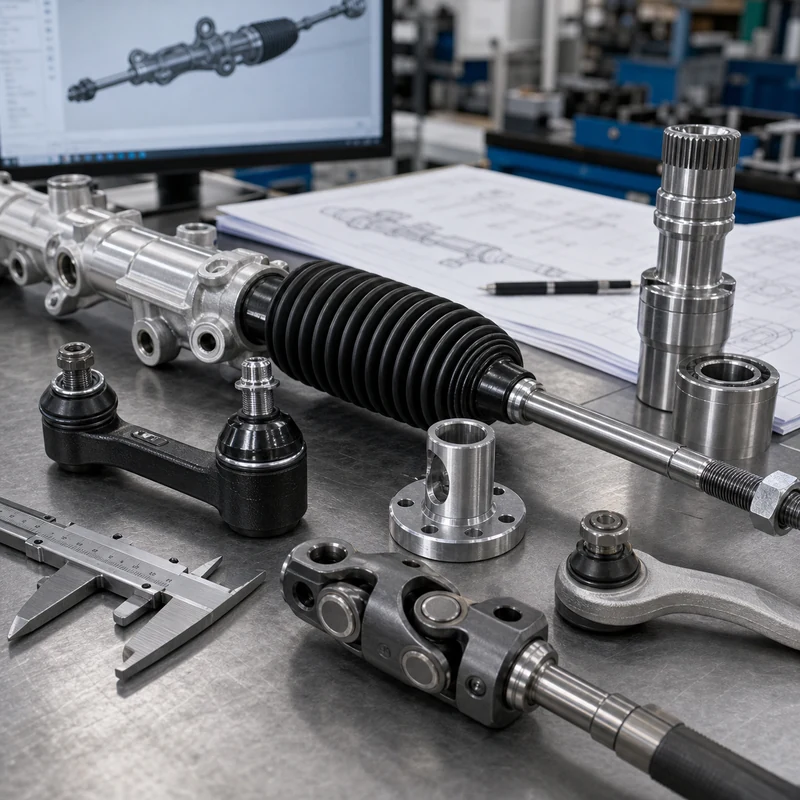
Car Steering Components: System Parts, Function, and Manufacturing Notes

Steering components convert driver input into controlled wheel movement. A reliable steering system depends on links, joints, racks, shafts, housings, bearings, and brackets that keep motion smooth and predictable.

Steering racks, tie rods, universal joints, brackets, and housings need accurate machining because looseness, poor alignment, or weak material can affect vehicle response.

Quick Guide to Car Steering Components

Item Purpose Manufacturing Note
Steering shaft Transfers rotation from wheel to rack or box Concentricity and joint fit matter
Tie rod Connects steering rack to wheel knuckle Threads, ball joint seats, and corrosion protection matter
Rack housing Supports internal rack and pinion Bores and mounting surfaces need accuracy
Brackets Mount steering parts to chassis Strength and hole position are critical

Automotive Manufacturing Notes

Automotive components must balance load, vibration, material strength, corrosion resistance, assembly fit, and production repeatability. CNC machining is often used for brackets, housings, shafts, spacers, connectors, prototypes, and low-volume performance components.

  • Match the process to the material and geometry.
  • Confirm critical dimensions before quoting.
  • Plan finishing and inspection before production.
  • Use prototypes to validate fit when the assembly risk is high.

Common Applications

Car Steering Components is relevant for prototypes, custom components, fixtures, low-volume manufacturing, maintenance parts, and engineering projects where function, cost, and lead time must be balanced.

Cost Factors

Cost usually depends on setup time, material price, number of operations, tool access, tolerance requirements, surface finish, inspection depth, and batch quantity.

Design and Sourcing Notes

The safest design approach is to define the part’s function first, then assign tolerances only where they affect assembly, movement, sealing, safety, or long-term performance.

  • Avoid unnecessary tight tolerances on non-critical surfaces.
  • Keep internal corners, hole depths, wall thickness, and tool access realistic.
  • Call out cosmetic surfaces separately from functional surfaces.
  • Include material, finish, quantity, and inspection notes in the RFQ package.

Quality Checks That Matter

Quality control may include visual inspection, dimensional measurement, thread checks, gauge checks, flatness checks, runout checks, surface finish checks, or CMM inspection depending on the part’s risk and function.

Related MTSPi Resources

FAQ

What is the main consideration for car steering components?

The main consideration is whether the design, material, and process can meet the functional requirements without adding unnecessary cost or risk.

Can MTSPi help with custom parts for this topic?

Yes. MTSPi can review drawings, material requirements, tolerances, finishing, and inspection needs for custom CNC machined or related manufacturing parts.

What should I send for a quote?

Send 3D CAD, 2D drawings, material grade, quantity, surface finish requirements, tolerance notes, and any critical assembly information.

Categories
Blog Industries & Applications

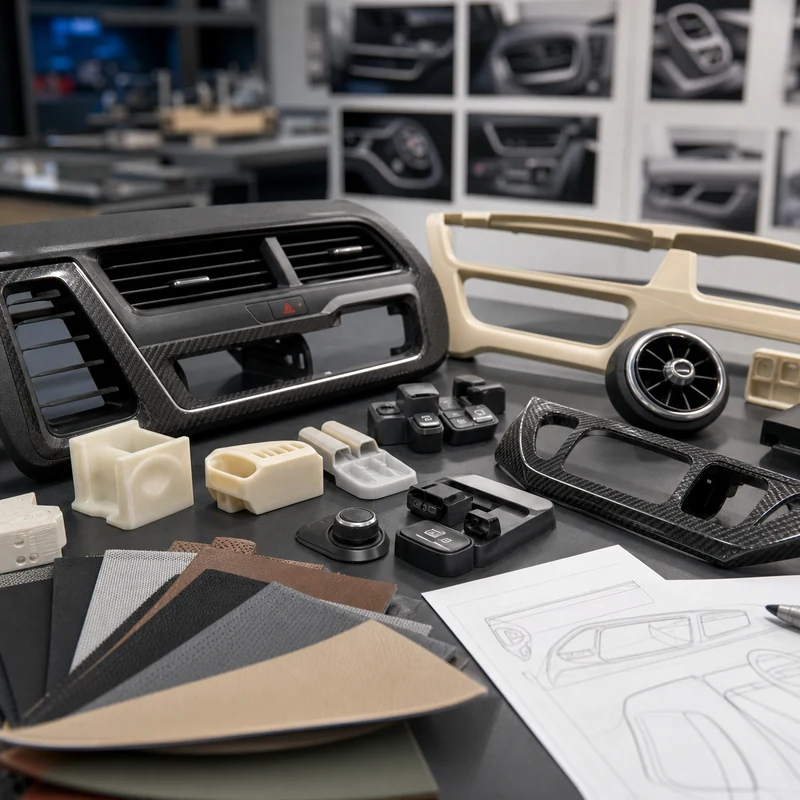
Custom Car Interior Parts: Materials, Processes, and Manufacturing Guide

Custom car interior parts include dashboard trim, console panels, knobs, vents, brackets, covers, bezels, switch housings, and personalized cabin components. These parts need more than a nice shape; they must fit accurately, feel right to the user, resist wear, and match the visual style of the vehicle interior.

For prototypes and low-volume customization, CNC machining, 3D printing, vacuum casting, and finishing are often combined. The right process depends on geometry, quantity, material, surface texture, heat exposure, and whether the part is functional, cosmetic, or both.

Common Car Interior Part Processes

Process Best For Notes
CNC machining Trim, bezels, fixtures, aluminum knobs, plastic panels High accuracy and real material properties
3D printing Concept models and ergonomic tests Fast, but surface finish and strength vary
Vacuum casting Small batches with molded appearance Good for soft-touch or cosmetic prototypes
Injection molding High-volume production Higher tooling cost but low unit cost

Material Choices

ABS, PC, nylon, acrylic, aluminum, and soft elastomers are common choices. ABS is economical and easy to finish. PC provides impact resistance. Aluminum is used for premium knobs, handles, decorative trim, and durable functional parts.

  • ABS for general trim and covers
  • PC for impact-resistant transparent or protective parts
  • Nylon for clips, guides, and wear points
  • Aluminum for premium or high-strength features

Design Requirements

Interior parts must fit around existing geometry. Clip positions, screw bosses, tabs, wall thickness, texture direction, and assembly clearance should be checked before production.

Finish and Appearance

Painting, polishing, bead blasting, anodizing, vapor smoothing, and texture matching can change the final look. Cosmetic surfaces should be marked clearly on the drawing.

Design and Sourcing Notes

A good interior part design balances appearance, assembly, hand feel, heat exposure, vibration, and repeatable manufacturing.

  • Keep snap-fit clips realistic for the chosen material.
  • Avoid very thin decorative lips that can warp or break.
  • Confirm UV, heat, and cleaning-chemical exposure.
  • Prototype visible parts before committing to tooling.

Quality Checks That Matter

Check mating features, clip engagement, screw hole position, visible surface defects, color/texture consistency, and assembly fit. Interior parts often fail because of fit and finish, not because of raw strength alone.

Related MTSPi Resources

FAQ

What material is best for car interior trim?

ABS is common for general trim, while PC, nylon, aluminum, and elastomers are used when impact, wear, or premium appearance matters.

Can CNC machining make interior parts?

Yes, especially prototypes, low-volume parts, aluminum trim, and precise plastic components.

What matters most for custom interior parts?

Fit, surface appearance, heat resistance, clip strength, and assembly clearance are usually the key factors.

Categories
Industries & Applications

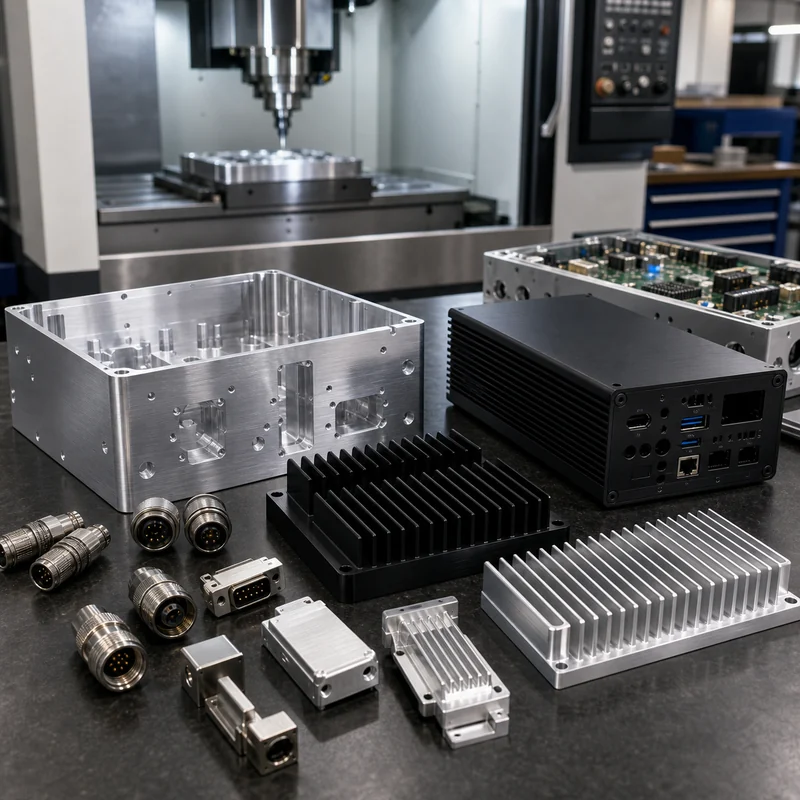
CNC Machining for Electronics Enclosures, Heat Sinks and Connectors

CNC machining electronics parts is a key search topic for buyers who need reliable custom parts, accurate dimensions, practical material advice, and clear supplier communication. Before sending a drawing or placing an order, buyers should understand the process, cost drivers, tolerance requirements, material options, lead time, inspection needs, and the questions that separate a capable machine shop from a weak supplier.

Electronics Applications

CNC machining can produce enclosures, panels, brackets, heat sinks, connector housings, knobs, mounts, and test fixtures.

Buyer Notes

For a smoother quote, prepare a 3D model, 2D drawing, target material, order quantity, surface finish, tolerance requirements, and any critical assembly information. Clear specifications reduce delays and help the supplier identify manufacturability risks early.

Material Choices

Aluminum is common for enclosures and heat sinks because it machines well and conducts heat. Plastics may be used for insulation or lightweight housings.

Buyer Notes

For a smoother quote, prepare a 3D model, 2D drawing, target material, order quantity, surface finish, tolerance requirements, and any critical assembly information. Clear specifications reduce delays and help the supplier identify manufacturability risks early.

Surface Finish

Anodizing, powder coating, brushing, bead blasting, and laser marking are common for electronics components.

Buyer Notes

For a smoother quote, prepare a 3D model, 2D drawing, target material, order quantity, surface finish, tolerance requirements, and any critical assembly information. Clear specifications reduce delays and help the supplier identify manufacturability risks early.

Design Notes

Check wall thickness, screw bosses, gasket surfaces, connector cutouts, ventilation, and assembly clearance.

Buyer Notes

For a smoother quote, prepare a 3D model, 2D drawing, target material, order quantity, surface finish, tolerance requirements, and any critical assembly information. Clear specifications reduce delays and help the supplier identify manufacturability risks early.

FAQ

Can CNC machining make electronics enclosures?

For CNC machining electronics parts, the right answer depends on part geometry, material, tolerance, surface finish, quantity, and end-use requirements. A complete RFQ helps the supplier give a useful recommendation.

Can CNC machining make heat sinks?

For CNC machining electronics parts, the right answer depends on part geometry, material, tolerance, surface finish, quantity, and end-use requirements. A complete RFQ helps the supplier give a useful recommendation.

What materials are used for electronic CNC parts?

Choose material by strength, weight, corrosion resistance, heat resistance, machinability, appearance, and cost. If unsure, ask the supplier to recommend options based on the part function.

What finish is best for aluminum enclosures?

Choose material by strength, weight, corrosion resistance, heat resistance, machinability, appearance, and cost. If unsure, ask the supplier to recommend options based on the part function.

Practical Checklist Before Ordering

  • Confirm material grade, dimensions, tolerance, and surface finish.
  • Share both 3D files and 2D drawings when possible.
  • Identify critical features that affect fit, sealing, strength, or assembly.
  • Ask about sample lead time, MOQ, inspection reports, and packaging.
  • Compare quotes by specification, not only by unit price.

Conclusion

A good CNC machining decision balances design, material, tolerance, cost, lead time, and supplier capability. Buyers who prepare complete files and ask the right technical questions usually receive more accurate quotes, better parts, and fewer production surprises.

Request A Quote

We'll Send You Back with Price Immediately!

DEC 1-31

XMAS SPECEIL

Up to

40% off

CNC Machining for Electronics Enclosures, Heat Sinks and Connectors

We'll Send You Back with Price Immediately!