

Categories
Blog CNC Machining Basics Industries & Applications

What Can You Make With a CNC Machine? Parts, Products, and Applications

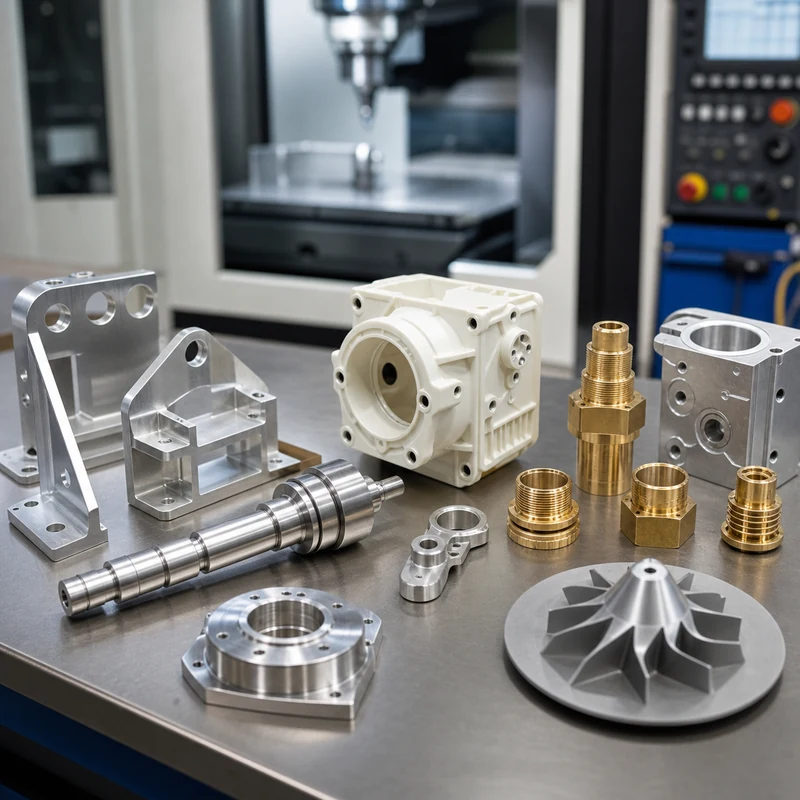
CNC machines can make a wide range of products, from simple plates and brackets to precision housings, shafts, heat sinks, fixtures, molds, connectors, robotic parts, and medical or aerospace components. The same core idea applies across all of them: a digital toolpath controls a cutting process so the finished part matches the model and drawing.

The best CNC product is not defined only by shape. It also depends on material, tolerance, surface finish, quantity, inspection level, and how the part will be assembled. MTSPi supports custom machined parts through CNC machined products, material planning, and production-oriented quality control.

Examples of CNC-Made Products

Product Type Examples Common Process
Structural parts Brackets, plates, frames, mounting blocks, machine bases 3-axis milling, 4-axis milling, 5-axis machining
Rotational parts Shafts, bushings, spacers, collars, rollers, pins CNC turning, Swiss-type machining, mill-turn
Enclosures and housings Sensor housings, electronics cases, motor covers, valve bodies Milling, drilling, tapping, boring
Thermal parts Heat sinks, cold plates, cooling blocks, finned components Milling, drilling, surface finishing
Tooling and fixtures Inspection fixtures, assembly jigs, soft jaws, nests, gauges Milling, turning, grinding-ready machining
Molds and dies Mold inserts, cavities, cores, die details 3-axis and 5-axis milling
Decorative or functional panels Nameplates, engraved plates, dashboard panels, prototypes Milling, engraving, finishing

Parts by Industry

Aerospace and drones

CNC machining can produce lightweight brackets, sensor mounts, landing gear parts, housings, antenna components, and structural frames. Aluminum and titanium are common because weight and strength matter.

Medical and life science

Medical projects often use stainless steel, titanium, aluminum, and engineering plastics for instrument components, housings, fixtures, and test hardware. Inspection, material control, and finish quality are especially important.

Robotics and automation

Robots need accurate joints, grippers, end-effectors, actuator housings, bearing blocks, shafts, sensor mounts, and lightweight plates. CNC machining is useful because fit and repeatability affect motion performance.

Electronics and semiconductor equipment

CNC machines can make enclosures, heat sinks, vacuum-compatible components, connector blocks, precision plates, and fixture hardware for electronics and semiconductor workflows.

Materials Used for CNC Products

  • Aluminum for lightweight prototypes, housings, brackets, and heat sinks.
  • Stainless steel for corrosion-resistant and durable components.
  • Brass and copper for fittings, contacts, thermal parts, and electrical components.
  • PEEK, POM, nylon, ABS, PC, and acrylic for insulated, lightweight, or low-friction parts.

What Cannot Be Made Efficiently With CNC?

CNC machining is not always the best answer. Thin sheet-metal parts may be better suited to laser cutting and bending. Very high-volume plastic parts may justify injection molding. Extremely large cast shapes may need casting first, followed by CNC finishing. The right process depends on geometry, volume, material, and cost target.

Design Tips for CNC-Made Products

  • Use realistic internal radii instead of sharp inside corners.
  • Avoid very deep narrow pockets unless they are functionally necessary.
  • Specify only the tolerances that affect fit, motion, sealing, or inspection.
  • Choose finishes early because anodizing, plating, polishing, and coating change dimensions and appearance.
  • Include drawings for threads, critical dimensions, flatness, surface roughness, and inspection notes.

From Idea to Finished Part

A typical project starts with CAD files and a drawing, then moves through manufacturability review, material selection, machining strategy, finishing, inspection, and shipment. For early-stage designs, rapid prototyping helps test fit and function before committing to a larger production run.

Related MTSPi Resources

FAQ

Can a CNC machine make finished products?

Yes. CNC machines can make finished components and, in some cases, complete products. Many projects still require secondary operations such as finishing, assembly, marking, or inspection.

Is CNC better for metal or plastic parts?

CNC works well for both. The best material depends on strength, weight, temperature, friction, chemical exposure, appearance, and cost.
Categories
Blog CNC Machining Basics Quality & Tolerances

CNC Machining Tolerances: Complete Guide to Standards, Fits, Cost, Materials, and Inspection

Quick answer: CNC machining tolerances define how much a finished dimension may vary from the drawing value. Standard tolerances are easier and cheaper to produce, while tight tolerances require better process control, stable material, rigid workholding, suitable tooling, slower machining, and more inspection. The best drawings apply tight tolerances only to features that affect fit, function, sealing, motion, or assembly.

What Are CNC Machining Tolerances?

A tolerance is the acceptable variation around a nominal dimension. If a drawing says 20.00 ±0.05 mm, the feature can pass inspection between 19.95 mm and 20.05 mm. No machining process makes every dimension exactly perfect, so tolerances tell the manufacturer what variation is acceptable.

CNC machining can be very accurate, but not every feature needs the same accuracy. A clearance pocket, cosmetic chamfer, threaded mounting hole, bearing bore, and dowel pin hole all serve different functions. Tolerances should match those functions.

Standard vs Tight Tolerances

Tolerance type Typical use Cost impact Inspection impact
General tolerance Non-critical dimensions, covers, brackets, simple plates Lower Basic inspection is usually enough
Moderate tolerance Mating surfaces, hole patterns, controlled slots Medium More careful measurement required
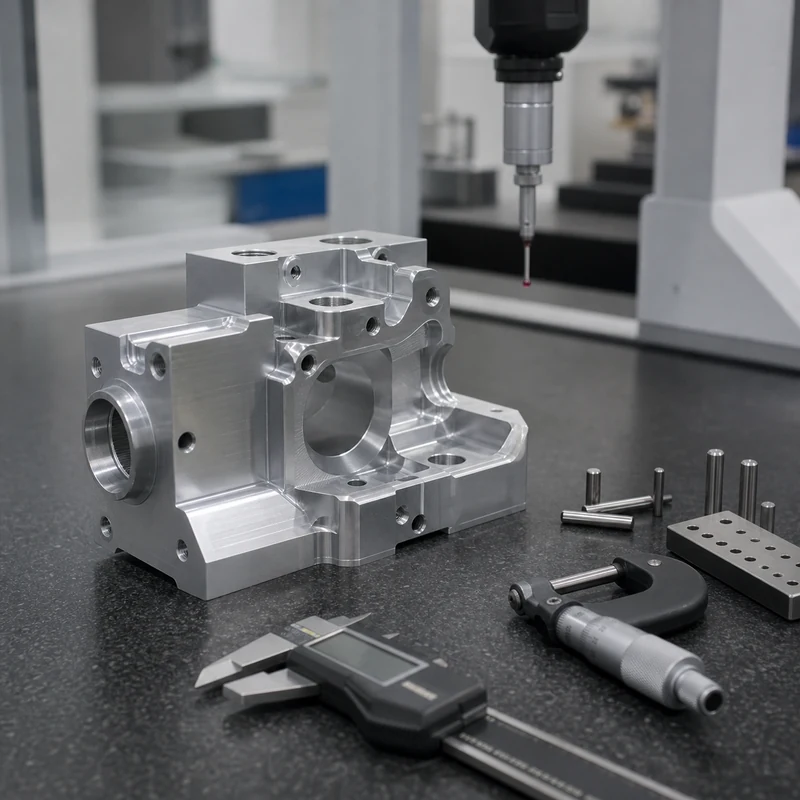
Tight tolerance Bearing bores, dowel holes, sealing faces, precision fits Higher CMM, gauges, or special inspection may be needed
GD&T-controlled tolerance True position, flatness, perpendicularity, profile, concentricity Higher when strict Requires datum-based inspection planning

Why Tight Tolerances Cost More

Tight tolerances increase cost because they reduce the room for normal process variation. The machinist may need more careful setup, additional finishing passes, better fixtures, slower cutting, sharper tools, more stable material, in-process checks, and final inspection. If the part moves after material removal or finishing, the process may need stress relief or a different sequence.

Cost often rises fastest when every dimension is marked tight even though only a few features are functional. A good tolerance strategy protects important interfaces while allowing normal manufacturing variation elsewhere.

Factors That Affect CNC Tolerance Capability

  • Material: Aluminum is generally easier to hold than flexible plastics or difficult heat-resistant alloys.
  • Geometry: Thin walls, deep pockets, long shafts, and slender features can move during machining.
  • Setup count: More setups can introduce alignment variation between features.
  • Tooling: Tool wear, deflection, diameter, coating, and runout affect accuracy.
  • Workholding: Weak clamping or distorted parts can ruin tolerance even with a good machine.
  • Heat: Cutting heat and thermal expansion can change measurements.
  • Finishing: Anodizing, plating, coating, blasting, and polishing may change surfaces or dimensions.
  • Inspection method: A tolerance is only useful if it can be measured reliably.

ISO 2768 and General Drawing Tolerances

Many mechanical drawings use a general tolerance standard such as ISO 2768 for dimensions that do not have individual tolerances. ISO 2768 tolerance classes help avoid writing a tolerance next to every dimension. However, buyers should still mark critical dimensions separately when the default class is not enough.

For international sourcing, do not assume every shop uses the same default tolerance. Put the standard on the drawing, confirm the class, and identify functional features. If a part will be inspected against GD&T, define datums clearly.

Typical CNC Tolerance Decisions

Feature Common concern Practical recommendation
Clearance hole Bolt or screw must pass through Use practical clearance unless position is critical
Dowel pin hole Accurate location and fit Use reaming, positional tolerance, and gauge/CMM inspection
Bearing bore Diameter, roundness, finish Define fit, surface finish, and inspection method
Cosmetic surface Appearance rather than fit Use finish notes instead of unnecessary dimensional tolerance
Threaded hole Fastener engagement and fit Define thread callout, depth, class, and gauge requirement
Thin wall Deflection and movement Avoid tight tolerance unless the wall is supported and measurable

Tolerance and Material Selection

Different materials respond differently to machining. Aluminum is stable and cost-effective for many precision parts. Stainless steel is strong but can work-harden and generate heat. Brass machines cleanly. Titanium and nickel alloys need more careful cutting strategies. Plastics can absorb moisture, flex under clamping, and move after machining. Before locking tolerances, compare options in the CNC materials guide.

Tolerance and Surface Finishing

Finishing can change dimensions and surface texture. Anodizing adds or converts surface layers on aluminum. Plating adds thickness. Powder coating is much thicker than most machined tolerance bands. Polishing can remove material. If a feature is tolerance-critical, state whether the tolerance applies before or after finishing and whether masking is required. See surface treatment options when appearance or corrosion resistance matters.

Inspection Methods for Toleranced Parts

Simple dimensions may be checked with calipers or micrometers. Precision holes may need pin gauges, plug gauges, bore gauges, or air gauges. GD&T features may require CMM inspection. Threads usually need go/no-go gauges. Surface roughness needs a roughness tester. The drawing should not only say what tolerance is required; it should also make the measurement method practical.

How to Write Better Tolerance Notes

  • Use general tolerances for non-critical dimensions.
  • Mark critical features separately.
  • Use GD&T when location, orientation, flatness, or profile matters more than simple size.
  • Identify datum surfaces clearly.
  • Do not use tight tolerances to compensate for unclear design intent.
  • Discuss tolerance after finishing when coating or plating is required.
  • Ask your supplier which tolerance level is standard and which requires extra cost.

FAQ

What is a normal CNC machining tolerance?

Normal tolerance depends on material, geometry, machine, and supplier standard. Many non-critical machined features can use general tolerances, while precision interfaces require custom callouts.

Can CNC machining hold very tight tolerances?

Yes, but tight tolerance depends on part geometry, material, setup, tooling, inspection, and cost. Not every feature can or should be made extremely tight.

Does anodizing affect tolerance?

Yes. Anodizing can affect dimensions and surface condition. Critical surfaces may need masking or post-finish inspection.

Are plastic tolerances different from metal tolerances?

Often yes. Plastics can move with temperature, moisture, stress, and clamping force, so tolerance planning should be more conservative.

How do I reduce tolerance-related cost?

Use tight tolerances only where function requires them, choose stable materials, avoid thin flexible geometry, and define inspection requirements clearly.

Need tolerance review before quoting?

Send your drawing and mark the critical features. MTSPi can review tolerance, material, machining route, finish, and inspection method before production.

Ask MTSPi to review your CNC drawing

Conclusion

CNC machining tolerances are a design and manufacturing decision, not just numbers on a drawing. Good tolerance planning protects fit and function while avoiding unnecessary machining and inspection cost.

Request A Quote

We'll Send You Back with Price Immediately!

DEC 1-31

XMAS SPECEIL

Up to

40% off

CNC Machining Tolerances: Complete Guide to Standards, Fits, Cost, Materials, and Inspection

We'll Send You Back with Price Immediately!