Categories
Blog Manufacturing Process Comparisons Quality & Tolerances

Cleanroom Injection Molding vs Standard Molding: Key Differences for Precision Parts

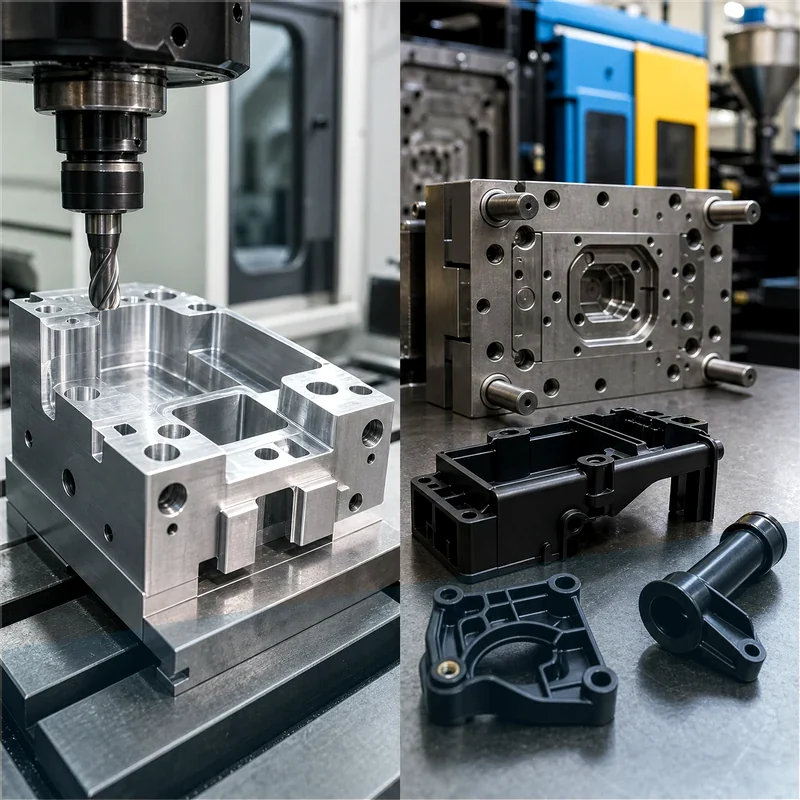
Cleanroom Injection Molding vs Standard Molding: Key Differences for Precision Parts is a practical manufacturing question because the answer affects cost, lead time, material behavior, inspection, and the path from prototype to production. For MTSPi CNC customers, the key is not simply naming a process, but understanding how the process connects with machined parts, fixtures, tolerances, surface requirements, and final assembly.

This guide explains cleanroom injection molding vs standard molding from an engineering and purchasing point of view. It is written for product developers, mechanical engineers, sourcing teams, and buyers who need clear decisions rather than generic process descriptions.

Quick Answer

Use standard molding for general industrial, consumer, and enclosure components where normal factory cleanliness is acceptable. Use cleanroom molding when particle contamination, biological burden, optical clarity, or medical validation can affect product performance.

Key Differences at a Glance

Point Option A Option B
Environment Controlled air and particle limits Normal manufacturing environment
Parts Medical, diagnostic, optical, sensitive electronics Industrial covers, brackets, caps, housings
Documentation Higher traceability and validation records Standard production records
Cost Higher operating and monitoring cost Lower cost for ordinary parts
Risk focus Contamination, packaging, handling Dimensions, cycle stability, cosmetic quality

How the Process Choice Affects Real Parts

A manufacturing method should be selected around the feature that actually controls function. Cosmetic surfaces, hidden support features, threads, bores, sealing faces, heat-transfer areas, and assembly datums do not carry the same risk. When those requirements are mixed together without priority, quotes become inconsistent and production becomes harder to control.

The safest workflow is to define the part requirement first, then match the process. A printed prototype may answer shape questions, a molded sample may answer appearance questions, and a CNC machined sample may answer tolerance, material, and functional questions. Many successful projects use more than one method before the final design is locked.

Design and Manufacturing Considerations

  • Specify cleanliness requirements only when they are functional or regulatory needs.
  • Separate cosmetic requirements from contamination requirements on the drawing.
  • Confirm resin compatibility with sterilization, cleaning agents, and final assembly conditions.
  • Plan inspection for critical dimensions, flash, particulates, and packaging damage.
  • Coordinate CNC inserts, machined fixtures, or threaded metal parts before mold validation.

Cost, Lead Time, and Risk Factors

Cost is driven by setup, tooling, material, machine time, inspection, finishing, and revision risk. A low unit price is not always the lowest project cost if it creates rework later. For prototypes and low-volume orders, flexibility can be more valuable than a process with a lower theoretical unit cost.

  • Use standard materials and standard feature sizes when they do not weaken the design.
  • Separate critical tolerances from general dimensions so the supplier knows where to focus.
  • Confirm surface finish and cosmetic requirements before production begins.
  • Avoid late changes to mounting holes, connector openings, datum faces, and threaded features.
  • Send CAD files and 2D drawings together when tolerances, threads, or finishes matter.

Quality Checks Before Production

A good quality plan checks the features that influence assembly and performance. Depending on the part, this may include dimensional inspection, thread gauges, surface roughness, flatness, perpendicularity, burr control, coating thickness, visual appearance, and fit with mating parts.

When This Topic Matters for CNC Buyers

cleanroom injection molding vs standard molding matters when a team is comparing prototype routes, validating a design, replacing a weak supplier, or trying to reduce manufacturing cost without damaging function. The best choice is usually the process that answers the current engineering question with the least unnecessary risk.

MTSPi CNC Engineering Notes

MTSPi CNC supports precision CNC milling, turning, rapid prototyping, low-volume production, finishing, and inspection for custom parts. If your project uses molding, casting, welding, PCB assemblies, or 3D printing, CNC machining can still be important for datums, holes, threads, sealing faces, fixtures, and production-ready prototypes.

Frequently Asked Questions

Can this process replace CNC machining?

Sometimes it can replace CNC for non-critical geometry, but CNC is often still needed when tight tolerances, real engineering material, threads, flat sealing faces, or precise mating features are required.

What files help MTSPi CNC review a project?

STEP or STP files are useful for geometry. A 2D drawing is important for tolerances, materials, threads, surface finish, inspection requirements, and notes that are not obvious from the CAD model.

How do I reduce manufacturing risk?

Define critical features, avoid unnecessary tight tolerances, confirm material and finish requirements, and use prototypes to validate assembly before committing to higher-volume tooling or production.
Related MTSPi Resources

Categories
Blog CNC Machining Basics Industries & Applications

What Is a CNC Machine Used For? Applications, Parts, and Manufacturing Examples

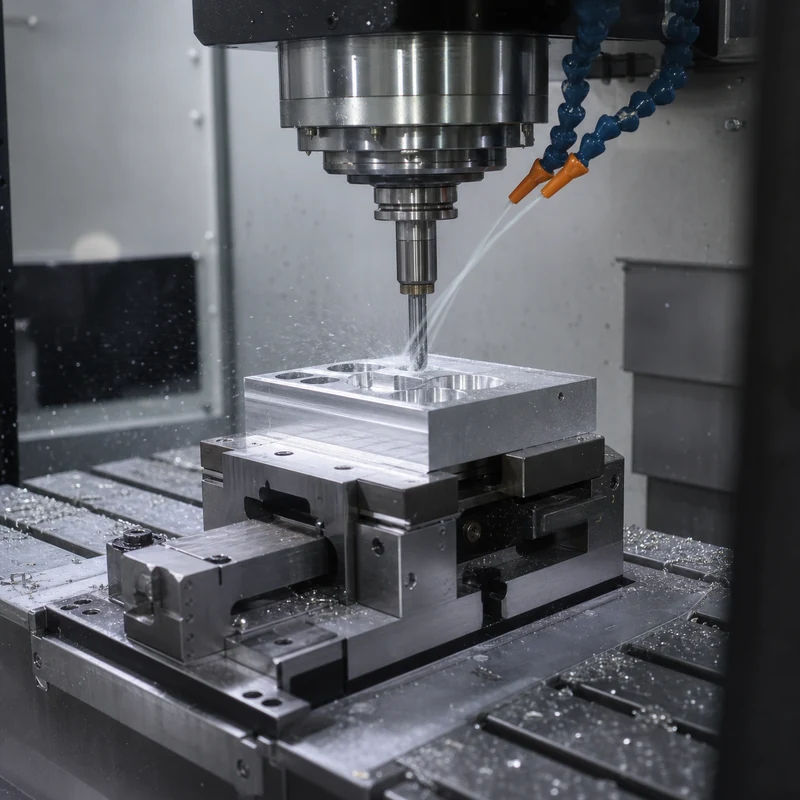
Quick answer: A CNC machine is used to cut, drill, turn, mill, engrave, tap, and shape metal or plastic parts with computer-controlled motion. It is commonly used for prototypes, production parts, fixtures, housings, shafts, brackets, molds, tooling, and precision components.

Common Uses of CNC Machines

CNC machines are used anywhere a part needs repeatable dimensions, controlled surfaces, accurate holes, or consistent production quality. The same basic technology can make a single prototype, a replacement component, or a batch of production parts.

Use Typical parts Best machine route
Prototypes Test housings, brackets, plates, adapters, fixtures CNC milling or turning
Machinery components Shafts, bushings, mounts, plates, tooling blocks Milling, turning, drilling
Aerospace and robotics Lightweight brackets, structural parts, precision interfaces Milling and multi-axis machining
Medical and electronics Small housings, connectors, fixtures, instrument components Precision milling and inspection
Maintenance parts Custom spacers, repair parts, replacement pins, covers Turning, milling, fast turnaround machining

Why Manufacturers Use CNC Instead of Manual Machining

Manual machining depends heavily on operator control. CNC machining uses programmed motion, making it better for repeatability, complex geometry, documented setups, and consistent batches. Manual work still has value for simple repairs, but CNC is stronger when repeatable production or tight drawing control is needed.

What Materials Can CNC Machines Cut?

CNC machines can cut many machining materials, including aluminum, stainless steel, carbon steel, brass, copper, titanium, ABS, POM, nylon, acrylic, PC, and PEEK. Aluminum is common for prototypes and lightweight parts, while stainless steel is selected for strength and corrosion resistance.

Which CNC Process Fits Which Part?

Flat, block-like, pocketed, or bracket-style parts usually fit CNC milling. Round parts such as shafts, pins, spacers, threaded sleeves, and bushings usually fit CNC turning. Parts with both round and milled features may require combined operations.

Industries That Use CNC Machines

  • Automation equipment and robotics
  • Automotive and electric vehicle hardware
  • Aerospace prototypes and lightweight structural parts
  • Medical devices, test fixtures, and instrument components
  • Electronics enclosures, heat sinks, and connectors
  • Industrial machinery, packaging equipment, and tooling

How to Decide If CNC Is Right for Your Part

CNC is a strong choice when you need real material properties, accurate dimensions, functional testing, low-volume production, or a part that cannot be easily molded without tooling. If the design needs very organic geometry or internal channels, 3D printing may be worth comparing.

FAQ

Can a CNC machine make one part?

Yes. CNC machining is often used for one-off prototypes, custom replacement parts, and short-run production.

Can CNC machines make plastic parts?

Yes. CNC machining is common for ABS, POM, nylon, acrylic, PC, PEEK, and other engineering plastics.

What is the difference between CNC milling and CNC turning?

Milling uses rotating cutting tools against a fixed workpiece, while turning rotates the workpiece against cutting tools.

Are CNC machines used for mass production?

Yes, but the economics depend on part geometry, cycle time, fixture design, material, and quantity.

Need help choosing a machining route?

Send MTSPi your drawing, material, quantity, finish, and inspection requirements. We will review the part for manufacturability before quoting.

Contact MTSPi for a CNC machining quote

Practical Buyer Notes

When buyers ask what a CNC machine is used for, the real question is usually whether CNC is the right manufacturing route for a specific part. CNC is strongest when the part needs real engineering material, controlled dimensions, repeatable features, and faster development than mold tooling.

For sourcing decisions, separate prototype use from production use. A prototype may focus on fit and function, while a production order must also consider cycle time, fixture repeatability, inspection method, packaging, and long-term cost stability.

How to Evaluate This Topic on a Real Drawing

Decision point Recommended approach Why it matters
Prototype or production Use CNC for real-material prototypes and low-volume production Avoids tooling cost while keeping functional material properties
Part geometry Match flat parts to milling and round parts to turning The right route lowers setup time and improves accuracy
Assembly risk Mark mating faces, holes, threads, and datums These features usually decide whether the part works
Finish requirement Define cosmetic and protective finishes early Finishing can change appearance, lead time, and dimensions

Common Mistakes to Avoid

  • Treating CNC as one single process instead of choosing milling, turning, drilling, or multi-axis machining.
  • Asking for tight tolerances on every dimension instead of only functional features.
  • Choosing a material by name without checking strength, heat, corrosion, and finish needs.
  • Forgetting to define threads, inserts, cosmetic faces, and burr requirements.

Recommended MTSPi Review Workflow

For application-driven pages, MTSPi reviews the part by use case first, then chooses the machining route. This keeps the page useful for information searches and also helps real buyers understand the quoting path.

  1. Confirm the part function, operating environment, and assembly risk.
  2. Review material, process, tolerance, surface finish, and inspection requirements together.
  3. Separate critical features from general dimensions so cost is not wasted on non-functional details.
  4. Use related resources such as CNC materials, surface treatment, and quality assurance to complete the specification.
  5. Send the final drawing package to MTSPi for quote review before production.

What to Send for a Faster Quote

A faster quote needs more than a screenshot or rough size. The best input package explains what the part does, how it assembles, which features are critical, and what finish or inspection level is required.

  • 3D CAD file and 2D drawing with revision number.
  • Material grade or acceptable alternatives.
  • Quantity, delivery target, and whether samples are required first.
  • Critical dimensions, thread callouts, finish notes, and inspection requirements.
  • Application notes when the part is used in heat, moisture, wear, vibration, or visible assemblies.

Conclusion

A CNC machine is used to turn digital designs into accurate physical parts. The best results come from matching the part shape to the right machining route, choosing a suitable material, and defining the important tolerances clearly before production.

Categories
Blog CNC Materials

What Is Cobalt Used For? Applications, Alloys, Properties, and Machining Notes

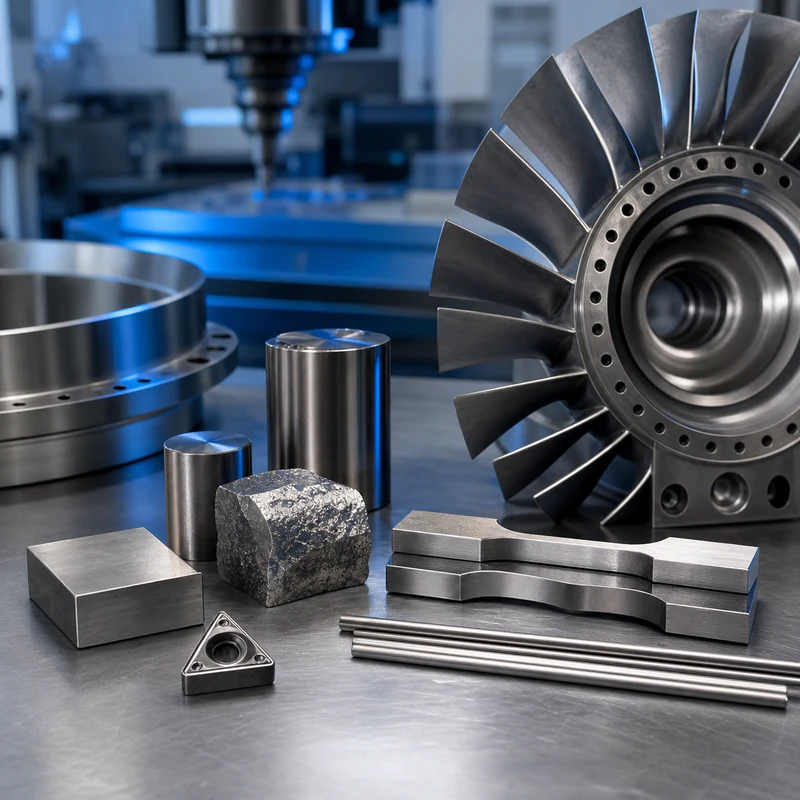
Quick answer: Cobalt is used for high-temperature alloys, lithium-ion batteries, magnets, cutting tools, wear-resistant coatings, pigments, catalysts, medical alloys, and corrosion-resistant components. In manufacturing, cobalt is valued for heat resistance, hardness, wear behavior, and alloy performance.

Why Cobalt Is Valuable

Cobalt is a metallic element often used as an alloying ingredient rather than as a pure structural material. It can improve high-temperature strength, hardness, wear resistance, corrosion behavior, and magnetic properties. These characteristics make it important in aerospace, energy, tooling, electronics, and medical applications.

Common Uses of Cobalt

Application Why cobalt is used Manufacturing note
Superalloys High-temperature strength and oxidation resistance Used in demanding turbine and aerospace environments
Batteries Electrochemical performance in certain battery chemistries Often discussed with nickel, lithium, and manganese systems
Magnets Magnetic performance and temperature stability Used in specialized magnetic materials
Cutting tools Hot hardness and wear resistance Cobalt-bearing tool steels and carbides improve cutting durability
Medical alloys Wear and corrosion resistance Requires strict material and quality control

Cobalt in Machining and Tooling

Many machinists know cobalt through cobalt high-speed steel drills and cutting tools. These tools can hold hardness at higher temperatures than ordinary HSS, making them useful for tougher metals when cutting conditions are appropriate.

Is Cobalt Easy to Machine?

Pure cobalt and cobalt-based alloys are not usually selected for easy machining. Many cobalt alloys are tough, heat-resistant, and abrasive to tools. Machining strategy may require rigid workholding, suitable tooling, conservative cutting parameters, coolant control, and careful inspection.

Cobalt Compared with Other Metals

Cobalt is often compared with nickel, titanium, stainless steel, and tool steel in demanding applications. For general CNC components, buyers usually choose a more common machinable metal unless cobalt alloy performance is specifically required.

Buyer Notes for Cobalt-Related Parts

  • Confirm the exact alloy, not just the word cobalt.
  • Define heat treatment and certification requirements.
  • Expect higher tooling difficulty for cobalt-based superalloys.
  • Review surface finish and inspection needs early.
  • Use an experienced supplier for high-value precision parts.

FAQ

Is cobalt a metal?

Yes. Cobalt is a metal and is commonly used as an alloying element in high-performance materials.

What is cobalt mostly used for?

Major uses include batteries, superalloys, magnets, cutting tools, catalysts, pigments, and medical alloys.

Is cobalt used in CNC machining?

Cobalt appears in some machined alloys and in cobalt-containing cutting tools, but many cobalt alloys are challenging to machine.

Is cobalt the same as nickel?

No. Cobalt and nickel are different metals, though they are both used in high-performance alloys and battery-related materials.

Need help choosing a machining route?

Send MTSPi your drawing, material, quantity, finish, and inspection requirements. We will review the part for manufacturability before quoting.

Contact MTSPi for a CNC machining quote

Practical Buyer Notes

Cobalt pages can rank for general science-style searches, but for MTSPi they should connect the material to manufacturing uses. The best content explains cobalt in alloys, cutting tools, batteries, magnets, coatings, and high-temperature applications.

Pure cobalt is not usually the everyday CNC material buyers request. More often, cobalt appears in cobalt-bearing alloys, cobalt chrome, tool steels, carbide tooling, or superalloys. This distinction makes the page more useful and more trustworthy.

How to Evaluate This Topic on a Real Drawing

Decision point Recommended approach Why it matters
Application Explain batteries, magnets, superalloys, tools, and medical alloys Covers broad search intent
Material form Separate pure cobalt from cobalt-containing alloys Prevents misleading manufacturing advice
Machinability Mention toughness, heat resistance, and tool wear Connects the topic to CNC decisions
Buyer action Ask for exact alloy grade and certification needs Improves quote accuracy

Common Mistakes to Avoid

  • Talking about cobalt only as a battery material.
  • Suggesting all cobalt materials machine the same way.
  • Ignoring cobalt chrome, superalloys, and cobalt cutting tools.
  • Leaving out safety, certification, and exact alloy identification.

Recommended MTSPi Review Workflow

When a buyer mentions cobalt, MTSPi should first identify the exact alloy and application. Then the review should cover machinability, heat treatment, certification, surface finish, and inspection requirements.

  1. Confirm the part function, operating environment, and assembly risk.
  2. Review material, process, tolerance, surface finish, and inspection requirements together.
  3. Separate critical features from general dimensions so cost is not wasted on non-functional details.
  4. Use related resources such as CNC materials, surface treatment, and quality assurance to complete the specification.
  5. Send the final drawing package to MTSPi for quote review before production.

What to Send for a Faster Quote

Send the exact alloy grade, drawing, operating temperature, certification requirement, quantity, finish, and whether the part is prototype or production.

  • 3D CAD file and 2D drawing with revision number.
  • Material grade or acceptable alternatives.
  • Quantity, delivery target, and whether samples are required first.
  • Critical dimensions, thread callouts, finish notes, and inspection requirements.
  • Application notes when the part is used in heat, moisture, wear, vibration, or visible assemblies.

Cobalt Alloy Buyer Considerations

When cobalt is part of a machining discussion, the exact alloy matters more than the word cobalt itself. Cobalt chrome, cobalt-bearing tool steel, cobalt-based superalloys, and battery-related cobalt compounds have very different properties and manufacturing requirements. A CNC supplier needs the actual material grade, not only a general material family.

Buyers should also clarify whether the part requires certification, heat treatment, special inspection, or controlled surface finish. Cobalt-related materials are often selected for demanding environments, so unclear specifications can create cost, tooling, and quality risks.

Conclusion

Cobalt is important because it improves performance in demanding environments. For CNC buyers, the key is to identify the exact cobalt alloy, understand machining difficulty, and define quality requirements before production begins.

Categories
Blog CNC Materials

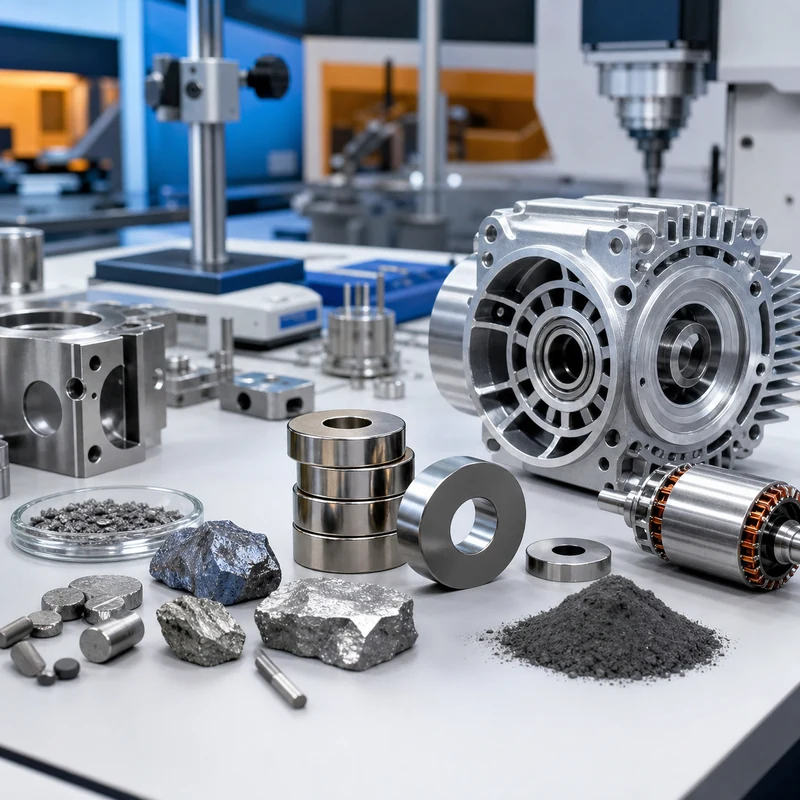
Rare Earth Metals: Properties, Uses, and Manufacturing Design Guide

Rare earth metals are a family of 17 elements valued less for ordinary strength and more for magnetic, optical, electrical, catalytic, and high-temperature behavior. They are important in motors, sensors, displays, medical equipment, aerospace systems, renewable energy hardware, robotics, and precision electronics.

For manufacturing teams, rare earth metals are usually not selected like aluminum, steel, or titanium. They are most often used inside magnets, coatings, alloys, ceramics, polishing compounds, catalysts, and electronic materials. The surrounding housings, brackets, shafts, heat sinks, fixtures, and assembly parts still rely on conventional CNC materials. This guide explains the practical role of rare earth materials and how to think about them during custom CNC machining and product development.

What Are Rare Earth Metals?

Rare earth metals include the 15 lanthanide elements plus scandium and yttrium. The name can be confusing because many of these elements are not extremely scarce in the earth’s crust. They are called rare because they are commonly dispersed, mixed with other minerals, and difficult to separate into high-purity usable materials.

Group Elements
Lanthanides Lanthanum, cerium, praseodymium, neodymium, promethium, samarium, europium, gadolinium, terbium, dysprosium, holmium, erbium, thulium, ytterbium, lutetium
Related rare earth elements Scandium and yttrium

Why Rare Earth Metals Matter in Manufacturing

Rare earth materials solve problems that common structural metals cannot solve alone. Neodymium and dysprosium help create compact high-strength permanent magnets. Europium and terbium support display and lighting phosphors. Cerium is used in polishing and catalysts. Yttrium appears in ceramics, lasers, and high-performance materials. Scandium can improve certain aluminum alloys.

This does not mean rare earth metals replace structural metals. A motor may use rare earth magnets, but its housing may still be machined from aluminum. A sensor may depend on rare earth functional materials, while the enclosure may use stainless steel, brass, plastic, or titanium.

Common Rare Earth Metals and Uses

Element Symbol Manufacturing Relevance
Neodymium Nd Strong permanent magnets for motors, robotics, sensors, and compact assemblies
Dysprosium Dy Improves high-temperature magnet performance in demanding systems
Terbium Tb Phosphors, magnetostrictive materials, electronics, and specialty devices
Samarium Sm Samarium-cobalt magnets for high-temperature and harsh environments
Cerium Ce Polishing compounds, catalysts, glass additives, and alloy uses
Lanthanum La Batteries, optical glass, catalysts, and specialty alloys
Yttrium Y Ceramics, lasers, phosphors, thermal barrier materials, and electronics
Scandium Sc Aluminum alloy modification for lightweight high-performance components

Key Properties

Magnetic performance

The best-known rare earth application is permanent magnets. Neodymium-based magnets provide very high magnetic strength in a small package. Samarium-cobalt magnets are useful where heat resistance and corrosion behavior matter. These magnets appear in electric motors, actuators, speakers, sensors, holding fixtures, and compact motion-control systems.

Optical and luminescent behavior

Some rare earth elements emit specific colors or interact with light in useful ways. This makes them important in displays, LED lighting, lasers, fiber optics, medical imaging, inspection instruments, and optical glass.

Electrical and electronic function

Rare earth materials can influence magnetic fields, electronic behavior, and signal performance. They are not usually used as basic conductors like copper, but they help electronic systems achieve functions that standard metals cannot provide by themselves.

Temperature and stability advantages

Certain rare earth additions improve performance at elevated temperature. This is especially important for motors, aerospace hardware, energy systems, and industrial machinery where heat can reduce magnetic strength or dimensional stability.

Light Rare Earths vs Heavy Rare Earths

Rare earth elements are often grouped into light rare earth elements and heavy rare earth elements. Light rare earths generally have lower atomic numbers and are more abundant. Heavy rare earths are often less available and can be more strategically sensitive because they are important for high-performance magnets and specialized technologies.

Category Typical Elements Practical Note
Light rare earth elements Lanthanum, cerium, praseodymium, neodymium, samarium Often used in magnets, catalysts, glass, polishing, batteries, and alloys
Heavy rare earth elements Europium, gadolinium, terbium, dysprosium, yttrium, lutetium and related elements Important for high-temperature magnets, phosphors, lasers, ceramics, and advanced electronics

Rare Earth Metals vs Common CNC Metals

In CNC machining, material selection usually starts with strength, weight, corrosion resistance, machinability, thermal behavior, surface finish, and cost. Rare earth metals are different. They are selected for functional behavior inside a system rather than for ordinary load-bearing structure.

Material Family Main Role Typical CNC Relevance
Rare earth materials Magnetic, optical, catalytic, electronic, and high-temperature functions Usually used as magnets, additives, ceramics, coatings, or specialty components
Aluminum Lightweight structures, housings, heat sinks, brackets, prototypes Excellent machinability and weight reduction
Stainless steel Corrosion-resistant structural and mechanical parts Good for medical, food, marine, and industrial components
Titanium High strength-to-weight ratio and corrosion resistance Useful for aerospace, medical, and high-performance parts
Copper and brass Electrical, thermal, fittings, bushings, connectors Strong conductivity and good machinability depending on grade

Design Notes for Parts That Use Rare Earth Magnets

Many CNC machined parts interact with rare earth magnets even if the rare earth material itself is not machined as the main component. Examples include motor housings, sensor mounts, magnetic couplings, robotics grippers, test fixtures, encoder parts, and compact electromechanical assemblies.

  • Allow realistic pocket clearance for magnet installation and adhesive thickness.
  • Consider magnet orientation and assembly sequence before finalizing the housing design.
  • Protect brittle magnets from impact, edge loading, and press-fit stress.
  • Account for heat exposure because magnet strength can drop if the grade is not suitable.
  • Use coatings or encapsulation when corrosion or fluid exposure is possible.
  • Define inspection points for critical magnet seats, alignment features, and mating surfaces.

Material Selection for Advanced Assemblies

Rare earth materials often work best as part of a broader material system. A compact motor may combine rare earth magnets, copper windings, machined aluminum housing, stainless fasteners, and engineered plastic insulation. A sensor assembly may combine magnetic material with a machined bracket, sealed enclosure, and precision-located reference surfaces. MTSPi can review these surrounding CNC components through our materials library, surface treatment planning, and quality assurance workflow.

Quality and Inspection Considerations

For rare-earth-related assemblies, inspection should focus on the features that control fit, alignment, thermal path, and reliability. The machined part may need tight flatness, bore position, pocket depth, thread quality, or surface finish even when the functional rare earth element is purchased separately.

  • Check magnet pockets, bores, datum surfaces, and locating shoulders against the drawing.
  • Confirm surface finish where adhesives, seals, bearings, or magnetic components contact the part.
  • Plan coating thickness so plated or anodized surfaces do not close up critical fits.
  • Use documented inspection when the part supports motors, sensors, aerospace equipment, or medical devices.

How MTSPi Supports Manufacturing Projects

MTSPi does not treat rare earth metals as a generic substitute for normal CNC materials. Instead, we help engineers choose the right machined support parts around the functional material. Send the 3D model, 2D drawing, material preference, magnet or electronic component requirements, quantity, surface finish, and inspection expectations through our contact page. We can then review material options, machining strategy, tolerance risk, finishing, and assembly-critical features.

Related MTSPi Resources

FAQ

Are rare earth metals actually rare?

Not always. Many are reasonably abundant in the earth’s crust, but they are difficult to mine, separate, refine, and supply in high-purity forms.

Are rare earth metals stronger than steel?

No. Their main value is functional performance such as magnetism, optical behavior, and electronic properties. Steel, aluminum, titanium, and other engineering metals are usually better for structural CNC parts.

Which rare earth element is used in strong magnets?

Neodymium is widely used in strong permanent magnets. Dysprosium or terbium may be added for higher-temperature performance, while samarium-cobalt magnets are used in some harsh environments.

Can rare earth metals be CNC machined?

Some rare earth materials can be processed, but they are not common everyday CNC stock materials. In most projects, CNC machining is used for the surrounding housings, brackets, fixtures, and precision parts that hold or protect rare earth components.

What industries use rare earth materials?

Electric vehicles, robotics, aerospace, medical devices, renewable energy, electronics, sensors, lighting, displays, and industrial automation all use rare earth materials in different ways.

Request A Quote

We'll Send You Back with Price Immediately!

DEC 1-31

XMAS SPECEIL

Up to

40% off

Rare Earth Metals: Properties, Uses, and Manufacturing Design Guide

We'll Send You Back with Price Immediately!