Categories
Blog CNC Materials Quality & Tolerances

Is Nickel Magnetic? What CNC Buyers Should Know

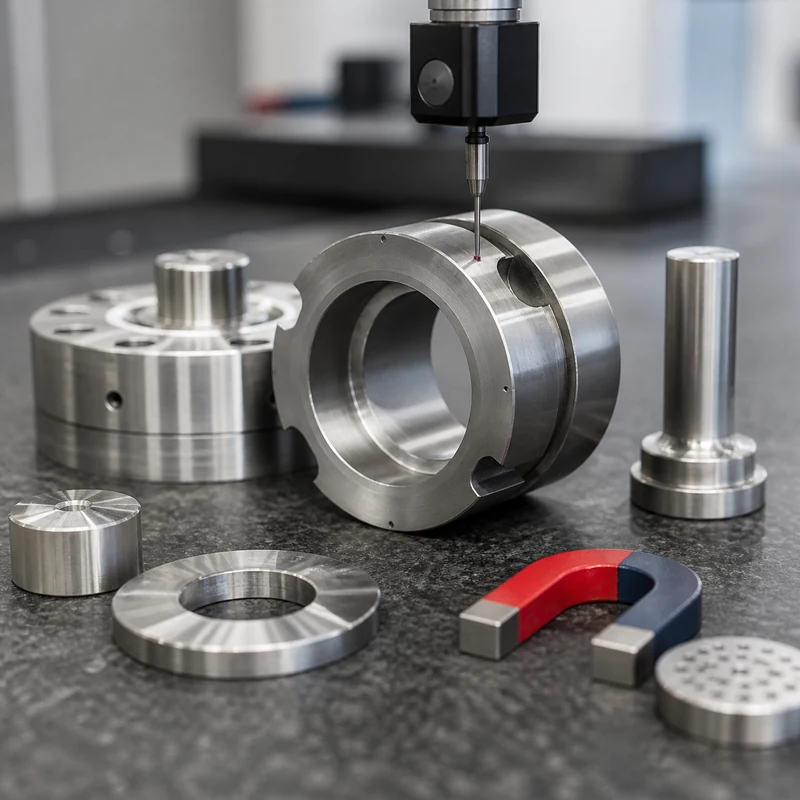
Pure nickel is one of the common engineering metals that can respond to a magnet. That simple answer is useful, but it is not enough for machined-part purchasing because most real projects use nickel alloys, plated surfaces, or stainless and high-temperature alloys that contain nickel in different amounts.

For CNC buyers, magnetic behavior should be treated as a material requirement in the same way as hardness, corrosion resistance, surface finish, and tolerance. MTSPi reviews these details together with CNC material options and the intended application before selecting a practical machining route.

Short Answer: Pure Nickel Is Magnetic

Pure nickel is ferromagnetic at normal room temperature. It can be attracted by a magnet because its internal magnetic domains can align under a magnetic field. Its response is usually weaker than iron, and it changes when nickel is alloyed with other elements.

Material or alloy family Typical magnetic response CNC buyer note
Pure nickel Magnetic Confirm whether magnetic response is acceptable near sensors or electronic assemblies.
Nickel-copper alloys Usually low to moderate Composition and processing history matter.
Nickel-chromium alloys Often weak or nearly non-magnetic Useful where corrosion and heat resistance are more important than magnetism.
Austenitic stainless steel Usually non-magnetic or weakly magnetic Cold working or machining can increase local response.

Why Nickel Alloy Magnetism Varies

A material name alone rarely tells the whole story. Alloying additions, crystal structure, cold work, heat treatment, and service temperature all affect magnetic behavior. Two parts with similar nickel content can react differently if one has been heavily worked or heat treated.

This is why the drawing should state any magnetic requirement directly. If the part will sit near magnetic sensors, motors, instruments, or sensitive electronics, include that condition in the RFQ along with dimensions and finish. MTSPi can review it during drawing review before machining starts.

Temperature and the Curie Point

Nickel loses its ferromagnetic behavior when heated above its Curie temperature, about 358 C. Below that point, pure nickel can remain magnetic. Above it, the magnetic domains no longer align in the same way. For high-temperature equipment, this property should be checked against the real operating temperature rather than assumed from room-temperature behavior.

Machining Considerations for Nickel Materials

Nickel and many nickel alloys can be demanding to machine because they may work harden, retain heat, and wear tools quickly. Good process planning matters as much as material selection. Depending on the geometry, MTSPi may compare CNC milling service with CNC turning service or use a mixed process for features that need stable datums.

Practical controls include sharp tooling, correct cutting parameters, rigid workholding, suitable coolant, and inspection after critical operations. Surface damage, burrs, and residual stress can affect both function and cosmetic finish, so deburring and finishing should not be left until the last minute.

When Magnetic Behavior Should Be Specified

Application condition Why it matters What to tell the supplier
Sensor housings Magnetic response can affect readings State allowable magnetic behavior and test method.
Medical or laboratory tools Equipment may operate near magnets or instruments Confirm material grade and inspection expectations.
Aerospace or electronics fixtures Magnetic attraction may interfere with assembly or service Share operating environment and certification needs.
General mechanical parts Magnetism may not affect function Do not over-specify if it adds cost without benefit.

Inspection and Documentation

If magnetism is a functional requirement, define how it will be verified. A casual magnet check is not the same as a controlled inspection plan. Buyers can combine material certificates, dimensional reports, and special checks through CNC machining quality inspection when the application requires traceability.

The best specification is clear enough for quoting, machining, and receiving inspection. It should name the material grade, finish, tolerance, operating temperature, and any magnetic limits that affect the assembly.

Conclusion

Nickel is magnetic in pure form, but CNC projects usually require a more specific answer. Alloy composition, manufacturing route, temperature, and inspection requirements determine whether magnetic behavior matters. Treat it as an engineering requirement, not a trivia fact, and include it in the drawing package when it can affect performance.

Categories
Blog Industries & Applications Quality & Tolerances

How to Evaluate Swiss CNC Machining Manufacturers in China

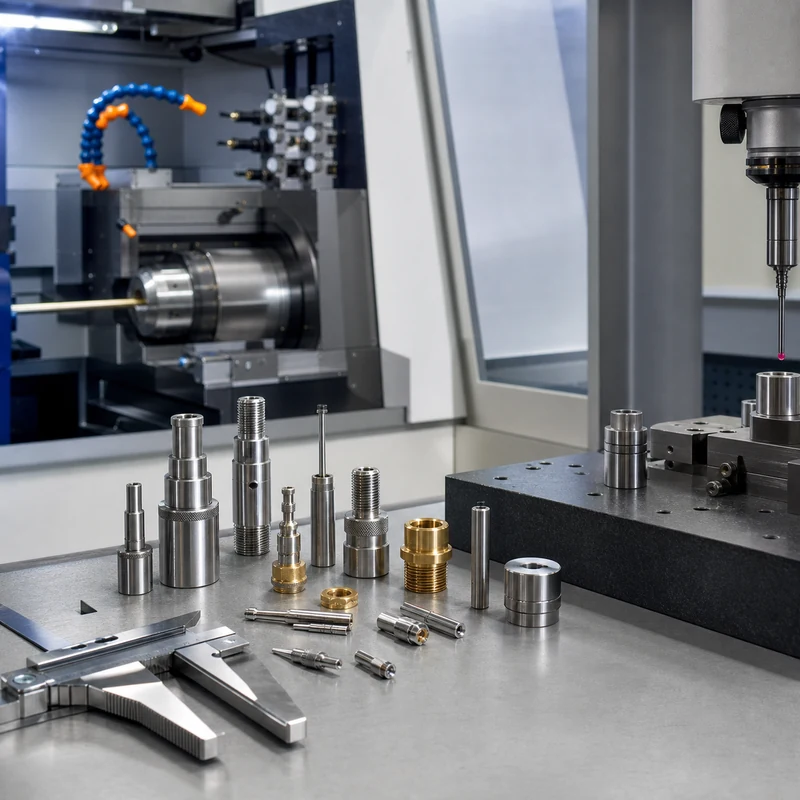
Swiss-type CNC machining is one of the most useful processes for small turned parts that need length, fine details, tight runout control, and repeatable production. China remains an important sourcing region for this work, but a buyer should not choose a supplier from a ranked name list alone. The real question is whether the shop can control bar-fed machining, guide-bushing support, live tooling, inspection, materials, finishing, and communication for your specific component. MTSPi supports Swiss-type machining and broader CNC turning service for precision shafts, pins, connectors, bushings, fasteners, and miniature mechanical parts.

What Makes Swiss-Type Machining Different

A Swiss-type lathe supports the bar close to the cutting tool, so the unsupported cutting length is very short. That setup is especially valuable for slender parts that would deflect on a conventional turning center. Many Swiss machines also combine turning, drilling, milling, slotting, thread cutting, and back-working in one cycle, which can reduce secondary operations when the part is designed well.

Capability Why It Matters Parts That Benefit
Guide-bushing support Reduces deflection on long and small-diameter workpieces Pins, shafts, needles, sleeves, miniature spacers
Live tooling Adds cross holes, flats, slots, and milled features in the same setup Connectors, medical-style components, sensor hardware
Bar-fed production Improves repeatability and cycle efficiency for small parts Fasteners, bushings, fittings, electrical contacts
Back-working Completes rear-side features after part-off Threaded ends, counterbores, chamfers, face details

How to Evaluate Swiss CNC Machining Manufacturers in China

The best supplier for a Swiss-machined part is not always the shop with the largest equipment list. Start with the drawing, the material, the annual volume, and the inspection requirement. Then compare suppliers by how clearly they explain the process plan and the risks.

Evaluation Area What to Confirm Buyer Risk if Ignored
Machine fit Bar diameter range, guide-bushing setup, live-tool axes, sub-spindle capability, and part-off strategy The part may require extra setups, higher cost, or unstable tolerance control
Tolerance control Expected process capability for diameter, length, runout, concentricity, threads, and small milled features A nominally precise shop may still miss the features that matter most
Material experience Stainless steel, titanium, aluminum, brass, copper alloys, engineering plastics, and difficult-to-machine grades Tool wear, burrs, heat, and surface finish can change the real lead time
Inspection method Micrometers, pin gauges, optical measurement, CMM, surface roughness checks, and documented first-article reports Quality evidence may not match the drawing requirement
Production control Tool-life rules, lot traceability, revision control, deburring standard, cleaning, and packaging Prototype success may not repeat across production batches
Engineering communication DFM questions, drawing markups, tolerance alternatives, finish notes, and change tracking Ambiguous requirements can turn into late rework

When Swiss-Type Machining Is the Right Process

Swiss machining is strongest when the part is small, slender, highly detailed, and expected to repeat. It is not automatically the best answer for every turned component. A short, simple bushing may be cheaper on a standard turning center. A large shaft may exceed the bar capacity. A prismatic part may belong on a milling platform or a mill-turn machine.

Part Condition Swiss-Type Fit Reason
Long diameter-to-length ratio Strong fit Guide-bushing support helps control bending and vibration
Tiny cross holes or milled flats Strong fit Live tooling can finish multiple features before part-off
Very short simple spacer Possible but not always economical Conventional turning may be faster and simpler
Large diameter component Usually poor fit Swiss machines are optimized around small bar stock
High-volume miniature part Strong fit Bar feeding and cycle consolidation can improve consistency

Materials Commonly Used for Swiss-Machined Parts

Material choice affects cutting stability, burr formation, tool wear, finish, and inspection. For material comparisons, review MTSPi’s CNC machining materials library before locking the drawing note. Swiss-type machining can handle many metals and plastics, but each grade needs a realistic plan.

Material Typical Use Manufacturing Note
Stainless steel Medical-style hardware, shafts, pins, fasteners, corrosion-resistant components Can work harden; tool condition and burr control matter
Titanium Lightweight high-strength components and demanding assemblies Heat control and sharp tooling are critical
Aluminum Light precision parts, housings, sleeves, electronics hardware Machines efficiently but needs clear cosmetic and anodizing notes
Brass Fittings, contacts, bushings, inserts, connectors Excellent machinability, with cleaning and tarnish expectations defined
Engineering plastics Insulators, low-friction spacers, lightweight precision parts Thermal movement and clamping distortion need attention

Inspection Questions Buyers Should Ask

  • Which dimensions will be checked in-process, and which will be checked after part-off?
  • How will runout, concentricity, thread fit, and small cross features be measured?
  • Does inspection happen before or after passivation, anodizing, plating, or cleaning?
  • Can the supplier provide a first-article report with actual measured values?
  • How are tool wear, burr growth, and dimensional drift controlled during repeat production?
  • What packaging prevents tiny parts from mixing, scratching, or damaging thread starts?

Design Details That Improve Swiss Machining Results

Swiss machining is precise, but it still benefits from practical DFM. Overly sharp internal corners, unrealistic surface finish notes, deep miniature holes, thin unsupported features, and excessive tolerance stacking can increase cost or reduce repeatability. If a feature is functional, mark it clearly. If a tight tolerance is only inherited from a template, loosen it before quoting.

Design Area Better Practice Why It Helps
Diameters Identify critical fits separately from noncritical stock-removal surfaces Keeps inspection effort focused on function
Threads Define thread standard, class, gauge requirement, and lead-in chamfer Prevents assembly issues in miniature components
Cross holes Confirm position tolerance and burr expectations Small intersecting holes often need special deburring control
Surface finish Apply roughness requirements only where they matter Avoids unnecessary cycle time and polishing risk
Part length Discuss cutoff burr, back-face finish, and sub-spindle support Controls the final end condition

RFQ Package for Comparing Suppliers

A complete RFQ makes supplier comparison much easier. Send the same information to each shop so price, lead time, inspection, and risk can be compared on equal assumptions.

RFQ Item Recommended Detail
3D model STEP file with the latest revision
2D drawing Datums, tolerances, threads, surface finish, notes, and critical dimensions
Material Grade, standard, temper or condition, and certificate requirement
Quantity Prototype order, batch size, annual volume, and release schedule
Finish Passivation, anodizing, plating, polishing, cleaning, color, and masking notes
Inspection First-article report, CMM or optical report, gauge checks, sampling level, and measurement format
Packaging Bagging, tray packing, anti-scratch protection, label format, and lot separation

When MTSPi Can Be a Practical Supplier Option

MTSPi can review Swiss-type turned parts, standard turned parts, milled features, and finishing requirements as one manufacturing package. For projects that involve small precision components, related capabilities may include Swiss-type machining, CNC turning, CNC milling, surface treatment, and quality assurance. Send the CAD model, drawing, material, quantity, tolerance notes, and inspection expectations so the manufacturing route can be reviewed before quoting.

Related MTSPi Resources

FAQ

What is Swiss CNC machining best for?

It is best for small, slender, complex turned parts such as pins, shafts, connectors, screws, sleeves, bushings, terminals, and miniature precision components.

Is Swiss-type machining always more accurate than standard turning?

Not always. It can be more stable for long and small-diameter parts, but accuracy still depends on machine setup, tooling, material, inspection, and process control.

What tolerances can Swiss machining hold?

The practical tolerance depends on the feature, material, part length, machine condition, tooling, and inspection method. Buyers should ask for realistic capability on the actual critical dimensions rather than a generic tolerance claim.

How do I compare Swiss CNC machining manufacturers in China?

Compare machine fit, bar capacity, live tooling, material experience, first-article reporting, tolerance control, deburring, finishing coordination, packaging, communication, and repeat-production control.

Categories
Blog CNC Materials Quality & Tolerances

Does Stainless Steel Rust? Corrosion and CNC Machining Guide

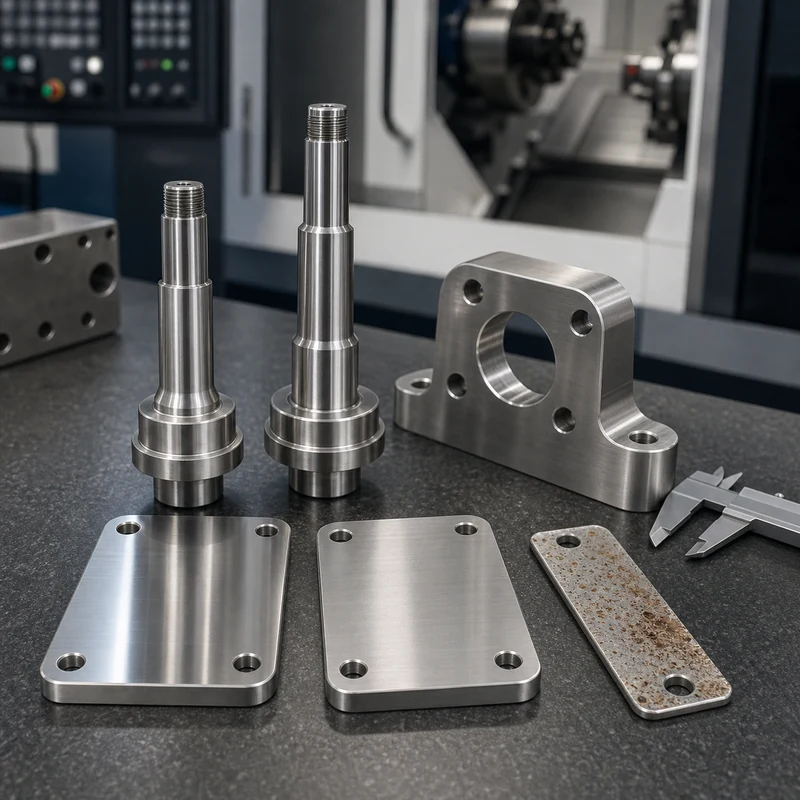
Stainless steel can rust, but it is far more corrosion resistant than ordinary carbon steel. The word stainless should be read as stain-resistant, not rust-proof. Its protection comes from chromium, which forms a thin passive chromium oxide layer on the surface. When the grade, finish, cleaning process, and service environment are chosen correctly, stainless steel is one of the most reliable materials for precision CNC parts. MTSPi supports stainless steel CNC machining for components that need strength, durability, corrosion resistance, and controlled inspection.

Does Stainless Steel Rust?

Yes, stainless steel can rust under the wrong conditions. It contains iron, so corrosion is possible. The reason it resists rust better than plain steel is its chromium content. Most stainless steels contain at least about 10.5 percent chromium. In the presence of oxygen, chromium forms a stable surface film that slows the reaction between the metal below and the surrounding environment.

That passive layer is extremely thin, but it is also self-renewing in many normal environments. If a light scratch exposes fresh stainless steel, chromium can react with oxygen again and rebuild protection. Problems begin when the passive layer is contaminated, mechanically damaged, starved of oxygen, or attacked by chlorides, strong chemicals, or heat.

Stainless Steel vs Carbon Steel Rust

Question Stainless Steel Carbon Steel
Base protection Chromium oxide passive film No comparable passive chromium layer
Rust tendency Low in suitable environments, but not zero High when moisture and oxygen are present
Common corrosion mode Pitting, crevice corrosion, tea staining, surface contamination Red-brown rust, scaling, section loss
Maintenance need Cleaning and grade/finish selection matter Coating, oiling, plating, or paint often required
Typical use Medical, food, marine, industrial, aerospace, precision hardware Structural, general fabrication, tooling, machinery

Why Stainless Steel Rusts

Most stainless rust problems come from a mismatch between environment and material preparation. A part that works perfectly indoors may show staining near salt spray. A polished stainless part can rust if carbon steel particles are embedded during grinding. A tightly assembled joint can corrode in a crevice where oxygen cannot reach the surface easily.

  • Chlorides from seawater, road salt, cleaning chemicals, or coastal air can attack the passive layer.
  • Carbon steel contamination from tools, fixtures, abrasive media, or handling can create rust spots.
  • Deep scratches, rough surfaces, and embedded debris can make local corrosion easier.
  • Crevices, blind holes, and trapped moisture reduce oxygen access and encourage localized attack.
  • The wrong grade can fail even if the part was machined and cleaned correctly.

304 vs 316 Stainless Steel

304 stainless steel is widely used for general corrosion resistance, food equipment, housings, brackets, and industrial components. 316 stainless steel includes molybdenum, which improves resistance to chloride attack. That is why 316 is often preferred for marine, coastal, chemical, and medical-adjacent applications where corrosion risk is higher.

Grade Best Fit Corrosion Note CNC Machining Note
304 stainless steel General industrial, indoor, food equipment, covers, brackets Good all-purpose corrosion resistance Tougher to machine than aluminum or brass; stable process planning matters
316 stainless steel Marine, coastal, chemical, medical, wet-service components Better chloride and pitting resistance than 304 Often selected when corrosion risk outweighs extra cost
316L stainless steel Welded parts and corrosion-sensitive assemblies Lower carbon helps after welding Useful when machining is followed by welding or passivation
17-4 PH stainless Higher-strength precision parts Good corrosion resistance with heat-treatable strength Requires planning around heat treatment and final dimensions

Does Stainless Steel Corrode in Salt Water?

It can. Salt water is one of the most important corrosion risks for stainless steel because chloride ions can break down the passive film and create pitting. A small pit can become a stress riser or a cleaning problem even when the rest of the surface looks acceptable. For continuous seawater exposure, grade selection, surface finish, crevice control, and maintenance requirements should be reviewed carefully.

Environment Typical Recommendation Reason
Dry indoor use 304 often works well Low chloride exposure and easier cleaning
Outdoor general use 304 or 316 depending on pollution and cleaning Rain, dirt, and contaminants vary by location
Coastal air 316 is often preferred Chloride exposure raises pitting and tea-staining risk
Marine contact 316, 316L, duplex, or specialized stainless may be needed Continuous salt exposure is aggressive
Chemical service Confirm compatibility by chemical and temperature Stainless grades respond differently to acids, alkalis, and chlorides

Manufacturing Contamination: A Common Hidden Cause

A stainless part can appear to rust because iron contamination on its surface is rusting. This may come from shared grinding media, carbon steel wire brushes, clamps, tables, cutting tools, or airborne particles. For precision CNC components, clean process separation and post-machining cleaning are not cosmetic details; they directly affect corrosion performance.

For critical parts, MTSPi can align machining, deburring, cleaning, and quality assurance expectations before production. If the drawing requires passivation, electropolishing, special packaging, or post-finish inspection, those requirements should be included in the RFQ stage.

How to Improve Stainless Steel Corrosion Resistance

  • Choose the grade around the real environment, especially chloride exposure.
  • Use dedicated or properly cleaned tools and abrasives for stainless steel work.
  • Specify passivation when free iron removal and passive-layer restoration are important.
  • Use smoother finishes where cleanliness and corrosion resistance matter.
  • Avoid crevices, liquid traps, sharp untreated edges, and rough pockets when possible.
  • Clean parts before packaging and avoid storage materials that leave reactive residue.

Surface Finish and Passivation

Surface finish affects how stainless steel behaves over time. A smoother surface leaves fewer places for moisture, salt, and debris to sit. Brushing, polishing, bead blasting, passivation, electropolishing, and coating each solve different problems. Review surface treatment options early because finishing can affect appearance, final dimensions, inspection method, and cost.

Finish or Treatment What It Does When to Consider It
Mechanical polishing Smooths and brightens the surface Visible parts and easier cleaning
Brushing Creates a consistent directional texture Decorative panels, covers, and handled parts
Passivation Removes free iron and supports the passive layer Medical, food, aerospace, and corrosion-sensitive components
Electropolishing Smooths micro-peaks and improves cleanability Sanitary, medical, and high-cleanliness parts
Coating Adds a barrier or color layer Special environments, appearance, or isolation needs

Is Stainless Steel Good for CNC Machining?

Yes. Stainless steel is a strong choice for CNC machined parts that need durability, heat resistance, cleanability, and corrosion resistance. It is more difficult to machine than aluminum or brass, so tool selection, coolant, workholding, speeds, feeds, and inspection planning matter. The tradeoff is worthwhile when the part must survive demanding environments or repeated cleaning.

Common CNC machined stainless parts include shafts, fittings, manifolds, housings, brackets, instrument components, medical hardware, food processing parts, robotic end-effectors, and aerospace hardware. Compare stainless with other CNC machining materials when strength, corrosion, magnetic behavior, and cost are being balanced.

FAQ

Can 304 stainless steel rust?

Yes. 304 stainless steel can rust or stain in harsh chloride exposure, poor cleaning conditions, or contaminated manufacturing environments, although it performs well in many general applications.

Can 316 stainless steel rust?

Yes. 316 stainless steel can still corrode, but it usually resists chlorides better than 304 because it contains molybdenum.

Does stainless steel rust after machining?

It can if the surface is contaminated, roughly finished, exposed to harsh conditions, or not cleaned properly. Passivation and suitable finishing can reduce this risk.

Related MTSPi Resources

Categories
Blog CNC Materials Quality & Tolerances

Does Aluminum Rust? Corrosion, Oxidation, Anodizing, and CNC Part Protection

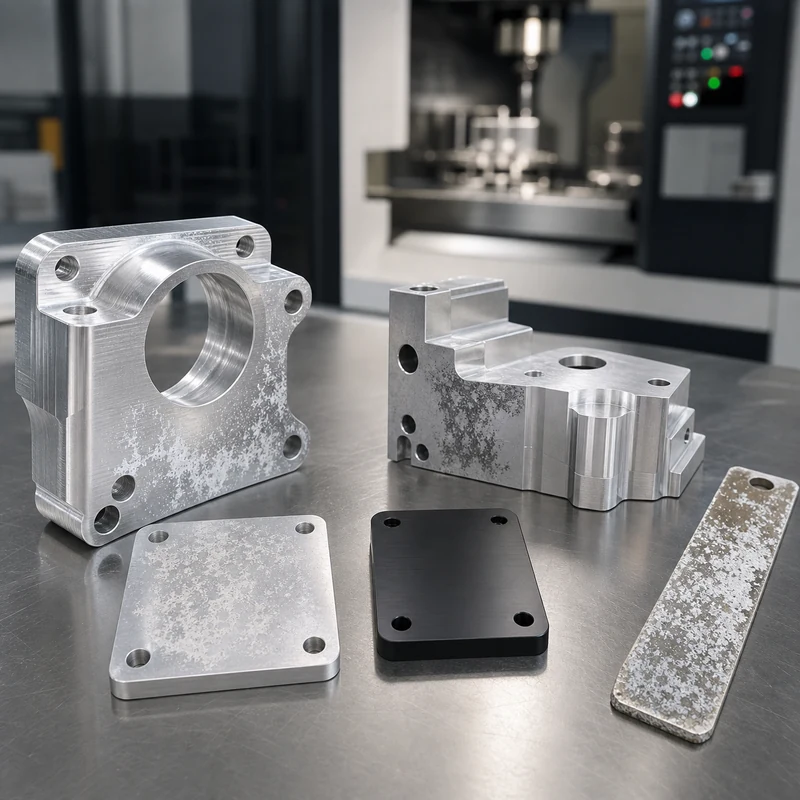
Quick answer: Aluminum does not rust because rust is iron oxide and aluminum contains no iron in normal use. However, aluminum can oxidize and corrode. Its natural oxide layer often protects the surface, but salt, chemicals, galvanic contact, and poor finishing can still damage aluminum parts.

Does Aluminum Rust?

Many buyers use the word rust to describe any metal surface damage. For aluminum, the more accurate terms are oxidation, corrosion, pitting, and galvanic corrosion. Understanding the difference helps choose the right alloy and finish.

Key Points for Buyers and Engineers

Topic What to know Practical impact
Rust Iron oxide on steel or iron Not the normal aluminum corrosion mode.
Oxidation Thin aluminum oxide layer Often protective in normal environments.
Pitting corrosion Localized attack Can occur with salts or harsh chemicals.
Galvanic corrosion Reaction between dissimilar metals Needs material pairing and isolation planning.

How This Affects CNC Machined Parts

Aluminum is widely used for CNC milled and turned parts. If corrosion or appearance matters, consider anodizing, chromate conversion, powder coating, painting, or plating from the surface treatment options.

Design and Purchasing Checklist

  • Choose the aluminum alloy by strength and environment.
  • Avoid direct contact with incompatible metals when corrosion matters.
  • Specify anodizing color, thickness, and masking needs.
  • Protect cosmetic parts during shipping.
  • Clean machined surfaces before finishing.

Related MTSPi Resources

FAQ

Does anodized aluminum rust?

No. Anodized aluminum does not rust like steel, but the anodized layer can be damaged or attacked in harsh conditions.

Why does aluminum turn white?

White powdery residue can be aluminum corrosion product from oxidation or environmental exposure.

Is aluminum good for outdoor parts?

Often yes, but alloy choice, anodizing, coating, drainage, and contact metals should be reviewed.

Need help with aluminum CNC part protection?

Send drawings, material, quantity, finish, tolerance notes, and application requirements. MTSPi can review manufacturability before quoting.

Contact MTSPi for engineering and quote support

Practical Buyer Notes

Aluminum corrosion pages should answer the simple rust question first, then explain oxidation, pitting, galvanic corrosion, anodizing, alloy choice, and surface protection.

This topic is valuable because many buyers use aluminum for CNC parts but do not understand when bare aluminum is enough and when anodizing, coating, or isolation from other metals is needed.

How to Evaluate This Topic on a Real Drawing

Decision point Recommended approach Why it matters
Indoor prototype Bare or as-machined aluminum may be enough Lowest cost and fastest lead time
Outdoor use Consider anodizing or coating Improves corrosion and appearance control
Salt exposure Review alloy and protective finish carefully Pitting risk increases
Dissimilar metals Use isolation or compatible design Reduces galvanic corrosion risk

Common Mistakes to Avoid

  • Saying aluminum cannot corrode because it does not rust.
  • Ignoring galvanic corrosion when aluminum touches stainless steel or other metals.
  • Choosing anodizing color without discussing thickness or masking.
  • Using the wrong alloy for outdoor or marine-like exposure.

Recommended MTSPi Review Workflow

MTSPi should review aluminum parts by alloy, environment, appearance, tolerance, and finishing. Corrosion protection should be planned before machining if masking or dimensional control is needed.

  1. Confirm the part function, operating environment, and assembly risk.
  2. Review material, process, tolerance, surface finish, and inspection requirements together.
  3. Separate critical features from general dimensions so cost is not wasted on non-functional details.
  4. Use related resources such as CNC materials, surface treatment, and quality assurance to complete the specification.
  5. Send the final drawing package to MTSPi for quote review before production.

What to Send for a Faster Quote

Send alloy preference, operating environment, cosmetic expectation, anodizing or coating requirement, critical dimensions, and mating material information.

  • 3D CAD file and 2D drawing with revision number.
  • Material grade or acceptable alternatives.
  • Quantity, delivery target, and whether samples are required first.
  • Critical dimensions, thread callouts, finish notes, and inspection requirements.
  • Application notes when the part is used in heat, moisture, wear, vibration, or visible assemblies.

Deeper Engineering Notes

For aluminum corrosion and oxidation, the strongest page is not just a definition. It should help a buyer decide what information belongs on the drawing, what questions to ask a supplier, and which details affect cost, quality, and delivery. In real RFQ work, the important details are usually alloy choice, anodizing, galvanic contact, drainage, salt exposure, and cosmetic expectations. These details decide whether the supplier can quote confidently or has to return with repeated questions.

The common risk is assuming aluminum cannot fail outdoors because it does not form red rust. That risk can make the content look complete on the surface but weak in a real manufacturing situation. A stronger specification connects the topic to material behavior, machine access, tolerance control, finishing, and inspection before the order is released.

Example Specification Review

Review area Question to answer Good specification practice
Function What does this feature or part need to do? Describe the load, fit, motion, appearance, sealing, or assembly requirement.
Material Is the selected material suitable for the environment? Confirm strength, heat, corrosion, wear, chemical exposure, and cosmetic needs.
Geometry Can the feature be reached by standard tools? Review depth, corner radius, wall thickness, tool clearance, and setup direction.
Tolerance Which dimensions are truly critical? Use tight tolerances only where function requires them and keep general dimensions practical.
Verification How will acceptance be checked? Define gauges, CMM checks, roughness measurement, thread inspection, or visual standards when needed.

How This Page Should Support Ranking

This topic can attract both beginner searches and buyer searches. The beginner wants a clear answer; the buyer wants enough detail to make a manufacturing decision. A page has a better chance to rank when it answers the simple question first, then adds examples, process limits, design notes, comparison tables, and practical next steps.

That is also why internal links should be helpful rather than forced. A reader should naturally move from this page to a process page, material page, surface finish page, inspection page, or quote page only when that next step solves a real question.

Conclusion

Aluminum does not rust like steel, but corrosion planning still matters. The right alloy, finish, and assembly design can greatly improve aluminum CNC part durability.

Categories
Blog CNC Materials Quality & Tolerances

Does Brass Rust or Tarnish? Complete Guide to Brass Corrosion and CNC Brass Parts

Quick answer: Brass does not rust like steel because rust is iron oxide and brass is mainly copper and zinc. However, brass can tarnish, darken, form a green patina, corrode, or suffer dezincification in harsh environments. For CNC machined brass parts, alloy choice, surface finish, storage, cleaning, and operating conditions decide how the part ages.

Does Brass Rust?

Strictly speaking, brass does not rust. Rust is the red or orange iron oxide corrosion product that forms on iron and steel. Standard brass is a copper-zinc alloy, so it does not produce the same flaky red rust seen on carbon steel. This is one reason brass is widely used for fittings, electrical contacts, decorative hardware, bushings, valve parts, and turned components.

That does not mean brass is immune to surface change. Brass can tarnish in air, discolor from handling, develop patina outdoors, and corrode in aggressive water, salt, ammonia, acidic environments, or certain industrial chemicals. So the better question is not only “does brass rust?” but also “what type of corrosion or appearance change can happen to brass?”

Brass Rust vs Tarnish vs Corrosion vs Dezincification

Surface condition Typical appearance Cause Risk level
Rust Red or orange flaky oxide Iron oxidation Not typical for normal brass unless iron contamination is present
Tarnish Dull brown, yellow-brown, or darker surface Reaction with oxygen, sulfur compounds, oils, or handling Usually cosmetic
Patina Green or blue-green film Long-term copper reaction with moisture, salts, pollutants, or carbonates Often surface-level but may be undesirable
General corrosion Dull, stained, etched, or roughened surface Chemicals, water quality, salt, acids, or pollutants Can become functional if severe
Dezincification Pink or copper-rich surface, weakened structure Zinc is selectively removed from brass Potentially serious for pressure, water, and load-bearing parts

Why Brass Tarnishes

Brass tarnish is usually an oxidation or surface reaction. Air, moisture, skin oils, sulfur compounds, fingerprints, cleaners, and packaging materials can change the surface color. For decorative parts, tarnish may be unacceptable even if the part still works. For hidden mechanical parts, light tarnish is often harmless.

Freshly machined brass may look bright because the cutting tool exposes clean metal. Over time, that surface reacts with the environment. Polishing can restore brightness, but polished brass will still change again unless it is protected by clear coating, plating, controlled packaging, or regular maintenance.

What Is Dezincification?

Dezincification is a form of brass corrosion where zinc is removed from the alloy and a copper-rich structure remains. The surface may look pinkish or reddish. Mild cases can appear cosmetic, but severe dezincification can weaken the part and create leakage or failure in fluid-handling components.

This matters for valves, fittings, threaded brass parts, plumbing-related components, marine hardware, and parts exposed to aggressive water chemistry. If the application involves water, pressure, salt, heat, or chemicals, buyers should confirm the brass grade instead of simply requesting “brass.”

Where Brass Performs Well

  • Electrical contacts and conductive components
  • Precision turned fittings and threaded inserts
  • Bushings, sleeves, spacers, and small mechanical hardware
  • Decorative machined parts and visible metal trim
  • Valve components and fluid fittings when the correct grade is selected
  • Low-friction or wear-related applications with moderate loads

Brass Grades and CNC Machining Considerations

Brass is generally one of the easiest metals to machine. It cuts cleanly, forms chips well, and can achieve good surface finish. Free-cutting brass is especially efficient for high-volume turned parts, but some applications require lead-free or dezincification-resistant brass. A purchasing specification should identify the exact alloy when compliance, water exposure, or mechanical properties matter.

For machined brass parts, MTSPi can support CNC turning, milling, drilling, tapping, and finishing. Brass parts often include threads, bores, flats, grooves, knurls, slots, and sealing surfaces. Each feature should be reviewed for tool access and inspection method.

How to Protect CNC Machined Brass Parts

Protection method Best use Important note
Polishing Bright cosmetic appearance May need maintenance or additional coating
Clear coating Decorative brass surfaces Can reduce tarnish from handling and air exposure
Nickel plating Appearance, wear, and corrosion resistance Thread fit and thickness should be considered
Chrome plating Harder decorative surface Usually more process planning and cost
Controlled packaging Shipping and storage protection Useful for polished or cosmetic parts

Cleaning Brass: What to Avoid

Avoid aggressive ammonia-based cleaners on stressed brass parts because ammonia exposure can contribute to cracking risk in some brass conditions. Acidic cleaners can brighten brass but may also attack the surface if used incorrectly. For precision machined parts, cleaning should preserve dimensions, threads, sealing faces, and cosmetic requirements.

FAQ

Does brass rust in water?

No, brass does not form red iron rust in water. But water chemistry can cause tarnish, general corrosion, or dezincification depending on the alloy and exposure.

Why does brass turn green?

Green patina forms when copper in brass reacts with moisture, salts, carbon dioxide, or pollutants. It is common on copper-rich alloys exposed outdoors.

Is tarnished brass ruined?

Usually no. Light tarnish is often cosmetic and can be cleaned or polished. Severe dezincification or deep corrosion is more serious.

Is brass better than stainless steel?

It depends on the application. Brass machines easily and conducts electricity well. Stainless steel usually performs better in many corrosion and strength-critical environments.

Can brass CNC parts be plated?

Yes. Brass can be polished, nickel plated, chrome plated, brushed, or coated. Finishing should be planned before machining if dimensions or appearance are critical.

Need brass CNC machined parts?

Send your drawing, alloy requirement, quantity, finish, and working environment. MTSPi can review the right brass grade and surface treatment.

Request a brass machining quote

Conclusion

Brass does not rust like steel, but it can tarnish, patinate, corrode, or dezincify. For CNC machined brass parts, the safest approach is to match alloy, machining method, finish, and packaging to the actual working environment.

Categories
Blog CNC Materials

Is Aluminum a Metal? Properties, Alloy Types, and CNC Machining Uses

Yes, aluminum is a metal. More specifically, it is a lightweight, silvery, non-ferrous metal known for its low density, corrosion resistance, electrical conductivity, thermal conductivity, and strong usefulness in manufacturing. If you see the spelling aluminium, it refers to the same element. Aluminum is the common American spelling, while aluminium is common in British English and many international markets.

That quick answer is useful, but buyers and engineers usually need more than a dictionary definition. The practical question is not only whether aluminum is a metal, but why it behaves differently from steel, copper, titanium, or plastic, and why it is so widely used in CNC machined parts. This guide explains aluminum as a metal from a material selection and manufacturing perspective, with clear comparisons, alloy examples, CNC machining notes, finishing options, and design guidance.

For custom aluminum components, MTSPi supports aluminum CNC machining, CNC milling, finishing, and inspection for prototypes and production parts.

Is Aluminum a Metal?

Aluminum is a metal because it has the core characteristics associated with metallic elements: metallic bonding, good electrical and thermal conductivity, ductility, malleability, a metallic luster, and the ability to form useful alloys. On the periodic table, aluminum has the symbol Al and atomic number 13. It belongs to the boron group, but in practical engineering it is treated as one of the most important commercial metals.

Unlike iron and steel, aluminum is a non-ferrous metal. That means it does not use iron as its main base element. This distinction matters because non-ferrous metals generally behave differently in weight, corrosion resistance, magnetism, conductivity, and machining. Aluminum is also not magnetic under normal conditions, which makes it useful in electronic housings, instrument components, aircraft parts, and fixtures where magnetic interference must be avoided.

Aluminum vs Aluminium: Are They the Same?

Yes. Aluminum and aluminium mean the same material. The spelling difference is regional, not technical. In the United States and Canada, aluminum is the dominant spelling. In the United Kingdom, Europe, and many other markets, aluminium is more common. A drawing, RFQ, or datasheet using either spelling can refer to the same metal.

For international sourcing, the alloy designation matters more than the spelling. A request for aluminum 6061-T6 or aluminium 6061-T6 is much clearer than simply asking for aluminum. The grade, temper, surface finish, tolerance, and inspection requirements define the real manufacturing result.

Key Properties of Aluminum

Property Why It Matters in Real Parts Manufacturing Note
Low density Aluminum is much lighter than steel, which helps reduce part weight. Useful for aerospace, robotics, fixtures, handheld products, and moving assemblies.
Corrosion resistance A natural oxide layer helps protect the surface from many environments. Anodizing or coating can improve protection and appearance.
Good machinability Many aluminum alloys cut efficiently and hold fine details. Sharp tools, chip evacuation, and proper feeds help maintain finish and accuracy.
Thermal conductivity Aluminum transfers heat well. Useful for heat sinks, housings, brackets, and thermal management parts.
Electrical conductivity Aluminum conducts electricity, though not as well as copper. Useful in electrical housings, bus bars, connectors, and lightweight conductive components.
Ductility Aluminum can deform before fracture and can be extruded, rolled, bent, or machined. Formability depends heavily on alloy and temper.
Surface finish compatibility Aluminum accepts anodizing, bead blasting, polishing, plating, and coating. Finish requirements should be specified before quoting.

Is Aluminum a Pure Metal or an Alloy?

Pure aluminum exists as an element, but most industrial aluminum parts are not made from commercially pure aluminum. They are usually made from aluminum alloys. An alloy is a metal mixture designed to improve strength, hardness, machinability, heat treatment response, corrosion behavior, or formability.

Common alloying elements include magnesium, silicon, copper, zinc, manganese, and chromium. These small additions can change performance dramatically. For example, 6061 aluminum is valued for balanced machinability, corrosion resistance, and weldability, while 7075 aluminum is selected when higher strength is needed.

Common Aluminum Alloy Families

Series Main Alloying Element Typical Strengths Common Uses
1000 series Mostly pure aluminum Excellent conductivity and corrosion resistance, low strength Electrical, chemical, reflective, and formed parts
2000 series Copper High strength and good fatigue performance Aerospace and structural parts where corrosion protection is managed
3000 series Manganese Good formability and corrosion resistance Sheet metal, housings, tanks, and general formed products
5000 series Magnesium Good corrosion resistance, especially marine environments Marine, automotive, welded structures, and sheet applications
6000 series Magnesium and silicon Balanced strength, machinability, corrosion resistance, and anodizing response CNC machined parts, frames, brackets, fixtures, housings
7000 series Zinc Very high strength potential Aerospace, high-load parts, tooling, and performance components

6061 Aluminum: The Common CNC Machining Choice

6061 aluminum is one of the most common materials for CNC machined aluminum parts. It offers a practical balance of strength, corrosion resistance, cost, availability, and machinability. It is often used for brackets, plates, housings, fixtures, covers, adapters, frames, and prototype components.

For buyers who are unsure which aluminum grade to start with, 6061-T6 is often a sensible baseline. It is not the strongest aluminum alloy, but it is versatile and widely available. It also responds well to anodizing, which helps when both appearance and corrosion resistance matter.

7075 Aluminum: Higher Strength for Demanding Parts

7075 aluminum is often selected when higher strength is required. It is common in aerospace, robotics, tooling, cycling components, and performance parts where weight reduction matters but the part still needs strong mechanical properties. The tradeoff is that 7075 is generally more expensive than 6061 and can be less corrosion resistant unless properly protected.

For CNC machining, 7075 can produce excellent parts, but material sourcing, tool selection, and finishing expectations should be reviewed carefully. If anodizing, appearance, or corrosion exposure is important, the alloy and temper should be confirmed before production.

Aluminum vs Steel

Aluminum and steel are both metals, but they are not interchangeable. Steel is much denser and usually stronger and stiffer by volume. Aluminum is much lighter and often easier to machine quickly. The right choice depends on strength, weight, stiffness, corrosion, magnetic behavior, cost, surface finish, and operating environment.

Comparison Point Aluminum Steel
Weight Low density, excellent for lightweight parts Much heavier
Strength Good strength-to-weight ratio, alloy dependent Usually higher absolute strength and stiffness
Corrosion Naturally corrosion resistant; anodizing improves protection Can rust unless stainless, coated, plated, or treated
Machining Often faster cutting and good surface finish Can be slower, harder, and more tool-wearing depending on grade
Magnetism Non-magnetic in normal use Many steels are magnetic
Cost behavior Material may cost more per kg, but machining can be efficient Material can be cheaper, but machining and finishing vary

Why Aluminum Is Popular for CNC Machining

Aluminum is popular for CNC machining because it combines useful mechanical performance with efficient manufacturing. Many aluminum alloys cut cleanly, allow high spindle speeds, and produce accurate features with good surface finish. This can reduce machining time compared with harder metals.

  • It is light enough for moving assemblies, robotic systems, drones, aerospace brackets, and portable devices.
  • It can be machined into plates, housings, heat sinks, manifolds, brackets, covers, adapters, and fixtures.
  • It supports many surface finishes, including clear anodizing, color anodizing, hard anodizing, bead blasting, polishing, and plating.
  • It is widely stocked in plate, bar, extrusion, and billet forms, which helps control lead time.
  • It offers a strong balance between prototype speed and production reliability.

CNC Design Notes for Aluminum Parts

Aluminum is forgiving compared with many engineering metals, but design choices still affect cost, accuracy, and quality. Deep pockets, thin walls, tight internal radii, very small tapped holes, cosmetic surfaces, and tight flatness requirements should be reviewed before manufacturing.

Design Area Recommendation Why It Helps
Internal corners Use the largest practical corner radius. Larger tools cut faster and reduce tool chatter.
Thin walls Avoid overly thin unsupported walls when possible. Thin aluminum walls can vibrate or deform during machining.
Deep pockets Reduce depth or increase tool access where possible. Deep features increase cycle time and tool deflection risk.
Tapped holes Specify thread size, depth, and required engagement clearly. This avoids confusion during drilling and tapping.
Tolerances Apply tight tolerances only to functional features. Unnecessary tight tolerances increase cost and inspection time.
Cosmetic areas Mark visible surfaces on the drawing. The shop can protect or finish the correct faces.

Surface Finishes for Aluminum

One reason aluminum is so widely used is its compatibility with many finishing methods. Clear anodizing can protect the surface while keeping a natural metallic look. Color anodizing adds appearance and identification value. Hard anodizing improves wear and corrosion resistance for demanding parts. Polishing and bead blasting can change the texture and reflectivity.

Finish choice should be discussed early because it can affect dimensions, color consistency, masking, electrical conductivity, and final inspection. For more options, see MTSPi’s surface treatment resources.

Common Applications of Aluminum

Aluminum appears across many industries because it is light, machinable, corrosion resistant, and visually clean after finishing. It is common in aerospace parts, automotive components, automation fixtures, robotics frames, electronic housings, heat sinks, medical device prototypes, optical mounts, consumer hardware, and custom industrial components.

  • Aerospace: brackets, plates, housings, lightweight structural components, and test fixtures.
  • Automation and robotics: arms, mounts, grippers, frames, sensor brackets, and end-effectors.
  • Electronics: heat sinks, enclosures, covers, EMI-related housings, and connector parts.
  • Automotive: prototype brackets, battery-related housings, adapters, and performance components.
  • Medical and instruments: lightweight fixtures, housings, trays, and development prototypes.

How to Choose the Right Aluminum Grade

When reading a material callout, distinguish the Al element symbol from alloy and temper codes: the symbol alone does not specify the grade or its condition.

Do not choose aluminum only because it is light. Choose the grade based on the actual function of the part. If the part is a general machined bracket, 6061 may be enough. If the part is high-load and weight-sensitive, 7075 may be worth considering. If corrosion, welding, forming, conductivity, or cosmetic anodizing matters, the alloy choice may change.

Need Likely Starting Point Important Check
General CNC machined parts 6061-T6 Tolerance, finish, and cost target
Higher strength lightweight parts 7075-T6 Corrosion protection and material cost
Good forming or sheet applications 3000 or 5000 series Bend radius, temper, and surface finish
Marine or corrosion exposure 5000 series or protected 6000 series Environment and coating requirements
Electrical or thermal conductivity 1000 series or suitable conductive alloy Strength and conductivity balance

Is Aluminum Better Than Plastic for CNC Parts?

Aluminum is not always better than plastic. It is better when the part needs metallic strength, heat transfer, threaded features, stiffness, surface finish options, or electrical conductivity. Engineering plastics may be better when the part needs chemical resistance, electrical insulation, low friction, transparency, or lower weight without conductive behavior.

If you are comparing aluminum with plastic for CNC machining, review CNC plastic machining and CNC machining materials before locking the drawing. Material selection is one of the easiest ways to control part cost and performance before production begins.

Conclusion

Aluminum is definitely a metal, but its real value comes from the way it balances low weight, machinability, corrosion resistance, conductivity, surface finish options, and alloy flexibility. For many CNC machined parts, aluminum provides a practical middle ground between heavy structural metals and lower-strength plastics.

For a custom aluminum part, send MTSPi your 3D model, drawing, quantity, finish requirement, tolerance notes, and target application. Our team can help review material choice, manufacturability, surface treatment, and inspection through our quote and engineering support process.

Related MTSPi Resources

FAQ

Is aluminum a metal or nonmetal?

Aluminum is a metal. It has metallic luster, conductivity, ductility, and the ability to form useful engineering alloys.

Is aluminum a ferrous metal?

No. Aluminum is a non-ferrous metal because it is not based on iron. This is why it does not rust like ordinary carbon steel and is not magnetic in normal use.

Is aluminum naturally corrosion resistant?

Yes. Aluminum forms a thin oxide layer that helps protect the surface. In tougher environments, anodizing, coating, or plating can improve protection.

What aluminum grade is best for CNC machining?

6061-T6 is one of the most common starting choices because it is available, machinable, reasonably strong, and suitable for many finishes. 7075 is used when higher strength is needed.

Can aluminum be anodized after CNC machining?

Yes. Many CNC machined aluminum parts are anodized after machining. Clear, color, and hard anodizing are common options depending on appearance, corrosion resistance, and wear requirements.

Is aluminum lighter than steel?

Yes. Aluminum is much lighter than steel. This makes it valuable for aerospace, robotics, vehicles, fixtures, and any assembly where reduced moving mass matters.

Does aluminum rust?

Aluminum does not rust like iron or carbon steel because rust is iron oxide. Aluminum can corrode, but its oxide layer usually provides useful protection.


Categories
Blog Design, Cost & Sourcing Quality & Tolerances

CNC Supplier Audit Checklist for Reliable Part Production

A CNC supplier audit is the practical bridge between a promising quotation and dependable production. Instead of judging a machine shop only by sample photos or unit price, engineers and sourcing teams should verify whether the supplier can repeatedly meet drawing requirements, manage material risk, document inspection results, and communicate clearly when something changes.

MTSPi supports prototype and production programs through CNC machining services, including milling, turning, 5-axis work, finishing coordination, and documented inspection. The checklist below is written as a reusable audit framework that buyers can apply when qualifying any machining partner for new work.

Supplier Audit Snapshot

Start with a short cross-functional review before going deep into drawings or pricing. A first-pass audit should tell you whether the supplier deserves a technical follow-up, an on-site visit, or a pilot order.

Audit Area What You Need to Confirm Why It Matters
Process fit The available machines and setups match your part geometry Capability gaps create rework, outsourcing, and lead-time risk
Quality system Incoming, in-process, and final inspection are defined Repeatable quality needs more than a final measurement
Material control Traceability, certificates, and storage practices are in place Wrong or mixed material can invalidate the whole build
Engineering support The supplier can review manufacturability and tolerance drivers Early DFM feedback reduces avoidable cost and scrap
Production control Capacity, scheduling, tooling, and revision control are visible A good sample does not guarantee stable repeat production
Communication Technical questions, updates, and escalation paths are clear Most schedule slips start as communication failures

1. Verify Process Capability Against the Actual Part

An audit should begin with the part family you want to buy, not with a generic machine list. A supplier may own advanced equipment but still be a weak fit for thin-wall enclosures, tight-runout shafts, or multi-face brackets that need accurate datum transfer.

Part Type Capability to Look For Audit Question
Prismatic plates and housings 3-axis or indexed 4-axis milling How are flatness, hole position, and burr control checked?
Multi-side complex features 4-axis or 5-axis machining How is setup error reduced across multiple faces?
Rotational parts CNC turning, mill-turn, or Swiss machining How are concentricity, runout, and thread quality controlled?
Deep cavities or difficult access Long-reach tooling strategy and simulation What risks exist for chatter, deflection, or tool collision?
Larger structural parts Large-travel machining and inspection access How are clamping distortion and thermal movement handled?

If the project may move between process types, a supplier that can combine CNC milling, CNC turning, and 5-axis CNC machining under one workflow usually reduces handoff risk.

2. Audit Inspection Planning, Not Just Inspection Tools

Buyers often ask whether a supplier has a CMM, but that question alone is too shallow. A strong audit checks how the inspection plan is built, where critical dimensions are verified, and how measurement data connects back to the drawing revision.

  • Confirm incoming material inspection and lot identification.
  • Ask which dimensions are checked in-process versus only at final inspection.
  • Review whether first-article reports are available for new parts.
  • Check how threads, cosmetic surfaces, and post-finish dimensions are verified.
  • Ask how nonconforming parts are segregated and documented.
  • Request a sample dimensional report for a part with similar complexity.

For high-precision work, inspection should align with the broader quality assurance workflow rather than functioning as a disconnected end-of-line step.

3. Confirm Material Traceability and Storage Discipline

Material mistakes are expensive because they often remain hidden until after machining, finishing, or assembly. The audit should therefore cover how raw stock is received, labeled, stored, and tied to the job traveler or inspection package.

Material Group What to Review Common Failure Mode
Aluminum alloys Grade callout, temper, and certificate retention Incorrect alloy substituted for a cosmetic or structural part
Stainless steel Heat traceability and separation from carbon steel Contamination, wrong grade, or finishing mismatch
Titanium Inventory segregation and machining history Tool wear or heat issues not planned into the process
Engineering plastics Moisture control, lot labeling, and storage method Warping or dimensional drift after machining

Material capability should also line up with the supplier’s practical experience. A broad CNC materials library is useful, but real project success depends on knowing how each grade behaves during machining, deburring, cleaning, and finishing.

4. Test Engineering Support With Real DFM Questions

A supplier audit becomes much more valuable when the reviewer probes the team’s engineering judgment. Good suppliers do not simply accept every note on the drawing without comment. They identify risk, explain tradeoffs clearly, and offer better routes when a requirement is expensive, unstable, or hard to inspect.

  • Ask which tolerances are most likely to drive scrap or setup changes.
  • Review sharp internal corners, thin walls, deep pockets, and long threads.
  • Check whether finish requirements conflict with dimensional targets.
  • Ask what design changes could reduce cost without weakening function.
  • Confirm how revision changes are shared between engineering, quality, and production.

This matters most for prototypes and early production because design intent is still moving. A capable supplier helps the customer stabilize the part before avoidable cost gets locked into repeat orders.

5. Review Process Control for Repeat Production

A shop can sometimes make one acceptable sample through extra attention and manual adjustment. The harder question is whether the same result can be repeated on the next lot, the next operator, or the next machine. That is why process control belongs in every supplier audit.

Control Area What to Look For Warning Sign
Programming Revision-controlled CAM files and setup sheets Program edits happen informally at the machine
Tool management Defined tool life, offsets, and replacement practice Critical tools are changed only after visible problems
Setup discipline Repeatable fixturing and documented zeroing method Knowledge depends on one operator only
Monitoring Checks during production, not just after the lot finishes No plan for drift, wear, or process instability
Packaging Protection for edges, threads, cosmetic faces, and clean parts Finished parts are packed like raw hardware

6. Compare Capacity and Lead Time Realistically

Lead time should be broken into material purchasing, machining, outside finishing, inspection, and packing. Buyers should ask the supplier to explain where the schedule is flexible and where it is exposed to outside dependencies.

  • Can prototype and repeat orders be scheduled differently?
  • Which operations depend on outside finishing vendors?
  • How are urgent jobs prioritized without disrupting committed orders?
  • What happens when incoming material misses the requested date?
  • How is capacity communicated if demand increases after approval?

A realistic answer is more useful than an aggressive promise. In supplier audits, vague optimism is usually a stronger risk signal than a slightly longer but clearly explained schedule.

7. Check Communication, Documentation, and Compliance

Communication quality during the audit often predicts communication quality during production. If technical answers are delayed, incomplete, or inconsistent before the order, the same pattern usually appears later when the project is under time pressure.

Requirement Why It May Matter What to Request
ISO 9001 or similar quality system Baseline quality management discipline Current certificate and scope
Industry-specific controls Aerospace, medical, or regulated sectors may require more Relevant procedures or certifications
Material certificates Confirms raw stock matches the drawing Example cert package from a similar job
Inspection reports Supports acceptance and downstream assembly Sample FAIR or dimensional report
Revision tracking Prevents outdated drawings from reaching production How document changes are released internally

Final Approval Checklist

Decision Point Approve When… Hold When…
Capability fit The process route matches the actual part family The supplier is relying on unproven subcontracting
Quality evidence Inspection planning and sample records are convincing Only generic promises are provided
Material control Traceability is documented and easy to follow Material handling is informal or unclear
Engineering support DFM feedback is specific and technically useful Questions are answered only with sales language
Production readiness Capacity, tooling, and scheduling are defined The shop can make a sample but not explain repeat control
Commercial clarity Quote assumptions, reports, and lead time are explicit Key cost or schedule assumptions remain vague

How MTSPi Supports Supplier Qualification

MTSPi works with buyers who need a machining partner that can discuss the technical details early, document the process clearly, and support prototype through repeat production. Projects may include complex milling, turned parts, 5-axis features, finishing coordination, and inspection reporting when required.

To review a new part, send the model, drawing, material, finish, quantity, and inspection scope through the MTSPi quote request.

Related MTSPi Resources

FAQ

What should a CNC supplier audit cover first?

Start with process fit, quality planning, material traceability, and engineering support. Those four areas reveal most early production risks.

Is a CMM enough to qualify a machining supplier?

No. The audit should also verify how measurements are planned, recorded, reviewed, and tied to the drawing revision and acceptance criteria.

Why is DFM feedback important during supplier qualification?

Because early feedback can reduce machining risk, remove unnecessary cost drivers, and prevent tolerance or finish requirements from conflicting during production.

When should a buyer reject a supplier after an audit?

Reject or pause approval when process capability is unclear, traceability is weak, technical answers are vague, or the supplier cannot explain how repeat production will stay in control.

Categories
Blog Design, Cost & Sourcing Quality & Tolerances

How to Choose a CNC Machining Supplier: Practical Buyer Checklist

Choosing a CNC machining supplier is not a price-only decision. A dependable partner needs the right machining process, stable quality controls, material knowledge, engineering communication, and enough capacity to support the project after the first sample is approved. This guide gives engineers and purchasing teams a practical way to compare suppliers before sending an order.

MTSPi supports custom prototype and production machining through CNC machining services, including milling, turning, 5-axis work, finishing coordination, and inspection documentation. The same criteria below can help you evaluate MTSPi or any other supplier on a project-by-project basis.

Start With a Complete RFQ Package

A supplier can only quote accurately when the manufacturing requirement is clear. Before asking for price and lead time, prepare the files and assumptions that define the part, inspection level, and delivery expectation.

RFQ Item What to Include Why It Affects the Quote
3D model STEP, Parasolid, or another neutral CAD file Defines geometry, setups, tool access, and programming work
2D drawing Tolerances, datums, threads, GD&T, surface roughness, and notes Shows which dimensions are function-critical
Material Grade, temper, standard, and certificate requirement Controls machinability, raw stock cost, and documentation
Finish Anodizing, passivation, plating, polishing, bead blasting, or masking notes Post-processing can change appearance, dimensions, and schedule
Quantity Prototype lot, release quantity, and expected repeat demand Fixture strategy and unit price depend on volume
Inspection Critical dimensions, report format, sampling plan, and CMM needs Quality work must be planned into cost and lead time

For early-stage designs, it is worth asking for manufacturability feedback before locking the drawing. Small changes to inside corner radius values, wall thickness, thread depth, datum structure, or finish callouts can improve cost and reliability without weakening function.

Match Machine Capability to the Part

A strong supplier for simple plates may not be the right fit for a thin-wall housing, a tight-concentricity shaft, or a multi-face aerospace-style bracket. Compare the supplier against the geometry and tolerance stack of the actual part.

Part Requirement Capability to Look For Typical Risk to Check
Flat plates, brackets, simple housings 3-axis milling or indexed 4-axis machining Hole position, flatness, edge burrs, and finish consistency
Multi-side parts with tight datum relationships 4-axis or 5-axis machining with reliable fixture planning Setup error, profile tolerance, and datum transfer
Curved surfaces or difficult tool access Simultaneous or positional 5-axis CNC machining Tool reach, surface blending, and collision planning
Shafts, sleeves, spacers, and bushings CNC turning, mill-turn, or Swiss-type machining Runout, concentricity, thread quality, and diameter control
Large frames or plates Large-travel milling or gantry machining Workholding, thermal movement, and inspection access

When the project requires multiple process types, a supplier with coordinated CNC milling, CNC turning, and 5-axis machining can reduce handoffs and communication risk.

Review Quality Control Before Production

Inspection capability should be discussed before a purchase order is placed, not after parts arrive. A capable supplier should understand which dimensions require in-process checks, which can be verified at final inspection, and which need documented reports.

  • Ask how incoming material is checked and stored.
  • Confirm whether first-article inspection is available for new parts.
  • Review whether CMM, micrometers, height gauges, pin gauges, thread gauges, and surface roughness testing fit the drawing.
  • Define which dimensions need a measurement report and which can follow normal sampling.
  • Clarify whether inspection happens before or after finishing when coating thickness matters.
  • Ask how nonconforming parts, drawing revisions, and corrective actions are handled.

For precision assemblies, the supplier should connect machining, deburring, cleaning, packaging, and quality assurance into one controlled workflow. This is especially important when small dimensional changes can cause fit problems downstream.

Check Material and Finishing Experience

Material experience matters because each alloy or plastic behaves differently under cutting forces, heat, tool wear, and finishing. A supplier should be able to explain machining concerns for the selected material instead of treating every drawing the same way.

Material Group Common CNC Part Types Supplier Questions
Aluminum alloys Housings, brackets, heat sinks, prototypes, optical frames How will cosmetic surfaces, anodizing allowance, and thin walls be controlled?
Stainless steel Medical components, shafts, fixtures, food equipment, corrosion-resistant parts How will work hardening, burrs, passivation, and surface finish be managed?
Titanium Aerospace, medical, and high-strength lightweight components What toolpath, coolant, and inspection approach is used for heat-sensitive cutting?
Copper and brass Electrical parts, fittings, contacts, and precision inserts How will burr control, thread quality, and surface marks be prevented?
Engineering plastics Insulators, medical parts, wear pads, low-friction components How will clamping, moisture, thermal expansion, and deformation be handled?

A broad CNC materials library is useful, but supplier experience should still be verified against the specific grade, tolerance, finish, and application. For visible components, also review the available surface finishing options before finalizing the design.

Look for Engineering Support

Good suppliers do more than run machine tools. They review the drawing, flag manufacturing risks, ask clear questions, and suggest practical changes when a requirement is expensive or difficult to verify.

  • Features that require long, unstable tools.
  • Sharp internal corners that need an EDM operation or a design change.
  • Thin walls that may move during machining or finishing.
  • Tolerances that are tighter than the part function requires.
  • Thread, pocket, or hole depths that create unnecessary cost.
  • Finish requirements that conflict with dimensional tolerance or masking limits.

This support is valuable for prototypes, low-volume production, and parts moving from development into repeat manufacturing. The best result is usually a supplier that can protect the design intent while making the part easier to manufacture and inspect.

Evaluate Capacity, Lead Time, and Communication

A supplier may be able to make one sample but still struggle with repeat production. Ask how capacity is scheduled, how repeat jobs are controlled, and how the supplier communicates when material, finishing, or inspection affects the timeline.

Evaluation Area What to Confirm Warning Sign
Capacity Available machines, shift coverage, and fixture strategy No clear plan for repeat orders or urgent changes
Lead time Separate timing for machining, finishing, inspection, and shipping A promise that ignores outside processing or inspection time
Communication Named contact, drawing question process, and change tracking Slow replies or unclear technical answers before the order
Documentation Material certificates, inspection reports, packing records, and revision control Reports are promised but not defined
Packaging Protection for cosmetic surfaces, threads, precision edges, and clean parts Finished parts are packed like rough hardware

Compare Quotes Beyond Unit Price

The lowest unit price can be misleading if the quote excludes inspection, finishing, packaging, material documentation, tooling assumptions, or realistic tolerance control. Compare suppliers using the same inputs and ask each one to identify assumptions that affect cost.

  • Does the quote include the specified material grade and certificates?
  • Are tight tolerances quoted as drawn, or are they treated as general tolerances?
  • Is finishing included, and who controls masking, color, thickness, and cosmetic acceptance?
  • Is inspection reporting included or billed separately?
  • Does the lead time include purchasing material, machining, finishing, inspection, and packing?
  • Are engineering questions documented before production begins?

A higher quote can be the better value when it reduces rework, prevents assembly problems, and gives the buyer clear evidence that the part meets the drawing.

Common Selection Mistakes

  • Choosing only by the lowest price without checking process fit.
  • Assuming a prototype supplier can support repeat production without a capacity plan.
  • Ignoring inspection methods until after parts are delivered.
  • Sending incomplete files and expecting an accurate quote.
  • Treating surface treatment as cosmetic only when it can affect dimensions.
  • Overlooking communication quality during the RFQ stage.

Why MTSPi Can Be a Practical CNC Machining Partner

MTSPi provides custom CNC machining support for precision prototypes, small batches, and repeat production parts. Projects can include CNC milling, CNC turning, 5-axis machining, material selection, surface treatment coordination, and dimensional inspection. The goal is to review the part requirement early, quote with clear assumptions, and deliver components that match the drawing and application.

To compare options or discuss a new part, send the model, drawing, material, finish, quantity, and inspection requirement through the MTSPi quote request.

Related MTSPi Resources

FAQ

What should I look for in a CNC machining supplier?

Look for process capability, material experience, inspection equipment, clear communication, engineering support, realistic scheduling, and evidence that similar parts have been produced successfully.

How can I verify supplier quality before ordering?

Ask for the inspection plan, available measurement equipment, sample report format, material control process, and how the supplier handles critical dimensions, drawing revisions, and nonconforming parts.

Is the cheapest CNC machining quote the best option?

Not automatically. A low quote may exclude inspection, finishing, documentation, or realistic tolerance assumptions. Compare total project risk, not only unit price.

Can a CNC machining supplier help improve my design?

Yes. Experienced suppliers can provide DFM feedback on tolerances, corner geometry, wall thickness, tool access, material choice, finish planning, and cost drivers before production begins.

Categories
Blog Industries & Applications Quality & Tolerances

How to Evaluate CNC Machining Companies in Mexico in 2026

Mexico is an important manufacturing market for buyers who need CNC machined parts, precision assemblies, prototypes, and repeat production support. The right supplier can shorten development cycles and reduce sourcing risk, but a country-level search is only a starting point. Engineering teams still need to verify process capability, material control, inspection discipline, communication quality, and delivery reliability.

This MTSPi guide explains how to evaluate CNC machining companies in Mexico without relying on a simple brand list. It focuses on practical buying criteria for custom components in aerospace, automotive, medical, robotics, electronics, and industrial equipment. MTSPi can also review drawings through its CNC machining services workflow when a project needs an alternate sourcing path.

Why Buyers Look at Mexico for CNC Machining

Mexico has become a major nearshore manufacturing option for North American supply chains. Buyers often consider Mexican CNC machining suppliers for automotive, aerospace, medical device, electronics, and industrial equipment programs where geography, communication time zone, and logistics can reduce friction.

The market can be attractive for prototype support, production machining, and regional supply-chain resilience. As with any sourcing region, the buyer still needs to verify machine capability, inspection systems, material control, export experience, and the supplier’s ability to handle drawings and revision changes correctly.

Supplier Evaluation Checklist

Evaluation Area What to Confirm Why It Matters
Process fit 3-axis milling, 4-axis indexing, 5-axis machining, CNC turning, mill-turn, EDM, grinding, or Swiss-type capability The equipment and setup strategy must match the actual geometry
Material experience Aluminum, stainless steel, tool steel, titanium, brass, copper, and engineering plastics Material behavior affects tolerance, burrs, tool wear, finish, and lead time
Quality planning CMM inspection, calibrated gauges, first-article reports, in-process checks, and revision control Precision parts need measurable evidence, not only visual approval
Production range Prototype, low-volume, bridge production, and repeat-batch support A strong sample must translate into stable repeat orders
Finishing control Anodizing, passivation, plating, bead blasting, polishing, heat treatment, and packaging Post-processing can change dimensions, appearance, and delivery risk
Communication DFM feedback, drawing questions, response time, English documentation, and change tracking Clear technical communication prevents rework

Match the Supplier to the Part Type

A supplier that is excellent for simple brackets may not be the best choice for a thin-wall housing, a tight-concentricity shaft, a cosmetic aluminum enclosure, or a 5-axis aerospace-style component. Build the shortlist around the part, not around the marketing category.

Part Requirement Supplier Capability to Look For Inspection Focus
Complex multi-face geometry 5-axis machining or reliable multi-setup fixture planning Datum relationships, profile tolerance, and repeat setup error
Turned shafts and sleeves CNC turning, mill-turn, or Swiss-type machining Diameter, runout, concentricity, thread quality, and surface finish
Cosmetic enclosures Stable aluminum milling plus finishing coordination Visible surfaces, edge breaks, anodizing allowance, and packaging
Medical or aerospace-style parts Controlled processes, material records, and documented inspection Critical dimensions, traceability, CMM data, and nonconformance handling
Production batches Fixture control, tool-life rules, and repeatable process documentation Lot-to-lot consistency and sampling plan

Quality Questions to Ask Before Placing an Order

  • Which dimensions are highest risk, and how will they be measured?
  • How many setups are planned, and how will datum transfer be controlled?
  • Will inspection be performed before or after surface treatment?
  • Can the supplier provide a sample inspection report for similar tolerances?
  • How are material certificates, drawing revisions, and process changes controlled?
  • What packaging method protects cosmetic surfaces and precision edges during shipment?

Cost, Lead Time, and Hidden Risk

Unit price is only one part of sourcing cost. Buyers should also account for material availability, fixture cost, programming effort, inspection time, finishing lead time, export paperwork, logistics, and the cost of rework if requirements are misunderstood. A quote that ignores tolerance, finish, inspection, or packaging assumptions is not complete.

Nearshore sourcing can reduce transit time and simplify communication for North American teams, but it does not remove technical risk. Compare total landed cost, quality evidence, finishing lead time, packaging, customs process, and the supplier’s ability to maintain repeat-batch consistency.

When MTSPi Can Be a Practical Alternative

MTSPi supports custom CNC machining projects that need engineering review, competitive production cost, broad material options, finishing coordination, and inspection documentation. Services include CNC milling, CNC turning, 5-axis CNC machining, prototype machining, and low-volume production. For material selection, review the CNC materials library.

RFQ Package for Accurate Supplier Comparison

RFQ Item Recommended Detail
3D CAD model STEP or equivalent neutral file
2D drawing Tolerances, GD&T, threads, surface finish, datums, and critical notes
Material Grade, temper, standard, and certificate requirement
Finish Process, color, thickness, cosmetic surfaces, and masking notes
Quantity Prototype quantity, annual volume, release schedule, and repeat order expectations
Inspection Critical dimensions, report format, sampling level, and CMM needs

Related MTSPi Resources

FAQ

How should I compare CNC machining companies in Mexico?

Compare suppliers by part fit, machine capability, material experience, tolerance control, inspection method, communication, finishing support, and repeat-production reliability.

Should I choose the lowest CNC machining quote?

Not automatically. A low quote can be useful, but it should include the same material, tolerance, finish, inspection, lead-time, and packaging assumptions as the competing quotes.

What files should I send for a CNC machining quote?

Send a 3D CAD file, a 2D drawing, material grade, finish requirements, quantity, target lead time, inspection requirements, and notes on the features that matter most to function.

Categories
Blog Industries & Applications Quality & Tolerances

How to Evaluate Precision CNC Machining Companies in Japan

Japan is an important manufacturing market for buyers who need CNC machined parts, precision assemblies, prototypes, and repeat production support. The right supplier can shorten development cycles and reduce sourcing risk, but a country-level search is only a starting point. Engineering teams still need to verify process capability, material control, inspection discipline, communication quality, and delivery reliability.

This MTSPi guide explains how to evaluate CNC machining companies in Japan without relying on a simple brand list. It focuses on practical buying criteria for custom components in aerospace, automotive, medical, robotics, electronics, and industrial equipment. MTSPi can also review drawings through its CNC machining services workflow when a project needs an alternate sourcing path.

Why Buyers Look at Japan for CNC Machining

Japan is known for high-precision manufacturing, disciplined production systems, advanced machine tools, and strong experience in automotive, robotics, electronics, medical equipment, industrial automation, and aerospace-related components. Buyers often look there when accuracy, process stability, and long-term consistency are especially important.

The strongest suppliers tend to combine careful process planning with controlled inspection routines, stable tooling practices, and attention to detail. However, international buyers should still verify capacity, export communication, documentation format, and whether the supplier is comfortable with the required order size.

Supplier Evaluation Checklist

Evaluation Area What to Confirm Why It Matters
Process fit 3-axis milling, 4-axis indexing, 5-axis machining, CNC turning, mill-turn, EDM, grinding, or Swiss-type capability The equipment and setup strategy must match the actual geometry
Material experience Aluminum, stainless steel, tool steel, titanium, brass, copper, and engineering plastics Material behavior affects tolerance, burrs, tool wear, finish, and lead time
Quality planning CMM inspection, calibrated gauges, first-article reports, in-process checks, and revision control Precision parts need measurable evidence, not only visual approval
Production range Prototype, low-volume, bridge production, and repeat-batch support A strong sample must translate into stable repeat orders
Finishing control Anodizing, passivation, plating, bead blasting, polishing, heat treatment, and packaging Post-processing can change dimensions, appearance, and delivery risk
Communication DFM feedback, drawing questions, response time, English documentation, and change tracking Clear technical communication prevents rework

Match the Supplier to the Part Type

A supplier that is excellent for simple brackets may not be the best choice for a thin-wall housing, a tight-concentricity shaft, a cosmetic aluminum enclosure, or a 5-axis aerospace-style component. Build the shortlist around the part, not around the marketing category.

Part Requirement Supplier Capability to Look For Inspection Focus
Complex multi-face geometry 5-axis machining or reliable multi-setup fixture planning Datum relationships, profile tolerance, and repeat setup error
Turned shafts and sleeves CNC turning, mill-turn, or Swiss-type machining Diameter, runout, concentricity, thread quality, and surface finish
Cosmetic enclosures Stable aluminum milling plus finishing coordination Visible surfaces, edge breaks, anodizing allowance, and packaging
Medical or aerospace-style parts Controlled processes, material records, and documented inspection Critical dimensions, traceability, CMM data, and nonconformance handling
Production batches Fixture control, tool-life rules, and repeatable process documentation Lot-to-lot consistency and sampling plan

Quality Questions to Ask Before Placing an Order

  • Which dimensions are highest risk, and how will they be measured?
  • How many setups are planned, and how will datum transfer be controlled?
  • Will inspection be performed before or after surface treatment?
  • Can the supplier provide a sample inspection report for similar tolerances?
  • How are material certificates, drawing revisions, and process changes controlled?
  • What packaging method protects cosmetic surfaces and precision edges during shipment?

Cost, Lead Time, and Hidden Risk

Unit price is only one part of sourcing cost. Buyers should also account for material availability, fixture cost, programming effort, inspection time, finishing lead time, export paperwork, logistics, and the cost of rework if requirements are misunderstood. A quote that ignores tolerance, finish, inspection, or packaging assumptions is not complete.

Japanese sourcing may make sense for very demanding parts, long-term technical programs, or projects where process discipline is more important than the lowest initial cost. For cost-sensitive prototypes or bridge production, buyers may also compare qualified suppliers in other manufacturing regions.

When MTSPi Can Be a Practical Alternative

MTSPi supports custom CNC machining projects that need engineering review, competitive production cost, broad material options, finishing coordination, and inspection documentation. Services include CNC milling, CNC turning, 5-axis CNC machining, prototype machining, and low-volume production. For material selection, review the CNC materials library.

RFQ Package for Accurate Supplier Comparison

RFQ Item Recommended Detail
3D CAD model STEP or equivalent neutral file
2D drawing Tolerances, GD&T, threads, surface finish, datums, and critical notes
Material Grade, temper, standard, and certificate requirement
Finish Process, color, thickness, cosmetic surfaces, and masking notes
Quantity Prototype quantity, annual volume, release schedule, and repeat order expectations
Inspection Critical dimensions, report format, sampling level, and CMM needs

Related MTSPi Resources

FAQ

How should I compare CNC machining companies in Japan?

Compare suppliers by part fit, machine capability, material experience, tolerance control, inspection method, communication, finishing support, and repeat-production reliability.

Should I choose the lowest CNC machining quote?

Not automatically. A low quote can be useful, but it should include the same material, tolerance, finish, inspection, lead-time, and packaging assumptions as the competing quotes.

What files should I send for a CNC machining quote?

Send a 3D CAD file, a 2D drawing, material grade, finish requirements, quantity, target lead time, inspection requirements, and notes on the features that matter most to function.

Request A Quote

We'll Send You Back with Price Immediately!

DEC 1-31

XMAS SPECEIL

Up to

40% off

How to Evaluate Precision CNC Machining Companies in Japan

We'll Send You Back with Price Immediately!