Categories
CNC Machining Basics

Unlock the Secrets: How Does Precision CNC Machining Work?

Ever wondered how incredibly complex and precise metal parts are made? The answer often lies in precision CNC machining. This guide will walk you through the fascinating step-by-step process, from a digital design to a finished, high-accuracy component, explaining the core principles that make it all possible.

The Step-by-Step Process of Precision CNC Machining

Let’s break down the journey of a part, which many refer to as the CNC machining process. Think of it like a highly skilled, super-fast sculptor that follows digital instructions to the letter.

From Idea to Digital Blueprint: CAD

It all starts on a computer. An engineer or designer uses Computer-Aided Design (CAD) software to create a perfect 3D model of the part. This is the digital master plan, defining every dimension, curve, and hole with extreme accuracy. It’s the most critical step for achieving true precision manufacturing.

Speaking the Machine’s Language: CAM & G-Code

Next, that 3D model needs to be translated into instructions the machine can understand. This is where Computer-Aided Manufacturing (CAM) software comes in. The CAM programmer decides on toolpaths, cutting speeds, and feed rates. The software then generates a special program called G-code, which is essentially a list of coordinates and commands that tell the machine exactly where to move and what to do. You might hear this whole phase called CNC programming.

The Physical Foundation: Machine Setup

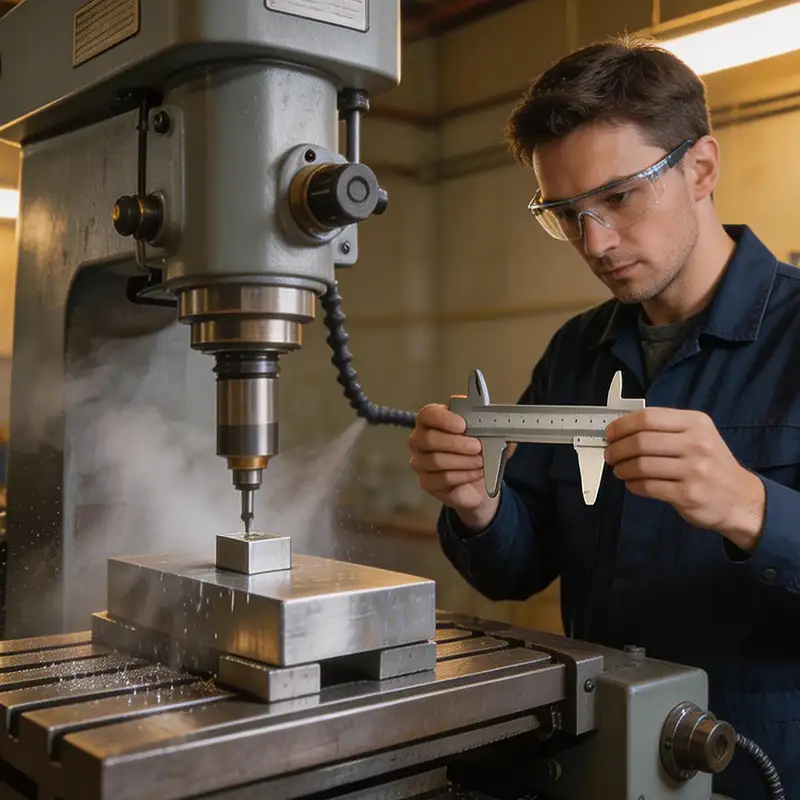
Now we move to the shop floor. An operator secures the raw material (like a block of aluminum or steel) firmly onto the machine’s bed or into a vise. They then load the correct cutting tools (end mills, drills, etc.) into the machine’s spindle and carefully set the tool and workpiece origins. This setup is crucial—even a tiny misalignment here can affect the final part’s accuracy.

The Magic Happens: Automated Machining

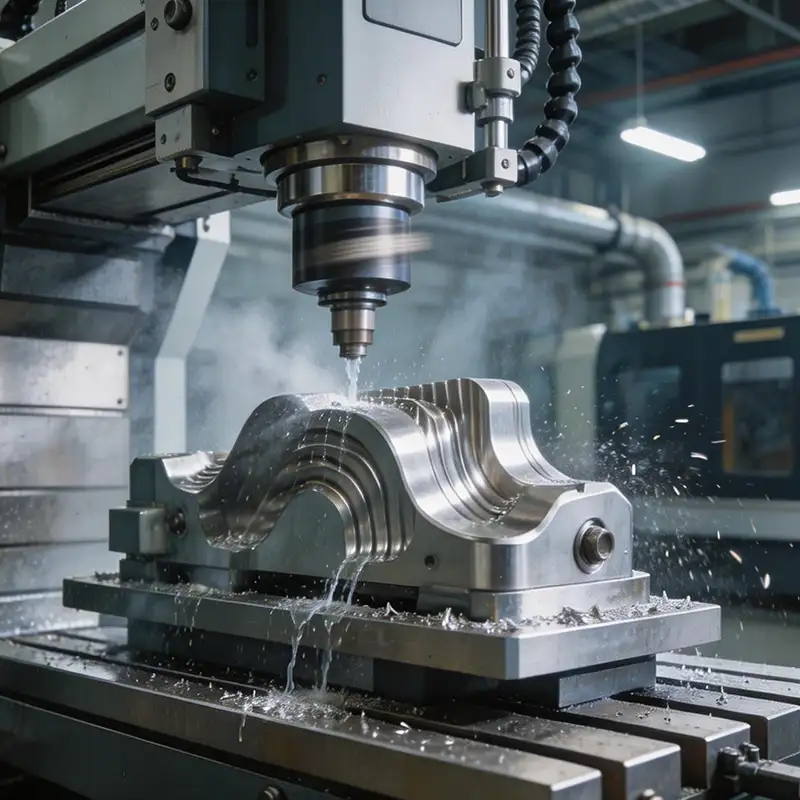
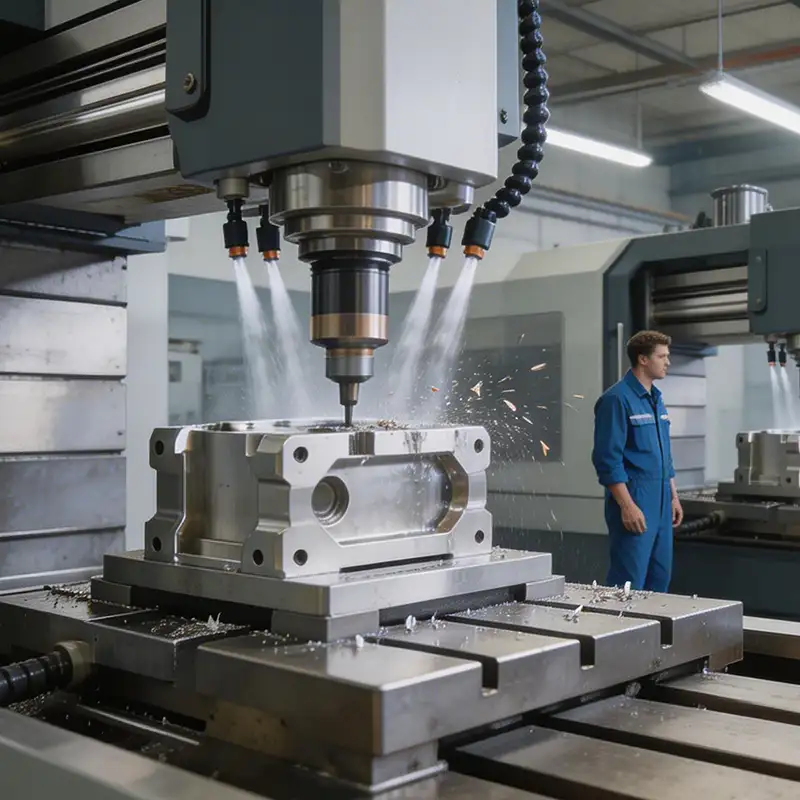
With the click of a button, the automated cycle begins. The CNC machine (which could be a mill, lathe, or router) follows the G-code program precisely. The spindle spins the cutting tool at high speeds, while motors move the tool and/or workpiece along multiple axes (like X, Y, and Z) to gradually remove material. This subtractive manufacturing process continues until the part emerges from the raw block, matching the CAD model. The level of automation in modern computer numerical control systems is what allows for such incredible repeatability.

The Final Touch: Post-Processing

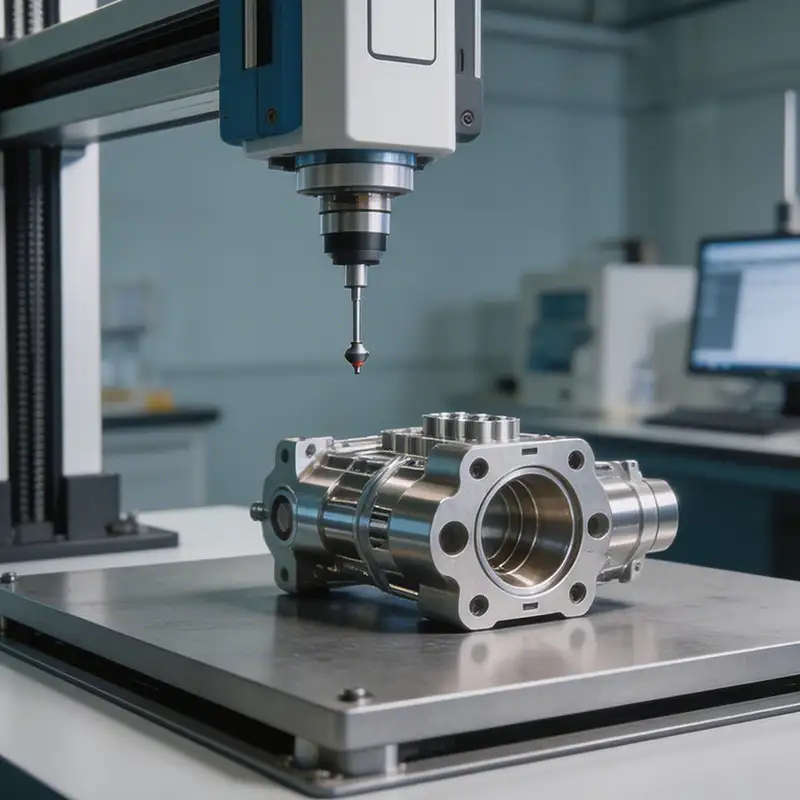
Once the main machining is done, the part often needs a little extra love. This can involve deburring (removing sharp edges), sanding, polishing, or applying surface treatments like anodizing or plating. For the highest levels of accuracy, the part might be measured on a Coordinate Measuring Machine (CMM) to verify every dimension is perfect. This final quality check is a hallmark of true high-precision machining.

Why Precision Matters: The Core Value of CNC

So, why go through all these steps? The real power of precision CNC machining lies in its outcomes. First, it delivers exceptional accuracy and consistency. You can produce ten, a hundred, or a thousand parts, and each one will be virtually identical—a game-changer for assembly and reliability. Second, it can handle incredibly complex geometries that would be impossible or prohibitively expensive to make by hand. Third, it works with a vast range of materials, from plastics and aluminum to tough alloys like titanium. This makes it indispensable for industries like aerospace, medical devices, and automotive, where there’s zero room for error. If you’re curious about the standards for these tolerances, organizations like ASME publish widely accepted guidelines.

Getting the Best Results: Helpful Tips for Your Project

If you’re considering using CNC services, here’s some friendly advice from the workshop. First, invest time in a clean, well-thought-out CAD design. Clearly defining your tolerances and critical features here saves headaches later. Second, choose the right material for your part’s function—don’t just default to the most common one. Third, communicate openly with your machining partner! Ask them for Design for Manufacturability (DFM) feedback; they can often suggest small tweaks that make the part easier and more cost-effective to produce without compromising your design intent.

Clearing the Air: Common Misconceptions About CNC

Let’s tackle a couple of myths I often hear. One is that “CNC is only for huge production runs.” Not true at all! While it’s great for volume, it’s also perfect for prototyping and low-volume custom parts because the setup is digital. Another misconception is that it’s a “set it and forget it” process. While highly automated, it still requires skilled programmers and operators to plan the process, select tools, and ensure everything runs smoothly. Think of it as a powerful tool guided by expert hands. Finally, some wonder, how does CNC milling work differently from turning? Simply put, milling uses a rotating tool on a stationary (or moving) workpiece, while turning (on a lathe) rotates the workpiece against a stationary tool. Both are essential branches of the machining family tree!
Categories
CNC Machining Basics

What Is Precision CNC Machining? Your Friendly Guide to the Basics

Precision CNC machining is a sophisticated manufacturing process where computer-controlled machines remove material from a solid block to create intricate, high-tolerance parts. It’s the backbone of modern industry, turning digital designs into physical reality with incredible accuracy. Let’s break down how it works and why it’s so vital.

Understanding the Fundamentals of Precision CNC Machining

So, you’re curious about precision CNC machining? Think of it as a super-skilled robotic sculptor. Instead of a chisel, it uses spinning cutting tools to carve a part out of metal, plastic, or other materials. The magic is in the “CNC” part – Computer Numerical Control. This means a computer program (often called G-code) tells the machine exactly where to move, how fast to spin, and how deep to cut, all with microscopic precision. This process is also widely known as subtractive manufacturing or CNC milling and turning.

CNC vs. Traditional Machining: What’s the Big Difference?

Imagine a master craftsperson making a part by hand on a manual lathe. It requires immense skill, is relatively slow, and each piece might have tiny variations. Now, imagine that craftsperson’s expertise translated into perfect digital instructions. That’s CNC machining. The computer control eliminates human error in the cutting process, allows for incredibly complex geometries that are impossible to make manually, and can produce the same perfect part over and over again. It’s the difference between handwriting a letter and printing it – both get the message across, but one is perfectly consistent and efficient for large volumes.

The Incredible Value and Real-World Applications

You might wonder, What is precision machining used for?” The answer is: almost everywhere! Its true value lies in creating reliable, high-performance components. If you’ve ever flown on a plane, received medical treatment, or used a smartphone, you’ve indirectly relied on precision machined components. In aerospace, it makes lightweight, strong engine parts. In medical device manufacturing, it creates life-saving implants like knee replacements with perfect biocompatible surfaces. For the automotive industry, it produces everything from complex engine blocks to custom performance parts. The key benefit is achieving tight tolerances – we’re talking about dimensions accurate to within the width of a human hair or even less. This level of high-precision manufacturing ensures parts fit together perfectly and perform flawlessly under stress. For a deeper dive into the technical standards behind this, you can explore resources from the American Society of Mechanical Engineers (ASME).

Getting Started: Your First Steps with a CNC Project

Let’s say you have a brilliant idea for a custom part. How do you make it a reality with CNC manufacturing? First, you need a digital 3D model, typically created in CAD (Computer-Aided Design) software. This is your part’s blueprint. Next, that CAD file is converted into machine instructions (CAM – Computer-Aided Manufacturing). Here’s a friendly tip: communicate clearly with your machine shop! Provide detailed drawings, specify the material (like aluminum, stainless steel, or PEEK plastic), and discuss the critical tolerances. Not every surface needs to be ultra-precise, which can save time and cost. A good shop will guide you on design for manufacturability (DFM) to optimize your design for the machining process. Asking how does CNC machining work for my specific design?” early on is the best way to ensure a smooth project.

Clearing Up Common Misconceptions

There are a few myths about precision CNC services we should clear up. One big one is that it’s only for giant companies doing mass production. While it’s excellent for production runs, it’s also perfect for prototyping and small batches thanks to its flexibility. Another misconception is that it’s prohibitively expensive. For simple designs and common materials, it can be quite cost-effective, especially when you consider the reduced labor and scrap waste compared to manual methods. Finally, some think the process is fully “hands-off.” While the cutting is automated, it relies on highly skilled programmers and machinists to set up the machines, choose the right tools, and oversee the entire operation. It’s a blend of advanced technology and human expertise.

Wrapping It All Up

In a nutshell, precision CNC machining is a transformative manufacturing method that combines digital design with automated, ultra-accurate cutting. It’s the reason we have advanced technology, safer vehicles, and innovative medical treatments. Whether you’re an engineer designing a new product or a hobbyist curious about how things are made, understanding this process opens up a world of possibility. It’s not just about making things; it’s about making things perfectly. So, the next time you see a complex metal component, you’ll know there’s a good chance a friendly CNC machine played a key role in its creation.

Categories
CNC Machining Basics

Discover Why Use Precision CNC Machining for Superior Results

When you need parts that fit perfectly every single time, precision CNC machining is the go-to solution. This guide explores the core benefits of this advanced manufacturing process, from unmatched accuracy to incredible material versatility, explaining why it’s essential for achieving superior, reliable results in your projects.

Unmatched Accuracy and Repeatability

Let’s start with the most obvious reason: precision. When we talk about precision machining, we’re referring to the ability to produce parts with extremely tight tolerances, often within microns. Imagine you’re assembling a high-performance engine or a medical device; a tiny deviation can lead to failure. That’s where CNC precision shines. The computer-controlled process follows the digital design to the letter, eliminating the human error you might find in manual machining. Once the program is perfect, the machine can reproduce that exact part hundreds or thousands of times with incredible consistency. This repeatability is a game-changer for maintaining quality across large production runs.

Why Tight Tolerances Matter

You might wonder, “How critical can a thousandth of an inch really be?” In many industries, it’s everything. For instance, in aerospace or precision manufacturing for medical implants, components must fit together seamlessly under extreme stress or within the human body. This level of high precision machining ensures safety, functionality, and longevity. It’s the difference between a part that works and one that becomes a costly liability.

Ability to Create Complex Geometries

Another compelling reason to use CNC machining is its capability to handle designs that would be impossible or prohibitively expensive with other methods. Need intricate contours, deep cavities, or complex 3D shapes? A multi-axis CNC machine can approach the material from almost any angle in a single setup. This flexibility allows engineers and designers to innovate without being constrained by manufacturing limitations. Whether it’s a custom bracket with organic curves or a mold with fine details, CNC milling and turning bring the most sophisticated blueprints to life.

Incredible Material Versatility

One of the fantastic aspects of CNC processing is its compatibility with a vast range of materials. From metals like aluminum, stainless steel, and titanium to various plastics, composites, and even wood, the same machine can be adapted to cut them all. This versatility answers the question of why choose CNC machining for prototyping. You can test your design in the final intended material right from the start, getting a true sense of its performance, weight, and feel. It removes the guesswork and helps you make better decisions early in the development cycle.

Enhanced Efficiency and Scalability

Efficiency isn’t just about speed; it’s about smart workflow. Once the initial setup and programming are complete, CNC machines can run with minimal supervision, often through the night. This automation of the cutting process translates to faster turnaround times and lower labor costs per part. Furthermore, scaling up is straightforward. Whether you need 50 units or 50,000, the process remains consistent. This seamless transition from low-volume to high-volume production makes precision CNC services incredibly cost-effective in the long run. For a deeper dive into manufacturing processes, you can explore resources from the American Society of Mechanical Engineers (ASME).

From Prototype to Production

This scalability is a key benefit of CNC machining. You can use the same machine and program to create a one-off prototype for verification and then immediately ramp up to full-scale production. There’s no need to retool or change the entire manufacturing method, which saves a tremendous amount of time and money. It provides a smooth, reliable path from your initial concept to market.

Superior Surface Finish and Part Integrity

Finally, let’s talk about quality. Precision computer numerical control doesn’t just shape a part; it can leave an excellent surface finish right off the machine. The controlled, precise movement of the cutting tool results in cleaner cuts with less burr and stress on the material. This means parts often require less secondary finishing work, and the material’s structural integrity is better preserved. For components subject to fatigue or precise mating, this superior finish and integrity are crucial for performance and durability. In essence, choosing precision CNC is an investment in a superior final product that looks, feels, and performs exactly as intended.

Categories
CNC Milling & Turning

What Is 5-Axis CNC Machining? Your Friendly Guide to How It Works

Welcome! If you’ve ever wondered how complex parts for airplanes or medical devices are made, you’re in the right place. This guide breaks down 5-axis CNC machining in simple terms, explaining how it works and why it’s such a game-changer for creating intricate, high-precision components.

Understanding the Fundamentals of 5-Axis Machining

Let’s start at the beginning. You might be familiar with a basic drill press that only moves up and down—that’s essentially one axis. 5-axis CNC milling is a massive leap from that. Think of it as giving a cutting tool the freedom to approach a workpiece from almost any angle. This capability is central to modern multi-axis machining and is what sets it apart from more common 3-axis methods.

What Are These “Axes” Anyway?

It’s simpler than it sounds! The three linear axes are straightforward: X (left to right), Y (front to back), and Z (up and down). A 5-axis CNC machine adds two rotational axes, typically called A and B or A and C. The A-axis rotates around the X-axis, and the B-axis rotates around the Y-axis. This rotation allows the cutting tool to tilt and swivel, making contact with the workpiece from directions that were previously impossible without manually repositioning it. This is the core of simultaneous 5-axis machining.

How It Works & The Value It Brings

So, what does this mean for making things? The benefits are huge and answer the common search for benefits of 5-axis CNC. Imagine you’re sculpting a detailed model out of clay. If you can only work from the top, you’ll have to constantly stop, turn the model, and try to match up your cuts. A 5-axis machine is like having a magical tool that lets you smoothly carve from the side, underneath, and at compound angles without ever letting go.

The Magic of a Single Setup

One of the biggest advantages is reduced setup time. In traditional machining, a complex part might need to be clamped down in five different positions to machine all its sides. Each setup introduces potential error and takes time. With a 5-axis system, the part is fixed once, and the machine’s head and table do all the moving. This not only speeds up production but also dramatically improves accuracy.

Tackling Complex Geometries with Ease

This technology shines when creating parts with complex contours and undercuts. Industries like aerospace rely on it for turbine blades and structural components with organic shapes. The medical field uses it for precise orthopedic implants and surgical tools. Even the automotive and mold-making industries benefit from the ability to create sleek, aerodynamic, or intricately detailed forms in one go. It’s the go-to solution for high precision machining of sophisticated parts.

Getting Started: Practical Advice for Your Projects

If you’re considering 5-axis machining services for a project, here’s some friendly advice. First, have a clear 3D CAD model—this is non-negotiable. The machine’s computer (the CNC) needs that digital blueprint. Second, communicate closely with your machining partner. Discuss the part’s function, tolerances, and material. Sometimes, a feature that looks tricky might be easy for a 5-axis machine, and vice-versa. A good partner can help optimize your design for manufacturability. You can learn more about the principles of CNC from resources like the Engineering.com platform.

Clearing Up Common Misconceptions

Let’s bust a few myths! A common one is that 5-axis CNC machining is always the best and fastest choice. Not necessarily. For a simple flat bracket with holes, a 3-axis machine is faster and more cost-effective. The 5-axis capability is for complexity. Another myth is that it’s impossibly expensive. While the machines are a significant investment, the total cost for your part might be lower due to reduced labor, setup time, and improved accuracy leading to less waste. It’s about the total value, not just the hourly rate.

Wrapping It All Up

In a nutshell, 5-axis CNC machining is a powerful manufacturing process that uses two extra rotational axes to machine complex parts from nearly any direction in a single setup. It’s the secret behind many of the advanced, high-performance components we rely on today. Whether you call it multi-axis milling or 5-axis CNC fabrication, the goal is the same: to create precise, intricate parts more efficiently. For the latest standards and technical insights, referring to authoritative sources like ASME (The American Society of Mechanical Engineers) is always a great idea. I hope this friendly guide has helped demystify how it all works!

Categories
CNC Milling & Turning

What Is 4-Axis CNC Machining? A Beginner’s Friendly Guide

Welcome to the world of 4-axis CNC machining! If you’re curious about what sets it apart from the more common 3-axis machines, you’re in the right place. This guide will walk you through the basics, explain why it’s so useful, and show you how it opens up new possibilities for creating complex parts with incredible precision.

Understanding 4-Axis CNC Machining

Let’s start with the basics. You might already be familiar with 3-axis CNC milling, where the cutting tool moves along the X, Y, and Z axes. 4-axis CNC machining adds a whole new dimension to this—literally. It introduces a rotational movement, typically around the X-axis, which we call the A-axis. This means the workpiece can spin while the tool cuts, allowing access to multiple sides without manually repositioning it. Think of it like a potter’s wheel for metal and plastic; the part rotates, and the tool can work on its circumference with amazing accuracy.

The Fourth Axis Explained

This rotational capability is the game-changer. In technical terms, this is often referred to as indexing or continuous 4th axis machining. In indexing mode, the machine rotates the part to a fixed position, locks it, and then makes cuts—perfect for drilling holes on a cylinder. In continuous mode, the rotation and cutting happen simultaneously, which is essential for machining complex contours like camshafts or helical gears. It’s this flexibility that answers the common search query, how does 4 axis CNC work.

The Value of 4-Axis Machining

So, why would you choose a 4 axis mill over a standard 3-axis one? The benefits are pretty compelling. First, it dramatically improves accuracy for complex parts. Since the part is set up once, you eliminate the cumulative errors that can creep in from multiple manual re-fixturings. Second, it’s a huge time-saver. Machining multiple sides in one operation slashes production time. Imagine making a custom automotive manifold or a detailed aerospace bracket; what used to take several setups now happens in one smooth, automated process. This efficiency is a major reason shops invest in CNC milling with 4th axis capabilities.

Getting Started: Practical Advice

If you’re considering 4-axis CNC milling for a project, here’s some friendly advice. It’s not always the default choice, but for the right job, it’s unbeatable.

When to Use 4-Axis Machining

We suggest you look at 4-axis technology when your part has features on multiple sides or involves curved, cylindrical geometries. Common applications include machining cylindrical cams, engraving around a cylinder, or creating precision parts with angled features. If you find yourself constantly flipping a part in a 3-axis vise, it’s a strong signal that a 4 axis CNC machine could streamline your workflow. For a deeper dive into multi-axis strategies, the engineering.com resource library has some excellent, beginner-friendly articles.

Key Considerations for Beginners

The jump from 3-axis to 4-axis involves more than just hardware. Your CAM (Computer-Aided Manufacturing) software needs to support the extra axis for toolpath generation. Also, workholding becomes crucial—you need a reliable rotary table or indexer to secure the part while it spins. Don’t worry, though; many modern machines and software packages are designed with this integration in mind, making the learning curve much friendlier than you might think.

Clearing Up Common Misconceptions

Let’s tackle a few myths head-on. A big one is that 4-axis CNC machining is just for ultra-complex, expensive aerospace parts. Not true! Many small job shops use it for more accessible products like custom furniture details, musical instrument components, or specialized prototypes. Another misconception is that it completely replaces 3-axis machines. In reality, they often work together. A 3-axis machine might rough out a part, which then goes to the 4-axis for finishing intricate details. It’s about choosing the right tool for the job.

Wrapping Up: Is 4-Axis Right for You?

In summary, 4-axis CNC machining is a powerful step up that adds rotational movement to create more complex parts with greater efficiency and precision. It’s the ideal solution for parts requiring work on multiple faces or cylindrical contours. While it requires an understanding of new programming and setup techniques, the payoff in capability and time savings is immense. Whether you’re exploring what is multi axis machining or considering an upgrade, this technology opens a door to a wider range of creative and technical possibilities in modern manufacturing.

Categories
CNC Milling & Turning

What Is CNC Turning Service? Your Friendly Guide to Precision Machining

Ever wondered how those perfectly round, intricate metal parts in machines are made? That’s often the magic of CNC turning. This guide breaks down this essential precision machining service in a friendly, easy-to-understand way, explaining how it works, why it’s so valuable, and how you can use it for your projects.

Understanding CNC Turning: A Key Precision Machining Process

Let’s start with the basics. Imagine a piece of material, like a metal rod, spinning at high speed. Now, imagine a sharp, stationary cutting tool being carefully moved against it, shaving away layers to create a specific shape. That’s the heart of CNC turning in a nutshell! It’s a form of subtractive manufacturing where the workpiece rotates, and the tool does the cutting. The “CNC” part stands for Computer Numerical Control, which means a computer program guides every single movement of the machine with incredible accuracy. This process is also commonly referred to as lathe machining or simply turning. So, when you ask “what is a CNC turning service?”, you’re asking about a shop that uses these computer-controlled lathes to create cylindrical parts from your designs.

Why Use a CNC Turning Service? The Core Benefits

You might be thinking, “Couldn’t I just use a manual lathe?” Well, you could, but partnering with a professional CNC turning company unlocks a world of advantages that manual work simply can’t match consistently. It’s like having a master craftsman who never gets tired and makes zero calculation errors.

Unmatched Precision and Repeatability

This is the superstar benefit. Because a computer follows the digital instructions (called G-code), every cut is exact. Need 10, 100, or 10,000 identical parts? A CNC lathe service will produce part #10,000 that is virtually indistinguishable from part #1. This level of consistency is crucial for industries like aerospace, medical devices, and automotive, where a tiny variance can cause big problems. The precision achievable is often within thousandths of an inch (or hundredths of a millimeter).

Incredible Material Versatility

Whether you’re working with aluminum, stainless steel, brass, titanium, or even tough plastics like PEEK, a good precision turning service can handle it. Different materials require different cutting speeds, tools, and approaches, and professional machinists have the expertise to select the right parameters for each job. This versatility makes it a fantastic solution for prototyping and production across countless applications.

How to Get Started with a Lathe Machining Service

Ready to turn your idea into a tangible part? The process is more straightforward than you might think. Here’s a friendly, step-by-step approach to engaging with a CNC turning shop.

Step 1: Preparing Your Design

It all starts with a good design. You’ll need to create a 3D CAD (Computer-Aided Design) model and a 2D drawing with critical dimensions and tolerances. Don’t worry if you’re not a CAD expert—many shops offer design assistance. The key is to think about how to design for CNC turning: avoid overly complex internal features that are hard to reach with a tool, and consider the starting size of your raw material. Providing clear files is the best way to get an accurate quote and a perfect part.

Step 2: Choosing the Right Machining Partner

Not all shops are the same. Look for one with experience in your specific industry or part type. Check their capabilities—do they have multi-axis turning centers for complex parts? Can they provide secondary services like milling or finishing? Reading reviews and asking for examples of past work (like a CNC turned parts portfolio) can give you great insight. A good partner will communicate clearly, ask questions about your application, and guide you through material selection and design optimization. For authoritative information on machining standards, you can refer to resources like the American Society of Mechanical Engineers (ASME).

Clearing Up Common Misconceptions About Turning

Let’s tackle a few myths head-on! A common one is that CNC turning and milling are the same thing.” They’re actually complementary brothers in the machining world. Turning rotates the workpiece; milling typically moves a rotating tool around a stationary workpiece. They create different types of geometries. Another misconception is that it’s only for huge production runs. Not true! Many shops excel at low-volume and prototype CNC turning, making it accessible for inventors and small businesses. Finally, some think it’s prohibitively expensive. While there are costs for setup and programming, the efficiency and material savings often make it cost-effective, especially when you factor in the reduced scrap and labor compared to manual methods.

Wrapping Up: Is CNC Turning Right for You?

So, is a CNC turning service the solution for your project? If you need cylindrical, conical, or radially symmetric parts made from metal or plastic with high precision and consistency, the answer is very likely yes. From simple shafts and bushings to complex fittings and connectors, rotational machining is a foundational manufacturing process. My best advice? Start a conversation with a reputable shop. Share your goals and challenges—a good machinist will be your ally in figuring out the best path forward to bring your precise component to life.

Categories
CNC Materials

Can CNC Machine Brass? 5 Expert Tips for Perfect Results

Absolutely! Brass is one of the most machinable metals for CNC processes. Its excellent properties make it a favorite for precision parts, but achieving flawless results requires specific know-how. This guide dives into why brass is so suitable for CNC milling and turning and shares five practical tips to help you get perfect finishes every time.

Expert Strategies for CNC Machining Brass Successfully

If you’re wondering, “can a CNC mill handle brass?” or “is brass good for CNC machining?”, you’re in the right place. I’ve worked with this material for years, and I can tell you it’s a joy when you get it right. The key is understanding its personality. Unlike tougher metals, brass is relatively soft and free-machining, which means you can often run your machines faster. But that softness also means it’s easy to mar the surface or get unwanted burrs. Let’s walk through the essentials to turn your brass CNC projects from good to great.

Why Brass is a CNC Machining Superstar

Before we jump into the tips, let’s talk about why brass, or copper zinc alloy, is such a popular choice. Its machinability rating is high, often used as a benchmark against other metals. This makes operations like CNC milling brass and CNC turning brass highly efficient. The chips break cleanly, tool wear is minimal, and you can achieve fantastic surface finishes. It’s no wonder it’s used for everything from intricate electrical connectors to beautiful architectural hardware.

Key Material Properties for Machining

Not all brass is the same. The most common type you’ll encounter is C36000, known as “free-cutting brass.” It contains a small amount of lead, which gives it those superb chip-breaking qualities. If you’re looking for a lead-free option for precision brass parts, alloys like C38500 or C46400 (Naval Brass) are excellent alternatives, though they may require slight adjustments to your machining parameters.

Tip 1: Master Your Tool Selection

Choosing the right cutter is half the battle. For machining brass on a CNC mill, sharp, polished flutes are your best friend. I highly recommend using uncoated or polished carbide end mills. The sharp edge shears the material cleanly without rubbing, which prevents built-up edge and gives you that smooth finish. For drills, standard HSS or carbide drills work well, but ensure they have a sharp point angle (around 118-135 degrees) for clean entry.

Tip 2: Dial in Speeds and Feeds

Here’s where many folks get tripped up. Because brass is soft, there’s a temptation to run slow. Actually, you want high surface speed and a moderate to high feed rate. A slow feed can cause the tool to rub instead of cut, generating heat and work-hardening the surface. A good starting point is a high RPM with a chip load per tooth that ensures you’re taking a healthy bite. Always refer to your tool manufacturer’s data, but don’t be afraid to push the limits a bit—brass can usually handle it!

Tip 3: Manage Coolant and Chip Control

You might ask, “do I need coolant for brass machining?” Often, you can get away with an air blast or mist coolant, which is perfect for clearing chips. The real goal is chip evacuation. Those beautiful, broken chips can quickly re-cut and scratch your part’s surface if they aren’t cleared away. Using compressed air or a coolant mist directed at the cut keeps everything clean and cool. For deep pocket milling or drilling, a flood coolant can help, but it’s not always necessary.

Tip 4: Secure and Stable Workholding

Brass is ductile, so it can flex or vibrate if not held firmly. This vibration, or chatter, will ruin your surface finish and dimensional accuracy. Use sturdy vises, proper step clamps, or even soft jaws machined to fit your part’s contour. The goal is maximum contact and rigidity. A little extra time setting up your workholding pays off massively in the quality of your final CNC machined brass components.

Tip 5: Don’t Forget Post-Processing

Your part might look perfect off the machine, but a few post-processing steps can make it shine—literally. Deburring is crucial. A hand deburring tool, a vibratory tumbler, or even a specific brass CNC machining service that offers tumbling can remove those tiny sharp edges. For a brilliant finish, you can polish it. A great resource for understanding finishing options is the Copper Development Association website, which has extensive information on copper alloys.

Common Mistakes to Avoid with Brass

Let me share a quick story. A friend once complained about poor tool life while fabricating brass parts. Turns out, he was using a coated end mill designed for steel. The coating wasn’t needed and actually reduced performance. The lesson? Don’t overcomplicate it. Also, avoid letting the tool dwell in the cut, as this can cause unwanted marking. And finally, always account for brass’s higher thermal expansion compared to steel when holding tight tolerances on larger parts.

So, can you CNC machine brass? You bet! With its superb machinability and these focused tips on tooling, parameters, and handling, you’re set up for success. Remember, start with a free-machining grade like C360, use sharp tools, run them fast and confidently, and keep those chips moving. Happy machining!

Categories
CNC Milling & Turning

What Is CNC Milling Service? A Beginner’s Friendly Guide

Ever wondered how complex metal or plastic parts are made with such incredible precision? That’s often the magic of CNC milling. This guide breaks down what a CNC milling service is, how it works, and why it’s a cornerstone of modern manufacturing, all in simple, friendly terms.

Understanding CNC Milling Services

Let’s start with the basics. CNC stands for Computer Numerical Control. So, a CNC milling service is a manufacturing process where a computer directs a cutting tool to carve material away from a solid block. Think of it like a super-precise, automated sculptor that can follow digital instructions to the letter. This process is a core part of subtractive manufacturing, where you start with more material and remove what you don’t need. It’s different from 3D printing (additive manufacturing), which builds parts layer by layer.

How Does a CNC Milling Machine Work?

It all begins with a digital blueprint, usually a 3D CAD (Computer-Aided Design) file. This design is translated into a set of instructions called G-code, which tells the CNC mill exactly where to move, how fast to spin the cutter, and how deep to cut. The machine then uses rotating cutting tools to shave off material—be it aluminum, steel, plastic, or even wood—with incredible accuracy. The result? Highly repeatable, complex parts that would be very difficult or time-consuming to make by hand.

The Value of Using a CNC Milling Service

You might be asking, “Why should I consider precision machining for my project?” The benefits are pretty compelling. First and foremost is precision and consistency. Once the program is set, a CNC machining service can produce the first part and the thousandth part virtually identical. This is crucial for industries like aerospace or medical devices. It also allows for incredible complexity—think intricate geometries, internal channels, and fine details. While the initial setup has a cost, for medium to high production runs, it becomes very cost-effective and fast. Plus, it works with a huge range of materials, giving you tons of flexibility.

Getting Started with CNC Machining

Ready to turn your idea into a physical part? The process is more collaborative than you might think. A good milling service provider will guide you through it. Here’s a friendly overview of what to expect.

Preparing Your Design Files

This is your most important step. You’ll need to provide a 3D model. Common file formats include STEP and IGES, which are great for conveying the complete geometry. The service’s engineers will then use CAM (Computer-Aided Manufacturing) software to plan the toolpaths—essentially, creating the roadmap for the machine. A pro tip? Design with manufacturability in mind. Avoiding overly sharp internal corners and considering how the tool will access all surfaces can save time and cost. Resources like the ASME Digital Collection offer great insights into design for manufacturability principles.

Choosing the Right Material

The material you choose impacts strength, weight, appearance, and cost. For prototypes, machinable plastics like ABS or Delrin are popular and cost-friendly. For final metal parts, aluminum 6061 is a fantastic all-rounder—it’s strong, lightweight, and easy to machine. For higher strength needs, you might look at steel or titanium. Your machining partner can help you weigh the options based on your part’s function and budget.

Clearing Up Common Misconceptions

Let’s tackle a few myths head-on. A big one is that CNC milling is only for giant corporations. Not true! Many machine shops cater to startups, engineers, and even hobbyists needing one-off prototypes or small batches. Another is that it’s always prohibitively expensive. While not cheap for a single simple bracket, the value for complex, precise, or multiple parts is often unbeatable. Finally, it’s not a “set it and forget it” magic box. It requires skilled programmers and machinists to set up, monitor, and ensure quality—the computer controls the machine, but human expertise drives the process. You can learn more about the technical standards behind the process from organizations like ISO.

Wrapping Up: Is CNC Milling Right for You?

So, is a computer numerical control milling service the right choice for your project? If you need parts with high dimensional accuracy, complex features, or consistent quality across multiple units, then the answer is likely yes. It’s the workhorse behind everything from custom car components to specialized research equipment. My best advice is to start a conversation with a reputable machine shop. Share your design and goals; they can provide a feasibility check and a quote. Bringing an idea from a screen to your hand is an amazing process, and CNC machining is one of the most reliable ways to make it happen.

Categories
CNC Materials

Can CNC Machine Titanium? 5 Expert Tips for Success

Absolutely, CNC machines can process titanium, but it’s a challenging material that demands respect and specific know-how. Success lies in understanding its unique properties and adapting your machining strategy accordingly. This guide will walk you through five essential expert tips to help you machine titanium parts effectively and efficiently.

Understanding Titanium’s Machining Nature

Before we dive into the tips, let’s get to know our material. Titanium isn’t your average metal. It’s incredibly strong yet lightweight, and it has excellent corrosion resistance—properties that make it a superstar in aerospace, medical implants, and high-performance automotive parts. However, these same benefits are what make titanium machining so tricky. People often ask, Is titanium hard to machine? and the short answer is yes, but it’s absolutely doable with the right approach. The key is to think of it not as a harder steel, but as a unique material with its own rules.

Key Challenges and Material Properties

The main hurdles in CNC milling titanium come from its material science. Titanium has a low thermal conductivity, meaning the heat generated during cutting doesn’t dissipate into the chip or the workpiece easily. Instead, it concentrates on the cutting tool edge, leading to rapid wear. It’s also prone to work hardening and can gall or weld to the tool if you’re not careful. Understanding these titanium alloy machining challenges is your first step toward conquering them. For a deep dive into titanium’s material properties, resources like the ASM International handbook are invaluable.

Tool Selection and Geometry Are Paramount

You wouldn’t use a butter knife to carve hardwood, right? The same logic applies here. For machining titanium on a CNC, your tool choice is critical. We strongly recommend using carbide end mills specifically designed for high-temperature alloys. Look for tools with a sharp, polished cutting edge and a geometry that promotes strong shearing action and efficient chip evacuation. Coatings like AlTiN (Aluminum Titanium Nitride) can provide an extra layer of thermal protection. Remember, a slightly more expensive tool that lasts longer and performs better will save you money and headaches in the long run compared to a standard tool that fails quickly.

Mastering Cutting Parameters and Techniques

This is where the art meets the science. The golden rule for how to CNC titanium is to maintain a consistent, controlled chip load. You want to avoid letting the tool rub or dwell in the cut, as this generates excessive heat. We suggest using lower cutting speeds (SFM) than you would for steel, but with a higher feed rate and a conservative depth of cut. This “high feed, light cut” strategy keeps the tool engaged in productive cutting, carries heat away in the chip, and minimizes the time the tool spends in contact with the workpiece. It’s a balancing act that prevents work hardening and extends tool life dramatically.

Workholding, Coolant, and Chip Control

A flimsy setup is your worst enemy when processing titanium with CNC. Titanium parts can vibrate or deflect under cutting forces, ruining surface finish and accuracy. Ensure your workpiece is clamped as rigidly as possible. Next, flood coolant is non-negotiable—and not just any coolant. Use a high-quality, high-pressure coolant aimed directly at the cutting zone to combat heat and flush chips away. Effective chip control is vital; long, stringy titanium chips can re-cut themselves and damage the part or tool. Proper parameters and toolpaths should produce small, broken chips, which are much safer and easier to manage.

Post-Machining: Handling and Inspection

Your job isn’t over when the spindle stops. Titanium parts, especially thin-walled features common in aerospace CNC machining, can retain residual stresses. Handle them carefully to avoid bending. A thorough inspection is crucial. Check for any signs of smearing, galling, or micro-cracks, particularly along edges. Deburring needs a gentle touch—aggressive methods can induce stress. Finally, consider post-processing like stress relieving or specific surface treatments if required by the application. Taking these final steps ensures the quality and integrity of your meticulously machined titanium component.

Categories
CNC Materials

Can CNC Machines Cut Aluminum? 5 Essential Tips for Success

Absolutely! CNC machines are exceptionally well-suited for cutting aluminum. It’s one of the most popular materials in the machining world due to its excellent machinability, strength-to-weight ratio, and versatility. This guide will walk you through why aluminum is a machinist’s friend and share five key tips to ensure your projects are a success, from choosing the right tools to perfecting your finish.

Mastering Aluminum Machining with CNC Technology

If you’re wondering, “can a CNC machine cut aluminum?” or “is aluminum good for CNC machining?”, let me put your mind at ease. The answer is a resounding yes! In fact, milling aluminum on a CNC router or machining center is a fundamental process in workshops everywhere. The real question isn’t *if* you can do it, but *how well* you can do it. Aluminum’s properties make it a dream to work with compared to tougher metals, but to get those clean, precise, and efficient results, a little know-how goes a long way. Think of it like driving a high-performance car; it’s capable of amazing things, but you need to understand the controls to get the best ride.

Tip 1: Select the Right Aluminum Alloy for Your Project

Not all aluminum is created equal. Your first step to success is picking the correct grade. Choosing the wrong one can lead to poor surface finishes, tool wear, or even a part that doesn’t meet its strength requirements. It’s the foundation of your entire CNC aluminum fabrication process.

Understanding Common Alloys

You’ll often hear machinists talk about series like 6061, 7075, or 5052. Here’s a quick breakdown: 6061 aluminum is the most common general-purpose alloy. It’s highly weldable, has good corrosion resistance, and offers great all-around machinability, making it perfect for prototypes, brackets, and frames. For high-stress applications like aerospace components, 7075 aluminum is the go-to. It’s much stronger but also harder to machine. So, ask yourself: do I need maximum strength or easier machinability? Your answer will guide your aluminum material selection.

Tip 2: Optimize Your Cutting Tools and Parameters

This is where the magic happens. Using the wrong tool or running it too slow or fast is the most common pitfall. Proper setup here directly answers the search for “best tools for milling aluminum” and ensures efficient aluminum CNC milling.

Tool Selection is Key

For aluminum, you generally want sharp, polished flutes that help chips slide away easily. Carbide end mills are the standard. I often recommend a 3-flute end mill for a great balance of material removal and finish. For roughing, a tool with a variable helix can really help reduce vibration. And don’t forget about coatings! An uncoated or ZrN (zirconium nitride) coated tool often works better than the standard TiAlN used for steel, as it reduces the material’s tendency to stick to the tool.

Dialing in Feeds and Speeds

Running your spindle too slow can cause the tool to rub instead of cut, building up heat and loading up with material. Too fast, and you risk deflection or breaking the tool. A good starting point is to use a feeds and speeds calculator. Remember, aluminum likes high spindle speeds and high feed rates. This creates thin, easy-to-evacuate chips and carries heat away. It might feel counterintuitive at first, but a more aggressive cut can often give you a better finish and longer tool life.

Tip 3: Master Chip Control and Evacuation

In aluminum work, the chips are your enemy if they’re not managed. Recutting chips is a primary cause of poor surface finish and tool failure. Good chip evacuation is non-negotiable for quality precision aluminum machining.

You can help this process along. Using compressed air or a coolant mist directed at the cut can blast chips out of the way. For deep pocket operations, consider using a toolpath strategy like trochoidal milling or high-efficiency milling (HEM), which keeps the tool engaged consistently and helps break chips into manageable pieces. It’s like keeping your work area clean while you build a model—it prevents mistakes and makes everything smoother.

Tip 4: Use Effective Cooling and Lubrication

While aluminum dissipates heat well, the cutting zone can still get very hot. The right coolant or lubricant serves two main purposes: it cools the tool and workpiece, and it prevents aluminum from welding itself to the cutting edges of your tool (a problem called built-up edge or BUE).

For many hobbyists or smaller shops, a simple flood coolant or a robust mist system works wonders. If you’re using a CNC router without a full enclosure, a spray bottle with a dedicated aluminum cutting fluid or even isopropyl alcohol can be effective for light work. The goal is to keep things cool and slippery. Resources from organizations like the Society of Manufacturing Engineers (SME) offer deeper dives into metalworking fluids.

Tip 5: Secure Your Workpiece and Minimize Vibration

Aluminum is relatively soft, which means it can flex and vibrate during aggressive cuts. This chatter shows up as visible marks on your part and can damage your tools. A rigid setup is your best defense.

Use sturdy vises, clamps, or even specialized fixtures to hold your stock. For thin-walled parts, consider using soft jaws machined to the part’s contour for maximum support. Also, ensure your machine itself is on a solid foundation. Taking the time to get a rock-solid setup might seem tedious, but it pays off with a mirror-like finish and dimensional accuracy that makes your CNC aluminum parts look professionally made.

Wrapping Up Your Aluminum CNC Journey

So, can you machine aluminum on a CNC? Without a doubt. By focusing on these five areas—choosing the right alloy, optimizing your tools and speeds, managing chips, using coolant, and ensuring a rigid setup—you’ll transform from simply cutting aluminum to mastering it. Every project is a chance to learn and refine your process. Start with a forgiving alloy like 6061, apply these tips, and you’ll be producing clean, precise, and strong aluminum components in no time. Happy machining!

Request A Quote

We'll Send You Back with Price Immediately!

DEC 1-31

XMAS SPECEIL

Up to

40% off

Can CNC Machines Cut Aluminum? 5 Essential Tips for Success

We'll Send You Back with Price Immediately!