Categories
CNC Machining Basics

What Is CNC Machining Used For? 5 Surprising Real-World Examples

Ever wondered how complex metal and plastic parts are made with such incredible precision? The answer often lies in CNC machining. This guide will explore the diverse applications of CNC technology, moving beyond the factory floor to show you five surprising places where it shapes our everyday world.

Common Applications of CNC Machining Technology

When we talk about the uses of CNC machining, it’s easy to picture big industrial factories. And you’re right—it’s a cornerstone of mass production. But the real magic of computer numerical control is its incredible versatility. It’s a subtractive manufacturing process where a computer directs cutting tools to carve a solid block of material into a finished part. This method is fantastic for creating everything from simple brackets to geometries that would be impossible to make by hand. Whether you’re looking at CNC milling for complex 3D shapes or CNC turning for symmetrical parts, the technology’s core value is repeatable, high-precision fabrication.

1. Aerospace: Crafting the Sky’s Backbone

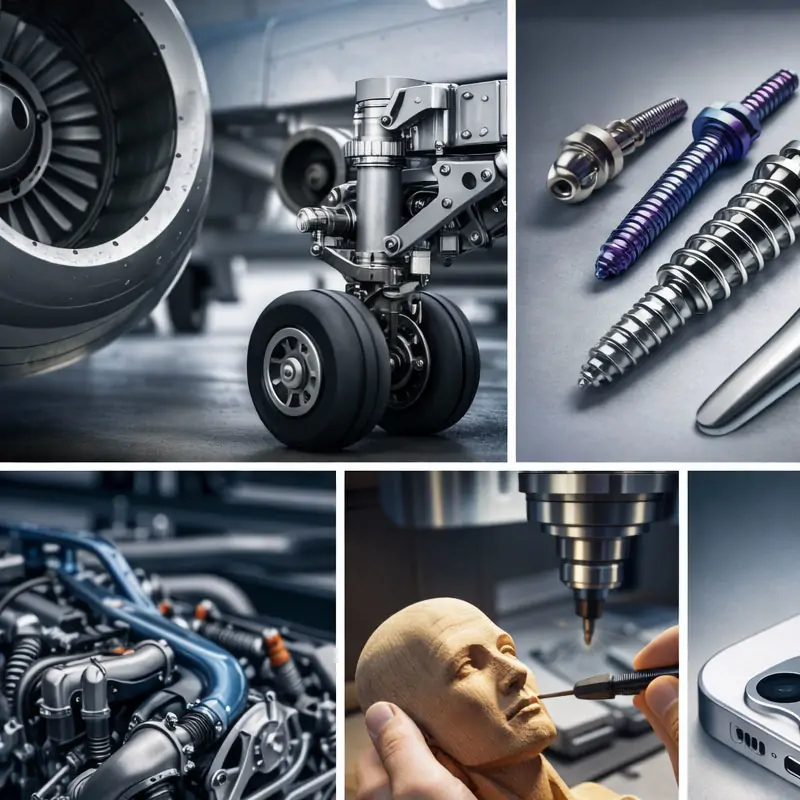
Let’s start high up—literally. The aerospace industry relies on CNC machining for some of its most critical components. Think about the landing gear, turbine blades, and structural brackets inside an aircraft. These parts face extreme stress, temperature changes, and must be incredibly lightweight. That’s where CNC manufacturing shines. It can work with tough materials like titanium and high-grade aluminum alloys, machining them into strong, complex, and lightweight forms that are essential for flight safety and fuel efficiency.

Why CNC is Non-Negotiable Here

The margin for error in aerospace is virtually zero. Every component must meet exacting specifications, and that’s a perfect job for a CNC machine shop. The process ensures that the tenth part produced is identical to the thousandth, which is crucial for maintenance and safety. For a deeper dive into the standards these parts must meet, you can read about aerospace manufacturing practices on NASA’s official website.

2. Medical: Precision for Life-Saving Devices

This is one of the most impactful applications of CNC technology. If you or a loved one has ever needed a knee replacement, a spinal implant, or even a intricate surgical tool, chances are it was made with CNC. These devices are not one-size-fits-all; they often need to be customized to fit a patient’s unique anatomy. CNC machining allows for this custom, patient-specific production from biocompatible materials like surgical-grade stainless steel or cobalt-chrome, all while maintaining a sterile, contaminant-free process.

Meeting the Highest Standards

The medical field demands the ultimate in precision and cleanliness, known as CNC precision machining. A hip implant, for example, must have a perfectly smooth surface to integrate with bone and a specific geometry to allow for natural movement. The controlled environment of a CNC machine, guided by detailed digital models from MRI or CT scans, makes this level of customization and quality not just possible, but routine.

3. Automotive: From Prototypes to High-Performance Parts

From the family sedan to a Formula 1 race car, CNC plays a huge role. In the development phase, engineers use CNC prototyping to create functional models of engine blocks, cylinder heads, and custom intake manifolds to test their designs. In aftermarket and racing, enthusiasts rely on CNC to produce high-strength, lightweight parts that can withstand incredible forces. So, when you’re searching for what can you make with a CNC machine in the auto world, the list is nearly endless.

The Role of CNC in Rapid Prototyping

Before a new car model hits the road, its parts are tested extensively. CNC machining allows teams to quickly turn a digital design into a physical part they can hold, test, and refine. This rapid prototyping speeds up innovation dramatically. It’s much faster than traditional tooling methods, letting engineers iterate designs until they get everything just right.

4. Art and Sculpture: Where Engineering Meets Creativity

Here’s a surprising one that answers the question what is the purpose of CNC milling beyond industry. Artists and sculptors are increasingly using CNC routers to create large-scale works, intricate furniture, and stunning architectural details. They can take a 3D model of a complex, organic shape and machine it from wood, foam, or soft metals. This doesn’t replace the artist’s vision; it gives them a powerful new tool to execute it with a level of detail and scale that would be incredibly time-consuming or impossible by hand.

The CNC Machine as an Artist’s Tool

Imagine a sculptor wanting to create a large, twisting metal sculpture. Instead of weeks of welding and shaping, they can design it on a computer and use a CNC machine to cut the pieces with perfect precision. They then assemble and finish the work. It’s a beautiful fusion of digital design and physical craftsmanship. You can see examples of how technology influences modern art at institutions like the Museum of Modern Art.

5. Consumer Electronics: The Tech in Your Pocket

Look at your smartphone, laptop, or smartwatch. The sleek metal casing, the precisely placed ports, the tiny internal brackets—many of these are made using CNC machining processes. For prototypes and low-to-medium volume production, CNC is ideal for creating the perfect unibody aluminum chassis that feels premium and durable. It allows for tight tolerances that ensure all the buttons, cameras, and screens fit together seamlessly.

Machining the Unseeably Small

The components inside our gadgets are getting tinier and more complex. Precision CNC machining can produce the small, heat-resistant fixtures that hold circuit boards or the precise molds used to make plastic components. This application shows how CNC isn’t just for big, heavy metal parts; it’s equally adept at creating the miniature, high-tolerance parts that make our modern digital life possible.

Concluding Thoughts on CNC Uses

So, what is CNC machining used for? As we’ve seen, it’s far more than just an industrial workhorse. It’s a fundamental technology that builds the planes we fly in, the medical devices that heal us, the cars we drive, the art that inspires us, and the electronics we depend on every day. Its power lies in transforming digital dreams into precise, reliable, and tangible reality. Whether you’re an engineer, a designer, or just someone curious about how things are made, the world of CNC machining is full of fascinating and surprising examples.
Categories
Machine Tools & Programming

Discover the 7 Essential Types of CNC Machines Explained

Ever wondered what the different kinds of CNC machines are? You’re in the right place! This guide will walk you through the seven most common types of CNC equipment, explaining what each one does best and how they’re used in modern manufacturing. Think of it as your friendly introduction to the world of automated machining.

CNC Milling Machines

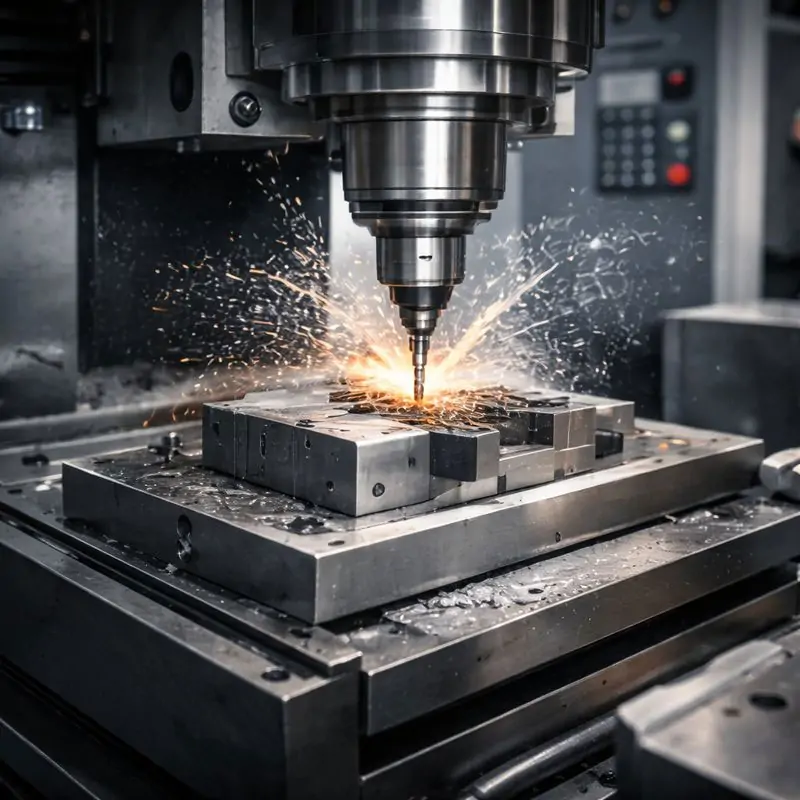
Let’s start with one of the most versatile players in the shop: the CNC mill. If you’re asking yourself, “what are the main categories of CNC equipment?”, this is a fantastic place to begin. Imagine a super-precise, computer-controlled drill that can move in multiple directions. That’s essentially a milling machine. It uses rotating cutting tools to remove material from a stationary workpiece, carving out complex shapes, slots, and holes. From creating engine blocks to intricate mold cavities, the CNC milling machine is a true workhorse. For a deeper dive into their history and mechanics, you can check out this resource from Modern Machine Shop.

Vertical Machining Centers (VMC)

A very popular subtype is the Vertical Machining Center, or VMC. Here, the spindle (the part that holds the cutting tool) is oriented vertically. It’s like the standard setup you might picture in a machine shop. VMCs are fantastic for detailed work on the top and sides of a part, making them a go-to choice for a huge range of CNC machining applications.

CNC Lathes

Now, let’s talk about the classic: the CNC lathe, often called a turning center. This machine flips the script. Here, the workpiece spins at high speed, and a stationary cutting tool is brought into contact with it to shave off material. This process, known as turning, is perfect for creating cylindrical or conical parts. Think shafts, bushings, and baseball bats. If you need something round and symmetrical, a lathe is your best friend. It answers the common query about different kinds of CNC lathes and their uses beautifully.

CNC Plasma Cutters

Need to slice through thick metal sheets like butter? Enter the CNC plasma cutter. This machine uses a superheated jet of ionized gas—plasma—to melt through conductive materials. It’s incredibly fast for cutting large shapes out of steel, aluminum, or stainless steel plates. While the edge might not be as smooth as a laser’s cut, it’s a cost-effective powerhouse for fabrication shops, sign making, and industrial construction. It’s a key answer when exploring types of CNC cutting machines.

CNC Laser Cutters

For precision and a clean, finished edge, the CNC laser cutter is a marvel. It focuses a high-powered laser beam to vaporize material, leaving an incredibly precise and smooth cut. They’re not just for metal; they can cut acrylic, wood, fabric, and more. The level of detail is astounding, making them ideal for intricate decorative pieces, precise mechanical parts, and prototyping. If you’re looking into CNC machine varieties for detailed work, the laser cutter is a top contender.

CNC Routers

You might have heard of these in a woodworking context, and that’s where they shine! A CNC router looks similar to a large milling machine but is typically designed for softer materials like wood, plastics, composites, and non-ferrous metals. They have a large working area (like a table) and are the stars behind custom furniture, ornate door carvings, sign-making, and even parts for musical instruments. They bring digital designs to life in the workshop, perfectly suited for list of CNC machines for woodworking and signage.

CNC Electrical Discharge Machines (EDM)

This one feels a bit like magic. Electrical Discharge Machining, or EDM, uses controlled electrical sparks to erode material. The workpiece and the electrode (tool) never actually touch! This allows it to cut incredibly hard metals and create complex shapes that would be impossible with a traditional cutting tool. There are two main EDM machine types: Wire EDM, which uses a thin wire to cut through like a cheese wire, and Sinker EDM, which uses a shaped electrode to create molds or cavities. It’s a specialist’s tool for ultra-precise, tough jobs.

CNC Grinders

Finally, for the finest finish and the tightest tolerances, we have CNC grinders. While milling and turning remove chunks of material, grinding uses an abrasive wheel to shave off tiny amounts. This achieves a super-smooth surface finish and dimensional accuracy measured in microns. They are essential for finishing precision components like bearing races, tooling, and parts that need to fit together with zero gap. When the question is about CNC equipment classifications for finishing, the grinder is the ultimate answer.

How to Choose the Right CNC Machine for Your Project

So, with all these options, how do you pick? Here’s a simple way to think about it. First, consider your material. Routing wood? Go for a CNC router. Slicing steel plate? Look at plasma or laser. Second, think about the shape. Round parts? A lathe. Complex 3D shapes? A milling machine. Finally, consider precision and finish. Need a mirror-like surface? You might start with a mill and finish with a grinder. My advice is to always start with the final part in mind and work backwards to find the machine that creates it most efficiently.

Clearing Up Common Misconceptions

I often hear a couple of myths that are worth addressing. One is that “CNC machines are only for giant factories.” Not true at all! With the rise of desktop CNC routers and small-format mills, hobbyists and small businesses are using this technology every day. Another is that “one CNC machine can do everything.” While a versatile 5-axis mill comes close, each type we discussed has its superpower. A lathe won’t efficiently cut a flat sheet, and a plasma cutter won’t turn a perfect sphere. Understanding their specializations is key to unlocking their potential.

And there you have it! We’ve explored the seven essential types of CNC machines, from the subtractive power of mills and lathes to the thermal precision of lasers and plasma. Each one is a specialized tool in the modern maker’s digital toolbox. Whether you’re a seasoned engineer or just curious about how things are made, I hope this friendly breakdown helps you see the amazing variety and capability behind computer-controlled manufacturing. Now you know not just what they are, but what each one is perfect for!

Categories
Machine Tools & Programming

Discover the Surprising Truth: How Accurate Is CNC Machining?

When you ask “how accurate is CNC machining?”, you’re really asking about the incredible precision of modern manufacturing. The truth is, it’s far more precise than you might imagine, capable of holding tolerances measured in thousandths of a millimeter. Let’s explore what makes this possible and how it translates into real-world value for your projects.

Understanding CNC Machining Precision and Tolerances

So, you want to know about CNC machining accuracy? It’s a fantastic question. Think of it like this: if a human hair is about 0.07 mm thick, a standard CNC machine can reliably produce parts with features many times finer than that. The level of precision in CNC is truly mind-blowing. It all revolves around the concept of “tolerance,” which is the permissible limit of variation in a physical dimension.

What Does “Tolerance” Really Mean?

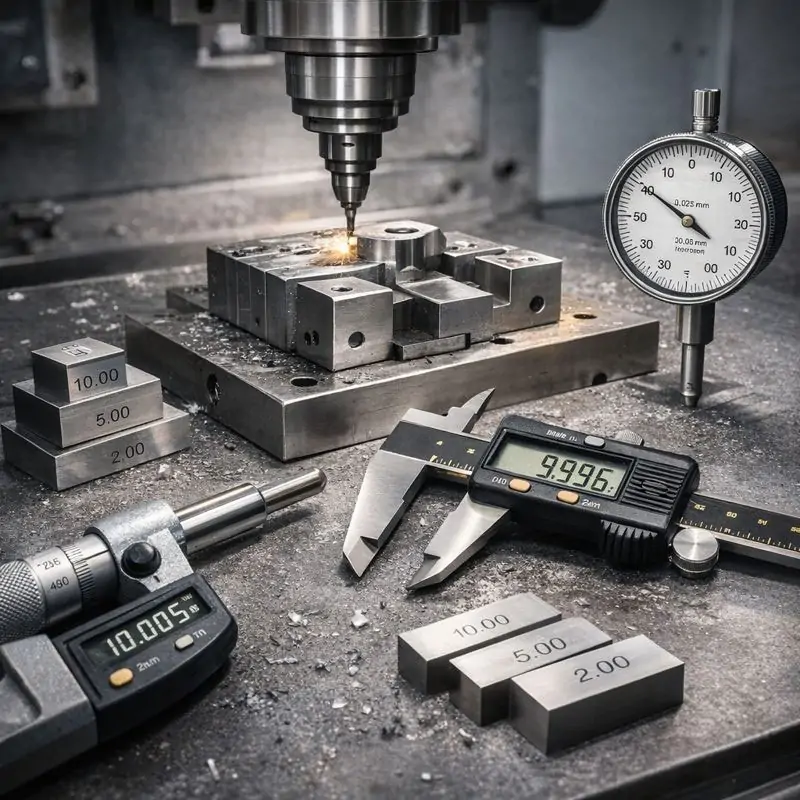
Let’s break it down simply. A tolerance is like a “wiggle room” agreement. If a drawing calls for a 10 mm hole with a ±0.05 mm tolerance, the machined part is perfect if the hole measures anywhere between 9.95 mm and 10.05 mm. This control over dimensional accuracy is what allows parts from different batches, or even different manufacturers, to fit together perfectly. For high-end applications, like aerospace or medical devices, tolerances can get incredibly tight, sometimes within ±0.005 mm or less! You can learn more about the fundamentals of these processes from authoritative sources like ASME (The American Society of Mechanical Engineers).

The Real-World Value of High Precision

You might wonder, “Why does this machining precision level matter to me?” Well, it translates directly into quality and performance. Imagine a tiny component in a watch or a surgical robot arm. If it’s off by even a hair’s breadth, the whole mechanism fails. This CNC tolerance capability ensures reliability. For a hobbyist, it means the custom bracket for your drone fits without filing. For an engineer, it means the prototype behaves exactly like the digital model. This repeatability—making the same perfect part over and over—is where Computer Numerical Control truly shines and adds immense value.

How to Achieve the Best Accuracy in Your Project

Getting the most out of CNC milling accuracy or CNC turning precision isn’t just about the machine; it’s a partnership. Here’s how you can help ensure your project turns out perfectly.

Material Matters

The stuff you choose to make your part from plays a huge role. Metals like aluminum are generally easier to machine to tight tolerances than, say, certain plastics that might warp or flex. It’s like trying to draw a super straight line on a wobbly table versus a solid granite slab. Discussing material options with your machining partner is a great first step to ensure precision manufacturing success.

Design for Manufacturability (DFM)

This is a friendly tip that can save you time and money. Simple design tweaks can make a part much easier to machine accurately. For instance, avoiding extremely deep, narrow pockets or specifying realistic internal corner radii. A good machinist can be your best ally here, offering DFM advice to optimize your design for the highest possible machining accuracy. Resources like Machine Design magazine often discuss these practical engineering principles.

Clearing Up Common Misconceptions

Let’s tackle a few myths head-on. First, some folks think CNC machines are infallible magic boxes. While they are incredibly precise, they are tools guided by human programming and maintenance. Thermal expansion of the machine or the material, tool wear, and vibration all need to be managed. Second, “more accuracy is always better” isn’t quite true. Holding a ±0.01 mm tolerance is far more costly than ±0.1 mm. Always specify the tightest tolerance your part *actually needs* for its function. This balance is key to smart, cost-effective CNC part accuracy.

Wrapping It Up: Precision at Your Fingertips

So, what’s the surprising truth about how precise is CNC? It’s astonishingly accurate, capable of creating parts that push the boundaries of modern engineering. This manufacturing accuracy empowers innovators, designers, and creators to turn complex ideas into tangible, high-performance reality. By understanding the basics of tolerance, collaborating on design and material choice, and having realistic expectations, you can fully harness this powerful technology for your next project. The precision you need is truly within reach.

Categories
Manufacturing Process Comparisons

CNC Milling vs. Turning: Which is Best for Your Precision Parts?

Choosing between CNC milling and CNC turning can be confusing when you need high-accuracy components. This guide breaks down the fundamental differences in how these two subtractive manufacturing processes work, their unique strengths, and how to decide which one is the optimal choice for your specific precision part project.

Understanding the Core Distinctions: CNC Milling and Turning Processes

Let’s start with the basics. The main difference between CNC milling and CNC turning boils down to what moves and what stays still. Imagine you’re sculpting a piece of wood. In one method, you move the chisel around a stationary block (that’s like milling). In the other, you spin the block against a stationary chisel (that’s like turning). This simple analogy is at the heart of precision machining.

How CNC Milling Works

In the CNC milling process, your raw material (called the workpiece) is held stationary in a vise or fixture. A rotating cutting tool, which can have multiple cutting edges, then moves along various axes (X, Y, and Z) to remove material. Think of it like a highly sophisticated, programmable drill that can also slide sideways to carve out slots, pockets, and complex 3D contours. This method is fantastic for creating parts with intricate features that aren’t symmetrical, like engine blocks, brackets, or molds. You might also hear this referred to as CNC machining in a broader sense, though that term can encompass both milling and turning.

How CNC Turning Works

Now, let’s look at CNC turning. Here, the workpiece is the star of the show—it rotates at high speed on a spindle. A single-point cutting tool is then fed into the spinning material, shaving it away to create cylindrical shapes. This is the go-to process for making anything that is fundamentally round: shafts, bolts, pins, and bushings. The machines that perform this operation are often called CNC lathes or turning centers. If you’re wondering about the difference between a lathe and a milling machine, remember: the lathe spins the part, the mill spins the tool.

Strengths and Typical Applications

Each process shines in different scenarios. Knowing their strengths helps you match the right manufacturing technique to your part’s design, which is key for cost-effectiveness and quality in precision part manufacturing.

When to Choose CNC Milling

You’ll want to lean towards CNC milling services when your component has complex geometries. This includes parts with flat surfaces, pockets, slots, threaded holes, or detailed 3D surfaces. For example, a mounting plate with an array of precisely located holes and a recessed cavity is a perfect job for a milling machine. It’s also ideal for working with block-like raw materials. The versatility of multi-axis milling machines allows for incredible complexity in a single setup. You can learn more about the capabilities of modern machine tools from resources like the Engineering.com platform.

When to Choose CNC Turning

Opt for CNC turning when your part design is primarily rotational or axisymmetric. Need a smooth, perfectly round diameter? Turning is your friend. It excels at producing parts like connectors, nozzles, and rollers with excellent concentricity and surface finish on the outer diameter. It’s generally faster and more cost-effective for high-volume production of simple cylindrical shapes. For creating internal features on a cylindrical part, like a drilled hole or an internal thread, turning machines use stationary tools brought into the rotating workpiece, a operation sometimes specifically called out in requests for precision turned components.

Making the Choice: Which Process is Best for Your Part?

So, how do you decide? I often advise clients to start by looking at the basic shape of their part. Ask yourself: “Is the core shape of my part round?” If the answer is a clear yes, turning is likely the most efficient starting point. If the part is more of a block, plate, or has a complex, non-round shape, milling is the probable candidate. Remember, many finished parts actually use both processes—this is where CNC milling and turning combined comes in. A part might be turned to create its basic cylindrical form and then moved to a mill to add cross-holes or flat features. A great resource for understanding material properties and how they interact with these processes is the ASM International knowledge base.

Clearing Up Common Misconceptions

Let’s tackle a couple of common mix-ups. First, one isn’t universally “better” than the other; they are different tools for different jobs. Second, while turning is often faster for simple rounds, modern 5-axis milling can be incredibly efficient for complex parts, reducing or eliminating the need for multiple setups. Lastly, both processes achieve extremely high precision; the choice isn’t about accuracy but about the most effective *path* to that accuracy based on the part geometry. Understanding these key differences in CNC machining helps you have a more productive conversation with your manufacturing partner.

In the end, the best choice for your precision parts depends entirely on their design. By understanding the fundamental motion of milling versus turning, you’re well-equipped to make an informed decision that leads to a better-made, more cost-effective component. When in doubt, a quick sketch or 3D model shared with a trusted machine shop can provide the perfect guidance.

Categories
Quality & Tolerances

How Accurate Is CNC Machining? Discover the Surprising Truth

When people ask “How accurate is CNC machining?”, they’re often surprised by the answer. The precision of modern CNC (Computer Numerical Control) equipment is truly remarkable, routinely achieving tolerances that were once the realm of specialized labs. Let’s explore what this really means for your projects.

Understanding CNC Machining Precision and Tolerances

So, you’re curious about the precision of CNC milling and turning? It’s a fantastic question. In simple terms, accuracy in CNC fabrication refers to how close the finished part is to the exact dimensions in your digital design. We measure this in tolerances, often down to thousandths or even ten-thousandths of an inch (or microns). For most standard machine shops, holding a tolerance of ±0.005 inches (0.127 mm) is very common, while high-precision shops can achieve incredible feats like ±0.0005 inches or better for critical features.

What Factors Affect CNC Accuracy?

It’s not just about the machine itself. Think of it like a skilled chef—the best ingredients and tools matter, but so does the environment and technique. The capabilities of CNC machinery are influenced by several key elements:

Machine Rigidity and Condition: A well-maintained, solid machine minimizes vibration, which is the enemy of fine detail. Newer machines with linear guides and ball screws generally offer more repeatability.

Tooling: A sharp, high-quality end mill or insert will produce a cleaner, more accurate cut than a worn tool. It’s one of the easiest places to gain or lose precision.

Material: Some materials, like certain aluminum alloys, machine beautifully and hold tight tolerances. Others, like soft plastics or heat-treated steels, can be trickier, as they may flex or change shape slightly during the process.

Operator Skill & Programming: This is huge! An experienced machinist knows how to write efficient toolpaths, choose the right speeds and feeds, and set up the workpiece securely to get the best possible outcome from the equipment. The dimensional accuracy of CNC is a partnership between human expertise and computer control.

Thermal Stability: This is a less obvious one. As machines run, they generate heat, which can cause expansion. High-end shops control their room temperature to mitigate this, ensuring consistent results all day long.

Real-World Applications and Tolerances

You might wonder, “What level of CNC machining tolerance do I actually need?” The answer depends entirely on the part’s job. Let me give you a couple of everyday examples. The plastic housing for a remote control might only need a tolerance of ±0.010 inches—plenty of room for a perfect fit. But the tiny brass connector inside your smartphone? That likely requires micron-level precision to ensure an electrical connection. Industries like aerospace and medical device manufacturing routinely demand these extremely tight tolerances for safety and function. The key is to specify only the tolerance you truly need, as tighter tolerances almost always mean higher cost and longer lead time.

Common Misconceptions About Machining Accuracy

I often hear a few myths about computer numerical control precision that are worth clearing up. First, “CNC is always perfect.” While it’s incredibly consistent (that’s its superpower!), it’s not magic. Tool wear, material inconsistencies, and the factors we discussed earlier all play a role. Second, “Tighter is always better.” Not true! Over-specifying tolerances can unnecessarily double the cost of a part without providing any benefit. A good machinist will work with you to understand the function of the part and recommend a sensible, cost-effective tolerance scheme. Finally, “All machines are created equal.” The difference between a standard 3-axis mill and a 5-axis machining center for complex geometries is like the difference between a handsaw and a laser cutter.

Tips for Maximizing Your CNC Results

Want to ensure you get the most accurate parts possible? Here’s my friendly advice from years in the trade. First, communicate clearly with your machine shop. Provide clear, fully-dimensioned drawings or 3D models and highlight the critical features. Second, consider design for manufacturability (DFM). Simple changes, like adding a slight fillet to an inside corner or avoiding extremely deep pockets, can make a part much easier to machine accurately. Third, ask about their quality control process. Reputable shops use tools like coordinate measuring machines (CMMs) and digital calipers to verify parts, not just rulers. By partnering with your shop and understanding the process, you’ll be amazed at what precision machining can achieve for your ideas.

Categories
CNC Machining Basics

What Is High Precision CNC Machining? A Beginner’s Friendly Guide

High precision CNC machining is a specialized manufacturing process that uses computer-controlled machines to create parts with extremely tight tolerances and exceptional accuracy. It’s the go-to method when a project demands components that fit together perfectly or perform reliably under stress. Think of it as the difference between a hand-drawn sketch and a detailed architectural blueprint.

Understanding High Precision CNC Machining

Let’s break it down. CNC stands for Computer Numerical Control. It means a machine—like a mill, lathe, or router—follows a set of digital instructions (called G-code) to cut and shape material. Now, add “high precision” to that. This refers to the incredible level of accuracy and repeatability the process can achieve. We’re talking about tolerances often measured in microns (thousandths of a millimeter). To give you a picture, a human hair is about 70 microns thick. High-precision CNC milling or CNC turning can work within a fraction of that.

The Real-World Value of Tight Tolerances

You might wonder, “Why does such tiny accuracy matter?” It’s all about performance and reliability. In many applications, parts aren’t just sitting on a shelf; they’re moving, spinning, bearing loads, or sealing fluids. Even a tiny deviation can lead to failure, noise, wear, or inefficiency. This level of precision machining ensures everything works together as designed, every single time.

Where You’ll Find High Precision Parts

This isn’t just for lab equipment. You interact with products made by high-accuracy CNC machining every day. The medical implants in a surgical kit, the fuel injectors in your car, the connectors in your smartphone, and the components inside a drone’s camera gimbal all rely on this technology. Industries like aerospace, medical device manufacturing, and optics simply couldn’t function without it. When someone searches for what is micro machining or tight tolerance machining services, they’re often looking for this specific capability.

The True Cost of Imprecision

Imagine ordering 10,000 parts for an assembly line. If each part is even slightly out of spec, you face a nightmare: assemblies that won’t fit, production delays, wasted materials, and costly rework. High precision CNC fabrication minimizes this risk. It’s an investment in predictability. By ensuring each part is virtually identical, you save massive headaches and money down the line. It turns manufacturing from a hopeful gamble into a reliable science.

How to Achieve High Precision Results

Getting those micron-level results doesn’t happen by accident. It’s a symphony of good decisions. From my experience talking with machinists, it starts long before the machine even powers on. It’s about planning for precision at every single step.

Starting with a Great Design

It all begins with your CAD (Computer-Aided Design) model. A design that’s difficult to machine will struggle to be precise. We recommend you work with your machinist early on. This practice, often called Design for Manufacturability (DFM), can identify potential issues like thin walls, hard-to-reach features, or unrealistic tolerances. A good resource to understand engineering fundamentals is the American Society of Mechanical Engineers (ASME) website. Clear communication at this stage sets the stage for success.

Choosing the Right Machine and Machinist

Not all CNC shops are equal. For high-precision work, you need a shop with modern, well-maintained equipment and, more importantly, highly skilled operators. The machinist’s expertise in selecting tools, setting up the machine, and compensating for variables like material stress or temperature is irreplaceable. They understand the nuances of advanced CNC manufacturing. When evaluating a shop, don’t just ask about their machine’s specs; ask about their quality control processes, like using coordinate measuring machines (CMMs) to verify every dimension.

Clearing Up Common Misconceptions

Let’s tackle a few myths head-on. First, “high precision” doesn’t automatically mean “slow and extremely expensive.” While it is more costly than standard machining, modern CNC technology has become remarkably efficient. For critical components, the value far outweighs the cost. Second, it’s not magic. There are physical limits based on the material, machine, and tooling. A good machinist will tell you what’s realistically achievable rather than promise the impossible. Finally, precision isn’t just about the machine; it’s a culture of meticulousness throughout the entire process.

Wrapping Up Your Beginner’s Journey

So, what is high precision CNC machining? It’s the art and science of making incredibly accurate, reliable parts through computer-controlled cutting. It’s essential for technology that pushes boundaries and improves lives. If your project demands flawless fit, function, or performance, this is the process you’re looking for. My friendly advice? Partner with a skilled machinist, design with manufacturing in mind, and understand that this precision is what turns a good idea into a great, working product. Welcome to the precise world of modern manufacturing!

Categories
Design, Cost & Sourcing

Your Guide to Choosing the Perfect Precision CNC Machining Supplier

Choosing the right precision CNC machining supplier is a critical decision that impacts your project’s quality, timeline, and budget. This guide walks you through the key factors to consider, from technical capabilities and quality control to communication and value, helping you make an informed and confident choice for your manufacturing needs.

Key Factors for Selecting a Precision CNC Machining Partner

When you’re looking for a supplier for your CNC machining services, it’s like picking a teammate for a crucial project. You need someone reliable, skilled, and easy to work with. The goal isn’t just to find a vendor; it’s to find a true manufacturing partner who understands your vision. Let’s break down the most important things to look for.

Technical Capabilities and Equipment

First things first, can they actually make your part? This goes beyond just having CNC machines. You need to dig into their specific precision machining expertise. Ask about their machine shop’s equipment: Do they have multi-axis mills and lathes capable of the complex geometries you need? What materials are they experienced with—aluminum, stainless steel, titanium, or engineering plastics? For instance, a shop specializing in prototype work might be perfect for low-volume, complex parts, while another might excel at high-volume production. It’s always a good idea to request examples of past work similar to your project. You might find that a supplier’s experience with a specific industry, like aerospace or medical device manufacturing, gives them a huge edge in understanding your tolerances and regulatory needs.

Quality Assurance and Certifications

Precision is in the name for a reason. A tiny deviation can render a part useless. That’s why a robust quality management system is non-negotiable. Look for suppliers with recognized certifications like ISO 9001 or, even better, industry-specific ones like AS9100 for aerospace or ISO 13485 for medical devices. These aren’t just plaques on the wall; they represent a documented commitment to consistency. Ask them about their inspection process. Do they use advanced metrology equipment like CMMs (Coordinate Measuring Machines) or optical comparators? A reliable partner will be transparent about their quality control steps and should provide detailed inspection reports with your first article. This is a core part of any machining supplier selection process.

The Supplier Evaluation and Selection Process

Once you know what to look for, it’s time to start the actual hunt. This process is more of a conversation than a checklist. We recommend you approach it with clear communication and a focus on building a relationship, not just getting a quote.

The RFQ and Communication Stage

Your request for quote (RFQ) is your first impression. Make it clear and detailed with complete drawings, material specs, tolerances, and quantities. But here’s a pro tip: pay as much attention to their *response* as to the price. How quickly did they reply? Did they ask insightful questions to clarify your design for manufacturability (DFM)? A good partner will suggest potential optimizations that could save you time and money. Their communication style here is a strong indicator of what it will be like to work with them. Are they proactive and helpful, or just sending back a number? This early dialogue is crucial for finding a CNC machine shop that aligns with your workflow.

Making the Final Decision

You’ve got a few quotes and have had initial chats. Now, it’s decision time. Price is important, but it shouldn’t be the sole deciding factor. Consider the total value. A slightly higher quote from a shop with better equipment, stricter quality controls, and excellent communication might save you from costly delays or rework down the line. Think about logistics, too. Can they handle your required lead times? What is their policy on revisions or issues? Sometimes, visiting the facility or arranging a video tour can give you immense peace of mind. You’re not just choosing a service; you’re choosing a business relationship for your contract manufacturing needs.

Common Pitfalls and How to Avoid Them

Let’s talk about some common mistakes people make so you can steer clear of them. One big one is focusing only on the unit price. The cheapest option often cuts corners on quality, communication, or reliability, leading to higher total costs. Another pitfall is not checking references or past client testimonials. A reputable CNC machining vendor should be happy to connect you with a past client (with their permission, of course). Also, don’t assume all capabilities are equal—a shop great at aluminum might struggle with titanium. Always verify their specific experience. Finally, unclear communication of your expectations from the start is a recipe for frustration. Be as detailed as possible in your initial brief.

Conclusion: Building a Lasting Partnership

Choosing the perfect precision CNC machining supplier is a strategic investment. By thoroughly evaluating technical capabilities, quality systems, communication, and overall value, you’re setting your project up for success. Remember, the best outcome is a long-term partnership where your supplier becomes an extension of your own team, contributing expertise and reliability to bring your designs to life. Take your time, ask the right questions, and trust the process. Your perfect manufacturing partner is out there. For more on industry standards, you can review information from authoritative sources like the American Society of Mechanical Engineers (ASME).

Categories
CNC Materials

Discover the Best Materials for Precision CNC Machining

Choosing the right material is a crucial first step in any precision machining project. The ideal material balances machinability, strength, and cost to bring your design to life. This guide explores the most common and effective materials used in CNC milling and turning, helping you make an informed decision for your next project.

Common Materials for Precision CNC Machining

When we talk about materials for CNC machining, we’re really looking at a fantastic toolbox. From robust metals to versatile plastics, each material family offers unique properties. Let’s break down the most popular options you’ll encounter in a machine shop.

Metals and Alloys

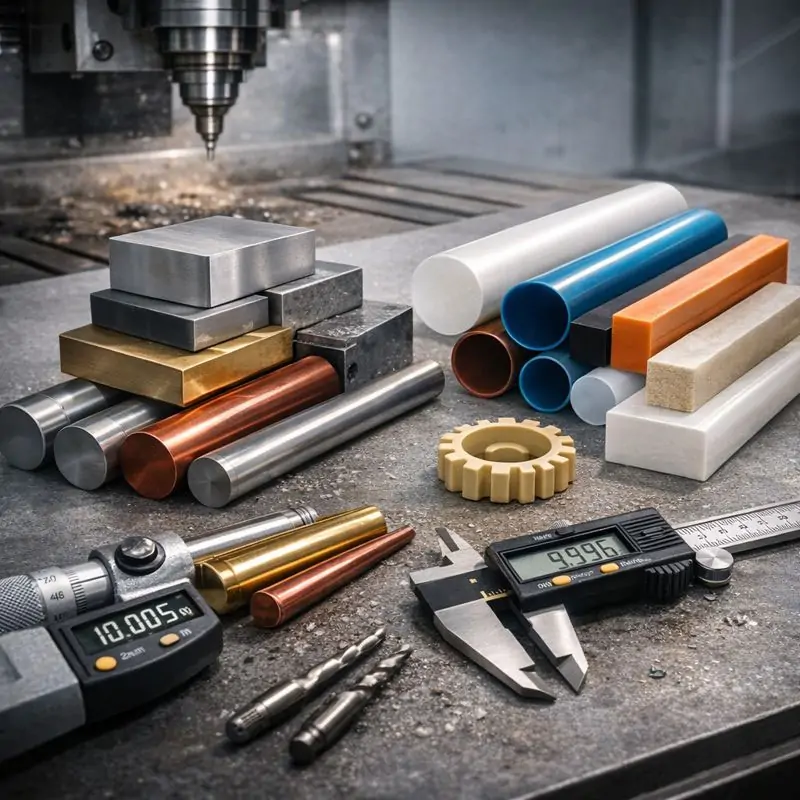
Metals are the workhorses of the industry. Aluminum, for instance, is a superstar because it’s lightweight, strong, and incredibly easy to machine, which often makes it a cost-effective choice. You’ll find alloys like 6061 and 7075 used everywhere from aerospace brackets to consumer electronics. Stainless steel is another go-to for parts that need to resist corrosion and handle high stress; grades like 304 and 316 are incredibly common. And let’s not forget brass and copper, which are excellent for electrical components and decorative pieces due to their conductivity and beautiful finish.

Engineering Plastics

Plastics aren’t just for prototypes! Modern engineering plastics offer incredible performance. Take Delrin (POM), for example—it’s stiff, has low friction, and machines to a beautifully smooth finish, making it perfect for gears and bearings. For parts needing clarity and impact resistance, acrylic (PMMA) is a fantastic option. And when you need something tough and chemical-resistant, like in automotive or medical applications, PEEK (Polyether Ether Ketone) is often the material of choice, despite being more challenging to work with.

Why Your Material Choice Matters

Picking the right stock material isn’t just a technicality; it directly impacts your project’s success. The right choice ensures your part can handle its intended load, environment, and lifespan. For instance, using a standard aluminum for a part that will face constant saltwater spray would be a mistake—a marine-grade aluminum or stainless steel would be necessary. The material also dictates the machining process itself; some cut like butter, allowing for faster production and lower costs, while others require special tools and slower speeds. Ultimately, matching the material to the application’s requirements is the key to a durable, functional, and cost-effective component.

How to Select the Right CNC Material

Feeling overwhelmed by the options? Don’t worry, we suggest you start by asking a few key questions. First, what is the primary function of the part? Does it need to be strong, lightweight, electrically insulating, or transparent? Second, consider the environment: will it face heat, chemicals, or outdoor exposure? Third, think about your budget and timeline. Easier-to-machine materials like aluminum 6061 or Delrin can significantly reduce machining time and cost. It’s always a good idea to consult with your machining partner early on. They can provide valuable insights, like recommending a slightly different alloy that machines more efficiently or a plastic that offers better performance for your specific use case.

Clearing Up Common Material Misconceptions

There are a few myths floating around that can lead to suboptimal choices. One common belief is that “stronger is always better.” While high-strength materials like titanium are amazing, they are often overkill for many applications and come with a much higher material and machining cost. Another misconception is that all plastics are weak. As we saw with PEEK and UHMW, some plastics are incredibly tough and suitable for demanding mechanical applications. Finally, some assume that the surface finish is purely a result of the machining process. While tooling and technique are critical, the material itself plays a huge role; for example, brass naturally achieves a smoother finish than some grades of steel.

Final Thoughts on Material Selection

Navigating the world of CNC machining materials is about finding the perfect partner for your design. Whether you’re creating a one-off prototype or components for high-volume production, the foundation is a well-chosen material. Remember to weigh the functional needs against practical factors like machinability and cost. By understanding the core families of metals and plastics and their best uses, you’re well-equipped to make a confident choice. For deeper technical data on material properties, reputable sources like the ASM International handbook are invaluable. Here’s to bringing your next precision part to life with the perfect material match!

Request A Quote

We'll Send You Back with Price Immediately!

DEC 1-31

XMAS SPECEIL

Up to

40% off

Discover the Best Materials for Precision CNC Machining

We'll Send You Back with Price Immediately!