Categories
CNC Machining Basics

Demystifying the CNC Machining Process Explained Simply

Ever wondered how complex metal or plastic parts are made with such incredible precision? The answer lies in CNC machining. This guide breaks down the entire CNC manufacturing process into simple steps, from a digital design to a finished physical part. We’ll explore how it works, why it’s so valuable, and clear up some common misconceptions.

Understanding the Step-by-Step CNC Machining Workflow

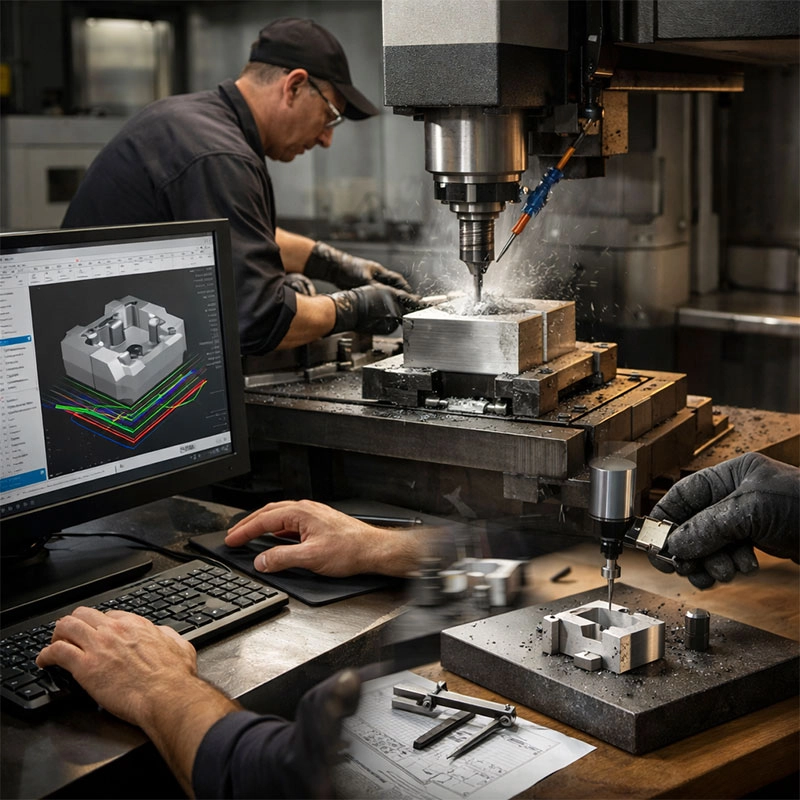
Let’s walk through the CNC machining process step by step. Think of it like a highly skilled chef following a perfect recipe. The recipe is the digital design, the chef is the machine, and the ingredients are your block of material. Every action is planned and executed with precision.

Step 1: The Digital Blueprint (CAD)

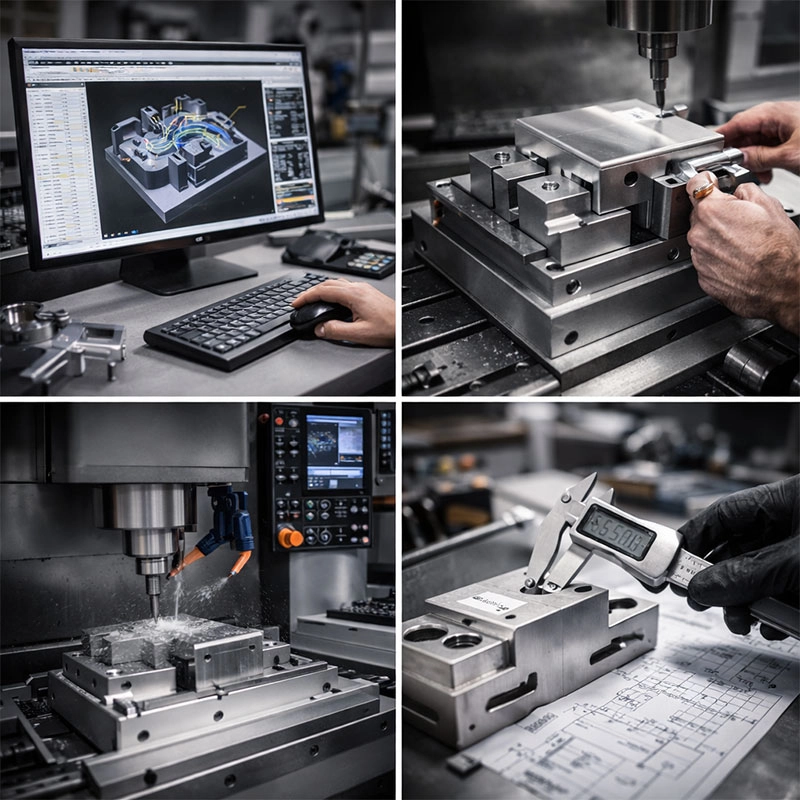
It all starts with an idea. Using Computer-Aided Design (CAD) software, an engineer or designer creates a detailed 3D model of the part. This is the master plan. It defines every dimension, curve, and hole. You might be asking, how does CNC machining work from a drawing?” Well, this 3D model is the essential first answer. It’s the source of truth for the entire CNC manufacturing process.

Step 2: Speaking the Machine’s Language (CAM)

The CAD model is beautiful, but the machine can’t understand it directly. This is where Computer-Aided Manufacturing (CAM) software comes in. The CAM programmer takes the 3D model and creates a set of instructions, called G-code. This code tells the machine exactly where to move, how fast to spin the cutting tool, and how deep to cut. It’s like translating the recipe into a language the chef understands perfectly.

Step 3: The Machine Setup

Now, we move to the shop floor. An operator secures the raw material (called the “workpiece”)—which could be aluminum, steel, plastic, or other materials—onto the machine bed. The correct cutting tools are loaded into the machine’s spindle. This setup is crucial for accuracy. A good setup ensures the CNC milling process or CNC turning operation starts from the right place every time.

Step 4: The Machining Operation

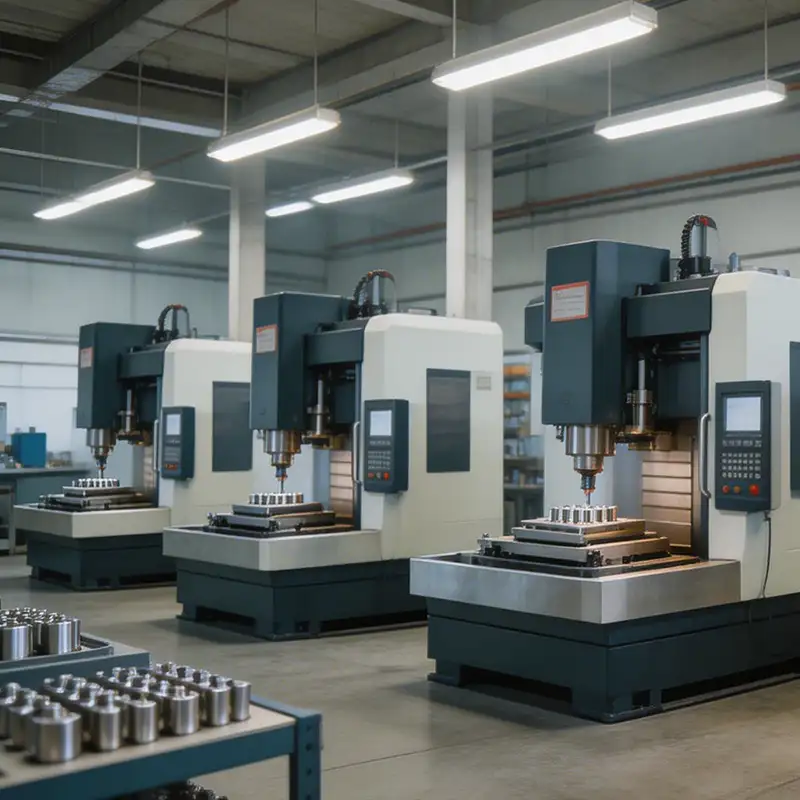
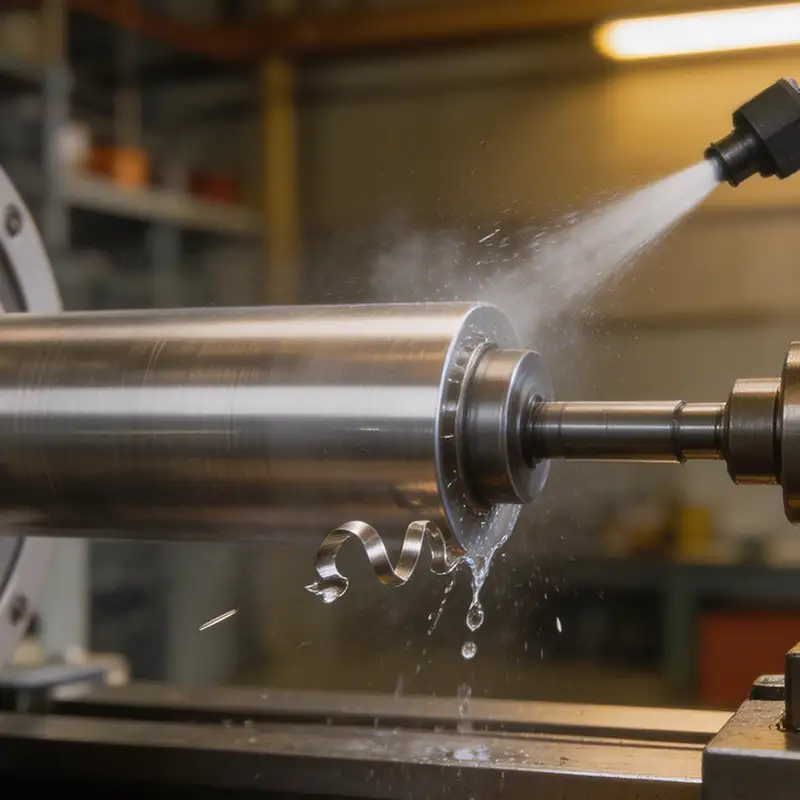
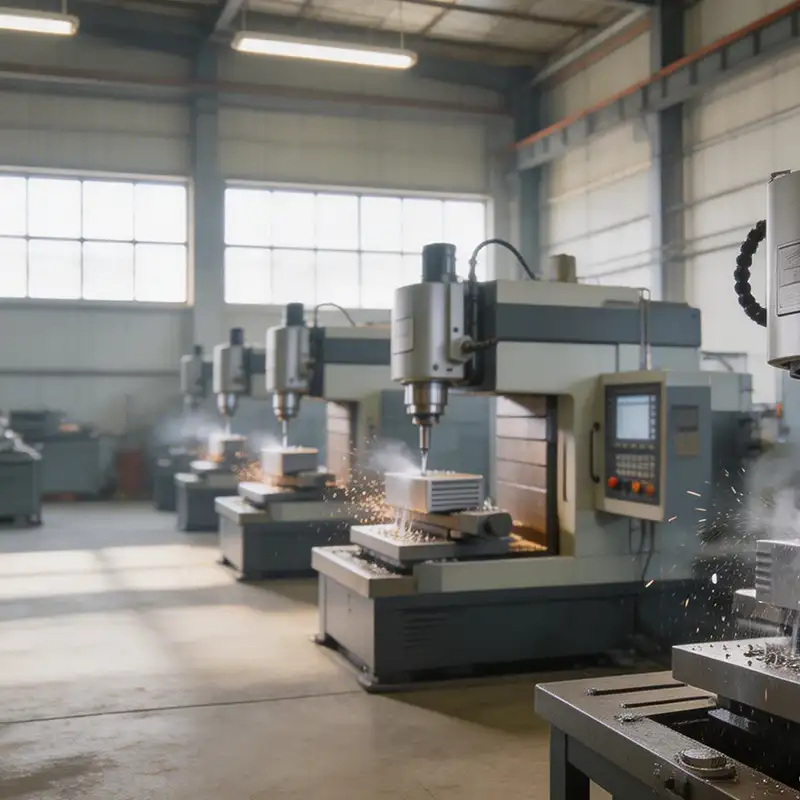
This is the main event! The machine operator starts the program. The spindle spins the cutting tool at high speeds, and it precisely removes material from the workpiece, following the paths defined by the G-code. You’ll see chips flying as the block of material is gradually shaped into the final part. Different operations like milling, drilling, and turning happen here, all part of the subtractive manufacturing family.

Step 5: Finishing Touches

Once the main cutting is done, the part often isn’t quite ready. It might have sharp edges or a rough surface. Secondary processes like deburring (removing sharp edges), sanding, polishing, or anodizing (for aluminum) are applied. This post-processing gives the part its final look, feel, and sometimes extra properties like corrosion resistance.

Why is the CNC Process So Valuable?

So, what makes this explanation of CNC machining so important for industries? The value is immense. First, it offers incredible precision and repeatability. You can make one part or a thousand, and they will all be virtually identical. This is a game-changer for everything from aerospace components to medical devices. Second, it can create incredibly complex geometries that would be impossible or prohibitively expensive to make by hand. Finally, while the initial setup and programming take time, it’s extremely efficient for production runs, saving both time and money in the long run. For a deeper dive into its applications, resources like the American Society of Mechanical Engineers (ASME) offer great insights.

How Can You Get Started with CNC Manufacturing?

If you’re curious about using CNC machining services for a project, here’s our friendly advice. Start with a clear and well-designed CAD file—this is the most important piece. Then, find a reputable machine shop. Don’t be afraid to ask questions! A good shop will guide you on material selection, design for manufacturability (making sure your design is easy to machine), and cost estimates. For beginners, starting with a simpler design in a common material like 6061 aluminum is a great way to learn the basics of CNC operation without breaking the bank.

Clearing Up Common CNC Machining Misconceptions

Let’s tackle a few myths. First, some think CNC is only for huge factories. Not true! Many small workshops and even hobbyists use desktop CNC machines. Second, it’s not always the fastest option for a single, simple part—3D printing might be quicker for a one-off prototype. Third, while highly automated, it still requires skilled humans for programming, setup, and quality control. The machine follows instructions; people provide the expertise. Understanding these nuances is key to a complete guide to computer numerical control.

In short, the CNC machining process is a powerful blend of digital design and physical precision. By understanding the workflow from CAD to finished part, you can appreciate its role in making the world around us, from your car’s engine to your smartphone’s casing. It’s a fascinating technology that turns digital dreams into tangible reality.
Categories
CNC Machining Basics

What Is CNC Machining? A Beginner’s Friendly Guide to Modern Manufacturing

Ever wondered how complex metal or plastic parts are made with such incredible precision? The answer often lies in CNC machining. This guide will walk you through what CNC machining is, how it works, and why it’s a cornerstone of modern manufacturing, all in simple, friendly terms.

Understanding the Basics of CNC Machining

Let’s start at the very beginning. If you’ve ever seen a perfectly smooth engine block, a custom guitar bridge, or even parts of a smartphone, you’ve likely seen the work of CNC manufacturing. At its heart, computer numerical control machining is a way to make things by removing material from a solid block, guided entirely by a computer. Think of it like a super-precise, automated sculptor that can carve metal, plastic, or wood based on a digital blueprint.

What Does CNC Stand For?

CNC stands for Computer Numerical Control. It sounds technical, but it’s quite straightforward. The “computer” part is the brain—it reads a set of coded instructions (called G-code). The “numerical control” part refers to how those instructions tell the machine exactly where to move, how fast to spin the cutting tool, and how deep to cut. Before CNC, machinists had to manually operate machines like lathes and mills, which was slower and less consistent. So, when people ask what is CNC milling or what is CNC turning, they’re really asking about specific applications of this brilliant computer-controlled system.

How Does the CNC Machining Process Work?

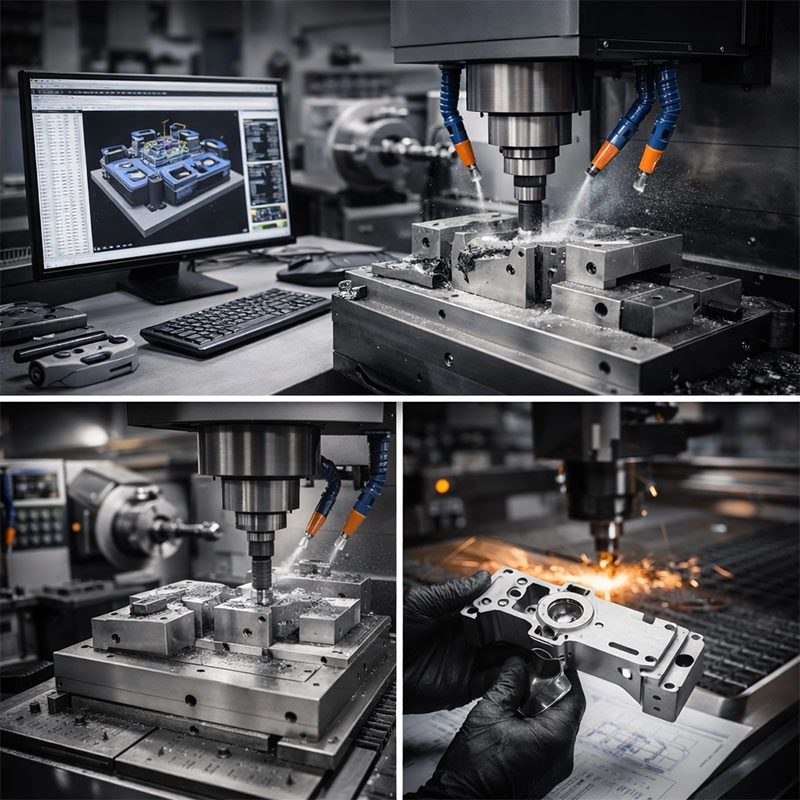
The journey from a raw block to a finished part is a fascinating dance between software and hardware. It usually starts with a 3D model designed in CAD (Computer-Aided Design) software. This model is then translated by CAM (Computer-Aided Manufacturing) software into the G-code the machine understands. Once the code is loaded, the operator secures the material (called the workpiece) onto the machine bed. Then, with the push of a button, the machine’s cutting tools follow the programmed path with incredible accuracy, shaving away material layer by layer until the part is complete. This process is the core of subtractive manufacturing, which is just a fancy term for carving out a shape.

CNC Milling vs. CNC Turning

You’ll often hear about two main types of CNC machine tools: mills and lathes. Here’s a simple way to tell them apart. A CNC milling service typically uses a rotating cutting tool that moves across a stationary workpiece to cut away material. It’s great for creating complex shapes, slots, and holes. On the other hand, CNC lathe work involves rotating the workpiece itself against a stationary cutting tool. This is ideal for making cylindrical or conical parts like shafts, knobs, and rings. Many modern workshops use multi-axis machining centers that can do both, offering incredible flexibility.

Why CNC Machining is a Game-Changer

So, why has precision CNC machining become so vital? First, it’s incredibly accurate and repeatable. You can produce ten parts or ten thousand, and each one will be virtually identical. This level of consistency is crucial for industries like aerospace and medical devices. Second, it can handle incredibly complex geometries that would be impossible or too expensive to make by hand. Third, while the initial setup and programming take time, it’s extremely efficient for production runs, saving time and money in the long run. It truly is a pillar of modern manufacturing techniques.

Getting Started with CNC: What You Should Know

If you’re curious about using CNC machining services, here’s some friendly advice. Start by having a clear, well-designed 3D model—this is your recipe. Next, think about your material choice; common options include aluminum, stainless steel, brass, and various plastics like ABS or nylon. Each has different properties and machining requirements. When you contact a machine shop, be ready to discuss your part’s function, required tolerances (how precise dimensions need to be), and surface finish. A good shop will guide you through the CNC fabrication process and help optimize your design for manufacturability. For a deeper dive into materials and standards, resources like ASM International can be very helpful.

Clearing Up Common CNC Misconceptions

Let’s tackle a few myths! One common belief is that CNC machines do everything by themselves without any human skill. In reality, a skilled machinist or programmer is essential for setting up the job, selecting the right tools, and ensuring everything runs smoothly. Another myth is that it’s only for giant factories. While it powers major industries, smaller CNC job shops and even hobbyists use desktop CNC machines for prototyping and custom projects. Finally, it’s not just for metal. CNC routing for wood and plastics is hugely popular in sign-making, furniture, and arts.

I hope this guide has helped demystify the world of CNC for you. From understanding what is computer numerical control to seeing its real-world impact, it’s a technology that shapes the physical world around us with precision and efficiency. Whether you’re an engineer, a maker, or just someone fascinated by how things are made, the principles of CNC machining are a wonderful glimpse into the innovation driving modern production.

Categories
CNC Machining Basics

How CNC Machining Works: Complete Process, Machines, Materials, Tolerances, and Inspection

Quick answer: CNC machining works by using computer-controlled machine motion to remove material from a solid workpiece until the final part matches the CAD model and drawing. A typical project moves through drawing review, material selection, CAM programming, machine setup, cutting, deburring, surface finishing, inspection, and shipping. The same workflow can produce prototypes, fixtures, replacement parts, and repeat production components in metal or plastic.

What CNC Machining Does

CNC machining is a subtractive manufacturing process. The machine does not build the part from nothing; it starts with bar, plate, billet, casting, forging, extrusion, or plastic stock and removes everything that is not part of the final geometry. This is why CNC machining is useful for accurate holes, pockets, flat faces, slots, threaded features, bores, contours, and assembly surfaces.

The word CNC means computer numerical control. The computer controls tool movement, spindle speed, feed rate, coolant, tool changes, and machine coordinates. The operator still matters, because fixture strategy, tool choice, cutting data, workholding, and inspection planning decide whether the programmed process will make a stable part.

CNC Machining Process Step by Step

Step What happens Why it matters
1. CAD and drawing review The supplier checks the 3D model, 2D drawing, material, tolerances, threads, surface finish, and quantity. This catches features that are expensive, unclear, impossible to inspect, or hard to machine.
2. DFM feedback The engineer reviews tool access, corner radii, wall thickness, pocket depth, hole depth, and setup direction. Small design changes can reduce cost and improve quality without changing part function.
3. CAM programming The part model is converted into toolpaths, cutting strategies, tool lists, speeds, feeds, and setup sheets. Programming controls machining time, tool wear, surface quality, and risk of collision.
4. Workholding and setup The material is held in a vise, chuck, fixture, soft jaws, pallet, or custom fixture. Rigid workholding helps maintain tolerance and repeatability.
5. Machining operations The machine performs milling, turning, drilling, boring, reaming, tapping, profiling, or facing operations. This creates the final shape and functional features.
6. Deburring and finishing Sharp edges are removed and the part may receive anodizing, plating, polishing, blasting, or coating. Finishing affects appearance, corrosion resistance, wear, and sometimes dimensions.
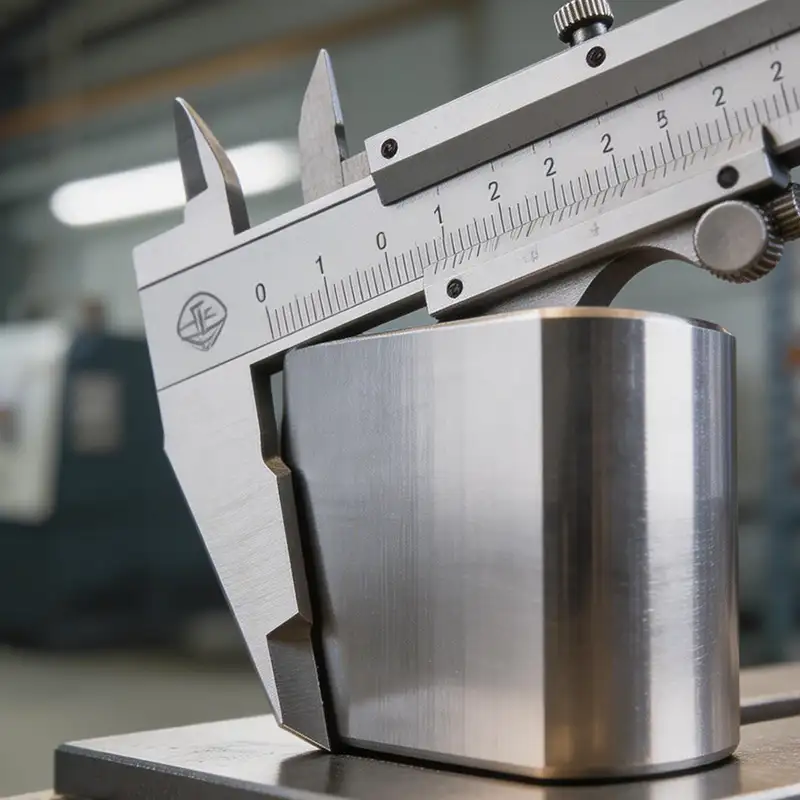
7. Inspection Parts are checked with calipers, micrometers, gauges, CMM, height gauges, or visual inspection. Inspection confirms whether the part meets the drawing before shipment.

Main CNC Machining Methods

CNC Milling

CNC milling uses rotating cutting tools to remove material from a fixed workpiece. It is a strong choice for plates, brackets, housings, pockets, slots, drilled holes, tapped holes, flat surfaces, and complex prismatic shapes. 3-axis milling is efficient for simple access geometry, while 4-axis and 5-axis machining help when parts need multi-side access or complex angles.

CNC Turning

CNC turning rotates the workpiece while cutting tools shape the diameter, face, groove, bore, or thread. It is commonly used for shafts, pins, bushings, sleeves, spacers, nozzles, fittings, rollers, and round precision parts. Live tooling can add milled flats, cross holes, or slots without moving the part to a separate mill.

Hole Machining

Most CNC parts include holes, and different hole operations serve different goals. Drilling creates the hole, boring improves diameter and alignment, reaming improves size and finish, and tapping or thread milling creates internal threads. Precision holes should not be treated the same as simple clearance holes.

Materials Used in CNC Machining

CNC machining works with aluminum, stainless steel, carbon steel, tool steel, brass, copper, bronze, titanium, nickel alloys, ABS, POM, nylon, acrylic, PC, PEEK, PTFE, and other engineering materials. Material choice changes cutting speed, tool wear, heat behavior, tolerance stability, cost, surface finish, and lead time.

For example, aluminum is fast to machine and good for prototypes, housings, brackets, and lightweight components. Stainless steel is stronger and more corrosion resistant but usually slower to machine. Brass cuts cleanly and works well for fittings and electrical parts. Plastics need sharp tools and heat control because they can flex, melt, or move after machining. Use the CNC materials guide when the part function is still unclear.

What Controls CNC Machining Accuracy?

Accuracy depends on more than the machine brand. Tool wear, fixture stiffness, material stress, thermal expansion, cutting strategy, setup count, part geometry, operator method, and inspection process all affect the final result. Thin walls, deep pockets, long shafts, hard materials, and tight hole patterns are more difficult than simple block-shaped parts.

Critical drawings should identify datums, true position, hole fit, thread class, surface finish, and inspection method. A supplier can hold a tolerance more reliably when the part has a stable datum structure and the critical features are clear. For demanding parts, connect the project with MTSPi’s quality assurance process.

Design Rules That Make CNC Parts Easier to Manufacture

  • Use practical inside corner radii instead of sharp internal corners.
  • Avoid deep narrow pockets unless the function truly requires them.
  • Do not apply tight tolerances to every dimension; reserve them for functional features.
  • Give thread size, pitch, depth, and blind/through condition clearly.
  • Separate cosmetic surfaces from non-cosmetic surfaces on the drawing.
  • Confirm finish requirements before machining because coating can change dimensions.
  • Send both 3D CAD and 2D drawings when tolerance and finish matter.

CNC Machining Cost Drivers

The main cost drivers are material price, part size, machining time, setup count, complexity, tolerance, surface finish, inspection, and quantity. A part with many setups, tight tolerances, deep pockets, small tools, and cosmetic finishing will cost more than a simple plate with standard tolerances. Batch quantity can reduce unit price because programming and setup time are spread across more parts.

CNC Machining vs 3D Printing, Casting, and Molding

Process Best for Limitation
CNC machining Accurate real-material parts, prototypes, low-volume production, fixtures, replacement parts Material waste and tool access constraints
3D printing Complex shapes, fast concept models, internal channels, lightweight structures Surface finish, tolerance, and material limitations vary by process
Casting Complex metal shapes and larger production volumes Tooling, porosity risk, and post-machining needs
Injection molding High-volume plastic production High tooling cost and longer upfront development

FAQ

What files are needed for CNC machining?

A 3D CAD file is best for programming, while a 2D drawing is important for tolerances, threads, surface finish, material, inspection notes, and revision control.

Is CNC machining only for metal parts?

No. CNC machining is used for metals and engineering plastics, including aluminum, stainless steel, brass, copper, ABS, POM, nylon, acrylic, PC, and PEEK.

Can CNC machining make one prototype?

Yes. CNC is often used for one-off prototypes because it produces parts from real materials without mold tooling.

Why are tight tolerances more expensive?

Tight tolerances require more careful setups, slower cutting, better fixtures, more stable materials, and more inspection time.

How can I reduce CNC machining cost?

Use standard materials, practical tolerances, accessible features, standard thread sizes, and clear drawings. Ask for DFM feedback before ordering.

Need CNC machining support?

Send CAD files, drawings, quantity, material, finish, and tolerance notes. MTSPi can review the best route before quoting.

Contact MTSPi for a quote

Conclusion

CNC machining works by turning digital part data into controlled cutting operations. The best results come from clear drawings, suitable materials, practical tolerances, stable setups, planned finishing, and inspection that matches the part function.

Categories
Design, Cost & Sourcing

Master CNC Machining Quotes: A Step-by-Step Guide for Accuracy

Creating an accurate CNC machining quote is crucial for both shops and clients. It ensures fair pricing, avoids project delays, and builds trust. This guide walks you through the essential steps, from gathering part details to final pricing, helping you master the quoting process for precision machining jobs.

Essential Steps for Preparing a CNC Machining Quote

Hey there! If you’ve ever wondered how to quote a CNC machining project, you know it can feel a bit overwhelming. Whether you’re a new shop owner or a procurement specialist, getting a CNC machining quote right is the key to a smooth project. Think of it like baking a cake—you need the right ingredients (part details), the proper recipe (process plan), and an accurate timer (machine runtime) to avoid a kitchen disaster. Let’s break down this CNC quote process into simple, manageable steps.

Gather Complete Part Data

The first and most critical step is collecting all the necessary information. A vague request like “I need a metal bracket” leaves too much room for error and will likely result in an inaccurate machining cost estimate. What you need is a complete package. This always starts with a detailed 2D drawing or 3D CAD model (like a .STEP or .IGES file). The drawing should clearly specify all dimensions, tolerances (we’ll talk more about those later), and critical surface finishes.

Next, clarify the material. Is it 6061 aluminum, 304 stainless steel, or Delrin? The type and grade significantly impact the CNC milling quote or CNC turning quote. Don’t forget the quantity! Pricing one prototype is vastly different from pricing a production run of 10,000 pieces. Finally, understand the part’s application. Knowing if it’s for a medical device or an automotive component can influence the required quality controls and certifications. For a deep dive into technical drawing standards, the ASME website is an excellent resource.

Analyze Design for Manufacturability

This is where your expertise truly shines. You’re not just a quote machine; you’re a manufacturing partner. Look at the design and ask, “Can this be made efficiently?” This is called Design for Manufacturability (DFM). For instance, are the internal corner radii achievable with standard tooling? Are the specified tolerances of ±0.001″ absolutely necessary, or can they be relaxed to ±0.005″ for a major cost saving?

I remember a client who sent a design with incredibly deep, thin pockets. By suggesting a slight design tweak, we were able to reduce the machining time calculation by over 30% without affecting the part’s function. A friendly DFM review at the quoting stage builds tremendous trust and often leads to a more accurate and competitive precision machining quote.

Calculate Material and Machine Time

Now, let’s talk numbers. The total cost for a CNC machine shop quote typically breaks down into three main buckets. First, material costs: Calculate the raw stock size needed, add a margin for waste, and get a current price from your supplier.

Second, and often the largest, is machine time (or cycle time). This is the estimated time the part will spend on the CNC mill or lathe. Modern CAM software is fantastic for simulating this, but experienced machinists can often provide a good estimate based on similar past jobs. This time is then multiplied by your shop’s machine hourly rate.

Finally, don’t forget setup and secondary operations. This includes the time to program the job, set up fixtures and tools on the machine, and any post-processing like deburring, anodizing, or inspection. Bundling all these elements gives you your base cost, to which you add your desired profit margin to create the final price for your custom machining quote.

Common Mistakes and How to Avoid Them

Let’s be honest, we’ve all made quoting errors. The goal is to learn from them! One of the biggest pitfalls is underestimating setup time, especially for small-batch or prototype work. That first part might take hours to program and fixture, while parts two through ten are much faster. Always account for the full setup in your CNC service quotation.

Another common issue is overlooking material waste and availability. You might quote based on an online price for a 1-foot bar, only to find you must purchase a 12-foot length, significantly increasing your cost. Always check with your suppliers for stock sizes and lead times. Finally, unclear communication about revisions can sink a project. Make sure your quote clearly states what is included (e.g., “price includes one round of minor revisions based on provided drawing”) and what would constitute a new, chargeable quote.

How to Deliver a Winning Quote

You’ve crunched the numbers, but how you present the machining price quote matters just as much. A winning quote is clear, professional, and transparent. Instead of just a single number on a page, provide a brief, itemized breakdown. This doesn’t have to reveal all your internal costs, but categories like “Material,” “Machining & Setup,” and “Surface Treatment” help the client understand the value.

Always include the key assumptions your quote is based on: the revision of the drawing used, the material specification, the estimated lead time, and the terms of payment. This protects both you and the client. Most importantly, be available to discuss it! A quick call to walk through the quote and your DFM suggestions can make all the difference, turning a simple price into a valuable consultation and securing the job.

In the end, mastering the CNC machining quotation process is about combining technical knowledge with clear communication. By following these steps, you’ll provide accurate, competitive quotes that win business and build lasting partnerships. Now go ahead and quote with confidence!

Categories
Design, Cost & Sourcing

Your Guide to Choosing the Best CNC Machining Service

Choosing the right CNC machining service is a crucial decision for any project. This guide walks you through the key factors—from capabilities and materials to quality control and communication—to help you find a reliable partner that delivers precision parts on time and within budget.

Key Factors for Selecting a CNC Machining Partner

When you start looking for a CNC machining supplier, it can feel a bit overwhelming. There are so many options! But think of it like finding a good mechanic—you want someone skilled, trustworthy, and who uses the right tools for your specific car. Your journey to selecting a precision machining service begins with understanding their core capabilities and how they align with your project’s needs.

Technical Capabilities and Equipment

The first thing I always ask about is their machine shop’s equipment. Can they handle the complexity and tolerances your part requires? A shop with both 3-axis and multi-axis machines offers more flexibility. For instance, if you need complex contours or undercuts, a 5-axis CNC milling service is essential. Don’t hesitate to ask about their machine brands, age, and maintenance schedules—a well-maintained machine from a reputable manufacturer like Haas or DMG Mori often translates to more consistent results. It’s also wise to inquire about their experience with computer numerical control programming for materials similar to yours.

Material and Finishing Expertise

Not all shops work with all materials. You might have a great design for an aluminum bracket, but if the vendor primarily machines steel, there could be a learning curve. A reliable partner will have proven experience with your chosen material, whether it’s common alloys like 6061 aluminum or tougher stuff like titanium or PEEK. Furthermore, ask about their in-house post-processing and surface finishing options. Can they provide anodizing, powder coating, or bead blasting? Having these services under one roof, as outlined in resources like ASM International’s materials information, streamlines the process and ensures better accountability for the final look and feel of your part.

Evaluating Quality and Reliability

Once you’re confident a shop has the right tools, the next step is to assess their commitment to quality. This goes beyond just having a measuring tool. It’s about a systematic approach to ensuring every part that leaves their facility meets your specifications. A key part of how to find a good CNC machine shop is looking for evidence of this ingrained quality culture.

Quality Assurance Systems

Look for shops that are certified to standards like ISO 9001. This tells you they have documented processes for quality management. Ask about their inspection equipment—do they use advanced tools like Coordinate Measuring Machines (CMM) or optical comparators? A good practice is to request a sample inspection report. This gives you a clear picture of how they verify dimensions and tolerances. Remember, consistent quality is what separates a part that works from one that causes assembly headaches down the line.

Communication and Collaboration

This might be the most important factor. Is your point of contact responsive and proactive? Do they ask clarifying questions about your drawings? A great CNC manufacturing partner acts as an extension of your team. They should provide constructive feedback on your design for manufacturability (DFM), suggesting small tweaks that could save cost or improve strength without compromising function. Clear communication from the initial quote to final delivery prevents misunderstandings and builds a trusting, long-term relationship.

Making the Final Decision

You’ve shortlisted a few shops that seem capable. Now it’s time to drill down into the details and make your choice. This phase involves a practical test—the Request for Quote (RFQ)—and a clear-eyed view of value beyond just the lowest price. Your goal in this CNC vendor selection process is to find the best overall partner, not just the cheapest bidder.

Navigating the RFQ Process

To get comparable quotes, provide a clear, complete package: detailed drawings (with all tolerances called out), the 3D CAD model, material specs, quantity, and desired finish. Send this same package to your top candidates. When the quotes come back, compare them line by line. A surprisingly low quote can sometimes mean hidden costs or corners being cut. Pay attention to lead times and terms as well. A slightly higher price from a shop that guarantees a faster turnaround might be worth it for your project timeline.

Common Pitfalls to Avoid

Let me share a common scenario: a friend chose a shop based solely on price for a prototype run. The parts arrived late and had poor surface finishes, costing him more in rework and delayed testing. The lesson? Don’t let price be the only deciding factor. Also, be wary of shops that don’t ask questions—it might mean they aren’t critically reviewing your design for potential issues. Finally, check their references or online reviews. Hearing about other customers’ experiences, perhaps on professional engineering forums or platforms like Thomasnet for industrial sourcing, can provide invaluable real-world insight into their reliability and customer service.

Categories
Quality & Tolerances

Master CNC Accuracy: 5 Simple Steps to Improve Your Machining Precision

Achieving high precision in CNC machining is a common goal for every shop. This guide breaks down the process into five manageable steps, focusing on practical maintenance, smart tooling, and operator knowledge to help you consistently hit tighter tolerances and improve part quality.

Start with a Solid Foundation: Machine Health

Think of your CNC machine like a high-performance athlete. To perform at its peak, it needs to be in top condition. You can have the best tools and programs, but if the machine itself has issues, your quest for perfect CNC machining accuracy will be an uphill battle. The first step to improving CNC precision is ensuring your equipment is properly maintained and calibrated.

The Non-Negotiable: Regular Maintenance

This isn’t just about wiping down the machine. I’m talking about a scheduled regimen. Check and lubricate the ball screws and guideways according to the manufacturer’s manual. Worn-out bearings or a dry ball screw can introduce backlash—that tiny bit of slack in the system—which directly translates to positional error in your parts. A simple CNC machine calibration check, like a laser interferometer test, can reveal these issues. Resources from organizations like the National Institute of Standards and Technology (NIST) provide great frameworks for understanding measurement and calibration standards.

Don’t Forget the Room It’s In

Here’s something you might not think about daily: temperature. Metal expands and contracts with heat. If your shop has big temperature swings, your machine’s frame and the part you’re machining can change size slightly. For ultra-high machining precision, controlling the shop environment or letting the machine warm up to a stable operating temperature is a game-changer. It’s a key part of enhancing CNC part quality.

Choose and Manage Your Tools Wisely

Your cutting tools are the direct point of contact with your material. Using dull, unbalanced, or low-quality tools is like trying to paint a masterpiece with a frayed brush. To increase CNC tolerance accuracy, invest in high-quality tooling from reputable brands and implement a strict tool management system. This means tracking tool life, so you change inserts or end mills *before* they get too worn. A worn tool doesn’t just produce a bad finish; it deflects more, pushing away from the cut and creating dimensional inaccuracies. For specific materials, using the correct tool coating and geometry is crucial for optimizing CNC cutting parameters.

Master the Art of Workholding

If your part isn’t held rock-solid, nothing else matters. Vibration or movement during cutting is the enemy of precision. Ensure your vises, chucks, or custom fixtures are clean, in good condition, and applying adequate, even clamping force. For complex or thin-walled parts, consider strategic support to prevent deflection. A part that “sings” or vibrates is telling you the workholding isn’t right. Proper CNC workholding techniques are a fundamental, yet often overlooked, method for reducing machining errors.

Fine-Tune Your Programming and Processes

Great CNC operation precision starts at the computer. Your CAM software and the choices you make when creating the toolpath have a huge impact. This is where you can really dial things in for better CNC surface finish and accuracy.

Smart Tool Paths Matter

Avoid programming that forces the tool to take sharp, heavy cuts or sudden direction changes. Instead, use smoother, adaptive toolpaths that maintain a more consistent load on the tool. This reduces tool deflection, heat buildup, and vibration—all factors that hurt accuracy. Think of it as taking a smooth highway instead of a bumpy back road.

Dialing in Feeds and Speeds

Running a tool too fast or too slow can cause problems. Too slow, and you risk work hardening the material or poor chip evacuation. Too fast, and you generate excessive heat and tool wear. Using recommended feeds and speeds for precision machining for your specific tool and material is essential. Don’t just use the default settings; treat them as a starting point for optimization. Websites like CNC Cookbook offer fantastic, practical guides and calculators to help you find the sweet spot.

Trust, But Verify: The Power of Measurement

You can’t improve what you don’t measure. The final, critical step to improving dimensional accuracy in CNC is implementing a robust in-process and post-process inspection routine. Don’t wait until the entire batch is done to check the first part. Use precision instruments like micrometers, calipers, and, for complex geometries, a CMM (Coordinate Measuring Machine). This data is gold—it tells you if you’re on target and helps you make tiny offsets to your tool compensation to correct any drift. This cycle of machining, measuring, and adjusting is the ultimate secret to consistent, high CNC milling and turning accuracy.

Categories
Design, Cost & Sourcing

5 Smart Ways to Reduce CNC Machining Cost Effectively

Looking to lower your CNC machining costs without sacrificing quality? You’re in the right place. We’ll explore practical, actionable strategies that focus on smarter design, material choice, and process planning to help you save money on every project.

Strategies for Minimizing CNC Machining Expenses

If you’ve ever received a quote for a CNC machined part and thought, “That’s more than I expected,” you’re not alone. Managing CNC machining expenses is a common challenge, but the good news is there are several levers you can pull. It’s not just about finding the cheapest shop; it’s about making intelligent decisions from the design phase all the way through to production. Think of it like planning a road trip—choosing the right route, packing efficiently, and maintaining your vehicle can all save you time and fuel. Let’s dive into five smart ways to make your next project more cost-effective.

1. Optimize Your Design for Manufacturing (DFM)

The single most powerful way to cut CNC machining costs happens before a single tool touches metal. This is all about Design for Manufacturability, or DFM. A design that looks perfect in CAD software might be unnecessarily expensive or difficult to machine. By tweaking your design with the machining process in mind, you can dramatically reduce cycle time, tool wear, and material waste. It’s a conversation between your vision and the practical realities of the machine shop.

Simplify Complex Geometry

Deep pockets with sharp internal corners, extremely thin walls, or overly complex surfaces can drive up costs. They require specialized tools, slower machining speeds, and multiple setups. For instance, instead of machining a deep, square hole, could it be a through-hole or have a radius at the bottom? Using a standard end mill to create a radius is much faster than using a tiny tool to square off a corner. Simplifying these features is a key tactic for lowering CNC machining prices.

Standardize Features and Tolerances

Specifying unnecessarily tight tolerances across an entire part is a major cost driver. Every decimal place adds inspection time and may require slower machining passes. Ask yourself: “Does this surface really need to be ±0.025mm, or would ±0.1mm work perfectly?” Similarly, using standard drill sizes for holes instead of custom diameters avoids the need for non-standard tools. This approach to reducing CNC part cost is about applying precision only where it’s functionally critical.

2. Make Smarter Material Choices

Material cost and machinability are huge factors in your final bill. While you might need a specific alloy for strength or corrosion resistance, always explore alternatives. A common example is opting for 6061 aluminum over 7075 for non-critical structural parts—it’s cheaper and generally easier to machine. Also, consider the stock size. Designing a part that fits neatly into a standard bar or plate dimension minimizes waste. If you’re making multiple parts, see if they can be nested from a single sheet to optimize material yield, directly addressing how to decrease CNC operational costs.

3. Leverage Batch Production and Nesting

There’s a fixed cost in programming and setting up the CNC machine. Spreading that cost over multiple parts is one of the most effective CNC cost-saving techniques. Even a small batch order is often more cost-effective per part than a one-off. Furthermore, a skilled machinist or programmer can use CAM software to “nest” multiple parts onto a single piece of stock material, similar to a puzzle, drastically reducing waste. This strategy is central to minimizing expenses in computer numerical control processes.

4. Minimize Secondary and Finishing Operations

Every additional step after the main machining adds cost. Do all surfaces need a mirror polish, or would a standard machined finish suffice? Can you design the part to avoid manual deburring? For instance, specifying a small break edge on sharp corners in your design can allow the CNC tool to deburr it during the primary operation. Being strategic about surface finish requirements is a straightforward method for lowering the price of machined components.

5. Communicate Early with Your Machining Partner

This might be the most overlooked tip. Don’t just send a CAD file and ask for a quote. Start a conversation. A good machine shop wants to be a partner, not just an order-taker. Share your application, budget, and concerns. They can provide invaluable DFM feedback, suggest material alternatives, or recommend small design changes that yield big savings. They have the hands-on experience to identify potential hiccups you might not see. Building this relationship is crucial for long-term CNC manufacturing cost reduction. For authoritative information on materials and standards that can inform these discussions, you can refer to resources like the ASM International website.

In my experience, the most successful projects come from collaboration. I recall a client who designed a beautiful, complex bracket. After a quick chat about its use in a non-critical indoor application, we suggested a simpler geometry and a different aluminum grade. The part performed flawlessly for its purpose, and their machining expenditure dropped by nearly 30%. Remember, reducing cost isn’t about cutting corners—it’s about working smarter. By focusing on design efficiency, material savvy, batch planning, and clear communication, you can achieve high-quality results that keep your project on budget.

Categories
Industries & Applications

Discover What Industries Use CNC Machining: 10 Key Sectors

Ever wondered where those incredibly precise metal and plastic parts come from? From the car you drive to the phone in your pocket, CNC machining plays a silent but crucial role. Let’s explore the diverse sectors that rely on this versatile manufacturing process to bring ideas to life.

Aerospace Industry

When we think about industries that utilize CNC machining, aerospace is often the first that comes to mind. It’s a perfect match. The need for ultra-lightweight, incredibly strong, and flawlessly precise components is non-negotiable here. Think about the engine turbine blades, landing gear parts, and complex airframe brackets—each one must perform perfectly under extreme stress and temperature. That’s where CNC milling and turning shine, transforming blocks of titanium or high-grade aluminum into mission-critical parts.

Why CNC is Critical Here

The margin for error is virtually zero. A tiny flaw can have major consequences. CNC technology allows for the creation of complex geometries that are often impossible with manual machining, all while maintaining the tightest tolerances. It’s not just about making a part; it’s about making a part that can reliably fly. For more on the standards these parts must meet, you can check resources from SAE International.

Automotive Sector

From high-performance race cars to the family sedan, the automotive industry uses CNC extensively. It’s used for both prototyping and full-scale production. You’ll find CNC-machined parts in engines (like cylinder heads and pistons), transmission systems, suspension components, and even in custom interior details. The shift towards electric vehicles has also opened new doors, requiring precise battery enclosures and motor housings. Whether it’s a one-off custom piece or a high-volume run using automated CNC systems, this process is a backbone of modern auto manufacturing.

Medical Device Manufacturing

This is a sector where precision is literally a matter of life and death. The application of CNC in medical fields is vast. It creates surgical instruments, orthopedic implants (like knees and hips), dental components, and enclosures for diagnostic equipment. These parts often require biocompatible materials like surgical-grade stainless steel or titanium, and surfaces that are exceptionally smooth to prevent bacterial growth. The ability of CNC to work with these tough materials and produce sterile, repeatable parts makes it indispensable.

Electronics & Consumer Goods

Look at your smartphone, laptop, or smartwatch. The sleek metal casing, the tiny internal connectors, the heat sinks—many are likely products of precision CNC machining. This sector demands the ability to machine small, intricate features with a fantastic surface finish. Aluminum and brass are common here. The process is perfect for creating the molds used in plastic injection molding for consumer products, too. So, even if the final product is plastic, a CNC-machined mold was probably involved.

Energy (Oil & Gas)

The energy sector, particularly oil and gas, relies on heavy-duty, reliable components that can withstand corrosive environments and immense pressure. Valves, pistons, drill bits, and turbine components for power generation are all prime examples of CNC machine applications in this field. These parts are typically large, made from tough alloys, and require machining that ensures perfect seals and longevity in harsh conditions. It’s all about durability and safety.

Defense & Military

Similar to aerospace, the defense industry requires components that are robust, reliable, and made to exact specifications. This includes everything from firearm components and optics mounts to communication equipment housings and parts for vehicles and aircraft. The use of CNC manufacturing ensures interchangeability of parts (a concept crucial for maintenance) and the ability to work with specialized, often classified, materials that offer high strength and other specific properties.

Industrial Machinery

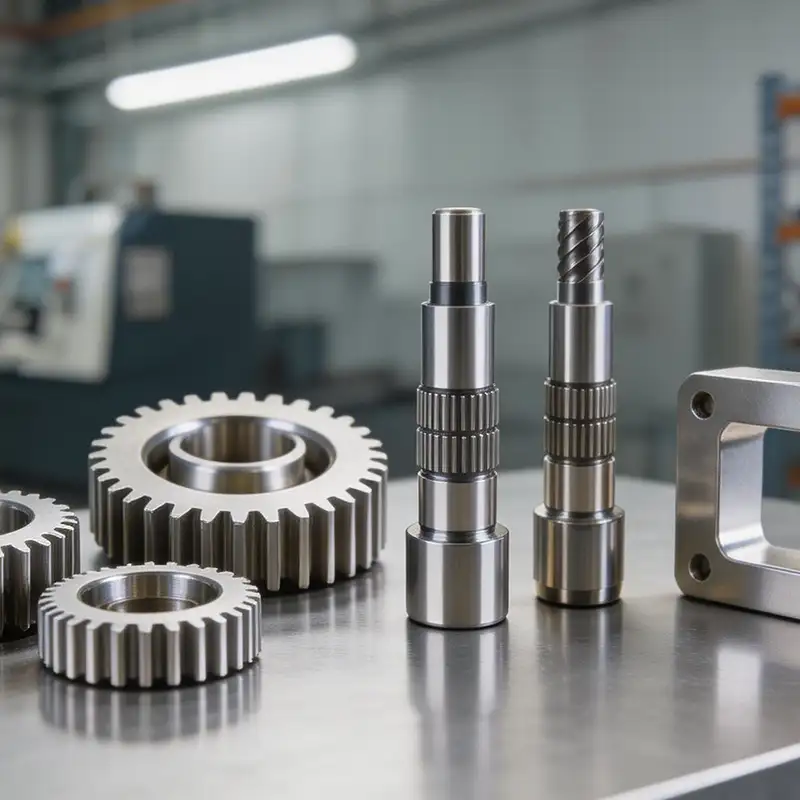
This is the industry that often builds the machines for other industries! CNC machining services are used to produce the gears, shafts, housings, and frames that make up factory equipment, packaging machines, and agricultural machinery. These parts need to be incredibly wear-resistant and precise to ensure the larger machine operates smoothly for years. It’s a great example of how CNC supports the very foundation of manufacturing itself.

Prototyping & Product Development

Before any product goes into mass production, it needs a prototype. CNC prototyping is a favorite method for engineers and designers because it allows them to create a functional, high-fidelity model directly from a digital design (CAD file). They can test the fit, form, and function using the actual intended material. This rapid turnaround from concept to tangible part accelerates innovation and helps catch design flaws early, saving significant time and cost.

Marine Industry

The marine environment is brutal—constant exposure to saltwater demands exceptional corrosion resistance. CNC machining is used to create propellers, engine components, fittings, and custom parts for both commercial vessels and luxury yachts. Materials like marine-grade aluminum, bronze, and specific stainless steels are commonly machined to withstand this challenge. The precision also ensures optimal hydrodynamic performance for parts like propellers.

Job Shops & Contract Manufacturing

This isn’t a single “industry” per se, but it’s a critical piece of the puzzle. Many companies don’t have in-house machining capabilities. That’s where contract machine shops come in. These versatile businesses use CNC to serve *all* the sectors we’ve talked about. A single job shop might work on a medical device prototype one week and a batch of aerospace brackets the next. They are the flexible, on-demand backbone of modern manufacturing, answering the broad question of which industries use CNC machines with a simple “practically all of them.

As you can see, the reach of CNC machining is astonishingly wide. It’s the quiet force behind innovation and reliability in so many aspects of our modern world. If you’re working on a project that demands precision, strength, or complex geometry, there’s a good chance that partnering with a skilled CNC shop is your best path forward.

Categories
CNC Machining Basics

What Is High Precision Machining? A Beginner’s Friendly Guide

High precision machining is a specialized manufacturing process focused on creating parts with exceptionally tight tolerances and superior surface finishes. Think of it as the art of making things incredibly accurate, often down to the width of a human hair or even finer. It’s essential in industries where a tiny error can lead to big problems.

The Fundamentals of High-Precision Machining

So, you’re curious about high precision machining? Let’s break it down in simple terms. At its core, it’s all about removing material from a workpiece—like metal, plastic, or ceramic—to create a part that matches its design specifications almost perfectly. The goal isn’t just to make a part; it’s to make a part with dimensions so accurate and a surface so smooth that it fits and functions flawlessly in its final application. This level of precision manufacturing goes beyond standard machining, demanding exceptional skill, advanced equipment, and meticulous planning.

Tolerances and Surface Finish: The Heart of Precision

Two concepts are absolutely crucial here: tolerances and surface finish. Imagine you’re ordering a custom cabinet. A tolerance is like saying, “This drawer must be between 499.95mm and 500.05mm wide.” That ±0.05mm is the allowed variation. In high-tolerance machining, these tolerances can be incredibly tight, sometimes measured in microns (one-thousandth of a millimeter). The surface finish, measured in Ra (roughness average), refers to how smooth the part’s surface is. A mirror-like finish isn’t just for looks; it reduces friction, improves wear resistance, and prevents cracks from starting. Mastering these two elements is what separates precision work from the ordinary.

Why It’s So Valuable: Where You’ll Find Precision Parts

You might wonder, “When do I actually need such extreme accuracy?” The answer is: more often than you think! This isn’t just a niche process. For instance, in the aerospace industry, a turbine blade must withstand insane forces and temperatures; a microscopic flaw could be catastrophic. In medical device manufacturing, think of a surgical implant or a component for a diagnostic machine—precision is directly linked to patient safety and device reliability. The automotive sector relies on it for fuel injectors and transmission components to boost efficiency. Even the electronics in your phone depend on precisely machined parts. Essentially, any industry where performance, safety, and miniaturization are critical is a home for ultra-precision machining.

Getting Started with Precision Machining: Key Considerations

If you’re considering a project that needs high precision, here’s some friendly advice from the shop floor. First, have a clear and detailed design. We recommend you provide a comprehensive CAD model and drawing with all tolerances and finishes clearly called out. This is your blueprint for success. Second, communicate early and often with your machining partner. Discuss the part’s function—this helps them suggest the best approach. A classic example is a client who needed a very stiff bracket. By understanding its role, we suggested a different material and machining strategy that saved them weight and cost while improving performance.

The Right Machine Tools for the Job

Not all machine shops are created equal for this work. CNC machining (Computer Numerical Control) is the standard, but the machines themselves must be high-end. Look for shops with modern 5-axis CNC mills and Swiss-type lathes that offer incredible flexibility and accuracy. These machines, often housed in temperature-controlled rooms to prevent thermal expansion, are the workhorses of precision. The process also frequently utilizes advanced techniques like micro-machining for tiny, intricate features. You can learn more about the capabilities of modern CNC systems from authoritative sources like the SME.

Why Material Choice Matters

The material you choose plays a huge role. Metals like aluminum, stainless steel, and titanium are common, but each machines differently. For instance, machining a tough alloy like Inconel requires different tools and strategies than machining brass. A good machinist will factor in the material’s hardness, thermal properties, and how it reacts to cutting forces. Sometimes, the quest for tight-tolerance manufacturing means selecting a material that is not only strong but also stable and predictable during the machining process.

Common Misconceptions About High-Precision Work

Let’s clear up a few things people often get wrong. First, precision machining isn’t always slow and prohibitively expensive for every part. While it requires more time and care than basic machining, for critical components, it’s a necessary investment that prevents costly failures later. Second, it’s not a magical, fully automated process. Yes, the CNC mechanical processing is automated, but it relies heavily on the expertise of skilled programmers and machinists to set up, monitor, and fine-tune everything. Finally, achieving high precision isn’t just about buying the best machine. It’s a holistic system involving measurement tools (like calibrated CMMs), a clean environment, and a culture of quality.

Wrapping Up: Precision as a Partnership

In the end, high precision machining is a fascinating blend of advanced technology, deep material science, and human skill. It’s the behind-the-scenes hero that makes modern innovation possible, from life-saving medical tools to the vehicles that explore other planets. If you have a project that demands this level of accuracy, view it as a partnership with your machine shop. Bring your design and application knowledge, and partner with a shop that brings the right equipment, expertise, and a commitment to quality. Together, you can turn a precise idea into a perfect part.

Categories
Quality & Tolerances

Discover What Tolerance CNC Can Achieve: A Practical Guide

When you’re designing a part, knowing the achievable CNC machining tolerances is crucial for fit, function, and cost. This guide breaks down the standard and high-precision capabilities of CNC, explains the factors that influence precision, and offers practical tips to specify tolerances effectively for your project.

Understanding CNC Machining Tolerances and Capabilities

If you’ve ever wondered, “How precise can a CNC machine be?” you’re asking the right question. The level of precision, or CNC tolerance, is what separates a good part from a great one. It directly impacts how parts fit together, how they perform, and even your project budget. In simple terms, tolerance is the permissible limit of variation in a physical dimension. Think of it as the “wiggle room” you allow for a measurement. Getting this right means your components will assemble smoothly and function reliably, which is the ultimate goal of any machining project.

What Exactly is a Machining Tolerance?

Let’s make it relatable. Imagine you’re ordering a custom dowel pin that must fit into a hole. If you specify a pin diameter of 10.00 mm with a tolerance of ±0.05 mm, you’re telling the machinist, “Any pin between 9.95 mm and 10.05 mm is perfectly acceptable to me.” This range is the dimensional accuracy target. Common questions like What are standard machining tolerances? or CNC precision limits are all getting at this core concept. It’s not about achieving a single, perfect number every time (which is nearly impossible), but about consistently hitting a defined range. For a deeper dive into geometric dimensioning and tolerancing (GD&T) principles, the ASME Y14.5 standard is the authoritative guide.

Standard vs. High-Precision CNC Tolerances

So, what numbers are we talking about? Most general machine shops work with standard machining tolerances around ±0.005 inches (±0.127 mm). This is often perfectly suitable for many brackets, enclosures, and non-critical components. However, when you need tighter fits—like for aerospace components, medical devices, or injection molds—that’s where high precision CNC machining comes in. Here, capabilities can reach incredible levels, such as ±0.0005 inches (±0.0127 mm) or even tighter for micromachining. It’s like comparing the precision of a standard ruler to a high-end caliper. The key takeaway? Always match the CNC accuracy level to your part’s actual needs. Requesting ultra-tight tolerances everywhere will skyrocket costs without adding value.

Key Factors Influencing CNC Accuracy

The tolerance capability of CNC milling isn’t just a number on a spec sheet. It’s the result of a whole system working in harmony. I like to think of it as a team sport where every player matters. If one part of the process is off, the final precision suffers. Let’s look at the main team members that determine how fine a tolerance you can hold.

The Machine Tool Itself

The foundation is the CNC machine. Its rigidity, the quality of its ball screws and guideways, and its thermal stability are paramount. A newer, well-maintained machining center will naturally hold tighter tolerances than a worn-out one. This is a big part of the answer to How fine a tolerance can CNC hold?.

Tooling and Workholding

A fantastic machine can’t compensate for a dull tool or a part that vibrates in the vise. Using sharp, high-quality end mills and secure, rigid workholding (like precision vises or custom fixtures) is non-negotiable for achieving good machining part accuracy. It’s the difference between a clean cut and a chattered, inaccurate one.

Material and Operator Skill

Some materials, like certain stainless steels or high-temperature alloys, are trickier to machine precisely than, say, aluminum. They may warp with heat or work-harden. Furthermore, a skilled machinist or programmer knows how to choose the right speeds, feeds, and toolpaths to minimize stress and maximize CNC milling precision. Their expertise in setting up the job is invaluable.

A Practical Guide to Specifying Tolerances

Now for the actionable advice. When you’re preparing your design drawings, be a tolerance hero, not a tolerance micromanager. First, apply tight tolerances only to critical features and dimensions—like a bore for a bearing or a mating surface. Leave non-critical dimensions with a looser, standard tolerance. This is the single best way to control costs. Second, communicate clearly with your machine shop. Ask them about their typical CNC tolerance standards for different operations. A good partner will help you design for manufacturability. Finally, remember that factors like part size and geometry matter; holding ±0.001″ on a 1-inch feature is different than on a 20-inch feature. By understanding the capabilities of CNC technology and applying tolerances thoughtfully, you ensure a successful, cost-effective project where every part fits and functions just as you envisioned.

Request A Quote

We'll Send You Back with Price Immediately!

DEC 1-31

XMAS SPECEIL

Up to

40% off

Discover What Tolerance CNC Can Achieve: A Practical Guide

We'll Send You Back with Price Immediately!