Categories
CNC Machining Basics

Uncover the Hidden Downsides of CNC Machining You Should Know

While CNC machining is a cornerstone of modern manufacturing, it’s not a perfect solution for every project. This article explores the less-discussed drawbacks of CNC technology, from high initial costs to design limitations, to help you make a fully informed decision for your production needs.

Exploring the Limitations and Drawbacks of CNC Machining

Hey there! If you’re considering CNC machining for a project, you’ve probably heard all about its amazing precision and repeatability. And it’s true—computer numerical control has revolutionized how we make things. But today, I want to have a friendly chat about the other side of the coin. Every technology has its trade-offs, and understanding the disadvantages of CNC milling and turning is just as important as knowing its strengths. Let’s pull back the curtain on some of the hidden costs and constraints you should be aware of before you dive in.

1. The High Initial Investment

Let’s start with the big one: cost. When we talk about the drawbacks of CNC machining, the upfront financial commitment is often the most significant barrier. It’s not just about buying a machine; it’s about building an entire ecosystem around it.

Machine and Tooling Costs

The price tag on a high-quality industrial CNC mill or lathe can be staggering. We’re talking tens to hundreds of thousands of dollars. Beyond the machine itself, you need a library of cutting tools, workholding fixtures like vises and chucks, and a steady supply of coolants and lubricants. A friend who runs a small job shop once told me, “Buying the machine felt like buying a house. Outfitting it felt like furnishing one!” This is a key part of the CNC machining pros and cons analysis—the “con” of capital expenditure is very real.

Software and Skilled Labor

Your shiny new machine is useless without the brains to run it. You’ll need Computer-Aided Manufacturing (CAM) software to translate your designs into machine instructions (G-code). Licenses for professional-grade software are a major ongoing cost. More importantly, you need skilled programmers and operators. Finding someone who truly understands feeds, speeds, toolpaths, and machine kinematics is challenging and expensive. This human element is a critical, and often overlooked, limitation of CNC technology.

2. Design and Geometry Limitations

CNC machining is a subtractive process, meaning it carves your part out of a solid block. This fundamental approach creates some inherent CNC manufacturing disadvantages related to what shapes you can actually create.

The Challenge of Internal Geometry

Imagine trying to carve the inside of a hollow ball with a straight tool—it’s nearly impossible. That’s the core issue. CNC tools are rigid and typically access the workpiece from the top or sides. This makes features like internal channels, undercuts, or complex internal lattices extremely difficult or sometimes impossible to produce without designing multiple parts for assembly. If your design has lots of hidden or enclosed cavities, you might hit a wall. This is a classic example of a CNC machining design constraint.

Inherent Material Waste

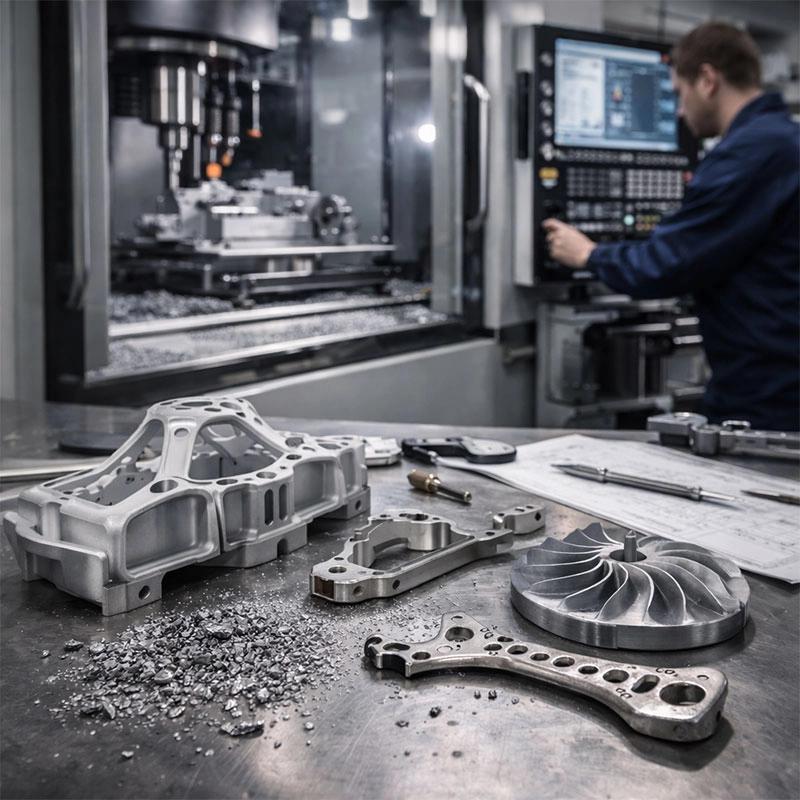
Since you start with a solid block and remove everything that isn’t your part, you generate chips—a lot of them. For parts with a high buy-to-fly ratio (like an aerospace bracket made from a large billet of titanium), the material waste can be significant and costly. This isn’t just about money; it’s an environmental consideration too. While recycling chips is possible, the energy and material loss from subtractive manufacturing drawbacks is a valid point against CNC for certain applications, especially when compared to additive processes like 3D printing.

3. Operational and Practical Drawbacks

Beyond cost and design, the day-to-day reality of running CNC equipment comes with its own set of challenges. These are the practical problems with CNC machines that shop managers deal with regularly.

Setup and Programming Time

CNC is fantastic for repeat production, but for one-off prototypes or very small batches, the setup time can kill your efficiency. You have to design the part, program the toolpaths, simulate the run, select and set up tools, and fixture the workpiece perfectly. For a single part, this preparatory work can take longer than the actual machining time. This is why for quick prototypes, many makers still turn to manual machining or other processes. The question “what are the negatives of CNC milling?” often has “lead time for first articles” as a top answer.

Maintenance and Potential Downtime

CNC machines are complex mechanical systems with spindles, ball screws, linear guides, and a sophisticated control system. They require regular, preventative maintenance—lubrication, calibration, and component inspection—to maintain their famed accuracy. When a critical component fails, the machine is down, and production stops. Diagnosing and repairing these systems often requires specialized technicians, leading to costly downtime. It’s a reminder that the precision of computer numerical control machining comes with a need for meticulous care. For reliable information on machine maintenance standards, you can refer to resources from institutions like the National Institute of Standards and Technology (NIST).

4. Making an Informed Choice

So, after all this, is CNC machining a bad choice? Absolutely not! It’s an incredible technology. The goal here isn’t to scare you away but to empower you with a balanced view. Knowing these CNC machining challenges allows you to ask the right questions: Is my design suitable for subtractive manufacturing? Does my production volume justify the setup and programming time? Can my budget handle the machine investment and skilled labor?

For high-precision, high-strength metal parts in medium to high volumes, CNC is often unbeatable. But for highly complex organic shapes in low volume, 3D printing might be better. For very simple parts in huge quantities, injection molding could win on cost per part. My advice? View CNC as one powerful tool in a vast manufacturing toolbox. By understanding its limitations and drawbacks, you can use it more effectively and know when to choose a different tool for the job. Always start with your part’s requirements and work backward to the process—not the other way around.
Categories
CNC Machining Basics

Discover the Top 5 CNC Machining Advantages for Your Projects

When you’re planning a new project, choosing the right manufacturing method is crucial. CNC machining offers a powerful set of benefits that can save you time, money, and headaches. Let’s explore the top five advantages of using CNC technology and see how it can make your next idea a reality.

Unmatched Precision and Consistency

One of the biggest benefits of CNC milling and turning is the incredible accuracy it delivers. We’re talking about tolerances within thousandths of an inch, something nearly impossible to achieve consistently by hand. This precision is controlled by computer programs, meaning every single part in a run is virtually identical to the last. Whether you need ten parts or ten thousand, you can trust they will all fit and function exactly as designed. This eliminates the “part variation” headache that can stall assembly lines and derail project timelines.

How This Precision Works for You

Imagine you’re creating a custom drone frame. The motor mounts need to be perfectly aligned, or you’ll get vibration and poor performance. With computer numerical control machining, the machine follows the digital blueprint to the letter, drilling each mounting hole in the exact same spot on every frame. This level of CNC manufacturing accuracy is why industries from aerospace to medical devices rely on it for critical components. It turns complex designs into reliable, repeatable reality.

Incredible Efficiency and Speed

Once the program is set, a CNC machine can work tirelessly—24/7 if needed—with minimal supervision. This automation translates directly into faster production times compared to manual machining. What might take a skilled machinist hours to complete can often be done in a fraction of the time. Plus, modern machines can often perform multiple operations (like milling, drilling, and tapping) in a single setup. This efficiency is a major reason why CNC machining benefits businesses by shortening lead times and getting products to market faster. You’re not just buying a part; you’re buying back valuable time.

Remarkable Material and Design Versatility

Wondering about the advantages of CNC over traditional machining when it comes to materials? The range is astounding. From metals like aluminum, steel, and titanium to various plastics and even woods, CNC systems can handle them all. This flexibility extends to design complexity as well. Intricate 3D contours, deep pockets, and fine details that would be costly or impossible with manual methods are standard fare for a 5-axis CNC mill. This opens up a world of possibilities for innovative product design and functional prototyping. You’re truly limited only by your imagination (and the laws of physics!).

Enhanced Safety and Reduced Labor Intensity

This is a significant but often overlooked perk. In CNC machine shop operations, the operator’s primary role is to monitor the process, load materials, and perform quality checks—not to stand directly over a spinning cutter. The cutting happens inside an enclosed workspace, dramatically reducing the risk of accidents associated with manual lathes or mills. This creates a safer work environment and allows skilled personnel to focus on programming, optimization, and quality assurance rather than repetitive, physically demanding tasks. It’s a smarter, safer way to build things.

Excellent Scalability for Any Volume

Whether you need a one-off prototype or a full production run, CNC is a fantastic choice. For prototyping, you can quickly iterate designs by simply modifying the digital file. When you’re ready for production, that same file can run to manufacture hundreds or thousands of identical parts with ease. This seamless transition from CNC prototyping advantages to full-scale manufacturing makes it a uniquely scalable solution. You don’t need to switch processes or retool extensively, which saves money and maintains consistency across your entire product lifecycle. It’s as suitable for a startup’s first batch as it is for an established company’s ongoing needs.

Key Benefits of CNC Machining for Modern Manufacturing

So, what does all this mean for your project? In short, CNC machining provides a reliable, precise, and flexible foundation for bringing ideas to life. The combination of digital accuracy, material flexibility, and efficient production empowers designers and engineers to solve problems in new ways. By leveraging these top advantages of CNC technology, you can reduce costs, accelerate development, and produce higher-quality parts. It’s a cornerstone of modern making, turning complex digital designs into tangible, high-performance objects you can hold in your hand. Ready to see what it can do for you?

Categories
CNC Milling & Turning

3 Axis vs 5 Axis CNC: Which is Right for Your Project?

Choosing between a 3-axis and a 5-axis CNC machine is a common crossroads in manufacturing. This guide breaks down their core differences in a friendly way, helping you understand which multi-axis machining center aligns with your project’s complexity, budget, and timeline.

Comparing 3-Axis and 5-Axis Machining Capabilities

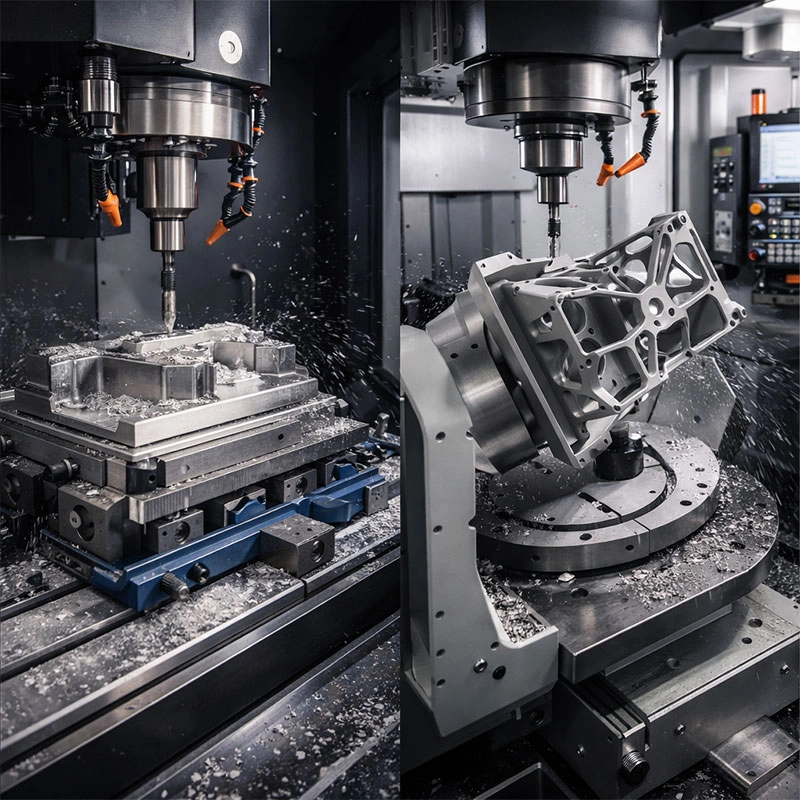
Let’s start with the basics. Think of axes as the directions in which the cutting tool or the workpiece can move. A standard 3-axis CNC milling machine moves in three linear directions: left/right (X), forward/backward (Y), and up/down (Z). It’s incredibly reliable for machining parts with relatively simple geometries. On the other hand, a 5-axis CNC machine adds two rotational axes (typically called A and B), allowing the cutting tool to approach the workpiece from virtually any direction in a single setup. This is the heart of simultaneous 5-axis machining.

How They Work: The Core Difference

Imagine you’re carving a detailed statue. With a 3-axis approach, you’d have to manually reposition the block multiple times to reach all the curves and undercuts—this is like needing multiple setups. A 5-axis setup is like having a robotic arm that can smoothly rotate the tool around the block, accessing those complex angles without stopping. This fundamental difference in movement is what drives all the other comparisons in CNC milling.

Where Each CNC Machine Shines: Practical Use Cases

So, when should you use each type? I like to think of the three axis CNC as the dependable workhorse. It’s perfect for machining 2.5D features, flat surfaces, pockets, holes, and simple contours. If you’re producing panels, brackets, or basic molds, a 3-axis is often the most cost-effective and straightforward choice. The 5 axis milling machine, however, is your go-to for complex, organic shapes. It excels at aerospace components (like turbine blades), intricate medical implants, sophisticated automotive parts, and complex sculptural forms. The ability to machine five sides of a part in one go (5-sided machining) is a massive time-saver and improves accuracy by eliminating setup errors.

How to Choose: Matching the Machine to Your Project

This is the big question: 3 axis vs 5 axis which is better for you? There’s no single “best” answer—it’s all about fit. We suggest you start by looking at your part’s design. Are there deep pockets, undercuts, or surfaces that aren’t parallel to the standard axes? If yes, 5-axis becomes attractive. Next, consider your budget. A 5-axis machine has a higher initial cost and often requires more expensive programming and tooling. For lower-volume or simpler projects, that investment might be hard to justify. Finally, think about time. A 5-axis can dramatically reduce cycle times and manual handling for complex parts, potentially offsetting its higher hourly rate.

Key Questions to Ask Before You Decide

To make your decision easier, ask yourself: What is the geometric complexity of my part? What is my total production volume? What is my tolerance and surface finish requirement? Do I have the technical expertise for multi-axis programming? Answering these will point you toward the right CNC machining process. For many, a hybrid approach works best: using 3-axis for most operations and reserving 5-axis for only the most complex features.

Clearing Up Common CNC Misconceptions

Let’s tackle a few myths head-on. First, “5-axis is always better.” Not true! Using a 5-axis mill for a simple flat plate is overkill—like using a sports car to haul lumber. Second, “3-axis machining is obsolete.” Absolutely not! It remains the backbone of the industry for a vast majority of components. Third, “5-axis is impossibly difficult to program.” While it’s more complex, modern CAM software has made it far more accessible. A final tip: don’t assume you must buy a machine. Many job shops offer both services, so you can test the waters with a 5-axis project without the capital outlay. You can learn more about machining fundamentals from authoritative sources like Engineering.com.

Making Your Final Decision

Choosing between 3-axis and 5-axis CNC machining ultimately comes down to your specific part, budget, and goals. For simplicity, speed on straightforward jobs, and lower cost, the trusted 3-axis path is often perfect. For unparalleled capability on complex, contoured parts where precision and reduced setups are critical, the power of 5-axis is worth the investment. My friendly advice? Start with a clear understanding of your part’s needs. If you’re still unsure, consult with an experienced machinist or a machine shop that offers both—they can provide invaluable guidance tailored to your unique CNC manufacturing project. Remember, the right tool for the job makes all the difference.

Categories
Manufacturing Process Comparisons

CNC Milling vs. Turning: Which Process Is Right for Your Project?

Choosing between CNC milling and CNC turning can be a pivotal decision for your manufacturing project. This guide breaks down the core differences, practical applications, and key factors to help you select the optimal subtractive manufacturing process for your specific part geometry and production goals.

Understanding the Core Differences Between CNC Milling and Turning

If you’re new to CNC machining, the terms “milling” and “turning” might sound similar. But in practice, they’re fundamentally different approaches to shaping material. Think of it like the difference between a sculptor and a potter. Both create shapes, but their tools and methods are distinct. Understanding this CNC milling vs CNC lathe distinction is the first step to making an informed decision for your prototype or production run.

How They Work: A Simple Analogy

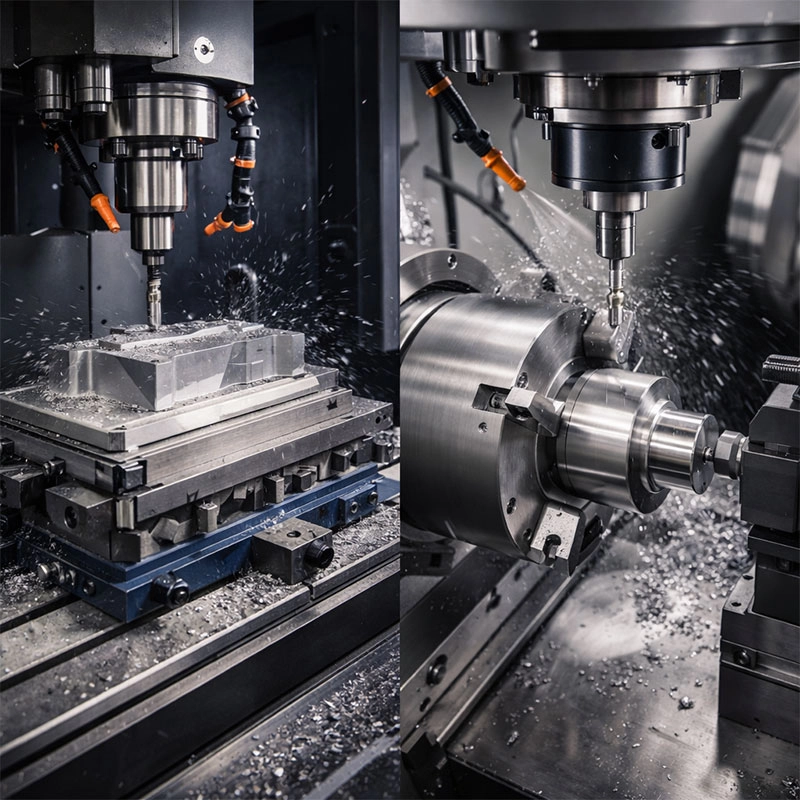
Let’s keep it simple. In CNC turning (often done on a CNC lathe), the workpiece is the one that spins. It’s clamped in a chuck and rotated at high speed. Then, a stationary cutting tool is brought into contact with it, peeling away material to create cylindrical shapes. Imagine a piece of clay spinning on a potter’s wheel as the potter’s hands shape it—that’s turning.

In CNC milling, the opposite happens. The workpiece is held stationary on a table, and a rotating cutting tool (the mill) moves across it along multiple axes (X, Y, and Z). This is like a sculptor using a rotating chisel to carve details into a stationary block of wood. This multi-axis movement allows milling to create incredibly complex and non-rotationally symmetric features, which is why comparing 3 axis vs 5 axis milling is also a common consideration for intricate parts.

When to Choose CNC Milling for Your Project

So, when does the “sculptor’s” method win? CNC milling services are your go-to for parts that aren’t primarily round. If your design has flat surfaces, pockets, slots, complex contours, or detailed 3D shapes, milling is almost certainly the answer. It excels at creating features like engine blocks, brackets, molds, and enclosures. The real power of milling lies in its versatility; you can machine a wide range of materials from aluminum and steel to plastics and composites. For operations like creating deep cavities or threading a hole that isn’t on the centerline, a milling machine with the right tools is indispensable.

When to Choose CNC Turning for Your Project

On the other hand, if your part is defined by its roundness, CNC turning is typically faster and more cost-effective. This process is ideal for producing shafts, pins, bolts, nuts, and any component where the critical shape is concentric around a central axis. The process is exceptionally efficient for high-volume production of such round parts. Furthermore, modern CNC lathes can perform secondary operations like drilling cross-holes or milling flats—often called “turn-mill” machines—which blurs the line a bit. But at its heart, turning is the master of cylindrical machined parts.

Making the Right Choice for Your Part

You might find that some projects clearly lean one way, while others could potentially use either process. Don’t worry, this is common! The best approach is to start with your part’s design and work backwards. I always tell my clients that the geometry is the ultimate guide.

Key Questions to Ask

Here’s a quick mental checklist we can run through:
1. Is the primary shape cylindrical or rotational? If yes, lean towards turning.
2. Does it have complex 3D surfaces, slots, or pockets? If yes, milling is likely needed.
3. What is the required tolerance and surface finish? Both processes can achieve high precision, but the optimal method depends on the feature.
4. What’s the production volume? Turning often has a speed advantage for simple round parts in bulk.

Sometimes, the most cost-effective solution involves both processes. A part might be roughed out on a lathe and then have detailed features added by a mill. This is where working with an experienced machine shop is invaluable.

What About Hybrid Machining?

It’s worth mentioning that the line between milling and turning continues to blur with advanced multi-axis machining centers. A Swiss-type lathe or a mill-turn center can perform both rotating workpiece operations and rotating tool operations in a single setup. This is fantastic for reducing handling time and improving accuracy for complex components. If you’re curious about the capabilities of these advanced systems, resources like the Basics of Mill-Turn Technology on Modern Machine Shop offer a great technical deep dive.

Conclusion: Partnering for Precision

The debate of CNC milling vs turning isn’t about which is better overall, but which is better for *your specific part*. By understanding the core principle—rotating tool vs. rotating workpiece—you’re already ahead. My friendly advice? Start with a clear CAD model and have a conversation with your machining partner. Share your goals for function, budget, and timeline. A good shop will help you navigate the choice between subtractive manufacturing processes, and might even suggest design tweaks (DFM – Design for Manufacturability) to make your part stronger, cheaper, and faster to produce. For further reading on material properties and machining guidelines, the Machine Design learning resources library is a trustworthy place to continue your research.

Categories
CNC Machining Basics

Your First CNC Project: A Beginner’s Guide to Machining Success

Starting your first CNC project can feel overwhelming, but it’s an incredibly rewarding journey. This guide breaks down the essential steps, from understanding the basics of computer numerical control to choosing your first simple design. We’ll walk you through the core concepts and practical tips to turn your digital idea into a physical part with confidence.

Getting Started with CNC: Essential Fundamentals for New Machinists

Welcome! If you’re curious about CNC machining for beginners, you’re in the right place. Think of learning computer numerical control like learning to drive. First, you need to know what the pedals and steering wheel do before you hit the open road. This section covers those fundamentals, so you understand the “why” behind the “how.” It’s the best way to build a solid foundation for your first CNC project and avoid common frustrations.

What Exactly is CNC Machining?

At its heart, CNC milling or CNC turning is a process where a computer controls machine tools. You create a digital design, and the machine follows those instructions with incredible precision to cut away material. It’s a form of subtractive manufacturing, which is a fancy way of saying you start with a block of material and carve your part out of it. This is different from 3D printing (additive manufacturing), where material is added layer by layer.

The Key Components of Your CNC Workflow

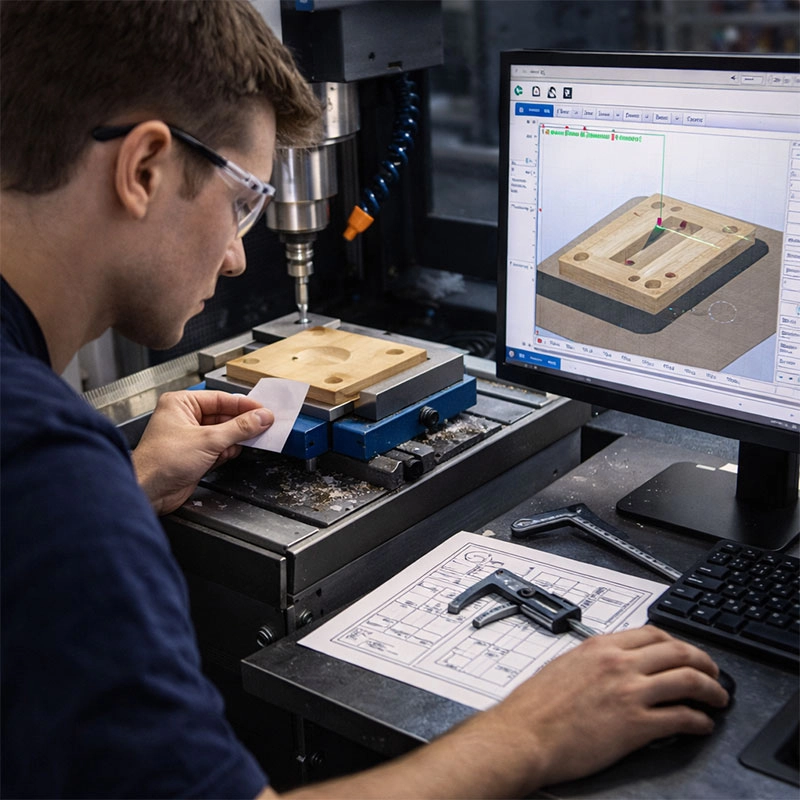
Your journey from idea to object involves three main stages, often called the CAD-CAM-CNC chain. First, CAD (Computer-Aided Design) is where you draw your part using software. Next, CAM (Computer-Aided Manufacturing) software takes that drawing and creates the toolpaths—the detailed instructions for the machine’s movements. Finally, the CNC controller reads those instructions and drives the motors to make the cuts. Understanding this flow is crucial for anyone starting CNC machining as a hobby.

Planning Your First CNC Machining Project

Jumping straight into a complex design is a recipe for discouragement. Successful beginner CNC projects are all about smart planning. This phase is where you set yourself up for a win by making thoughtful choices about your design and material. A little planning here saves a lot of troubleshooting later.

Choosing the Perfect Beginner-Friendly Design

We suggest you start with something flat and 2.5D. A simple nameplate, a coaster, or a basic bracket are fantastic first projects for CNC. These designs typically use profile cuts (cutting out the outline) and pocketing (clearing out areas), which teach you the core operations without needing complex 3D toolpaths. Avoid designs with tiny, delicate details or steep overhangs for now. You can find great free CNC projects for starters on sites like Thingiverse.

Material Selection: Start Simple for Success

Your material choice dramatically affects your experience. For your very first attempt, I highly recommend using wood (like pine or poplar) or a soft plastic like HDPE or acrylic. These materials for new CNC users are forgiving—they cut easily, are less stressful on your tools, and are cheaper if you make a mistake. Save metals like aluminum for when you’re more comfortable with the process. Remember, the goal of learning CNC machining is to learn the process, not to fight a tough material.

From CAD to Part: The Digital Workflow Simplified

This is where your project comes to life on the screen before it touches the machine. The digital workflow transforms your idea into a language the CNC understands. While it might seem technical, modern software makes CNC programming for novices more accessible than ever.

You’ll use CAD software to draw your part. For beginners, free options like Fusion 360 (for personal use) or Tinkercad are excellent starting points. Once your design is ready, you switch to the CAM workspace within the same software or a dedicated program. Here, you’ll select the tool (like an end mill), define the cutting speeds and feeds (how fast the tool spins and moves), and generate the G-code. This G-code is the final set of instructions. A common tip is to always simulate the toolpath in the software first—it’s like a dry run that can prevent a costly crash on the actual machine.

Machine Setup and Safe Operation Practices

Now for the hands-on part! Proper setup is non-negotiable for safety and quality. This involves securing your material to the machine bed (we call this “workholding”), installing and measuring the correct cutting tool, and setting the machine’s zero points. Rushing this step is the biggest mistake beginners make.

Always, always wear safety glasses. Secure your material rock-solid; if it moves, the part is ruined and it can be dangerous. Use clamps or a vise. Then, you’ll “touch off” your tool to set the X, Y, and Z zero positions, telling the machine exactly where the material is. This process, part of basic CNC operation, ensures the machine cuts in the right place. Double-check everything before you start the spindle. For comprehensive safety guidelines, refer to resources from OSHA.

Launching Your Cut and Learning from the Process

Take a deep breath and hit start! It’s normal to be nervous. Stay by the machine for the first few moments, ready to hit the emergency stop if something sounds or looks wrong (like a loud bang or the material vibrating loose). Listen to the sound of the cut—a smooth, consistent sound is good; screeching or chattering means something might be off.

Your first part might not be perfect, and that’s okay. The real goal of your introductory CNC guide is the learning. Did the tool leave rough marks? Maybe the feed rate was too high. Did a thin part break? Perhaps you needed a different workholding strategy. Each “mistake” is a valuable lesson that makes your next project better. Document what you did, the settings you used, and the outcome. Before you know it, you’ll have the confidence and skills to tackle more advanced CNC router projects for beginners and beyond. You’ve just taken the first step into the amazing world of making things with precision!

Categories
Industries & Applications

Discover 10 Surprising CNC Machining Applications Today

When you think of CNC machining, you might picture industrial parts or automotive components. But its reach is far wider! This guide explores ten unexpected and fascinating uses of CNC technology, showing how this precise manufacturing process touches everything from art to medicine.

The Unexpected Value of CNC Machining

Hi there! If you’re curious about what CNC machining can really do, you’re in the right place. We often box it into “heavy industry,” but its true value lies in its incredible versatility and precision. Whether you’re a designer, engineer, artist, or just a curious mind, understanding the diverse applications of CNC technology opens up a world of possibilities. It’s not just about making parts; it’s about turning complex ideas into tangible reality with accuracy that’s hard to match by hand.

10 Surprising CNC Machining Applications

Let’s dive into some of the most creative and unexpected places where CNC milling and CNC turning applications shine. You might be surprised where this technology pops up!

Custom Musical Instruments

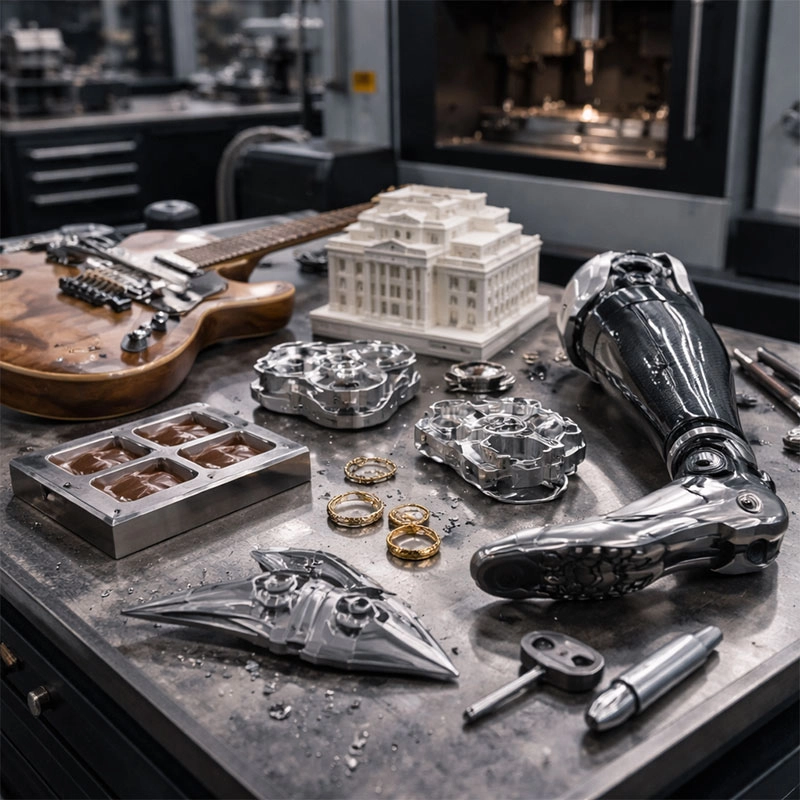
Imagine a guitar with a body carved from a single, exotic piece of wood, featuring intricate soundhole patterns that would be impossible to cut by hand. That’s CNC at work! Luthiers use it to create precise necks, fretboards, and even entire brass or woodwind instrument bodies. This level of precision machining ensures perfect intonation and unique aesthetic designs, allowing musicians to have truly one-of-a-kind instruments. For more on advanced manufacturing techniques, you can check out resources from ASME.

Architectural Models & Art

Before a skyscraper rises, architects often present detailed scale models. CNC machines carve these models from foam, wood, or acrylic with stunning detail. Beyond models, artists are using CNC as a digital chisel to create large-scale sculptures, intricate wall panels, and textured installations. It’s a fantastic example of how computer numerical control bridges the gap between digital design and physical art.

Medical Prosthetics & Orthotics

This is where CNC machining makes a profound human impact. Using 3D scans of a patient, technicians can machine custom prosthetic limbs or orthotic braces that fit perfectly. The materials used, like medical-grade titanium or polymers, are easily worked by CNC to create lightweight, strong, and comfortable devices. This application highlights the critical role of CNC manufacturing in improving quality of life.

The Food Industry

Yes, you read that right! While not cutting food directly, CNC machines are vital in creating the molds and dies used for food production. Think of the complex shapes of chocolate bars, the detailed designs on cookies, or the molds for pasta. The machines that make those production tools are often CNC, ensuring consistency and intricate design in what we eat.

Custom Jewelry & Fashion

High-end and custom jewelry relies on the fine detail of CNC machining, especially for wax molds used in casting. Designers can create incredibly complex patterns and settings that would be too time-consuming or fragile to make manually. Furthermore, some designers are machining metal accessories, custom buttons, or even elements for haute couture directly, pushing the boundaries of machining uses in fashion.

Historical Restoration

Restoring a historic building or vehicle often requires replicating a broken or missing part that hasn’t been made for a century. Conservators can 3D scan the original or its counterpart, design a replacement digitally, and use CNC machining to create a perfect replica in the correct material, whether it’s vintage brass, wrought iron, or rare wood.

Scientific Instruments

Research labs depend on precision. Custom lens holders, sample chambers, components for spectrometers, and parts for particle accelerators often require the tolerances only CNC can provide. These uses of CNC machines enable scientific breakthroughs by creating the specialized tools researchers need.

Custom Furniture & Woodworking

Modern woodworkers use CNC routers to bring new designs to life. They can produce complex joinery like dovetails or mortise-and-tenon joints with perfect repeatability, carve elaborate decorative panels, or cut out unique furniture shapes. It allows for a blend of traditional craftsmanship with digital precision, expanding what’s possible in custom furniture design.

Aerospace Prototypes & Components

While aerospace is a known field for CNC, the surprising part is the prototyping of unconventional components. Before committing to expensive casting dies for a new engine bracket or satellite housing, engineers will often machine a functional prototype directly from metal or composite block using CNC. This allows for rapid testing and iteration. Standards for such high-stakes manufacturing are rigorous, and information can be found through organizations like SAE International.

Movie Props & Cosplay

Next time you see a hero’s detailed armor or a futuristic weapon in a film, there’s a good chance CNC helped make it. Prop shops machine parts from foam, urethane, or lightweight composites to create durable, detailed, and repeatable props. Similarly, dedicated cosplayers use desktop CNC routers to create incredibly accurate costumes and accessories, showcasing the creative applications of CNC milling in fandom.

How to Explore CNC for Your Project

Feeling inspired? If you have a project that could benefit from precision, here’s a friendly suggestion: start with a clear digital design. Software like CAD is your blueprint. Then, look for a local machine shop or a maker space with CNC capabilities. Don’t be afraid to discuss your idea with them—they can advise on the best materials (like aluminum, plastics, or woods) and machining processes for your needs. Many shops love working on unique, non-industrial projects!

Busting Common Myths About CNC Uses

Let’s clear up a couple of things! A common myth is that CNC is only for huge, expensive metal parts. As you’ve seen, it’s fantastic for prototyping, one-off custom items, and softer materials like wood and plastic. Another is that it removes all skill from creation. On the contrary, it requires skilled operators to program, set up, and manage the process—the skill shifts from manual dexterity to digital mastery and technical knowledge.

Final Thoughts

So, there you have it! From the concert hall to the operating room, and from the movie set to your dining room table, CNC machining applications are far more diverse than we often assume. It’s a tool of incredible precision that empowers creativity and innovation across countless fields. We hope this tour has given you a new appreciation for the surprising and wonderful world of CNC machine applications. Who knows what you’ll create with it next?

Categories
CNC Materials

Your Ultimate CNC Machining Materials List & Guide

Choosing the right material is one of the most critical decisions in any CNC machining project. This guide will walk you through the essential materials list, from metals and plastics to more exotic options, explaining their properties, uses, and how to select the best one for your application. Think of it as your friendly workshop companion for material selection.

Why Your Material Choice is a Game-Changer

Hey there! Let’s talk about something fundamental. When you’re planning a project, whether it’s a custom bike part or a prototype for a new gadget, the CNC machining materials list you start with sets the stage for everything. It’s not just about what’s available; it’s about matching the material’s personality—its strength, weight, cost, and how it behaves under the tool—to your vision. Picking the wrong one can lead to parts that wear out too fast, cost too much, or simply don’t work. I like to think of it as choosing the right ingredient for a recipe. Get it right, and the final product is a masterpiece.

The Metal Machining Guide: From Common to Exotic

Metals are the backbone of many machined parts, prized for their strength and durability. Your CNC material selection guide isn’t complete without a deep dive into these workhorses. From the lightweight champion aluminum to the tough stalwart steel, each brings something unique to the table. Let’s break down the most common metals you’ll encounter and some you might consider for special jobs.

Aluminum Alloys: The Go-To Favorite

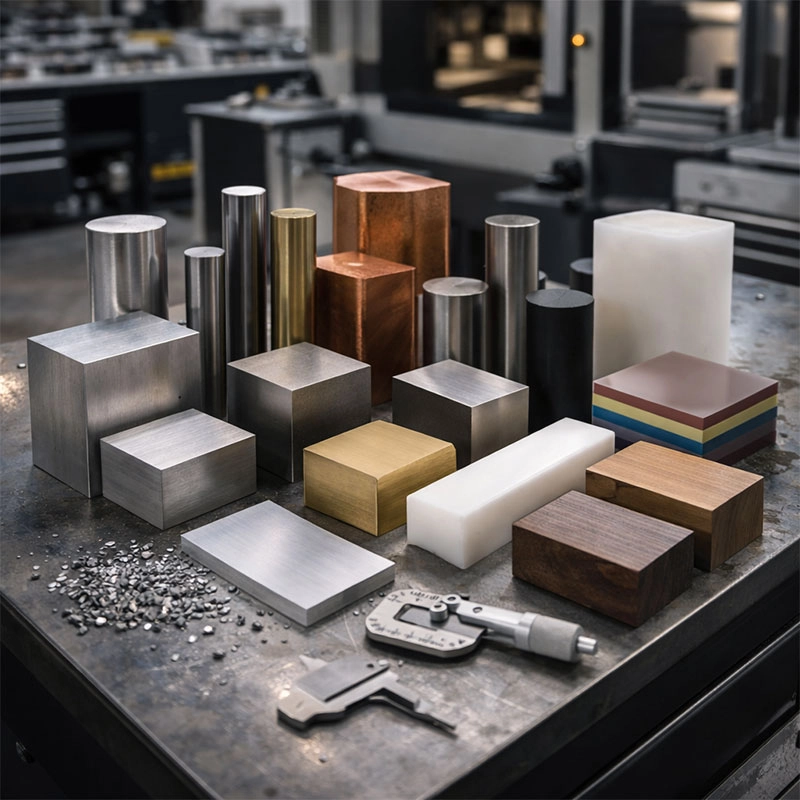
If you’re looking for a material that’s easy to machine, lightweight, and has good strength, aluminum alloys are often the first stop. Grades like 6061 and 7075 are superstars in the CNC metals list. 6061 is incredibly versatile and cost-effective, perfect for automotive parts, frames, and consumer goods. 7075, on the other hand, is much stronger (comparable to many steels) and is a top choice for aerospace components. You might find that for most general-purpose projects, starting with an aluminum alloy is a safe and smart bet.

Stainless Steel: For Strength & Shine

When you need corrosion resistance and serious strength, stainless steel enters the chat. It’s a key part of any comprehensive machining materials database. Grades like 304 (general purpose) and 316 (with even better corrosion resistance, great for marine environments) are widely used. Machining stainless can be tougher on tools than aluminum—it’s harder and generates more heat—but the result is a part that can withstand harsh conditions and look great doing it. Think medical instruments, food processing equipment, or architectural details.

Other Essential Metals

Your guide to CNC materials should also include these other key players. Mild Steel (like 1018) is inexpensive and easy to machine, ideal for non-critical structural parts. Titanium is the high-performance option: incredibly strong, lightweight, and biocompatible, but challenging and expensive to machine—common in medical implants and aerospace. Brass and Copper offer excellent electrical conductivity and machinability, making them perfect for electrical components and decorative fittings. Don’t forget Tool Steels (like D2 or A2), which are hardened for making, well, tools and dies themselves.

Plastics & Polymers: Lightweight & Versatile

Plastics aren’t just cheap substitutes; they’re engineering materials in their own right. A complete CNC machining materials list must cover plastics, which offer benefits metals can’t, like electrical insulation, transparency, and often lower cost. They’re generally easier on cutting tools, too. When you’re searching for the best plastics for CNC machining, you’ll typically split them into two camps: engineering-grade and commodity-grade.

Engineering Plastics

These are the high-performers. POM (Acetal/Delrin) is famously stiff, has low friction, and machines to a beautiful finish—great for gears and bearings. Nylon (PA) is tough, wear-resistant, and has good chemical resistance. Then there’s PEEK, a superstar polymer used in extreme environments (like inside an engine or the human body) due to its incredible thermal and chemical stability. While more expensive, these materials solve specific, demanding problems.

Common Plastics for Machining

For many projects, a standard plastic is all you need. ABS is that familiar, tough plastic used in LEGO bricks and car dashboards; it’s easy to machine and glue. Polycarbonate (PC) is virtually unbreakable and clear, perfect for protective shields or lenses. PVC is cheap and chemical-resistant, often used for pipes and fittings. And PMMA (Acrylic) gives you glass-like clarity and is wonderful for signs, displays, and light fixtures. When building your CNC stock materials list, these are reliable, readily available options.

How to Choose: Your Practical Selection Checklist

With so many options, how do you decide? Let’s make it practical. Instead of getting overwhelmed, run through this simple checklist. Ask yourself: What is the primary function of the part? Does it need to bear load (strength), move (wear resistance), or be exposed to weather (corrosion resistance)? Next, consider the operating environment—temperature, chemicals, moisture. Then, factor in budget and machinability; a cheaper material that’s hard to machine might end up costing more in labor. Finally, think about appearance and regulations (like FDA approval for food contact). I always recommend getting a small sample machined if you’re unsure—it’s the best way to test the real-world performance of your CNC raw material options.

Final Thoughts on Building Your Materials List

Creating your ultimate CNC machining materials list is less about memorizing every alloy and polymer and more about understanding the landscape. Start with the application, let that guide your property requirements, and then match it to the material family. Remember, fantastic resources exist to help. For deep technical data on metals, I often refer to the ASM International website. For plastics, the IDES Plastics Database is an incredible source for property sheets. Don’t be afraid to consult with your machine shop either—their experience is gold. With this guide in hand, you’re well-equipped to make informed choices and bring your best designs to life. Happy machining!

Categories
Quality & Tolerances

Master CNC Machining Tolerance Standards: A Beginner’s Guide

Welcome! If you’re new to CNC machining, the world of tolerances and precision standards might seem a bit overwhelming. Think of it like following a recipe: the tolerances are the specific measurements that ensure your final part turns out just right. This guide will walk you through the basics of CNC machining tolerance standards in a friendly, easy-to-understand way.

Understanding CNC Machining Tolerances and Specifications

Let’s start at the very beginning. In the world of CNC precision machining, a “tolerance” isn’t about patience—it’s about permission. It’s the allowable amount of variation in a physical dimension. If a drawing calls for a 10 mm hole with a ±0.1 mm tolerance, it means the machined hole can be anywhere from 9.9 mm to 10.1 mm and still be considered perfect. These dimensional tolerances in machining are the rules of the game, ensuring every part fits and functions as intended.

What Exactly is a Machining Tolerance?

You might wonder, “Why not just make everything perfectly to the number on the drawing?” In an ideal world, that would be great! But in reality, tiny variations are inevitable due to tool wear, material properties, and machine capabilities. Tolerance standards for CNC give us a practical, agreed-upon range for these variations. They answer the question: “How close is close enough?” For a deeper dive into the fundamental concepts, the American Society of Mechanical Engineers (ASME) provides the foundational guidelines, like ASME Y14.5, that define how we communicate these tolerances on engineering drawings.

Why Getting Tolerances Right is So Important

Specifying the correct CNC machining accuracy standards is like choosing the right tool for a job. Too loose, and parts might not assemble or function correctly—imagine a wobbly gear or a leaky seal. Too tight, and you’re asking for unnecessary expense and potential production delays. Getting it just right ensures reliability, safety, and cost-effectiveness. It’s the secret sauce that allows parts from different batches, or even different manufacturers, to work together seamlessly. This interoperability is a key benefit of adhering to recognized geometric dimensioning and tolerancing (GD&T) principles.

Your Practical Guide to Specifying Tolerances

So, how do you, as a beginner, approach this? First, don’t just guess. Collaborate with your machinist or engineer early on. Ask yourself: What is this part’s job? Does it need to spin freely, press-fit snugly, or just cover a hole? The answer will guide your machining precision requirements.

Common Tolerance Standards and Grades

Many shops use standard tolerance grades, like ISO 2768-mK for general metal parts. It’s a fantastic starting point that covers most features without cluttering your drawing. For example, under this standard, a dimension like 25 mm might have a default tolerance of ±0.2 mm. For critical features, you then call out tighter part tolerance guidelines specifically. Remember, every decimal place you add (e.g., ±0.1 mm vs. ±0.01 mm) increases the challenge and cost. The International Organization for Standardization (ISO) website is a great resource to explore these international benchmarks.

Balancing Cost, Time, and Complexity

Here’s a friendly tip from experience: apply tight tolerances only where they are functionally critical. I once saw a designer specify extremely tight tolerances on every single dimension of a non-critical bracket. This turned a simple, affordable part into a costly and time-consuming project. By relaxing the tolerances on non-mating surfaces, we cut the cost in half with zero impact on performance. Always consider the manufacturing tolerances for CNC parts in the context of the whole assembly.

Clearing Up Common Misconceptions About Tolerances

Let’s bust a couple of myths! First, “tighter is always better.” Not true. Unnecessarily tight machining limits and fits waste money and can even make a part more prone to failure if it requires an overly delicate manufacturing process. Second, “the CNC machine will automatically hit any tolerance I write down.” While modern machines are incredibly accurate, they have limits. A tolerance of ±0.001 mm is a different league than ±0.1 mm and requires specific tools, processes, and environmental controls. Understanding these CNC part dimensional accuracy realities helps set realistic expectations.

Wrapping Up: Your Path to Confident Tolerancing

Mastering CNC machining tolerance standards is a journey, not a destination. Start by understanding the basic “why” behind tolerances, use standard grades as your baseline, and specify tighter controls only for critical features. Always talk to your manufacturing partner—their expertise is invaluable. By taking this balanced approach, you’ll design parts that are not only functional and reliable but also manufacturable and cost-effective. Happy machining!

Categories
Quality & Tolerances

How Accurate Is CNC Machining? Discover the Surprising Truth

When people ask about CNC machining accuracy, they’re often looking for a simple number. The truth is more nuanced, involving factors like machine capability, material behavior, and operator skill. This guide breaks down what “accuracy” really means in CNC manufacturing and what you can realistically expect for your projects.

Understanding the Precision of CNC Machining

So, you’re wondering about the precision of CNC machining? It’s a fantastic question and the heart of why this technology is so revolutionary. In my experience, when folks ask “how precise is CNC,” they’re often imagining a single, magic number. But the reality is a fascinating blend of engineering, physics, and a bit of craftsmanship. Let’s think of it like a master baker following a recipe. The recipe (the CAD file) is perfect, but the final cake depends on the oven’s exact temperature, the quality of the ingredients, and the baker’s skill. CNC machining works in a similar, wonderfully complex way.

Accuracy vs. Repeatability: The Key Distinction

This is the first thing I always clarify. Accuracy refers to how close a single machined part is to the exact dimensions in the design. Repeatability, on the other hand, is the machine’s ability to produce the *same* accurate part, over and over again. A machine might occasionally hit a perfect measurement (accuracy) but struggle to do it consistently. The best CNC systems excel at both. This consistency is what makes computer numerical control manufacturing ideal for high-volume production where every component must be identical.

What Influences CNC Machine Accuracy?

The tolerance of a CNC machine isn’t set by one thing. It’s a team effort between several critical factors. Understanding these helps you see why accuracy can vary and how to ensure you get the best results for your specific part.

The Machine Tool Itself

The foundation is the machine. High-end machining centers with rigid frames, precision ground ball screws, and high-resolution feedback systems naturally hold tighter tolerances. Think of it as the difference between a sports car and a family sedan—both drive, but one is built for extreme performance. Factors like thermal growth (the machine expanding as it heats up) and mechanical backlash are constantly managed by the machine’s design and controller.

Tooling and Workholding

Even the best machine can’t compensate for a wobbly cutting tool or a part that shifts in its vise. Using high-quality, sharp end mills and drills is non-negotiable for fine detail. Similarly, robust workholding—using the right clamps, fixtures, or vises—ensures the material doesn’t move a single micron during the aggressive forces of milling or turning. It’s like trying to write your signature on a notepad held firmly in your hand versus one floating on water.

Material and The Human Factor

Materials behave differently. Aluminum is generally forgiving and easy to machine to tight specs, while stainless steel can be tricky and may spring slightly after cutting. The CNC programmer and operator play a huge role. Their expertise in selecting the right speeds, feeds, and cutting paths (the toolpath) directly affects the final outcome. A well-written program accounts for material properties and machine dynamics to achieve the designed dimensional accuracy.

Real-World Tolerances: What Numbers Can You Expect?

Let’s get to some numbers, because that’s what we’re all curious about! For standard commercial CNC milling services, a typical tolerance of ±0.005 inches (±0.127 mm) is very common and achievable. For many applications, this is more than sufficient. However, the world of precision machining goes much further. High-end shops regularly hold tolerances of ±0.001 inches (±0.0254 mm) or even ±0.0005 inches (±0.0127 mm) for critical features. It’s important to know that holding these ultra-tight tolerances across an entire part significantly increases cost and time. A good practice is to only specify critical tolerances where they are functionally necessary, which is a tip I often share with designers. You can learn more about standard industrial practices from resources like the American Society of Mechanical Engineers (ASME).

How to Maximize Accuracy for Your Project

Want to ensure your project gets the best possible CNC machining precision? Here’s my friendly advice from the workshop. First, communicate clearly with your machining partner. Provide a clean, well-dimensioned drawing or CAD model, and highlight which features are critical. Second, be open to their feedback on design for manufacturability (DFM). Sometimes a tiny design change can make a part much easier and more accurate to produce. Finally, choose the right material for the job and be realistic about tolerance requirements. Asking for aerospace-level precision on a decorative bracket is often overkill and costly.

Common Misconceptions About CNC Precision

Let’s clear up a few things! One big myth is that CNC is always perfect and fully automatic. While it’s incredibly reliable, it’s not magic. It requires skilled setup and monitoring. Another is that “more accuracy is always better.” Unnecessarily tight tolerances can skyrocket costs without adding value. Finally, people sometimes confuse the resolution of the CNC system (the smallest move it can make) with its achievable accuracy. The machine might be able to command a move of 0.0001 inches, but actually cutting to that exact position depends on all the other factors we’ve discussed. The surprising truth is that the incredible accuracy of modern CNC fabrication comes from the smart combination of advanced machinery and human expertise.

Categories
Manufacturing Process Comparisons

CNC vs. Traditional Machining: Which Is Right for Your Project?

Choosing between CNC and traditional machining can be a pivotal decision for your manufacturing project. This guide breaks down their core differences in automation, precision, and cost to help you make an informed choice that aligns with your specific needs and budget.

The Core Differences: Automation vs. Craftsmanship

At its heart, the debate between CNC machining vs manual machining is about how control is exerted over the cutting tools. Think of it like driving: one is a pre-programmed, hands-off cruise control, and the other is a fully manual stick shift requiring constant input. This fundamental shift changes everything about the machining process.

How CNC Machining Works

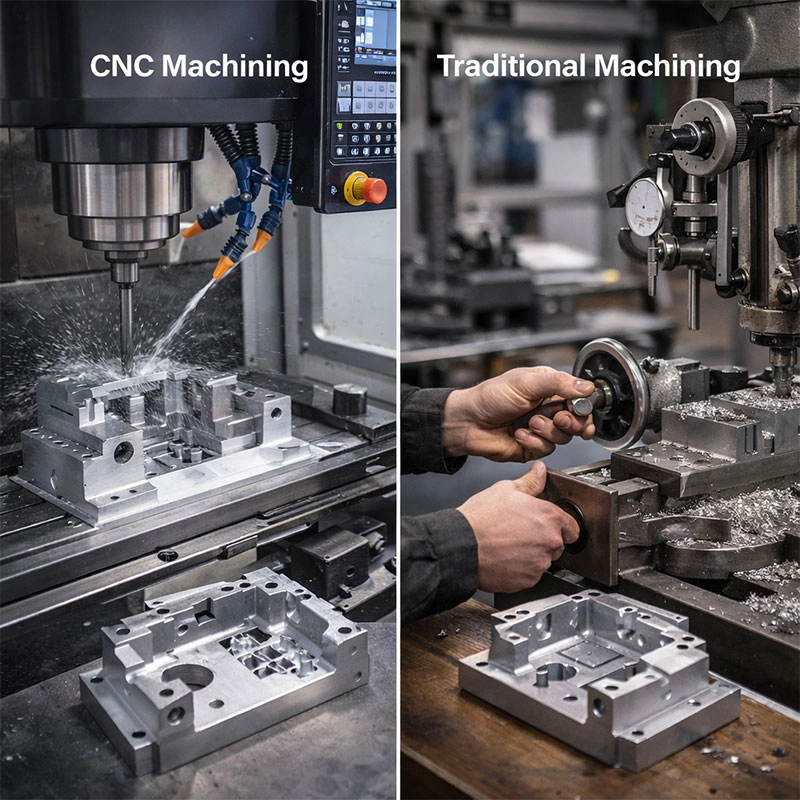
CNC, or Computer Numerical Control machining, is all about automation. A machinist writes a program (using G-code) that tells the machine—be it a mill, lathe, or router—exactly what to do. Once set up, the machine runs the program with minimal human intervention, producing part after identical part. This method is fantastic for precision machining of complex geometries that would be incredibly time-consuming or impossible to do by hand. It’s the go-to for high-volume production or parts with tight tolerances.

How Traditional Machining Works

Traditional machining, often called conventional machining or manual machining, relies on the skill of a machinist operating machines like engine lathes, milling machines, or drill presses. The machinist directly controls the movement of the cutting tool using hand wheels, levers, and their expert judgment. This method offers incredible flexibility for one-off parts, quick prototypes, or repairs. The comparison of manual vs automated machining really shines here—it’s the difference between a custom-tailored suit and one bought off the rack.

Which Machining Process Fits Your Project?

So, how do you decide? There’s no single “best” option—only the best one for *your* job. Let’s walk through some common scenarios to see where each method excels. I often tell my clients that understanding the advantages of CNC over manual machining (and vice versa) is the key to a successful and cost-effective project.

When to Choose CNC Machining

You’ll likely want to lean towards CNC milling and turning services if your project has these characteristics:

Volume & Repeatability: Need 50, 500, or 5,000 identical parts? CNC is your friend. The initial setup and programming take time, but once done, reproducing parts is fast and consistent.

Complex Designs: Does your part have intricate contours, complex 3D shapes, or precise holes at odd angles? Computer-controlled machining handles these with ease, following the digital blueprint to the letter.

Extreme Precision: For parts where tolerances are measured in thousandths of an inch (or less), the automated precision of CNC is hard to beat. It minimizes human error.

Material Considerations: While both methods work with many materials, CNC is often more efficient for machining tough alloys or materials that benefit from highly consistent cutting parameters.

When to Choose Conventional Machining

Don’t count out traditional milling and lathe work just yet! It’s often the perfect choice for:

Prototypes & One-Offs: Need a single part made quickly to test a concept? A skilled manual machinist can often have it in your hands faster and for less money than programming a CNC machine.

Simplicity & Speed for Simple Parts: If you have a basic bracket with a few holes, the setup time on a manual mill or drill press can be almost instantaneous.

Modifications & Repairs: This is where traditional machining shines. Fixing a worn shaft, adding a new keyway to an existing gear, or modifying a casting on the fly is often easier and more intuitive on a manual machine.

Lower Budget for Simple Jobs: For very low-volume, simple parts, the lower overhead of a manual shop can mean significant cost savings. You’re paying primarily for skilled labor, not machine programming and amortization.

Making Your Final Decision: A Practical Guide

Feeling stuck? Let’s make it practical. Grab your project notes and ask yourself these questions, which get to the heart of the difference between CNC and manual machining:

What’s my quantity? (Low volume = lean traditional. High volume = lean CNC).

How complex is the geometry? (Simple shapes = either works. Complex curves = likely CNC).

What are my tolerance requirements? (Very tight = CNC. More forgiving = traditional can work).

What’s my timeline and budget? (Fast/cheap for one part = traditional. Consistent cost per part for many = CNC).

My best advice? Have a conversation with your machine shop. A good shop, like many reputable ones you can find through industry resources such as Thomasnet for supplier discovery or by reviewing standards on ASME’s website, will discuss these factors with you. They can tell you if your part is a better candidate for a CNC machine tool or a manual one, often saving you time and money. Remember, the goal isn’t to use the “most advanced” technology, but the *most appropriate* one to get your project from idea to finished part successfully.

Request A Quote

We'll Send You Back with Price Immediately!

DEC 1-31

XMAS SPECEIL

Up to

40% off

CNC vs. Traditional Machining: Which Is Right for Your Project?

We'll Send You Back with Price Immediately!